Dignity Before Flavor: Why the First Metric in Coffee Isn’t in the Cup

By: Krzysztof Blinkiewicz

The coffee world prides itself on precision. We measure grams, seconds, water temperature, and flavor scores down to decimals. Yet the one thing we almost never measure is the first and only true metric: dignity.

A 90-point Gesha can still come from a farmer who skips meals to pay off debt. A latte art champion can still return home to a barista wage that doesn’t cover rent. A Q Grader can spend years calibrating flavors while being forbidden to question the institution that controls their license. These are not abstract injustices — they are lived realities.

In Colombia, one producer grew a microlot that sold for over $40/kg. Buyers praised its floral complexity, but that price applied only to a few dozen kilograms out of tons of coffee. The rest sold near the global “C” price of about $9/kg. After paying wages, fertilizer bills, loan repayments, milling, transport, and exporter margins, what reached his household was minimal. When his daughter needed urgent medical care, one hospital bill erased an entire season of work. The story of $40/kg was not one of prosperity, but of fragility disguised as success.

Another farmer, with a large plantation and several loyal employees, continually invests in new methods and varieties, even Gesha, financed through loans. Year after year, the books balance at “zero,” but debts grow. Rising prices no longer help. The cycle leads to depression, anxiety, and isolation. A once-respected leader of her community is left paralyzed by despair, with no escape from debt and no way to sell her land without loss.

In Europe, a young barista in a “specialty” café earns barely above minimum wage, scrolling second-hand markets for essentials during breaks. Customers post Instagram photos of their flat whites while she wonders how long until burnout drives her out of coffee.

Even barista champions face indignity. A national winner earns the right to compete on the world stage, but while local sponsors fund flashy events, the champion struggles to cover basic travel and training costs. Salaries remain unchanged, and sponsorship funds often vanish into dinners, rented screens, or private pockets. Her dignity, like her future, was never part of the budget.

The weight of coffee is heavier than sacks. It carries bent backs, stolen hours, and lives strained to the limit. Dignity must be the first measure — before flavor, before scores, before profit.

Consider the boy who dreams of roasting. He works at a small UK roastery, earning fairly, yet knows a decade of saving won’t buy him his own machine. With his father’s help, he purchases a second-hand roaster, fills it with a few bags of safe coffees, and pays for an expensive trade fair stand. His online shop sells barely five bags a week. Each month the dream drains him further. Should he give up?

Flavor notes often mask these realities. We are trained to talk about blueberry, jasmine, and red apple, but not about exhaustion, debt, or fear. This is pointwashing: when numbers and tasting notes plaster over lives in struggle.

At The Better Coffee, we reject this. Our compass is different. Dignity is the baseline: the right to rest without guilt, to pay rent without fear, to speak without punishment, and to imagine a future without shame. Only then does flavor truly matter.

This is not charity, nor corporate social responsibility. It is survival — and justice.

In practice, this means:

  • Buyers can sign contracts that guarantee stable income rather than speculative premiums.

  • Roasteries can redirect marketing budgets to raise barista pay.

  • Trainers can create classrooms open to critical dialogue, even if it challenges established structures.

  • Consumers can ask cafés not only about tasting notes, but how the people behind the coffee are treated.

Dignity is not an optional extra. It is the foundation. Without it, no score, sticker, or award means anything. Coffee does not need to reach 100 points — it needs to meet the needs of those who grow, roast, brew, and drink it. A system that cannot provide dignity is not “specialty”; it is extraction disguised as craft.

So next time you raise a cup, pause. Ask yourself: does this coffee taste of freedom — or of someone else’s unpaid bill?
Brazil Coffee Harvest 2025/2026: A Decent Crop Amid Market Volatility

São Paulo – September 16, 2025 – Qahwa World (EFICO’s Coffee Bean Scene) – There is an old saying in the coffee world: “When Brazil sneezes, the rest of the coffee world catches a cold.” The phrase remains true today. With the upcoming Brazil Coffee Harvest 2025/2026, accounting for nearly 40% of global production, Brazil continues to dictate the rhythm of supply, prices, and the flavor profiles that reach consumers around the globe. At times, it offers stability; at others, it sparks volatility across the market. In fact, the Brazil Coffee Harvest 2025/2026 will likely dominate coffee sector discussions for the coming year.

The past has proven this influence repeatedly. The frost of 1975 sent international prices soaring, while the droughts of 2014 and 2021 created deep uncertainty for exporters. Currency swings have only added to the turbulence, reshaping contracts and global trade dynamics. Brazil remains, without doubt, the heartbeat of the coffee industry, especially as we anticipate the results of the Brazil Coffee Harvest 2025/2026.

Harvest Progress and Outlook

By the end of August, Brazil’s 2025 harvest was virtually complete, with 100% of robusta and 98% of arabica collected. Rainfall—up to 50mm in arabica areas and 30mm in robusta regions—did little to damage bean development. Average bean size is larger than last year, and mild winter conditions extended the processing season, allowing more washed and semi-washed coffees to enter the market. Light frosts in June caused only localized impact, with no major losses.

The 2025/26 crop is now projected at 62.3 million bags—down 3.4% from earlier estimates and 5.4% compared to last year. Arabica is expected at 36.5 million bags, a sharp decline of 18.4% year-on-year, while robusta will rise to 25.8 million bags, a gain of nearly 22%. Strong vegetation growth after harvest suggests excellent potential for the 2026/27 cycle, with nurseries already sold out and farmers reinvesting in renewal and expansion. Notably, Brazil Coffee Harvest 2025/2026 will be closely watched for its impact on these numbers and future cycles.

Regional Insights

South Minas Gerais, the world’s largest coffee region with 500,000 hectares under cultivation, continues to showcase both challenges and innovation. Cities like Varginha, Três Pontas, Poços de Caldas, and Guaxupé remain central hubs. While productivity averages 25 bags per hectare, EFICO’s field visits revealed stark differences between farms. Yet one constant was clear: investment in innovation, from modern warehouses to irrigation projects that allow precise fertilization and improved yields. As a result, Brazil Coffee Harvest 2025/2026 outcomes will be partially driven by the ongoing modernization in these regions.

The Cerrado, often referred to by EFICO Brazil director João Marcos Crespo as “The Factory,” demonstrates a more industrialized approach. With 250,000 hectares—more than half irrigated—its productivity averages 35 bags per hectare, producing nearly 6 million bags annually. Regenerative agriculture is widely adopted here, both for cost savings and soil health. Farmers are also installing new high-capacity mechanical dryers, doubling efficiency compared to traditional models.

Market Dynamics

Despite decent production levels, commercialization has slowed to its lowest point in five years. Producers are financially stable and releasing coffee in small volumes, waiting for favorable prices. The introduction of a 50% U.S. import duty on Brazilian coffee in August has added further uncertainty to the market. Exporters are now carefully balancing procurement and sales strategies while watching international flows closely.

Overall, Brazil’s 2025 harvest stands between 60 and 62 million bags. While arabica output has dropped, robusta is filling part of the gap, and investments in quality continue to push screen sizes above last year’s levels. Market volatility is expected to persist at least through October, as the flowering season and rainfall patterns will set the tone for the 2026 crop.

Final Note

From the innovation-driven Cerrado to the tradition-rich farms of South Minas, Brazil’s coffee sector remains both resilient and deeply influential. As the new harvest begins arriving in early October, one thing is certain: when Brazil sneezes, the entire coffee world feels it. Ultimately, only time will reveal the full implications of the Brazil Coffee Harvest 2025/2026 for the global industry.

Vietnam on the Brink of a Thriving Coffee Season: Higher Yields and Greener Practices

Hanoi – September 15, 2025 – (Qahwa World) – Vietnam is preparing for the 2025/26 coffee harvest season with a sense of optimism, as early forecasts point to higher yields, improved quality, and significant progress on sustainability initiatives. Industry experts confirm that weather conditions, farming practices, and regulatory readiness are aligning to strengthen the country’s position as one of the world’s most important coffee producers.

Production expectations for the new crop are estimated at 29.65 million bags, an 8.3% increase compared with last year. Robusta, the dominant variety in Vietnam, is projected at 28.34 million bags (+7.4% year-on-year), while Arabica is forecast to reach 1.31 million bags, marking an impressive 31.3% rise. These estimates are based on crop surveys and current field observations. Farmers report that the cherries are developing steadily, with many Robusta plants entering maturation and Arabica already approaching harvest.

Weather conditions have remained favorable so far, with rainfall close to historical averages. This suggests that harvest timing will mirror last year: Arabica is expected to begin in mid-September, Robusta in mid-October, with both peaking in early December and concluding by late January. If favorable conditions continue, quality is expected to improve, supported by the growing adoption of Good Agricultural Practices (GAPs) such as pruning, weeding, and shade management. Many farmers are also converting from chemical fertilizers to organic compost, which is expected to further enhance cup quality and reduce input costs.

At this stage, no major challenges have been reported. Producers and processors are optimistic, and high prices across agricultural commodities are providing farmers with strong returns for the second consecutive year. This economic stability is enabling many to invest in better inputs and more sustainable practices, creating a positive outlook for both production and livelihoods.

Vietnam’s coffee industry is also navigating an evolving regulatory environment. Domestically, the government has introduced a 5% Value Added Tax (VAT) on coffee trading, with exporters and buyers required to comply through verified suppliers. On the international stage, the European Union Deforestation Regulation (EUDR) will come into force on January 1, 2026. Although not yet active, Vietnamese supply chains are already preparing by strengthening traceability systems and collecting farm-level data to ensure compliance when the regulation takes effect.

Sustainability remains a central focus this year, with multiple initiatives underway to boost farm productivity, resilience, and environmental responsibility. The IMPACT responsible sourcing program continues to expand, with a 4,000-metric-ton supply chain in Gia Lai now in its second verification cycle and a 3,500-metric-ton chain in Lâm Đồng advancing into its third year. According to Senior Sustainability Coordinator Nhu Le, more than 80% of the supply chain has now been mapped using polygon farm plots, a sharp increase from 30% earlier this year, both to prepare for EUDR and to support broader forest conservation efforts.

Expansion is also taking place in Arabica-growing regions. In Son La and Lâm Đồng, more than 1,500 farmers across five wet mills have joined programs certified under RA, 4C, and the Global Coffee Platform (GCP). These farmers are receiving training on sustainable agricultural practices aligned with international standards, further strengthening Vietnam’s network of responsible suppliers.

Farmer training remains a cornerstone of the country’s sustainability agenda. Over the past season, more than 1,500 farmers have participated in interactive workshops covering composting, fertilizer management, water and weed control, Integrated Pest Management (IPM), and shade tree cultivation. These sessions not only transfer technical knowledge but also create opportunities for farmers to share experiences and apply practices directly in their fields, enhancing resilience at both farm and community level.

One of the most promising developments has been the shift from chemical fertilizers to organic composts. Farmers are increasingly learning to produce compost from coffee husk waste generated during Robusta natural processing. So far, nearly 500 farmers have been trained in composting techniques, collectively producing more than 3,000 metric tons of organic fertilizer. This practice reduces chemical inputs, improves soil health, cuts costs, and contributes to lower carbon emissions.

Tree planting projects are also taking root. Over the past year, farmers have received 47,000 forest and fruit tree seedlings, which will help diversify local ecosystems, improve environmental resilience, and provide additional sources of income through fruit and timber.

Soil and carbon initiatives are another priority. The Vietnam team has collected 475 soil samples to provide tailored fertilizer guidance, helping farmers cut input costs while maintaining yields and lowering emissions. At the same time, carbon footprint mapping is underway across partner projects, with the results expected to shape long-term reduction strategies and support compliance with new global standards.

The combination of favorable weather, improved agricultural practices, and strong sustainability investments has positioned Vietnam’s coffee industry for a productive 2025/26 season. With production projected to rise and sustainability outcomes deepening, the outlook for both farmers and buyers is positive. The sector’s early adaptation to regulatory changes and its ongoing commitment to responsible sourcing reinforce Vietnam’s role as a global leader in coffee supply.

As the harvest begins in the coming weeks, industry stakeholders are closely watching how these combined efforts will translate into both higher yields and better quality in the cup. For now, Vietnam’s coffee story in 2025/26 is one of growth, resilience, and readiness for the challenges and opportunities that lie ahead.

China’s wonders never end .. Mushroom coffee is the latest craze

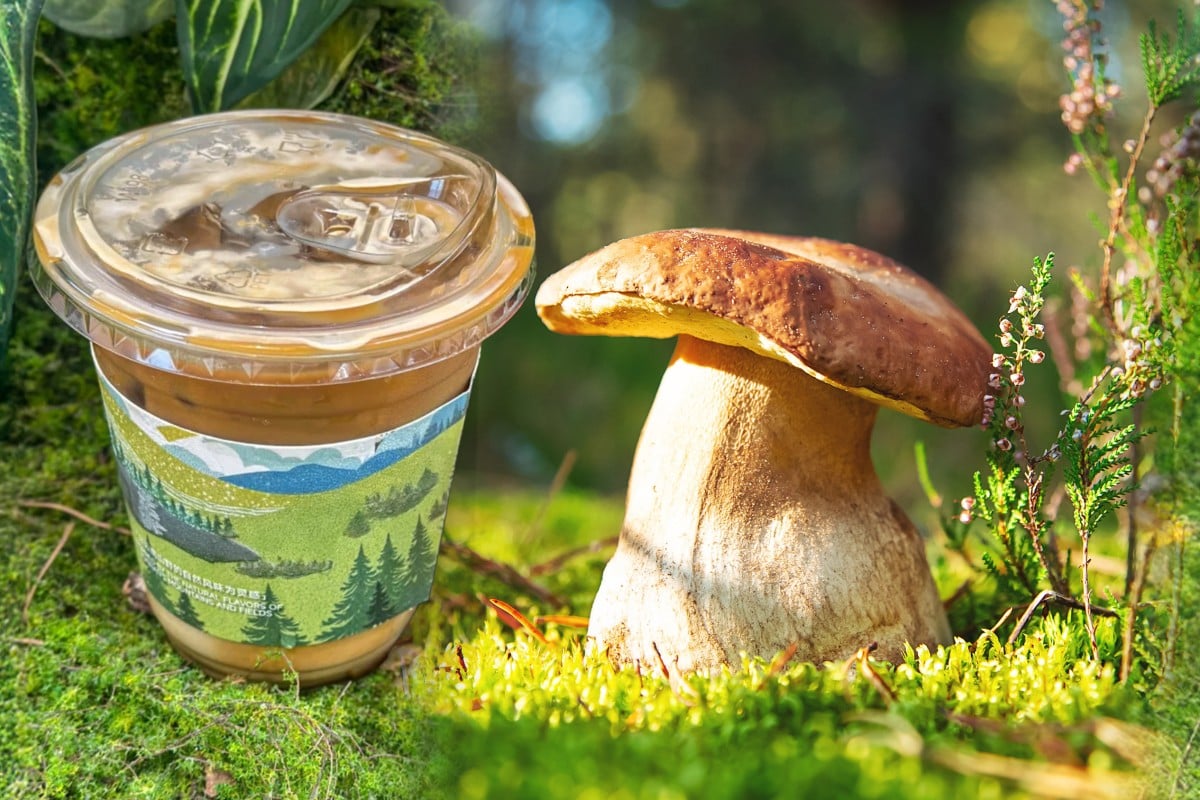
Dubai – 16 September 2025 – (Qahwa World) – A café in China’s southwestern Yunnan province has launched two seasonal drinks that blend coffee with penny bun (porcini) mushrooms, priced at 23 yuan (about US$3) per cup. The offerings are a “Cheese Americano with Penny Bun” and a “Penny Bun Oat Milk Latte,” an innovation built on uniting two local signatures in one cup: Yunnan coffee and premium wild mushrooms.

The preparation details point to a measured flavor approach: the Cheese Americano is served with mushroom powder, a coffee base, a layer of cheese cream, and a cookie shaped like the mushroom, while the oat-milk latte is made with coffee, mushroom powder, and oat milk. Each is priced at roughly 23 yuan. These formulations have been attributed to “Forleaf Coffee” in Yunnan, according to recent regional coverage.

Crowds have shown up from the early days. Staff at the café say they sell around 50–70 cups of mushroom coffee daily, with customers coming specifically to try the two drinks. The venue has previously offered a “black truffle coffee,” suggesting a pattern of seasonal, attention-grabbing innovations that ride the wave of curiosity.

The timing is no accident; June through September is wild-mushroom season in Yunnan, when celebrated varieties—such as matsutake, termite mushrooms, and penny bun—top the lists of those seeking forest-driven flavors. This seasonal context helps explain the widespread interest and the early impression that “the mushroom here is part of the terroir,” not a passing add-on.

On social platforms, opinions split between those who see mushrooms as “too precious to be mixed with coffee” and others who found the taste “surprisingly delicious.” These differing positions have accompanied news of strong sales, giving the innovation a debate that goes beyond mere “trendiness.”

Even so, short-term success does not guarantee continuity. Management at Forleaf Coffee has indicated that repeating the drinks next year is not assured and will depend on the cost of ingredients—chief among them the mushroom. For reference, penny bun prices in August ranged between 40 and 80 yuan per kilogram, a band wide enough to make the decision to continue primarily an economic one before it is a marketing call.

The Yunnan experiment fits into a broader Chinese wave that blends coffee with local or unusual components. In 2024, Starbucks China offered a pork-flavored latte for Lunar New Year—priced at 68 yuan per cup—in a notable example of limited editions serving as both flavor testbeds and marketing tools. In recent months, other controversial drinks—such as a “pork-intestine latte” in Sichuan—have also spread widely on social media.

What distinguishes the Yunnan case is that the “mushroom” here is not “functional” in the wellness sense common in global mushroom-coffee blends (like lion’s mane and chaga), but an edible porcini used for flavor—crafting a new profile that marries a gentle umami with coffee’s sweet-bitter edge. This approach relies on the ingredient’s rootedness in the region’s forests and daily life, not on physiological claims or dietary supplements.

Despite the momentum, repeatability is constrained by several factors: price volatility during the harvest season, the cost of developing and localizing recipes inside production lines, and the café’s ability to maintain powder quality and a stable supply. While queues often mark the initial “buzz,” turning the novelty into a seasonal signature requires a precise balance of feasibility, supply, and flavor. Local coverage—explicitly and implicitly—has tied the drink’s fate to input costs and annual availability.

In sum, this is a flavor-first experiment that draws more on terroir than on “novelty for novelty’s sake,” while capturing the spirit of rapid innovation in China’s highly competitive coffee market, where local blends become shareable stories that drive visits. Between admiration and objection, the future of “mushroom coffee” in Yunnan rests on seasonal pricing—numbers alone will decide whether the craze returns next season or remains a memory of 2025.

Coffee Prices Surpass $4 per Pound Amid Global Supply Strains and Trade Tensions

Dubai, September 16, 2025 (Qahwa World) – The global coffee market has once again taken center stage as New York arabica futures surged above $4 per pound for the first time since April. This sharp rally reflects a confluence of factors—from severe drought in Brazil and dwindling inventories to U.S. import tariffs and weaker global exports—raising new concerns about supply stability.

A Sharp Rally in Prices

On Monday, arabica futures jumped 3.6%, bringing total gains since early August to nearly 47%. In New York, arabica rose 3.1% to $4.0905 per pound, while robusta in London climbed 3.6%. The steep rise has fueled market anxiety, with momentum indicators signaling overbought conditions: the 14-day relative strength index crossed above 70, pointing to unusually rapid gains.

Brazil at the Epicenter

Brazil, the world’s top coffee producer, remains at the heart of the current price surge. According to meteorological firm Somar Meteorologia, the key producing states of Minas Gerais and São Paulo face abnormal heat and drought, while Espírito Santo is also expected to receive below-average rainfall. Such conditions threaten the upcoming flowering stage—a critical period for setting the next harvest due in mid-2026.

Brazil’s crop forecasting agency Conab lowered its 2025 arabica output estimate by 4.9% on September 4, cutting projections to 35.2 million bags from 37 million in May. Overall coffee production was revised to 55.2 million bags from 55.7 million previously.

Currency movements are amplifying the pressure: the Brazilian real rallied to a 15-month high against the U.S. dollar, discouraging export sales and lending further bullish support to global coffee prices.

U.S. Tariffs Tighten Supply

Trade tensions are another driving force. The U.S. imposed a 50% tariff on Brazilian coffee imports, prompting American buyers to cancel new contracts. This shift is tightening domestic supplies, particularly significant given that nearly one-third of U.S. unroasted coffee imports come from Brazil. Analysts warn this could amplify short-term volatility.

Shrinking Inventories

The decline in exchange-monitored stockpiles underscores the strain on global supply. ICE-monitored arabica inventories fell Monday to a 16-month low of 666,337 bags. Robusta inventories also slipped to a two-week low of 6,556 lots, hovering just above the seven-week low reached in late August.

Reduced reserves highlight how vulnerable the market is to further disruptions, with less buffer available to absorb shocks.

Export Slowdowns Worldwide

Export data confirms these tightening conditions. The International Coffee Organization (ICO) reported on September 3 that global exports fell 1.6% year-on-year in July to 11.6 million bags. Cumulative shipments from October through July declined 0.3% to 115.6 million bags.

Brazilian exports have been particularly weak. The Trade Ministry reported a 20.4% year-on-year drop in July shipments of unroasted coffee to 161,000 metric tons. Exporter group Cecafe said July green coffee exports fell 28% to 2.4 million bags, with arabica shipments down 21% and robusta plunging 49%. Overall, Brazil’s exports in July totaled 2.7 million bags, while January–July shipments fell 21% to 22.2 million bags.

Vietnam Adds to the Strain

Vietnam, the world’s second-largest producer, is also struggling. Production in the 2023/24 crop year fell 20% to 1.47 million metric tons, the smallest crop in four years, while exports for 2024 dropped 17.1% to 1.35 million tons. The Vietnam Coffee and Cocoa Association in March lowered its 2024/25 production estimate to 26.5 million bags from 28 million.

Yet more recent figures show some rebound: Vietnam’s National Statistics Office reported January–August 2025 exports up 7.8% year-on-year to 1.14 million tons, highlighting mixed signals from the world’s robusta powerhouse.

Mixed Forecasts and Outlook

The outlook remains divided. The USDA’s Foreign Agriculture Service (FAS) projects global coffee production in 2025/26 will rise 2.5% year-on-year to a record 178.7 million bags. Arabica production is forecast to fall 1.7% to 97 million bags, while robusta is expected to jump nearly 8% to 81.7 million bags. Ending stocks are seen climbing 4.9% to 22.8 million bags.

By contrast, commodity trader Volcafe projects a global arabica deficit of 8.5 million bags in 2025/26, widening from a 5.5 million bag shortfall this season. This would mark the fifth consecutive year of supply deficits for arabica, underscoring persistent structural imbalances.

Harvest Progress in Brazil

One counterweight to bullish factors is Brazil’s rapid harvest progress, which typically exerts downward pressure on prices. On September 5, cooperative Cooxupé reported that its members had harvested 97% of their crops. Separately, Safras & Mercado said Brazil’s 2025/26 harvest was 99% complete as of August 20, compared with 98% at the same time last year. Robusta harvesting was complete, and arabica was 98% finished.

Still, despite the near-completion of the harvest, broader supply-side issues—including weather stress and declining exports—continue to outweigh the potential bearish impact of fresh beans entering the market.

The Bigger Picture

The coffee market now finds itself caught between conflicting forces. On one side are bullish drivers: drought in Brazil, U.S. tariffs, shrinking inventories, weaker exports, and long-term arabica deficits. On the other side are bearish signals, including harvest completion and USDA’s optimistic production outlook.

For now, the bullish momentum dominates. The symbolic $4-per-pound threshold has been breached, highlighting the fragility of coffee supply chains. With climate uncertainty, trade disputes, and tightening stockpiles all in play, volatility looks set to remain a defining feature of the global coffee market in the months ahead.

JDE Peet’s Transfers Shares to Participants Under Employee Incentive Plans

Amsterdam – September 15, 2025 (Qahwa World) – JDE Peet’s N.V. (EURONEXT: JDEP), the world’s largest pure-play coffee and tea company, announced today that it has transferred a total of 319,417 shares to participants under its employee incentive plans.

The transfer was made for no consideration to 21 participants who were previously granted or committed awards under the company’s long-term incentive programs.

Each share carries a nominal value of EUR 0.01. Following this transfer, the company confirmed that its total issued and outstanding share capital remains unchanged at 488,178,642 shares, of which 4,095,966 shares are held as treasury stock.

The move comes in line with disclosure requirements under Dutch offer rules, amid the ongoing recommended public offer by Keurig Dr Pepper, Inc. (the Offeror) for all issued and outstanding shares in JDE Peet’s.

The company clarified that it does not hold shares in Keurig Dr Pepper and is not aware of the Offeror holding any shares in JDE Peet’s.

Dreams and Ambitions: Youth Academy Middle East Launches in Dubai

Dubai – Qahwa World

The Middle East has welcomed a new chapter in coffee education with the launch of the first edition of Youth Academy Middle East 2025, held in Dubai and organized by Simonelli Group. This pioneering program provides six young coffee talents with full scholarships to attend the prestigious SCA Coffee Skills Program, giving them the opportunity to build professional careers in the global coffee industry.

The inaugural edition began at the Simonelli Group Middle East Experience Lab, where participants embarked on their training under the guidance of SCA-certified trainers. The program blends theory with practice, offering young baristas and coffee enthusiasts a chance to deepen their knowledge and discover new perspectives on coffee.

The Scholarship Winners

Among the six winners are young professionals whose passion and dreams reflect the diverse paths coffee can inspire:

  • Hnin Kha Nady (22 years old), a barista who hopes to inspire others through her craft: “Eventually I want to share my passion by creating unique coffee experiences for others.”

  • Mark Mwangi Mungai, a Kenyan barista, fascinated by both tradition and innovation: “The slowly emerging trends with AI and modern technology show how coffee, which has been here for ages, is adapting to new times.”

  • Amritha Varsha PR, an engineer-turned-coffee explorer: “For me, learning is exciting, but re-learning is like a second brew—often richer and clearer.”

  • Brenzen Labarete, Senior Barista, Brand Ambassador, and Middle East Barista of the Year 2023: “I look forward to connecting with people who share the same passion, exchange ideas, and be inspired to take my craft to the next level.”

  • Mohamed Alameeri, who describes himself as a “normal coffee guy” driven by curiosity: “The endless amount of information in the coffee world fascinates me. No matter how much you know, there is always more to learn.”

  • Donna Santianez, a passionate barista dreaming of opening her own café: “My dream is to become a professional barista and, one day, to have my own coffee shop.”

A Future Built on Passion

With their unique stories, ambitions, and dedication, these six young talents embody the essence of the Youth Academy—transforming passion into knowledge and knowledge into opportunity. Their journey marks not only a personal milestone but also a promising step for the future of coffee in the Middle East.

As the Youth Academy Middle East continues, the energy, curiosity, and commitment of its first participants highlight the growing importance of education and innovation in shaping the next generation of coffee professionals.

CHARTING THE FUTURE OF SPECIALTY COFFEE IN MENA

By: Kim Thompson , Co-founder of “RAW Coffee Company

The global coffee industry is in a period of rapid flux. Record-breaking auction prices, unprecedented mergers, volatile commodity markets, and mounting climate pressures are reshaping how coffee is grown, traded, and consumed. Against this backdrop, RAW Coffee Company is setting a clear course: to lead with integrity, strengthen our role as a trusted voice in the MENA region, and focus relentlessly on creating real value at origin.

Dubai recently made headlines with a newly opened coffee business, buying a world-record-breaking Panama Geisha lot for AED 2,218,785 ($604,080) at the 2025 Best of Panama Auction. This 98-point washed Geisha is now the highest-scoring and most expensive coffee in history, an extraordinary symbol of both the passion, volatility, and marketing spend, in our sector.

At the same time, consolidation is accelerating. Keurig Dr Pepper’s planned $18 billion merger with JDE Peet’s will create a new global giant. Coca-Cola’s $1.5 billion acquisition of Costa Coffee in 2018 gave it a ready-to-drink platform, while JAB Holding continues to expand its vast portfolio. Equipment leaders, too, are changing hands, De’Longhi’s 2023 purchase of 41% of La Marzocco and its acquisition of Eversys show how deeply coffee has become embedded in corporate strategy.

Meanwhile, climate change is placing unprecedented stress on producers. Extreme weather in Brazil and Vietnam, supply shortages, tariffs, and speculative trading are pushing prices upward and amplifying volatility. This is the new reality our industry must face.

As global forces reshape coffee, there is growing debate about the role of institutions like the Specialty Coffee Association (SCA). While the SCA has historically provided technical standards and a shared framework, the concern is that prioritizing organizational profit over producer benefit risks homogenizing coffee, reducing innovation, and diluting the very authenticity that defines specialty.

RAW Coffee Company believes our future cannot rest on certifications or corporate consolidation alone. Instead, our focus is on producers, the people whose creativity, resilience, and craftsmanship give specialty coffee its soul.

Our commitment is to go beyond sourcing. We aim to actively strengthen producers’ ability to thrive, compete, and innovate on their own terms.

  1. Foster True Direct Trade Relationships
  • Cut out intermediaries so farmers retain more of the final sales value.
  • Build trust and transparency through direct communication and fair pricing.
  1. Empower Producers with Resources and Capital
  • Invest in quality improvements, from processing to soil health, including knowledge-sharing on biochar and agronomy.
  • Support producers in developing their own roasting and direct selling businesses at origin.
  1. Facilitate Access to Tools and Services
  • Improve access to essentials like exporting licenses, international payments, and digital platforms.
  • Provide education on market trends, consumer expectations, and storytelling to strengthen their positioning.
  1. Encourage Local Value Addition
  • Champion origin-based roasteries and cafés so more value stays in producing countries.
  • Advocate for barista trainings in origin countries, developing a strong foundation for advancing coffee culture.
  1. Focus on Quality and Differentiation
  • Shift the mindset from scarcity to creativity, intention, and resourcefulness.
  • Guide producers to define their unique qualities rather than replicate trends.

As the pioneer of specialty coffee in Dubai for nearly two decades, RAW is uniquely positioned to shape the next chapter of coffee in the MENA region. Our responsibility is to amplify producer voices, maintain transparency in an era of volatility, and ensure that the values of authenticity, equity, and quality remain at the heart of our industry.

The future of coffee will not be written by corporate mergers, record-breaking auction prices or new assessment forms that do not improve outcomes for producers. It will be defined by the relationships we choose to nurture, the creativity we empower at origin, and the trust we build across the value chain. At RAW, that is where our focus will remain.


DMCC Coffee Centre: Supply Chain Pressures and Tariffs Threaten Global Coffee Trade

Dubai, 15 September 2025 ( Qahwa World) – Coffee, the world’s second most traded commodity after oil and a cultural staple for billions, is entering a critical stage in its global journey. The threats facing the industry are no longer confined to climate change alone. Increasingly, they include mounting supply chain disruptions and escalating tariffs that are reshaping the economics of one of the most vital agricultural products on earth. In its latest report, released as part of the Future of Trade Agri Series, the DMCC Coffee Centre warns that unless urgent measures are taken, the future of the global coffee trade may be defined by instability, rising costs, and deep uncertainty.

For decades, coffee has been regarded as a model commodity for international trade thanks to its durability and storability as green beans. But according to the report, this traditional advantage is no longer sufficient. Shipping costs have risen sharply amid ongoing global supply chain disruptions, compounded by geopolitical tensions across key trade corridors such as the Red Sea and the Panama Canal. Even a 1% increase in transport costs, the report notes, can result in months of accumulated price hikes for coffee worldwide. What was once a relatively resilient supply chain has become a fragile lifeline vulnerable to external shocks.

The situation has been further aggravated by protectionist trade policies. Most notably, the United States recently imposed tariffs of up to 50% on coffee imports from Brazil, the world’s largest exporter. While this may appear to offer short-term relief for American markets, it has shaken investor confidence and created uncertainty for Brazilian producers who rely heavily on exports. Many growers now face the prospect of cutting back production or seeking alternative markets, both of which come with risks of their own.

Mike Butler, Assistant Director for Coffee at DMCC, described the dilemma: “Large buyers often have the option of stockpiling coffee to protect themselves against price swings, but this strategy is not available to everyone. Smallholder farmers and specialty roasters remain the most exposed, as they lack the resources to hedge or hold inventories for long periods.”

The pricing system itself is also under strain. For decades, futures markets like the Intercontinental Exchange (ICE) provided reliable benchmarks for coffee. But the DMCC report highlights how these benchmarks are increasingly detached from reality. Futures contracts may show declines, while specialty coffee prices remain elevated, squeezing small and medium-sized roasters who cannot reconcile speculative market prices with real-world sourcing costs. Garfield Kerr, President of the Specialty Coffee Association and founder of Dubai’s “Mokha 1450,” summed it up: “The futures market has become more speculative and no longer reflects the actual value of high-quality coffee.”

Adding to this pressure is the rapid transformation of consumption patterns. Across Asia—in countries like China, Japan, and the Philippines—demand for coffee is accelerating, particularly among younger generations seeking premium quality and unique experiences. This growth, while promising, makes these markets especially vulnerable to global supply shocks. A shipping delay in Brazil or a tariff dispute in the U.S. can now ripple instantly into cafés and supermarkets in Beijing or Manila, underscoring the fragility of today’s interconnected coffee economy.

Amid these challenges, Dubai is positioning itself as a stabilizing hub. The DMCC Coffee Centre offers a pay-as-you-go model for storage, roasting, packaging, and logistics, lowering barriers for producers and small exporters to access global markets. Its geographic location at the crossroads of Africa, Asia, and Latin America allows Dubai to act as a natural bridge, absorbing shocks and keeping trade flows alive even in turbulent times. This strategic advantage, the report argues, could prove decisive as volatility becomes the new normal.

Still, the outlook remains precarious. Global production is expected to reach a record 178.7 million bags in the 2025/26 season. But without meaningful reforms, these volumes may not translate into market stability. Tariffs, freight costs, and speculative pricing continue to weigh heavily on the system, leaving more than 25 million smallholder farmers—who form the backbone of global coffee production—on the edge of economic survival.

The DMCC Coffee Centre’s report concludes with a stark choice. Either the industry embraces international cooperation, reforms outdated pricing mechanisms, and invests in supply chain infrastructure, or it risks plunging into prolonged volatility. Coffee, long celebrated as a symbol of connection and culture, could instead become a mirror of global trade’s fragility. But with decisive action, from fairer pricing models to transparent trade systems and collaborative investment, the industry has the tools to safeguard coffee’s future as a unifying global commodity.

DMCC Coffee Centre Warns: Climate Volatility Threatens the Future of Global Coffee

DUBAI – September 2025 – Qahwa World – Coffee is more than a beverage. It is a lifeline for over 25 million smallholder farmers, a $200 billion industry, and a cultural anchor with more than two billion cups consumed daily. Yet today, the global coffee sector faces one of the greatest challenges in its long history, according to the DMCC Coffee Centre, part of the Dubai Multi Commodities Centre (DMCC).

In its latest report, released under the Future of Trade Agri Commodities Series, the DMCC Coffee Centre published a special edition on coffee, warning that lands where coffee has thrived for centuries may no longer be suitable for cultivation in the coming decades.

According to the report, coffee’s vulnerability to climate change is stark. Unlike many other crops, coffee can only be cultivated in limited geographical zones, often at specific altitudes and within narrow temperature ranges. Any disruption in this balance — whether through droughts, frosts, or fungal diseases such as coffee leaf rust — can devastate entire harvests. Recent years have offered a preview of this future. In Vietnam, prolonged drought cut production by 20% and exports by 10% in the 2023/24 season. In Brazil, the world’s largest producer, one of the worst droughts in history pushed Arabica prices up by more than 80% in 2024. These are not isolated events but warning signals of a changing climate destabilizing a vital crop.

Research cited in the report projects that by 2050, half of today’s coffee-growing land may become unsuitable. Arabica, which accounts for 60–70% of global production and is prized for its quality, is the most at risk. Dependent on cooler climates with clearly defined wet and dry seasons, Arabica is highly sensitive to even modest increases in temperature. Robusta, known for its greater heat tolerance, may also face challenges under worsening climate conditions.

“The reality is that producers often have customers who have pre-booked volumes months in advance,” said Mike Butler, Associate Director of Coffee at DMCC. “If crops fail, they cannot deliver. This puts enormous pressure on farmers and traders, making climate volatility the new normal.”

Mike Butler, Associate Director of Coffee at DMCC

These pressures are already reshaping market dynamics. When Arabica prices surge, major brands increasingly turn to Robusta to fill the gap, often blending higher proportions into espresso and instant products. But as Garfield Kerr, President of the Specialty Coffee Association (SCA) and founder of Mokha1450 in Dubai, explains: “Specialty coffee consumers will notice the difference. While efforts are underway to develop specialty-grade Robusta, its flavor profile remains distinct.” This divergence could redefine what consumers drink, as well as where and how coffee is cultivated in the decades ahead.

Garfield Kerr, President of the Specialty Coffee Association (SCA) and founder of Mokha1450

The effects of climate change extend beyond farms to disrupt the global trade system. Shortages in Brazil or Vietnam ripple across supply chains, triggering price spikes and reshaping import decisions worldwide. Exchange-based pricing, once a reliable benchmark for roasters, is increasingly disconnected from the realities of specialty markets. Butler notes: “We are in a complex situation. Exchange pricing has become speculative and detached from the actual market, especially in premium segments.”

For smallholder farmers — who produce 80% of the world’s coffee — volatility is a fight for survival. Most lack the resources to withstand failed harvests or price shocks. When yields collapse, so too does income, jeopardizing education, healthcare, and food security for millions of families. The DMCC Coffee Centre report stresses the urgent need for investment in climate adaptation strategies that enable farmers to continue producing under increasingly hostile conditions.

Among the most promising solutions is agroforestry, where coffee is cultivated alongside trees and diverse crops to shield plants from heat, improve soil fertility, conserve water, and diversify incomes. Developing drought-resistant coffee varieties is another frontier. Kerr highlights Yemen as a potential leader, where farmers have for centuries produced resilient coffees in arid, high-temperature conditions. “I expect Yemen to become an industry leader in producing drought-resistant coffees,” he says, “because its farmers and agronomists already grow coffee in hotter climates with less water.”

The urgency of innovation extends beyond agriculture. International institutions and trade hubs must foster collaboration, data-sharing, and investment to support producers. The International Coffee Organization, in partnership with the International Trade Centre, has launched a Coffee Sustainability Support Database cataloguing more than 400 climate and sustainability initiatives worldwide. From training farmers in composting techniques to supporting cooperative-led climate projects, such efforts highlight the collective action required to build resilience.

Still, adaptation alone may not suffice without broader systemic change. Consumers increasingly demand proof that their coffee is produced sustainably and ethically, and regulators are responding with measures such as the European Union Deforestation Regulation. Compliance requires end-to-end traceability, raising costs but also creating opportunities for new technologies like blockchain and AI-powered monitoring to ensure that sustainability commitments are verifiable.

The DMCC Coffee Centre concludes that the global coffee sector stands at a crossroads. Climate change is already disrupting production, and risks are intensifying. While forecasts suggest that production could reach a record 178.7 million 60-kg bags in 2025/26, long-term threats loom over both supply and the livelihoods of millions of farmers. At the same time, solutions — from agroforestry to resilient varieties, from digital transparency to circular economy models — are emerging. The question is not whether the industry will change, but whether it can adapt quickly enough to safeguard coffee’s future.

For an industry that spans continents and cultures, the message is clear: without urgent action, climate volatility could reshape the coffee world beyond recognition. But through innovation, cooperation, and resilience, coffee can remain what it has always been — not just a drink, but a global connector, an economic pillar, and a cultural force.

Dubai Sets World Record with the Most Expensive Cup of Coffee

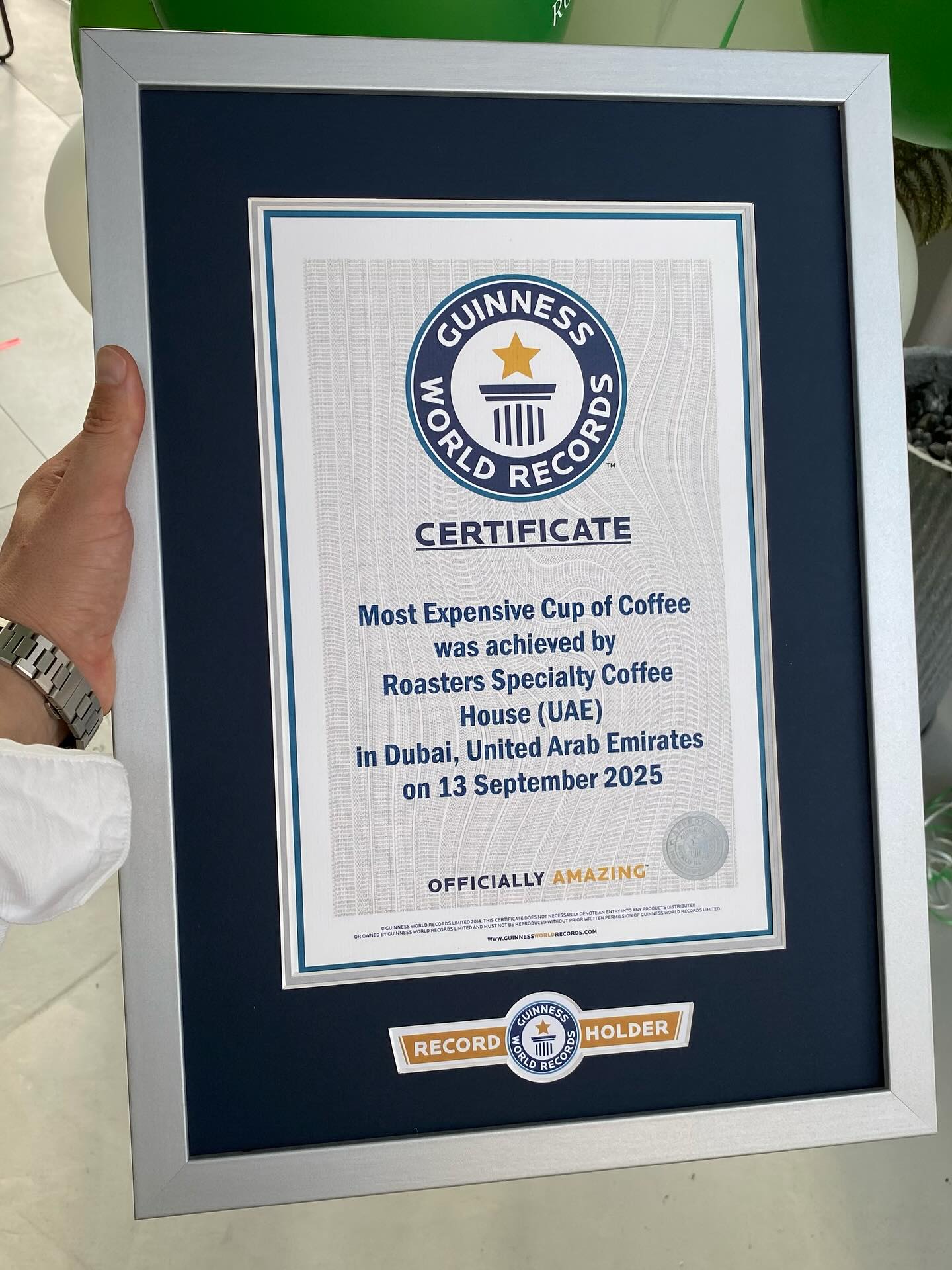
Dubai – 15 September 2025 – (Qahwa World) – Dubai has once again captured the spotlight in the global coffee scene. Roasters Specialty Coffee House has officially entered the Guinness World Records for serving the most expensive cup of coffee in the world.

The achievement was registered on 13 September 2025 in Dubai, United Arab Emirates, where Guinness World Records representatives confirmed the milestone. The exceptional cup, brewed using the V60 method, was sold at a record-breaking price, setting a new benchmark for luxury coffee experiences worldwide.

During the official announcement, the Guinness adjudicator declared: “Today is the year for the record of the most expensive coffee cup. This record was achieved by Roaster’s Specialty Coffee House. Congratulations, you are officially amazing.”

This milestone follows a string of bold moves that have placed Dubai’s coffee culture in the global spotlight. Just last month, the famed “Best of Panama 2025” auction made history when washed Geisha coffee from Hacienda La Esmeralda fetched an unprecedented $30,204 per kilogram. Yet the bigger surprise was the buyer: a Dubai-based startup, only one week old at the time, that stunned the industry by purchasing the entire 20-kilogram lot for $604,000.

That dramatic moment shook markets and ignited debates among experts, investors, and coffee leaders worldwide. With this new Guinness World Record, Dubai has once again proven its unique ability to merge tradition with innovation and luxury, cementing its place as a rising force in the global coffee industry.

Germany Earns More From Coffee Than Producing African Nations

Berlin – September 14, 2025 – (Qahwa World) – Germany, a country that does not grow coffee, has become one of the most influential players in the global coffee industry, earning more from exports than all African producing nations combined. In 2024, Germany exported over 473,000 tonnes of coffee worth €6 billion, largely by importing raw beans from producing countries and re-exporting them after processing and branding.

Africa, home to 18 coffee-exporting countries including Uganda, Ethiopia, Kenya, and Rwanda, remains dependent on raw bean exports. Uganda recently overtook Ethiopia as the continent’s leading exporter, shipping nearly 800,000 bags in May 2025 alone, worth $243 million. Ethiopia, long considered the historic heart of coffee, followed with 43,481 tonnes during the same period. Data from the International Coffee Organization covering March 2023 to February 2024 shows Uganda shipped over six million bags, compared with Ethiopia’s 3.5 million, while other producers such as Tanzania, Côte d’Ivoire, and Kenya trailed with far smaller volumes.

The disparity lies in value addition. A KPMG study as far back as 2014 highlighted that Africa exported coffee worth $6 billion while the global coffee industry exceeded $100 billion, driven by roasting, blending, packaging, branding, and sustainable certification. Germany has built its dominance on precisely these steps, importing nearly one million tonnes of green coffee in 2023, 91 percent directly from producing nations. Brazil supplied the largest share at 341,000 tonnes, followed by Vietnam, Honduras, Uganda, Colombia, and India. Even when imports declined by 17 percent that year, Germany’s reserves ensured its exports continued without disruption.

The contrast underscores a hard truth: while coffee was born in Africa, most of its wealth is captured elsewhere. Unless producing nations invest in roasting, branding, and specialty development at origin, they will remain suppliers of raw beans while others reap the greater rewards.