ICO Stands with Vietnam as Heavy Rains Devastate Coffee Heartland

Key Impacts:

  • 50+ fatalities reported nationwide.

  • Dak Lak farmers report only 10-15% harvest completion.

  • Direct losses estimated at $341 million USD.

  • Global Robusta futures are surging on supply fears.

Dubai – Qahwa World

The International Coffee Organization (ICO) has issued an urgent message of solidarity to Vietnam following catastrophic flooding that has claimed dozens of lives and paralyzed the country’s vital “Coffee Belt” in the Central Highlands.

The disaster, triggered by weeks of relentless torrential rains and the aftermath of recent tropical storms, has struck at the peak of the coffee harvest season, threatening one of the world’s most critical supplies of Robusta beans.

In a statement posted on its official Instagram account, the ICO addressed the tragedy directly, emphasizing the human cost behind the supply chain disruption.

“The International Coffee Organization expresses its heartfelt condolences following the severe floods in Vietnam, which have tragically claimed lives and devastated coffee-growing communities,” the statement read.

The message highlighted the plight of smallholder farmers who are now facing the dual trauma of personal loss and economic ruin. “Our thoughts are with the families affected and with the farmers whose harvests have been severely damaged by the persistent rains. The ICO stands in solidarity with Vietnam and remains committed to supporting resilience and recovery across the global coffee sector.”

The Central Highlands, particularly the provinces of Dak Lak and Lam Dong, serve as the engine of Vietnam’s coffee industry, accounting for over a third of the world’s Robusta supply. November usually marks the bustling onset of the harvest, but this year, the fields are silent and waterlogged.

Field estimates indicate that farmers in Dak Lak province had managed to harvest only 10% to 15% of their crop before the floods hit. In low-lying areas, reports confirm that floodwaters have submerged coffee trees by up to two meters, threatening root rot and the destruction of ripe cherries.

Heavy Human and Material Losses

Local authorities report that rainfall in some areas has exceeded 1,500mm (59 inches) in recent weeks. The deluge has triggered landslides and flash floods, isolating remote farming villages.

As of this weekend, disaster management agencies have reported over 50 fatalities nationwide. Economically, the Vietnamese government estimates the direct losses from the disaster at approximately 8.98 trillion VND ($341 million USD), with nearly 80,000 hectares of crops damaged, a significant portion being coffee farms.

For coffee farmers, the timing could not be worse.

“The cherries are ripe, but we cannot pick them,” said Nguyen Van An, a farmer in the Buon Ma Thuot region. “If we pick them, we cannot dry them because there is no sun. If we leave them, they rot on the branch or fall into the mud.”

Global Market Tremors

The situation in Vietnam has sent immediate shockwaves through the global commodities market. Coffee futures have surged to multi-week highs as traders brace for a severe supply crunch, with analysts now fearing a drop in Vietnam’s total production by up to 20% compared to previous forecasts.

Unlike Arabica, which is often mechanically dried, Vietnamese Robusta is largely sun-dried on patios. The persistent moisture raises the risk of mold and fermentation, potentially rendering large portions of the crop unusable for export. With global coffee stockpiles already tight, analysts fear this disaster could push consumer prices higher in 2026.

A Call for Resilience

The ICO’s statement underscores a growing urgency within the industry to address climate vulnerability. Vietnam has faced an increasingly erratic climate in 2025, swinging from severe droughts earlier in the year to the current historic floods.

As rescue teams continue to reach isolated communities and the waters slowly recede, the focus will soon turn to recovery. The ICO’s pledge to support “resilience and recovery” suggests that international aid and long-term adaptation strategies will be crucial in helping Vietnam’s coffee sector weather the storms of a changing climate.
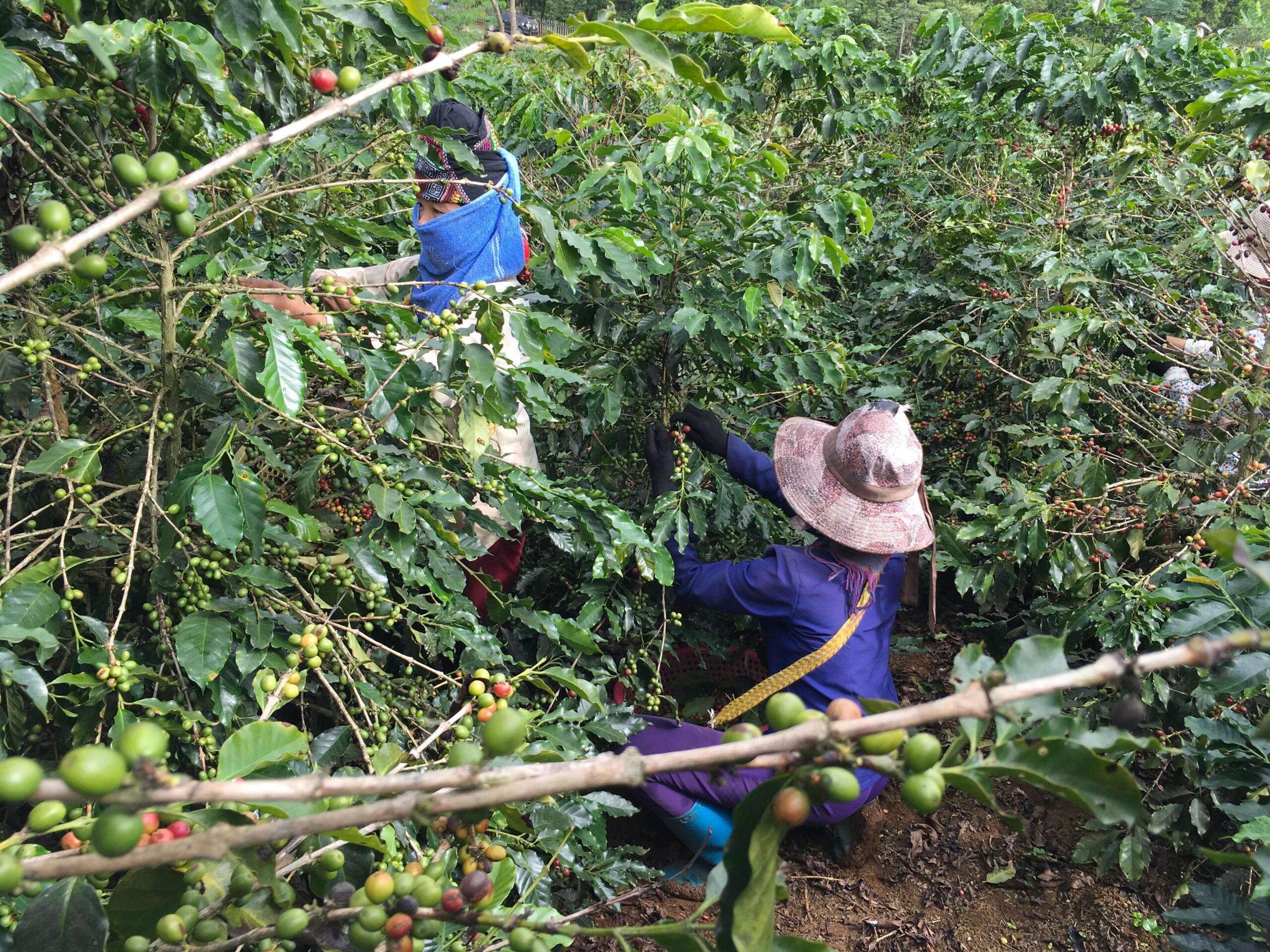
Vietnam on the Brink of a Thriving Coffee Season: Higher Yields and Greener Practices

Hanoi – September 15, 2025 – (Qahwa World) – Vietnam is preparing for the 2025/26 coffee harvest season with a sense of optimism, as early forecasts point to higher yields, improved quality, and significant progress on sustainability initiatives. Industry experts confirm that weather conditions, farming practices, and regulatory readiness are aligning to strengthen the country’s position as one of the world’s most important coffee producers.

Production expectations for the new crop are estimated at 29.65 million bags, an 8.3% increase compared with last year. Robusta, the dominant variety in Vietnam, is projected at 28.34 million bags (+7.4% year-on-year), while Arabica is forecast to reach 1.31 million bags, marking an impressive 31.3% rise. These estimates are based on crop surveys and current field observations. Farmers report that the cherries are developing steadily, with many Robusta plants entering maturation and Arabica already approaching harvest.

Weather conditions have remained favorable so far, with rainfall close to historical averages. This suggests that harvest timing will mirror last year: Arabica is expected to begin in mid-September, Robusta in mid-October, with both peaking in early December and concluding by late January. If favorable conditions continue, quality is expected to improve, supported by the growing adoption of Good Agricultural Practices (GAPs) such as pruning, weeding, and shade management. Many farmers are also converting from chemical fertilizers to organic compost, which is expected to further enhance cup quality and reduce input costs.

At this stage, no major challenges have been reported. Producers and processors are optimistic, and high prices across agricultural commodities are providing farmers with strong returns for the second consecutive year. This economic stability is enabling many to invest in better inputs and more sustainable practices, creating a positive outlook for both production and livelihoods.

Vietnam’s coffee industry is also navigating an evolving regulatory environment. Domestically, the government has introduced a 5% Value Added Tax (VAT) on coffee trading, with exporters and buyers required to comply through verified suppliers. On the international stage, the European Union Deforestation Regulation (EUDR) will come into force on January 1, 2026. Although not yet active, Vietnamese supply chains are already preparing by strengthening traceability systems and collecting farm-level data to ensure compliance when the regulation takes effect.

Sustainability remains a central focus this year, with multiple initiatives underway to boost farm productivity, resilience, and environmental responsibility. The IMPACT responsible sourcing program continues to expand, with a 4,000-metric-ton supply chain in Gia Lai now in its second verification cycle and a 3,500-metric-ton chain in Lâm Đồng advancing into its third year. According to Senior Sustainability Coordinator Nhu Le, more than 80% of the supply chain has now been mapped using polygon farm plots, a sharp increase from 30% earlier this year, both to prepare for EUDR and to support broader forest conservation efforts.

Expansion is also taking place in Arabica-growing regions. In Son La and Lâm Đồng, more than 1,500 farmers across five wet mills have joined programs certified under RA, 4C, and the Global Coffee Platform (GCP). These farmers are receiving training on sustainable agricultural practices aligned with international standards, further strengthening Vietnam’s network of responsible suppliers.

Farmer training remains a cornerstone of the country’s sustainability agenda. Over the past season, more than 1,500 farmers have participated in interactive workshops covering composting, fertilizer management, water and weed control, Integrated Pest Management (IPM), and shade tree cultivation. These sessions not only transfer technical knowledge but also create opportunities for farmers to share experiences and apply practices directly in their fields, enhancing resilience at both farm and community level.

One of the most promising developments has been the shift from chemical fertilizers to organic composts. Farmers are increasingly learning to produce compost from coffee husk waste generated during Robusta natural processing. So far, nearly 500 farmers have been trained in composting techniques, collectively producing more than 3,000 metric tons of organic fertilizer. This practice reduces chemical inputs, improves soil health, cuts costs, and contributes to lower carbon emissions.

Tree planting projects are also taking root. Over the past year, farmers have received 47,000 forest and fruit tree seedlings, which will help diversify local ecosystems, improve environmental resilience, and provide additional sources of income through fruit and timber.

Soil and carbon initiatives are another priority. The Vietnam team has collected 475 soil samples to provide tailored fertilizer guidance, helping farmers cut input costs while maintaining yields and lowering emissions. At the same time, carbon footprint mapping is underway across partner projects, with the results expected to shape long-term reduction strategies and support compliance with new global standards.

The combination of favorable weather, improved agricultural practices, and strong sustainability investments has positioned Vietnam’s coffee industry for a productive 2025/26 season. With production projected to rise and sustainability outcomes deepening, the outlook for both farmers and buyers is positive. The sector’s early adaptation to regulatory changes and its ongoing commitment to responsible sourcing reinforce Vietnam’s role as a global leader in coffee supply.

As the harvest begins in the coming weeks, industry stakeholders are closely watching how these combined efforts will translate into both higher yields and better quality in the cup. For now, Vietnam’s coffee story in 2025/26 is one of growth, resilience, and readiness for the challenges and opportunities that lie ahead.

Brazil Dryness Ahead of Flowering Period Boosts Coffee Prices

Dubai, September 8, 2025 (Qahwa World) – Coffee prices surged today, with December arabica futures rising by +9.65 cents per pound (+2.58%) and November robusta contracts climbing +$119 per ton (+2.76%). The rally comes as severe dryness in Brazil’s coffee-growing regions raises concerns about yields ahead of the critical flowering period. Meteorology agency Somar reported that Minas Gerais, Brazil’s largest arabica-producing state, received no rainfall during the week ending September 6.

Additional support came from Brazil’s crop forecasting agency Conab, which cut its 2025 arabica crop estimate by -4.9% to 35.2 million bags, down from 37 million bags projected in May. Conab also lowered its total coffee production forecast for 2025 by -0.9% to 55.2 million bags.

Meanwhile, the International Coffee Organization (ICO) reported that global coffee exports in July fell -1.6% year-on-year to 11.6 million bags, while cumulative exports for October through July were down -0.3% at 115.6 million bags.

Tighter stocks at the ICE exchange are also supporting prices. ICE-monitored arabica inventories dropped to a 1.25-year low of 686,863 bags last week before slightly rebounding to 692,766 bags. Robusta inventories remain close to a 1.5-month low at 6,552 lots.

U.S. supplies are under additional pressure from trade measures. American buyers have begun canceling contracts for Brazilian beans following the imposition of 50% tariffs on imports, tightening supply as about one-third of U.S. unroasted coffee comes from Brazil.

Harvest progress in Brazil is also influencing prices. Cooxupé, the country’s largest coffee cooperative, reported that its members’ harvest was 94.9% complete by August 29. Separately, Safras & Mercado estimated the national 2025/26 crop at 99% complete by August 20, with robusta fully harvested and arabica 98% complete.

Export data shows a sharp decline. Brazil’s Trade Ministry reported that unroasted coffee exports in July fell -20.4% year-on-year to 161,000 tons. Exporter group Cecafe said green coffee exports were down -28% to 2.4 million bags, with arabica shipments falling -21% and robusta plunging -49%. Total shipments from January through July dropped -21% to 22.2 million bags.

Vietnam, the world’s second-largest coffee producer, also faces challenges. Its 2023/24 crop fell -20% to 1.472 million tons, the smallest in four years, while 2024 exports dropped -17.1% to 1.35 million tons. However, January–August 2025 exports rose +7.8% year-on-year to 1.141 million tons. The Vietnam Coffee and Cocoa Association reduced its 2024/25 output estimate to 26.5 million bags, down from 28 million bags.

Looking ahead, the U.S. Department of Agriculture (USDA) projects global coffee production for 2025/26 to rise +2.5% to a record 178.7 million bags. Arabica output is expected to fall -1.7% to 97 million bags, while robusta production is forecast to grow +7.9% to 81.6 million bags. Ending stocks are projected to climb +4.9% to 22.8 million bags. However, trading group Volcafe warns of an -8.5 million bag global arabica deficit in 2025/26, compared with a -5.5 million bag deficit in 2024/25—marking the fifth consecutive year of shortages.

Geadas atingem cafezais no Cerrado Mineiro e preocupam produtores

São Paulo, 18 de agosto de 2025 (Qahwa World) – Cafezais da região de Patrocínio, considerado o maior município produtor de café do mundo, foram atingidos por geadas na madrugada de segunda-feira, segundo informou à Reuters o presidente da Federação dos Cafeicultores do Cerrado, Gláucio de Castro. O fenômeno climático pode ter afetado os botões florais destinados à próxima safra.

Além de Patrocínio, municípios vizinhos como Araxá e Indianópolis, também localizados no Cerrado Mineiro – região estratégica para a produção de café arábica do Brasil – registraram geadas. Contudo, Castro ressaltou que a real dimensão dos danos só poderá ser confirmada após o período de floradas.

Impacto preliminar

De acordo com a avaliação inicial, as geadas foram classificadas como “de capote”, atingindo principalmente a parte superior das plantas. Embora menos intensas e abrangentes que as ocorridas em 2021, quando a safra seguinte foi severamente comprometida, elas ainda podem reduzir o potencial produtivo.

“As geadas dessa vez foram mais de capote, pegaram mais o lado superior da planta. Mas, de qualquer forma, afeta”, afirmou Castro.

O dirigente destacou que os botões florais atingidos são sensíveis e poderiam florescer entre setembro e outubro, com a chegada das chuvas. No entanto, os efeitos do frio podem se revelar apenas mais adiante. “Essa queima dos botões florais é meio silenciosa, só vamos ver para frente se vai abrir flor”, explicou.

Levantamentos em andamento

As cooperativas do Cerrado Mineiro estão realizando levantamentos sobre eventuais perdas. Segundo relatos preliminares de produtores, os danos representariam cerca de um terço do impacto causado em 2021. Entretanto, Castro alertou que é cedo para estimar números com precisão.

Em casos de geadas mais intensas, quando ambos os lados da planta são comprometidos, os agricultores recorrem ao “esqueletamento” – poda drástica que implica na perda total da produção da safra seguinte.

Reflexo no mercado

Na segunda-feira, o café arábica negociado na bolsa ICE encerrou em alta de quase 4%, impulsionado pelos relatos de geadas no Brasil, maior produtor e exportador global da commodity. Porém, nesta terça-feira, os preços recuaram, devolvendo parte dos ganhos.

Situação em outras regiões

Cooperativas do Sul de Minas, como a Cooxupé (Guaxupé) e a Minasul (Varginha), informaram que as geadas se concentraram em áreas de baixada, sem maiores danos às lavouras.

Segundo a consultoria StoneX, o Sul de Minas deverá produzir pouco mais de 15 milhões de sacas de 60 kg em 2025, enquanto o Cerrado Mineiro deve registrar 6,2 milhões de sacas.