Vietnam’s Coffee Exports Hit Record Levels and Set Sights on New Growth in 2026

Ho Chi Minh  – Qahwa World

Vietnam has closed the 2024–2025 coffee season with unprecedented results, marking the highest performance in the history of its coffee industry. The country’s coffee export value reached USD 8.4 billion, according to the Vietnam Coffee and Cocoa Association (VICOFA), which held its annual conference on 24 October 2025 in Ho Chi Minh City, attended by representatives from the Ministry of Agriculture and Environment, exporters, and local producers.

Data released by the association shows that from October 2024 to September 2025, Vietnam exported over 1.5 million tons of coffee—an increase of 1.8 % in volume and 55.5 % in export value compared with the previous season. The average export price reached USD 5,610 per ton, up 52.7 % year on year.

Europe remained Vietnam’s largest export market, accounting for about 47 % of total shipments—more than 710,000 tons—valued at over USD 4 billion. Within that figure, the 27 European Union countries represented 40.1 % of the total exported volume and 39.4 % of export value, reaffirming the country’s strong foothold in European markets despite tightening sustainability regulations.

Speaking at the event, Hoang Trung, Deputy Minister of Agriculture and Environment, praised the industry’s achievements as a result of joint efforts among farmers, exporters, and government agencies to improve product quality and expand international market access. He reported that the total coffee cultivation area reached 731.9 thousand hectares, including 678.5 thousand hectares in production, while re-planted areas covered 20 thousand hectares, achieving 96.4 % of the national re-planting plan.

According to the deputy minister, favorable weather conditions and high coffee prices encouraged farmers to invest in intensive cultivation and rejuvenate plantations, leading to higher productivity and improved bean quality. Government estimates suggest that total coffee production could approach 2 million tons this year—an impressive achievement demonstrating Vietnam’s resilience amid global agricultural volatility.

A key highlight of the conference was the announcement that cooperation between VICOFA, government authorities, and international partners had resulted in the creation of a national traceability database covering 137,000 hectares of coffee farms, which is now being expanded to 462,000 hectares, or about 80 % of the total coffee area in the Central Highlands. Thanks to this initiative, the European Union has classified Vietnam as a “low-risk” country under the EUDR (Deforestation Regulation), requiring inspection of only 1 % of imported shipments. Trung described this classification as “a recognition of Vietnam’s transparency, accountability, and environmental responsibility within the coffee sector.”

He further noted that programs dedicated to specialty and high-quality coffee, as well as sustainable low-emission initiatives, have significantly contributed to increasing the added value of Vietnamese coffee and strengthening its brand identity on the global stage.

The report also showed that by mid-October 2025, Vietnam had already exported 1.27 million tons of coffee, valued at USD 7.21 billion—a 12.5 % rise in volume and more than 62 % growth in value compared with the same period a year earlier. This performance highlights a strategic shift from expanding output to enhancing value and quality, underscoring the success of Vietnam’s transformation from a commodity-based producer to a sustainability-driven exporter.

During the event, VICOFA projected that coffee production for the 2025–2026 season could increase by 10 % from the previous year if favorable weather continues. The association said that encouraging price levels had motivated farmers to increase investments in crop care and expand their cultivated areas, raising prospects for another strong season ahead.

Deputy Minister Hoang Trung outlined several key directions for sustaining growth and maintaining competitiveness:

  • Expand sustainable production by adopting international certification standards such as RA, 4C, FLO, and C.A.F.E. Practices.
  • Strengthen traceability and deep processing to reduce dependence on raw-bean exports.
  • Adopt low-emission cultivation techniques to cut fertilizer and pesticide use and promote water-efficient irrigation.
  • Diversify markets beyond Europe toward Asia and Southeast Asia, leveraging cross-border e-commerce opportunities.
  • Promote the “Vietnam Coffee” brand in specialty segments through global marketing and participation in exhibitions and trade fairs.
  • Foster stronger linkages across the supply chain—from farmers and cooperatives to processors and exporters—to ensure equitable and sustainable growth.
  • Enhance awareness and compliance with import-market requirements, especially environmental and traceability regulations under the EU EUDR.

The conference concluded with a shared conviction among participants that, with its robust agricultural base, growing commitment to sustainability, and rapidly improving quality standards, Vietnam is on course to strengthen its position as one of the world’s leading coffee exporters. As the new 2025–2026 season approaches, the sector looks set for further expansion, higher value, and record-breaking achievements in the years ahead.
Vietnam on the Brink of a Thriving Coffee Season: Higher Yields and Greener Practices

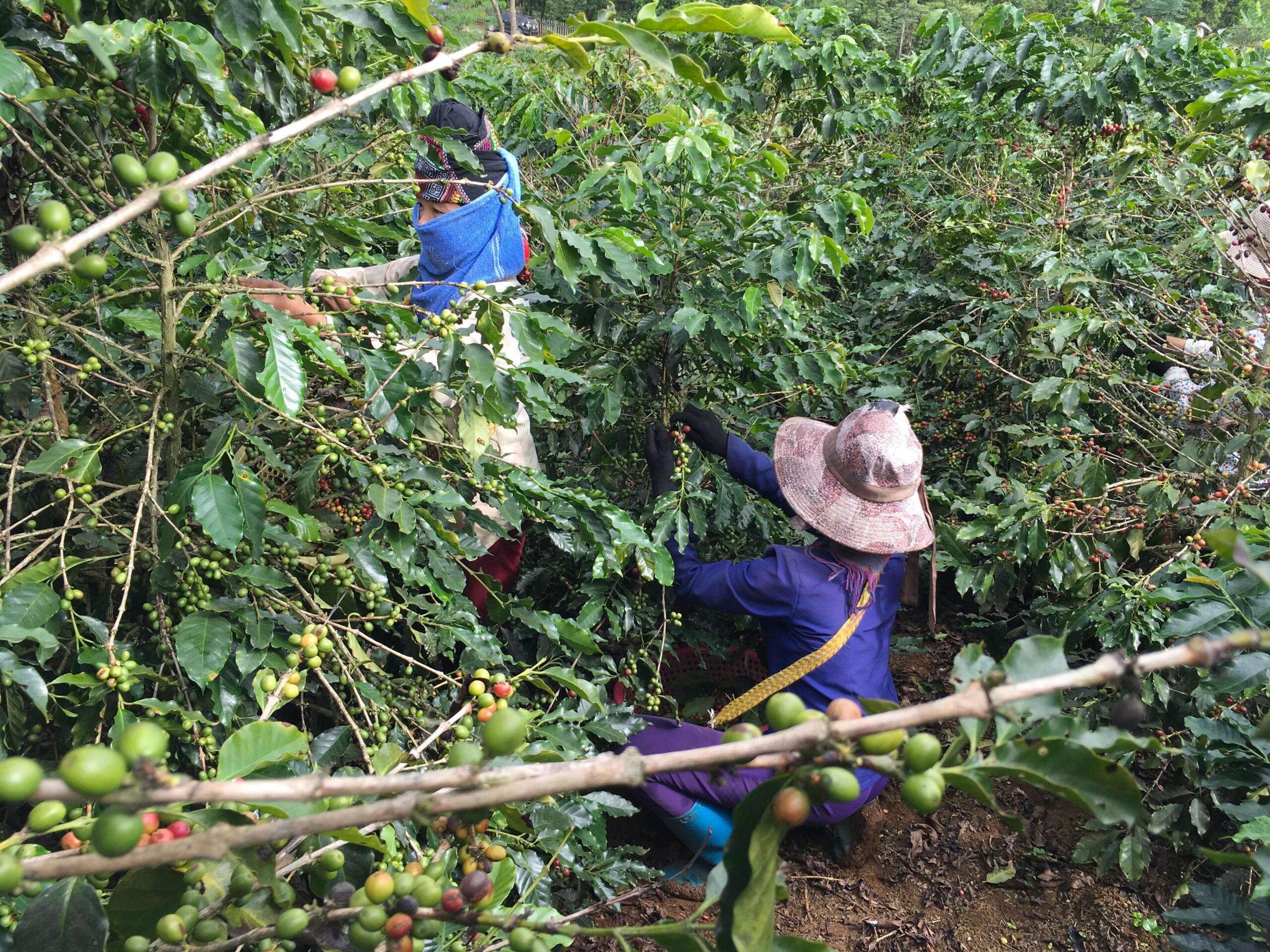
Hanoi – September 15, 2025 – (Qahwa World) – Vietnam is preparing for the 2025/26 coffee harvest season with a sense of optimism, as early forecasts point to higher yields, improved quality, and significant progress on sustainability initiatives. Industry experts confirm that weather conditions, farming practices, and regulatory readiness are aligning to strengthen the country’s position as one of the world’s most important coffee producers.

Production expectations for the new crop are estimated at 29.65 million bags, an 8.3% increase compared with last year. Robusta, the dominant variety in Vietnam, is projected at 28.34 million bags (+7.4% year-on-year), while Arabica is forecast to reach 1.31 million bags, marking an impressive 31.3% rise. These estimates are based on crop surveys and current field observations. Farmers report that the cherries are developing steadily, with many Robusta plants entering maturation and Arabica already approaching harvest.

Weather conditions have remained favorable so far, with rainfall close to historical averages. This suggests that harvest timing will mirror last year: Arabica is expected to begin in mid-September, Robusta in mid-October, with both peaking in early December and concluding by late January. If favorable conditions continue, quality is expected to improve, supported by the growing adoption of Good Agricultural Practices (GAPs) such as pruning, weeding, and shade management. Many farmers are also converting from chemical fertilizers to organic compost, which is expected to further enhance cup quality and reduce input costs.

At this stage, no major challenges have been reported. Producers and processors are optimistic, and high prices across agricultural commodities are providing farmers with strong returns for the second consecutive year. This economic stability is enabling many to invest in better inputs and more sustainable practices, creating a positive outlook for both production and livelihoods.

Vietnam’s coffee industry is also navigating an evolving regulatory environment. Domestically, the government has introduced a 5% Value Added Tax (VAT) on coffee trading, with exporters and buyers required to comply through verified suppliers. On the international stage, the European Union Deforestation Regulation (EUDR) will come into force on January 1, 2026. Although not yet active, Vietnamese supply chains are already preparing by strengthening traceability systems and collecting farm-level data to ensure compliance when the regulation takes effect.

Sustainability remains a central focus this year, with multiple initiatives underway to boost farm productivity, resilience, and environmental responsibility. The IMPACT responsible sourcing program continues to expand, with a 4,000-metric-ton supply chain in Gia Lai now in its second verification cycle and a 3,500-metric-ton chain in Lâm Đồng advancing into its third year. According to Senior Sustainability Coordinator Nhu Le, more than 80% of the supply chain has now been mapped using polygon farm plots, a sharp increase from 30% earlier this year, both to prepare for EUDR and to support broader forest conservation efforts.

Expansion is also taking place in Arabica-growing regions. In Son La and Lâm Đồng, more than 1,500 farmers across five wet mills have joined programs certified under RA, 4C, and the Global Coffee Platform (GCP). These farmers are receiving training on sustainable agricultural practices aligned with international standards, further strengthening Vietnam’s network of responsible suppliers.

Farmer training remains a cornerstone of the country’s sustainability agenda. Over the past season, more than 1,500 farmers have participated in interactive workshops covering composting, fertilizer management, water and weed control, Integrated Pest Management (IPM), and shade tree cultivation. These sessions not only transfer technical knowledge but also create opportunities for farmers to share experiences and apply practices directly in their fields, enhancing resilience at both farm and community level.

One of the most promising developments has been the shift from chemical fertilizers to organic composts. Farmers are increasingly learning to produce compost from coffee husk waste generated during Robusta natural processing. So far, nearly 500 farmers have been trained in composting techniques, collectively producing more than 3,000 metric tons of organic fertilizer. This practice reduces chemical inputs, improves soil health, cuts costs, and contributes to lower carbon emissions.

Tree planting projects are also taking root. Over the past year, farmers have received 47,000 forest and fruit tree seedlings, which will help diversify local ecosystems, improve environmental resilience, and provide additional sources of income through fruit and timber.

Soil and carbon initiatives are another priority. The Vietnam team has collected 475 soil samples to provide tailored fertilizer guidance, helping farmers cut input costs while maintaining yields and lowering emissions. At the same time, carbon footprint mapping is underway across partner projects, with the results expected to shape long-term reduction strategies and support compliance with new global standards.

The combination of favorable weather, improved agricultural practices, and strong sustainability investments has positioned Vietnam’s coffee industry for a productive 2025/26 season. With production projected to rise and sustainability outcomes deepening, the outlook for both farmers and buyers is positive. The sector’s early adaptation to regulatory changes and its ongoing commitment to responsible sourcing reinforce Vietnam’s role as a global leader in coffee supply.

As the harvest begins in the coming weeks, industry stakeholders are closely watching how these combined efforts will translate into both higher yields and better quality in the cup. For now, Vietnam’s coffee story in 2025/26 is one of growth, resilience, and readiness for the challenges and opportunities that lie ahead.