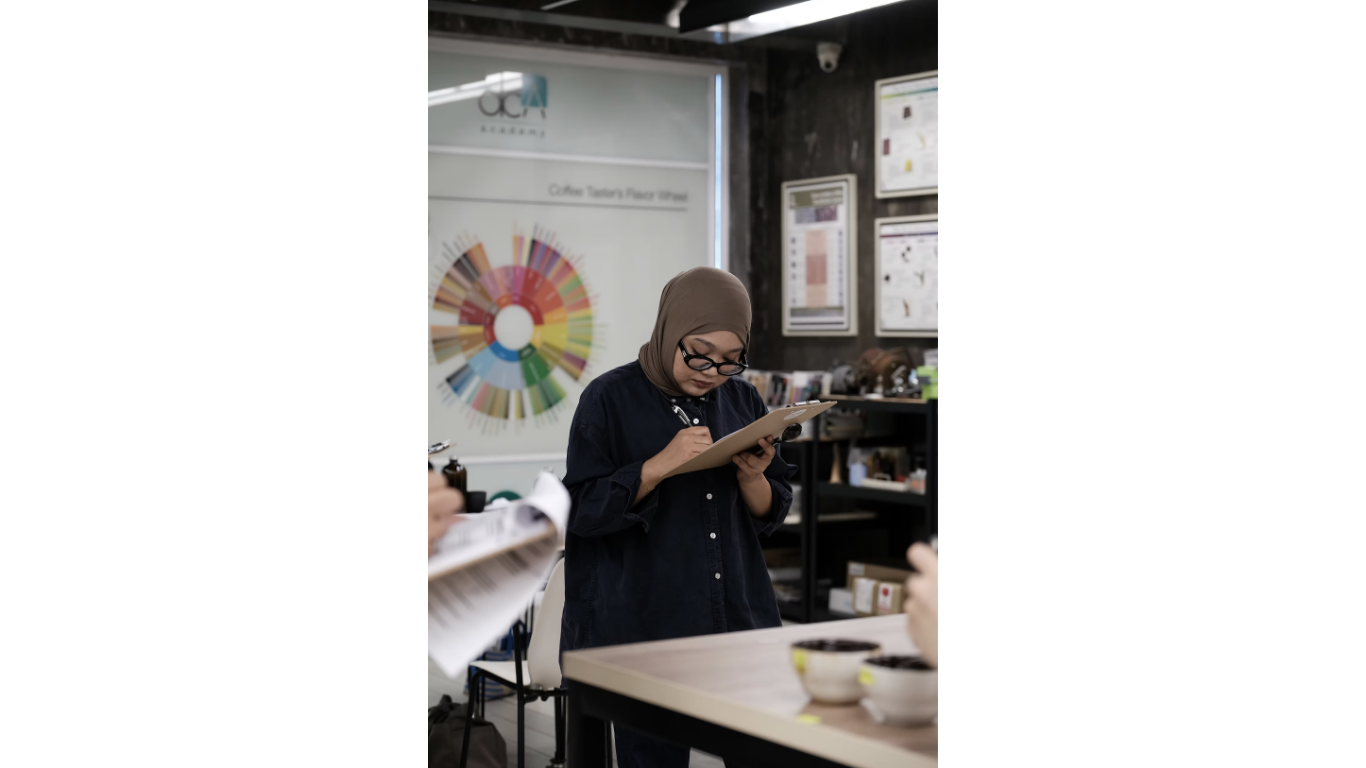
Youth Academy Applications Open in Malaysia, UK, and UAE for 2026

Author: Qahwa World Dubai
Source: Official announcement
Date: May 18, 2026

Executive Summary:

  • Applications for Youth Academy are now open in Malaysia, the United Kingdom, and the United Arab Emirates.
  • Malaysia deadline is June 7, 2026, with interviews on June 18 and 19, and winners announced June 30.
  • UK deadline is June 14, 2026, with interviews on June 22 and 23, and winners announced June 29.
  • UAE deadline is June 21, 2026, with interviews from June 29 to July 10, and winners announced July 27.
  • Applicants should complete their Coffee Knowledge Hub profile before applying.
  • Strong applications are authentic, specific, and use real examples from coffee experiences.
  • Shortlisted candidates will be invited for an interview focused on conversation and genuine curiosity.

Applications for Youth Academy are now open in Malaysia, the United Kingdom, and the United Arab Emirates. If you plan to apply, this is the right time to get organized. Understanding the timeline, preparing your profile, and allowing enough time to submit a thoughtful application are essential steps.

Youth Academy is more than a scholarship program. It is also a community. When applying, think not only about what you hope to gain, but also about what you can contribute to the coffee community. Your attitude, your willingness to share knowledge, your local coffee scene, and the way you support others as you grow all matter.

Key Dates by Country

Country Applications Close Interviews Winners Announced
Malaysia June 7, 2026 June 18–19, 2026 June 30, 2026
United Kingdom June 14, 2026 June 22–23, 2026 June 29, 2026
UAE June 21, 2026 June 29 – July 10, 2026 July 27, 2026

Before You Apply

Start by completing your Coffee Knowledge Hub profile. Use your real first and last name, upload a clear photo, and ensure your profile reflects the information in your application. It does not need to be long. It just needs to feel genuine and current.

Read the application process carefully. Each country has its own application page and process. Take time to read the instructions properly before starting your answers.

Give your application direction. Strong applications are rarely the ones trying to sound perfect. The best applications are focused, specific, and authentic. Use real examples. Keep your answers consistent with your profile. Avoid leaving everything until the final day.

Concrete Examples Matter

Rather than simply saying you are passionate about coffee, show it through your actions. Mention cupping sessions you have attended, cafés or roasteries you visited to learn, routines you developed for practice, mentors who influenced you, and projects or events you contributed to. Small experiences still matter when they are real and meaningful.

Preparing for the Interview

If you are shortlisted, you will be invited for an interview. The best way to approach it is as a conversation rather than a test. Before the interview, think clearly about a challenge you faced in coffee and what it taught you, a moment that made you want to go deeper into the industry, and a few genuine questions you would like to ask about the program. Curiosity is part of the learning journey. Strong interviews usually come from candidates who are honest, engaged, and present, not from those trying to perform.

It Is Not Only About What You Want to Learn

Youth Academy is more than a scholarship program. It is also a community. When applying, think not only about what you hope to gain, but also about what you can contribute to the coffee community. Consider your attitude, your willingness to share knowledge, your local coffee scene, and the way you support others as you grow.

If you are applying in Malaysia, the United Kingdom, or the UAE, take your time. Review your profile carefully and write an application that genuinely reflects who you are.

Frequently Asked Questions (FAQ)

1. When is the application deadline for Malaysia?

The application deadline for Malaysia is June 7, 2026. Interviews will be held on June 18 and 19, and winners will be announced on June 30.

2. When is the application deadline for the UK?

The UK deadline is June 14, 2026. Interviews take place on June 22 and 23, with winners announced on June 29.

3. When is the application deadline for the UAE?

The UAE deadline is June 21, 2026. Interviews run from June 29 to July 10, and winners will be announced on July 27.

4. What should I do before applying?

Complete your Coffee Knowledge Hub profile with your real name and a clear photo. Read the application process for your country carefully and prepare authentic answers with concrete examples from your coffee experience.

5. How should I prepare for the interview?

Think of the interview as a conversation. Prepare to discuss a challenge you faced in coffee, a moment that deepened your interest in the industry, and genuine questions about the program. Honesty and engagement are more important than performing.

6. What is Youth Academy looking for in applicants?

Youth Academy seeks applicants who are not only eager to learn but also willing to contribute to the coffee community. Your attitude, knowledge sharing, support for others, and connection to your local coffee scene are all important.

Qahwa World Dubai – Based on an official announcement regarding Youth Academy applications for 2026.
Published: May 18, 2026

Escape: The “Sanctuary” Philosophy Reconnecting Sharjah’s Community Over Coffee

Sharjah – Qahwa World

Nestled in a serene corner of Al Heera Beach, one of Sharjah’s newest leisure destinations near the Ajman border, “Escape Cafe/Community” stands as more than just a commercial venture. It is a dream realized after three years of meticulous preparation, blending the excellence of specialty coffee with the warmth of human connection.

A Comfort That Feels Like Home

From the moment you step into the cafe, a sense of peace, calm, and tranquility washes over you, the kind of comfort typically reserved for entering one’s own home. It is a new destination that serves as an ideal retreat for UAE residents, offering a diverse selection of coffee and cuisine crafted to satisfy those seeking a refined yet cozy experience.

From Pandemic Isolation to Community Warmth

Founder Mohammed Ali Patel shares that the concept of “Escape” was born during the isolation of the COVID-19 pandemic. “I felt that people had drifted apart, and there wasn’t much connection happening,” Patel explains. “I realized there is no better way to bring a community back together than over coffee. It is the catalyst for our meetings, whether for business or friendship.”

A Philosophy Beyond Business

Escape does not follow the traditional commercial mold. Designed with the vision of being an “escape from reality,” the space is wide and open, giving visitors an immediate sense of freedom. The cafe’s philosophy rests on four pillars:

  • Education: Hosting workshops to educate the public on coffee origins and brewing techniques.
  • Art: Combining art and coffee to enhance productivity and mental stillness.
  • Mental Health: Providing a space to raise awareness of mental well-being, a topic often overlooked in daily life.
  • Community: Building personal bonds with neighbors and regulars so they feel truly “at home.”

Sharjah: A Gracious Host for Innovation

Regarding the choice of location, Mohammed Ali Patel views Sharjah as a “stable and accepting” community that appreciates a slower pace of life. He attributes the potential for success to the initiatives of His Highness Sultan bin Muhammad Al Qasimi, who has long championed art, education, and tradition, values that resonate with the cafe’s proximity to art hubs and established residential areas.

A Menu Defined by Morning Energy

While the cafe offers main courses such as burgers and pasta, its core focus remains on brunch and breakfast, served from 7:00 AM to 1:00 PM. “The energy we get from customers during the morning shift is wonderful,” Patel says. “We want to ensure our guests start their day with a positive spirit.”

Success Measured by Names, Not Numbers

Reflecting his long term vision, Patel says success a year from now will not be measured solely by sales figures, but by knowing his customers by name. “Success is when students and neighbors feel free to sit here, even in our outdoor spaces, knowing this is their home. They do not always have to order, they just need to feel they belong.”

UN Officially Designates 1 October as International Coffee Day

Dubai – Qahwa World

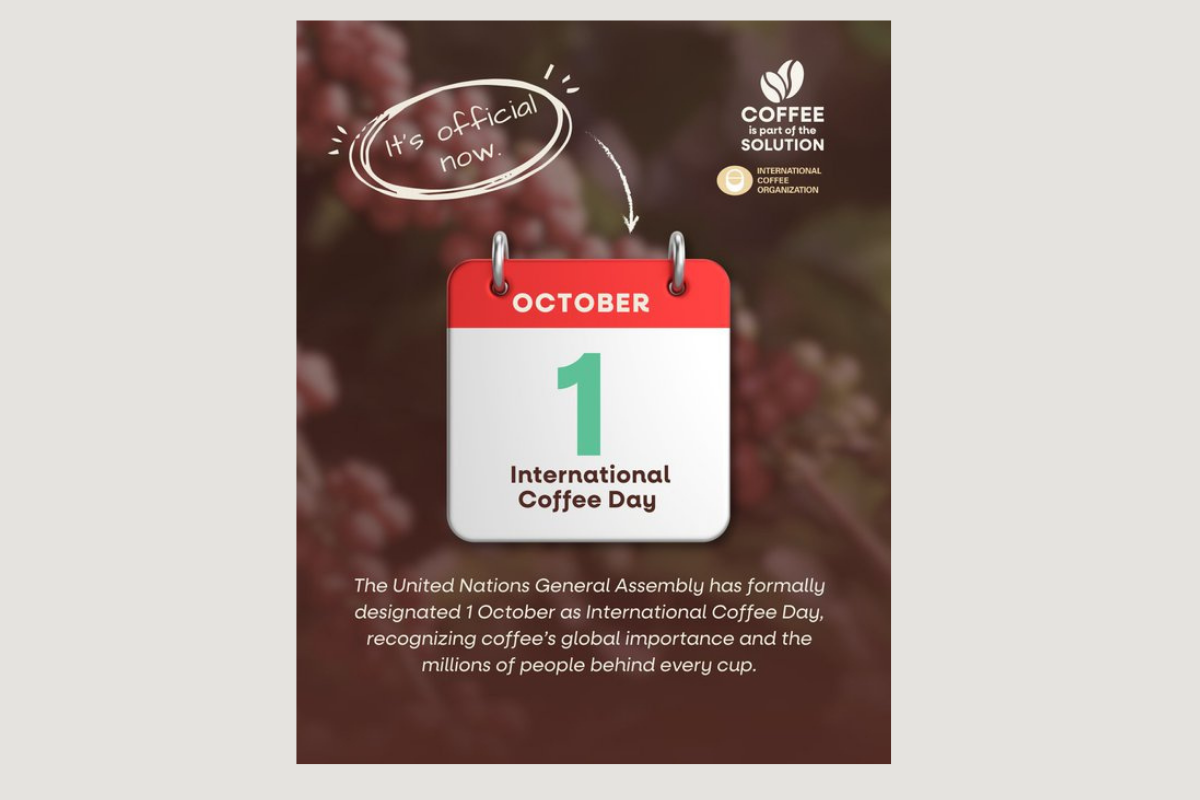
The International Coffee Organization has announced what it described as “a historic moment for the global coffee community” after the United Nations General Assembly formally designated 1 October as International Coffee Day.

According to the announcement, the decision recognizes coffee’s profound importance to global economies, cultures, and livelihoods, highlighting the role the beverage plays across producing and consuming nations alike.

The milestone follows the adoption of Resolution A/80/L.44 by the United Nations General Assembly on 10 March 2026. The resolution, introduced by Brazil, received 150 votes in favor, with one vote against from the United States and one abstention from Canada.

United Nations Officially Declares 1 October International Coffee Day

Under the resolution, 1 October will now be officially recognized every year as International Coffee Day, and all countries, United Nations bodies, and relevant stakeholders are invited to organize activities that highlight the economic, social, and environmental significance of coffee.

The resolution also invites the Food and Agriculture Organization of the United Nations to lead the annual observance in cooperation with the International Coffee Organization.

  • Elevating an existing global celebration

International Coffee Day has already been observed globally on 1 October since 2015, when the initiative was first launched by the International Coffee Organization during Expo 2015 Milan.

The new United Nations designation elevates the observance to an official international day within the UN system, giving the coffee sector broader global recognition and strengthening the visibility of the millions of people who depend on coffee for their livelihoods.

United Nations Officially Declares 1 October International Coffee Day

In its statement, the International Coffee Organization noted that the decision reflects the collective efforts of its member countries, institutional partners, and international organizations, including the Food and Agriculture Organization, to raise awareness of the coffee sector’s importance.

  • Supporting farmers and sustainability

Coffee remains one of the world’s most widely traded agricultural commodities and supports millions of farmers, workers, traders, and communities across Africa, Asia, and Latin America.

The International Coffee Organization and the Food and Agriculture Organization see the UN recognition as an opportunity to strengthen global attention to the sector’s key challenges and opportunities, including sustainability, farmer livelihoods, and climate-related risks affecting coffee production.

Qu Dongyu welcomed the decision, stating that the new international day will help raise awareness of coffee’s socio-economic importance and reinforce its role in supporting efforts to reduce poverty worldwide.

United Nations Officially Declares 1 October International Coffee Day

For the global coffee community—from smallholder farmers to exporters, roasters, and consumers—the recognition marks a significant step toward greater international acknowledgment of the industry’s cultural and economic impact.

With the adoption of the UN resolution, International Coffee Day on 1 October is expected to gain even broader global participation, as governments, organizations, and coffee professionals organize events and initiatives celebrating the beverage and the people behind every cup.

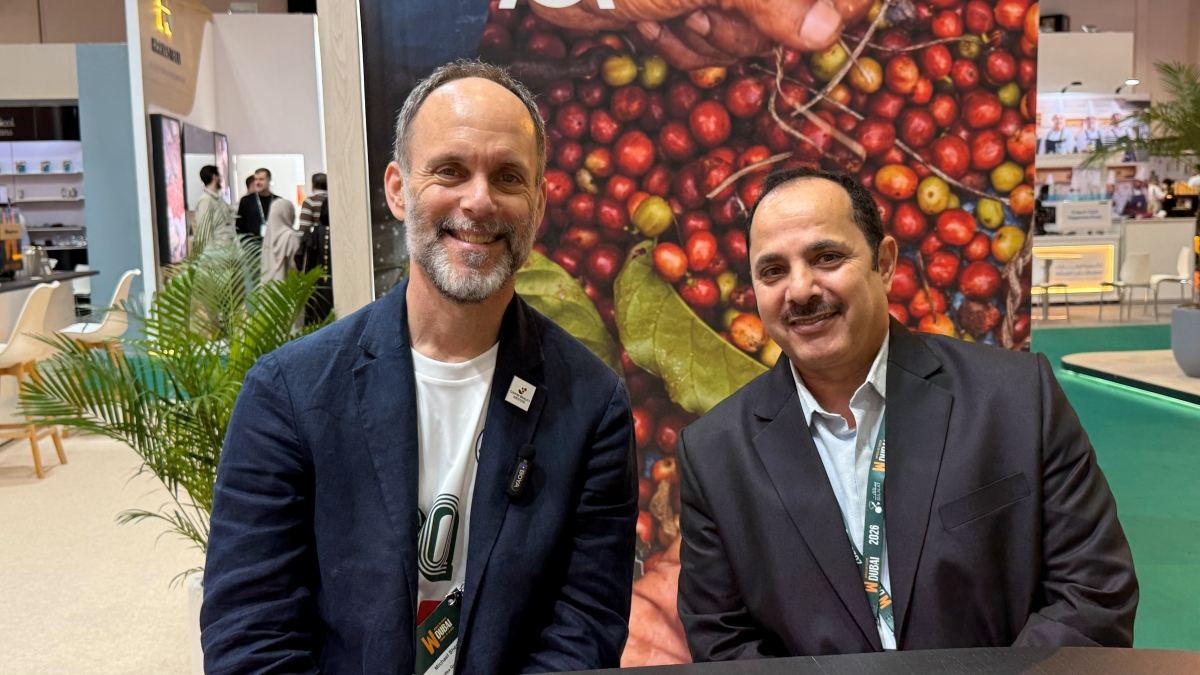
Michael Sheridan in an Exclusive Interview with Qahwa World

CQI CEO Speaks Candidly About Coffee, Community, and 2026 Goals

Dubai – Ali Alzakary

2025 was a year of transformation and challenge for the Coffee Quality Institute (CQI). From transitioning its flagship program, the Q, to SCA, to navigating the sudden loss of USAID funding—the largest donor in CQI’s history—CEO Michael Sheridan reflects on how these shifts shaped the organization’s mission and approach. Amid historic market volatility, Sheridan discusses the importance of recommitting to CQI’s goal of supporting coffee producers, promoting measurable impact for farmers—especially women—and evolving coffee education to meet the demands of a rapidly changing industry. He also shares insights from global conversations on the biggest concerns in the coffee community, including risk reduction, community engagement, and strategies to create meaningful impact.

Join us in this valuable interview to hear directly from Michael Sheridan about CQI’s vision for 2026 and beyond.

  • What did 2025 teach you, and how is that changing your approach for 2026?

Last year was a really consequential one for CQI. We transitioned our biggest program, the Q, to SCA against the backdrop of the shuttering of USAID, which was the biggest source of public funding for development work in coffee communities and the largest donor in CQI’s history. At the same time, the coffee market was experiencing the largest and most sustained rally anyone has ever seen, which caused lots of disruption in the market and undid years of work on trading relationships based on mutual commitment to quality.

We understood in 2025 that we were entering a new phase in CQI’s work, and that effectively advancing our mission in this new context would require thinking carefully about CQI’s role in the coffee ecosystem and listening carefully to members of the community. We are still in this process of reflection and consultation, but two things are clear.

First, we are recommitting to our mission: we are focused on market-based support for coffee producers. Second, we know we can’t get there alone. We know that the changes we introduced last year were disruptive in our community, and we know we need to build that community to be successful. We are working to create new approaches for collaboration with individuals and coffee companies, and expect to be in a position to talk more about those in the coming weeks.

  • How do you know you’re truly making a difference for farmers, especially women?

One of the things I love about this work is how measurable it can be. I got my start in coffee working for an international development agency where many of my peers were working on programs that measured change over very long time horizons. Their work in peacebuilding, gender equity, and social change was as hard to measure as it was important. In contrast, I was always grateful that my work to support coffee producers had annual metrics tied to the coffee cycle: production, average price, gross coffee income, etc.

While some of the structural changes we want to be part of at CQI related to equitable value distribution may require long-term commitment, every year brings an opportunity to check in on how well we are advancing our mission to improve the quality of coffee and the lives of the people who produce it. The mechanism that links those two elements of our mission (one, the improvement of quality, and the other, improvement of lives) is the market. Buyers can convert improvements in quality into improvements in seller livelihoods every coffee cycle by increasing rewards (e.g., premium prices, increased purchase volume, etc.), reducing risks (e.g., longer-term commitments, multi-grade purchases, etc.), or both. This is part of the reason we will be more intentional about engagment with industry parters in 2026 and beyond — to try to ensure quality improvements translate into improvements in the lived realities of the people who grow our coffee.

Women play a prominent role in our thinking about impact. As you may know, CQI has a long history of promoting women’s participation in the benefits generated by coffee. Long before my time, visionary leaders at CQI created the Partnership for Gender Equity, which evolved into an independent organization called Equal Origins that is doing groundbreaking work in this space. We have consistently supported women’s participation over the years, and investment in educational activities by and for women has been a throughline in our project investments over the past two years. I expect more of the same in 2026, which has been designated the International Year of the Woman Farmer by the UN’s Food and Agriculture Organization.

  • How must coffee education evolve to stay relevant right now?

I think coffee education has never been more necessary. There has been so much disruption in recent years — accelerated climate change, historic market volatility, rapidly changing market preferences, sharp changes in policy, and public disinvestment in coffee communities have all created the need for recalibrating traditional approaches, and in many cases that means education to meet new challenges and seize new opportunities.

At CQI, we are thinking hard about the what, how, and who of our educational work. I think the “what” is the relevance question you ask: what are the specific topics that will position producers and other supply stream actors to respond effectively to changes in the operating environment? In a global marketplace in which processing is as important as it has been in our lifetimes, we see lots of opportunities to deliver new and improved content through our Post-Harvest Processing Program that is timely and relevant. We are also eyeing new tools and content relevant to coffee quality beyond post-harvest processing that aim to address pain points that have surfaced in our conversations over the past few months.

Additionally, we are exploring the “how,” seeking ways to deliver educational content that are efficient and accessible. In some cases, that will likely mean creating new content for digital delivery or digitalizing existing analog content. In other cases, it will mean delivering in-person education in shorter-form classes that are not designed to lead to certification but directly to field-level impact through the adoption of good practices.

Finally, we are acutely aware that we need to evolve the “who” and certify more instructors who live and work in the places where coffee is grown. Localising coffee education will be a key to unlocking access.

  • From your global talks, what’s the no. 1 concern you’re hearing from the community?

We have spent the last few months conferring with leaders from the coffee sector to inform the next phase of CQI’s work — producers, processors, traders, roasters, educators, and others. The one thing that seemed to be on everyone’s mind was risk — market risk, price risk, production risk, risk related to quality, etc. As we think about how we can best support coffee producers and the entire coffee community in 2026 and beyond, we find ourselves thinking a lot about how we can partner with actors all along the supply stream to help reduce risk, most especially the smallholder producers who are generally least equipped to bear it. In a market where there is a lot of attention paid to way quality improvement can increase the rewards and premiums growers earn, there may be less appreciation for a focus on risk reduction, but it can help us deliver on our mission to improve the lives of producers every bit as much as increased rewards.

  • At the end of 2026 — what does a “win” look like for CQI?
Well, I think part of the answer is related to your question above about measuring our impact — the outcomes of the work will speak for themselves. But I think an important part of the answer is also related to the process — how effective we are at building community engagement in our work will go a long way to defining how successful we can be. I know that if we can manage to enlist the best of the CQI community in this effort with us, we are going to create real opportunity for producers while addressing pain points in the industry. That sounds like success to me!


View this post on Instagram


A post shared by Coffee Qahwa (@qahwaworld)

UAE AeroPress Championship 2025 Kicks Off Tomorrow

A Celebration of the UAE’s “Qahwa Culture” in an Atmosphere of Challenge and Creativity

Dubai – Qahwa World

The UAE AeroPress Championship 2025 kicks off tomorrow in its ninth edition, bringing together more than 250 competitors from across the Emirates — alongside café owners, coffee experts, and enthusiasts — in a spectacular celebration of coffee culture under the theme “A Celebration of Qahwa Culture in the Emirates.”

Proudly supported by Qahwa World as the official media partner, the three-day event will take place from November 6th to 8th at Almas Tower – Jumeirah Lake Towers, Dubai. Doors open at 4:30 PM, with competitions beginning at 6:00 PM daily. Admission is free for all coffee lovers across the UAE.

Building on the tremendous success of last year’s championship — recognized as the largest AeroPress competition in the world by number of participants — this year’s edition highlights the harmony between traditional Arabic coffee and modern brewing methods such as the AeroPress, reflecting the UAE’s dynamic and culturally rich coffee landscape.

Ahmed Bin Sulayem, Executive Chairman and Chief Executive Officer of DMCC, said: “The AeroPress Championship serves as a platform that unites excellence in brewing, cultural expression, and global connection. Hosting this event at Almas Tower, supported by the DMCC Coffee Centre — which processed more than 7,400 metric tonnes of coffee in 2024 — reaffirms our ongoing commitment to strengthening Dubai’s position as a global hub for coffee heritage, trade, and innovation.”

Garfield Kerr, CEO of Mokha 1450 and the event’s organizer, added: “The UAE has become one of the world’s leading destinations for specialty coffee, thanks to its long-standing relationship with Arabic qahwa. This championship celebrates that heritage and gives participants the opportunity to showcase their passion, creativity, and brewing artistry.”

Championship Schedule

  • November 6th: Regional Championship 1 – Abu Dhabi, Ras Al Khaimah, Sharjah, Umm Al Quwain

  • November 7th: Regional Championship 2 – Dubai, Ajman, Fujairah

  • November 8th: National Championship – featuring 21 finalists from across the Emirates

The national champion will go on to represent the UAE at the World AeroPress Championship in Seoul, South Korea, on December 5th and 6th, 2025.

More Than a Competition

Beyond its competitive spirit, the UAE AeroPress Championship is a community celebration, offering coffee tastings, interactive experiences, and AeroPress giveaways, along with opportunities to connect with local roasters and coffee brands — all in a vibrant, inclusive atmosphere that embodies the true spirit of qahwa culture.

Sponsors and Partners

Organizer: Mokha 1450
Host: DMCC Coffee Centre – Almas Tower
Gold Sponsors: Polpanorte, Aiya Matcha, CMI Coffee, Boncafé, Oatly, Lohas Beans
Silver Sponsors: Stree F&B, KGN Coffee, RAW Coffee Company, Coffee Museum, Karam Coffee
Bronze Sponsors: Steens Middle East, Brewing Gadgets, Victoria Arduino
Media Partner: Qahwa World

The UAE AeroPress Championship is more than just a brewing competition — it is a living expression of community, creativity, and the enduring spirit of coffee in the Emirates.

Registration Opens for Emirati Baristas Brewing Competition 2025 at Sheikh Zayed Festival

Abu Dhabi – Qahwa World 

The aroma of competition is brewing once again as registration officially opens for the Emirati Baristas Brewing Competition 2025, one of the most anticipated national coffee events of the year. The competition will take place on November 21, 2025, at the Sheikh Zayed Festival in Abu Dhabi — offering a platform for Emirati baristas to showcase their skills, creativity, and deep passion for coffee.

Organized by Caffeinection, Your Ultimate Coffee Hub (One-Stop-Shop) for beans, tools, equipment, services, coffee consulting, and event management, the competition aims to spotlight local talent and advance the UAE’s thriving specialty coffee community. Caffeinection, the official distributor of MHW-3Bomber, brings together innovation and craftsmanship to elevate the coffee experience in the Emirates.

The event is being held in collaboration with Grateful Café & Roastery, the Abu Dhabi-based specialty coffee destination known for its fresh roasts and its motto, “Serving gratitude in every cup.” Together, the organizers promise an event filled with flavor, creativity, and community spirit.

Venue: Sheikh Zayed Festival, Abu Dhabi, UAE

Date: November 21, 2025

Registration Fee: AED 200

Note: Limited slots available

Taking place within the Sheikh Zayed Festival, one of the UAE’s largest cultural celebrations, the competition will blend the world of coffee with art, culture, and entertainment. Families and visitors will have the opportunity to enjoy spectacular shows, international cuisines, exhibitions, fireworks, and attractions — all while witnessing the artistry of Emirati brewers at work.

Registration is now open through Caffeinection’s official website

With this event, Caffeinection and Grateful Café & Roastery reaffirm their commitment to nurturing the Emirati coffee community — a movement that continues to place the UAE among the most dynamic centers of specialty coffee culture in the region.

Grounds for Health Auction Returns with Rare Coffees to Support Women’s Health

Dubai, September 1, 2025 (Qahwa World) – The annual Grounds for Health Auction will return on Thursday, September 18, offering roasters around the world the chance to acquire rare, high-quality green coffees and specialty equipment while directly supporting lifesaving women’s health programs in coffee-growing communities.

This year’s auction features contributions from some of the most renowned farms in the coffee industry. Among the highlights are a washed Geisha “Guabo” lot from Hacienda La Esmeralda in Panama, exceptional coffees from Finca El Injerto in Guatemala, and Hacienda La Minita in Costa Rica. The catalog also includes premium offerings from major traders such as Walker Coffee Trading, Keffa Coffee, and San Cristobal Coffee Importers, in addition to professional coffee equipment.

All proceeds from the auction go directly to Grounds for Health, a U.S.-based nonprofit organization dedicated to preventing and detecting cervical cancer in coffee-producing regions. The group currently operates programs in Ethiopia and Kenya, where cervical cancer remains one of the leading causes of death among women, despite being entirely preventable with early screening.

“When we invest in women’s health, we invest in the future of coffee itself. Healthy women farmers mean thriving families, sustainable farms, and the exceptional coffee quality our industry depends on,” said Justin Mool, Auction Manager at Grounds for Health.

Since its launch in 2009, the auction has raised more than $1 million to fund its health initiatives. Past editions have featured notable contributions from farms such as Hacienda El Roble in Colombia and Daterra Coffee in Brazil, along with strong support from traders including Walker Coffee Trading. In the 2024 auction, nearly thirty lots of specialty coffee were offered, underlining the ongoing commitment of the global coffee community to this cause.

Roasters and industry participants can register through the official auction website to bid on coffee or equipment, or to make direct donations. Shipping costs are not included in the winning bids and must be arranged separately.

CQI Reflects on a Landmark Year and Sets Ambitious Plans for 2025

As the Coffee Quality Institute (CQI) concludes 2024, CEO Michael Sheridan shares reflections on a remarkable year for the organization and its global coffee community. Marking the 20th anniversary of the Q Grader program, CQI celebrated the milestone with podcasts, social media campaigns, and in-person events that underscored the legacy of the industry’s premier coffee cupping credential.

The Q Grader community, which now boasts nearly 10,000 members, saw significant growth this year, alongside the expansion of CQI’s Processing Professionals and Instructor networks. Sheridan welcomed three new team members, including T.J. Ryan, who has taken on the role of Director of Mission Engagement. “Welcoming T.J. was like bringing family home,” Sheridan noted. Ryan will spearhead CQI’s project initiatives and the evolving Global Fund, an area poised for greater impact in the coming year.

Global Fund Expansion: Empowering Coffee Communities Worldwide

In its second year of operation, the CQI Global Fund provided nearly $90,000 in cash and in-kind support to seven initiatives across four continents. Highlights include:

  • Mexico: Two grants supported nearly 100 participants, with post-harvest process training and scholarships empowering smallholder farmers and quality control managers. Collaborations included CAFECOL and the International Women’s Coffee Alliance.
  • Ethiopia: CQI worked with women-led companies to certify seven new Q Graders through the Q Combo course.
  • Latin America: The innovative Girlsplaining initiative, led by Assistant Instructor Camila Khalifé, delivered specialized training to women in coffee.
  • United States: Support for NKG PACE program partners included cupping courses and introductory post-harvest processing classes.

Looking ahead, CQI plans to unveil a comprehensive vision for the Global Fund’s future at its 25th Annual Luncheon in April 2025 in Houston.

Celebrating Dedication: Honoring Outgoing Trustees

As 2024 draws to a close, CQI honors the commitment of outgoing trustees who collectively dedicated 96 years of service to the organization. From Ellen Jordan’s 26-year legacy to the fresh perspective of Liz Caselli-Mechael’s two-year tenure, CQI’s success owes much to these visionaries.

A Message of Growth and Gratitude

Sheridan’s year-end message also highlighted plans for 2025, including expanded coffee events, new courses, and continued certification projects, such as the impressive five-fold increase in certified Q Graders in Burundi. As CQI looks to the future, it remains deeply committed to improving coffee quality and the lives of those who produce it.

With deep gratitude for the past and ambitious goals for the future, CQI enters 2025 with renewed energy to strengthen its impact in the global coffee community.

The Coffee Community in the Emirates: A Focus on 2023 and Anticipation for 2024

The coffee culture and industry are experiencing significant growth in the United Arab Emirates, mirroring the upward trajectory seen in other economic sectors. However, what sets this sector apart is its foundation on the historical significance of coffee as a beverage and its unique position within the Emirati community. Coffee continues to symbolize Generosity and respect, standing out as a prominent tradition of hospitality passed down through generations. Consequently, it is unsurprising to witness the societal, cultural, and industrial dimensions of coffee in the Emirates evolving.

Within this vibrant coffee culture of the United Arab Emirates, 2023 unfolds as a year marked by transformation and continuity, welcoming new factors and contributors to the scene. As we bid farewell to 2023 and usher in 2024, We “QahwaWorld” tried to analyze the coffee community’s dynamics in the Emirates over the past year. To provide insights into future trends, challenges, and innovations shaping the UAE’s coffee industry, we have engaged two distinguished experts in the field: Lameen Abdul-Malik, CEO of Honest Management Company and founder of 100 Ideas Café, and Federico Ortile, DM of the Simonelli Foundation in the Middle East.

In his assessment of the general landscape of the coffee sector in the Emirates, Lameen Abdul-Malik observed a noteworthy increase in the number of cafes claiming to serve specialty coffee. This trend is accompanied by rising prices and a discernible surge in new cafes spread across the landscape. While Lameen Abdul-Malik did not identify shifts in consumer preferences for coffee types or preparation methods, he affirmed the stability of consumer preferences across generations.

Amidst the prominence of innovation and technology, Lameen Abdul-Malik noted a subtle shift in the adoption of technology within cafes, with some opting for batch coffee preparation and automatic pouring methods, influencing the pace of coffee consumption. However, he expressed concern that sustainability efforts remain insufficient, citing Cypher as the sole company making substantial strides in this area by incorporating solar panels for roasting.

Addressing challenges and opportunities in the sector Lameen Abdul-Malik highlighted the lack of transparency in identifying sources and financial conflicts between cafes. He stressed the imperative to enhance business acumen among coffee industry experts, identifying untapped potential in proper business training, fostering a business-oriented approach among baristas, and promoting specialty coffee in fine dining establishments.

Dismissing the impact of global events, economic transformations, and climate issues on the local coffee industry, Lameen Abdul-Malik anticipated an increase in coffee-related activities in the UAE. However, he expressed concerns that the awareness generated within the coffee community is insufficient to reach the broader populace. Looking ahead, he expects rising prices and climate change to impact coffee prices, presenting challenges and opportunities for companies to invest in ethical sourcing and customer education.

Turning to Federico Ortile, CEO of Simonelli in the Middle East, his portrayal of the coffee scene in the Emirates highlighted a notable shift in consumer preferences, especially among young people. These individuals are inclined towards innovative preparation methods and flavored coffee. Federico Ortile emphasized the digital inclination of young people in the UAE, leading to trends such as online delivery, cloud kitchens, and dark stores gaining traction. Cafes are strategically combining technology and passion to drive an evolving coffee culture, with a growing emphasis on drive-thru services.

Federico Ortile underscored the technological advancements in coffee brewing, citing innovations like “PureBrew” from the “Victoria Arduino” company. This technology seamlessly switches between espresso and filter coffee with the touch of a button, representing a significant revolution. Furthermore, developments in milk steaming technology, such as the Easy Cream steam wand, have simplified and standardized the milk steaming process, ensuring safety for baristas.

Regarding community events and contributions to developing coffee culture in the UAE, Federico Ortile confirms that during the year 2023, the UAE witnessed many important events related to coffee and community participation activities, which contributed to strengthening the already strong coffee community, as prominent events such as the “World of Coffee” exhibition contributed Coffee Dubai 2023, and the Pure Brew Roadshow organized by Victoria Arduino Black Eagle Maverick, help establish coffee culture. These events not only promote healthy competition, but also provide platforms for exchanging knowledge, enhancing skills, and celebrating coffee culture. Such activities reinforce the UAE’s position as a vital hub for coffee lovers and professionals alike.

With the upcoming launch of the Experience Lab in Al Quoz, Victoria Arduino aims to further promote coffee culture by organizing educational events, becoming a reference point for interaction, knowledge transfer, and the dissemination of values, DNA, and technology to future generations in the United Arab Emirates and the region.

Looking ahead to 2024, Federico Ortile anticipates new trends and developments in the UAE’s coffee industry. He emphasized the increasing interconnectedness of the coffee community due to digital transformation and the influence of social media, transcending geographical boundaries. Global Coffee World initiatives promote inclusivity, allowing diverse communities to actively participate and shaping the future of the industry through collaboration and shared expertise.

Education is poised to play a pivotal role in breaking down barriers and uniting communities. The focus on coffee education, exemplified by platforms like the online Coffee Knowledge Center and Demo Labs, is expected to propel the industry forward, facilitating a collective journey towards a new future.

In conclusion, the overview of the UAE’s coffee scene presents a tapestry of contrast and convergence, where challenges coexist with promises of technological innovation and a growing global coffee community. The future appears to be a blend of tradition and innovation, where the aroma of coffee transcends generations and geographical boundaries, uniting enthusiasts on a collective journey into the next era of coffee culture in the UAE.