Coffee Processing Methods in the Americas

Dubai – Qahwa World

Understanding how coffee is processed at origin is essential for buyers, roasters, and importers. While traditional classifications—washed, natural, and honey—still dominate the conversation, the reality is far more nuanced. From mechanized harvesting in Brazil to cooperative-led processing in Peru, each producing country has developed its own post-harvest practices.

This guide breaks down the dominant coffee processing methods across key producing countries in the Americas, drawing on insights from our producer network.

Coffee processing directly affects flavor profile, cup quality, shelf life, pricing, sustainability, and water usage. For green coffee buyers, understanding origin-specific practices is crucial for sourcing the right profiles, managing risk, and building transparent supply chains.

  • Brazil: Mechanized Natural Processing at Scale

Brazil leads the world in natural coffee processing due to its scale and mechanization. Harvesting is largely mechanized, using either large machines that shake entire trees or pole-mounted vibrating devices that target individual branches—sometimes still referred to as manual despite their mechanical nature.

A notable feature is the use of “floaters,” cherries that have partially or fully dried on the tree. These often contribute to desirable cup profiles rather than reflecting poor maturation.

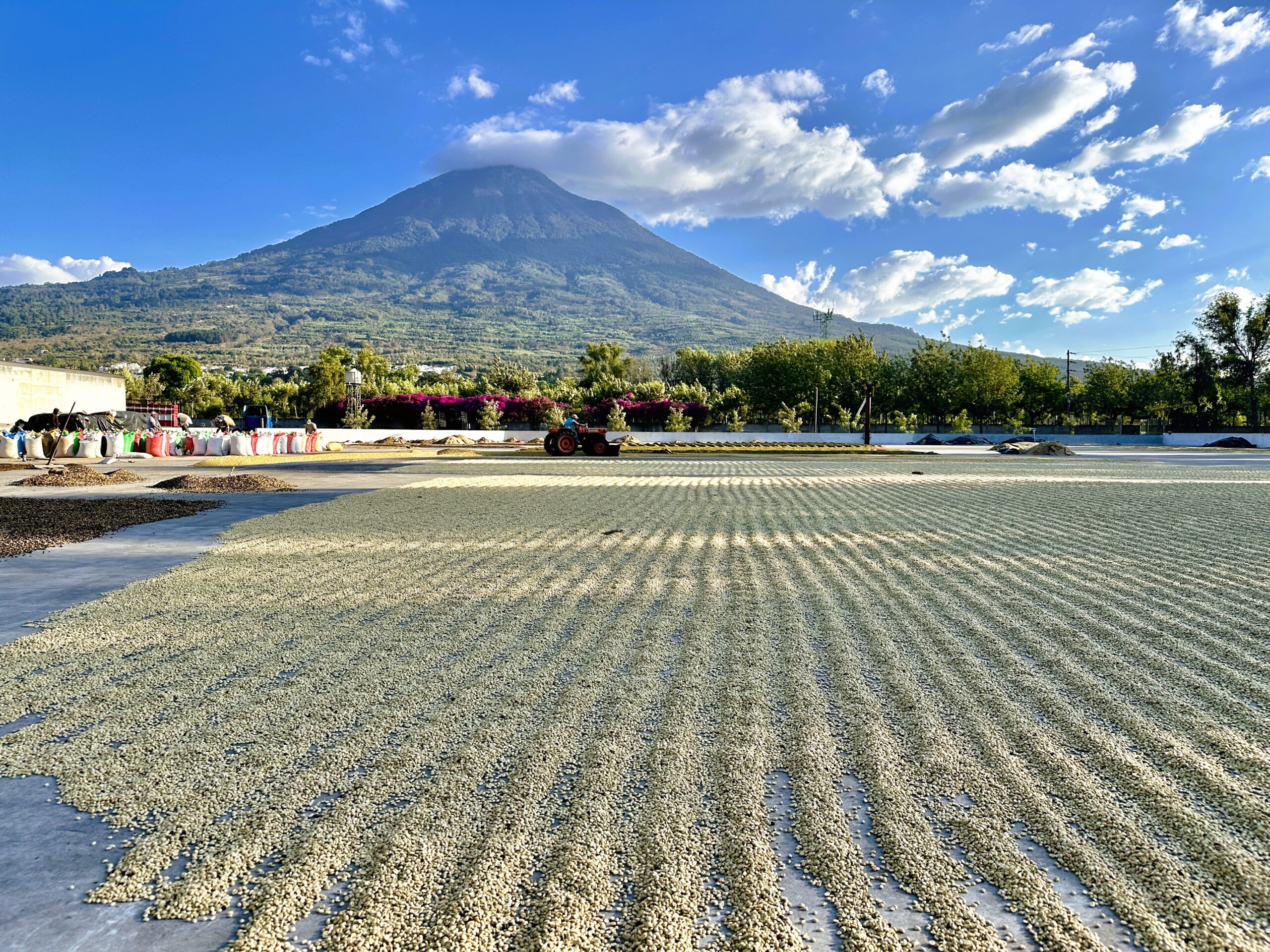
After harvest, coffee is initially dried on patios. Once moisture falls below ~20%, mechanical dryers complete the process efficiently. Dry milling is often done on-farm, with a final cleaning stage handled by exporters. Green coffee is typically rested in wooden silos before shipment.

Dominant Process: Natural (60–70%)
Harvesting: Mechanized (machines or vibrating poles)
Drying: Patios + mechanical dryers
Post-Harvest: Dry milling on-farm; beans rested in wooden silos

  • Colombia: Washed Coffee with Infrastructure Support

Over 95% of Colombian coffee is processed using the washed method, despite a reputation for experimental naturals. Cherries are handpicked selectively, often requiring multiple passes. After pulping, beans are fermented in tanks and dried on patios, raised beds, or mechanical dryers.

Centralized collection centers help maintain quality, receiving coffee in wet, semi-wet, or dried states, each priced accordingly. When drying space is limited, submerging parchment in water preserves quality. These systems, guided by the Colombian Coffee Growers Federation (FNC), ensure consistent, high-quality washed coffees.

Dominant Process: Washed
Harvesting: Manual, selective picking
Drying: Patios, raised beds, vertical dryers (guardiolas)

  • Costa Rica: Washed with Innovation

Approximately 94% of Costa Rican coffee is washed. Cherries are manually picked and delivered to roadside collection points, where wet and dry processing occurs.

Many cooperatives use centrifugal demucilagers, reducing water usage and fermentation defects. Drying occurs on patios, raised beds, or mechanical dryers. Costa Rica also experiments with eco-efficient honey processes (white, yellow, red, and black).

Dominant Process: Washed
Innovation: Centrifugal demucilagers reduce water use
Drying: Patios, raised beds, mechanical dryers
Collection: Cherries delivered to collection centers

  • El Salvador: Traditional Washed with Growing Diversity

Washed processing accounts for ~80% of production, with cherries pulped, fermented, and dried on patios or guardiolas. Natural and honey methods each represent ~10%, catering to specialty buyers seeking unique profiles.

Dominant Process: Washed
Drying: Patios and increasing use of guardiolas
Other Methods: 10% natural, 10% honey

  • Guatemala: High-Altitude Washed Coffees

Guatemala primarily produces washed coffee (85–99%). Cherries are pulped, fermented, and dried on patios or rooftops to maximize sun exposure. Honey and natural processes are growing among specialty producers. Mechanical drying is increasingly used in regions with unpredictable weather.

Dominant Process: Washed
Drying: Patios, rooftops
Other Methods: 5–15% honey, 0.5–5% natural

  • Honduras: Cooperative-Driven Washed Production

Honduras favors washed processing, with most coffee handled on-farm and parchment delivered to cooperatives. Some mills experiment with cherry color sorting and centralized reception, but traditional methods prevail. Cooperatives play a key role in quality and market access for smallholders.

Dominant Process: Washed
Processing: On-farm; parchment sent to cooperatives
Innovation: Emerging cherry color sorting
Other Methods: 3% natural, 10–15% honey

  • Mexico: Washed Simplicity

Mexico relies on washed processing, with manual harvesting and patio drying. Practices vary by region, and isolated approaches could benefit from collaborative methods. Increasing Canephora cultivation may impact processing norms.

Dominant Process: Washed
Processing: Mostly on-farm, inherited practices
Drying: Patios

  • Nicaragua: Washed

Washed processing dominates (~97%), with cherries processed on-farm and parchment delivered to central mills. Water channels are used for density sorting, cleaning, and transport. Drying occurs on patios, raised beds, or guardiolas. Honey and natural processes exist but are marginal.

Dominant Process: Washed
Drying: Patios, raised beds, guardiolas
Operations: Water channels for cleaning and sorting

  • Peru: Cooperative-Led Washed Processing

Peru is overwhelmingly washed, with tank fermentation and sun-drying. Drying occurs on patios, lofts, raised beds, or parabolic dryers at cooperative stations. Natural and honey methods are rare but emerging.

Dominant Process: Washed
Fermentation: Tank-based
Drying: Patios, lofts, raised beds, parabolic dryers

  • Key Takeaways for Coffee Buyers
  • Washed processing dominates Latin America; Brazil is the main exception with natural processing.

  • Infrastructure and cooperatives play a crucial role in maintaining quality and consistency.

  • Innovation is rising, particularly in Costa Rica and Colombia, with eco-friendly and hybrid methods.

  • Understanding local practices is key for sourcing, pricing, and building traceable supply chains.

The Ultimate Guide to Coffee Processing Methods Around the World: From Cherry to Cup

Dubai, 23 August 2025 (Qahwa World) – In the world of coffee, the journey from a ripe cherry on a tropical tree to the steaming brew in your mug is a tale of art, science, and global tradition. The coffee processing stage—where the fruit is transformed into green beans ready for roasting—is the crucible where flavors are shaped. This comprehensive guide explores coffee processing methods, diving into their histories, techniques, regional strongholds, and sensory impacts. Whether you’re a researcher seeking types of coffee processing, a barista curious about wet vs dry coffee processing, or an enthusiast exploring anaerobic coffee processing trends, this reference covers it all. Spanning over 70 coffee-producing countries, we’ll journey through time-honored methods like natural, washed, and honey processing, alongside cutting-edge innovations like anaerobic fermentation, which is gaining traction worldwide, including in Yemen.

With climate change reshaping coffee production, processing methods are evolving to balance sustainability and flavor innovation. By 2025, the rise of anaerobic processing in countries like Yemen highlights its growing appeal. Let’s uncover the full story.

The Origins of Coffee Processing: A Historical Perspective

Coffee’s story begins in Ethiopia around the 9th century, where wild Coffea arabica plants were first harvested. Early farmers dried whole cherries under the sun, birthing natural coffee processing. As coffee spread through Yemen and the Middle East to the Americas by the 18th century, diverse climates and resources spurred new techniques. Processing significantly influences a coffee’s flavor profile—many experts estimate it can account for around 30%—shaping acids, sugars, and volatile compounds through microbial activity and fermentation time. For researchers studying coffee biochemistry or sustainability, this guide offers a foundation for understanding these dynamics.

Natural (Dry) Processing: The Timeless Tradition

Natural coffee processing, or dry processing, is the oldest method, requiring minimal water and relying on sunlight. Whole cherries are spread on patios, raised beds, or rooftops and dried for 2–4 weeks, turned regularly to prevent mold. The bean absorbs sugars from the fruit, and the dried husk is hulled at 11% moisture.

Key Regions and History

  • Ethiopia: The origin, producing Yirgacheffe naturals with wild strawberry notes.

  • Brazil: The world’s top producer, using mechanized farms for consistency.

  • Yemen and Indonesia: Ancient terraces yield complex, winey profiles.

Flavor Profile and Science
Natural processing creates full-bodied, low-acidity cups with sweet, fruity notes like blueberry or chocolate. The bean ferments inside the fruit, boosting ethyl butyrate esters for fruity aromas. Risks include mold in humid conditions, requiring careful management. Variations include African raised-bed drying for airflow and Brazilian mechanical dryers for rainy seasons.

Washed (Wet) Processing: Precision and Clarity

Pioneered in Central America in the 19th century, washed coffee processing suits wet climates. Cherries are depulped, fermented in water tanks for 12–48 hours to remove mucilage, washed, and dried to 10–12% moisture.

Key Regions and History

  • Colombia and Kenya: Abundant rivers produce bright, citrusy coffees.

  • Guatemala, Nicaragua, Rwanda: High-altitude farms emphasize acidity.

Flavor Profile and Science
Washed coffees are clean and vibrant, with high acidity and notes like green apple or jasmine. Fermentation breaks down pectins via yeast and bacteria, clarifying terroir. Though water-intensive (20–40 liters per kilo), it reduces defects. Innovations include Kenyan double-washing for brightness and mechanical aquapulping to save water.

Honey (Pulped Natural) Processing: The Sweet Hybrid

Originating in Costa Rica in the mid-20th century, this hybrid method conserves water. Cherries are depulped, leaving varying mucilage (the “honey”) during drying for 8–30 days.

Key Regions and History

  • Costa Rica: Classifies as Yellow (minimal mucilage, grainy acidity), Red (balanced sweetness), or Black Honey (floral, syrupy).

  • Brazil (Pulped Natural), El Salvador, Panama: Used for premium lots.

Flavor Profile and Science
Sweeter than washed, cleaner than natural, with caramel, stone fruit, and honey notes. Mucilage caramelization enhances sucrose absorption. It’s eco-friendly but needs monitoring to avoid over-fermentation.

Wet Hulled (Giling Basah): Indonesia’s Earthy Signature

For humid climates, wet hulled coffee processing (semi-washed or Giling Basah) emerged in 19th-century Indonesia. Cherries are depulped, briefly fermented, hulled at 30–35% moisture, and dried further.

Key Regions and History

  • Indonesia (Sumatra, Java): Suits rainy climates, producing bold Mandheling coffees.

  • Papua New Guinea: Similar adaptations.

Flavor Profile and Science
Low acidity, heavy body, with earthy tobacco and dark chocolate notes. Rapid microbial activity in humid conditions risks defects but creates unique profiles.

Emerging Innovations: The Rise of Anaerobic and Fermentation-Driven Methods

The specialty coffee boom has sparked fermentation innovations, with anaerobic coffee processing leading the charge. Inspired by winemaking, it involves sealing beans in oxygen-free tanks for 12–72 hours, enhancing exotic flavors. By 2025, anaerobic processing is surging globally, including in Yemen, where farmers are adopting it to boost quality and demand.

Key Regions and History

  • Colombia and Costa Rica: Pioneers of anaerobic, yielding peach or yogurt notes.

  • Yemen: Recent adoption (post-2020) enhances Mocha coffee’s complex flavors, with airtight bags or barrels used for up to 120 hours, compared to traditional 10–20 hour wet fermentation. Professional tasters note increased recognition for Yemeni coffee globally.

  • Ethiopia, Brazil, Panama: Experimenting for premium lots.

  • Vietnam: Applying to robusta for bold, innovative profiles.

Flavor Profile and Science
Anaerobic fermentation produces intense, fruit-forward, or winey flavors (lactic acids create cheesy or yogurt-like notes). Yemen’s anaerobic coffees highlight natural aromas, balancing acidity. Variations include:

  • Carbonic Maceration: CO₂-infused tanks (Panama, Kenya) yield banana or whisky notes, starting in 2015.

  • Lactic Processing: Emphasizes creamy textures via milk-like bacteria.

  • Frozen Natural: Chilling cherries preserves brightness.

These methods enhance volatiles but may reduce bioactives like caffeine. They’re costly but fetch high prices in specialty markets.

Coffee Processing Methods Comparison: Insert Table Here

COFFEE PROCESSING METHODS COMPARISON
Method Key Regions Water Use Drying Time Flavor Profile Pros / Cons
Natural (Dry) Ethiopia, Brazil, Yemen Low 2–4 weeks Fruity, sweet, full-bodied Eco-friendly; risk of mold
Washed (Wet) Colombia, Kenya, Guatemala High 1–2 weeks Clean, bright acidity Consistent quality; water-intensive
Honey (Pulped) Costa Rica, Brazil, Panama Medium 1–4 weeks Sweet, caramel, balanced Sustainable; requires monitoring
Wet Hulled Indonesia (Sumatra) Medium ~1 week Earthy, heavy body, low acid Fast process; higher risk of defects
Anaerobic Colombia, Costa Rica, Yemen Varies Varies Exotic, winey, lactic, fruity Innovative; costly; experimental
Carbonic Maceration Panama, Kenya Low Varies Wine-like, banana, whisky Premium lots; inspired by winemaking

The Future of Coffee Processing: Sustainability and Global Trends

As climate change threatens yields, low-water methods like honey and anaerobic are gaining ground. Yemen’s shift to anaerobic processing, reported in 2025, reflects a broader trend toward flavor innovation and market competitiveness. AI-monitored fermentations and thermal shock (quick freezing) are emerging, with researchers predicting wider adoption by 2030. The Specialty Coffee Association offers resources for studying these trends.

FAQ: Common Questions on Coffee Processing

What is anaerobic coffee processing?
A fermentation in oxygen-free tanks, producing exotic flavors, increasingly used in Yemen and Colombia.

Why is anaerobic processing popular in 2025?
It enhances flavor complexity, boosting demand in specialty markets.

How does processing affect coffee quality?
It shapes acidity, body, and defects through microbial and chemical changes.

What are the best coffee processing methods?
Natural for sweetness, washed for clarity, anaerobic for innovation.


This ultimate guide to coffee processing methods is a definitive resource for researchers, baristas, and enthusiasts searching for anaerobic coffee processing Yemen or global coffee processing techniques. Each method tells a story of tradition, innovation, and environment, ensuring every sip is a chapter in coffee’s global legacy.