Tarrazú: Costa Rica’s Highland Coffee That Captivates the World

Dubai, August 20, 2025 (Qahwa World) – The announcement by the International Atomic Energy Agency (IAEA) yesterday of an innovative scientific initiative to safeguard the authenticity of Tarrazú  coffee using advanced nuclear techniques has sparked a wave of questions about this coffee and its unique value. In response, Qahwa World seeks to shed light on this exceptional origin, which has established its reputation over centuries with outstanding quality that combines heritage, sustainability, and distinctive flavor.

Costa Rica may account for less than one percent of global coffee output, but few origins enjoy such prestige. According to the USDA, the country produces around 1.18–1.19 million bags annually, a modest volume compared with global production exceeding 178 million bags. Yet Costa Rican coffee, and Tarrazú in particular, consistently commands premium prices thanks to its unique combination of altitude, climate, and artisanal production methods.

Geography and Identity

The Tarrazú region lies within the Los Santos highlands, covering the cantons of Tarrazú, Dota, and León Cortés. Farms stretch between 1,200 and 1,900 meters above sea level, conditions that classify beans as “Strictly Hard Bean” (SHB). At this altitude, coffee matures slowly, developing dense beans rich in sugars and aromatic compounds. Combined with volcanic, mineral-rich soils and a climate marked by seven months of rain and five months of dry weather, Tarrazú produces a cup profile that is instantly recognizable: bright acidity, floral notes, and citrus complexity with a clean, sweet finish.

Shade trees—including banana, citrus, avocado, guava, and mango—play an important role in protecting biodiversity and stabilizing the soil. Generational farming families preserve artisanal methods, while the micro-mill model gives producers control over processing and enhances traceability. These small-scale mills have become a Costa Rican hallmark, enabling farmers to secure direct trade relationships and better incomes.

In 2019, Tarrazú coffee was granted Protected Denomination of Origin (PDO) status, ensuring that only beans grown in its three cantons may use the name. The PDO, now protected in more than 180 countries, safeguards the livelihoods of farming families and reassures consumers worldwide of the coffee’s authenticity. It also reinforces a national narrative: coffee is not just an export crop but a pillar of Costa Rica’s independence and cultural identity.

Sustainability lies at the core of Tarrazú’s success. Farmers invest in eco-friendly wet mills that recycle water, soil conservation techniques that maintain fertility, and reforestation programs that protect watersheds. These practices not only preserve the landscape but also secure the future of coffee cultivation in the face of climate change.

Between Tradition and Science

Tarrazú’s reputation is not only built on geography and farming practices but also on culture. One of the most visible symbols is the Vandola, a hand-crafted ceramic brewer designed by artisan Minor Alfaro. Each piece is made of natural clay and highlights the clarity and aroma that define Tarrazú’s cup profile. Beyond its function, it transforms brewing into a ritual of heritage, linking Costa Ricans and coffee enthusiasts worldwide to the traditions of the highlands.

On the international stage, Tarrazú continues to shine at specialty coffee auctions such as the Cup of Excellence, where its lots regularly achieve high scores and command top prices. Specialty roasters from North America, Europe, and Asia compete fiercely for access, a sign of the origin’s enduring appeal.

The IAEA’s #Atoms4Food initiative now adds another layer to this story. By applying nuclear techniques, scientists at the University of Costa Rica are developing a geographic database that authenticates the beans’ origin with scientific precision. This project will help protect farmers from fraud and strengthen consumer trust in global markets.

Yet long before science arrived, authenticity in Tarrazú was safeguarded by its people, their traditions, and their respect for the land. Today, as international bodies lend their expertise, Tarrazú stands as both a cultural emblem and a scientific case study, proving that heritage and innovation can thrive together. Every sip carries not only bright citrus notes and floral elegance, but also the resilience of a community and the story of a nation.

Barista Terminology | Episode 13: Espresso Machine Components Explained

Understanding an espresso machine’s anatomy is essential for any barista. Whether you’re pulling shots, steaming milk, or troubleshooting a problem, knowing how each part functions ensures better coffee and safer operation.

  1. Group Head
  • The component where the portafilter locks in and water is dispersed over the coffee puck.
  • It includes a screen and gasket and is usually made of brass or stainless steel to retain heat.
  • Consistent temperature here ensures consistent extraction.
  1. Portafilter
  • A handle with a filter basket that holds ground coffee.
  • Comes in spouted, bottomless (naked), and pressurized variants.
  • Must be evenly filled and tamped for optimal extraction.
  1. Filter Basket
  • The metal insert inside the portafilter that holds the coffee grounds.
  • Sizes vary (single, double, triple), and hole precision affects flow rate.
  • Needs to be cleaned regularly to avoid flavor contamination.
  1. Boiler
  • The machine’s internal tank that heats and stores water for brewing or steaming.
  • Single boiler, dual boiler, and heat exchanger types exist.
  • Pressure and temperature stability here are key for quality shots and milk texturing.
  1. Pump
  • Responsible for delivering water to the group head at high pressure (~9 bars).
  • Most machines use rotary or vibratory pumps.
  • A stable pump ensures consistent flow and extraction.
  1. Steam Wand
  • The nozzle used to froth or steam milk.
  • Has one or multiple holes (tips) that control steam pressure and direction.
  • Must be cleaned immediately after each use to prevent milk buildup.
  1. Pressure Gauge
  • Displays boiler and/or pump pressure.
  • Useful for diagnosing performance issues.
  • Helps baristas track consistency during extraction.
  1. Drip Tray
  • Collects waste water and spilled coffee.
  • Should be emptied and rinsed regularly to maintain hygiene.
  • May include a drain pipe in plumbed-in machines.
  1. Hot Water Tap
  • Provides hot water for Americanos or tea.
  • Connected to the boiler system.
  • Useful but can introduce temperature instability if overused.
  1. Control Panel / Buttons
  • Manual machines use switches or levers.
  • Semi-automatics and automatics use programmable buttons for shot volume and other functions.
  • Some modern machines include touchscreens and PID temperature controls.

Related Stories:

Barista Terminology | Episode 12: Brewing Equipment Maintenance & Hygiene

Barista Terminology | Episode 11: Milk-Based Coffee Drinks

Barista Terminology | Episode 10: Advanced Concepts

Barista Terminology | Episode 9: Sensory Evaluation

Barista Terminology | Episode 8: Customer Service Language in the Café

Barista Terminology | Episode 7: Water & Temperature Control

Barista Terminology | Episode 6: Grind & Extraction Variables

Barista Terminology | Episode 5: Milk Texturing & Latte Art

Barista Terminology | Episode 4: Brew Methods Explained

Barista Terminology | Episode 1: The Coffee Bean – From Seed to Roast

Barista Terminology | Episode 2: Barista Tools & Equipment

Barista Terminology | Episode 3: Espresso Basics


Anaerobic Fermentation Transforms Unripe Coffee Cherries into Specialty-Grade

Dubai,August 15, 2025 – (Qahwa World) – Unripe coffee cherries, long discarded for their harsh and astringent taste, may now hold hidden value thanks to a breakthrough study from Brazil. Researchers at the Federal University of Uberlândia (UFU) have demonstrated that self-induced anaerobic fermentation (SIAF) can transform immature beans from the Arara cultivar into beverages scoring above 80 points on the Specialty Coffee Association (SCA) scale—the threshold for specialty coffee.

Rethinking the Role of Unripe Cherries

In the specialty coffee sector, greenish unripe beans are typically excluded for producing bitter, pungent flavors. The UFU team challenged this assumption by fermenting unripe Arara cherries in 200-liter hermetically sealed bioreactors for up to 96 hours, with variations in temperature, pH control, water content, and yeast inoculation.

Blind cupping by professional Q-graders revealed that fermented lots containing 13% to 30% unripe cherries not only matched but in some cases outperformed beverages produced solely from ripe cherries. When temperature was carefully controlled at 27 °C, the results were particularly striking, with tasters awarding higher scores than those given to control samples of ripe fruit processed without anaerobic fermentation.

How It Works

The SIAF process places cherries in sealed tanks without oxygen. Naturally occurring microorganisms in the fruit initiate biochemical reactions, releasing carbon dioxide and altering the beans’ chemical profile. These changes reduce the undesirable qualities of immature beans and create new flavor attributes.

The research team also developed a monitoring device to track temperature and pH inside the bioreactors in real time, ensuring precision without disturbing the fermentation process.

Wider Impact for Coffee Growers

The implications are significant. Roughly 70% of the cherries harvested in the UFU trials were unripe, identified using an AI tool created by the research group. Traditionally considered a loss, these cherries now represent a potential source of added value for farmers, particularly in regions where inconsistent ripening reduces yields of high-quality beans.

“Using SIAF with temperature and pH control can minimize the negative effects of immature beans and even elevate the beverage, adding value while still on the farm,” explains Luiza Braga, lead author of the study and a master’s researcher at UFU’s Faculty of Chemical Engineering.

A Collaborative Effort

The project, titled Transforming Challenges into Quality: The Power of Controlled Fermentation in Immature Arara Coffee Beans, was published in Food and Bioprocess Technology. It was supported by FAPESP in partnership with Brazil’s Ministry of Science, Technology, and Innovation (MCTI), with additional funding from FAPEMIG, CAPES, CNPq, and FINEP.

The study forms part of the “Da Semente à Xícara” (Seed to Cup) research group, established in 2019 to advance post-harvest coffee innovations.

What’s Next?

The researchers aim to identify the specific compounds in fermented unripe coffee responsible for the positive sensory attributes and to test the technique on other Arabica varieties.

If successful, anaerobic fermentation could become a vital tool for producers navigating volatile markets, offering a way to extract more value from every harvest. In a world where coffee demand is rising and prices fluctuate, turning waste into quality may be one of the most promising innovations yet.

Iron-Fortified Coffee Breakthroughs Aim to Tackle Global Malnutrition Without Changing Taste

Dubai, 14 August 2025 (Qahwa World) – Two major research efforts on opposite sides of the globe are redefining how iron — one of the most essential yet deficient nutrients worldwide — can be seamlessly integrated into coffee and other foods without altering their taste or quality.

A Global Health Problem

Around 2 billion people suffer from iron deficiency, which can lead to anemia, impaired brain development in children, reduced immunity, chronic fatigue, and higher infant mortality rates. Traditional food fortification programs have been successful but face persistent challenges: iron often reacts with food components, causing metallic flavors, reduced bioavailability, and degradation during storage or cooking.

MIT’s Breakthrough: Iron and Iodine in a Single Microparticle

Researchers at the Massachusetts Institute of Technology (MIT) have developed metal–organic framework (MOF) microparticles — tiny crystalline cages made from iron and a food-safe ligand (fumaric acid) — capable of delivering iron without unwanted chemical interactions.

  • Particle size: 10–100 µm, small enough to disperse invisibly in food or drink without affecting texture.

  • Key innovation: MOFs prevent iron from reacting with polyphenols in coffee and tea — compounds that typically reduce iron absorption.

  • Dual fortification: The same particles, branded “NuMOFs,” can also carry iodine without either nutrient degrading, enabling “double-fortified” foods.

  • Adaptability: Platform can potentially deliver other nutrients like zinc, calcium, magnesium, or vitamin A.

Ana Jaklenec, principal investigator at MIT’s Koch Institute, said:

“We wanted a fortification approach that could be used globally without having to reformulate for each country’s staple foods — whether that’s bread, rice, coffee, or tea.”

The MOFs remain stable under long-term storage, high heat and humidity, and even boiling. They only release their payload when exposed to stomach acidity, ensuring maximum bioavailability.

In animal trials, both iron and iodine were detected in the bloodstream within hours of consumption, with radioactive iodine later localizing in the thyroid and clearing via the kidneys.

The research, led by postdoc Xin Yang and Dr. Linzixuan (Rhoda) Zhang, was published in Matter and partially funded by the J-WAFS Fellowships for Water and Food Solutions, with ongoing development supported by the Bill & Melinda Gates Foundation.

Indian Study Identifies Optimal Iron Compounds for Coffee

Meanwhile, in India, a team from the CSIR-Central Food Technological Research Institute (CSIR-CFTRI) in Mysuru systematically evaluated seven different iron compounds for fortifying Arabica coffee:

  • Ferric sodium EDTA (FSE) – Highest solubility (>90%), iron retention of 4.702 mg/100 mL brewed coffee, minimal interaction with coffee polyphenols, negligible flavor change.

  • Ferrous bisglycinate (FB) – Good solubility and sensory profile.

  • Ferrous sulfate (FS) and Ferrous gluconate (FG) – Acceptable results but lower iron retention.

  • Ferrous fumarate (FF) and Electrolytic iron (EI) – Stability issues and undesirable metallic or astringent flavors.

  • Ferric pyrophosphate (FPP) – Poor solubility and limited absorption potential.

Sensory testing confirmed that FSE-fortified coffee maintained desirable aroma, flavor, and mouthfeel, while chemical analyses (ATR-FTIR and GC–MS) showed minimal impact on key volatile compounds.

Lead author B.S. Yashwanth emphasized the public health potential:

“Coffee is one of the most widely consumed beverages globally. Choosing the right iron fortificant can turn it into a functional food that addresses micronutrient deficiencies without sacrificing consumer enjoyment.”

Commercial and Scientific Outlook

  • Color challenge: MOFs currently appear brown, and researchers are working to adapt the color for integration into light-colored foods like salt.

  • Cost control: For applications like double-fortified salt, the added cost must remain low to be viable in developing countries (e.g., salt sells for just $0.20–$1/kg).

  • Industry readiness: MIT’s team is launching a spin-off company to develop iron- and iodine-fortified coffee, tea, and other beverages, while the Indian research offers an immediate pathway for large-scale adoption of iron fortification in coffee production.

Experts suggest the combined insights from these two studies could pave the way for region-specific fortification strategies — using MOF-based delivery where dual micronutrient stability is key, and using optimized compounds like FSE for direct coffee fortification where production and consumer acceptance are priorities.

Bottom line: With billions still affected by iron deficiency, these innovations signal a new era where your morning coffee could do more than wake you up — it could help close one of the most persistent nutrition gaps in the world.

Evolved Q Grader Program Adopts Coffee Value Assessment, Reshaping Global Coffee Standards

Dubai, 13 August 2025 (Qahwa World) — The global coffee industry is set for a historic transformation as the Q Grader Program, the benchmark certification for coffee quality evaluation, adopts the Coffee Value Assessment (CVA) framework under the leadership of the Specialty Coffee Association (SCA).

From October 1, 2025, the SCA will take over program operations from the Coffee Quality Institute (CQI), retiring the 2004 cupping protocol that has defined quality standards for over two decades. The move marks a significant shift toward a more holistic approach to coffee evaluation, placing equal emphasis on physical, sensory, cultural, and personal perception attributes.

Why the Change Matters

The 2004 protocol—built on objective scoring for aroma, flavor, body, and other measurable traits—has long been a trusted tool. However, industry leaders argue it underrepresents extrinsic factors such as origin, processing method, certifications, and producer stories, which increasingly influence market value.

Introduced in 2023, the CVA integrates four dimensions of assessment:

  • Physical Attributes — Objective evaluation of green coffee quality.

  • Extrinsic Attributes — Market-relevant factors such as terroir, certifications, and narratives.

  • Affective Attributes — The cupper’s personal impression on a 100-point scale.

  • Descriptive Attributes — Detailed sensory profiling of flavor and aroma.

By including these dimensions, the CVA reflects a coffee’s complete market value—not just its chemical or physical characteristics.

Impact on Q Graders

All current and former Arabica and Robusta Q Graders must complete the CVA for Cuppers conversion course by December 31, 2025 to maintain certification. The course, lasting two days, is designed to help graders transition smoothly to the new framework.

From 2026 onward, only the six-day Evolved Q Course will lead to certification. Missing the conversion deadline means starting the process from scratch.

Industry Reactions

“The CVA acknowledges that coffee quality is more than chemistry—it’s culture, craftsmanship, and context,” said Thomas Haigh, Specialty Coffee Merchant and Arabica Q Grader since 2015.

Producers, particularly in origin countries, see the shift as an opportunity to highlight unique practices and secure better recognition for their efforts. Roasters and green buyers anticipate richer, more nuanced data for sourcing decisions.

Key Transition Dates

  • October 1, 2025 — SCA takes over Q Grader Program; CVA becomes standard.

  • December 31, 2025 — Last day for Q Graders to complete CVA for Cuppers conversion course.

  • From 2026 — Six-day Evolved Q Course becomes the only certification route.

Looking Ahead

The adoption of the CVA is more than an administrative change—it represents an industry-wide realignment toward recognizing both intrinsic and extrinsic value in coffee. While some professionals may resist altering a long-trusted system, others view this as an essential evolution to meet the demands of a more globalized and story-driven specialty market.

Nordic Coffee Fest 2026 Opens Call for Industry Stage Speakers

Göteborg, 12 August 2025- (Qahwa World) – The Nordic Coffee Fest (NCF) 2026 has officially opened applications for speakers to join its Industry Stage, set to be held in Göteborg, Sweden.

This year’s theme, “Facing the Next Five Years,” will focus on exploring the challenges, changes, and opportunities shaping specialty coffee in an increasingly volatile, fast-changing world.

The Industry Stage will provide a platform for thought leaders, innovators, and professionals to address pressing topics such as price volatility, climate change, shifting global demand, tariffs, and evolving market dynamics.

The aim is to create space for open, impactful discussions on what the coffee industry must understand, adapt, and improve to not only survive but thrive in the coming half-decade.

Organisers are inviting applications from individuals working across all sectors of the coffee value chain — from farmers and roasters to café owners, equipment specialists, trainers, content creators, and philanthropic leaders.

Applicants are encouraged to share perspectives that challenge the status quo or highlight important industry shifts.

Interested speakers can apply by completing the official pitch template and submitting it via the application form available on the festival’s website.

Submissions must include:

  • Official lecture title and pitch

  • Short biography

  • Lecture introduction for marketing purposes

  • Estimated lecture duration

  • Two high-resolution promotional photos (landscape and portrait)

Speaking opportunities will be awarded based on relevance to the event’s theme and the value of the proposed contribution.

For inquiries, applicants can contact Anna at [email protected].
The application process closes once the final lineup is confirmed.

About Nordic Coffee Fest
Nordic Coffee Fest is one of the region’s premier specialty coffee events, bringing together professionals, enthusiasts, and innovators to celebrate and advance the coffee industry. The 2026 edition promises an engaging mix of exhibitions, workshops, and thought-provoking discussions.

CQI Reflects on a Landmark Year and Sets Ambitious Plans for 2025

As the Coffee Quality Institute (CQI) concludes 2024, CEO Michael Sheridan shares reflections on a remarkable year for the organization and its global coffee community. Marking the 20th anniversary of the Q Grader program, CQI celebrated the milestone with podcasts, social media campaigns, and in-person events that underscored the legacy of the industry’s premier coffee cupping credential.

The Q Grader community, which now boasts nearly 10,000 members, saw significant growth this year, alongside the expansion of CQI’s Processing Professionals and Instructor networks. Sheridan welcomed three new team members, including T.J. Ryan, who has taken on the role of Director of Mission Engagement. “Welcoming T.J. was like bringing family home,” Sheridan noted. Ryan will spearhead CQI’s project initiatives and the evolving Global Fund, an area poised for greater impact in the coming year.

Global Fund Expansion: Empowering Coffee Communities Worldwide

In its second year of operation, the CQI Global Fund provided nearly $90,000 in cash and in-kind support to seven initiatives across four continents. Highlights include:

  • Mexico: Two grants supported nearly 100 participants, with post-harvest process training and scholarships empowering smallholder farmers and quality control managers. Collaborations included CAFECOL and the International Women’s Coffee Alliance.
  • Ethiopia: CQI worked with women-led companies to certify seven new Q Graders through the Q Combo course.
  • Latin America: The innovative Girlsplaining initiative, led by Assistant Instructor Camila Khalifé, delivered specialized training to women in coffee.
  • United States: Support for NKG PACE program partners included cupping courses and introductory post-harvest processing classes.

Looking ahead, CQI plans to unveil a comprehensive vision for the Global Fund’s future at its 25th Annual Luncheon in April 2025 in Houston.

Celebrating Dedication: Honoring Outgoing Trustees

As 2024 draws to a close, CQI honors the commitment of outgoing trustees who collectively dedicated 96 years of service to the organization. From Ellen Jordan’s 26-year legacy to the fresh perspective of Liz Caselli-Mechael’s two-year tenure, CQI’s success owes much to these visionaries.

A Message of Growth and Gratitude

Sheridan’s year-end message also highlighted plans for 2025, including expanded coffee events, new courses, and continued certification projects, such as the impressive five-fold increase in certified Q Graders in Burundi. As CQI looks to the future, it remains deeply committed to improving coffee quality and the lives of those who produce it.

With deep gratitude for the past and ambitious goals for the future, CQI enters 2025 with renewed energy to strengthen its impact in the global coffee community.

World Coffee Championship Announces the Names of the Qualifiers for the Championship Final in Chicago

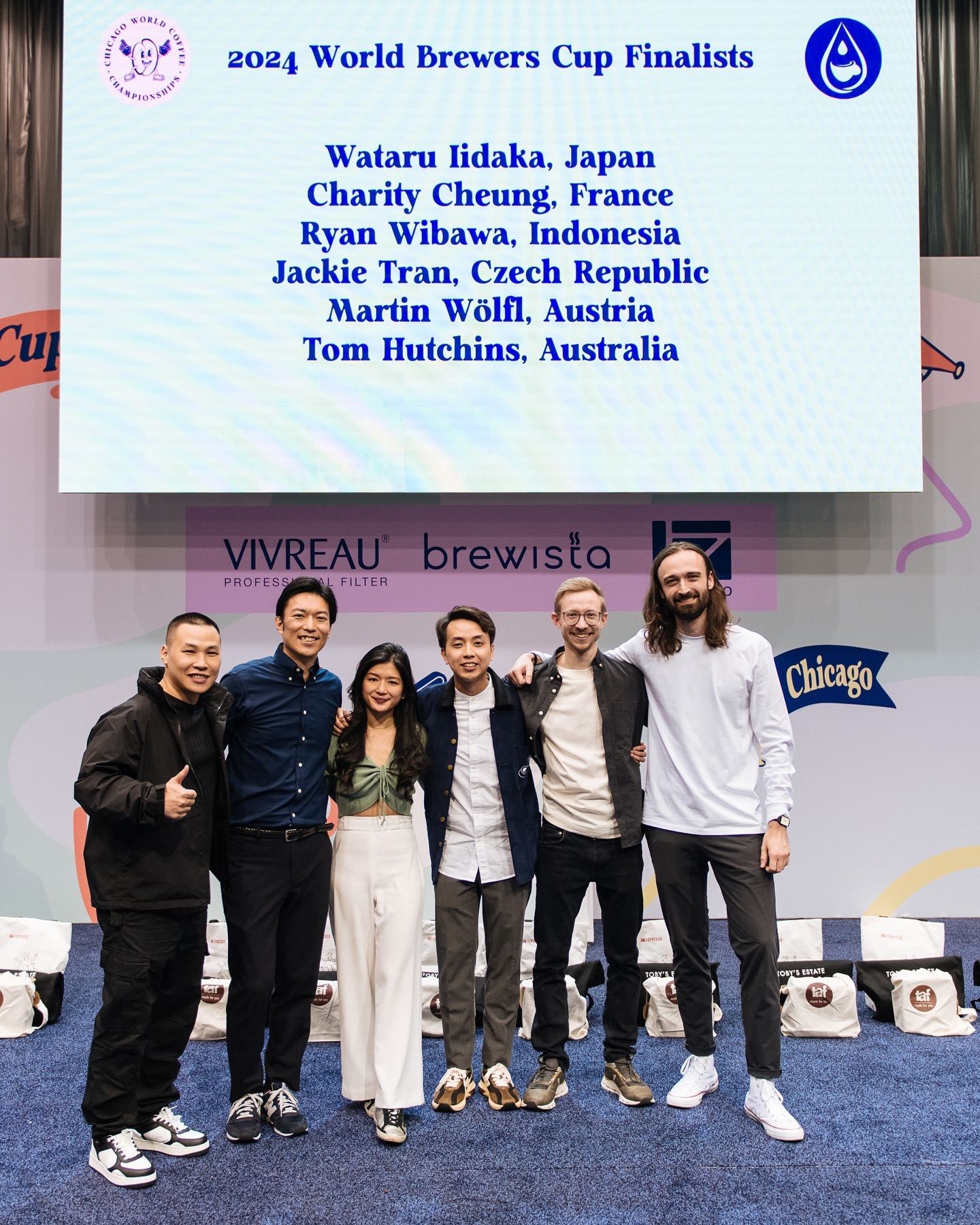
Chicago – QW : – Continuing the thrilling start to the ongoing World Coffee Championship held during the Specialty Coffee Expo Chicago 2024, the Specialty Coffee Association has announced the names of the qualifiers for the championship final, totaling 6 individuals representing Japan, France, Indonesia, Czech Republic, Austria, and Australia.

The Specialty Coffee Association stated in a press release that on Day 2 of the World Coffee Championship, following a fierce competition where 12 competitors took the stage in the semi-final this morning, we announce and congratulate the six qualifiers for the championship final, who will compete for the title today, Sunday, April 14, starting at 8:30 AM Central Time in the United States.

Without a specific order, the association announced the names of the six qualifiers and the countries they represent:

Wataru Iidaka, Japan

Charity Cheung, France

Ryan Wibawa, Indonesia

Jackie Tran, Czech Republic

Martin Wölfl, Austria

Tom Hutchins, Australia

The association invites the audience to join and follow the global event, saying: Join us to watch the final stage this evening. You can follow the action up close at the Specialty Coffee Expo in Chicago or watch the live stream on chicago.wcc.coffee to witness every exciting moment. Don’t miss out on the excitement and thrill amidst the competition of the outstanding players vying for the World Coffee Championship title!”


World Coffee Championship Announces Semi-Finalists in Chicago

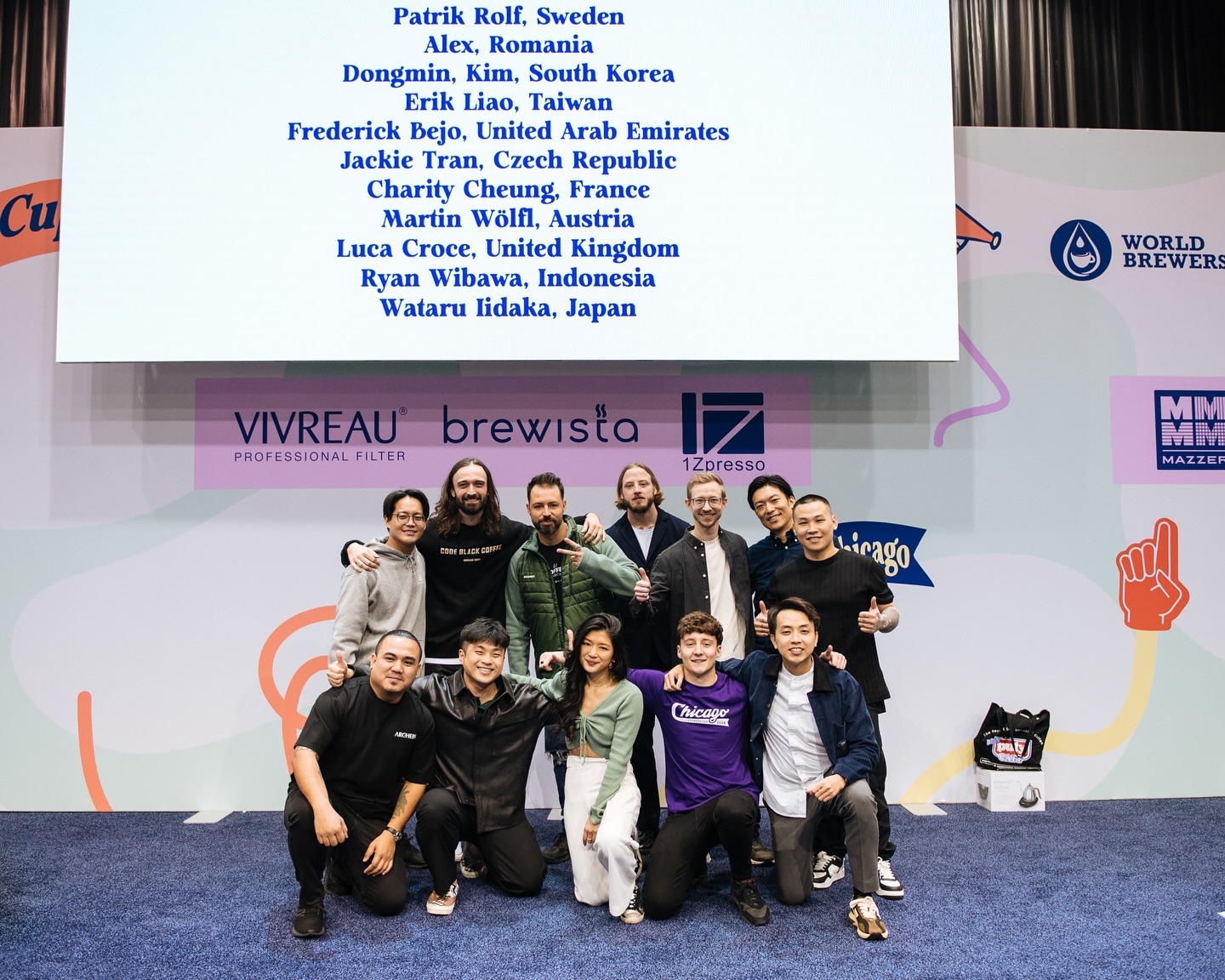
In an exciting start to the ongoing World Brewers Cup Championship at the Specialty Coffee Expo Chicago 2024, the Specialty Coffee Association has announced the names of the qualifiers for the semi-final, totaling 12 individuals representing the United Arab Emirates, Australia, Sweden, Romania, South Korea, Taiwan, the Czech Republic, France, Austria, the United Kingdom, Indonesia, and Japan.

The association stated, “The World Brewers Cup Championship kicked off with enthusiasm in Chicago, as 41 talented competitors from around the world showcased their coffee brewing skills on the global stage. Amidst the aroma of freshly ground beans and the hum of espresso machines, the competition was fierce, but the spirit of sportsmanship filled the air.”

The association added, “After an exhilarating first day of competition, the following skilled competitors emerged victorious and will advance to the semi-final round:

  • Tom Hutchins from Australia
  • Patrik Rolf proudly representing Sweden
  • Alex Niculae representing Romania
  • Dongmin Kim from South Korea
  • Erik Liao showcasing skills from Taiwan
  • Frederick Bejo representing the United Arab Emirates
  • Jackie Tran representing the Czech Republic
  • Charity Cheung bringing French elegance to the table
  • Martin Wölfl representing Austria
  • Luca Croce displaying expertise from the United Kingdom
  • Ryan Wibawa representing Indonesia
  • Wataru Iidaka from Japan.

They have captivated audiences with their unique brewing techniques and dedication to the craft.”

“The stage is set for an exciting Semi-Final round, where they will face new challenges and push the boundaries of excellence in the world of coffee even further,” the association stated.

The association invited the public to join and follow the global event, saying, “Join us to watch the Semi-Final round this evening starting at 1:38 PM Central Time. You can witness the action firsthand at the Specialty Coffee Expo in Chicago or tune in to the live stream at chicago.wcc.coffee to catch every thrilling moment. Don’t miss out on the excitement as the world’s finest brewers compete for the World Brewers Cup Championship title!”


Coffee V60: Its Story and How It’s Made

In the constantly evolving scene of coffee preparation, one name reigns supreme: V60 coffee. Its prominent brewing method, born from the fusion of innovation and tradition, has made V60 synonymous with the art of pour-over coffee. Join us as we explore the rich history, practical techniques, and sensory delight of the V60 experience.

Origins of V60

The story of V60 began with the pioneering spirit of its creator, Hario. Founded in Japan in the early 20th century, Hario quickly became a leader in glassware and coffee equipment. Drawing inspiration from traditional pour-over coffee methods and modern design principles, Hario set out to create a brewer that would redefine the coffee brewing experience.

After years of research and development, V60 was born. Its unique conical shape and spiral ribs were meticulously crafted to ensure optimal extraction and unparalleled clarity of flavor. From its elegant lines to its iron handle, every aspect of V60 was made with precision and purpose.

Rise of V60

V60 was introduced to the market in 2005 and quickly captured the hearts and minds of coffee enthusiasts worldwide. Its intuitive design and ability to consistently produce delicious coffee made it an essential part of both coffee shops and home kitchens alike, as well as competitions.

But the success of V60 was not only due to its innovative design – it was also a testament to the growing popularity of specialty coffee. As consumers began to prefer high-quality coffee, they started looking for brewing methods that would allow them to appreciate the diverse flavors of premium coffee. With its focus on precision and control, V60 became the perfect tool for this.

How to Make V60 Coffee: Step-by-Step Brewing Guide

  1. Gather Your Materials: You’ll need a V60, filters, freshly ground coffee, a kettle, and a scale.
  2. Prepare Your Equipment: Place the filter in the V60 and rinse it with hot water to remove any paper taste. Preheat the brewing vessel and the cup you’ll be using.
  3. Measure and Grind: Weigh out the desired amount of coffee according to your preferred coffee-to-water ratio (usually around 15-17 grams of coffee per 250 ml of water). Grind the coffee to a medium consistency, similar to sea salt.
  4. Bloom: Place the V60 on the brewing vessel and add the ground coffee. Start the timer and pour enough hot water (about twice the weight of the coffee) to evenly saturate it. Allow the coffee to bloom for 30-45 seconds.
  5. Pour: After blooming, slowly pour hot water in a circular motion, starting from the center and moving outward. Your goal is to maintain the water level slightly below the top edge of the filter to ensure even extraction.
  6. Enjoy: Once all the water has passed through the coffee grounds, lift the V60 and remove the filter. Stir the coffee briskly to ensure even extraction, then pour it into the preheated cup and savor every drop.

Beyond Brewing with V60

The journey with V60 extends beyond the brewing process itself – it’s a sensory experience that engages all the senses. From the rich aroma of freshly ground beans to the subtle flavors dancing on your palate, each cup of V60 coffee tells a story of craftsmanship, quality, and passion.

So whether you’re an experienced coffee lover or a newcomer to the world of specialty coffee, let V60 be your guide. With its elegant design, precise brewing technique, and unparalleled clarity of flavor, V60 is the perfect companion for anyone looking to explore the true potential of coffee.


View this post on Instagram


A post shared by عالم القهوة (@qahwaworld)

Specialty Coffee Association (SCA) Releases 2023 Annual Report

In a year marked by remarkable progress and innovation, the Specialty Coffee Association (SCA) unveils its highly anticipated 2023 Annual Report. Led by CEO Yannis Apostolopoulos, the SCA’s endeavors have propelled the global specialty coffee industry forward, cementing its commitment to enhancing sustainability, fostering community engagement, and delivering unparalleled service.

Global Impact through Sustainability

Central to the SCA’s mission is its Sustainable Coffee Agenda, a framework aimed at promoting equitable value distribution throughout the coffee supply chain. In 2023, the SCA reached two significant milestones in this regard. Firstly, it formally introduced the Sustainable Coffee Agenda and its theory of change, solidifying its dedication to sustainable practices. Secondly, the SCA launched the Coffee Value Assessment, a groundbreaking tool designed to facilitate transparent discussions about value distribution. With a focus on community integration, the SCA plans to embed these initiatives across all programs, fostering a culture of sustainability within the industry.

Expanding Horizons and Local Engagement

Expanding its global footprint, the SCA hosted events beyond traditional hubs, including Latin America and the Asia Pacific region. Through initiatives like the World of Coffee Panama 2026 and World of Coffee Busan 2024, the SCA forged connections within local communities, enriching experiences for coffee enthusiasts worldwide. Furthermore, the association revamped its membership model and enhanced support for chapters and guilds, ensuring greater accessibility and relevance within local coffee communities.

Empowering Growth and Education

With a focus on professional development, the SCA expanded its educational offerings, catering to diverse needs within the industry. Notably, efforts were made to address information gaps among coffee producers, supported by the Coffee Value Assessment’s insights. By investing in accessible education across multiple platforms and languages, the SCA continues to empower individuals and drive innovation within the specialty coffee sector.

Strengthening Infrastructure and Financial Resilience

Amidst challenges posed by the COVID-19 pandemic, the SCA navigated financial hurdles, achieving a remarkable turnaround in 2023. From a significant negative equity of -US$1.8M, the association successfully built an equity of US$12.5M, ensuring robust financial reserves for the future. This achievement underscores the SCA’s commitment to financial sustainability and resilience in the face of uncertainty.

Looking Ahead

As the SCA embarks on its journey into 2024, CEO Yannis Apostolopoulos expresses optimism for the future. With ongoing initiatives such as the rollout of the new membership model and continued research endeavors, the SCA remains steadfast in its mission to elevate the specialty coffee experience worldwide. As stakeholders anticipate upcoming events in Chicago, Busan, and Copenhagen, excitement brews for the innovative strides ahead in the world of specialty coffee.

The release of the 2023 Annual Report marks a pivotal moment in the SCA’s journey, reaffirming its dedication to excellence and progress within the global coffee community.

To read the report, click here


NCA: Daily Coffee Consumption in America Hits 20-Year High

A new study has revealed that daily coffee consumption in the United States has reached its highest level in 20 years, according to new research released by the National Coffee Association (NCA). According to the National Coffee Data Trends (NCDT) report for Spring 2024, 67% of American adults consumed coffee in the past day (more than any other beverage, including tap or bottled water), compared to 49% in 2004. The report also shows that 75% of American adults consumed coffee in the past week, with an increase of 4% since the Spring 2023 NCDT.

The increase in daily coffee consumption is attributed to consumers aged 25 and over. The largest increase is among consumers aged 60 and over, whose consumption increased by 9% (from 67% to 73%). Consumers aged 25-39 and 40-59 also saw an increase in consumption by 4.5% (from 67% to 70% and from 66% to 69%, respectively). Consumption among 18-24-year-olds remained steady at 47%.

Specialty coffee has also experienced significant growth, with 57% of American adults consuming specialty coffee in the past week, a 7.5% increase on a yearly basis. Among specialty coffees, consumption in the past week increased the most for espresso-based beverages, by 10%. Lattes are the most popular espresso-based beverage, enjoyed by 18% of American adults in the past week, followed by espresso (16%) and cappuccinos (14%).

Ready-to-drink coffee has become the third most popular preparation method among past-day coffee drinkers, almost doubling from 8% to 15%, pushing espresso machines to fourth place. Drip coffee makers (37%) and single-cup brewers (28%) continue to be the top two at-home preparation methods.

NCA President and CEO William “Bill” Murray commented: “NCA’s exclusive research has tracked coffee trends for over 70 years, and America’s favorite beverage has only continued to grow in terms of overall popularity and innovation to meet evolving consumer tastes. This year’s two-decade high is only the latest proof of America’s enduring love affair with coffee.”

About the National Coffee Association: The National Coffee Association (NCA) USA, Inc. is the leading trade association serving the U.S. coffee industry through education, advocacy, and connection. NCA members represent an estimated 90% of U.S. coffee commerce with small, medium, and large companies, including growers, importers, exporters, traders, brokers, freight forwarders, roasters, manufacturers, retailers, and allied companies.”