The New Frontier of Flavor: Co-Fermentation and the Ethics of “Infused” Coffee

Dubai – Qahwa World

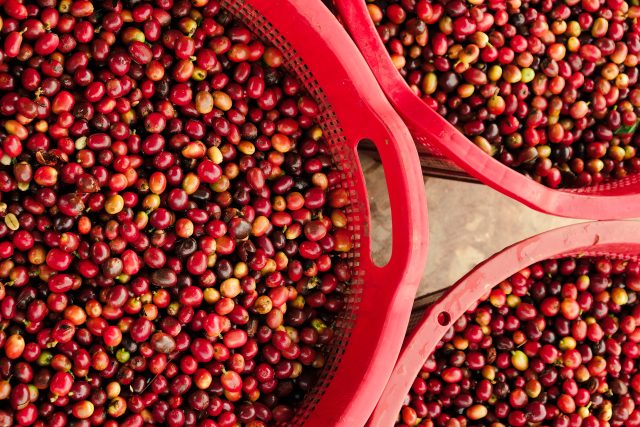
The specialty coffee sector is undergoing a radical transformation in post-harvest processing. The emergence of co-fermentation—the practice of introducing non-coffee organic substrates during fermentation—has created a new category of flavor profiles. This article explores the mechanics of this method, the regulatory challenges regarding allergens and labeling, and the philosophical debate defining the future of coffee authenticity.

  • 1. Defining the Terms: From Inoculation to Co-Fermentation

To understand the controversy, industry professionals must first distinguish between the varying levels of fermentation intervention. The terminology is often used interchangeably, which leads to market confusion.

Standard Fermentation: The natural microbial breakdown of mucilage by native yeast and bacteria found in the environment.

Controlled Inoculation: The introduction of specific, lab-grown strains of yeast (e.g., Saccharomyces or Lactobacillus) to guide the flavor profile towards consistency. This is widely accepted as an agronomic best practice.

Co-Fermentation (Additive Fermentation): The addition of foreign organic material—such as fruits, spices, hops, or essential oils—into the fermentation tank. The goal is to provide specific nutrients (substrates) for the microbes to metabolize, creating esters and aldehydes that bond with the coffee seed’s cellular structure.

  • 2. The Science of Substrates and “Mossto”

The mechanism behind co-fermentation is not merely “flavoring” in the traditional sense; it is metabolic engineering.

When a producer introduces a substrate like passion fruit or cinnamon, they are introducing simple sugars and specific acids. The microbial culture consumes these sugars and produces byproducts (flavor compounds). Because the coffee bean is porous and undergoing osmotic changes during fermentation, these compounds penetrate the green bean.

  • The Role of “Mossto”

A critical technique in this field, utilized by innovators like Edwin Noreña of Finca Campo Hermoso in Colombia, is the use of Mossto.

Definition: Mossto is the “must” or juice collected from a previous fermentation batch, rich in active enzymes and acclimatized microbes.

Application: Producers cultivate this starter culture and then add secondary ingredients (e.g., galaxy hops or dehydrated fruits). Noreña argues that this does not “mask” the coffee but amplifies existing precursors. For example, using a citric-heavy Mossto to enhance a varietal that already possesses citric notes.

  • 3. The Regulatory Vacuum: Allergens and Labeling

The most significant friction point in co-fermentation is not flavor, but safety and legality. Currently, the regulatory framework lags behind innovation.

  • The FDA and the “Kill Step”

In the United States, green coffee is a raw agricultural product. The FDA generally views the roasting process (which exceeds 400°F/200°C) as a validated “kill step” for pathogens like Salmonella. However, roasting does not reliably denature all allergenic proteins.

The Risk: If a producer co-ferments coffee with lactose, soy, or nuts to create a creamy mouthfeel, and fails to disclose this on the export documents, a consumer with a severe allergy is at risk.

The Labeling Gap: Current regulations do not strictly require “green coffee” bags to list ingredients other than coffee. This breaks the chain of custody, often leaving importers and roasters unaware of the additives used at the farm level.

  • 4. The Debate: Authenticity vs. Evolution

The industry is currently split into two philosophical camps regarding how these coffees should be categorized.

The Purist Argument: Critics argue that co-fermentation risks homogenizing coffee. If a producer can make a mediocre Castillo varietal taste like a top-tier Geisha by adding floral extracts during fermentation, it distorts the value of the genetic material and terroir. They demand these coffees be labeled as “Infused” or “Processed with Adjuvants” rather than “Specialty Coffee.”

The Innovator Argument: Proponents argue that coffee processing borrows from wine and beer (cider) traditions, where adjuncts are common. They view the fermentation tank as a canvas and argue that as long as the base material is coffee, the processing method is simply a tool for creativity and differentiation in a saturated market.

  • 5. Conclusion: The Path Forward

Co-fermentation is unlikely to disappear; the market demand for exotic, high-intensity fruit profiles is too strong. However, for the industry to mature, it must embrace Radical Transparency.

  • The future of high-end coffee likely involves a bifurcation:

Traditional Specialty: Focused on terroir, genetics, and low-intervention processing.

Engineered Specialty: Focused on co-fermentation, sensory design, and creative processing.

Both have a place on the shelf, provided the consumer knows exactly what is in the cup.

The Ultimate Guide to Coffee Processing Methods Around the World: From Cherry to Cup

Dubai, 23 August 2025 (Qahwa World) – In the world of coffee, the journey from a ripe cherry on a tropical tree to the steaming brew in your mug is a tale of art, science, and global tradition. The coffee processing stage—where the fruit is transformed into green beans ready for roasting—is the crucible where flavors are shaped. This comprehensive guide explores coffee processing methods, diving into their histories, techniques, regional strongholds, and sensory impacts. Whether you’re a researcher seeking types of coffee processing, a barista curious about wet vs dry coffee processing, or an enthusiast exploring anaerobic coffee processing trends, this reference covers it all. Spanning over 70 coffee-producing countries, we’ll journey through time-honored methods like natural, washed, and honey processing, alongside cutting-edge innovations like anaerobic fermentation, which is gaining traction worldwide, including in Yemen.

With climate change reshaping coffee production, processing methods are evolving to balance sustainability and flavor innovation. By 2025, the rise of anaerobic processing in countries like Yemen highlights its growing appeal. Let’s uncover the full story.

The Origins of Coffee Processing: A Historical Perspective

Coffee’s story begins in Ethiopia around the 9th century, where wild Coffea arabica plants were first harvested. Early farmers dried whole cherries under the sun, birthing natural coffee processing. As coffee spread through Yemen and the Middle East to the Americas by the 18th century, diverse climates and resources spurred new techniques. Processing significantly influences a coffee’s flavor profile—many experts estimate it can account for around 30%—shaping acids, sugars, and volatile compounds through microbial activity and fermentation time. For researchers studying coffee biochemistry or sustainability, this guide offers a foundation for understanding these dynamics.

Natural (Dry) Processing: The Timeless Tradition

Natural coffee processing, or dry processing, is the oldest method, requiring minimal water and relying on sunlight. Whole cherries are spread on patios, raised beds, or rooftops and dried for 2–4 weeks, turned regularly to prevent mold. The bean absorbs sugars from the fruit, and the dried husk is hulled at 11% moisture.

Key Regions and History

  • Ethiopia: The origin, producing Yirgacheffe naturals with wild strawberry notes.

  • Brazil: The world’s top producer, using mechanized farms for consistency.

  • Yemen and Indonesia: Ancient terraces yield complex, winey profiles.

Flavor Profile and Science
Natural processing creates full-bodied, low-acidity cups with sweet, fruity notes like blueberry or chocolate. The bean ferments inside the fruit, boosting ethyl butyrate esters for fruity aromas. Risks include mold in humid conditions, requiring careful management. Variations include African raised-bed drying for airflow and Brazilian mechanical dryers for rainy seasons.

Washed (Wet) Processing: Precision and Clarity

Pioneered in Central America in the 19th century, washed coffee processing suits wet climates. Cherries are depulped, fermented in water tanks for 12–48 hours to remove mucilage, washed, and dried to 10–12% moisture.

Key Regions and History

  • Colombia and Kenya: Abundant rivers produce bright, citrusy coffees.

  • Guatemala, Nicaragua, Rwanda: High-altitude farms emphasize acidity.

Flavor Profile and Science
Washed coffees are clean and vibrant, with high acidity and notes like green apple or jasmine. Fermentation breaks down pectins via yeast and bacteria, clarifying terroir. Though water-intensive (20–40 liters per kilo), it reduces defects. Innovations include Kenyan double-washing for brightness and mechanical aquapulping to save water.

Honey (Pulped Natural) Processing: The Sweet Hybrid

Originating in Costa Rica in the mid-20th century, this hybrid method conserves water. Cherries are depulped, leaving varying mucilage (the “honey”) during drying for 8–30 days.

Key Regions and History

  • Costa Rica: Classifies as Yellow (minimal mucilage, grainy acidity), Red (balanced sweetness), or Black Honey (floral, syrupy).

  • Brazil (Pulped Natural), El Salvador, Panama: Used for premium lots.

Flavor Profile and Science
Sweeter than washed, cleaner than natural, with caramel, stone fruit, and honey notes. Mucilage caramelization enhances sucrose absorption. It’s eco-friendly but needs monitoring to avoid over-fermentation.

Wet Hulled (Giling Basah): Indonesia’s Earthy Signature

For humid climates, wet hulled coffee processing (semi-washed or Giling Basah) emerged in 19th-century Indonesia. Cherries are depulped, briefly fermented, hulled at 30–35% moisture, and dried further.

Key Regions and History

  • Indonesia (Sumatra, Java): Suits rainy climates, producing bold Mandheling coffees.

  • Papua New Guinea: Similar adaptations.

Flavor Profile and Science
Low acidity, heavy body, with earthy tobacco and dark chocolate notes. Rapid microbial activity in humid conditions risks defects but creates unique profiles.

Emerging Innovations: The Rise of Anaerobic and Fermentation-Driven Methods

The specialty coffee boom has sparked fermentation innovations, with anaerobic coffee processing leading the charge. Inspired by winemaking, it involves sealing beans in oxygen-free tanks for 12–72 hours, enhancing exotic flavors. By 2025, anaerobic processing is surging globally, including in Yemen, where farmers are adopting it to boost quality and demand.

Key Regions and History

  • Colombia and Costa Rica: Pioneers of anaerobic, yielding peach or yogurt notes.

  • Yemen: Recent adoption (post-2020) enhances Mocha coffee’s complex flavors, with airtight bags or barrels used for up to 120 hours, compared to traditional 10–20 hour wet fermentation. Professional tasters note increased recognition for Yemeni coffee globally.

  • Ethiopia, Brazil, Panama: Experimenting for premium lots.

  • Vietnam: Applying to robusta for bold, innovative profiles.

Flavor Profile and Science
Anaerobic fermentation produces intense, fruit-forward, or winey flavors (lactic acids create cheesy or yogurt-like notes). Yemen’s anaerobic coffees highlight natural aromas, balancing acidity. Variations include:

  • Carbonic Maceration: CO₂-infused tanks (Panama, Kenya) yield banana or whisky notes, starting in 2015.

  • Lactic Processing: Emphasizes creamy textures via milk-like bacteria.

  • Frozen Natural: Chilling cherries preserves brightness.

These methods enhance volatiles but may reduce bioactives like caffeine. They’re costly but fetch high prices in specialty markets.

Coffee Processing Methods Comparison: Insert Table Here

COFFEE PROCESSING METHODS COMPARISON
Method Key Regions Water Use Drying Time Flavor Profile Pros / Cons
Natural (Dry) Ethiopia, Brazil, Yemen Low 2–4 weeks Fruity, sweet, full-bodied Eco-friendly; risk of mold
Washed (Wet) Colombia, Kenya, Guatemala High 1–2 weeks Clean, bright acidity Consistent quality; water-intensive
Honey (Pulped) Costa Rica, Brazil, Panama Medium 1–4 weeks Sweet, caramel, balanced Sustainable; requires monitoring
Wet Hulled Indonesia (Sumatra) Medium ~1 week Earthy, heavy body, low acid Fast process; higher risk of defects
Anaerobic Colombia, Costa Rica, Yemen Varies Varies Exotic, winey, lactic, fruity Innovative; costly; experimental
Carbonic Maceration Panama, Kenya Low Varies Wine-like, banana, whisky Premium lots; inspired by winemaking

The Future of Coffee Processing: Sustainability and Global Trends

As climate change threatens yields, low-water methods like honey and anaerobic are gaining ground. Yemen’s shift to anaerobic processing, reported in 2025, reflects a broader trend toward flavor innovation and market competitiveness. AI-monitored fermentations and thermal shock (quick freezing) are emerging, with researchers predicting wider adoption by 2030. The Specialty Coffee Association offers resources for studying these trends.

FAQ: Common Questions on Coffee Processing

What is anaerobic coffee processing?
A fermentation in oxygen-free tanks, producing exotic flavors, increasingly used in Yemen and Colombia.

Why is anaerobic processing popular in 2025?
It enhances flavor complexity, boosting demand in specialty markets.

How does processing affect coffee quality?
It shapes acidity, body, and defects through microbial and chemical changes.

What are the best coffee processing methods?
Natural for sweetness, washed for clarity, anaerobic for innovation.


This ultimate guide to coffee processing methods is a definitive resource for researchers, baristas, and enthusiasts searching for anaerobic coffee processing Yemen or global coffee processing techniques. Each method tells a story of tradition, innovation, and environment, ensuring every sip is a chapter in coffee’s global legacy.

Anaerobic Fermentation Transforms Unripe Coffee Cherries into Specialty-Grade

Dubai,August 15, 2025 – (Qahwa World) – Unripe coffee cherries, long discarded for their harsh and astringent taste, may now hold hidden value thanks to a breakthrough study from Brazil. Researchers at the Federal University of Uberlândia (UFU) have demonstrated that self-induced anaerobic fermentation (SIAF) can transform immature beans from the Arara cultivar into beverages scoring above 80 points on the Specialty Coffee Association (SCA) scale—the threshold for specialty coffee.

Rethinking the Role of Unripe Cherries

In the specialty coffee sector, greenish unripe beans are typically excluded for producing bitter, pungent flavors. The UFU team challenged this assumption by fermenting unripe Arara cherries in 200-liter hermetically sealed bioreactors for up to 96 hours, with variations in temperature, pH control, water content, and yeast inoculation.

Blind cupping by professional Q-graders revealed that fermented lots containing 13% to 30% unripe cherries not only matched but in some cases outperformed beverages produced solely from ripe cherries. When temperature was carefully controlled at 27 °C, the results were particularly striking, with tasters awarding higher scores than those given to control samples of ripe fruit processed without anaerobic fermentation.

How It Works

The SIAF process places cherries in sealed tanks without oxygen. Naturally occurring microorganisms in the fruit initiate biochemical reactions, releasing carbon dioxide and altering the beans’ chemical profile. These changes reduce the undesirable qualities of immature beans and create new flavor attributes.

The research team also developed a monitoring device to track temperature and pH inside the bioreactors in real time, ensuring precision without disturbing the fermentation process.

Wider Impact for Coffee Growers

The implications are significant. Roughly 70% of the cherries harvested in the UFU trials were unripe, identified using an AI tool created by the research group. Traditionally considered a loss, these cherries now represent a potential source of added value for farmers, particularly in regions where inconsistent ripening reduces yields of high-quality beans.

“Using SIAF with temperature and pH control can minimize the negative effects of immature beans and even elevate the beverage, adding value while still on the farm,” explains Luiza Braga, lead author of the study and a master’s researcher at UFU’s Faculty of Chemical Engineering.

A Collaborative Effort

The project, titled Transforming Challenges into Quality: The Power of Controlled Fermentation in Immature Arara Coffee Beans, was published in Food and Bioprocess Technology. It was supported by FAPESP in partnership with Brazil’s Ministry of Science, Technology, and Innovation (MCTI), with additional funding from FAPEMIG, CAPES, CNPq, and FINEP.

The study forms part of the “Da Semente à Xícara” (Seed to Cup) research group, established in 2019 to advance post-harvest coffee innovations.

What’s Next?

The researchers aim to identify the specific compounds in fermented unripe coffee responsible for the positive sensory attributes and to test the technique on other Arabica varieties.

If successful, anaerobic fermentation could become a vital tool for producers navigating volatile markets, offering a way to extract more value from every harvest. In a world where coffee demand is rising and prices fluctuate, turning waste into quality may be one of the most promising innovations yet.