Coffee Prices Continue Rising Despite Tariff Cuts

Dubai – Qahwa World

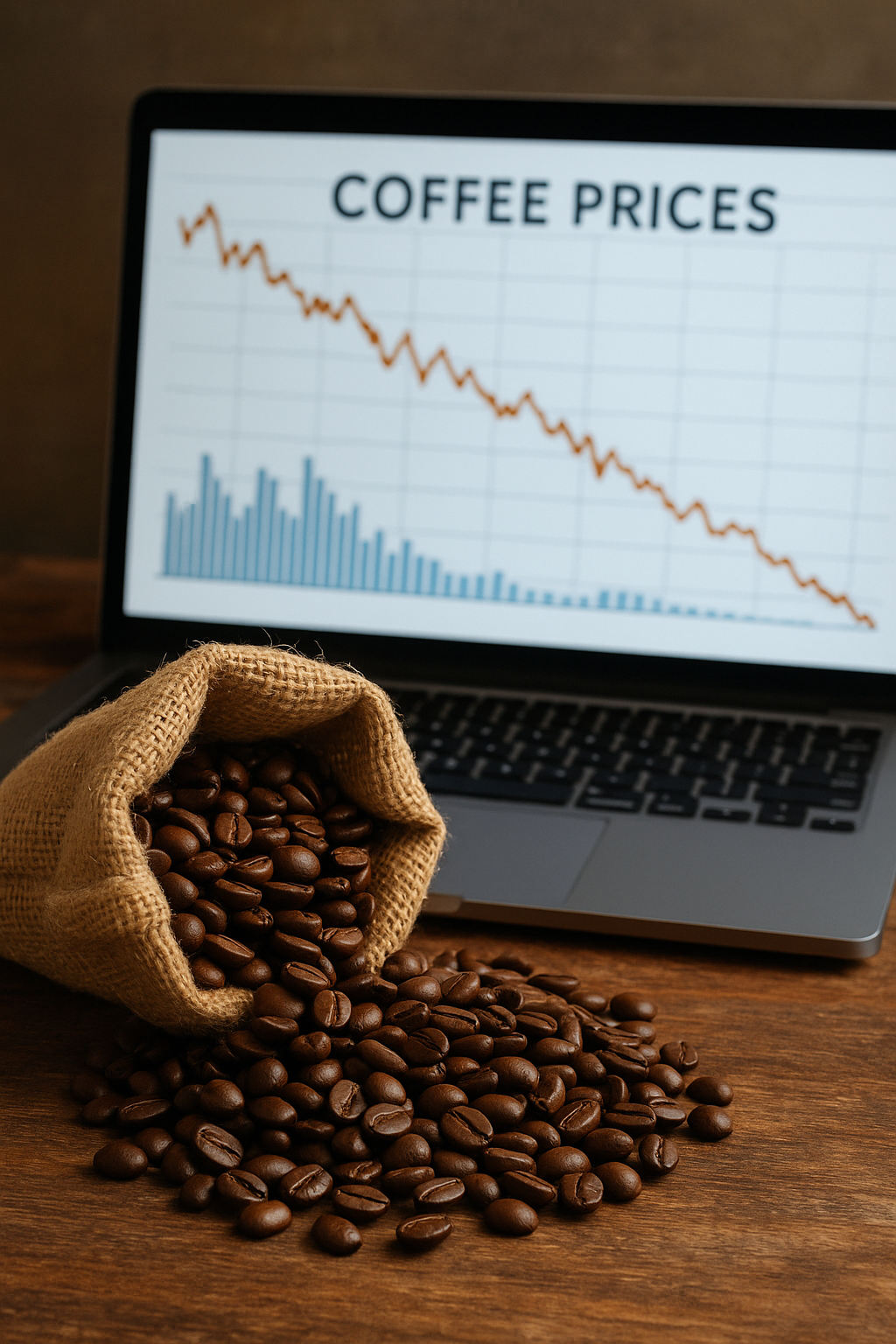
The global coffee market is entering a protracted period of rising prices, and even the easing of US tariffs has failed to change the trajectory of rapid price growth. In recent months, Arabica coffee has reached historic highs, and retail prices are only just beginning to reflect this jump. Experts warn that a reduction in the drink’s cost should not be expected in the foreseeable future, as supply chains and price dynamics continue to exert pressure on producers and sellers.

The global coffee market is entering a protracted period of rising prices, and even the easing of US tariffs has failed to change the trajectory of rapid price growth. In recent months, Arabica coffee has reached historic highs, and retail prices are only just beginning to reflect this jump. Experts warn that a reduction in the drink’s cost should not be expected in the foreseeable future, as supply chains and price dynamics continue to exert pressure on producers and sellers.

Cristina Scocchia, CEO of Illycaffe, announced that prices will increase again in January—the third such increase this year. She stated that the current rise in green bean costs remains “unhealthy,” and the company can no longer compensate for the increased expenses. Scocchia emphasized that the price increase will affect all countries and all sales channels. She attributes the sharp rise in Arabica prices primarily to speculation rather than global supply disruptions, although weak harvests in several countries also affect the market. (Note: I cannot confirm the accuracy of the company’s forecasts.)

Following the expansion of tariff concessions by US President Donald Trump for Brazilian agricultural products, Arabica and Robusta futures dropped by a few percent, but this effect proved temporary. Prices remained at abnormally high levels, underscoring the resilience of the long-term upward trend. The historical jump witnessed from 2023–2024—with Arabica costs increasing by almost 190% and Robusta by more than 260%—has not yet been fully reflected in retail. According to Carlos Mera, Head of Agricultural Commodities Research at Rabobank, the lag between exchange dynamics and store prices can range from several months to a year, so consumers should prepare for further price increases.

Despite the drop in futures and the easing of tariffs, producers continue to expect market growth and stable demand. According to Illycaffe’s long-term forecast, the cost of green Arabica will only enter a more stable range—remaining within $2.80–$3.00 per pound—in the second half of 2026. This indicates that the era of low coffee prices has effectively concluded, and the influence of speculative factors, climate risks, and trade policy will continue to hold the market in a high-cost zone.

Collectively, these factors form a strong expectation of further price increases for the end consumer. Even with sustained demand and the gradual adaptation of the market to new conditions, experts agree that a return to previous prices in the coming years is unlikely.

Coffee Prices Plunge as Trump Removes Tariffs on Brazilian Products

Dubai – Qahwa World

On Friday, coffee prices fell sharply, with March arabica futures (KCH26) down 1.91% and January robusta futures (RMF26) falling 2.70%. Arabica reached a seven-week low.

The decline followed an executive order signed by President Trump late Thursday, exempting Brazilian food products from tariffs, including the 40% duty on Brazilian coffee. Prices dropped further after the Brazilian real weakened to a five-week low against the dollar, boosting the competitiveness of Brazilian coffee exports.

Weather factors also influenced the market. Heavy rains are forecast across Brazil’s main coffee-growing regions into next week, which benefits crop development but puts downward pressure on prices.

Robusta prices found some support from Vietnam, where heavy rainfall delayed harvesting in Dak Lak, the country’s largest coffee-producing province. Additional showers may damage crops further, providing some upward pressure on prices.

Inventory trends on ICE exchanges were mixed. US tariffs had previously limited Brazilian coffee imports, reducing stocks. As of Thursday, ICE-monitored arabica stocks dropped to a 1.75-year low of 398,645 bags, while robusta inventories fell to a four-month low of 5,567 lots. US buyers have been avoiding new Brazilian coffee contracts due to tariffs, tightening domestic supply, as roughly one-third of unroasted coffee in the US comes from Brazil. From August to October 2025, US imports of Brazilian coffee fell 52% year-on-year to 983,970 bags.

Rainfall data also influenced the market. Brazil’s largest arabica region, Minas Gerais, recorded 19.8 mm of rain in the week ending November 14 — 42% of the historical average, according to Somar Meteorologia.

On the supply side, analysts at StoneX forecast Brazil’s 2026/27 coffee crop at 70.7 million bags, including 47.2 million bags of arabica — a 29% increase year-on-year.

Vietnam’s coffee production is also rising. January–October 2025 exports increased 13.4% year-on-year to 1.31 million metric tons. Production for the 2025/26 crop year is projected at 1.76 million metric tons (29.4 million bags), a four-year high. The Vietnam Coffee and Cocoa Association (Vicofa) expects production to be 10% higher than last year if weather conditions remain favorable. Vietnam remains the world’s largest robusta producer.

Global supply data show mixed signals. The International Coffee Organization reported on November 7 that world coffee exports for the current marketing year (October–September) fell 0.3% year-on-year to 138.658 million bags.

Brazil’s Conab forecasted a smaller 2025 arabica crop, reducing it by 4.9% to 35.2 million bags, while total coffee production was adjusted down 0.9% to 55.2 million bags.

The USDA projects global coffee production in 2025/26 at a record 178.68 million bags, with arabica down 1.7% to 97.022 million bags and robusta up 7.9% to 81.658 million bags. Brazil’s crop is expected to rise 0.5% to 65 million bags, and Vietnam’s output is forecast up 6.9% to 31 million bags, a four-year high. Ending stocks for 2025/26 are projected at 22.819 million bags, up 4.9% from the previous year.

US rolls back extra duties on Brazilian coffee imports

Dubai – Qahwa World

The administration in Washington has moved to ease trade pressure on Brazil by withdrawing an additional 40% duty that had been placed on a range of Brazilian food products, including coffee. The decision, issued through an Executive Order dated 20 November 2025, applies to goods entering the US on or after 13 November 2025. The baseline 10% tariff introduced earlier in the year remains active.

Brazil supplies a significant share of the green coffee used by the US market. When the combined import levy reached 50%, shipments between the two countries were severely disrupted. Industry data shared in August 2025 indicated a sharp drop in US purchases of Brazilian coffee during the month the extra charge took effect. Many US roasters faced higher operating costs, and retail coffee prices rose noticeably as companies redirected sourcing to alternative suppliers. Warehouses in Brazil also experienced delays as trading activity slowed.

Representatives of Brazil’s coffee export sector said the heightened tariff regime had effectively halted their ability to ship to the US, noting that clients paused new agreements immediately after the higher duty was introduced.

The trade disruption briefly shifted global buying patterns, with another major European importer receiving more Brazilian shipments during that period. Retail coffee prices in the US climbed significantly, reflecting the sudden supply imbalance.

The White House has begun reversing several import charges in recent weeks as domestic food inflation remains elevated. Earlier in November, the administration announced the removal or reduction of duties on coffee from multiple producing countries, including Vietnam and several South American origins.

Following indications that tariff reductions were forthcoming, the head of a leading US coffee trade association welcomed the policy shift, noting that easing import costs could help stabilize supply chains and reduce financial pressure on coffee drinkers and businesses across the country.

The New Global Coffee Order: Major Transformations Shaping the Industry’s Future

Dubai – Qahwa World

The coffee industry is witnessing an unprecedented transformation, reshaping itself under pressures that span climate, economics, trade, and consumer behavior. The World Coffee Portal’s recent two-part analytical study, titled “Coffee’s New World Order”, provides a deep dive into these sweeping changes, offering a comprehensive view of how the global coffee system is evolving before our eyes.

Climate Pressures and Production Volatility

Global coffee production is now more vulnerable than ever. In 2025, Brazil, the world’s largest arabica producer, faced severe heatwaves and erratic rainfall, pushing arabica prices to historic highs. Meanwhile, Vietnam, a key robusta supplier, suffered prolonged droughts that impacted yields, raising the cost of instant coffee ingredients to levels unseen in nearly half a century.

These climate challenges are compounding existing market pressures. Futures markets, historically driven by stable inventory practices, are now in backwardation, discouraging stockpiling and amplifying shortages. As a result, the world is seeing unprecedented fluctuations in both commodity prices and availability, affecting roasters, exporters, and consumers alike.

Trade Policies and Global Ripple Effects

Recent trade developments have intensified the industry’s volatility. When the United States imposed significant tariffs on Brazilian coffee, supply chains were forced to adapt quickly. European and Asian markets absorbed redirected volumes, leading Germany to surpass the US as Brazil’s largest export destination. Meanwhile, China has actively expanded imports to secure long-term supply for its growing domestic chains, including large-scale deals by regional players to stock thousands of stores.

These developments illustrate that coffee is no longer a commodity confined to traditional trade patterns. Instead, it is part of a dynamic, multi-polar market, where emerging economies increasingly influence global flows, pricing, and strategies.

Consumer Trends and Emerging Markets

The World Coffee Portal study emphasizes that consumption patterns are shifting globally. Asia, the Middle East, and Latin America are no longer passive markets. Local brands are rapidly innovating, offering products tailored to regional tastes, from fruit-infused coffee drinks to digital-first ordering experiences. These trends challenge legacy Western models of expansion, demonstrating that global dominance in coffee is no longer guaranteed by scale alone.

Specialty Coffee Under Pressure

Specialty coffee, long seen as insulated from commodity pressures, now faces both opportunities and risks. Automation and technological advances can reduce operational costs, but the premium coffee segment must balance quality, exclusivity, and affordability. Experts highlight that consumer expectations remain high; price increases must be justified by superior flavor, traceability, and experience. The premium market’s future will hinge on its ability to navigate these competing demands.

Sustainability and Climate Resilience

With 70% of global coffee produced by smallholders, sustainability is central to industry stability. Climate resilience, yield improvements, and farmer support are critical to safeguarding the coffee supply chain. While development aid has declined, private sector initiatives and collaborative programs—such as G7-backed funds and proposed levies on green coffee—are emerging as essential mechanisms to ensure long-term sustainability.

The End of Cheap Coffee?

The era of inexpensive, untraceable coffee is drawing to a close. Rising costs, climate impacts, and supply chain disruptions are driving prices upward, even as global demand remains robust. Consumers may pay more, but the industry is evolving toward efficiency, transparency, and collaboration, creating a new paradigm for how coffee is grown, traded, and consumed worldwide.

The World Coffee Portal’s study offers a rare and detailed glimpse into this evolving global landscape, providing essential insights for industry leaders, traders, and enthusiasts alike. The global coffee order is changing—and those who adapt quickly will define the next era of the industry.

Coffee Prices Slide as U.S. Hints at Possible Tariff Reductions

Dubai – Qahwa World

Coffee markets recorded a sharp downturn on November 12 after fresh signals from Washington suggested that import tariffs on coffee could soon be eased, triggering immediate reactions across arabica and robusta futures. December arabica contracts declined by 3.62%, while January robusta fell by 5.09%, reaching a two-week low. The drop intensified after comments by President Donald Trump indicating plans to reduce tariffs on coffee, followed by remarks from Treasury Secretary Bessent about upcoming announcements affecting products not grown in the United States, coffee among them.

The market also reacted to the first outlook from StoneX for the 2026/27 season, which projects Brazil’s total coffee harvest at 70.7 million bags, including 47.2 million bags of arabica — a significant 29% increase compared to the previous year. Consistent rains in Brazil added further pressure, with Somar Meteorologia reporting that Minas Gerais, the country’s primary arabica-producing region, received 72.1 mm of rain during the week ending November 7, equal to 160% of its historical average. Improved moisture levels reduced earlier concerns about dryness and contributed to the bearish sentiment.

Additional downward pressure came from Vietnam, where the National Statistics Office confirmed that coffee exports for January to October 2025 rose by 13.4% year-on-year to 1.31 million metric tons. Production for 2025/26 is expected to increase by 6% to 1.76 million metric tons, marking the country’s highest output in four years. Industry officials noted that, with favorable weather, the harvest could potentially surpass last year’s by 10%. Vietnam remains the world’s largest producer of robusta coffee, and higher supply expectations have weighed heavily on prices.

Despite these developments, some indicators are providing support to the market. The International Coffee Organization reported a slight decline of 0.3% in global coffee exports for the current marketing year, reaching 138.658 million bags. At the same time, ICE inventories have tightened noticeably as U.S. buyers reduce purchases from Brazil since the introduction of 50% tariffs on Brazilian coffee imports. ICE-monitored arabica inventories fell to a 1.75-year low of 406,129 bags, while robusta stocks dropped to 5,873 lots, the lowest level in nearly four months. With about one-third of U.S. unroasted coffee typically sourced from Brazil, reduced contracting has led to a visible drawdown in domestic supplies.

Longer-term climate risks also continue to influence sentiment. In mid-September, the U.S. National Oceanic and Atmospheric Administration raised the probability of a La Niña event to 71% for the October–December period. Such conditions can bring excessively dry weather to Brazil and potentially disrupt the 2026/27 crop. Brazil’s crop agency Conab has already revised its 2025 arabica forecast downward by 4.9%, estimating 35.2 million bags, while also trimming overall coffee production to 55.2 million bags.

On a global scale, the USDA Foreign Agricultural Service expects 2025/26 world coffee production to reach a record 178.68 million bags, reflecting a 2.5% increase. The outlook includes a slight decline of 1.7% in arabica production to 97.022 million bags, offset by a robust 7.9% rise in robusta output to 81.658 million bags. Brazil’s production is forecast to grow modestly by 0.5% to 65 million bags, while Vietnam’s output is projected to rise by 6.9% to 31 million bags, the highest level in four years. Global ending stocks are estimated to climb by 4.9% to 22.819 million bags.

Keurig Dr Pepper’s Coffee Gamble Turns into Private-Equity Opportunity

Dubai – Qahwa World

Keurig Dr Pepper Inc. (KDP) has turned investor discontent into renewed optimism after securing a $7 billion investment from Apollo Global Management and KKR & Co. to support its €15.7 billion (about $18 billion) acquisition of Dutch coffee group JDE Peet’s. The capital injection eased market fears over KDP’s rising debt and transformed what was initially seen as a controversial coffee gamble into a strategic success backed by private equity.

When KDP first announced its plan in August 2025 to acquire JDE Peet’s from JAB Holding Group, shares fell by roughly 30 percent, wiping about $10 billion from its market value. Investors feared the deal would triple KDP’s exposure to coffee and overburden its balance sheet, while hedge fund Starboard Value publicly criticised the move, calling for a reduction rather than expansion in coffee assets.

The situation shifted when Apollo and KKR stepped in with a hybrid financing package that helped restore confidence and pushed KDP’s stock up by around 10 percent after the announcement. Their combined $7 billion support came in two parts: $4 billion directed toward a joint venture known as Global Coffee Co., which merges KDP’s coffee-pod business with JDE Peet’s, and $3 billion in preferred stock carrying a dividend below 5 percent and convertible into ordinary shares at roughly the pre-deal price.

This arrangement reduced KDP’s effective leverage to about 4.5 times EBITDA, compared with the 5.5 times analysts had feared when the deal was first disclosed. The structure blends elements of equity and debt, costing just above 7 percent annually, and serves as a vote of confidence in KDP’s financial resilience and in JAB Holding’s broader beverage strategy.

According to Bloomberg Opinion, the investment underscores how private-equity firms are shifting away from their old reputation as “barbarians at the gate.” Rather than launching full buyouts, groups such as Apollo and KKR now deploy hybrid capital — part loan, part equity — that offers reliable yield with potential upside. Both firms are holding their KDP positions through their insurance subsidiaries, which seek long-term, credit-like assets to back liabilities. For KDP, the infusion provides near-equity financing without diluting control, while giving investors comfort over leverage.

The turnaround was further strengthened by KDP’s third-quarter results. The company reported $4.31 billion in net revenue, an increase of nearly 11 percent and well above forecasts. Growth was driven by stronger volume, pricing, and acquisitions. U.S. Refreshment Beverages revenue rose 14.4 percent year on year, International 10.5 percent, and U.S. Coffee 1.5 percent. Adjusted earnings grew 6 percent, maintaining a dividend yield above 3.25 percent.

Market analysts now project a recovery toward the $35 share-price range, estimating an upside of about 25 percent from October levels. Institutional investors have continued to accumulate KDP stock at roughly two shares bought for every one sold throughout 2025, giving the company a solid base of long-term holders.

Beyond financial performance, the transaction carries strategic weight for the global coffee industry. The integration of KDP and JDE Peet’s would create one of the largest coffee enterprises worldwide, combining brands such as Peet’s, L’OR, Senseo, and Green Mountain under a single umbrella. Analysts believe the merger could reshape competition in both single-serve and roasted-coffee markets, expand distribution networks across North America, Europe, and the Middle East, and increase procurement influence in coffee-producing countries.

The deal also marks a turning point in how major beverage and coffee companies fund growth. What began as an unpopular, debt-heavy acquisition has become a model of financial engineering, illustrating the growing role of private capital in global coffee. For investors and industry watchers alike, Keurig Dr Pepper’s transformation of a “loathed” coffee deal into a structured, profitable partnership with private equity may signal a new era in how coffee giants balance ambition with financial discipline.

Vietnam’s Coffee Exports Hit Record Levels and Set Sights on New Growth in 2026

Ho Chi Minh  – Qahwa World

Vietnam has closed the 2024–2025 coffee season with unprecedented results, marking the highest performance in the history of its coffee industry. The country’s coffee export value reached USD 8.4 billion, according to the Vietnam Coffee and Cocoa Association (VICOFA), which held its annual conference on 24 October 2025 in Ho Chi Minh City, attended by representatives from the Ministry of Agriculture and Environment, exporters, and local producers.

Data released by the association shows that from October 2024 to September 2025, Vietnam exported over 1.5 million tons of coffee—an increase of 1.8 % in volume and 55.5 % in export value compared with the previous season. The average export price reached USD 5,610 per ton, up 52.7 % year on year.

Europe remained Vietnam’s largest export market, accounting for about 47 % of total shipments—more than 710,000 tons—valued at over USD 4 billion. Within that figure, the 27 European Union countries represented 40.1 % of the total exported volume and 39.4 % of export value, reaffirming the country’s strong foothold in European markets despite tightening sustainability regulations.

Speaking at the event, Hoang Trung, Deputy Minister of Agriculture and Environment, praised the industry’s achievements as a result of joint efforts among farmers, exporters, and government agencies to improve product quality and expand international market access. He reported that the total coffee cultivation area reached 731.9 thousand hectares, including 678.5 thousand hectares in production, while re-planted areas covered 20 thousand hectares, achieving 96.4 % of the national re-planting plan.

According to the deputy minister, favorable weather conditions and high coffee prices encouraged farmers to invest in intensive cultivation and rejuvenate plantations, leading to higher productivity and improved bean quality. Government estimates suggest that total coffee production could approach 2 million tons this year—an impressive achievement demonstrating Vietnam’s resilience amid global agricultural volatility.

A key highlight of the conference was the announcement that cooperation between VICOFA, government authorities, and international partners had resulted in the creation of a national traceability database covering 137,000 hectares of coffee farms, which is now being expanded to 462,000 hectares, or about 80 % of the total coffee area in the Central Highlands. Thanks to this initiative, the European Union has classified Vietnam as a “low-risk” country under the EUDR (Deforestation Regulation), requiring inspection of only 1 % of imported shipments. Trung described this classification as “a recognition of Vietnam’s transparency, accountability, and environmental responsibility within the coffee sector.”

He further noted that programs dedicated to specialty and high-quality coffee, as well as sustainable low-emission initiatives, have significantly contributed to increasing the added value of Vietnamese coffee and strengthening its brand identity on the global stage.

The report also showed that by mid-October 2025, Vietnam had already exported 1.27 million tons of coffee, valued at USD 7.21 billion—a 12.5 % rise in volume and more than 62 % growth in value compared with the same period a year earlier. This performance highlights a strategic shift from expanding output to enhancing value and quality, underscoring the success of Vietnam’s transformation from a commodity-based producer to a sustainability-driven exporter.

During the event, VICOFA projected that coffee production for the 2025–2026 season could increase by 10 % from the previous year if favorable weather continues. The association said that encouraging price levels had motivated farmers to increase investments in crop care and expand their cultivated areas, raising prospects for another strong season ahead.

Deputy Minister Hoang Trung outlined several key directions for sustaining growth and maintaining competitiveness:

  • Expand sustainable production by adopting international certification standards such as RA, 4C, FLO, and C.A.F.E. Practices.
  • Strengthen traceability and deep processing to reduce dependence on raw-bean exports.
  • Adopt low-emission cultivation techniques to cut fertilizer and pesticide use and promote water-efficient irrigation.
  • Diversify markets beyond Europe toward Asia and Southeast Asia, leveraging cross-border e-commerce opportunities.
  • Promote the “Vietnam Coffee” brand in specialty segments through global marketing and participation in exhibitions and trade fairs.
  • Foster stronger linkages across the supply chain—from farmers and cooperatives to processors and exporters—to ensure equitable and sustainable growth.
  • Enhance awareness and compliance with import-market requirements, especially environmental and traceability regulations under the EU EUDR.

The conference concluded with a shared conviction among participants that, with its robust agricultural base, growing commitment to sustainability, and rapidly improving quality standards, Vietnam is on course to strengthen its position as one of the world’s leading coffee exporters. As the new 2025–2026 season approaches, the sector looks set for further expansion, higher value, and record-breaking achievements in the years ahead.

Coca-Cola Reassesses Its $5 Billion Coffee Investment

Dubai – Qahwa World

Coca-Cola is reconsidering its coffee strategy after its $5.1 billion acquisition of Costa Coffee failed to deliver the expected results.

CEO James Quincey admitted during the company’s recent earnings call that the “investment hypothesis didn’t work out as we expected.” The beverage giant had hoped Costa would drive significant growth beyond its traditional retail outlets, but that expansion has not materialized.

Despite the setback, Quincey emphasized that coffee remains a “super attractive category,” noting that Coca-Cola continues to invest in Costa’s UK operations and in expanding automated coffee machines under the Costa brand. However, he acknowledged that the business “hasn’t yet created the multiplier effect we were looking for.”

Coca-Cola is currently “reflecting” on how to position its coffee business moving forward. Reports from Reuters in August indicated that the company may be exploring a potential sale of Costa Coffee, though Quincey did not comment on that possibility.

Coca-Cola’s stock rose about 4% on Tuesday following its announcement that net sales increased by 5% to $12.46 billion in the third quarter.

The company’s coffee ventures also include experiments with Coca-Cola Coffee, a beverage blending the brand’s classic soda with coffee extract.

Arabica Leads the Recovery: Coffee Outperforms Sugar, Cotton, and Cocoa in Q3 2025

Dubai – Qahwa World

The agricultural commodities sector gained 1.89% in Q3 2025, driven by strong advances in Arabica coffee and frozen concentrated orange juice (FCOJ) futures. Despite the quarterly rise, the sector remained 19.25% below its 2024 closing level, with four of five major agricultural commodities ending lower and two down more than 40%.

Arabica coffee was the best-performing agricultural commodity in Q3, climbing 22.2% amid concerns over Brazil’s crop outlook and posting a 17.23% year-to-date increase. Futures closed at $3.7485 per pound at the end of September and climbed further to $4.0875 by mid-October, marking coffee as the standout performer of 2025 so far.
The monthly chart shows sustained bullish momentum that began in late 2024.

Cocoa, however, led the downside after reaching an all-time high of $12,931 per ton in late 2024. Prices plunged 27.86% in Q3 and 42.19% since the start of 2025, closing at $6,749 per ton in September and falling below $5,900 in mid-October. Analysts point to commodity cyclicality — high prices trigger oversupply, larger inventories, and weaker demand.

World sugar futures (#11) rose 4% in Q3 but are still 16.41% lower year-to-date. Prices settled at 16.10 cents per pound at the end of September, well below the November 2023 peak of 28.14 cents. By mid-October, March 2026 contracts were trading near 15.60 cents, extending the bearish trend.

Cotton prices slipped 0.77% in Q3 and 3.85% year-to-date. Futures closed September at 65.77 cents per pound and hovered slightly lower at around 65 cents in mid-October. Cotton has trended downward since the May 2022 high of $1.5595 per pound, though current levels may offer a foundation for recovery if production contracts due to low prices.

While FCOJ gained 11.90% in Q3, it remained the worst-performing agricultural commodity year-to-date, down 51.04%. Prices fell from a December 2024 record of $5.4315 per pound to $2.4355 by the end of September and slipped below $2 in mid-October.
Analysts note that FCOJ’s limited liquidity amplifies volatility, with low open interest and trading volumes causing sharper price swings.

As Q4 begins, coffee prices remain elevated while cocoa, sugar, cotton, and FCOJ continue to slide. However, sugar and cotton may find cyclical support, as low prices typically drive production cuts, inventory drawdowns, and stronger demand — setting the stage for a rebound.

Weather conditions, crop health, trade policies, and geopolitics will continue to shape volatility across agricultural commodities. While coffee may face corrective pressure after its rally, sugar and cotton appear the most likely candidates for recovery — particularly cotton, which tends to peak in Q1–Q2 amid planting uncertainty. With prices below 66 cents per pound, cotton could emerge as the strongest recovery play for 2026.

“Agricultural commodities led the asset class in 2023 and 2024 but have fallen behind in 2025. Yet, cyclicality remains the driving force — where lows are found, the next rallies begin.”

Colombia Records Its Best Coffee Harvest in Over 30 Years

Bogotá — Qahwa World

Colombia, the world’s third-largest coffee producer after Brazil and Vietnam, has celebrated its most productive coffee year in more than three decades. The impressive rebound, driven by favorable weather conditions and extensive crop renewal, brought total production between October 2024 and September 2025 to 14.87 million 60-kg bags, marking a 17% year-on-year increase and exceeding the country’s estimated output of 14 million bags, according to the National Federation of Coffee Growers.

However, the Federation warned that this peak may not continue into the next season.

We are now beginning the 2025/2026 coffee cycle, which, due to the natural physiological response of the coffee tree and significant rainfall in the first half of the year, is projected to be a year of lower production,” said Federation Manager Germán Bahamón on X.

Colombia, home to about 840,000 hectares of coffee cultivation, supports roughly 540,000 farming families who depend on the crop for their livelihoods.

Strong Output and Export Growth

In September 2025, Colombia’s production of washed Arabica coffee rose 7% year-on-year, reaching 1.14 million bags, slightly below 1.24 million bags in August. Coffee exports increased 6% in September, totaling 1.06 million bags, the Federation reported.

The Colombian statistics agency DANE noted that the value of coffee exports surged 79.7% year-on-year between January and August 2025, reaching $3.67 billion, largely driven by high international coffee prices.

Monthly Coffee Output and Exports (Oct 2024 – Sep 2025)

Month Output (1,000 bags) Exports (1,000 bags)
September 2025 1,142 1,063
August 2025 1,243 1,128
July 2025 1,373 1,150
June 2025 909 1,086
May 2025 819 910
April 2025 703 796
March 2025 1,064 1,268
February 2025 1,361 1,187
January 2025 1,356 1,151
December 2024 1,798 1,282
November 2024 1,761 1,189
October 2024 1,339 1,047
September 2024 1,071 987
Source: National Federation of Coffee Growers of Colombia (FNC), DANE  |  Data in thousand 60-kg bags

These figures illustrate a strong performance throughout the year, particularly in late 2024, when monthly output peaked above 1.7 million bags before stabilizing in 2025. Despite slight fluctuations, both production and exports remained consistently high, reflecting the resilience of Colombia’s coffee sector amid shifting weather patterns and global market volatility.

As Colombia enters a new production cycle, growers remain cautiously optimistic, balancing the recent record harvest with expectations of a natural slowdown in the coming year.

Historic Drop in Certified Coffee Stocks Threatens Global Market Stability

Dubai Qahwa World

The global coffee market is entering a period of heightened uncertainty as certified coffee stocks fall to their lowest level in years, signaling tightening supply chains and growing pressure on prices. According to the International Coffee Organization’s (ICO) September 2025 Coffee Market Report, both Arabica and Robusta certified inventories saw steep declines, raising alarm among traders and producers about the sustainability of global coffee flows.

The ICO reported that certified Arabica stocks in the United States dropped by 19.3%, falling to 0.66 million 60-kg bags, while certified Robusta stocks in London declined by 4.3% to 1.08 million bags. The organization described these figures as a “clear indicator of tightening supply,” warning that if this trend continues, it could lead to further market volatility and stronger upward pressure on coffee prices into 2026.

The decline in certified stocks comes at a time when global coffee prices are already at a two-year high. The ICO Composite Indicator Price (I-CIP) averaged 324.62 US cents per pound in September up 9.3% from August and 25.4% year-on-year. This sustained rally reflects a combination of supply shortages, export delays, and speculative momentum, according to the report. Analysts also note that the depletion of certified stocks is a major driver behind the surge, as roasters and traders draw down existing inventories to meet ongoing demand.

In Brazil, the world’s largest coffee producer and exporter, the situation remains complex. Despite a healthy harvest, export performance continues to weaken, with the Brazilian Coffee Exporters Council (Cecafé) reporting a tenth consecutive monthly decline. Shipments have been slowed by logistical congestion at the Port of Santos and delayed customs procedures, resulting in slower replenishment of certified stocks. Much of the crop, although harvested, remains stored domestically awaiting transport a factor that continues to strain global availability.

Colombia, the world’s top producer of washed Arabica, is also struggling with weather disruptions in key coffee-growing regions and infrastructure setbacks that have limited its export capacity. Meanwhile, Vietnam, the largest Robusta supplier, has maintained stable production but faces supply chain bottlenecks that delay shipments to major consuming markets, particularly Europe and North America.

The ICO emphasized that these combined factors have created a fragile equilibrium in which global coffee demand remains resilient, but the flow of physical supply is insufficient to keep inventories stable. “The rate of certified stock depletion is now nearing levels not seen since 2021,” the report warned, adding that the balance between consumption and production is increasingly difficult to maintain amid logistical and policy-related challenges.

Trade policies are adding further complications. The United States’ 50% import tariff on coffee, still in place as of September 2025, continues to weigh heavily on trade volumes. Many importers have avoided purchasing new shipments at elevated costs, instead relying on existing certified reserves. This has accelerated the drawdown of available stock, pushing certified inventories closer to critical thresholds.

At the same time, monetary policy decisions have influenced speculative activity across commodity markets. The Federal Reserve’s recent 25-basis-point rate cut its first since 2024 triggered renewed investor interest in coffee futures, pushing prices even higher. The report noted that this speculative demand has intensified the pressure on physical stocks, as traders anticipate continued price gains and hedge against potential shortages.

The ICO also pointed to regulatory uncertainty in Europe as a factor contributing to the decline in certified inventories. Exporters are recalibrating their shipment schedules due to the forthcoming EU Deforestation Regulation (EUDR), which mandates traceability and geolocation data for coffee imports. While the European Commission has signaled a potential one-year delay in enforcement, many traders are opting to postpone shipments until compliance frameworks are clarified, further limiting short-term supply availability.

Market analysts caution that the combination of depleted stocks, policy delays, and persistent trade restrictions could lead to supply shortages in early 2026 if current trends persist. “The market is walking a fine line,” one analyst cited by the ICO noted. “With certified inventories at record lows, even minor disruptions whether from weather, logistics, or policy shifts could have an outsized impact on prices.”

This tightening supply scenario has already been reflected in the futures markets. ICE Arabica prices in New York rose by 11.5% in September, averaging 366.31 US cents per pound, while ICE Robusta prices in London climbed 8.9% to 197.56 US cents per pound. The price differential between the two markets widened by 14.7% to 168.75 US cents per pound, the highest level recorded in 2025. The ICO said the widening gap highlights uneven stock conditions and structural imbalances between Arabica and Robusta markets.

Furthermore, intra-day price volatility increased to 13.8%, compared to 10.6% in August, underscoring how thin inventories amplify market sensitivity to short-term developments. The report noted that low stock levels make the market more reactive to speculative trading, currency fluctuations, and export data releases.

Despite these challenges, some optimism remains tied to upcoming harvests in Central America and East Africa, which could provide temporary relief to global supplies. However, the ICO cautioned that recovery will likely be slow, as high fertilizer and labor costs continue to limit farm investment and productivity gains across several producing countries.

Ultimately, the ICO concluded that the historic decline in certified coffee stocks represents more than a temporary fluctuation it reflects a deep structural imbalance in the global coffee economy. Persistent trade barriers, logistical delays, and delayed regulatory decisions have combined to restrict availability at a time when global demand remains robust. The report warned that unless export performance and stock replenishment improve by early 2026, the market could face an extended period of high prices and intensified volatility.

As the global coffee sector navigates this critical juncture, the ICO urged stakeholders from producers to importers to focus on efficient supply chain management, sustainable farming practices, and regulatory coordination to restore stability to the market. Without such measures, the world’s coffee supply chain risks remaining on edge well into the coming year.
Global Coffee Prices Surge to 2-Year High

Dubai – Qahwa World

The global coffee market witnessed a significant price surge in September 2025, marking one of the strongest monthly performances in recent years. According to the latest Coffee Market Report issued by the International Coffee Organization (ICO), the ICO Composite Indicator Price (I-CIP) averaged 324.62 US cents per pound, representing a 9.3% increase compared to August 2025 and a striking 25.4% rise year-on-year. The report reveals that while prices rose across all coffee groups, tightening certified stocks and persistent trade uncertainties continue to define the market’s volatile landscape.

The ICO noted that Arabica varieties led the monthly increase, with Colombian Milds climbing 10.1% to 403.77 US cents/lb, Other Milds advancing 9.3% to 400.21 US cents/lb, and Brazilian Naturals gaining 11.3% to 374.91 US cents/lb. Robusta, meanwhile, registered a more moderate yet notable 5.9% increase to 210.85 US cents/lb. The rise was mirrored on both major futures exchanges, with New York ICE prices up 11.5% to 366.31 US cents/lb, and London ICE prices increasing by 8.9% to 197.56 US cents/lb. The I-CIP fluctuated between 298.14 and 360.74 US cents/lb during the month, maintaining a median value of 323.44.

The report attributes much of September’s price escalation to several interconnected macroeconomic and policy-related developments that placed upward pressure on the market during the first half of the month. Among these, concerns over the long-term supply of coffee to the United States stood out, especially given the continued uncertainty surrounding import tariffs. Although on 8 September the U.S. administration issued an executive order revising tariffs for “aligned partners” with established trade agreements, coffee remained excluded from the list. The commodity continues to face a 50% import tariff imposed earlier in the year, as it is not yet categorized among products that the U.S. cannot sufficiently produce domestically. This policy has led to sustained apprehension among traders and exporters, particularly as U.S. certified Arabica stocks continue to decline.

The ICO underlined that certified stocksused as a short-term substitute for coffee importsare shrinking at an alarming rate, reinforcing market tightness. U.S. certified stocks of Arabica fell 19.3% in September to 0.66 million 60-kilogram bags, while London-certified Robusta stocks decreased 4.3% to 1.08 million bags. These drawdowns, the report states, indicate that the market is “starting to feel the squeeze,” signaling a bullish outlook for prices if replenishment remains weak.

However, the latter half of September brought developments that introduced downward pressure and tempered speculative enthusiasm. On 15 and 17 September, the ICE Futures U.S. exchange raised margin requirements for Arabica contracts twice in a single week. Higher margin requirements force investors to deposit more capital with brokers to cover increased credit risk, thus raising borrowing costs for both new and existing positions. The ICO explained that such moves can reduce liquidity and limit speculative demand, potentially stabilizing prices in overheated markets.

At the same time, discussions at the United Nations General Assembly between U.S. and Brazilian officials provided a momentary boost to market optimism. As the world’s largest coffee producer and the largest destination market sought to improve bilateral trade relations, investors interpreted the talks as a signal that tariff détente might eventually follow. Brazil’s exports have been under severe strain, declining for ten consecutive months due to both cyclical production factors and logistical issues at the port of Santos.

On the monetary front, the U.S. Federal Reserve’s 25-basis-point interest rate cut on 17 September had a nuanced impact. While the policy was intended to lower borrowing costs across the economy, it indirectly affected coffee prices by making speculative trading less expensive. The ICO noted that cheaper credit may have helped sustain trading volumes, adding volatility to a market already under pressure from tightening supplies.

The European Union also entered the spotlight in September after the EU Commissioner for Environment, Water Resilience and a Competitive Circular Economy raised concerns over the readiness of the EU Deforestation Regulation (EUDR) IT system. The Commissioner indicated that the system might not be able to handle the expected transaction volume, suggesting a possible one-year extension before enforcement begins. The EUDR, which aims to ensure that coffee and other commodities imported into the EU are deforestation-free, has been a major topic of concern among exporters since its adoption, and any delay could temporarily ease compliance-related pressures on coffee-producing nations.

Despite these counterbalancing developments, overall volatility continued to rise. The ICO reported that intra-day volatility of the I-CIP increased by 2.8 percentage points compared to August, averaging 13.8% in September. By category, Colombian Milds and Other Milds showed volatility of 14.0% and 13.7%, respectively, Brazilian Naturals 14.7%, and Robustas 15.0%. At the futures level, New York volatility stood at 15.2%, while London measured 16.2%, reflecting a minor uptick in speculative activity.

Price differentials also widened notably. The Colombian MildsOther Milds differential expanded from 0.41 to 3.56 US cents/lb, while the Colombian MildsRobustas differential rose 15.1% to 192.92 US cents/lb. The arbitrage between the London and New York markets, a key indicator of the spread between Arabica and Robusta, widened by 14.7% to 168.75 US cents/lb, the highest level of the year.

Overall, the ICO described September as a month defined by tightening supplies, speculative activity, and geopolitical uncertainty. The consistent decline in certified stocks, combined with unresolved tariff tensions and potential EUDR delays, continues to reinforce a bullish sentiment across the market. As the fourth quarter of 2025 begins, analysts expect coffee prices to remain elevated, with volatility likely to persist until structural issuessuch as logistics bottlenecks, regulatory clarity, and weather-related production concernsare addressed.

In summary, the ICO’s latest data depict a coffee market under strain but also opportunity. Prices are buoyed by constrained supply and investor sentiment, while trade policies and financial dynamics continue to influence short-term movements. With the I-CIP climbing above 320 US cents/lb for the first time in over two years and certified stocks hitting new lows, September 2025 may well be remembered as a turning point in the evolving balance between global coffee supply and demand.