Coffee Prices Drop as Brazilian Real Weakens

Dubai – Qahwa World

Coffee prices fell sharply on Wednesday after the Brazilian real lost some of its recent gains, prompting traders to liquidate long positions in coffee futures.

March Arabica (KCH26) closed down 16.25 points (-4.42%).

March Robusta (RMH26) fell 130 points (-3.04%).

Earlier in the session, Arabica had climbed to a two-and-a-half-week high, while Robusta reached a one-and-three-quarter-month peak before giving up gains. The weaker real makes Brazilian coffee more competitive for export, adding pressure on futures prices.

  • Key Factors Driving the Market

Supporting Prices:

Brazilian coffee exports declined in December by 18.4%, totaling 2.86 million bags, with Arabica down 10% and Robusta down 61% year-on-year.

Below-average rainfall in Minas Gerais, Brazil’s main Arabica region, has raised concerns about supply, as the area received just 33.9 mm of rain last week—around half the historical average.

Pressuring Prices:

ICE coffee inventories have recovered after hitting multi-year lows, which weighs on prices.

Vietnam, the world’s top Robusta producer, saw its 2025 exports jump 17.5% to 1.58 million metric tons, with production rising 6% year-on-year.

Global coffee supply forecasts show a modest increase in total production, with Arabica down and Robusta up, creating mixed signals for the market.

  • Market Outlook

Brazil’s 2025/26 production is projected to fall to 63 million bags, while Vietnam’s output is expected to rise to 30.8 million bags—a four-year high. Ending stocks for the season are forecasted to decline to 20.148 million bags, down 5.4% from the previous year, keeping supply concerns on traders’ radar.

Brazilian Coffee Ends 2025 with Record Revenues Exceeding $15.6 Billion

São Paulo – Qahwa World

In a detailed economic report reflecting major shifts in global commodity markets, the Brazilian Coffee Exporters Council (Cecafé) announced the conclusion of 2025 with an unprecedented financial performance. Despite ongoing supply chain disruptions and geopolitical volatility, Brazil achieved a historic record in coffee export revenues, reinforcing its position as a leading force in the global agricultural economy.

  • Cecafé: The Reference Authority for Data and Policy

The Brazilian Coffee Exporters Council (Cecafé) is the official body representing coffee exporters in Brazil and is responsible for monitoring coffee trade flows to more than 120 countries worldwide. According to Cecafé’s December 2025 report, these exceptional financial results demonstrate the sector’s ability to adapt to global price fluctuations, supported by strategic investments in quality enhancement and value creation for Brazilian coffee in international markets.

  • Financial Performance Analysis: Value Growth Amid Lower Volumes

Based on data analyzed by Cecafé, Brazil’s coffee export revenues reached $15.586 billion in 2025, marking a 24.1% increase compared with the previous year. This figure represents the highest export revenue level in Brazil’s coffee trade history.

Notably, this record revenue was achieved despite a 20.8% decline in shipment volumes. Brazil exported 40.049 million 60-kg bags in 2025, down from more than 50 million bags in 2024. The increase in revenues was driven by a sharp rise in the average export price, which reached $389.17 per bag, up 56.4% year on year. This pricing dynamic allowed exporters to generate higher returns with lower volumes, supporting crop sustainability and helping preserve domestic stocks affected by adverse climatic conditions.

  • A Reshaped Trade Map: Germany Takes the Lead

The year 2025 marked a significant shift in Brazil’s coffee export destinations. According to Cecafé, the United States fell to second place among Brazil’s largest coffee importers, while Germany emerged as the leading destination.

Germany imported 5.409 million bags, representing a 6.1% increase, while U.S. imports declined sharply by 33.9%, totaling 5.381 million bags. Cecafé attributes this contraction in the U.S. market primarily to the imposition of 50% import tariffs on Brazilian coffee during parts of the year, which reduced the product’s competitiveness and redirected volumes toward European and Asian markets.

In parallel, Japan recorded growth of 19.4%, while China posted a 19.5% increase, highlighting the success of Cecafé’s market diversification strategy and its focus on emerging economic powers in Asia.

  • Differentiated Coffees: Driving Qualitative Growth

Cecafé’s report also highlights the strong performance of the “Differentiated Coffees” segment, which includes coffees certified for high quality standards or sustainable production practices. This segment generated $3.525 billion in revenue, accounting for 22.6% of total export earnings.

Although shipment volumes in this category declined by 15.1%, their total value increased by 39.1%. Márcio Ferreira, President of Cecafé, noted that global consumers are increasingly willing to pay premium prices for coffees that ensure environmental and social sustainability—an area in which Brazil has strengthened its position through advanced agricultural technologies.

  • Logistics Challenges: The Cost of Success

Despite the strong financial results, 2025 was not without challenges. Cecafé reported severe logistical constraints at Brazilian ports, particularly at the Port of Santos. According to the report, 55% of vessels experienced schedule delays, disrupting the shipment of thousands of containers each month.

These delays resulted in operational losses amounting to millions of Brazilian reais, driven by demurrage charges and additional storage costs. Cecafé emphasized that improving port infrastructure and ensuring a steady supply of containers are essential to sustaining record export performance in the coming years.

  • Outlook for 2026: Sustainability and Innovation

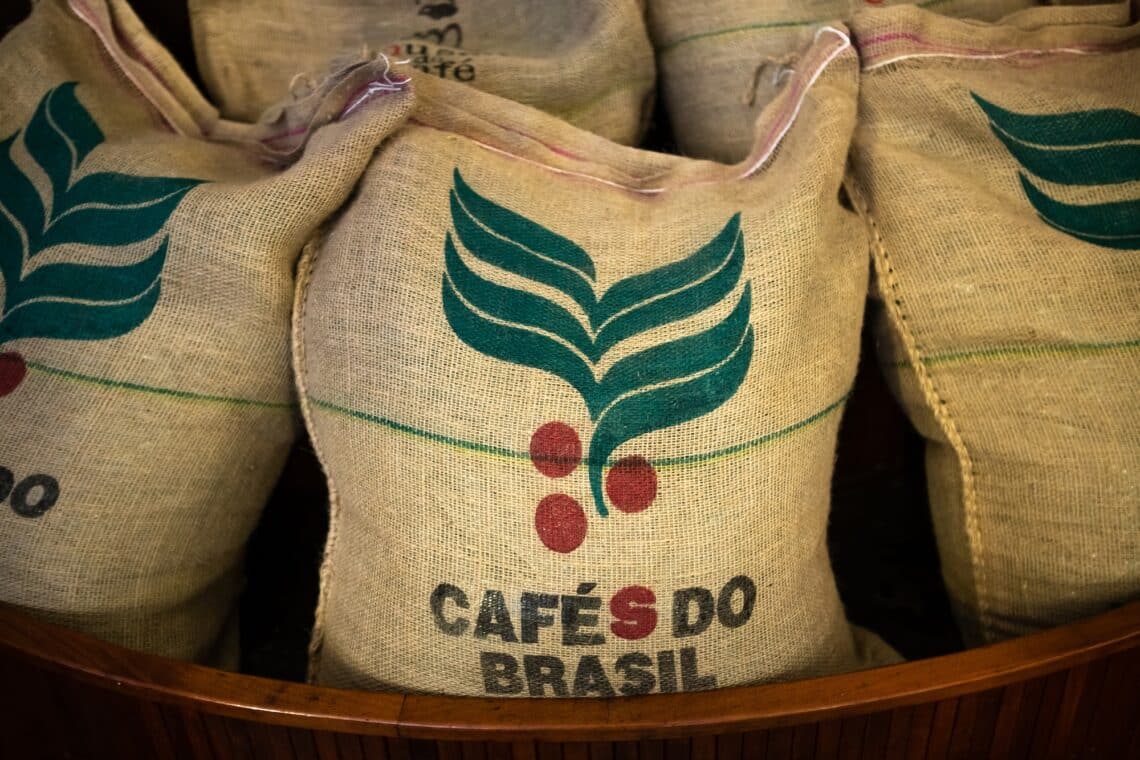
Cecafé’s December 2025 report concludes with an optimistic outlook led by Marcos Matos, CEO of the Brazilian Coffee Exporters Council. He stated that the “Cafés do Brasil” brand has become a global benchmark, successfully combining large-scale production with environmental responsibility.

According to the report, Brazil—through Cecafé—not only supplies approximately one-third of global coffee demand, but also leads efforts in agricultural digitalization, labor rights protection, and forest conservation, positioning Brazilian coffee as a reliable and sustainable choice for the future.

  • Conclusion

Generating more than $15.6 billion in export revenues in a single year is not merely a statistical milestone, but a clear indicator of the strength and global standing of Brazilian coffee. It also underscores the central role played by the Brazilian Coffee Exporters Council (Cecafé) in guiding the sector toward new levels of financial and professional achievement.

Coffee Prices Rise as Dollar Weakens

Dubai – Qahwa World

Coffee futures ended higher on Friday, with robusta reaching a 1.5-month high, as the U.S. dollar fell to its lowest level in three and a half months. March arabica (KCH26) increased by 0.92%, while March robusta (RMH26) gained 2.88%. The weaker dollar prompted short-covering across commodities, including coffee.

Brazilian coffee exports have declined, supporting prices. Cecafe reported that December’s total green coffee exports fell 18.4% year-on-year to 2.86 million bags. Arabica shipments dropped 10% to 2.6 million bags, while robusta exports plunged 61% to 222,147 bags. Below-average rainfall in Minas Gerais, Brazil’s largest arabica-growing region, also added upward pressure, with Somar Meteorologia reporting only 33.9 mm of rain for the week ending January 16, just 53% of the historical average.

At the same time, inventories monitored by ICE have rebounded, putting some pressure on prices. Arabica stocks rose to a 2.5-month high of 461,829 bags, after reaching a 1.75-year low in November. Robusta inventories recovered to a 1.75-month high of 4,609 lots, following a 1-year low in December.

Global supply trends remain mixed. Brazil’s crop agency Conab raised its estimate for 2025 coffee production by 2.4% to 56.54 million bags. Vietnam, the world’s largest robusta producer, reported a 17.5% year-on-year increase in coffee exports for 2025, reaching 1.58 million metric tons. Its coffee output is projected to rise 6% to 29.4 million bags, marking a four-year high.

Overall, global coffee production is expected to grow, with USDA forecasts projecting a 2% increase in 2025/26 to a record 178.85 million bags. Arabica output is anticipated to fall 4.7% to 95.52 million bags, while robusta production is expected to climb 10.9% to 83.33 million bags. Brazil’s output is forecasted to decline 3.1% to 63 million bags, while Vietnam’s is projected to rise 6.2% to 30.8 million bags. Ending stocks are expected to drop 5.4% to 20.15 million bags.

The coffee market is navigating a mix of forces: a weaker dollar and tight Brazilian exports support prices, while recovering inventories and record Vietnamese production weigh on the market. Traders and industry observers will continue watching weather conditions, export flows, and inventory levels closely as the year progresses.

The World’s Mood, Tuned to an Emirati Rhythm

By: Ali Al Amodi

In a world where a cup of coffee sets the rhythm of daily life, World of Coffee Dubai 2026 proved to be far more than a specialized industry event. It stood as a reflection of a city that knows how to turn the impossible into reality. From the heart of Dubai, the world’s largest global platform for coffee trade took shape—an irony that perfectly captures the meaning of vision and the ability to transform geography into opportunity.

Hosted at the Dubai World Trade Centre, the exhibition presented a striking scene: pavilions from 78 countries, more than 2,100 companies and brands, and an area exceeding 20,000 square meters. Together, they told the story of coffee’s journey from distant mountain farms to the consumer’s cup at the far edges of the world. This was not merely a commercial showcase, but a vibrant network of relationships, knowledge exchange, and advanced technologies in roasting, processing, and brewing.

The visit of His Highness Sheikh Mohammed bin Rashid Al Maktoum, Vice President and Prime Minister of the UAE and Ruler of Dubai, carried special significance. It underscored that attention to this sector is part of a broader vision that sees the creative economy and global value chains as key drivers of development. Coffee—often described as “setting the world’s mood”—has also become an indicator of market vitality and growth opportunities, at a time when the global coffee market is moving toward hundreds of billions of dollars. Record-breaking prices at premium coffee auctions clearly signal rising global demand for high-quality coffee.

World of Coffee Dubai encapsulates a powerful Emirati lesson: success is not measured by natural resources, but by vision, connectivity, and the courage to invest in the future. In the coffee cup that begins the day for millions lies the story of a city that chose to become a meeting point for the world—and succeeded.

By hosting this global event, Dubai once again confirms that it does not wait to be invited into the future; it takes the initiative to shape it. From a coffee exhibition to a global economic platform, a clear Emirati philosophy emerges: transforming everyday details into major opportunities and building a global reputation based on quality, organization, and innovation. Thus, the morning cup of coffee becomes yet another witness to the story of a city that truly masters the art of inspiration.

Perhaps the most striking aspect of World of Coffee Dubai is the human and cultural diversity flowing through its halls. Here, a farmer from Latin America meets a roaster from Asia, while an African trader sits beside a European investor—united by a single shared language: coffee.

It is a convergence created by a city that believes its true role is to be a bridge, not a barrier, and an open marketplace for ideas as much as for trade.

Brazil Coffee Export Revenue Hits Record Despite Falling Volumes

Dubai – Qahwa World

Brazil’s coffee export revenue reached a historic high of $15.6 billion in 2025, despite a significant decline in shipment volumes, according to the latest report from Cecafé, the Brazilian Coffee Exporters Council.

Released on January 19, the report shows that total coffee exports fell by more than 10 million 60-kilogram bags, dropping from a record 50,584,170 bags in 2024 to 40,049,222 bags in 2025—a decrease of over 20 percent. Even so, the 2025 figure remains higher than exports recorded in any year between 2020 and 2023.

Cecafé President Márco Ferreira attributed the surge in export earnings to steadily rising coffee prices throughout 2025. He noted that higher average monthly prices, combined with continued investment by Brazilian growers in technology, innovation, and quality, helped elevate both the standard and market value of Brazilian coffee.

The report also highlights the impact of United States tariffs, which led to a 55 percent decline in exports to the U.S. between August and November. The tariffs included a 40 percent national emergency levy, introduced on July 30, alongside a 10 percent reciprocal tariff. Both measures were lifted on November 12.

As a result of reduced U.S. demand, Germany emerged as Brazil’s largest coffee importer in 2025, followed by Italy, Japan, and Belgium.

Looking ahead, Ferreira expects Brazilian coffee exports in 2026 to once again exceed 40 million 60-kilogram bags, reinforcing the country’s position as the world’s largest coffee producer. By comparison, the record 2024 harvest generated approximately $12.5 billion in export revenue, while the 2023 crop earned $6.2 billion.

Coffee Prices Rise on Brazil Dryness and Global Supply Dynamics

Dubai – Qahwa World

Coffee markets moved higher today amid ongoing concerns over dry conditions in Brazil, the world’s largest arabica producer. March arabica futures (KCH26) rose +4.20 (+1.18%), while March robusta futures (RMH26) gained +36 (+0.92%).

The price gains follow last week’s rally, when arabica hit a one-month high due to below-average rainfall in Brazil. Somar Meteorologia reported that Minas Gerais, Brazil’s primary arabica-growing region, received just 26.5 mm of rain for the week ending January 9—only 29% of the historical average—raising fears of smaller harvests.

  • Inventory Levels Support Prices

Tighter stock levels are adding upward pressure on coffee prices. ICE-tracked arabica inventories fell to a 1.75-year low of 398,645 bags on November 20 but rebounded to 461,829 bags last Wednesday. ICE robusta inventories hit a one-year low of 4,012 lots on December 10, later rising to a five-week high of 4,278 lots.

  • Vietnam Exports and Global Supply Trends

While Brazilian dryness is bullish, rising robusta exports from Vietnam are weighing on prices. Vietnam exported 1.58 million metric tons of coffee in 2025, up 17.5% from the previous year. Vietnam’s 2025/26 coffee production is expected to reach 1.76 million metric tons (29.4 million bags), a four-year high. The Vietnam Coffee and Cocoa Association noted that output could increase 10% over the prior year if favorable weather continues.

Globally, coffee supplies are showing mixed signals. The International Coffee Organization reported a slight year-on-year decline in exports for the current marketing year (October–September), totaling 138.658 million bags. Meanwhile, the USDA’s Foreign Agricultural Service (FAS) projects world coffee production in 2025/26 will hit a record 178.848 million bags, with arabica decreasing 4.7% to 95.515 million bags and robusta rising 10.9% to 83.333 million bags. Brazil’s production is expected to fall 3.1% to 63 million bags, while Vietnam’s output may climb 6.2% to 30.8 million bags. Ending stocks are projected to drop 5.4% to 20.148 million bags.

  • Outlook

Market watchers are balancing the bullish signals from Brazil’s dry weather and shrinking inventories against the bearish influence of rising Vietnamese supplies and higher global production forecasts. The net effect has been steady upward pressure on coffee prices, with both arabica and robusta futures posting notable gains in recent sessions.

Ethiopia and China Strengthen Coffee Sector Cooperation

Addis Ababa – Qahwa World

Ethiopia is strengthening its coffee sector by expanding value-added exports and deepening strategic cooperation with China, particularly in agriculture and coffee, according to senior government officials.

Ethiopia and China are elevating their agricultural cooperation beyond trade into a strategic partnership, with coffee emerging as a central pillar of collaboration. China has rapidly become one of the top destinations for Ethiopian coffee, rising from 33rd to 4th place among export markets within the past five years.

A trade and economic cooperation forum aimed at promoting Ethiopian coffee in the Chinese and global markets was recently held in Jujiao City, China. The forum brought together government officials, buyers, and private-sector stakeholders and resulted in new market linkage agreements.

Officials said the strengthening of cooperation is driven by several factors, including China’s expanding role as a coffee destination, duty-free tariff privileges for African exports, technology and knowledge transfer, growing e-commerce linkages, and Hunan Province’s position as a key trade hub.

State Minister of Agriculture Dr. Efrem Mulleta said Ethiopia is implementing wide-ranging reforms to make its agricultural products competitive in international markets. These reforms focus on increasing production quality and quantity through modern technologies, innovation, and improved agricultural inputs.

He added that the conference in China is part of broader efforts to boost export earnings not only from coffee but also from livestock products, fisheries, and other agricultural outputs.

Ethiopian Coffee and Tea Authority Director General Dr. Adugna Debela said Ethiopia’s strong focus on coffee productivity, quality, and value addition has brought significant improvements in export performance.

In the last fiscal year alone, Ethiopia exported 470,000 tons of coffee, generating USD 2.6 billion in revenue. To further enhance earnings, the country is prioritizing the export of value-added coffee rather than raw beans.

Dr. Adugna noted that a 15-year coffee sector strategy has been developed and implemented to address structural challenges, improve productivity, and expand market access. Old, low-yield coffee trees have been replaced, while millions of new seedlings have been planted under the Green Legacy Initiative.

He emphasized that quality is critical for global competitiveness and said strict monitoring systems are in place to ensure high standards. Policy reforms have also streamlined the coffee marketing system, reduced losses, and minimized quality deterioration.

A newly approved directive now allows domestically roasted and ground coffee to be sold in foreign currency, creating new opportunities for exporters. As a result, several Ethiopian coffee companies have begun selling value-added products through Ethiopian Airlines, major hotels, and tourist destinations.

Dr. Adugna added that Ethiopian specialty coffee is gaining popularity among Chinese consumers, driven by rising demand and China’s duty-free market access for African countries.

State Minister of Government Communication Services Tesfahun Gobezay said China’s large population and rapidly growing coffee consumption make it a reliable and expanding market for Ethiopian coffee.

He also noted that the recent forum introduced Ethiopian coffee culture—from production to consumption—to Chinese audiences and opened a new chapter for expanding bilateral coffee trade and cooperation.

Officials stressed that Ethiopia’s combined focus on value addition, quality improvement, and strategic partnerships—particularly with China—is expected to further strengthen foreign exchange earnings and create sustainable growth in the coffee sector.

Coffee Prices Mixed as Brazil Rainfall Lags and Vietnam Exports Surge

Dubai – Qahwa World

Coffee futures ended mixed on Monday, January 5, with arabica prices settling higher while robusta declined to a one-week low. March arabica coffee rose about 0.6%, supported by below-normal rainfall in Brazil and a stronger Brazilian real, while March robusta fell between 1% and 2.5% under pressure from rising Vietnamese supplies.

Arabica prices drew support after Somar Meteorologia reported that Minas Gerais—Brazil’s largest arabica-growing region—received just 47.9 millimeters of rain in the week ending January 2, only 67% of the historical average. Weather concerns remain important for Brazil, the world’s largest arabica producer. Additional support came from the Brazilian real strengthening to a three-week high against the U.S. dollar, which discourages Brazilian growers from selling coffee into export markets.

In contrast, robusta prices weakened as supply concerns eased. Vietnam’s National Statistics Office reported that 2025 coffee exports surged 17.5% year over year to 1.58 million metric tons. Vietnam is the world’s largest robusta producer, and expectations for higher output continue to weigh on prices. Production for the 2025/26 season is projected to rise about 6%, with industry groups suggesting output could climb as much as 10% if weather remains favorable.

Inventory trends remain mixed but generally supportive. ICE-monitored arabica inventories fell to a 1.75-year low in November before rebounding modestly in late December, while robusta inventories also recovered slightly after hitting a one-year low earlier in the month. Meanwhile, U.S. coffee stocks remain tight after American buyers sharply reduced Brazilian purchases last fall due to temporary import tariffs, which caused U.S. imports from Brazil to drop more than 50% year over year during that period.

Longer-term supply expectations continue to pressure the market. Brazil’s crop agency Conab recently raised its 2025 production estimate to 56.54 million bags. Globally, the USDA projects world coffee production in 2025/26 will rise 2% to a record level, driven by strong growth in robusta output despite a projected decline in arabica production. Ending stocks are expected to fall modestly, offering some offsetting support.

Overall, the coffee market remains caught between near-term weather and currency support for arabica and ample robusta supplies led by Vietnam, keeping prices volatile and direction mixed.

Coffee Prices Rise Amid Brazilian Heatwave and Supply Pressures

Dubai – Qahwa World

Coffee markets are seeing an upward shift in prices, driven by weather events in key production regions and tightening global supplies.

March arabica futures rose 1.26%, while ICE robusta for January had previously gained 1.06% before the holiday closure. The Brazilian coffee belt is experiencing a heatwave forecasted to last through Monday, putting pressure on crops and supporting prices.

Additional factors are influencing the market. In Indonesia, recent floods have affected roughly one-third of northern Sumatra’s arabica plantations, potentially cutting the nation’s coffee exports by up to 15% in the 2025-26 season. Robusta production has been less impacted. Indonesia remains the third-largest robusta producer worldwide.

Meanwhile, Brazil’s Minas Gerais region received rainfall during the week ending December 19 that was below average, according to Somar Meteorologia. Reduced precipitation in key growing areas can add bullish pressure on arabica coffee.

Coffee inventories also play a role in market dynamics. ICE-tracked arabica stocks hit a 1.75-year low of 398,645 bags in November before rising to 456,477 bags recently. Robust a inventories similarly fell to near 12-month lows before modest recovery.

US demand for Brazilian coffee remains restrained. Tariffs previously imposed on imports led to a 52% drop in purchases from August to October compared to the previous year. Although tariffs have since eased, US stock levels remain limited.

On the supply side, Brazil’s national crop agency Conab raised its 2025 production estimate to 56.54 million bags, up from 55.20 million in September, signaling an ample supply outlook.

Robusta coffee faces downward pressure amid expectations of strong output. Vietnam’s coffee exports surged 39% year-on-year in November and 14.8% from January to November, according to government statistics. Total production in 2025/26 is projected to rise 6% to 1.76 million metric tons, a four-year high.

Globally, the International Coffee Organization reported a slight decline of 0.3% in coffee exports for the current marketing year, supporting price stability. The USDA projects world coffee output for 2025/26 to reach a record 178.85 million bags, with arabica falling 4.7% and robusta rising 10.9%. Brazil’s production is expected to decrease by 3.1%, while Vietnam’s output could rise 6.2% to a four-year high. Ending stocks are projected to decline by 5.4% to 20.15 million bags.

Overall, a combination of adverse weather in Brazil, flooding in Indonesia, and fluctuating inventories is contributing to upward momentum in coffee prices, even as abundant output in some regions, particularly Vietnam, applies downward pressure on robusta markets.

Indian Coffee Export Earnings Set to Surpass $2 Billion in 2025

Dubai – Qahwa World

Indian coffee exports are on track to cross the $2 billion mark by the close of 2025, driven primarily by strong global prices, even as shipment volumes decline.

According to export permit data issued by the Coffee Board of India, the total value of coffee exports reached approximately $1.968 billion by 16 December. This represents a year-on-year increase of about 21% compared with the $1.63 billion recorded during the same period in 2024. The export value is more than double what the sector generated five years ago, underscoring the impact of sustained price strength in international markets.

In contrast, export volumes moved in the opposite direction. Shipments up to mid-December totaled around 366,000 tonnes, down from 391,000 tonnes during the corresponding period last year, reflecting a decline of roughly 6%.

Industry sources cited by Indian media reports suggest that the reduction in volumes is partly linked to some European buyers opting for lower-priced coffee origins, as Indian coffee prices remained comparatively high throughout the year.

Despite this shift, Indian coffee—both Robusta and Arabica—continues to command solid premiums on global exchanges. Indian Robusta parchment AB is currently trading at an estimated premium of $1,000 to $1,100 per tonne above London LIFFE prices. Robusta cherry AB is fetching an additional $400 to $450 per tonne. Meanwhile, Arabica parchment is selling at a premium of approximately 12 to 15 US cents per pound over New York market prices.

Europe remained the largest destination for Indian coffee exports. Italy accounted for about 18% of total shipments, followed by Germany at 11% and Belgium at 7.5%. Other key markets included the Russian Federation, which absorbed roughly 5.3% of exports, and the United Arab Emirates at around 5%.

India currently ranks as the world’s seventh-largest coffee producer and the fifth-largest exporter, maintaining a strong position in the global coffee trade despite ongoing shifts in demand and pricing dynamics.

Coffee Prices Find Support Amid Indonesian Flooding

Dubai – Qahwa WORLD

Global coffee prices showed mixed movement on Tuesday, with market sentiment shaped by supply concerns in Southeast Asia and updated production forecasts from major producing countries.

Arabica coffee futures for March delivery edged lower, while robusta contracts for January moved higher. The divergence reflects differing supply dynamics for the two varieties.

Prices have received support from extensive flooding in Indonesia, a key coffee producer. Recent reports indicate that floodwaters have affected roughly one-third of arabica coffee farms in northern Sumatra. Robusta-growing areas, however, appear to have suffered less damage, limiting the overall impact on Indonesia’s export capacity.

Weather developments in Brazil also influenced the market. According to Somar Meteorologia, Minas Gerais — the country’s largest arabica-producing region — recorded 38.3 millimeters of rainfall during the week ending December 19. This amount represents approximately 76% of the historical weekly average, easing concerns about drought stress in key growing zones.

Despite these supportive factors, expectations of ample global supply continue to weigh on prices. Brazil’s agricultural forecasting agency revised its 2025 coffee production estimate upward in early December, projecting total output at 56.54 million bags, compared with a previous estimate of 55.20 million bags.

Robusta prices remain under pressure due to strong export flows from Vietnam. Official statistics showed that Vietnam’s coffee exports surged sharply in November, with shipments rising significantly compared to the same month last year. Cumulative exports for the January–November period also posted strong year-on-year growth.

Arabica prices, meanwhile, found some support from lower Brazilian export volumes. Data from Brazil’s coffee exporters association indicated a notable decline in green coffee exports in November compared with the same period last year.

Inventory levels on ICE exchanges have also played a role in recent price movements. Certified arabica stocks fell to their lowest level in more than a year in late November before rebounding in December. Robusta inventories followed a similar pattern, declining to multi-month lows earlier in the month and then partially recovering.

Trade flows to the United States added another layer of complexity. Purchases of Brazilian coffee by U.S. buyers dropped sharply during the period when higher tariffs were in place earlier in the year. Although those tariffs have since been reduced, U.S. inventories remain tight following the earlier slowdown in imports.

Looking ahead, rising production in Vietnam is seen as a bearish factor. Forecasts for the 2025/26 season suggest higher output, with industry groups indicating that favorable weather conditions could push production well above last year’s levels. Vietnam remains the world’s leading producer of robusta coffee.

At the global level, some indicators point to tighter supply. The International Coffee Organization recently reported a slight decline in global coffee exports for the current marketing year.

However, longer-term projections suggest overall production growth. The U.S. Department of Agriculture expects global coffee output in the 2025/26 season to reach a record level, driven by increased robusta production, even as arabica output is forecast to decline. Ending stocks are projected to fall compared with the previous season, reflecting ongoing demand and inventory adjustments.

Rising Prices Redraw Coffee Consumption Habits

Dubai – Qahwa World

Surging coffee prices have not pushed consumers to abandon their daily cup. Instead, higher costs are reshaping how coffee is consumed. As global inflation weighs on household budgets, many consumers are adjusting purchasing habits rather than giving up a routine that has become embedded in everyday life.

Market indicators show that coffee demand remains relatively steady despite higher prices, highlighting the sector’s resilience and ability to adapt. This comes at a time when climate-related challenges and trade pressures continue to drive costs upward across global supply chains.

Production Under Pressure, Prices on the Rise

Coffee markets are facing a widening gap between supply and demand. Output has been affected in several key growing regions, while transportation and logistics costs have risen. Together, these factors have contributed to elevated price levels over the past period.

Top Coffee-Producing Countries

(thousand bags, 60 kg per bag)

Rank Country Expected Production
1 Brazil 63,000
2 Vietnam 30,800
3 Colombia 13,800
4 Indonesia 12,450
5 Ethiopia 11,560
6 Uganda 6,875
7 India 6,050
8 Honduras 5,800
9 Peru 4,200
10 Mexico 3,903

New Ways to Keep the Habit

Rather than cutting coffee out altogether, consumers are increasingly turning to lower-cost alternatives. Home brewing has gained popularity, with many attempting to recreate café-style drinks using simple equipment. This approach allows consumers to preserve the experience while reducing spending.

The shift reflects a broader rebalancing of priorities, where enjoyment is maintained but costs are kept under control.

Coffee Shops Adjust Their Strategies

Changes in consumer behavior have also prompted cafés to rethink their business models. Faster service options and more affordable menu choices are becoming more common, as operators respond to growing price sensitivity.

Market observations suggest that coffee consumption has not declined, but has instead taken new forms, with customers opting for simpler or less expensive options rather than stopping purchases entirely.

Coffee as a Resilient Consumer Good

Coffee offers a clear example of a product with relatively flexible demand in the face of price shocks. Even as prices reach historically high levels, consumption remains broadly stable, reflecting coffee’s status as a daily essential for many people.

Largest Coffee-Consuming Markets (2025–2026)

(thousand bags, 60 kg per bag)

Rank Country / Entity Expected Consumption
1 European Union 41,870
2 United States 26,550
3 Brazil 22,162
4 Japan 7,550
5 Philippines 6,780
6 China 5,500
7 Indonesia 4,900
8 Canada 4,800
9 Vietnam 3,750
10 Russia 3,610