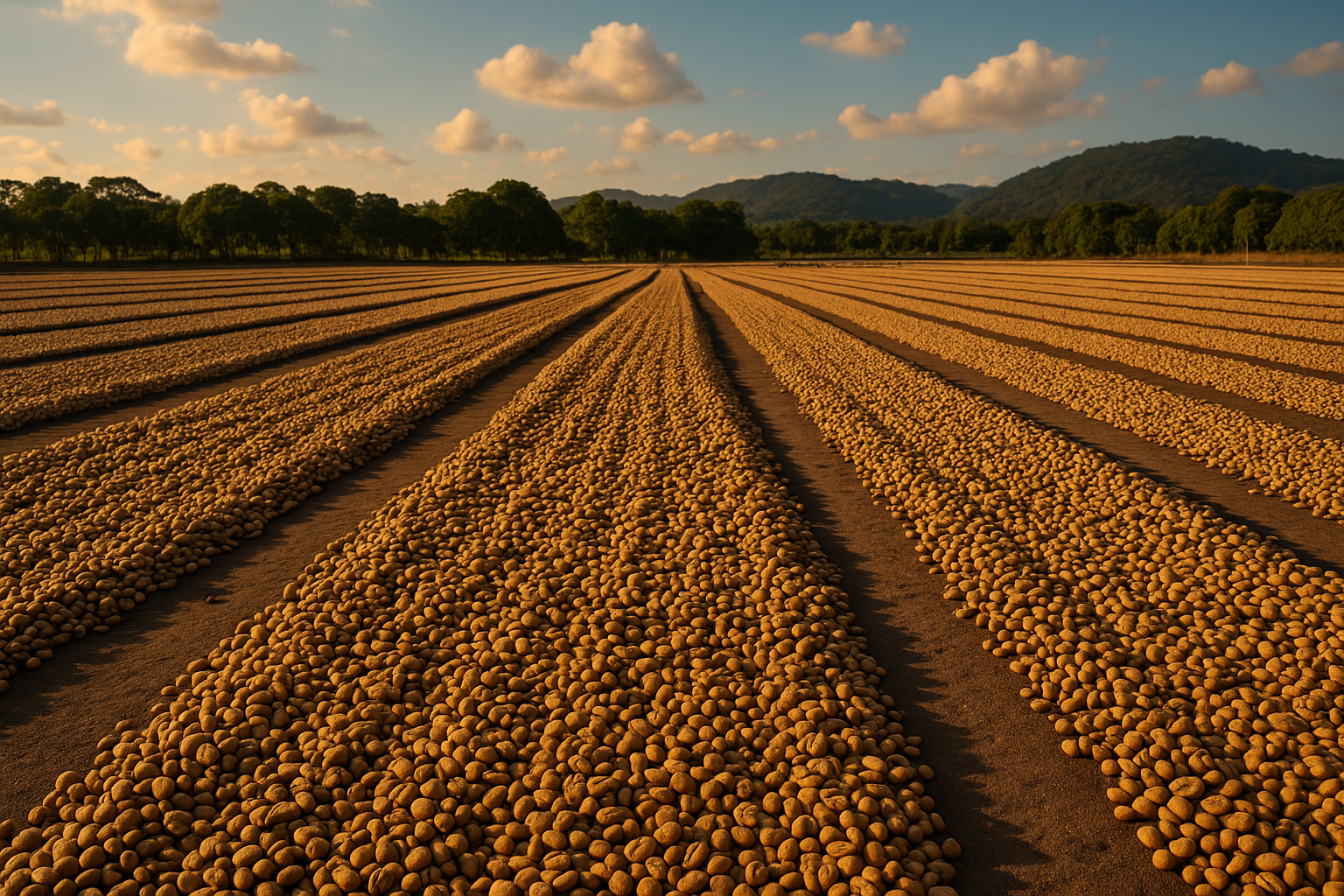
Peru Hits Record Coffee Sales of Over $1.5 Billion in 2025

Dubai – Qahwa World

Peru’s coffee industry reached an unprecedented historical milestone in 2025, with the latest official data from the Ministry of Agrarian Development and Irrigation (MIDAGRI) reporting record-breaking sales of $1.57 billion between January and November. This figure represents a staggering 54.1% year-on-year growth compared to the same period in the previous year, firmly positioning the coffee sector as one of the most vital pillars of the Peruvian national economy over the last decade.

This exceptional success is the result of Peru’s long-term strategic commitment to solidifying its status as the world’s leading producer and exporter of organic coffee. This commitment has perfectly aligned with a major shift in global consumer behaviour, where buyers are increasingly prioritising sustainable, eco-certified, and ethically sourced crops. Furthermore, favourable international prices for high-value speciality coffee lots played a decisive role in maximising financial returns. Peruvian exporters have successfully navigated and met the rigorous quality standards and strict traceability requirements demanded by major strategic markets, most notably the United States and the European Union.

Field reports indicate that this growth was not accidental but the product of intensive investment in improving logistical supply chains and advancing post-harvest processing technologies within the rugged Andean highlands. This prosperity has had a direct and tangible impact on the national income, significantly enhancing the livelihoods of more than 223,000 farming families across the Andes and the Amazon rainforest. In these regions, coffee cultivation serves as the primary socioeconomic lifeline and a fundamental social pillar for rural communities. Building on these historic results, the Peruvian government now aims to leverage this momentum to further promote regional brands in international forums and ensure the long-term sustainability of these record-breaking figures in future seasons.

Coffee Market in Southern Russia: 2025 Overview

Dubai – Qahwa World

In 2025, the coffee market in Southern Russia experienced steady price growth alongside the expansion of café networks. Data from Check Index and Kontur.Fokus reveal key trends in Rostov Oblast and Krasnodar Krai.

  • Rising Coffee Prices and Consumer Demand

By December 2025, the average price of a cup of coffee in Rostov Oblast reached 209 rubles (+17% YoY).

In Krasnodar Krai, the average price was 223 rubles (+15% YoY).

Despite price increases, consumer demand remained stable, driven by milk-based drinks and combo purchases.

Top Coffee Choices: Over 80% of sales come from cappuccino and latte.
Combo Orders: Many consumers pair coffee with pastries, sandwiches, or desserts.
Average Check: Rostov-on-Don ranked in the top 10 Russian cities over one million residents by café spending, with the average check at 494 rubles in autumn 2025.

  • Café Infrastructure Growth

The rise in prices did not stop café expansion:

Rostov Oblast: 513 cafés (+11.5%)

Krasnodar Krai: 792 cafés (+11.9%)

  • Strategic Opportunities

Experts highlight a shift in growth from central urban areas to residential districts, where high-quality coffee outlets are scarce. This trend opens new opportunities for entrepreneurs in Southern Russia’s coffee market.

The New Global Coffee Order: Major Transformations Shaping the Industry’s Future

Dubai – Qahwa World

The coffee industry is witnessing an unprecedented transformation, reshaping itself under pressures that span climate, economics, trade, and consumer behavior. The World Coffee Portal’s recent two-part analytical study, titled “Coffee’s New World Order”, provides a deep dive into these sweeping changes, offering a comprehensive view of how the global coffee system is evolving before our eyes.

Climate Pressures and Production Volatility

Global coffee production is now more vulnerable than ever. In 2025, Brazil, the world’s largest arabica producer, faced severe heatwaves and erratic rainfall, pushing arabica prices to historic highs. Meanwhile, Vietnam, a key robusta supplier, suffered prolonged droughts that impacted yields, raising the cost of instant coffee ingredients to levels unseen in nearly half a century.

These climate challenges are compounding existing market pressures. Futures markets, historically driven by stable inventory practices, are now in backwardation, discouraging stockpiling and amplifying shortages. As a result, the world is seeing unprecedented fluctuations in both commodity prices and availability, affecting roasters, exporters, and consumers alike.

Trade Policies and Global Ripple Effects

Recent trade developments have intensified the industry’s volatility. When the United States imposed significant tariffs on Brazilian coffee, supply chains were forced to adapt quickly. European and Asian markets absorbed redirected volumes, leading Germany to surpass the US as Brazil’s largest export destination. Meanwhile, China has actively expanded imports to secure long-term supply for its growing domestic chains, including large-scale deals by regional players to stock thousands of stores.

These developments illustrate that coffee is no longer a commodity confined to traditional trade patterns. Instead, it is part of a dynamic, multi-polar market, where emerging economies increasingly influence global flows, pricing, and strategies.

Consumer Trends and Emerging Markets

The World Coffee Portal study emphasizes that consumption patterns are shifting globally. Asia, the Middle East, and Latin America are no longer passive markets. Local brands are rapidly innovating, offering products tailored to regional tastes, from fruit-infused coffee drinks to digital-first ordering experiences. These trends challenge legacy Western models of expansion, demonstrating that global dominance in coffee is no longer guaranteed by scale alone.

Specialty Coffee Under Pressure

Specialty coffee, long seen as insulated from commodity pressures, now faces both opportunities and risks. Automation and technological advances can reduce operational costs, but the premium coffee segment must balance quality, exclusivity, and affordability. Experts highlight that consumer expectations remain high; price increases must be justified by superior flavor, traceability, and experience. The premium market’s future will hinge on its ability to navigate these competing demands.

Sustainability and Climate Resilience

With 70% of global coffee produced by smallholders, sustainability is central to industry stability. Climate resilience, yield improvements, and farmer support are critical to safeguarding the coffee supply chain. While development aid has declined, private sector initiatives and collaborative programs—such as G7-backed funds and proposed levies on green coffee—are emerging as essential mechanisms to ensure long-term sustainability.

The End of Cheap Coffee?

The era of inexpensive, untraceable coffee is drawing to a close. Rising costs, climate impacts, and supply chain disruptions are driving prices upward, even as global demand remains robust. Consumers may pay more, but the industry is evolving toward efficiency, transparency, and collaboration, creating a new paradigm for how coffee is grown, traded, and consumed worldwide.

The World Coffee Portal’s study offers a rare and detailed glimpse into this evolving global landscape, providing essential insights for industry leaders, traders, and enthusiasts alike. The global coffee order is changing—and those who adapt quickly will define the next era of the industry.

Why Coffee Prices Are Rising — And What It Means for Consumers?

Dubai, September 4, 2025 (Qahwa World) – Coffee drinkers around the world are paying more than ever for their daily brew. In the United States, the price of ground roast coffee reached $8.41 per pound in July, a record high and a 33% jump from last year, according to the U.S. Bureau of Labor Statistics.

Prices for all types of coffee, including instant and roasted, were also up 14.5% year-on-year in July. That made coffee the second-fastest rising item in the consumer price index, just behind eggs.

This sharp increase is the result of three main factors: extreme weather in producing countries, falling inventories, and new trade tariffs on Brazil, the world’s largest coffee exporter.

Weather shocks

Coffee is highly sensitive to climate conditions. Even small changes in weather can damage the crop and reduce yields.

Brazil, which produces about 40% of the world’s coffee, has faced a mix of severe drought and heavy rains in recent seasons. Experts call this pattern “precipitation whiplash.” The plants first suffer from lack of water, then get too much, leaving beans of lower quality and lower quantity.

Vietnam, the second-largest producer, had a similar problem. Its coffee production dropped by 20% in 2024 due to drought. Later, heavy rains caused further damage to the harvest.

“Coffee plants are very sensitive to their environment,” said Mike Hoffmann, professor emeritus at Cornell University. “Drought weakens the plants, then excess water comes in and harms the quality and the yield.”

Trade tariffs

On top of weather problems, trade policy is adding more pressure. The Trump administration imposed 50% tariffs on Brazilian coffee, which could keep prices high in the U.S. and other markets.

A report by the International Coffee Organization (ICO) warned in August that these tariffs would place “upward pressure” on global prices, especially since the U.S. imports about 32% of its coffee from Brazil.

Still, analysts believe big chains can manage the cost better than small buyers. For example, Starbucks might only need to raise prices by 0.5% or less to cover the tariff cost, thanks to its large size and strong purchasing power.

Low inventories

For the past few years, many coffee companies chose to run down their existing stockpiles instead of buying beans at higher market prices. As a result, global inventories are now at very low levels compared with history.

According to a Bernstein research report, when inventories are low, the market is more exposed to sudden shocks. If demand rises or if another supply problem hits, prices can spike very quickly.

Prices and consumption

The way consumers feel the price increase depends on how they buy their coffee.

At grocery stores, coffee prices usually follow commodity prices more closely. When wholesale prices go up, supermarkets often raise prices quickly. When prices fall, they may use discounts and promotions to attract shoppers.

In coffee shops and restaurants, prices are less volatile. Chains like Starbucks or Dunkin’ may take longer to pass higher costs on to customers, since they can spread out the impact across many products and markets.

Short-term and long-term outlook

Some relief could come in the short term. Better weather and new investment in farming productivity may help bring prices down slightly. Sustainable farming methods and technology could also improve efficiency and stabilize supply.

But the long-term picture is more worrying. Climate change is expected to bring more frequent droughts, floods, and extreme weather events. These patterns will continue to hurt production in major coffee regions.

“The prices will continue to go up, in my mind,” Hoffmann said. “Climate change isn’t going away. The severity of droughts, flooding — all of that will get worse. And it’s not just coffee. It’s the whole food supply.”

What it means for the future

The global coffee market is heading toward more uncertainty. Consumption is still growing worldwide, but production is struggling to keep up due to climate, economic, and political challenges.

This means consumers should expect coffee prices to stay higher than average in the coming years, with possible spikes whenever new disruptions occur. For farmers and producers, the situation may bring both risks and opportunities. Those who adopt technology, invest in climate-resilient farming, and improve supply chains may be able to thrive in a difficult environment.

For everyday coffee drinkers, the “morning cup” may remain affordable at big chains for now, but at-home brewers are likely to keep seeing bigger swings in grocery store prices.


Tariffs Push U.S. Coffee Industry Into Crisis as Prices Surge

Dubai, September 2, 2025 – (Qahwa World) – The U.S. coffee sector is entering one of its most turbulent phases in decades as new tariffs take hold, global prices soar, and supply chains face renewed disruption. From small roasters to household-name brands, the entire industry is scrambling to cope with higher costs and mounting uncertainty — with consumers ultimately left paying the price.

Prices Climb to Record Highs

According to the latest inflation data, the average retail price of roasted coffee in the U.S. has risen 14.8% since July 2024. In total, coffee prices have jumped 84% since 2021, with the retail price of ground coffee reaching $8.41 per pound in July 2025, up from $4.56 just four years ago.

Globally, the situation is even more alarming. Coffee prices have surged 59% year-over-year, with a 34% spike in August alone. Arabica stockpiles have fallen to less than 14.5 months of supply, the lowest level in a decade, driving specialty coffee prices above $20 for a 12-ounce bag in many U.S. grocery stores.

New Tariffs Reshape the Market

On August 6, the Trump administration imposed a sweeping set of tariffs: 50% on unroasted Brazilian coffee, 10% on imports from Colombia and Ethiopia, 25% on India, and 40% on Myanmar. Mexico remains the only major origin exempt, thanks to the U.S.–Mexico–Canada Agreement (USMCA).

Brazil — the world’s largest producer, responsible for 37% of global supply — is the hardest hit. With its price advantage wiped out, many U.S. roasters are reconsidering long-term sourcing strategies.

China and the European Union are moving quickly to fill the gap. In late August, Beijing approved 183 Brazilian exporters to ship coffee under a new five-year deal, while the EU, which already sources about a third of its coffee from Brazil, has secured additional contracts. These moves could permanently shift trade flows away from the U.S. market.

Roasters and Consumers Under Pressure

The tariffs are squeezing the entire coffee supply chain. Large corporations such as Starbucks and Keurig Dr Pepper can leverage economies of scale, but thousands of smaller roasters are struggling to absorb the shock.

Independent businesses like Elevated Roast in Washington State report tariff costs amounting to 21% of total imports. The owner says he is “eating” half the costs to shield customers, but acknowledges this approach is unsustainable in the long run.

Industry experts warn that roasters operating on thin margins — especially those with existing debt — may face closures if costs continue to rise alongside higher interest rates and restricted access to credit.

Consumers, meanwhile, are being forced to adapt. Coffee remains the most consumed beverage in the U.S., with 66% of adults drinking it daily, according to the National Coffee Association. Yet surveys show changing habits: many households are stockpiling coffee, trading down to cheaper brands, or reducing café visits. At the same time, 71% of Americans report brewing at home at least once a day, compared to just 16% who exclusively rely on cafés.

Political, Legal, and Climate Uncertainty

The tariffs have also sparked political and legal battles. Members of the Congressional Coffee Caucus have called on the administration to exempt coffee imports, arguing that every $1 spent on imported coffee generates $43 in economic value across the U.S. supply chain.

Legal challenges are already under way. A federal appeals court recently ruled that the administration exceeded its authority in imposing the tariffs, but enforcement remains suspended until at least mid-October pending possible Supreme Court review.

At the same time, climate change continues to amplify supply risks. Successive droughts in Brazil and Central America have already reduced yields, and any additional shocks could push prices even higher.

What Lies Ahead

Analysts agree that unless coffee is granted a tariff exemption, volatility will persist. While major players such as Keurig Dr Pepper and JDE Peet’s are pursuing a merger that could bring long-term efficiencies, such strategies will not address immediate disruptions.

The risk, experts warn, is a wave of consolidation in which small and mid-sized roasters exit the market, reducing diversity and competition while leaving the sector more dependent on a few corporate giants.

For consumers, the dilemma remains simple yet unavoidable: adapt to higher prices, change consumption patterns, or cut back altogether. But with coffee entrenched as both a ritual and a cultural staple, scaling back may prove harder than any trade policy shift.

Global Coffee Prices Surge as Brazil Faces Weather Woes and US Tariffs

São Paulo, August 25, 2025 (Qahwa World) – Coffee markets remain under heavy pressure from climate shocks in Brazil and trade tensions with the United States, pushing prices sharply higher in recent weeks, even as a stronger U.S. dollar triggered modest profit-taking on Monday.

Arabica futures in New York had surged to a 3.5-month high earlier in the day but ended lower, with December contracts closing down 0.15% after investors booked profits. September robusta contracts were idle due to a UK holiday. Analysts said the dollar’s strength spurred liquidation, though underlying supply concerns continue to dominate the market.

In Brazil, retail coffee prices that had fallen an average of 12% earlier in August are now expected to reverse course. According to the Brazilian Coffee Industry Association (ABIC), raw coffee prices rose almost 25% between July and August, reaching 2,191 reais ($395) per 60-kilogram bag. Despite this surge, supermarket prices in August averaged 58.99 reais (around $10) per kilogram, still below May’s peak of 70 reais/kg. ABIC’s executive director, Celirio Inacio, warned that if futures remain elevated, higher shelf prices are “inevitable.”

The main external factor driving the rally remains the 50% tariff imposed by the U.S. government on Brazilian goods, including coffee. Brazil normally supplies about one-third of U.S. unroasted coffee imports, and American buyers have already begun canceling contracts. Marcio Ferreira, president of Brazil’s Coffee Exporters Council (Cecafé), called the tariffs “the main driver” of the sharp price increases in New York.

Weather concerns add another layer of pressure. Somar Meteorologia reported that Minas Gerais, Brazil’s largest arabica-producing state, received no rainfall in the week ending August 23. Frost damage earlier in the month has also raised fears of reduced yields. Despite this, Brazil’s 2025/26 harvest is almost complete: Safras & Mercado estimated 99% of the crop had been gathered by August 20, with robusta fully harvested and arabica at 98%. Cooxupé, the country’s largest cooperative, reported its members’ harvest at 86.1% by mid-August.

Exports are slowing dramatically. Brazil’s July shipments of unroasted coffee dropped 20.4% year-on-year to 161,000 metric tons, while Cecafé data showed green coffee exports fell 28% to 2.4 million bags. Arabica exports fell 21%, robusta plunged 49%, and total shipments from January through July were down 21% from last year at 22.2 million bags. Meanwhile, inventories tracked by ICE remain at multi-year lows: arabica stocks hit a 15-month low of 726,661 bags in mid-August, while robusta fell to its lowest in four weeks.

Global dynamics reflect the same strain. The USDA’s Foreign Agriculture Service (FAS) projects world coffee production in 2025/26 will rise 2.5% year-on-year to a record 178.7 million bags, with robusta up nearly 8% but arabica slightly down. Brazil’s production is forecast to rise only 0.5% to 65 million bags, while Vietnam could rebound 6.9% to 31 million bags, its largest in four years. Yet despite the higher output, trading house Volcafe predicts an arabica deficit of 8.5 million bags for 2025/26 — the fifth consecutive year of shortfalls.

Brazil, as the world’s top coffee producer and exporter and the second-largest consumer after the United States, stands at the center of these global shifts. With tariffs restricting trade, exports slowing, inventories tightening, and weather threats mounting, analysts warn that consumers should brace for rising retail coffee prices both domestically and worldwide — even if day-to-day trading sometimes pulls prices lower.

Coffee Prices Soar to New 2-Month Highs Amid Brazil Frost and Falling Exports

Dubai, August 16, 2025 (Qahwa World) – Coffee prices surged to their highest levels in two months on Friday, driven by frost concerns in Brazil, declining exports, and tightening global inventories. The rally pushed September Arabica coffee (KCU25) up 4.64% to close at +15.15, while September Robusta coffee (RMU25) gained 2.86% at +117. Over the week, Arabica rose +10.4% and Robusta +18%, marking one of the strongest weekly rallies of the year.

Brazil Frost Sparks Market Tensions

Early this week, a light frost was reported in Cerrado Mineiro, one of Brazil’s key Arabica-producing regions. While crop damage was limited, the event renewed market fears over frost risks during Brazil’s winter season. Weather events in Brazil remain a critical factor in global coffee price volatility.

Sharp Decline in Brazilian Exports

Brazil, the world’s largest coffee exporter, reported a 20.4% year-on-year drop in July unroasted coffee exports to 161,000 MT, according to its Trade Ministry. Exporter group Cecafe confirmed a steep decline, with green coffee exports down 28% y/y to 2.4 million bags. Within this, Arabica exports fell -21%, while Robusta exports plunged -49%.
From January to July, Brazil shipped 22.2 million bags, down -21% compared with last year.

Inventories at Multi-Year Lows

Declining ICE warehouse stocks further fueled bullish momentum. Arabica inventories hit a 1.25-year low of 726,661 bags on Thursday before rebounding slightly to 731,739 on Friday. Robusta inventories fell to a three-week low of 6,907 lots, below the recent two-year high of 7,029 lots reached in late July.

U.S. Tariffs Add Uncertainty

The market is awaiting clarity on U.S. trade policy, as President Trump has yet to exempt coffee from the proposed 50% tariff on Brazilian exports. Such a move could raise domestic inventories in Brazil while reshaping global trade flows.

Weather and Harvest Update

Above-average rainfall in Minas Gerais, Brazil’s largest Arabica region, brought 4.8 mm of precipitation last week, or 109% of the historical average, easing dryness concerns but weighing slightly on prices.
Meanwhile, Brazil’s 2025/26 harvest is nearing completion. Safras & Mercado reported 94% progress as of August 6, ahead of last year’s 92%. Cooxupe, Brazil’s largest cooperative, said its members had completed 80.4% of the harvest by August 8.

Global Coffee Exports and Vietnam Outlook

On the supply side, the International Coffee Organization (ICO) noted that global coffee exports rose +7.3% y/y in June to 11.69 million bags. However, cumulative exports from October to June dipped slightly by -0.2% y/y at 104.14 million bags.

Vietnam, the world’s second-largest producer, continues to face challenges. The country’s 2023/24 output fell 20% y/y to 1.472 million MT, the lowest in four years, due to drought. Exports in 2024 dropped -17.1% to 1.35 million MT. However, from January to July 2025, Vietnam’s shipments rose 6.9% y/y to 1.05 million MT, offering partial recovery.

USDA and Volcafe Projections

The USDA’s Foreign Agriculture Service (FAS) expects world coffee production to hit a record 178.68 million bags in 2025/26, up 2.5% year-on-year. Robusta output is forecast to surge by +7.9% to 81.65 million bags, while Arabica is projected to decline -1.7% to 97.02 million bags.
Despite this, Volcafe projects a widening global Arabica deficit of -8.5 million bags for 2025/26 – the fifth straight year of supply shortfalls – compared with a -5.5 million bag deficit last season.