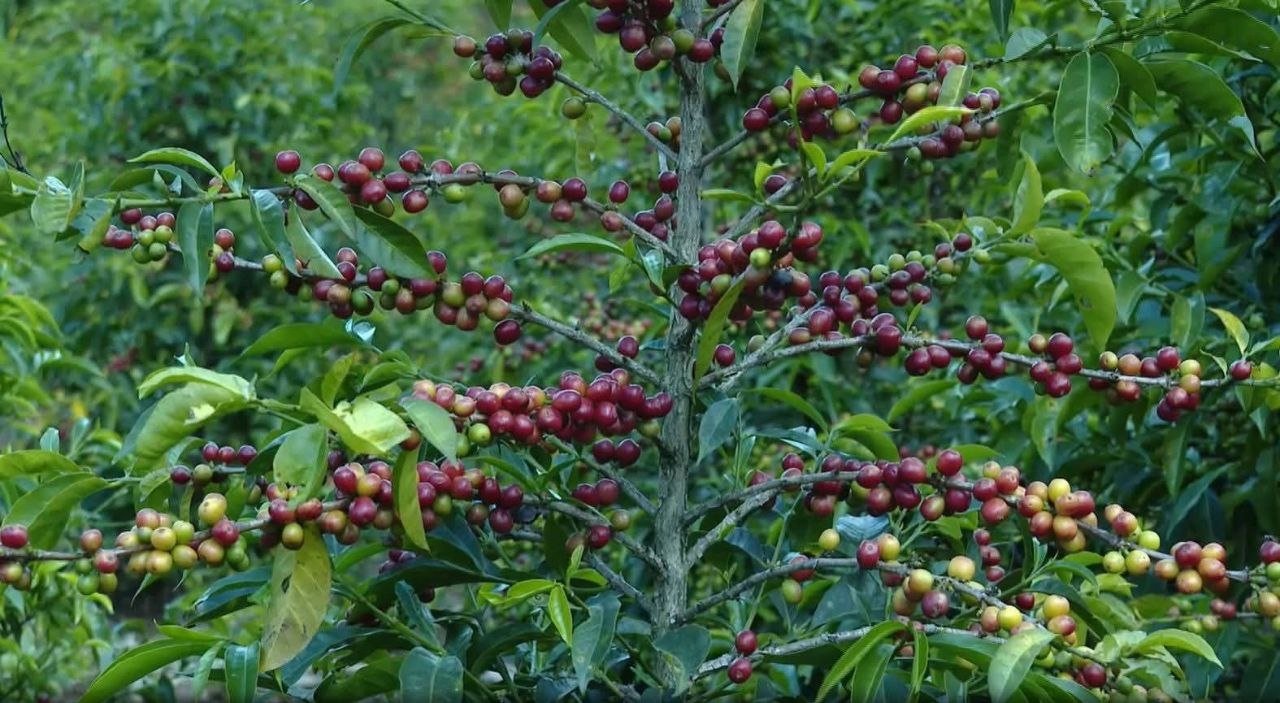
Drier Conditions in Brazil Lift Arabica Coffee Prices

Dubai – Qahwa World

Arabica coffee futures moved higher on Wednesday, reaching their strongest level in about four weeks, while robusta prices weakened. March arabica contracts gained modestly, supported by weather concerns in Brazil and currency movements, whereas robusta futures declined amid ample supply from Vietnam.

Lower-than-normal rainfall across key Brazilian growing regions is providing support to arabica prices. Recent data from Somar Meteorologia showed that Minas Gerais—Brazil’s largest arabica-producing state—received significantly less rainfall than usual in late December, raising concerns about crop development. Brazil is the world’s top producer of arabica coffee, making weather conditions there especially influential for global prices.

Additional support came from a firmer Brazilian real, which reached its strongest level in roughly a month against the US dollar. A stronger currency tends to slow export selling, as Brazilian producers receive fewer local-currency returns from dollar-based coffee sales.

In contrast, robusta prices are under pressure due to strong export volumes from Vietnam, the world’s largest robusta supplier. Official figures indicate that Vietnam’s coffee exports rose sharply in 2025, adding to near-term supply availability.

Inventory trends remain a key focus for traders. Arabica stocks monitored by ICE had previously fallen to their lowest level in nearly two years before rebounding slightly in recent weeks. Robusta inventories also declined to a one-year low earlier in December but have since shown signs of recovery.

Demand patterns have also influenced the market. Earlier US tariffs on Brazilian imports reduced American purchases of Brazilian coffee, leading to tighter inventories in the United States. Although those tariffs have since been reduced, buying activity has not yet fully recovered.

Looking ahead, expectations of larger global supplies are limiting further price gains. Brazil’s crop agency recently raised its forecast for the country’s 2025 coffee output, citing improved conditions. Vietnam is also expected to increase production in the upcoming season, with industry groups projecting strong output if favorable weather continues.

On the global stage, export data suggest some tightening, as shipments declined slightly year over year. However, longer-term projections from the USDA point to record world coffee production in 2025/26, driven by growth in robusta output that more than offsets a decline in arabica production. Ending global coffee stocks are forecast to fall modestly, keeping supply concerns on the radar despite higher overall production.

Arabica Leads the Recovery: Coffee Outperforms Sugar, Cotton, and Cocoa in Q3 2025

Dubai – Qahwa World

The agricultural commodities sector gained 1.89% in Q3 2025, driven by strong advances in Arabica coffee and frozen concentrated orange juice (FCOJ) futures. Despite the quarterly rise, the sector remained 19.25% below its 2024 closing level, with four of five major agricultural commodities ending lower and two down more than 40%.

Arabica coffee was the best-performing agricultural commodity in Q3, climbing 22.2% amid concerns over Brazil’s crop outlook and posting a 17.23% year-to-date increase. Futures closed at $3.7485 per pound at the end of September and climbed further to $4.0875 by mid-October, marking coffee as the standout performer of 2025 so far.
The monthly chart shows sustained bullish momentum that began in late 2024.

Cocoa, however, led the downside after reaching an all-time high of $12,931 per ton in late 2024. Prices plunged 27.86% in Q3 and 42.19% since the start of 2025, closing at $6,749 per ton in September and falling below $5,900 in mid-October. Analysts point to commodity cyclicality — high prices trigger oversupply, larger inventories, and weaker demand.

World sugar futures (#11) rose 4% in Q3 but are still 16.41% lower year-to-date. Prices settled at 16.10 cents per pound at the end of September, well below the November 2023 peak of 28.14 cents. By mid-October, March 2026 contracts were trading near 15.60 cents, extending the bearish trend.

Cotton prices slipped 0.77% in Q3 and 3.85% year-to-date. Futures closed September at 65.77 cents per pound and hovered slightly lower at around 65 cents in mid-October. Cotton has trended downward since the May 2022 high of $1.5595 per pound, though current levels may offer a foundation for recovery if production contracts due to low prices.

While FCOJ gained 11.90% in Q3, it remained the worst-performing agricultural commodity year-to-date, down 51.04%. Prices fell from a December 2024 record of $5.4315 per pound to $2.4355 by the end of September and slipped below $2 in mid-October.
Analysts note that FCOJ’s limited liquidity amplifies volatility, with low open interest and trading volumes causing sharper price swings.

As Q4 begins, coffee prices remain elevated while cocoa, sugar, cotton, and FCOJ continue to slide. However, sugar and cotton may find cyclical support, as low prices typically drive production cuts, inventory drawdowns, and stronger demand — setting the stage for a rebound.

Weather conditions, crop health, trade policies, and geopolitics will continue to shape volatility across agricultural commodities. While coffee may face corrective pressure after its rally, sugar and cotton appear the most likely candidates for recovery — particularly cotton, which tends to peak in Q1–Q2 amid planting uncertainty. With prices below 66 cents per pound, cotton could emerge as the strongest recovery play for 2026.

“Agricultural commodities led the asset class in 2023 and 2024 but have fallen behind in 2025. Yet, cyclicality remains the driving force — where lows are found, the next rallies begin.”