Just 90 Seconds Turns Wet Coffee Grounds into High-Grade Solid Fuel

Source: National Research Council of Science & Technology – Chemical Engineering Journal |
Author: Qahwa World |
Date: June 21, 2026

Just 90 Seconds Turns Wet Coffee Grounds into High-Grade Solid Fuel

Key Takeaways:

  • Korean researchers develop Flame Plasma Pyrolysis (FPP) technology to convert wet coffee grounds into biochar in just 90 seconds.
  • The technology eliminates the need for pre-drying, the biggest barrier to coffee waste recycling.
  • The resulting biochar achieves a heating value of 29.0 MJ/kg, comparable to high-grade anthracite coal.
  • The process achieves 83.3% mass reduction and triples fixed carbon content (from 15.6% to 46.2%).
  • The technology is 40 to 240 times faster than conventional hydrothermal carbonization.
  • Potential applications include food waste, sewage sludge, and agricultural residues with high moisture content.

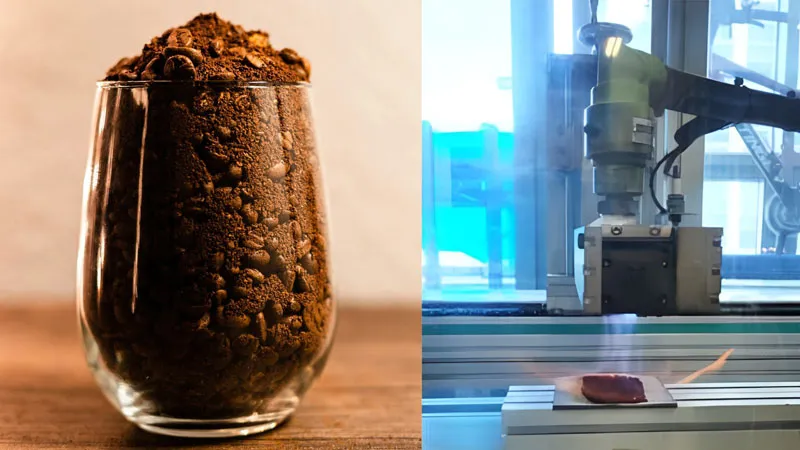
Every year, global coffee consumption generates more than 10 million tons of spent coffee grounds, most of which end up landfilled or incinerated, releasing greenhouse gases and polluting the environment. While these grounds hold real energy potential, their high moisture content has long been a barrier to converting them into fuel or carbon products.

Now, a research team from the Korea Institute of Geoscience and Mineral Resources (KIGAM) has developed a revolutionary technology called Flame Plasma Pyrolysis (FPP), which directly treats biomass containing approximately 55% moisture without any pre-drying, converting it into high-quality biochar in just 90 seconds.

A Solution to the Growing Waste Challenge: From Waste to Energy

The global coffee industry faces a growing environmental challenge: more than 10 million tons of spent coffee grounds are produced annually, with most ending up in landfills or incinerators. These grounds are not just waste – they are wasted energy. Coffee grounds contain a heating value of up to 21.8 MJ/kg, but their high moisture content (approximately 55%) has been the biggest obstacle to economic utilization.

Flame Plasma Pyrolysis: A Revolution in Wet Waste Processing

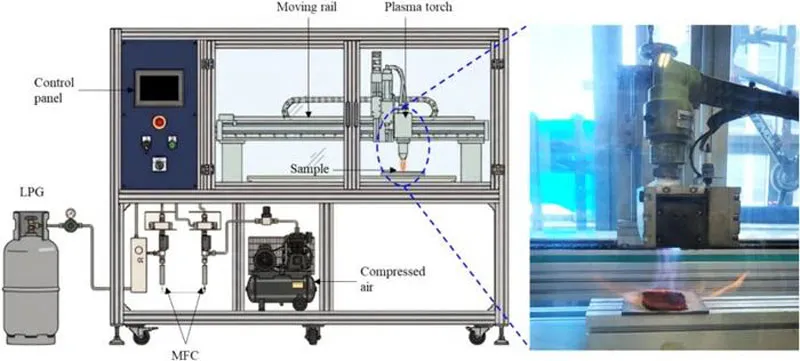
The flame plasma system generates plasma flames at temperatures of approximately 800–900°C through the combustion of liquefied petroleum gas (LPG) and compressed air. Unlike conventional pyrolysis technologies, the process eliminates the need for any pre-drying treatment. During processing, the intense thermal energy rapidly vaporizes moisture trapped inside the biomass particles. The resulting pressure buildup triggers microscopic explosions known as the “popcorn effect,” which simultaneously enhance carbonization and create highly porous structures. Rather than acting as a barrier, moisture itself becomes a steam-activation agent that accelerates reactions and improves product quality.

Anthracite-Level Fuel Performance and Significant Quality Improvements

Under optimized conditions, the researchers achieved complete conversion within 90 seconds, with a mass reduction of 83.3%. The resulting biochar exhibited a heating value of 29.0 MJ/kg, approximately 33% higher than the original coffee grounds (21.8 MJ/kg) and comparable to that of anthracite coal.

Indicator Before Treatment After Treatment Improvement
Heating Value (MJ/kg) 21.8 29.0 +33%
Fixed Carbon Content (%) 15.6 46.2 ≈3×
Specific Surface Area (m²/g) 1.5 115.4 ×77
Sulfur Compounds Present Fully Removed No SOx Emissions

Dramatically Faster Than Existing Technologies

The new process offers substantial advantages in both processing speed and energy efficiency. Compared with hydrothermal carbonization (HTC), which typically requires one to six hours, the FPP process is 40 to 240 times faster. It also reduces treatment time by more than 20-fold compared with torrefaction, which generally requires at least 30 minutes. Because the system relies on combustion-generated plasma rather than electricity-intensive plasma devices, it lowers overall energy consumption while maintaining high processing performance.

Future Applications: From Coffee Waste to Decentralized Energy Systems

Beyond coffee waste, the technology is potentially applicable to a wide range of high-moisture organic wastes, including food waste, sewage sludge, and agricultural residues. Its compact process design and ultra-fast treatment capability make it particularly attractive for decentralized on-site waste-to-energy facilities, where transportation and drying costs often limit resource recovery efforts.

Researchers: “We Are Changing the Paradigm from Waste as a Problem to Waste as an Energy Resource”

Dr. Taejun Park, lead author of the study, said: “This technology presents a new paradigm in which waste is no longer viewed as a disposal problem but as a valuable energy resource.” He added: “We plan to expand the technology to various types of high-moisture organic waste and further optimize the process for industrial-scale commercialization.”

Research Context: Published in the Leading Chemical Engineering Journal

The research was published in the Chemical Engineering Journal (Elsevier, Impact Factor 13.2), a leading international journal in chemical engineering. The study demonstrates a new approach for transforming wet organic waste into valuable energy resources while advancing carbon-neutral waste management strategies. The Korea Institute of Geoscience and Mineral Resources (KIGAM) is a government-funded research institute specializing in geoscience, mineral resources, energy technologies, and Earth system science.

Frequently Asked Questions About Coffee Waste-to-Fuel Technology

Q: What is Flame Plasma Pyrolysis technology?

A: A revolutionary technology developed by Korean researchers that converts wet biomass (such as coffee grounds) into high-quality biochar in just 90 seconds, without any pre-drying.

Q: What is the heating value of the resulting biochar?

A: 29.0 MJ/kg, which is 33% higher than the original coffee grounds and comparable to high-grade anthracite coal.

Q: How long does the conversion process take?

A: Just 90 seconds – 40 to 240 times faster than conventional hydrothermal carbonization techniques.

Q: Can this technology be applied to other types of waste?

A: Yes, it can be applied to food waste, sewage sludge, and agricultural residues with high moisture content.

Q: What are the environmental benefits of this technology?

A: It reduces waste sent to landfills, lowers greenhouse gas emissions, and produces clean sulfur-free fuel, preventing SOx emissions.

Flame Plasma Pyrolysis technology represents a paradigm shift in converting wet organic waste into valuable energy resources. With rapid, cost-effective processing, this technology opens new horizons for sustainable waste management and renewable energy production. As global coffee consumption continues to grow, this technology may be the key to turning one of the biggest waste challenges into an energy and environmental opportunity.

Prepared and edited by: Qahwa World – Based on a study published in the Chemical Engineering Journal (Elsevier) by the Korea Institute of Geoscience and Mineral Resources.

All rights reserved. Republication with attribution permitted.

Publication date: June 21, 2026

From Cup to Concrete: How Coffee Waste Is Building a Greener Future

Dubai – Qahwa World

Two years after Australian researchers first turned yesterday’s espresso shots into tomorrow’s building material, the “coffee concrete” revolution is no longer a lab curiosity. It is now being used on the streets of Victoria and reshaping how the world thinks about waste.

As a coffee expert who has spent two decades tracing every bean from farm to cup, I can say this: the humble spent coffee ground, once a soggy pile thrown away without a second thought, is now a high performance material in the construction industry. In 2026, the story is getting even better.

The Science, Brewed to Perfection

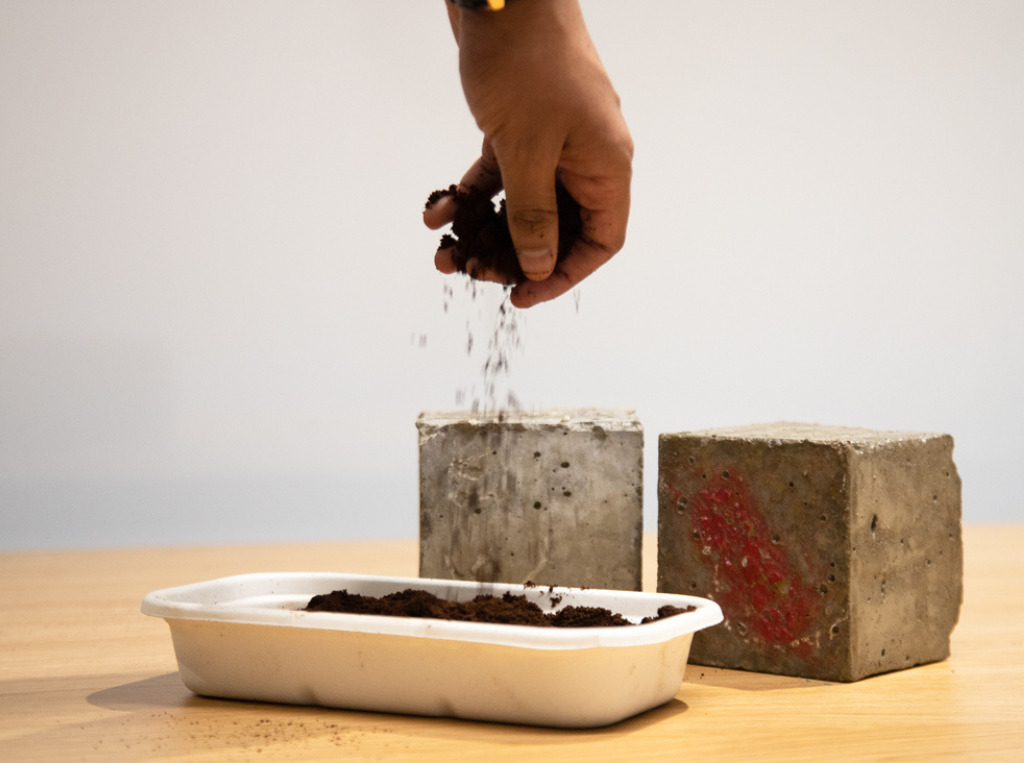
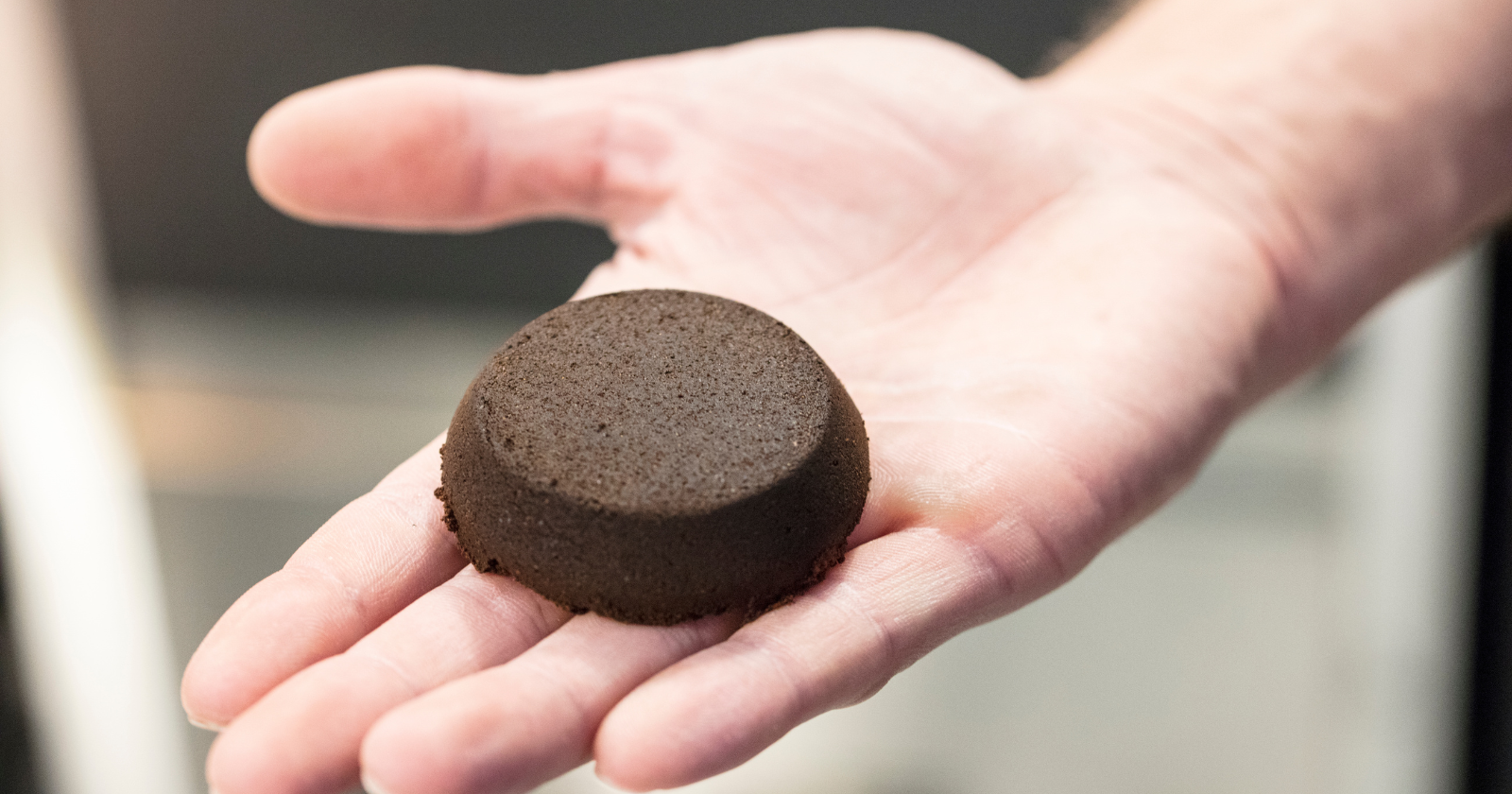
Back in 2023, engineers at RMIT University discovered that pyrolyzing spent coffee grounds at 350°C in the absence of oxygen creates a porous, carbon rich biochar. Replacing up to 15 percent of the sand in a standard concrete mix with this biochar increases compressive strength by nearly 30 percent. Higher temperatures do not perform as well. The optimal point is a precise low and slow process.

This is not just stronger concrete. It is smarter concrete. A peer reviewed life cycle analysis published in November 2025 showed it can reduce the material’s carbon footprint by up to 26 percent, cut fossil fuel use by 31 percent, and ease pressure on diminishing river sand supplies.

RMIT has also reported that the same coffee derived biochar improves thermal insulation in cement composites by up to 20 percent. Buildings made with it stay cooler in summer and warmer in winter. This leads to lower energy use and reduced emissions over time.

Real Streets, Real Impact

The results are already visible in real world projects.

In October 2024, the first section of coffee biochar concrete was laid on Victoria’s Big Build project in Pakenham. Five tonnes of spent coffee grounds, equal to about 140000 cups of coffee, were converted into two tonnes of biochar for a 30 cubic metre footpath. There was no smell and no visible difference, only improved strength and sustainability.

A parallel trial in Gisborne with Macedon Ranges Shire Council tested coffee and wood chip biochar side by side. Researchers continue to monitor long term performance under foot traffic, weather conditions, and freeze thaw cycles. Early results are promising.

A Circular Gift for the Coffee Industry

This development has direct implications for café owners, roasters, and coffee drinkers.

Globally, tens of millions of tonnes of spent coffee grounds are produced each year. Most are still sent to landfill, where they release methane. Now, this waste can be reused in a way that benefits both the environment and the industry.

Cafés that join collection programs may eventually turn their daily waste into revenue or carbon credits. A single cup of coffee could contribute to building stronger and more energy efficient schools and hospitals. This is a practical example of a circular economy.

Dr Rajeev Roychand and the RMIT team have stated they are ready to scale the technology. They are working with contractors and local councils and presenting the material in major exhibitions. The next steps include commercial standards, larger pilot projects, and expanded supply chains, all progressing in 2026.

The Bigger Picture

This innovation stands out as one of the most effective responses to coffee waste. It does not require changes in how coffee is prepared. It simply redefines the value of what remains after brewing.

From coffee farms in Ethiopia and Colombia to urban infrastructure in Melbourne and beyond, coffee is proving it can play a role far beyond consumption. It can contribute to building a more sustainable and resilient world.

In 2026, the future of construction carries a subtle trace of coffee.

Ahmed Al-Qahwa is Qahwa World’s lead voice on sustainable coffee innovation. He has visited RMIT’s laboratories and walked the Pakenham trial site.

Share this story with your local café or council. The coffee grounds from your cup could one day be part of the ground beneath your feet.