CQI Workshop in Dubai Explores the Science of Post-Harvest Coffee Processing

Tomorrow, coffee professionals and enthusiasts in the UAE will gather at the Victoria Arduino Experience Lab in Dubai for a six-hour workshop titled “CQI – Introduction to Post-Harvest Processing.” Organized by Mystic Cup Stories in collaboration with Victoria Arduino, the class promises an in-depth and hands-on introduction to one of the most crucial stages in coffee production.

Accredited by the Coffee Quality Institute (CQI), the session will guide participants through major processing methods — Natural, Honey, Mechanically Demucilaged, Fully Washed, and Wet Hulled — explaining how each technique shapes the final flavor profile of coffee.

The workshop will be led by Kristina Bakhtoiarova, an experienced educator, roaster, and consultant with over 15 years in specialty coffee. As a Q Processing Lecturer, Bakhtoiarova has trained professionals around the world and will share her deep understanding of post-harvest systems, from cherry selection and fermentation to drying and pre-cleaning.

Participants can also look forward to a guided coffee cupping featuring coffees from Mystic Cup Stories, offering a sensory exploration of how processing methods affect taste and aroma.

The program is open to baristas, roasters, café owners, coffee lovers, and future green buyers who want to decode common processing terms such as “Washed,” “Honey,” and “Natural.”

By hosting this CQI workshop, Victoria Arduino continues to strengthen Dubai’s reputation as a leading center for specialty coffee education and innovation in the Middle East.

Arabica Coffee Prices Dip as Brazil Rains and Tariff Talks Pressure Market

Dubai – Qahwa World

Arabica coffee prices fell on Wednesday as forecasts of rainfall in Brazil’s coffee belt and renewed trade discussions between Brazil and the United States triggered selling in the futures market.

On the ICE exchange, December Arabica (KCZ25) dropped by –4.75 points (–1.19%), while November Robusta (RMX25) rose by +55 points (+1.23%). The session began with an upward trend but later reversed, with traders reacting to changing weather expectations and tariff concerns.

Traders who had bet on prolonged dry conditions liquidated positions after new forecasts showed that Brazil’s main coffee-growing regions would receive rain later this week. The shift came just after reports of drought-related stress in Minas Gerais, where rainfall during the week ending October 11 reached only 48% of the historical average, raising concerns for the crucial flowering phase of the 2026/27 crop.

Market sentiment also shifted after Bloomberg reported that Brazilian Foreign Affairs Minister Mauro Vieira is set to meet U.S. Secretary of State Marco Rubio on Thursday to discuss tariffs. The talks come amid ongoing U.S. import tariffs of 50% on Brazilian coffee, which have already reduced shipments and tightened U.S. supplies.

ICE-monitored arabica inventories fell to a 1.5-year low of 494,558 bags, while robusta inventories slipped to 6,200 lots, their lowest in nearly three months. Meanwhile, the NOAA recently raised the likelihood of a La Niña event to 71% for October–December, potentially bringing drier conditions to Brazil and heightening risks for the next harvest.

In contrast, Vietnam’s Central Highlands, the country’s main coffee zone, is forecast to receive above-average rainfall through October 20 — with Dak Lak province expecting 70 mm, compared with a historical average of 61 mm. The favorable weather supports a strong 2025/26 robusta crop, with production projected to rise by 6% year-on-year to 1.76 million tons (29.4 million bags) — a four-year high.

According to the Vietnam National Statistics Office, coffee exports in the first nine months of 2025 climbed 10.9% year-on-year to 1.23 million tons, adding to global supply pressures.

The U.S. Foreign Agricultural Service (FAS) projects 2025/26 global coffee production at a record 178.68 million bags, up 2.5% from the previous year. Arabica output is expected to decline 1.7%, while robusta rises 7.9%.

Brazil’s total coffee production is forecast at 65 million bags, up 0.5%, while Vietnam’s is seen reaching 31 million bags, up 6.9%.

However, global trading firm Volcafe anticipates an arabica deficit of 8.5 million bags for 2025/26 — the fifth consecutive annual shortfall.

RAW Coffee Brings Its Signature Brews to Dubai Creek

Dubai – Qahwa World

Specialty coffee pioneer RAW Coffee Company has officially arrived at Dubai Creek, partnering with Boulevard Gourmet at the Radisson Blu Hotel Dubai Deira Creek for a six-month café takeover that promises to blend Old Dubai’s charm with contemporary coffee craftsmanship.

The pop-up marks a new chapter for RAW, giving visitors a chance to enjoy its signature espresso blends and explore unique single origins such as Ethiopian Guji and Mexican Mazateca. For adventurous palates, the highlight of the menu is the Noir Elixir — a bold cold brew creation with layers of blackcurrant, golden honey, and tonic, crafted to balance sweetness, acidity, and a dark fruit-forward profile.

Paired with Boulevard Gourmet’s selection of handmade pastries, sandwiches, and cakes, the collaboration offers a multisensory experience that celebrates both artisanal coffee and artisanal baking.

The café’s Creekside setting provides a vibrant, sunlit backdrop where guests can sip, unwind, and rediscover RAW’s signature coffee philosophy — bringing exceptional taste to one of Dubai’s most historic districts.

UK’s WatchHouse Enters UAE Market via Franchise Partnership

Dubai – Qahwa World

London-based specialty coffee brand WatchHouse is set to make its first franchised overseas foray this October, through a partnership with Dubai’s Big Belly Hospitality.
World Coffee Portal

The rollout will begin with a pop-up espresso bar at Marsa Boulevard, a waterfront development on Dubai Creek, before transitioning to full-scale cafes. Two permanent locations are earmarked for Abu Dhabi Equestrian Club and Saadiyat Grove in early 2026, with additional sites—possibly including one in DIFC (Dubai International Financial Centre)—slated for later in the year.

Big Belly Hospitality’s founder, Pallav Patel, emphasized that the partnership aims to blend a “design-led” global coffee experience with local relevance in the UAE marketplace.
World Coffee Portal

For Big Belly Hospitality, this move complements its existing portfolio of F&B ventures in the UAE, such as Bombay Bungalow, Ibn Al Bahr, and Masti. The group also introduced UK’s Patty & Bun to the region in mid-2024.
World Coffee Portal

Before this UAE entry, WatchHouse had already entered the US market via its first international outlet on New York’s 5th Avenue in April 2024.
World Coffee Portal

The brand operates around 20 outlets in the UK, and in June 2025, opened a second US site within New York’s Chrysler Building.In September 2025, WatchHouse’s Managing Director, Caroline Ottoy, outlined ambitious expansion targets: aiming for 100 global stores by end-2028, with the US footprint growing to 25 sites and further international franchises in markets such as Singapore and Qatar.

Ethiopia Earns $762.7 Million from Coffee Exports in Q1 FY 2025/26

Addis Ababa – Qahwa World

Ethiopia generated $762.75 million in revenue from coffee exports during the first quarter of the 2025/26 fiscal year, according to the Ethiopian Coffee and Tea Authority. The figure represents a 47% increase, or $243.73 million more than the same period last year, exceeding both export and revenue targets.

Dr. Adugna Debela, Director General of the Authority, announced that the country exported 113,542 tons of coffee between July and September 2025, achieving 75% of the planned export volume of 151,969.41 tons. However, the revenue reached 123% of the quarterly target of $622.5 million, underscoring higher prices and stronger market performance.

Leading Destinations

Germany remained the largest buyer, importing 20,793.14 tons (18%) and contributing $138.18 million (18%) to total earnings. Saudi Arabia followed with 16,088.45 tons (14%), generating $102.18 million (13%), while Belgium ranked third with 13,910.92 tons (12%) and $93.45 million (12%) in revenue.

Other key destinations included China (4th), the United States (5th), South Korea (6th), the United Arab Emirates (7th), Japan (8th), Italy (9th), and the Russian Federation (10th). Together, these top ten markets accounted for 80% of the total export volume and 79% of Ethiopia’s foreign exchange earnings. Compared with the same period of the previous fiscal year, the top destinations saw 3% growth in export volume and a significant 52% increase in revenue.

Key Drivers Behind the Growth

Dr. Adugna attributed the strong performance to multiple strategic initiatives introduced by the Authority, including:

Expanding coffee export markets to new destinations such as China.

Enhancing data quality and modernizing trade monitoring through a centralized coffee database and a secure data exchange system that tracks daily shipments.

Providing traders and stakeholders with monthly global and domestic market updates to support informed decision-making.

Reinforcing supervision to ensure exporters meet delivery timelines and contractual obligations.

Introducing a weekly minimum contract selling price aligned with global market trends.

Strengthening bilateral cooperation and knowledge exchange with countries that have advanced coffee production and management experience.

The Authority emphasized that these measures are part of Ethiopia’s broader effort to maximize export revenues and solidify its position as Africa’s leading coffee producer and exporter.

Coffee Prices in Russia Soar to 4,000 Rubles per Kilogram

Moscow – Qahwa World

Coffee prices in Russia have reached an all-time high, with instant coffee exceeding 4,000 rubles per kilogram for the first time. Ground and roasted coffee have also risen sharply, prompting a noticeable decline in demand of 4–11% across categories.

A Steep Climb Over the Past Year

According to Russia’s Federal State Statistics Service (Rosstat), the price of natural instant coffee rose to 4,006 rubles per kilogram in September 2025, up from 3,988 rubles in August — an annual increase of 18.3%. The price of ground and roasted coffee jumped to 1,994 rubles per kilogram, marking a 29.3% rise compared with last year. In the foodservice sector, the average cup of coffee now costs 110.9 rubles, up 13.6% year-on-year.

Analytics from Check Index show that between June and August, the average retail price of coffee reached 829 rubles, 12% higher than in 2024. The average receipt for whole-bean coffee grew by 22% to 1,508 rubles per pack, while instant coffee climbed 11% to 461 rubles. Ground coffee increased by 16% to 650 rubles, and coffee capsules saw a 17% rise to 881 rubles per pack.

Why Coffee Is Getting More Expensive

The primary driver of the surge is the global rise in coffee prices. Over the past year, Arabica prices have increased by 1.5 times, while Robusta surged by 40% in just three months.
The International Coffee Organization (ICO) attributes this to poor harvest conditions in Brazil, the world’s largest producer. Additional pressure has come from U.S. tariffs on Brazilian coffee, which encouraged American roasters to stockpile supplies. European roasters are also building reserves ahead of the EU’s deforestation-free supply regulations.

According to Olga Lebedinskaya, Associate Professor at the Plekhanov Russian University of Economics, domestic factors are also adding strain: inflation, higher transportation costs, international payment difficulties, and rising labor and rental expenses have all contributed to the surge.

“The market has become highly concentrated, leaving few alternative sources,” she explains. In 2025, Brazil overtook Vietnam as Russia’s main coffee supplier. From January to September, Russian companies imported $287.9 million worth of Brazilian coffee beans, nearly double the value imported during the same period in 2024.

Lebedinskaya notes that Laos could become an alternative source, but logistical barriers remain unresolved. “While for Russia this would serve as a niche complement to Brazilian and Vietnamese supplies, for Laos it means diversifying exports without raising costs dramatically,” she said.

What to Expect in 2026

Lebedinskaya forecasts that global price increases will reach Russia’s retail market with a six-month delay, meaning consumers are likely to see new price levels by spring 2026.
“Many coffee shops are already gradually adjusting their prices to soften the impact,” she noted, adding that the traditional tactic of replacing Arabica with cheaper Robusta is no longer effective, as both varieties are now priced nearly equally.

She expects coffee shops to expand their beverage menus by promoting alternatives such as matcha, chicory, and milk-based drinks, while espresso and Americano will likely see the fastest price growth.

According to Alexey Plugov, Director of the Agribusiness Analytical Center AB-Center, 2025 is set to record the highest average global coffee prices since the 1977 coffee crisis. In 2026, he predicts that prices will remain high but fall by 10–15% from 2025 levels.

Tea and Cocoa: Moderate Movements

Rosstat data show that as of October 6, the price of black tea in Russia reached 1,351.9 rubles per kilogram, rising 7.3% over the year — slower than the overall annual inflation rate of 8.1%. According to AB-Center, green tea prices grew by 3.9%, while black tea in bags increased by only 1.6%, averaging 84.7 rubles for a 25-bag pack.

In contrast, cocoa powder prices rose 7.1% year-on-year in September to 1,139 rubles per kilogram. Plugov notes that global tea prices could rise 8–12% in 2026, while cocoa prices may fall 5–10%, though still remaining well above 2022–2023 levels.

Cropster Acquires South Korean Coffee Tech Company

Dubai – Qahwa World

Austria-based Cropster, a leading developer of smart software solutions for the coffee industry, has announced the acquisition of Firescope, a South Korean technology company specializing in coffee roasting software. The move marks a key step in Cropster’s expansion strategy across Asia and its broader plan to strengthen its position in global coffee technology.

Firescope, founded in 2020 in Seoul, provides cloud-based roasting software used by more than 3,000 independent coffee roasters in South Korea and Japan. The acquisition will enable Cropster to expand its footprint in East Asia’s rapidly growing specialty coffee market. The financial terms of the deal were not disclosed.

Founded in 2008 by Andreas Idl, Norbert Niederhauser, and Martin Wiesinger, Cropster creates digital tools that improve efficiency, consistency, and traceability across the entire coffee value chain — from green coffee trading and roasting to retail operations and cafés.

In 2024, Cropster sold a majority stake to the Oslo-based investment firm Verdane, providing the company with a strong financial foundation to pursue mergers and acquisitions aimed at building an integrated digital ecosystem for the coffee industry.

Under the new agreement, Firescope will continue operating as a standalone platform until the second half of 2026, after which it will be integrated into Cropster’s ecosystem. This integration will allow Firescope’s services to reach new markets beyond East Asia for the first time.

Cropster also plans to use Firescope’s Seoul headquarters as its new regional hub for sales and technical support in Asia, further strengthening its presence in the region.

“Asia plays a central role in the growth of the global specialty coffee sector, and this acquisition positions Cropster as a leader in providing comprehensive digital solutions across the region,” said Ralph Karg, Director at Verdane.

Andreas Idl, Co-Founder and CEO of Cropster, emphasized that this acquisition is the beginning of a larger strategy:

“Our vision is to digitalize the entire coffee journey — from cultivation and production to roasting, distribution, and cafés. Firescope represents a key part of this vision, and we plan to pursue additional acquisitions to achieve our ‘crop-to-cup’ mission.”

Today, Cropster works with thousands of coffee companies in more than 100 countries, including well-known specialty coffee brands such as Blue Bottle Coffee, WatchHouse, Five Elephant, Verve Coffee Roasters, and Bunista. Firescope’s clients include HOWW Coffee, Your Home Coffee Roasters, Koffee Sniffer, and Indigo Coffee Roasters.

With this acquisition, Cropster reinforces its role as a global leader in coffee technology, advancing its goal of creating a connected, data-driven ecosystem that supports innovation across the entire coffee supply chain.

Iced Drinks and Matcha Fuel Record Summer Sales for The Nero Group

Dubai – Qahwa World

London – The Nero Group, operator of several well-known coffeehouse brands, has reported its strongest-ever summer performance, with iced beverages and matcha-based drinks driving substantial sales growth across its network.

The company achieved £166 million ($220 million) in revenue during the first quarter ending 31 August 2025, marking a 9% increase compared to the same period last year. Like-for-like sales rose by 6%, reflecting solid customer demand across all key markets.

The Group’s leading brand, Caffè Nero, recorded its best-ever first-quarter performance in the United Kingdom, generating £97 million ($128 million) in sales — a 7% year-on-year rise. Across the group’s five coffee chains, summer sales of iced beverages surged 49%, supported by the growing popularity of iced matcha options introduced this year.

According to The Nero Group, its seasonal menu expansion — particularly the launch of iced matcha — played a pivotal role in attracting new and returning customers. More than 1.3 million cups of matcha drinks were sold during the summer months alone.

“The opening quarter has been outstanding, giving us a very strong start to our financial year. Our iced drinks campaign, especially our matcha and iced coffee selections, resonated extremely well with customers,” said Gerry Ford, the group’s Founder and CEO.

The company added 13 new stores during the quarter, expanding its global footprint to 1,150 outlets across its five brands: Caffè Nero, Coffee#1, 200 Degrees, Harris + Hoole, and FCB Coffee. The UK remains its largest market, with over 630 Caffè Nero locations and nearly 200 outlets under its other banners.

Beyond the UK, Caffè Nero continued to perform well across Europe and the United States, with particularly strong results in Turkey, Sweden, Ireland, and Cyprus. In the US, the brand now operates 41 stores, primarily in Boston, Massachusetts, where trading remains robust despite intense competition.

Founded in 1997, Caffè Nero has grown into one of the most recognizable European coffee chains, known for its premium café experience and strong community presence. The Nero Group’s performance this year builds on last year’s record £626.4 million ($853.1 million) in annual sales, supported by the acquisitions of 200 Degrees and FCB Coffee in late 2024 — both of which have strengthened the group’s position in the specialty coffee market.

Selecta Group Names Venkie Shantaram as New CEO

Dubai – Qahwa World

Switzerland’s Selecta Group has announced the appointment of Venkie Shantaram as its new Chief Executive Officer, marking a pivotal step in the company’s ongoing transformation following a major leadership restructure earlier this year.

Shantaram joins the Cham-based food and beverage vending operator from Morgan Stanley Infrastructure Partners, where he served as Managing Director since December 2023. Before his role in investment banking, he spent several years at Compass Group, one of the world’s leading catering and support services firms. During his tenure, he held key regional leadership positions, including CEO for Central Asia (2017–2019) and later for Europe and the Middle East (2019–2022).

At Compass Group, Shantaram was credited with delivering record revenues of €5 billion ($5.8 billion), improving profitability, and enhancing customer retention across the region. His performance in leading large-scale operations and driving strategic growth is seen as an ideal fit for Selecta’s ambitions as it seeks to strengthen its position in the European vending and coffee service market.

“We’re delighted to welcome Venkie to Selecta. His deep sector knowledge, clear vision, and people-first leadership style will help us move confidently into the future,” Selecta’s Board of Directors said in an official statement. “The Board is certain that under his guidance, Selecta will continue to grow and thrive.”

Shantaram succeeds Michael Rauch, who served as interim CEO for five months. His appointment follows Selecta’s September 2025 senior leadership overhaul, during which the company eliminated the Chief Commercial Officer position and introduced new roles, including Chief Financial Officer, Chief Transition Officer, and Chief Business Profitability Officer.

The executive reshuffle comes after Selecta finalized a recapitalization deal in July 2025, which saw ownership transfer from UK-based private equity firm KKR to a consortium of institutional investors and creditors—including Invesco, Man Group, Strategic Value Partners, and Diameter Capital Partners. The deal provided €330 million ($369 million) to support future growth while cutting the company’s outstanding debt by over €1 billion ($1.1 billion).

Founded in Switzerland, Selecta Group is one of Europe’s largest vending and self-service coffee operators, managing over 365,000 machines across 16 countries. The company’s extensive network serves transport hubs, workplaces, educational institutions, and public buildings, offering both coffee and food solutions. Its coffee portfolio includes leading international brands such as Starbucks We Proudly Serve, Nescafé, ZOÉGAS, Lavazza, Pelican Rouge, and Change Please.

With Shantaram now at the helm, Selecta is expected to focus on accelerating digital innovation, enhancing operational efficiency, and strengthening partnerships with major beverage and snack brands to adapt to evolving consumer preferences in automated retail.

First Look at the Central America Coffee Harvest 2025 / 2026

Dubai – Qahwa World

Sucafina has published a new field report titled First Look at the 2025 / 2026 Central America Coffee Harvest, offering an early overview of the upcoming season across Central America and Mexico. The report describes a sense of cautious optimism among producers as they prepare for the harvest, buoyed by improved weather conditions during the first half of the year.

According to Sucafina, early indicators suggest a 3% increase in coffee production compared to the previous season, with the first volumes expected to appear in the second half of October and the peak harvest period projected between December and January — a timeline more in line with historical averages for the region.

Oscar Fernando Hurtado Ramirez, Global Head of Production Research at Sucafina, stated that overall crop expectations across the region are positive. “We are expecting more coffee production in each country due to better weather conditions during the first half of the year,” he explained. Total production across Central America and Mexico is forecast to reach around 18 million bags, representing an increase of approximately 570,000 bags compared to the previous cycle.

Improved Crop Quality and Fewer Pests

The report notes that crop quality and conversion rates are also looking favorable this year. Lower pest and disease pressure have created more stable conditions that support plant health and boost yield potential. However, the report warns that coffee leaf rust could rise later in the year, given the higher proportion of susceptible varieties planted across the region combined with wetter conditions expected in October and December.

EUDR Still a Major Concern

Despite the encouraging start to the season, concerns remain high regarding the European Union Deforestation Regulation (EUDR). Hurtado emphasized that “EUDR remains the biggest concern among farmers and the broader coffee sector.” While progress has been made in preparing for compliance, producers are still uncertain about how the regulation will be implemented in practice—particularly for smallholders who may struggle to meet traceability and verification requirements.

Investing in Education for Lasting Impact

The report also highlights Sucafina’s ongoing social initiatives in Central America, particularly its collaboration with the Seeds for Progress Foundation to strengthen rural education in coffee-growing communities. Active in Guatemala across regions such as Santa Rosa, Jalapa, and Chiquimula, the initiative supports school infrastructure, teacher training, and the creation of safe learning environments for children during the harvest season, when many parents are at work in the fields.

One current project, Opportunity Through Pre-School Education, focuses on improving preschool classrooms in Santa Rosa by providing child-friendly furniture and training for educators. This initiative forms part of Sucafina’s IMPACT program, which promotes responsible sourcing and human rights development at origin.

As the 2025 / 2026 harvest begins to take shape, Sucafina reaffirmed its commitment to supporting both farmers and communities in the region. The company plans to share more updates from the field in the coming weeks and encourages partners to coordinate with their trading teams to plan for the upcoming coffee volumes.

JDE Peet’s Opens Transformed Innovation Laboratory in Utrecht to Accelerate Coffee Breakthroughs

Amsterdam – Qahwa World

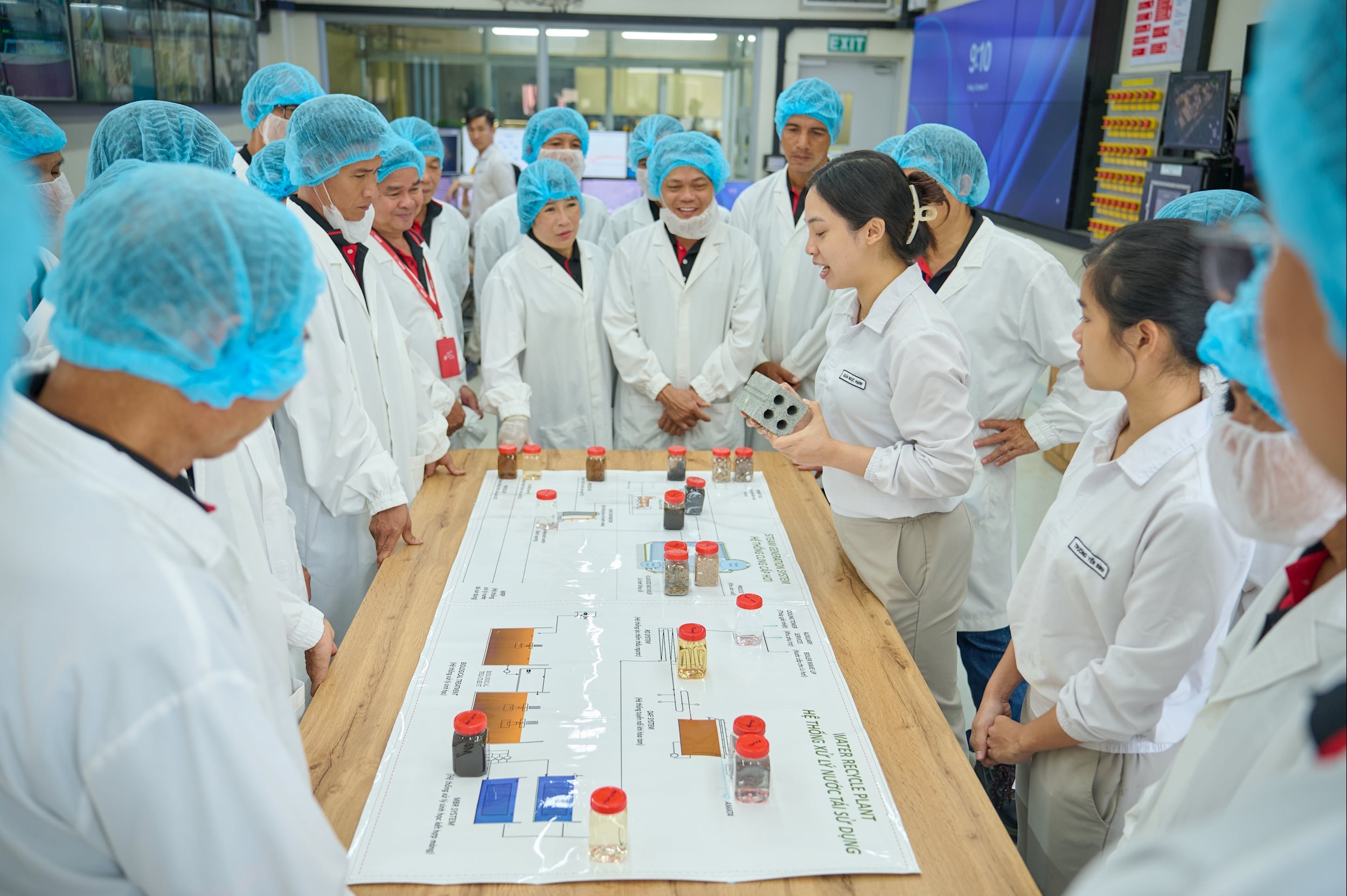
JDE Peet’s (EURONEXT: JDEP) has announced the opening of its fully revamped modular Innovation Laboratory in Utrecht, the Netherlands, marking a major milestone in its efforts to accelerate next-generation coffee breakthroughs.

The upgraded facility reinforces the company’s commitment to scaling customer-led innovations and highlights the strategic importance of its global R&D center in Utrecht. With a modular setup, the Innovation Lab allows teams to rapidly develop new coffee products, processes, and packaging materials that can be quickly scaled across JDE Peet’s global manufacturing network.

This investment complements the recent opening of the company’s innovation facility in Joure, which focuses on next-generation extraction and freeze-drying technologies. Together, both facilities represent a combined investment of €8 million.

Key focus areas for the Utrecht Innovation Lab include single-serve, capsule, ready-to-drink, and instant coffee formats, alongside the development of sustainable packaging solutions. In support of JDE Peet’s Common Grounds sustainability goals, the new laboratory also integrates advanced heating and ventilation systems designed to recycle heat and reduce energy consumption.

Carolyn Adams, Chief R&D Officer at JDE Peet’s, said:

“We’re proud that our next generation of coffee innovations will be developed in the home of our oldest and most beloved brands – Douwe Egberts. Coffee is one of the most exciting and fast-evolving consumer categories, with new flavors and formats emerging almost every week. The agile, modular setup of our Innovation Lab enables us to rapidly respond to consumer insights and quickly scale new flavors and formats – whether hot, cold, wet, or dry – to full factory production. As we deliver our ‘Reignite the Amazing’ strategy, this investment will allow us to significantly accelerate the time-to-market of the next generation of coffee breakthroughs in response to changing consumer needs and trends.”

The Utrecht Innovation Laboratory offers a flexible, modular workspace equipped with advanced technologies for coffee product development. These include high-precision grinders and capsule fillers for single-serve and portioned espresso, technologies for JDE Peet’s liquid Cafitesse products, facilities for ready-to-drink cold coffee, and advanced freeze-drying systems for next-generation instant coffee — an important growth area for the company.

Recent innovations developed at the Utrecht Lab include improved non-dairy creamers, energy-efficient roasting methods, home-recyclable paper packaging for freeze-dried instant coffee in the UK, and the ongoing development of mono-material packaging to enhance recyclability.

EU’s New Organic Regulation Reshapes Coffee Value Chains Worldwide

Brussels – Qahwa Wolrd

The European Union’s latest update to its organic regulation—Regulation (EU) 2018/848, which took full effect on October 1, 2025—marks a pivotal moment for the global coffee sector. The law replaces the long-standing “equivalency” model for non-EU organic imports, introducing a unified standard that all producers must now meet to access the European organic market.

A Tougher Landscape for Organic Coffee

Coffee producers and roasters are navigating a period of significant disruption. The EU’s new organic legislation joins other major frameworks such as the Deforestation Regulation (EUDR) and mandatory Due Diligence rules, forming part of a broader push for transparency and sustainability across agricultural supply chains.

Globally, organic coffee represents a small but valuable portion of the estimated 11 million metric tons of coffee produced each year. Its importance lies in the specialty and premium markets, where consumers demand traceability and environmentally responsible sourcing. Yet, for thousands of smallholders in Latin America, Africa, and Southeast Asia—many of whom have long relied on local certification systems—the new EU framework introduces new hurdles.

Under the previous equivalence system, non-EU countries could certify organic products according to their own standards, provided they broadly aligned with EU rules. That flexibility has now ended. From October 2025, all organic coffee imported into the EU must fully comply with the EU’s own organic standards, covering soil fertility, crop rotation, certification procedures, and cooperative governance structures.

Key Changes and Their Impacts

1. End of the Equivalence Model
All non-EU organic producers must now adhere directly to EU standards. The change eliminates national variations, enforcing uniform practices such as strict crop rotation, total prohibition of synthetic inputs, and certification of entire farming units as organic.
Impact: The removal of flexibility poses particular challenges for smallholders working in agroforestry or mixed-farming systems, who may now need to alter long-established practices or risk losing access to the EU market.

2. Stricter Group Certification Rules
Only legally recognised cooperatives or producer associations can now hold organic certificates. Private companies can no longer do so on behalf of farmers. Additionally, groups are limited to a maximum of 2,000 producers, and mixed groups—containing both organic and non-organic members—are prohibited.
Farms larger than five hectares or with annual sales above €25,000 must undergo individual audits.
Impact: Compliance and administrative costs are increasing sharply. Many smallholders face the burden of restructuring cooperatives or creating new associations to meet the legal requirements, potentially pushing the smallest players out of the organic sector.

3. Mandatory Three-Year Transition Period
All farms must now complete a minimum three-year conversion process before qualifying for organic certification—regardless of their previous practices or ecological conditions.
Impact: This universal rule raises barriers for newcomers, slows returns on investment, and could reduce the number of regions entering the organic coffee market.

4. Stricter EU Controls and Testing
Certification bodies must now be EU-recognised, and all coffee lots are subject to more frequent laboratory testing for chemical residues. Delays of one to two weeks are common as producers await results before exporting.
Impact: These tighter controls safeguard label integrity but cause certification bottlenecks, increase costs, and delay shipments—particularly harming smallholder-based supply chains that operate on thin margins.

5. Rising Costs and a Shift in Market Dynamics
The cumulative effect of these measures is a rise in certification expenses and operational complexity. The stricter requirements are expected to reduce the supply of certified organic coffee, driving up prices in Europe and possibly pushing exporters to target less-regulated markets.
Impact: European roasters face tighter supplies and higher costs, while producers are forced to balance compliance with commercial viability.

Implications for Coffee Roasters

The new framework compels European roasters to reassess sourcing strategies and brand positioning:

  • Brand Philosophy: Roasters must decide whether to continue carrying the official EU organic label or to highlight broader sustainability credentials instead.

  • Sourcing Viability: Some origins may lose certification, necessitating portfolio diversification to secure reliable supply.

  • Supplier Due Diligence: Strong partnerships with compliant cooperatives and exporters are now crucial to ensure certification integrity and continuity.

EFICO’s Role in Supporting the Transition

Belgium-based EFICO, a major green coffee importer, is assisting roasters and cooperatives through this regulatory transition. The company offers three main sourcing options:

  • Certified Organic Coffee – fully compliant with Regulation (EU) 2018/848.

  • ‘Organic by Nature’ Coffee – produced under sustainable, chemical-free conditions.

  • Conventional Coffee – high-quality, consistently sourced.

EFICO’s Certified Organic Portfolio:

  • Robusta: India

  • Arabica: Central America (Peru, Honduras, Mexico, Nicaragua) and Ethiopia

EFICO continues to guide partners on certification strategies and compliance requirements to help maintain a stable and transparent coffee supply chain amid Europe’s evolving organic landscape.