Haraz: Where Mountain Agriculture Shapes the Character of Yemeni Coffee

Haraz – Qahwa World

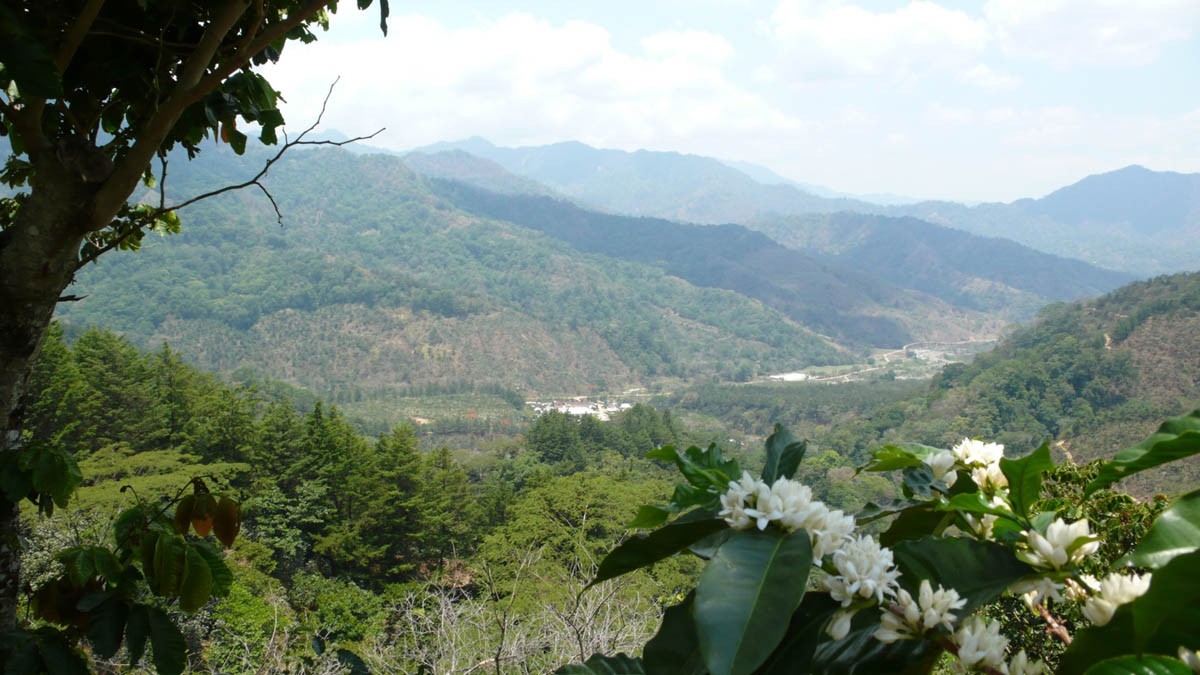
High in Yemen’s rugged western highlands, the Haraz region stands as one of the world’s most demanding and refined coffee-growing landscapes. Farming coffee here is not merely an agricultural activity; it is a disciplined system built on manual labor, inherited knowledge, and a deep respect for natural cycles.
At Jabalbon Estate, this centuries-old approach remains alive, offering a clear field example of how Yemeni mountain coffee is cultivated with precision, patience, and purpose.

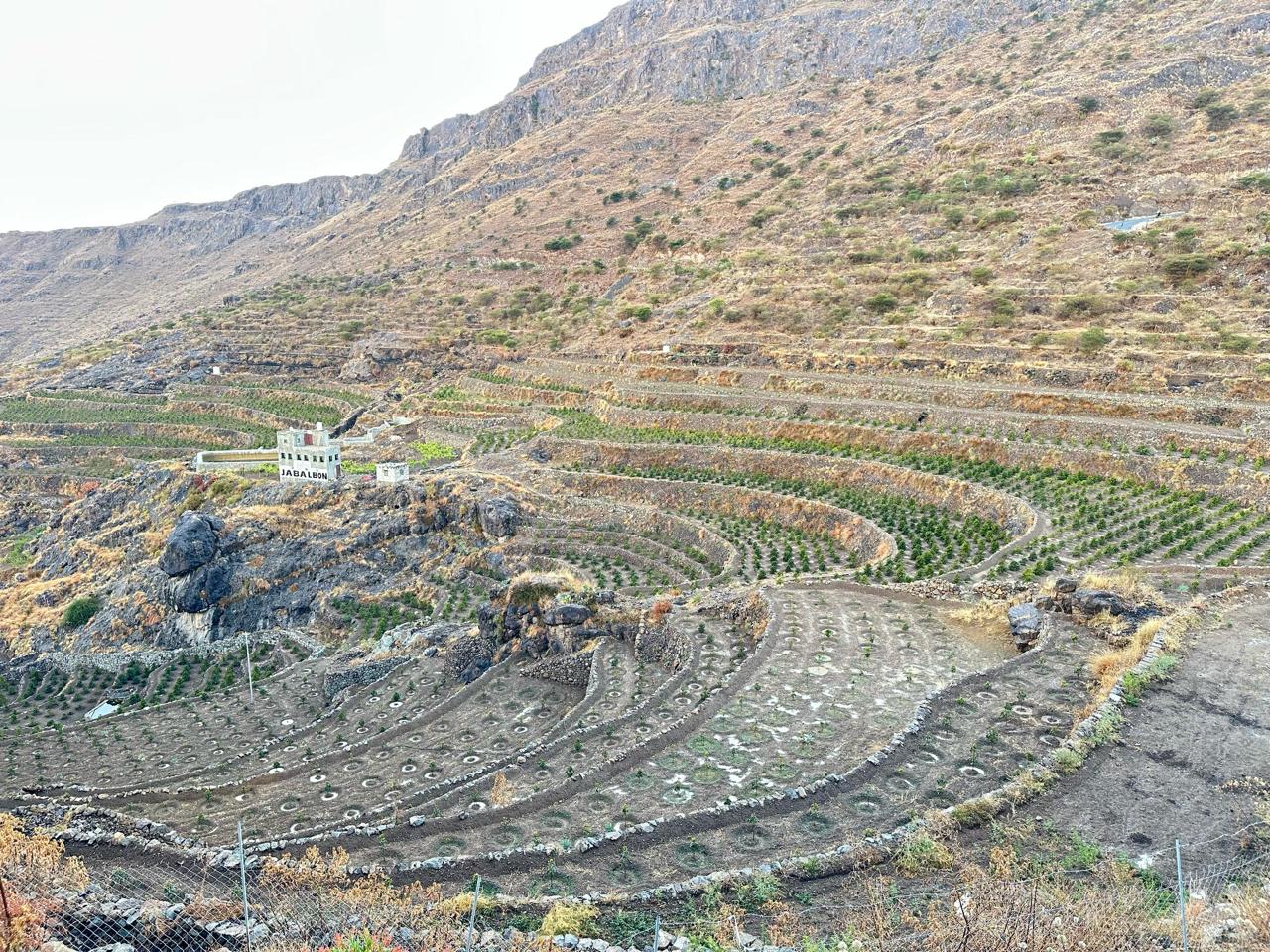
The land reclamation process in Jabalbon Estate farms in Haraz
  • Reclaiming the Mountain Slopes

The coffee journey in Haraz begins with land rehabilitation, a physically intensive process essential to survival farming in steep terrain. Farmers remove invasive trees such as acacia, clear wild grasses, and restore collapsed stone terraces using traditional construction methods. These terraces are more than landscape features. They stabilize soil, capture seasonal rainfall, and prevent erosion, forming the backbone of sustainable agriculture in Yemen’s high mountains.

A plot of land in Jabalbon Estate in Haraz, where meticulous care is evident from the very beginning.
  • Precision in Field Layout

Once the land is prepared, plots are carefully mapped to determine planting points. Coffee trees are spaced at approximately two meters apart, a deliberate decision aimed at improving soil aeration, reducing nutrient competition, and allowing balanced root and canopy development. In an environment where every square meter matters, spacing becomes a quality factor rather than a convenience.

In Jabalbon Estate in Haraz, every tree in its plot tells a unique story.
  • The “Buur” Pits: A Local Practice with Scientific Logic

One of Haraz’s most distinctive practices is the use of deep planting pits, locally known as buur. Each pit is roughly one meter deep and one meter wide. These pits are designed to break compact volcanic clay soil, enhance drainage, and reactivate biological life within the ground.
Left exposed for several months, the pits are naturally sterilized by sunlight before being refilled, transforming dense soil into a healthier growing medium ready to receive coffee seedlings.

In Jabalbon Estate in Haraz, the timing of planting is carefully managed.
  • Seasonal Planting Windows

Coffee seedlings are planted during two key periods: March and July. These windows coincide with moderate temperatures and natural moisture from seasonal rains, significantly increasing seedling survival rates and long-term stability.


  • In Jabalbon Estate in Haraz, coffee trees receive continuous care throughout the year, carried out manually with precise professional attention.
    In Jabalbon Estate in Haraz, coffee trees receive continuous care throughout the year, carried out manually with precise professional attention.

Maintaining coffee trees in Haraz requires continuous attention. Due to the soil’s tendency to harden, farmers carry out multiple annual plowing cycles to prevent root suffocation.
Irrigation relies primarily on rainfall, supported by carefully controlled supplemental watering when necessary. Fertilization follows a balanced program focused on strengthening root systems, supporting vegetative growth, and improving cherry quality over time rather than chasing short-term yields.

Jabalbon Estate is located atop the peaks of the Haraz Mountains, where the high altitude is one of the key factors behind its quality and distinction.
  • Altitude: The Silent Quality Driver

Jabalbon’s farms are located at elevations exceeding 2,600 meters above sea level. At this height, cooler temperatures and wide day–night fluctuations slow cherry development.
This extended maturation period increases bean density and contributes to the layered, complex flavor profiles that distinguish high-altitude Yemeni coffee on the global stage.

In Jabalbon Estate in Haraz, patience and continuous effort are two indispensable factors.
  • Patience Before Productivity

Coffee trees at Jabalbon are nurtured for years before reaching full economic production. Peak performance typically begins around the sixth year, when trees achieve physiological stability and consistent output. The philosophy here prioritizes longevity over speed, treating each tree as a long-term agricultural partner rather than a short-term asset.

In Jabalbon Estate in Haraz, between the tree’s flowering and the fruit’s ripening lies a journey that is both challenging and rewarding.
  • Flowering, Maturation, and Harvest

Flowering generally begins in March, followed by a slow maturation period lasting six to seven months. Harvest season starts in October and is conducted entirely by hand.
Only fully ripe red cherries are selectively picked, while unripe or green fruit is deliberately excluded. This strict selection ensures that each harvest reflects the true expression of altitude, soil, and climate.

In Jabalbon Estate in Haraz, there is complete reliance on manual labor.
  • Agricultural Ethics at the Core

Jabalbon Estate operates on principles that define traditional Yemeni coffee farming: manual cultivation, respect for natural rhythms, and refusal to force productivity at the expense of tree health.
Here, quality is not engineered through shortcuts. It is earned through time, restraint, and commitment to the land.

In Yemen’s high mountains, coffee is not grown to be harvested quickly — it is grown to endure.

In Jabalbon Estate in Haraz, irrigation holds special importance and follows precise schedules.

EU’s New Organic Regulation Reshapes Coffee Value Chains Worldwide

Brussels – Qahwa Wolrd

The European Union’s latest update to its organic regulation—Regulation (EU) 2018/848, which took full effect on October 1, 2025—marks a pivotal moment for the global coffee sector. The law replaces the long-standing “equivalency” model for non-EU organic imports, introducing a unified standard that all producers must now meet to access the European organic market.

A Tougher Landscape for Organic Coffee

Coffee producers and roasters are navigating a period of significant disruption. The EU’s new organic legislation joins other major frameworks such as the Deforestation Regulation (EUDR) and mandatory Due Diligence rules, forming part of a broader push for transparency and sustainability across agricultural supply chains.

Globally, organic coffee represents a small but valuable portion of the estimated 11 million metric tons of coffee produced each year. Its importance lies in the specialty and premium markets, where consumers demand traceability and environmentally responsible sourcing. Yet, for thousands of smallholders in Latin America, Africa, and Southeast Asia—many of whom have long relied on local certification systems—the new EU framework introduces new hurdles.

Under the previous equivalence system, non-EU countries could certify organic products according to their own standards, provided they broadly aligned with EU rules. That flexibility has now ended. From October 2025, all organic coffee imported into the EU must fully comply with the EU’s own organic standards, covering soil fertility, crop rotation, certification procedures, and cooperative governance structures.

Key Changes and Their Impacts

1. End of the Equivalence Model
All non-EU organic producers must now adhere directly to EU standards. The change eliminates national variations, enforcing uniform practices such as strict crop rotation, total prohibition of synthetic inputs, and certification of entire farming units as organic.
Impact: The removal of flexibility poses particular challenges for smallholders working in agroforestry or mixed-farming systems, who may now need to alter long-established practices or risk losing access to the EU market.

2. Stricter Group Certification Rules
Only legally recognised cooperatives or producer associations can now hold organic certificates. Private companies can no longer do so on behalf of farmers. Additionally, groups are limited to a maximum of 2,000 producers, and mixed groups—containing both organic and non-organic members—are prohibited.
Farms larger than five hectares or with annual sales above €25,000 must undergo individual audits.
Impact: Compliance and administrative costs are increasing sharply. Many smallholders face the burden of restructuring cooperatives or creating new associations to meet the legal requirements, potentially pushing the smallest players out of the organic sector.

3. Mandatory Three-Year Transition Period
All farms must now complete a minimum three-year conversion process before qualifying for organic certification—regardless of their previous practices or ecological conditions.
Impact: This universal rule raises barriers for newcomers, slows returns on investment, and could reduce the number of regions entering the organic coffee market.

4. Stricter EU Controls and Testing
Certification bodies must now be EU-recognised, and all coffee lots are subject to more frequent laboratory testing for chemical residues. Delays of one to two weeks are common as producers await results before exporting.
Impact: These tighter controls safeguard label integrity but cause certification bottlenecks, increase costs, and delay shipments—particularly harming smallholder-based supply chains that operate on thin margins.

5. Rising Costs and a Shift in Market Dynamics
The cumulative effect of these measures is a rise in certification expenses and operational complexity. The stricter requirements are expected to reduce the supply of certified organic coffee, driving up prices in Europe and possibly pushing exporters to target less-regulated markets.
Impact: European roasters face tighter supplies and higher costs, while producers are forced to balance compliance with commercial viability.

Implications for Coffee Roasters

The new framework compels European roasters to reassess sourcing strategies and brand positioning:

  • Brand Philosophy: Roasters must decide whether to continue carrying the official EU organic label or to highlight broader sustainability credentials instead.

  • Sourcing Viability: Some origins may lose certification, necessitating portfolio diversification to secure reliable supply.

  • Supplier Due Diligence: Strong partnerships with compliant cooperatives and exporters are now crucial to ensure certification integrity and continuity.

EFICO’s Role in Supporting the Transition

Belgium-based EFICO, a major green coffee importer, is assisting roasters and cooperatives through this regulatory transition. The company offers three main sourcing options:

  • Certified Organic Coffee – fully compliant with Regulation (EU) 2018/848.

  • ‘Organic by Nature’ Coffee – produced under sustainable, chemical-free conditions.

  • Conventional Coffee – high-quality, consistently sourced.

EFICO’s Certified Organic Portfolio:

  • Robusta: India

  • Arabica: Central America (Peru, Honduras, Mexico, Nicaragua) and Ethiopia

EFICO continues to guide partners on certification strategies and compliance requirements to help maintain a stable and transparent coffee supply chain amid Europe’s evolving organic landscape.