Indonesia Expands Coffee Exports with New Shipment to Saudi Arabia

JAKARTA – Qahwa World

Indonesia has expanded its coffee export market with a new shipment of premium Arabica beans from the slopes of Mount Argopuro in East Java to Saudi Arabia, marking another milestone for the country’s growing smallholder coffee sector.

The shipment, totaling 15 tons and valued at around 3 billion rupiah (approximately 180,000 U.S. dollars), reflects Indonesia’s continued effort to strengthen its position in the global coffee trade and promote the role of micro, small, and medium enterprises in international markets. The consignment was officially dispatched on Monday, in a move hailed by government officials as a success story for local farmers and entrepreneurs.

Bagus Rachman, Deputy for Business Affairs at Indonesia’s Ministry of Micro, Small, and Medium Enterprises, said the export from Mount Argopuro demonstrates the competitiveness of Indonesian MSMEs on the global stage. He emphasized that more than 90 percent of the nation’s coffee plantations are managed by smallholder farmers, who have become the backbone of Indonesia’s coffee production and export activities. Rachman described the Argopuro shipment as a model of how medium-scale enterprises can become a driving force within the MSME ecosystem, creating added value and expanding export capacity.

According to Statistics Indonesia, the country’s coffee exports rose from 279.94 million kilograms in 2023 to 316.72 million kilograms in 2024, underscoring steady growth despite challenges from fluctuating prices and global demand pressures. East Java, where Mount Argopuro is located, remains one of Indonesia’s key coffee-producing regions, known for high-altitude Arabica beans characterized by their clean cup, moderate acidity, and distinct aroma.

Local officials in Situbondo Regency, the region surrounding Mount Argopuro, praised the export as a breakthrough for community-based farmer groups that have invested in quality improvement and post-harvest processing. They highlighted that Argopuro’s elevation, reaching about 1,800 meters above sea level, contributes to its unique flavor profile, making it increasingly sought after in Middle Eastern and Asian markets. The local government also called for stronger support programs to encourage youth participation in coffee farming and ensure long-term sustainability of production.

Data from Indonesia’s Ministry of Trade shows that the country exported coffee, tea, and related products worth more than 16 million U.S. dollars to Saudi Arabia in 2023. The new shipment from East Java is expected to deepen trade relations between the two nations, opening opportunities for future collaboration in the premium and specialty coffee segments. Saudi Arabia has become an emerging destination for Indonesian agricultural products, reflecting growing demand for high-quality Arabica beans in the region’s expanding coffee industry.

Industry observers say the success of this shipment could inspire similar initiatives across Indonesia’s coffee-growing provinces, including Aceh, North Sumatra, and South Sulawesi, where MSMEs are working to boost exports of specialty varieties. The government’s ongoing push to promote downstream processing, improve logistics, and introduce value-added branding is seen as essential to enhancing Indonesia’s competitiveness in international markets.

Indonesia, the world’s fourth-largest coffee producer, has long been known for its diverse range of beans, from Sumatra Mandheling to Java and Toraja. With global demand for Arabica and Robusta continuing to rise, initiatives like the Argopuro export are expected to help the country expand its share of premium coffee markets, create higher income for farmers, and reinforce Indonesia’s image as a leading origin in the world of coffee.

From Jerusalem to the World: Izachman Coffee Preserves a Century-Old Palestinian Legacy

Dubai – Ali Alzakary

From the narrow alleys of Jerusalem’s Old City, specifically the historic Khan Al-Zeit market, a coffee story was born in 1921 one that became part of the city’s collective memory and cultural identity. That year, the founder established the first coffee shop and roastery, laying the foundation for a family legacy that would span generations. Through time, the Izachman family preserved its traditional craft while embracing modernity, turning “Izachman Coffee” into a symbol of authenticity and quality in every Palestinian home.

Today, Mahmoud Izachman, the grandson of the founder and the founder of Jerusalem’s first Specialty Coffee Academy, continues this legacy with a modern vision that blends tradition with knowledge and innovation. In this exclusive interview with Qahwa World, Mahmoud shares his family’s century-long journey with coffee, the challenges facing the Palestinian coffee sector, and his hopes for the future of specialty coffee in Jerusalem and beyond.

Your family has been in the coffee trade since 1921. How did it all begin, and what makes your family’s experience unique?

The story began with my grandfather, who established the first coffee shop and roastery in Jerusalem’s Old City, in the Khan Al-Zeit market in 1921. At that time, coffee was not just a drink; it was part of people’s daily lives and cultural identity. What set our journey apart was our ability to preserve this heritage and evolve it over generations while maintaining a bond of trust based on quality. This trust became a legacy within Palestinian homes, making “Izachman Coffee” a mark of excellence without losing our authenticity.

A historical black-and-white photo from Jerusalem showing a vintage car bearing the “Izachman Coffee” sign surrounded by people and children — a glimpse into the early legacy of Palestinian coffee culture.

How did this passion for coffee pass from one generation to the next?

It was never just a business; it was a way of life. I grew up watching my father and uncle, listening to stories of how my ancestors treated coffee with sacred respect, passion, and precision. This love was passed down naturally. Over time, I developed my own passion for learning, pursuing international certifications and specialized courses. Today, I see myself as a new link in a long family chain, adding a modern touch grounded in science and innovation.

As the founder of Jerusalem’s first Specialty Coffee Academy, how would you describe the current state of the coffee industry there?

It’s a mix of challenge and opportunity. Jerusalem and Palestine have a deep-rooted history with coffee it’s part of the cultural and social fabric. The market still relies heavily on Arabic coffee, Turkish coffee, and espresso in various forms, whether prepared at home or served in cafés. However, specialty coffee is emerging. Young people are increasingly curious and eager to learn about quality and global standards. This gives us an opportunity to build a new generation of professionals who can elevate the industry and reshape how coffee is perceived.

How have geopolitical and economic conditions affected the coffee sector in Jerusalem and Palestine?

The difficult political and economic conditions have had a direct impact from import challenges and high costs to declining purchasing power. But these hardships have strengthened our determination to hold onto our culture and identity through coffee. For Palestinians, coffee is no longer just a drink it’s a symbol of resilience and hospitality, a part of who we are.

How do people in Jerusalem respond to specialty coffee compared to traditional coffee?

Traditional coffee still dominates, being a core part of Palestinian hospitality and heritage. Yet, the appeal of specialty coffee is growing, particularly among the younger generation seeking renewal and global connection. We’re seeing more cafés embracing this shift in Jerusalem, Ramallah, and even smaller cities. It’s not always perfect, but the direction is promising.

Mahmoud Izachman stands at the entrance of Izhiman Coffee in Jerusalem, surrounded by traditional decor and copper coffee equipment, representing a blend of heritage and modern specialty coffee culture.

How do you see the future of specialty coffee in Palestine?

I’m very optimistic. The journey may be challenging, but the potential is huge. Palestinians are naturally discerning and appreciate taste and quality. With the right training and support, young professionals can create a specialty coffee culture that rivals any in the world. The growth may be gradual, but the trend is clear and upward.

What role can academies and training centers play in spreading coffee education?

They are the backbone of any industry revival. Through them, we transfer knowledge, develop skills, and raise awareness about quality and sustainability. An academy is not just a place for training it’s a platform to reshape culture and build a professional coffee community.

Tell us about your recent visit to Dubai. What stood out to you about the coffee scene there?

The visit was to complete training licensing requirements from the Specialty Coffee Association (SCA) and to connect with industry leaders. What impressed me most was the diversity and openness of Dubai’s coffee scene a blend of all schools and philosophies, from small roasteries to global brands. The community spirit and collaboration among professionals were inspiring. The level of investment in quality and customer experience is remarkable, something we aim to cultivate gradually among Palestinian consumers too.

How do you evaluate the UAE specialty coffee market? Do you see opportunities for cooperation?

The UAE market is mature and diverse, with knowledgeable consumers who value quality. This creates opportunities for both academic and business collaboration. We are currently marketing “Izachman Coffee” products in the UAE and promoting our sub-brand “Izpresso,” which focuses on espresso blends and Nespresso-compatible capsules. We also plan to launch training and consultancy projects across the region, building partnerships that combine tradition with innovation.

Mahmoud Izachman participates in a professional coffee cupping session, carefully tasting and evaluating different brews — a moment reflecting his expertise and dedication to specialty coffee education.

What are your long-term ambitions for the academy and future projects?

Our ambition is to transform the academy into a national and eventually regional reference point for specialty coffee in the Arab world, producing certified experts who leave a global impact. We’re also exploring projects focused on sustainability and innovation to contribute to the coffee industry on a larger scale.

How do you envision the coffee industry in Jerusalem over the next decade?

I believe it will become more mature, with stronger awareness of quality and sustainability. Specialty coffee will take a larger share of the market, and cafés will focus more on the full experience rather than just the beverage. In Jerusalem, I hope to see a coffee scene that reflects our identity blending heritage and modernity and becoming a model for the region.

What are the main challenges you face as the first specialty coffee academy in Palestine, and how can they be overcome?

The biggest challenge is spreading accurate knowledge and convincing the public of the importance of investing in proper learning. The field is still new, and much of the information circulating is incomplete or inaccurate. Our approach is to offer affordable or even free introductory workshops to attract more participants and build awareness. This will help lay a solid foundation for a coffee community that values knowledge and modernity without losing its roots.

Global Coffee Market Reacts to Tariffs, Rate Cuts, and EU Regulation Uncertainty

Dubai Qahwa World

The global coffee market navigated a turbulent September as trade tensions, monetary policy shifts, and regulatory uncertainty reshaped investor sentiment and price dynamics. According to the International Coffee Organization’s (ICO) latest Coffee Market Report for September 2025, the sector was influenced by a combination of U.S. tariff policy, an interest rate cut by the Federal Reserve, and developments surrounding the European Union’s Deforestation Regulation (EUDR). Together, these factors created a complex environment of both optimism and caution across producing and consuming regions.

The month began with heightened uncertainty following the decision by the United States to maintain its 50% import tariff on coffee. This came despite a presidential executive order, issued on 8 September, that excluded several commodities from the existing tariff regime. Coffee, however, remained absent from the exemption list, as it is not considered a product that can be sufficiently produced within the U.S. to meet domestic demand. The policy stance kept traders and importers on edge, particularly in light of already tight global supplies and rising domestic roasting costs.

The ICO report noted that the continued imposition of tariffs has dampened export momentum from major producing countries, particularly Brazil, which remains the world’s largest coffee supplier. Exporters faced not only the direct cost of tariffs but also indirect consequences such as higher insurance premiums and delayed shipments. The United States, typically the second-largest destination for Brazilian coffee after Germany, saw imports fall sharply in August down 46% year-on-year and 26% month-on-month, according to data from Cecafé.

However, as the month progressed, a diplomatic thaw between Washington and Brasília offered a glimmer of optimism. Meetings between senior officials from both countries, held on the sidelines of the United Nations General Assembly in New York, were interpreted by market analysts as a potential first step toward resolving trade tensions. Though no formal changes were announced, the dialogue provided reassurance to traders that punitive tariffs might be reviewed later in the year, especially if inflationary pressure continues to ease in the United States.

Adding to the month’s market developments, the U.S. Federal Reserve cut its benchmark interest rate by 25 basis points on 17 September its first such move since early 2024. The decision aimed to support economic growth amid signs of slowing consumer spending and lower manufacturing output. For coffee traders, the rate cut brought mixed implications. On one hand, cheaper borrowing encouraged speculative activity in commodity markets, which helped lift prices. On the other, the stronger U.S. dollar that followed the announcement increased costs for buyers using other currencies, especially in emerging markets.

The ICO observed that the daily volatility of the ICO Composite Indicator Price (I-CIP) rose to 13.8% in September, up from 11% the previous month, partly driven by the interplay of monetary and trade factors. The organization emphasized that such fluctuations reflect not only speculation but also genuine uncertainty about the future of trade flows and regulatory frameworks that govern the industry.

In Europe, a different kind of uncertainty unfolded. The European Commissioner for Environment, Oceans, and Fisheries, responsible for overseeing the Deforestation Regulation (EUDR), expressed concern over the readiness of the EU’s technical system for tracing commodities such as coffee, cocoa, and palm oil. The Commissioner admitted that the digital platform designed to monitor compliance might not be fully operational in time for the regulation’s official start date in January 2026. As a result, Brussels is now considering a one-year postponement of the EUDR’s implementation.

This potential delay was met with relief from coffee-producing nations and exporters, many of whom have voiced apprehension over the costs and logistical burdens of compliance. The regulation, adopted in 2023, requires companies importing into the EU to prove that their products do not contribute to deforestation or forest degradation. For coffee, that means exporters must provide precise geolocation data for every farm and ensure traceability across the supply chain. While the regulation aims to promote sustainable trade, several producing countries, including Ethiopia, Uganda, and Honduras, have warned that smaller farmers could be excluded from the European market if compliance deadlines remain too strict.

Market participants see the proposed delay as a temporary reprieve. “It gives exporters and cooperatives valuable time to adjust and strengthen traceability systems,” the ICO noted. However, the organization also cautioned that postponement does not remove the long-term challenge of compliance. Producers who fail to invest in sustainable certification and farm-level data systems risk losing access to the world’s most regulated and high-value coffee market.

By the end of September, the combined effects of tariffs, monetary easing, and policy uncertainty continued to shape market sentiment. The ICO Composite Indicator Price averaged 324.62 US cents per pound, up 9.3% from August, marking the highest level in two years. Yet, behind the price surge lay diverging regional realities: while exporters in Vietnam and Colombia benefited from strong demand and competitive logistics, producers in Brazil and Central America faced rising export costs and political tension around trade access.

The report concluded that these intersecting economic and regulatory developments have pushed the coffee industry into a phase of structural adaptation. With monetary policy softening in the United States, trade negotiations cautiously reopening, and the EU potentially adjusting its sustainability timeline, the final quarter of 2025 is expected to test the industry’s resilience. Analysts agree that while prices may remain high in the short term, long-term stability will depend on how swiftly producers, traders, and regulators can align under a more predictable and sustainable framework.

As the ICO noted, the coffee market of late 2025 is no longer defined solely by supply and demand but by the policies, regulations, and economic instruments that govern it. The cup of coffee on the global stage has never been more entangled with diplomacy, finance, and environmental accountability.

Global Coffee Prices Surge to 2-Year High

Dubai – Qahwa World

The global coffee market witnessed a significant price surge in September 2025, marking one of the strongest monthly performances in recent years. According to the latest Coffee Market Report issued by the International Coffee Organization (ICO), the ICO Composite Indicator Price (I-CIP) averaged 324.62 US cents per pound, representing a 9.3% increase compared to August 2025 and a striking 25.4% rise year-on-year. The report reveals that while prices rose across all coffee groups, tightening certified stocks and persistent trade uncertainties continue to define the market’s volatile landscape.

The ICO noted that Arabica varieties led the monthly increase, with Colombian Milds climbing 10.1% to 403.77 US cents/lb, Other Milds advancing 9.3% to 400.21 US cents/lb, and Brazilian Naturals gaining 11.3% to 374.91 US cents/lb. Robusta, meanwhile, registered a more moderate yet notable 5.9% increase to 210.85 US cents/lb. The rise was mirrored on both major futures exchanges, with New York ICE prices up 11.5% to 366.31 US cents/lb, and London ICE prices increasing by 8.9% to 197.56 US cents/lb. The I-CIP fluctuated between 298.14 and 360.74 US cents/lb during the month, maintaining a median value of 323.44.

The report attributes much of September’s price escalation to several interconnected macroeconomic and policy-related developments that placed upward pressure on the market during the first half of the month. Among these, concerns over the long-term supply of coffee to the United States stood out, especially given the continued uncertainty surrounding import tariffs. Although on 8 September the U.S. administration issued an executive order revising tariffs for “aligned partners” with established trade agreements, coffee remained excluded from the list. The commodity continues to face a 50% import tariff imposed earlier in the year, as it is not yet categorized among products that the U.S. cannot sufficiently produce domestically. This policy has led to sustained apprehension among traders and exporters, particularly as U.S. certified Arabica stocks continue to decline.

The ICO underlined that certified stocksused as a short-term substitute for coffee importsare shrinking at an alarming rate, reinforcing market tightness. U.S. certified stocks of Arabica fell 19.3% in September to 0.66 million 60-kilogram bags, while London-certified Robusta stocks decreased 4.3% to 1.08 million bags. These drawdowns, the report states, indicate that the market is “starting to feel the squeeze,” signaling a bullish outlook for prices if replenishment remains weak.

However, the latter half of September brought developments that introduced downward pressure and tempered speculative enthusiasm. On 15 and 17 September, the ICE Futures U.S. exchange raised margin requirements for Arabica contracts twice in a single week. Higher margin requirements force investors to deposit more capital with brokers to cover increased credit risk, thus raising borrowing costs for both new and existing positions. The ICO explained that such moves can reduce liquidity and limit speculative demand, potentially stabilizing prices in overheated markets.

At the same time, discussions at the United Nations General Assembly between U.S. and Brazilian officials provided a momentary boost to market optimism. As the world’s largest coffee producer and the largest destination market sought to improve bilateral trade relations, investors interpreted the talks as a signal that tariff détente might eventually follow. Brazil’s exports have been under severe strain, declining for ten consecutive months due to both cyclical production factors and logistical issues at the port of Santos.

On the monetary front, the U.S. Federal Reserve’s 25-basis-point interest rate cut on 17 September had a nuanced impact. While the policy was intended to lower borrowing costs across the economy, it indirectly affected coffee prices by making speculative trading less expensive. The ICO noted that cheaper credit may have helped sustain trading volumes, adding volatility to a market already under pressure from tightening supplies.

The European Union also entered the spotlight in September after the EU Commissioner for Environment, Water Resilience and a Competitive Circular Economy raised concerns over the readiness of the EU Deforestation Regulation (EUDR) IT system. The Commissioner indicated that the system might not be able to handle the expected transaction volume, suggesting a possible one-year extension before enforcement begins. The EUDR, which aims to ensure that coffee and other commodities imported into the EU are deforestation-free, has been a major topic of concern among exporters since its adoption, and any delay could temporarily ease compliance-related pressures on coffee-producing nations.

Despite these counterbalancing developments, overall volatility continued to rise. The ICO reported that intra-day volatility of the I-CIP increased by 2.8 percentage points compared to August, averaging 13.8% in September. By category, Colombian Milds and Other Milds showed volatility of 14.0% and 13.7%, respectively, Brazilian Naturals 14.7%, and Robustas 15.0%. At the futures level, New York volatility stood at 15.2%, while London measured 16.2%, reflecting a minor uptick in speculative activity.

Price differentials also widened notably. The Colombian MildsOther Milds differential expanded from 0.41 to 3.56 US cents/lb, while the Colombian MildsRobustas differential rose 15.1% to 192.92 US cents/lb. The arbitrage between the London and New York markets, a key indicator of the spread between Arabica and Robusta, widened by 14.7% to 168.75 US cents/lb, the highest level of the year.

Overall, the ICO described September as a month defined by tightening supplies, speculative activity, and geopolitical uncertainty. The consistent decline in certified stocks, combined with unresolved tariff tensions and potential EUDR delays, continues to reinforce a bullish sentiment across the market. As the fourth quarter of 2025 begins, analysts expect coffee prices to remain elevated, with volatility likely to persist until structural issuessuch as logistics bottlenecks, regulatory clarity, and weather-related production concernsare addressed.

In summary, the ICO’s latest data depict a coffee market under strain but also opportunity. Prices are buoyed by constrained supply and investor sentiment, while trade policies and financial dynamics continue to influence short-term movements. With the I-CIP climbing above 320 US cents/lb for the first time in over two years and certified stocks hitting new lows, September 2025 may well be remembered as a turning point in the evolving balance between global coffee supply and demand.

Germany Earns More From Coffee Than Producing African Nations

Berlin – September 14, 2025 – (Qahwa World) – Germany, a country that does not grow coffee, has become one of the most influential players in the global coffee industry, earning more from exports than all African producing nations combined. In 2024, Germany exported over 473,000 tonnes of coffee worth €6 billion, largely by importing raw beans from producing countries and re-exporting them after processing and branding.

Africa, home to 18 coffee-exporting countries including Uganda, Ethiopia, Kenya, and Rwanda, remains dependent on raw bean exports. Uganda recently overtook Ethiopia as the continent’s leading exporter, shipping nearly 800,000 bags in May 2025 alone, worth $243 million. Ethiopia, long considered the historic heart of coffee, followed with 43,481 tonnes during the same period. Data from the International Coffee Organization covering March 2023 to February 2024 shows Uganda shipped over six million bags, compared with Ethiopia’s 3.5 million, while other producers such as Tanzania, Côte d’Ivoire, and Kenya trailed with far smaller volumes.

The disparity lies in value addition. A KPMG study as far back as 2014 highlighted that Africa exported coffee worth $6 billion while the global coffee industry exceeded $100 billion, driven by roasting, blending, packaging, branding, and sustainable certification. Germany has built its dominance on precisely these steps, importing nearly one million tonnes of green coffee in 2023, 91 percent directly from producing nations. Brazil supplied the largest share at 341,000 tonnes, followed by Vietnam, Honduras, Uganda, Colombia, and India. Even when imports declined by 17 percent that year, Germany’s reserves ensured its exports continued without disruption.

The contrast underscores a hard truth: while coffee was born in Africa, most of its wealth is captured elsewhere. Unless producing nations invest in roasting, branding, and specialty development at origin, they will remain suppliers of raw beans while others reap the greater rewards.

“Star Bux” Defeats Starbucks After 12-Year Legal Battle

Karachi – September 14, 2025 – Qahwa World – In a remarkable conclusion to one of the most unusual brand disputes in the coffee industry, a Pakistani café named “Star Bux” has won a 12-year-long legal battle against the global coffee giant Starbucks. The verdict, delivered by the Pakistani court, has not only ended a prolonged legal fight but has also raised important questions about culture, identity, and the limits of trademark law.

The story began in 2013 when Rizwan Ahmed and Adnan Yousuf opened a café in Karachi under the name “Star Bux.” The café’s logo immediately drew attention for its playful resemblance to Starbucks. Instead of the familiar mermaid encircled in green, “Star Bux” featured the face of a mustached man inside a circular green emblem. This visual and phonetic similarity sparked widespread discussion, with some finding it amusing while others considered it too close for comfort. Starbucks, which had not yet opened outlets in Pakistan, quickly filed a complaint, arguing that the café’s identity could mislead consumers and weaken its globally recognized brand.

Starbucks based its case on the established international framework of trademark protection, insisting that “Star Bux” could cause confusion among customers who might assume a link between the two businesses. The company argued that such similarities represented trademark dilution and could undermine the uniqueness of its brand image, even if customers were not directly deceived. The stakes were high: Starbucks was protecting one of the most famous brands in the world, while “Star Bux” defended its right to local identity and creative expression.

The café’s founders, however, presented an unusual but powerful defense. They claimed their brand was not an imitation but a form of parody. According to them, the choice of name and logo was meant as a cultural and humorous statement, not an attempt to deceive customers or steal market value. They highlighted the differences in fonts, artistic styles, and even the character at the center of their logo—a mustached man instead of a mythical figure. Their menu also went beyond coffee, featuring burgers, pasta, pizza, and even items with humorous names inspired by Pakistani culture, underscoring their effort to create a distinct identity rather than a copy of Starbucks.

Over time, the café made small adjustments to its visual identity to further reduce similarities, while adding disclaimers clarifying that it had no connection to Starbucks. These changes reinforced the claim that “Star Bux” was a parody brand rooted in local culture and humor. What might have started as a playful idea eventually turned into a cultural symbol, attracting attention on social media and sparking debates on intellectual property and creative freedom.

After years of hearings and legal back-and-forth, the court finally ruled in favor of the Karachi café. The judge recognized parody as a legitimate form of artistic and cultural expression under Pakistani law, stating that it did not constitute a violation of trademark protections. The ruling emphasized that there were enough visual and conceptual differences between the two brands to prevent real confusion among consumers, and that global corporations must also recognize the role of local culture and creativity.

The outcome represents a rare victory for a small business against a multinational powerhouse. The case has sparked international debate on how far trademark protections should extend, and whether global companies should always be allowed to enforce their rights in markets where local culture gives rise to parody and satire. It also highlights the importance of consumer perception: whether people truly believe two brands are connected, or whether they can recognize parody as parody.

The story of “Star Bux” is no longer just about a trademark dispute. It has become an emblem of how cultural identity and humor can challenge global corporate dominance. By winning this case, the café has established itself as more than a local business—it is now a symbol of resilience, creativity, and the power of parody to stand up to one of the world’s most influential coffee brands.

Twelve years after the first complaint, “Star Bux” has proven that even the smallest businesses can win against global corporations when their case is rooted in originality, culture, and authenticity. This legal battle will be remembered not only as a fight over names and logos but as a story about how creativity, humor, and local heritage can triumph over corporate might.

The Future of Arabica: Between Climate Threats and Breeding Innovations

By: Matin Yazdi

Arabica coffee could look very different by 2050. Climate models warn that half of today’s Arabica-growing land is at risk of disappearing under the weight of rising heat, drought, pests, and erratic weather. This isn’t just a farmer’s crisis — it’s a challenge for every coffee drinker around the globe.

Yet, amid these sobering warnings, there is reason for optimism. Science is advancing at an unprecedented pace, ushering in what many experts are calling a “golden age” of coffee breeding. As climate pressures mount, new tools and innovations are reshaping the possibilities for resilient and sustainable coffee.

F1 Hybrids: Climate Champions

First-generation hybrids (F1 Hybrids), first pioneered in Central America, are showing extraordinary promise. These varieties deliver 30–60% higher yields compared to traditional Arabica and thrive in agroforestry systems that integrate shade trees and crops. They combine resilience with cup quality — a balance once thought difficult to achieve. The main challenge remains affordability and large-scale distribution, but advances in tissue culture and seed-based propagation are steadily closing that gap.

The Genome Maps Flavor and Resistance

A major breakthrough in recent years has been the sequencing of Arabica’s genome at chromosome level. This allows breeders to pinpoint genes tied to drought tolerance, disease resistance, and even sensory quality. With these tools, the process of developing new varieties can shrink from decades to just a few years — a radical transformation in the coffee world.

Diversity as Insurance for the Future

Genetic diversity is perhaps the most powerful safeguard for coffee’s survival. Robusta harbors hidden clusters of genes that could be tapped for resilience. Liberica is offering new species with surprising disease resistance. Meanwhile, wild relatives such as Coffea charrieriana — naturally caffeine-free — are no longer curiosities, but strategic resources. Preserving these species is not charity; it is a direct investment in the sustainability of coffee supply chains.

From Molecules to the Field

The next frontier is molecular breeding. Tools like metabolomics (the study of chemical compounds in plants) and DNA markers are moving out of research labs and into real-world breeding programs. That means breeders can select plants for sweetness, body, or resilience before they ever reach the field. This leap in precision is poised to redefine how quality and resilience are achieved in coffee.

Collaboration as the Accelerator

Scientific breakthroughs alone are not enough. True impact depends on collaboration across research institutions, companies, and producers. Initiatives such as World Coffee Research’s Innovea network and corporate-backed genome projects demonstrate that progress is fastest when stakeholders align. The critical challenge now is scaling funding and ensuring smallholder farmers — who grow most of the world’s coffee — gain access to these innovations.

A Race Between Climate and Innovation

The story of Arabica’s future is not one of despair, but of urgency. It is a race between mounting climate pressures and the speed of scientific innovation. The question is not whether coffee will change, but how we prepare to face that change. With the tools already available, the industry has the chance to secure a resilient, flavorful, and sustainable future for coffee lovers everywhere.

Even decaf enthusiasts may have reason to celebrate. Wild caffeine-free species could herald a new era of decaf coffee that finally delivers all the flavor — with none of the compromise.

Conclusion: The future of Arabica is not predetermined. It hangs in the balance between threats and opportunities. By embracing innovation and expanding collaboration, the global coffee community can ensure that future generations will continue to enjoy rich, sustainable, and high-quality coffee.

Brazil’s Coffee Paradox: Global Prices Drop While Local Costs Surge

Dubai, September 3, 2025 (Qahwa World) – While global coffee prices are falling due to heavy rainfall in Brazil and the near completion of the harvest, consumers in the world’s largest producer and exporter are facing the opposite reality: higher prices for roasted and instant coffee in the domestic market.

December arabica futures fell 3.44%, while November robusta dropped 3.28% to a one-week low. Weather data from Somar Meteorologia showed that Minas Gerais, Brazil’s largest arabica-producing region, received 10.1 mm of rain in the week ending August 30 – 163% of the historical average.

Meanwhile, Cooxupé, Brazil’s biggest coffee cooperative, reported that its members’ harvest was 94.9% complete as of August 29. Safras & Mercado confirmed that Brazil’s 2025/26 harvest was 99% finished by August 20, with robusta fully harvested and arabica 98% complete.

In contrast, roasters 3 Coracoes and Melitta announced fresh price hikes in Brazil starting September 1. 3 Coracoes raised roasted and ground coffee prices by 10% and instant coffee by 7%, while Melitta increased prices by 15%. These hikes follow earlier rises: 11% in January and 14.3% in March by 3 Coracoes, and a 25% increase by Melitta last December.

This creates a striking paradox in Brazil’s coffee market: while international prices are easing thanks to favorable weather and ample harvests, local consumers are paying more, driven by climate volatility, a 50% U.S. tariff on Brazilian coffee imports, and rising raw bean costs.

Global arabica prices have already climbed more than 20% this year after a 70% surge in 2024. With tariffs in place, U.S. roasters have been tapping existing stockpiles, adding further pressure.

The Brazilian Coffee Industry Association (ABIC) noted a brief drop in retail prices in August as futures eased from record highs, but warned that the trend would reverse once tariffs took effect — and that reversal is now underway. Major roasters are struggling to balance costs as consumers shift toward cheaper supermarket brands.

Looking ahead, the U.S. Department of Agriculture projects global coffee production to rise 2.5% in 2025/26 to a record 178.7 million bags. Yet trader Volcafe forecasts a widening global arabica deficit of 8.5 million bags — the fifth straight year of shortages. This contradiction — falling global prices alongside rising domestic costs in Brazil — sets the stage for continued turbulence in the coffee market.

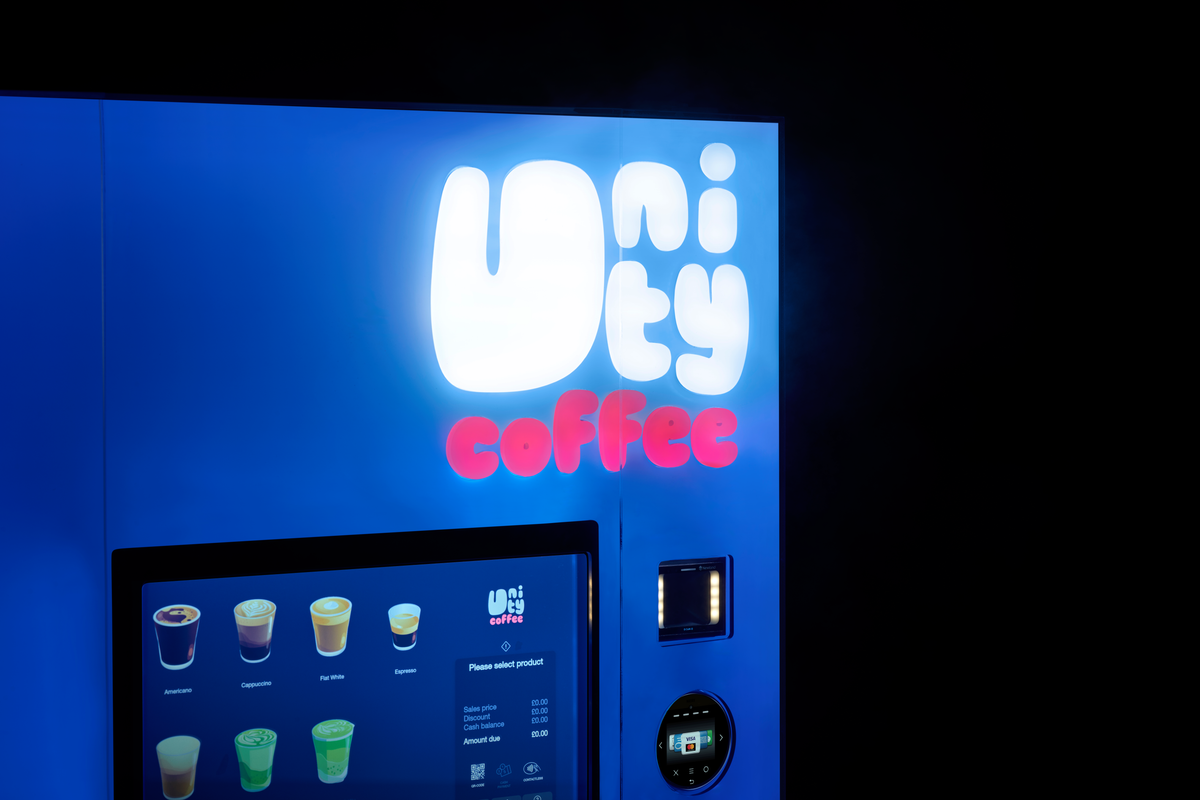
Unity Coffee Launches to Redefine the UK’s Self-Serve Coffee Market

Dubai, 2 September 2025 (Qahwa World) – Scott Martin, the entrepreneur who pioneered the UK’s self-serve coffee sector, has returned with a bold new venture, Unity Coffee, which aims to disrupt the market through digital-first innovation, premium quality, and fairer value.

The brand is rolling out this month across the United Kingdom, targeting retail, travel, leisure, and education venues. With a plan to install more than 500 units in the next two years, Unity Coffee positions itself as a challenger brand ready to compete directly with industry giants.

Built on a FinTech platform, Unity Coffee is the first self-service coffee concept of its kind, offering customers a seamless mobile-first journey. Consumers can order and pay through the brand’s dedicated app while benefiting from agile pricing, real-time promotions, and personalized loyalty rewards. The machines are designed to ensure consistency across a wide menu that includes espresso, specialty coffee drinks, matcha, and hot chocolate, with both dairy and plant-based milk options.

“The coffee-to-go market has let customers down for years with overpriced drinks and tired, repetitive experiences,” said Martin. “Unity Coffee is leading a new movement, delivering exceptional coffee at fairer prices through smart technology, dynamic loyalty, and instant rewards. We’re going to take on big coffee and give the power back to the people.”

Martin is no stranger to innovation. In 1998, he co-founded Coffee Nation, which quickly grew to nearly 900 machines and captured almost half of the UK’s self-serve market. The company was acquired by Whitbread in 2011 for £59.5 million ($77.3 million) and rebranded as Costa Express. Under Martin’s leadership, the network expanded to 14,000 machines before becoming part of Coca-Cola’s £3.9 billion ($5.4 billion) acquisition of Costa Coffee in 2019.

Unity Coffee has secured backing from investors with strong expertise across hospitality, retail, manufacturing, and packaging, ensuring both financial strength and operational insight. Martin himself continues to advise on other innovative ventures, including UK specialty coffee group Grind, self-serve solutions firm BoxBar, and Singapore-based Crown Digital, the developer of the robotic barista concept ELLA.

The launch of Unity Coffee comes at a time when self-service technologies are gaining renewed attention across global retail. With its FinTech foundation, wide product range, and consumer-first approach, the brand is positioning itself not just as a coffee provider but as part of a broader digital transformation in the coffee-to-go sector.

Faisal Abdu Saeed Al-Tahri: The Hero of Al-Udayn and Guardian of Yemeni Coffee

Ibb – August 30, 2025 – (Qahwa World) — In Wadi ‘Annah of Al-Udayn District, where terraced fields rise against the mountain slopes, stands Faisal Abdu Saeed Al-Tahri, known locally as Al-Mahlawi. With determination rooted as deep as his coffee trees, he refuses to let a centuries-old legacy fade. His annual harvest may amount to only 40–50 kilograms, but each bean carries the story of Al-Udayn — a story that has gifted the world a coffee unlike any other.

Despite drought, the absence of modern irrigation, and the high costs of cultivation, Al-Tahri is intent on expansion, not retreat. He plans to plant 500 new seedlings over the next two years. Achieving this goal, however, requires real support, for he lacks the means to build water reservoirs or install irrigation systems. His effort is more than a personal endeavor; it is a model for safeguarding Yemen’s coffee and turning individual resilience into collective success.

Al-Udayn: Valleys Between Mountains and Water

Al-Udayn, in Ibb governorate, is one of Yemen’s most fertile and striking regions. It is home to Wadi Al-Dur and Wadi ‘Annah, two beating hearts of Yemeni coffee. Within these valleys, two distinct coffees thrive:

  • Mountain coffee: grown at higher altitudes, producing small beans with concentrated, complex flavor.

  • Valley coffee: cultivated along streams and under shade trees, softer in taste and smoother on the palate.

This balance of mountain and valley has given Al-Udayn coffee its singular identity. Here, coffee is not merely a crop — it is heritage. Local historians even suggest that the very name Al-Udayn is linked to the stem of the coffee plant.

From Al-Udayn to Mocha: A Journey That Changed History

Al-Udayn was never isolated. It was part of the supply network that sustained the historic port of Mocha. From its valleys, caravans carried beans across rugged terrain to the coast, where they were shipped abroad. In the mid-15th century (around 1450), the first Yemeni coffee left Mocha, and the word Mocha became synonymous with coffee worldwide.

Enduring Testimonies

In 1587, historian Abdul Qadir Al-Jaziri wrote in Umdat al-Safwah fi Hal al-Qahwa:
“As for the origin of coffee, it is from the lands of Yemen — from Aden, Zabid, Sana’a, Mocha, and others.”

In 1573, German physician Leonhard Rauwolf described coffee for Europeans for the first time:
“A black beverage like ink, sold in Yemen, beloved by the people, useful for stomach ailments.”

And in the 17th century, Ottoman traveler Evliya Çelebi observed:
“In the mountains of Ibb and Al-Udayn are coffee farms that dazzle the eyes, and their people live by this precious crop whose fame spread across horizons.”

These accounts are more than documentation; they are a testament that what Al-Tahri cultivates today is part of a heritage that once transformed global history.

Our Visit to Faisal Al-Tahri

Our visit to Faisal Al-Tahri was not just a meeting with a farmer but a glimpse into the living history of Al-Udayn. Through his determination, he mirrors the perseverance of hundreds of farmers who struggle to preserve coffee against drought, neglect, and the spread of competing crops such as qat, which has consumed large areas of farmland.

He embodies the broader story of Yemen itself: a land that gave coffee to the world and continues, through its devoted farmers, to offer an enduring lesson in resilience.

Faisal: The Face of the Present, the Banner of the Future

Al-Tahri’s humble smile never leaves his face, and his care for his centuries-old trees reflects the Yemeni farmer’s deep bond with the land. Coffee for him is no longer just a crop — it is a struggle for survival against drought, lack of support, and the encroachment of other crops threatening Yemen’s agricultural identity.

In Faisal Abdu Saeed Al-Tahri, Al-Udayn is personified: its fertile valleys, its towering mountains, and its historic link to Mocha, the port that shipped the world’s first coffee. He is the present rooted in the past, cultivating for the future a legacy that endures under one name: Al-Udayni Coffee.

British Study: Hot Drinks Contain the Highest Levels of Microplastics

London – August 28, 2025 (Qahwa World) – A peer-reviewed study from the University of Birmingham has found that everyday hot beverages—especially tea and coffee—contain the highest concentrations of microplastics among popular drinks tested, raising fresh questions about packaging, preparation practices, and real-world exposure. The paper, published in Science of the Total Environment, analysed 155 widely available drinks sold in UK supermarkets and coffee shops and is the first to assess human exposure via total beverage intake rather than water alone.

Researchers reported microplastics in every sample. Hot tea recorded the highest average concentration at 60 ± 21 particles per litre, followed by hot coffee at 43 ± 14 particles per litre. By comparison, iced tea averaged 31 ± 7, iced coffee 37 ± 6, fruit juices 30 ± 11, energy drinks 25 ± 11, and soft drinks 17 ± 4 particles per litre. Detected particle sizes ranged from 10 to 157 μm. The study also found a statistically significant difference between hot and cold beverages, indicating that temperature enhances the leaching of microplastics from packaging into drinks.

Packaging emerged as a critical factor. The authors highlight that higher temperatures increase microplastic release from packaging and that plastic packaging contributes to the contamination observed in beverages. In hot coffee served in disposable paper cups with polypropylene (PP) caps, PP microplastics predominated—strong evidence that cup materials are a primary source. Similar packaging-linked patterns appeared for iced products sold in PET bottles.

Beyond quantifying contamination, the study models realistic exposure by combining laboratory results with a survey of UK adults’ daily drink consumption. The estimated daily intake via total beverage consumption averages 1.6–1.7 microplastic particles per kilogram of body weight per day for men and women, respectively—a materially higher figure than previous estimates based on water alone. The authors conclude that focusing exposure assessments solely on tap or bottled water underestimates total intake because other beverages contribute substantially.

Contextualising these results, the research team notes that prior work by the same group measured broadly similar microplastic levels in UK tap and bottled water, underscoring that the higher counts now seen in hot tea and coffee represent an additional exposure pathway. The paper also synthesises evidence from multiple countries showing packaging and handling as recurring factors—ranging from release from tea bags to particles in soft drinks—while emphasising the novelty of testing a broad range of hot and cold beverages from a single market and pairing those measurements with consumption data.

Mechanistically, the findings are consistent: heat accelerates the transfer of particles from polymer-lined cups and lids, while materials such as PP, PET, polystyrene, polyethylene, and others appear across drink categories, mirroring common packaging choices. The authors cite previous studies that similarly link high temperature to increased microplastic release and demonstrate that both container material and product format (for example, single-use cups or PET bottles) shape the polymer “fingerprint” detected in the drink.

Public-health implications, while still being delineated by the broader scientific community, are clear enough to prompt the study’s call for more comprehensive risk assessments and policy responses. The authors characterise this work as a critical step toward understanding real-life exposure and urge regulators and industry to consider the combined effects of packaging materials, preparation conditions, and consumption habits when setting guidelines to limit human exposure.

The Birmingham team underscores limitations that likely make their exposure estimates conservative. Analytical methods in this study quantified particles ≥10 μm; smaller microplastics and nanoplastics—potentially more bioavailable—were outside detection limits. Nevertheless, with microplastics present across all categories tested and highest in hot beverages integral to daily routines, the evidence base now more firmly indicates that the act of making and serving hot drinks in common packaging can materially influence what ends up in the cup.

For consumers and producers alike, the study’s takeaway is practical: materials and temperature matter. For policymakers, the message is systemic: exposure assessments built solely on drinking water do not reflect the way people actually consume liquids. As the authors conclude, more accurate, comprehensive, and realistic exposure studies are needed to support effective environmental and public-health interventions.

Source: University of Birmingham, “Synthetic microplastics in hot and cold beverages from the UK market: Comprehensive assessment of human exposure via total beverage intake,” Science of the Total Environment 996 (2025) 180188.

Qahwa World and Ethiopia’s Buna Kurs Forge Landmark Editorial Alliance

Dubai,Addis Ababa, 27 August 2025(Qahwa World) – In a groundbreaking development for the global coffee industry, Qahwa World of the Middle East and Ethiopia’s Buna Kurs Media have signed a pioneering editorial Memorandum of Understanding (MoU), creating a cross-regional alliance that bridges Yemeni coffee heritage, the broader Arab qahwa tradition, and Ethiopia’s buna legacy. These three cultural foundations have shaped coffee’s global history yet remain underrepresented in industry narratives.

The partnership establishes a new model of media collaboration in the coffee sector, centered on shared storytelling, cross-regional representation, and mutual amplification. By connecting Yemen’s pivotal contribution, the Arab world’s cultural continuum, and Ethiopia’s origin story, Qahwa World and Buna Kurs aim to spark new conversations among brands, researchers, donors, media, and investors.

Under the agreement, Qahwa World will serve as Buna Kurs’s editorial partner in the Middle East, amplifying African coffee narratives—including Ethiopia and beyond—to Yemeni and Arab audiences, while Buna Kurs strengthens Qahwa World’s presence in Africa. The collaboration includes joint editorial exchange, event coverage, and advertising opportunities. Together, the two platforms will publish features, interviews, and cultural spotlights designed to challenge conventional narratives, elevate overlooked voices, and create new opportunities for authentic engagement.

“Qahwa World has always sought to honor coffee’s Yemeni and Arab legacy. Working with Buna Kurs allows us to situate that legacy within the broader African origin story, creating a holistic and globally relevant narrative. This is not just about content—it is about shaping the industry’s cultural conscience,” said Ali Alzakary, Founder of Qahwa World.

Tewodros Balcha, Founder of Buna Kurs, echoed the vision: “Coffee has always been more than a commodity—it is a cultural connector. Through this partnership, we are pioneering a new way to tell coffee’s story: one that restores origin narrative.”

At a time when the global coffee industry is grappling with sustainability, equity, and identity, the alliance signals a fresh approach to media and storytelling. By linking Yemen, the Arab world, and Ethiopia, the initiative offers brands, institutions, and investors a platform for authentic cross-continental engagement while opening new doors for responsible promotion, collaborative research, and cultural exchange.

The MoU serves as a framework for broader cooperation, with plans for co-hosted events, thematic campaigns, and joint representation at global industry forums. Both Qahwa World and Buna Kurs are committed to shaping a coffee narrative that reflects heritage, culture, and the evolving challenges of today’s market.

About Qahwa World
Qahwa World is a UAE-based media platform dedicated to Yemeni and Arab coffee heritage. Through journalism, cultural storytelling, events, and partnerships, it bridges traditional qahwa culture with today’s global coffee industry.

About Buna Kurs
Buna Kurs is Ethiopia’s pioneering coffee industry platform, with a curated audience of thousands of stakeholders across Africa. It amplifies Ethiopia’s and Africa’s role in the global coffee narrative.