Living Legacy: Yemen’s Coffee Farmers Shine in Best of Yemen 2025

Dubai / Sana’a – August 2025 (Qahwa World) – The mountains of Yemen have spoken once again. The Best of Yemen 2025 auction has revealed its winners: 33 rare coffees, each carrying the taste of history and the strength of survival. This year’s theme, Living Legacy, honors the people, practices, and places that have kept Yemeni coffee alive for more than five centuries.

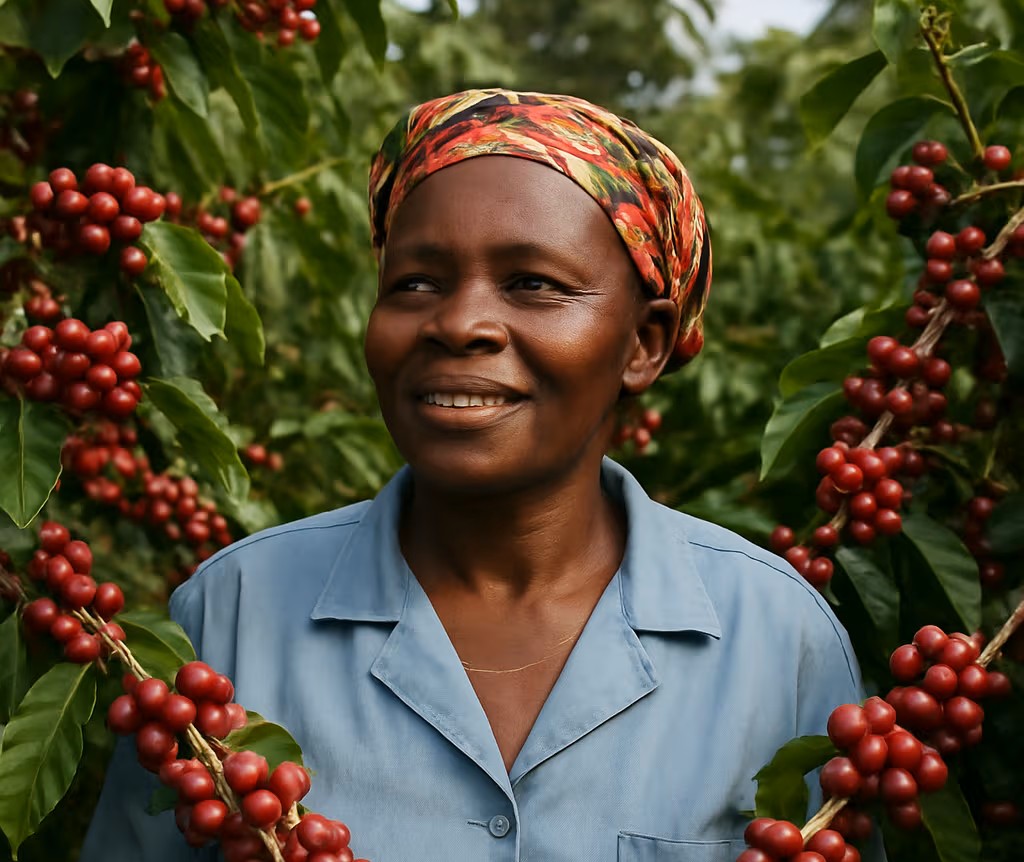
At the summit stands Yahya Al Faqeeh, a farmer from Al Jidan in Hayma Kharijiya. His Yemenia natural, just 37 pounds in total, scored 90.45 points—the highest of the competition. In his cup: jasmine, yellow lily, peach, macerated strawberry, blueberry gummies, and green apple. Behind it is a family tradition stretching back three centuries, with women at the heart of harvest and terraces carved into stone that have endured drought, pests, and time itself.

He is joined by other remarkable producers: Maghrib Ans XV (90.29), a Kent variety shaped through Qima’s Alchemy fermentation; Hejrat Al Ain Women Farmers XV (90.16), a women-led lot grown at 2,300m; and Bait Yaseen XI (90.16), a community coffee that blends history with floral vibrancy.

This year, women played a defining role. Fourteen of the winning lots—42 percent—came from women farmers, either through individual entries or collective groups. From Hejrat Al Ain to Al Mezab, their stories echo sacrifice and determination: planting seedlings instead of qat, selling gold to buy new trees, and working from dawn to dusk so their children inherit both terraces and tradition.

The auction also highlighted Yemen’s unique balance of tradition and innovation. Natural processes preserved terroir at its purest, Alchemy lots introduced layers of clarity and sweetness, and Carbonic Honey, represented by Bani Zaidan, added rare vibrancy while conserving water.

From 12 highland villages, perched between 1,800 and 2,300 metres, these coffees are more than agricultural products—they are monuments of endurance. Each terrace tells a story of families who, against scarcity and isolation, continue to farm the world’s most legendary coffee.

On 18 September 2025, buyers worldwide will compete for these treasures at the seventh edition of the Best of Yemen auction, held in collaboration with the Alliance for Coffee Excellence. For them, it will be a chance to secure rare coffees of unmatched flavour. For Yemen, it is another chapter in a legacy written across mountains, families, and centuries.

Because Yemeni coffee is not just grown. It is lived.

US Report: Caffeinated Coffee Is Generally Safe Despite Some Risks

Dubai, 18 August 2025 (Qahwa World) – A new investigation by the US-based nonprofit Clean Label Project has revealed that caffeinated coffee is largely safe from harmful toxins and contaminants, though certain risks remain present in some products.

The Clean Label Project, an independent consumer advocacy organization, specializes in testing food and beverage products for hidden contaminants such as heavy metals, pesticides, and plasticizers. The group’s latest study examined 45 popular coffee brands from Brazil, Colombia, Costa Rica, Ethiopia, Guatemala, Kenya, Peru, and Hawaii, conducting more than 7,000 laboratory tests.

Safe Overall, but Not Entirely Risk-Free

“While some contaminants were present, most were found at minimal levels and well below the European Union’s safety limits per 6-ounce serving. This means coffee is generally safe,” said Molly Hamilton, executive director of the Clean Label Project.

The study found:

  • Glyphosate and AMPA (byproduct): While glyphosate, a widely used herbicide, was detected only in trace amounts, its byproduct AMPA was more common, including in 100% of the organic samples tested.

  • Phthalates: Small amounts of these plasticizers, linked to reproductive and hormonal issues, were detected at higher levels in canned and pod coffee than in bagged coffee.

  • Heavy Metals: Levels varied by origin, with the lowest in African coffees and the highest in Hawaiian samples, consistent with volcanic soil content.

  • Acrylamide: Found in all samples, this chemical forms during roasting. Medium roasts contained the highest concentrations, while light and dark roasts showed lower levels.

Industry and Expert Response

David Andrews, acting chief science officer of the Environmental Working Group, said the results show packaging may be a key source of contamination. “The higher phthalate levels found in coffee pods and canned coffee suggest that packaging could be a meaningful source of these chemicals of concern,” he explained.

The National Coffee Association (NCA), which represents the US coffee industry, rejected concerns raised by the report.
“It is highly irresponsible to mislead Americans about the safety of their favorite beverage,” said William “Bill” Murray, NCA president and CEO. “Decades of independent scientific evidence show that coffee drinkers live longer, healthier lives.”

Organic Coffee Findings

Although organic coffees generally contained fewer contaminants than conventionally grown samples, all 12 organic coffees tested contained AMPA. According to Hamilton, this could result from environmental contamination via water or neighboring farms using pesticides.

“Still, the detection of AMPA in 100% of organic samples is a wake-up call,” Hamilton said. “We need stronger safeguards and greater transparency in our food system.”

What Consumers Should Do

The Clean Label Project stressed that coffee remains one of the cleanest products they have ever tested. However, Hamilton recommended practical steps for consumers:

  • Choose dark or light roasts to reduce acrylamide intake.

  • Prefer bagged coffee over cans or pods to lower phthalate exposure.

  • Consider origin, as soil conditions influence heavy metal content.

“Our report isn’t meant to raise alarm or discourage coffee drinking,” Hamilton concluded. “It’s about empowering people to choose the cleanest and safest cup of coffee possible.”

Rising Production and Exports Put Kenya Back on the Global Coffee Map

Dubai – Qahwa World

Kenya is witnessing a strong rebound in its coffee sector, with production forecast to grow by 13.3% in the 2025/26 marketing year, reaching 850,000 sixty-kilogram bags. This recovery is driven by high global prices, government reforms, and farmer support programs. Exports are also projected to rise by 10%, while domestic consumption is expected to increase by 6.9%. With these promising indicators, Kenya is reclaiming its place among the world’s top Arabica coffee producers.

According to the USDA’s Coffee Annual Report (May 2025), Kenya’s coffee production is forecast to increase from 750,000 bags in 2024/25 to 850,000 bags in 2025/26. Farmers have responded to favorable prices with improved agricultural practices—applying more fertilizer, controlling pests more effectively, and capitalizing on Arabica’s natural biennial production peak.

In February 2025, the Nairobi Coffee Exchange (NCE) recorded a historic high of $363 per 50-kg bag, up from $254 in October 2024. Although a slight price correction is expected in the second half of the year, prices remain favorable and have reinvigorated investment in farms.

Slight Expansion in Planted Area

While harvested area is expected to remain at 105,000 hectares, planted area will increase slightly as the Kenyan government rolls out its Coffee Expansion Program in both traditional and new growing regions across Central, Eastern, and Rift Valley Kenya. The program includes subsidized seedlings, supported by county-level grants and expanded production at the Coffee Research Institute to meet increased demand.

Urbanization Slows, Coffee Area Stabilizes

Between 2020 and 2024, coffee area declined from 112,000 to 105,000 hectares due to urban development, particularly around Nairobi, Kiambu, and Nyeri. However, this trend has slowed, thanks to a stagnating real estate market, offering the sector a chance to stabilize.

Marketing Reforms and Structural Overhaul

Roughly 80% of Kenya’s coffee is sold through producer cooperatives, while the remaining volume is marketed by private farms and estates. The Nairobi Coffee Exchange remains the country’s primary marketplace, handling over 90% of coffee sales.

Since 2023, Kenya has implemented significant reforms in marketing and regulation. The NCE is now under the Capital Markets Authority, which licenses brokers responsible for classification and auction procedures. There are currently 15 licensed brokers. Additionally, licensing of millers was decentralized to county governments.

A pending Coffee Bill in Parliament seeks to formalize these changes by creating a new Coffee Board of Kenya and an independent Coffee Research and Training Institute, to be funded through a coffee sales levy.

Exports Rising but Facing EU Deforestation Law

Coffee exports are expected to grow by 10% to 840,000 bags in 2025/26, up from 763,000 bags the previous year. Green beans dominate Kenya’s export portfolio, with major buyers including:

  • European Union: Over 57%

  • United States: 16.75%

  • South Korea: 5.16%

  • United Kingdom: 3.43%

  • Other emerging markets: China, Australia, India

However, the upcoming EU Deforestation Regulation, taking effect in January 2026, poses a potential challenge. In response, Kenya has formed a multi-agency committee to evaluate readiness and establish compliance mechanisms.

Domestic Consumption on the Rise

Domestic coffee consumption is projected to grow by 6.9%, reaching 62,000 bags in 2025/26. This growth is driven by the rapid expansion of coffee shops, particularly in Nairobi, and a 15% surge in tourism in 2024. Kenya’s coffee culture is evolving, with increasing demand for specialty brews and locally roasted varieties.

Despite this growth, soluble coffee consumption remains low due to the lack of local processing facilities. Kenya imports approximately 45,000 bags of instant coffee annually.

Stock Levels and Imports

Ending stocks are expected to increase to 86,000 bags in 2025/26, reflecting higher production. For 2024/25, stock estimates have been revised downward to 63,000 bags due to higher exports and tighter output.

Conclusion: Kenya’s Return to Coffee Leadership

With production, exports, and consumption all trending upward, Kenya is once again asserting itself on the global coffee stage. While challenges like EU environmental compliance lie ahead, the country’s proactive reforms and farmer-focused strategies signal a new era of growth and global relevance for Kenyan coffee.

The Unsung Hero of Every Cup: The Story of Coffee Filters

Dubai – Qahwa World

The coffee filter—a simple, unassuming piece of material—is the unsung hero in the art of brewing. While we often praise the beans, roasters, and brewing methods, the story of the coffee filter is one of quiet ingenuity and a vision for a better cup. Behind its creation lies a tale of innovation, perseverance, and a quest for perfection that revolutionized how the world enjoys coffee.

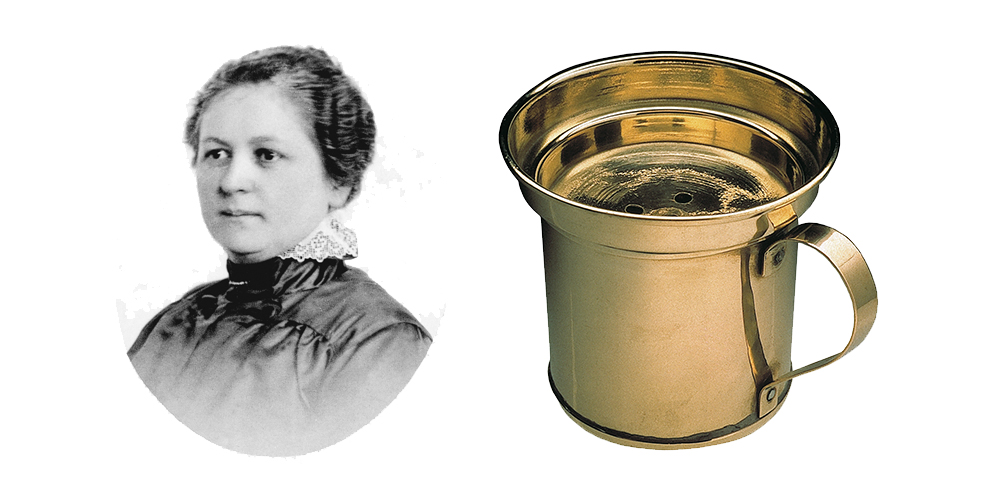
In 1908, in the bustling city of Dresden, Germany, a woman named Melitta Bentz was grappling with a common frustration: gritty, bitter coffee. At the time, coffee grounds were brewed directly in boiling water, leaving behind an unpleasant residue and an over-extracted flavor. Melitta wasn’t an inventor by trade; she was a housewife who loved a clean cup of coffee. Yet her dissatisfaction became the catalyst for change.

One day, as she prepared coffee in her kitchen, inspiration struck. She took a piece of blotting paper from her son’s school notebook, punctured a brass pot with holes, and used the paper as a makeshift filter. The result? A smooth, grit-free coffee that tasted pure and bright. Melitta had not just solved her problem—she had laid the foundation for a brewing revolution.

A Patent and a Family Dream

Recognizing the potential of her invention, Melitta patented her coffee filter on July 8, 1908. What followed was a story of determination. Together with her husband Hugo and their two sons, Melitta began producing and selling her filters from their home. They established the Melitta Company, a small family business that would grow into one of the most respected names in coffee history.

The coffee filter’s popularity soared as households and cafes adopted the innovation, appreciating its ability to transform brewing into an art. It wasn’t just a tool—it was a symbol of progress, of the pursuit of excellence in the everyday.

The Evolution of Coffee Filters: White and Brown

As coffee filters gained traction, their production evolved. The early filters were unbleached, naturally brown, and minimally processed. Over time, white filters were introduced, chemically bleached or oxygen-treated to remove the natural color. These white filters appealed to those who valued a neutral taste profile, as the process removed any residual papery flavor.

But the brown filters remained beloved among environmentally conscious coffee lovers, who appreciated their eco-friendly manufacturing process. Today, the debate between white and brown filters persists—one of taste versus sustainability, preference versus principle.

Beyond Paper: Innovations in Brewing

While paper filters remain a staple, innovation in coffee brewing has led to alternatives. Metal filters, made of stainless steel, preserve the natural oils of coffee, offering a fuller-bodied brew. Cloth filters, though requiring care, provide an eco-friendly and reusable option. These innovations underscore the enduring influence of Melitta’s original invention—a solution designed to perfect the brewing process.

The Legacy of a Visionary

Melitta Bentz’s story is more than an account of invention; it is a testament to how one person’s desire for a better experience can change an entire industry. Today, over a century later, her company remains family-owned, continuing her legacy of quality and innovation. The coffee filter is a reminder that even the simplest ideas, born in the humblest of settings, can shape the way we live.

What Lies Ahead

The coffee filter’s journey isn’t over. With sustainability at the forefront of global concerns, brands are reimagining filters to reduce waste and embrace renewable materials. Specialty coffee enthusiasts demand filters tailored to highlight the unique characteristics of their beans, driving producers to innovate further.

Why the Coffee Filter Matters

In an era of high-tech coffee machines and exotic brewing gadgets, the coffee filter is a grounding force—a humble yet indispensable component of the perfect cup. It reminds us that the pursuit of quality begins with the basics and that even a small improvement can ripple across the world, elevating the everyday into something extraordinary.

The next time you brew your coffee, take a moment to appreciate the filter. Behind that thin sheet of paper lies a history of ingenuity, a dedication to craft, and a legacy of excellence. The coffee filter may not sing its praises loudly, but its quiet contribution is one of the most significant in the world of coffee.

This is the story of the coffee filter: a tale of simplicity, innovation, and timeless brilliance.

The Lifecycle of Coffee..From Tree to Cup

Dubai – Qahwa World

The coffee tree, belonging to the Coffea genus, thrives in tropical climates between the Tropics of Cancer and Capricorn. Notable species include Coffea arabica (Arabicas) and Coffea canephora (Robustas). Arabica, characterized by large bushy growth, produces cherries with two flat seeds, commonly known as coffee beans. In contrast, Robusta, a robust shrub or small tree, yields smaller oval seeds and is resilient in hotter climates.

Temperature and altitude play crucial roles, with Arabica thriving in 15 to 24ºC conditions and Robusta excelling in 24 to 30ºC temperatures. Rainfall requirements range from 1,500 to 3,000 mm annually, with Arabica being less demanding. While Robusta can grow up to 800 meters above sea level, Arabica thrives at higher altitudes, often cultivated in hilly terrains.

Harvesting the Beans

Hand-picking is the norm for harvesting ripe coffee cherries due to the mountainous landscapes, except in Brazil where machinery finds utility. Pickers, every 8 to 10 days, meticulously select only fully ripe cherries. Arabica’s selective picking, though labor-intensive, is favored for its quality. Harvested cherries yield 2 to 4 kilos, and a skilled picker can harvest 45 to 90 kilos per day, resulting in 9 to 18 kilos of coffee beans.

Processing the Harvest

Post-harvest, the next step involves separating the coffee seeds from the cherries and drying them. Two methods prevail: the dry or ‘natural’ method and the wet method. The dry method, simpler and older, dries whole cherries in the sun for up to four weeks before further processing. The wet method involves pulping, fermenting, washing, and then drying the beans, which takes 8 to 10 days.

Roasting and Grinding

With over 1,000 aroma components identified, roasting conditions determine the final coffee flavor. Green coffee beans undergo roasting at 180ºC to 240ºC for 1.5 to 20 minutes, influencing color and aroma intensity. Roasting occurs in rotating drums or fluidized bed roast chambers, followed by cooling and potential packaging as whole beans.

Brewing and Consumption

Arabica dominates global coffee cultivation, spanning Latin America, Central and East Africa, India, and Indonesia. Robusta thrives in West and Central Africa, Southeast Asia, and Brazil. Different brewing methods, such as filter, plunger, espresso, Swedish, and Turkish, cater to diverse preferences. Instant coffee, made from roasted and ground beans, utilizes either spray-drying or freeze-drying methods.

Understanding Coffee Composition

Caffeine, antioxidants, and diterpenes contribute to coffee’s unique flavor and physiological effects. Caffeine, a mild stimulant, has desirable effects in moderation. Antioxidants, including chlorogenic acids, offer potential health benefits. Diterpenes, like cafestol and kahweol, present in oil, impact cholesterol levels, with brewing methods influencing their concentration.

Exploring Health Considerations

Coffee composition also involves compounds like Ochratoxin A, acrylamide, and furan, which require careful monitoring and adherence to safety regulations. Nutritionally, black coffee is low in macronutrients, providing only 1-2 kcal per 100 ml. Micronutrients like potassium, magnesium, and niacin vary based on preparation methods.

Coffee and Hydration

Black coffee, comprising over 95% water, does not lead to dehydration when consumed in moderation. Studies suggest that caffeine’s diuretic effects are outweighed by the fluid intake from coffee. Moderation, encompassing 3-5 cups per day, aligns with a balanced diet and active lifestyle, providing an enjoyable journey from tree to cup.