Leon launches major restructuring plan with potential store closures

London – Qahwa World

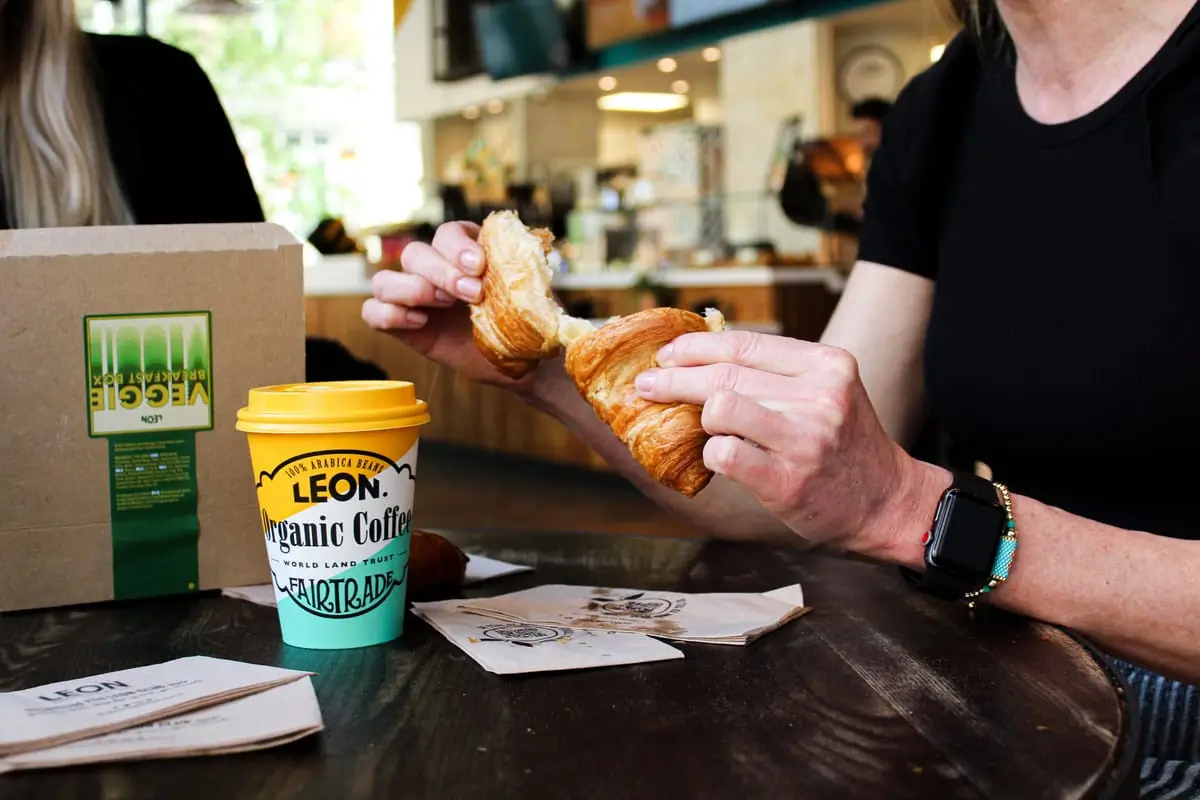
Leon, the UK-based food-to-go and coffee chain, has initiated a company voluntary arrangement (CVA) as it works to shut down loss-making branches and reshape the business into a more efficient and sustainable operation.

This step follows the recent move by Co-founder John Vincent, who reacquired the brand from Asda just over a month ago.

Leon reported a pre-tax loss of £8.4 million ($11.3 million) for 2024, marking the company’s ninth consecutive year in deficit.

As part of the restructuring plan, the chain may close up to 20 underperforming outlets in an effort to reduce ongoing financial pressures. The CVA allows Leon to continue operating while arranging a structured repayment plan with creditors. Although the process is less costly than other insolvency options and keeps management in control, it is expected to lead to job cuts.

The initial phase will target branches that have been consistently unprofitable. Vincent said the process should help Leon emerge as a “leaner business” with a clearer path back to its original mission and values.

Vincent’s return to leadership has already brought significant changes. Shortly after retaking ownership of the 70-store chain, he discontinued Leon’s value-driven coffee subscription programme—ended only 18 months after its relaunch, which had aimed to attract budget-conscious customers.

Leon has not recorded a profit since 2015, and although losses were reduced by more than half in the previous year, the chain still ended 2024 with a substantial deficit.

Leon was founded in 2004 by Vincent, Henry Dimbleby, and chef Allegra McEvedy to introduce healthier fast-food options to the UK high street. However, after the brand’s sale to EG Group in 2021 and later to Asda in 2023, critics argue that its nutrition-focused identity has weakened.

In October 2025, shortly before Vincent took back control, Dimbleby—formerly a government advisor on food health—publicly criticised Asda, accusing it of undermining Leon’s concept by prioritising cheaper and saltier menu items.

During Asda’s tenure, Leon also expanded its presence in supermarkets. What began in 2019 with packaged coffee and sauces has since grown into a wide range of ready meals and frozen items such as waffle fries, burgers, and chicken nuggets—an area where some critics say the brand’s health-first approach has become less visible.

Financial advisory firm Quantuma has been appointed to manage the CVA process. Leon also announced a partnership with Pret A Manger to support employees who may face redundancy, offering opportunities for redeployment within Pret’s network.

Bain Capital Submits Bid to Acquire Costa Coffee from Coca-Cola

Dubai – Qahwa World

US private equity firm Bain Capital has made an initial bid to acquire Costa Coffee from beverage giant The Coca-Cola Company, according to sources familiar with the matter.

The bid was submitted through Bain Capital’s Special Situations unit, which has invested more than $17bn since its launch in 2018 and currently manages over $21.6bn in assets. The investment group already counts boutique bakery-café chain Gail’s and restaurant brand PizzaExpress among its portfolio.

The development follows less than two weeks after Apollo Global Management, once considered the frontrunner, withdrew its interest in the UK-based coffee chain. Reports indicate that Coca-Cola has received fewer offers than expected for Costa, which operates more than 4,100 outlets worldwide. London-based TDR Capital, which has stakes in UK supermarket Asda and QSR brand Popeyes, also submitted a preliminary bid last month.

Coca-Cola has been exploring a sale of Costa since August 2025, nearly seven years after acquiring the company from Whitbread in January 2019 for $4.9bn. Speaking after Coca-Cola’s second-quarter earnings release earlier this year, CEO James Quincey admitted that the group’s investment in Costa Coffee “is not where we wanted it to be.”

A sale would likely see Coca-Cola incur losses of several billion dollars compared to its original purchase price. However, the company is expected to retain ownership of Costa’s ready-to-drink (RTD) beverage portfolio.

Founded in 1971, Costa Coffee is the UK’s largest coffee chain, with its home market accounting for around two-thirds of its global footprint. The brand reported 9% year-on-year sales growth in the 12 months ending 31 December 2023, reaching £1.2bn ($1.6bn), with the UK contributing 96% of total sales.

From America to Europe: Starbucks Continues Store Closures

Dubai – Qahwa World

In less than two days, Starbucks’ downsizing plan has expanded from North America to Europe. After announcing yesterday the closure of hundreds of stores in the United States and Canada, the company today revealed further closures in the UK, Switzerland, and Austria, underscoring the challenges facing the world’s largest coffee chain.

Starbucks’ EMEA division confirmed that a review of its company-owned stores in Europe, the Middle East, and Africa has resulted in a decision to shutter outlets in three key European markets. The company did not disclose how many stores will close or the exact timeline but stressed the move is part of a broader strategy to align store formats with customer traffic and profitability.

This announcement comes just one day after the company said it would close around 400 stores in the U.S. and Canada and cut 900 non-retail jobs as part of a $1 billion restructuring plan. Read yesterday’s report here

Numbers Tell the Story

Starbucks currently operates nearly 5,000 stores across 42 countries in the EMEA region. The UK is its largest market, with 1,416 stores (521 company-owned). Switzerland has 49 company-owned outlets, while Austria operates 21.

The financial strain is evident in recent results: UK revenues fell 4% year-on-year to £525.6m ($668.9m) for the year ending September 2024, with a pre-tax loss of £35.2m ($44.8m). Across EMEA, revenues declined 9%, gross profit fell 5%, and operating profit dropped 16%.

“Back to Starbucks” Strategy

The closures form part of CEO Brian Niccol’s Back to Starbucks strategy, first launched in late 2024, which aims to return the brand to its “coffeehouse roots.” The strategy emphasizes simpler menus, stronger barista engagement, and encouraging customers to spend more time in stores.

Despite the retrenchment, Starbucks insists it remains committed to expansion. The company plans to open 80 new UK stores and 150 additional EMEA outlets by the end of the current fiscal year on 30 September 2025, with a pledge to return to net positive store growth across the region in 2026.

Lavazza Doubles UK Profits Despite Record Coffee Costs in 2025

London – Qahwa World

Italian coffee giant Lavazza has doubled its UK profits despite grappling with severe supply chain disruption and record-high green coffee costs. Strategic price increases and high-profile sponsorships have helped the brand maintain momentum in one of its key European markets.

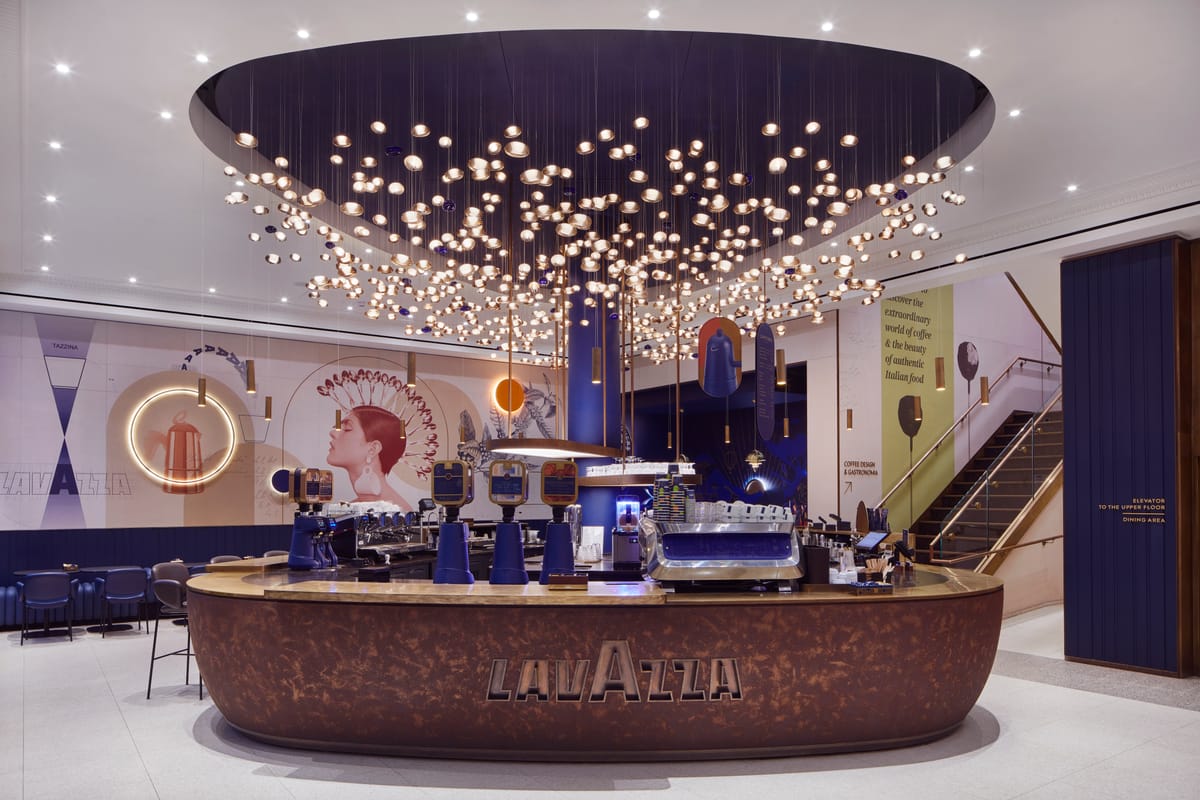
Lavazza UK reported a pre-tax profit of £3.2 million ($4.3m) in 2024, compared with £1.5 million ($2m) the previous year. Sales rose 8% year-on-year to £110.3 million ($149m), marking the second consecutive year revenues surpassed the £100m threshold. The Turin-based roaster strengthened its UK presence through partnerships with Wimbledon, Arsenal Football Club, and Ascot Racecourse, initiatives that it said significantly boosted brand visibility and consumer recognition. Lavazza has also operated a flagship store in London since 2021, reinforcing its retail footprint.

In its Companies House filing, the company acknowledged “unprecedented” cost pressures tied to climate change, geopolitical tensions, and volatile green coffee markets. Despite leveraging Lavazza Group’s global procurement strategies to hedge against volatility, it admitted that part of the inflationary burden had to be passed on to consumers. “The company benefits from the policies adopted by the Lavazza Group to limit the impact of volatility within the coffee market,” Lavazza UK stated. “However, despite these measures, the company has had to mitigate the increased risk by passing some inflation to its customers and consumers.”

According to company figures, UK households consume 13 million cups of Lavazza coffee every week and use 1.4 million capsules. Raising prices has been a key lever for sustaining modest revenue growth and absorbing cost pressures in an environment where inflation has pushed up the cost of everyday goods. Data from consumer watchdog Which? indicates that retail coffee prices in the UK climbed by up to 40% in the 12 months to March 2025.

Still, there are signs of relief. Speaking to UK press in July 2025, Lavazza Group Chairman Giuseppe Lavazza suggested that record coffee prices may have already peaked, potentially bringing stability to supermarket shelves. On a global scale, the group absorbed €600m ($658m) in additional costs since 2022 but nonetheless achieved record revenues of €3.35bn ($3.67bn) in 2024, underlining the strength of its brand across more than 140 markets.

Founded in 1895, Lavazza remains one of the world’s most prominent coffee roasters. Its performance in the UK highlights how strategic pricing and brand-building investments have enabled it to withstand inflationary shocks while continuing to expand its international footprint.

Pret A Manger Aims to Double UK Stores Following Strong 2024 Growth

Pret A Manger is preparing for a major expansion across the UK after reporting robust growth in 2024.

The London-based coffee and food-to-go chain, which currently operates 500 stores in the UK and another 200 across 20 international markets, achieved 10% year-on-year revenue growth in 2024, reaching £1.2bn ($1.6bn). Adjusted EBITDA rose 36% to £98m ($133m).

Chief Executive Pano Christou, who has led the JAB Holding-backed business since 2019, said Pret aims to double its UK footprint to 1,000 outlets by focusing on city centres and transport hubs. “Customers love the brand on the go. Our travel business has really exploded in recent years. We have eight locations at Heathrow and will add two more next year,” he told reporters.

Pret ended 2024 with 717 outlets across 21 global markets. Alongside its expansion plans, the chain will introduce new value-driven offerings, including a £6-£7 ($8.14-$9.50) lunchtime meal deal trial in the UK. The initiative, already successful in France, is expected to boost sales and afternoon footfall.

The company has also launched a premium ‘Super Plates’ salad range in 250 UK stores and overhauled its Club Pret subscription, scrapping its five-coffees-a-day offer for £30 ($38.99). Additionally, a new store format targeting dine-in and family groups has been unveiled in its home market.

Beyond the UK, Pret is seeking significant growth in the US, where it operates 70 stores generating approximately $100m annually, mainly in New York. Christou highlighted transport hubs along the East Coast as the primary focus for expansion. In October 2023, Pret signed a joint venture with franchise partner Dallas International to triple its US footprint by 2029, and in July 2025, it appointed former Tim Hortons executive Felipe Athayde as President of its North America business.

“2024 was another year of growth for Pret, where we took disciplined decisions to protect sales despite intense pressures on the hospitality industry. Our priority now is to drive transactions and sustainable growth by offering great value for Pret customers,” Christou said.

Unity Coffee Launches to Redefine the UK’s Self-Serve Coffee Market

Dubai, 2 September 2025 (Qahwa World) – Scott Martin, the entrepreneur who pioneered the UK’s self-serve coffee sector, has returned with a bold new venture, Unity Coffee, which aims to disrupt the market through digital-first innovation, premium quality, and fairer value.

The brand is rolling out this month across the United Kingdom, targeting retail, travel, leisure, and education venues. With a plan to install more than 500 units in the next two years, Unity Coffee positions itself as a challenger brand ready to compete directly with industry giants.

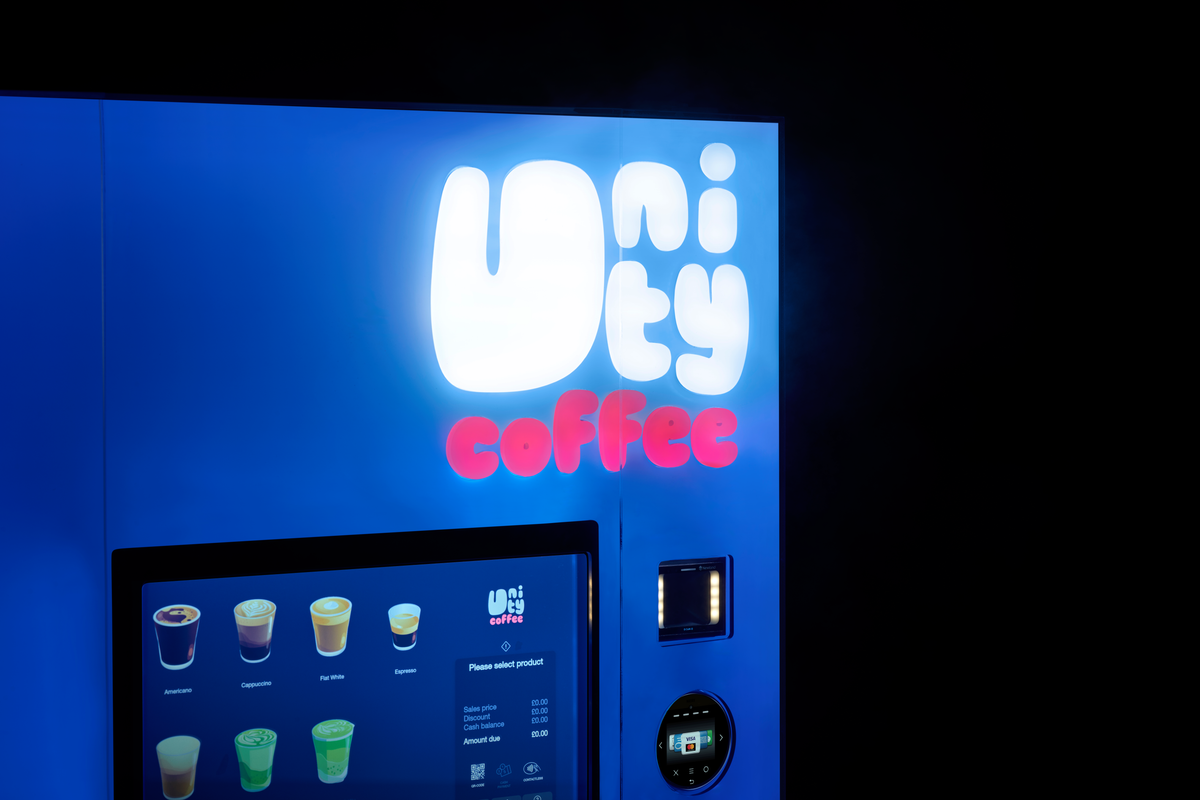
Built on a FinTech platform, Unity Coffee is the first self-service coffee concept of its kind, offering customers a seamless mobile-first journey. Consumers can order and pay through the brand’s dedicated app while benefiting from agile pricing, real-time promotions, and personalized loyalty rewards. The machines are designed to ensure consistency across a wide menu that includes espresso, specialty coffee drinks, matcha, and hot chocolate, with both dairy and plant-based milk options.

“The coffee-to-go market has let customers down for years with overpriced drinks and tired, repetitive experiences,” said Martin. “Unity Coffee is leading a new movement, delivering exceptional coffee at fairer prices through smart technology, dynamic loyalty, and instant rewards. We’re going to take on big coffee and give the power back to the people.”

Martin is no stranger to innovation. In 1998, he co-founded Coffee Nation, which quickly grew to nearly 900 machines and captured almost half of the UK’s self-serve market. The company was acquired by Whitbread in 2011 for £59.5 million ($77.3 million) and rebranded as Costa Express. Under Martin’s leadership, the network expanded to 14,000 machines before becoming part of Coca-Cola’s £3.9 billion ($5.4 billion) acquisition of Costa Coffee in 2019.

Unity Coffee has secured backing from investors with strong expertise across hospitality, retail, manufacturing, and packaging, ensuring both financial strength and operational insight. Martin himself continues to advise on other innovative ventures, including UK specialty coffee group Grind, self-serve solutions firm BoxBar, and Singapore-based Crown Digital, the developer of the robotic barista concept ELLA.

The launch of Unity Coffee comes at a time when self-service technologies are gaining renewed attention across global retail. With its FinTech foundation, wide product range, and consumer-first approach, the brand is positioning itself not just as a coffee provider but as part of a broader digital transformation in the coffee-to-go sector.

5 Trends Shaping the UK Branded Coffee Shop Market in 2024

In 2023, the UK branded coffee shop market soared to £5.3bn ($6.6bn), surpassing 10,000 outlets for the first time and experiencing remarkable sales growth. However, amidst ongoing economic challenges and shifting consumer behaviors, operators tread cautiously. Exclusive insights from the Project Café UK 2024 report unveil the pivotal dynamics shaping Europe’s largest branded coffee shop market.

  1. Navigating Economic Headwinds: Despite resilient growth, operators face constraints from a challenging economy. High inflation and decreased footfall at prime locations have compelled brands to reassess strategies, with notable shifts observed in consumer spending habits and outlet expansion plans.
  2. Franchising for Expansion: To mitigate risks amidst rising costs and stiff competition, UK operators increasingly turn to franchising for expansion. Notable brands like Costa Coffee and Greggs are leveraging this model to penetrate diverse markets and capitalize on local expertise.
  3. Rise of Boutique Operators: The specialty coffee segment witnesses unprecedented growth, with boutique operators like WatchHouse and Grind expanding their footprint and diversifying offerings. The market’s maturity is evident as specialty operators thrive beyond London.
  4. Oat’s Dominance in Non-Dairy Choices: Oat emerges as the preferred non-dairy option in UK coffee shops, gaining traction at the expense of other alternatives. Despite this, challenges persist, signaling that dairy still holds sway over consumer preferences.
  5. Diversification and Competition: Non-coffee-focused branded cafés are intensifying competition, offering handcrafted beverages and indulgent experiences. From bubble tea to premium drinking chocolate, these establishments seek to captivate younger consumers and tap into evolving tastes.

The UK branded coffee shop market of 2024 is characterized by resilience, innovation, and adaptation. As operators navigate economic uncertainties and changing consumer preferences, strategic maneuvers and diversification efforts emerge as key drivers of success in this dynamic landscape.