Starbucks to Close Hundreds of Stores and Cut Thousands of Jobs in a $1bn Austerity Plan

Starbucks is preparing to write off $1bn in costs and assets by closing hundreds of stores in North America and making further corporate layoffs.

Between June and the end of September, 400 US and Canada stores deemed unprofitable and unsuitable for refurbishment were closed or slated for closure. US store managers will find out this week if their outlet has been added to the list, extending cuts that have so far focused on takeaway-only stores.

However, in an open letter to employees, Starbucks CEO Brian Niccol announced that hundreds more sit-in stores deemed unsuitable for refurbishment under the Back to Starbucks strategy would also close. Starbucks has sought to move away from “overly transactional” takeaway stores and focus on longer dwell-time visits and more personalised service as part of a major strategy to reverse faltering sales in the US.

“We have identified coffeehouses where we’re unable to create the physical environment our customers and partners expect, or where we don’t see a path to financial performance, and these locations will be closed,” Niccol said in his letter.

Niccol forecasts that Starbucks will end its fiscal year with nearly 18,300 company-operated and licensed stores across North America, down from 18,734 at the end of its third quarter ended 30 June 2025. The Seattle-based coffee chain, which has posted six consecutive quarters of like-for-like sales decline in the US, plans to return to positive outlet growth across North America next year, as well as modernise more than 1,000 US stores 10% of its company-owned US locations.

Niccol has also announced further layoffs, just seven months after announcing plans to cut 1,100 corporate jobs across its global business. Approximately 900 non-retail roles will be axed as the coffee chain seeks to prioritise investment in retail operations.

“These steps are to reinforce what we see is working and prioritise our resources against them. We will continue to carefully manage costs and stay focused on the key areas that drive long-term growth,” Niccol added.

In a separate SEC filing, Starbucks said $450m of the total $1bn costs will be allocated to exiting leases early, with a further $400m on the disposal of company-operated store assets. The remaining $150m will be allocated to severance and staff support packages.

In July 2025, Starbucks reported 2% year-on-year net revenue growth in North America to reach $6.9bn. However, the coffee chain saw third quarter like-for-like sales and comparable transactions both declined.

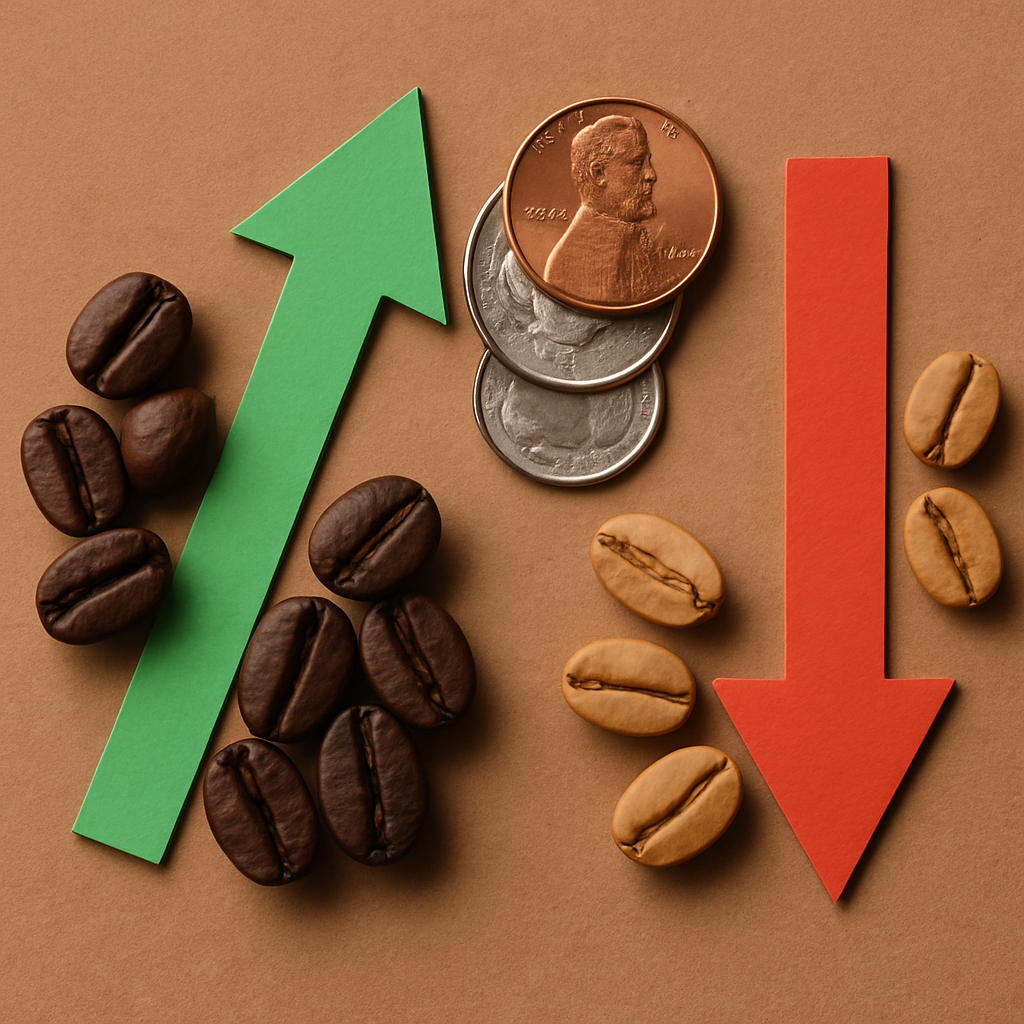
Coffee Prices Mixed as Robusta Surges and Arabica Faces U.S. Tariff Pressure

Dubai – Qahwa World

Coffee futures ended Monday in mixed territory as robusta prices climbed on concerns over heavy rains in Vietnam, while arabica remained under pressure from uncertainty surrounding U.S. tariff policy and ongoing harvest progress in Brazil. December arabica (KCZ25) fluctuated during the session and ultimately closed down -1.50 (-0.41%), while November robusta (RMX25) gained +121 (+2.93%).

The sharp rise in robusta was fueled by forecasts of heavy rainfall across Vietnam’s Central Highlands, the country’s key growing area, which could damage cherries entering their final stage of development before harvest. Vietnam, the world’s largest producer of robusta, continues to play a decisive role in global market movements. Despite the short-term weather risks, the country is still expected to deliver a bumper crop, with 2025/26 production projected to climb 6% year-on-year to 1.76 million metric tons, or 29.4 million bags, the highest level in four years. Export momentum remains strong as well, with shipments from January to August up 7.8% compared with the previous year, reaching 1.141 million metric tons.

Arabica, meanwhile, faced renewed selling pressure linked to the policy debate in Washington, where lawmakers are considering a bill that would exempt coffee imports from tariffs. The United States currently maintains a 50% tariff on Brazilian imports, a measure that has disrupted traditional trade flows and forced buyers to cancel contracts. This has tightened U.S. supplies significantly, with ICE-monitored arabica inventories falling to a 17-month low of 643,341 bags. Robusta inventories also dropped to a 1.75-month low of 6,464 lots. The trade impact is considerable, since Brazil accounts for roughly one-third of America’s unroasted coffee imports.

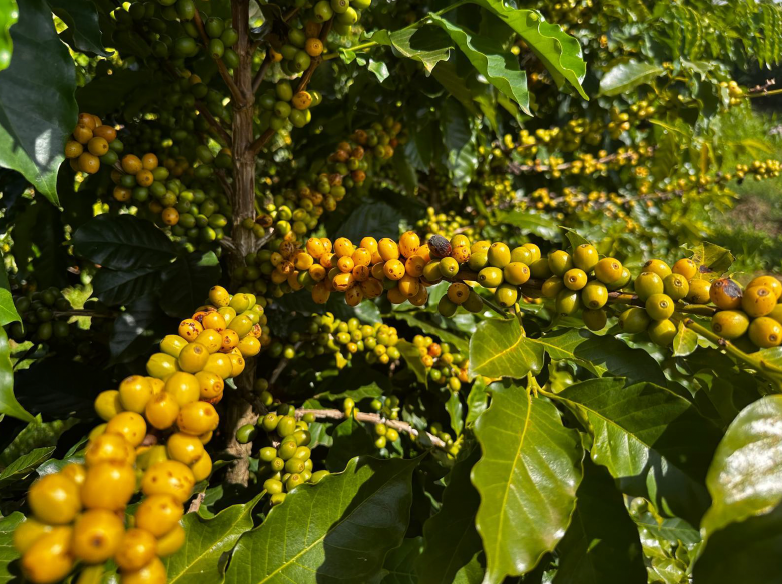
While tariffs weigh on demand for arabica, supply-side pressures in Brazil are offering a degree of support. Somar Meteorologia reported that Minas Gerais, Brazil’s largest arabica-producing state, received only 10.5 millimeters of rain during the week ending September 20, representing just 73% of the historical average. September is a critical flowering month for coffee trees, and any shortage of rain could compromise the next crop cycle. Earlier this month, Brazil’s crop agency Conab cut its forecast for the 2025 arabica harvest by 4.9% to 35.2 million bags and lowered total coffee production to 55.2 million bags, reinforcing concerns about supply.

Globally, the balance remains tight despite expectations of record output. The USDA’s Foreign Agriculture Service projects that world coffee production will increase by 2.5% in 2025/26 to reach 178.68 million bags. Arabica output, however, is forecast to decline 1.7% to 97 million bags, while robusta is expected to rise by nearly 8% to 81.6 million bags. This uneven growth underlines the structural imbalance in the market. Commodity trader Volcafe has warned that the arabica deficit will widen to 8.5 million bags in 2025/26, compared with 5.5 million bags in the previous cycle, marking the fifth consecutive year of shortfalls.

Export figures add further weight to bullish sentiment. The International Coffee Organization reported earlier this month that global shipments in July fell 1.6% year-on-year to 11.6 million bags, while cumulative exports for the first ten months of the current season declined 0.3%. Brazil’s shipments saw particularly sharp declines. Data from the Trade Ministry showed that unroasted coffee exports in July plunged 20.4% to 161,000 metric tons, while exporter group Cecafe reported green coffee shipments down 28% to 2.4 million bags. Robusta exports collapsed by nearly half. In total, Brazil’s shipments between January and July dropped 21% to 22.2 million bags.

In the short term, harvest pressure continues to weigh on arabica prices. Brazil’s Cooxupe cooperative, the country’s largest exporter group, reported that its members had completed 98.9% of the harvest by September 12, signaling that near-term supply remains ample. Yet market participants remain cautious about the months ahead, with the National Oceanic and Atmospheric Administration forecasting a 71% chance of La Niña developing between October and December. Such a weather pattern could intensify drought conditions in Brazil and place the 2026/27 crop at risk.

The global coffee market thus finds itself pulled in opposite directions. On one side, robusta prices are supported by immediate weather risks in Vietnam, while arabica is weighed down by trade policy uncertainty and harvest dynamics in Brazil. On the other, tightening inventories, shrinking exports, and the prospect of continued arabica deficits provide a strong bullish undertone. With weather volatility and geopolitical trade policies both in play, analysts expect price swings to remain a defining feature of the market for months to come.

Update on Intended Recommended Public Offer by Keurig Dr Pepper for JDE Peet’s

Burlington (Mass.), Frisco (Texas) & Amsterdam – 19 September 2025 – Qahwa World – Keurig Dr Pepper (KDP) and JDE Peet’s have issued a joint update on the intended recommended public offer by KDP for all issued and outstanding ordinary shares of JDE Peet’s. The all-cash offer, first announced on 25 August 2025, values each share at €31.85, alongside a previously declared dividend of €0.36 per share to be paid prior to closing.

The companies confirmed that preparations for the offer are progressing as planned. A request for review and approval of the Offer Memorandum will be filed with the Dutch Authority for the Financial Markets (AFM) no later than 16 November 2025.

Subject to regulatory approvals and customary conditions, both parties continue to expect the transaction to close in the first half of 2026. Once completed, the deal will significantly reshape the global coffee landscape by uniting KDP’s North American strength with JDE Peet’s worldwide portfolio of brands, including Peet’s, L’OR, Jacobs, Douwe Egberts and Moccona.

The €18.2bn acquisition also aligns with JDE Peet’s “Reignite the Amazing” strategy, focused on simplifying its portfolio, strengthening leading brands, and delivering efficiency savings of €500m ($590m).

The tender offer will be made under Dutch law and will also comply with U.S. securities regulations via the Tier II exemption. U.S. shareholders are advised that the process will follow Dutch disclosure and procedural requirements, which differ from U.S. tender offer rules.

KDP, a leading North American beverage company with revenues exceeding $15bn, is known for its broad portfolio of over 125 owned, licensed and partner brands, including Green Mountain Coffee Roasters and Dr Pepper. JDE Peet’s, the world’s largest pure-play coffee company, serves approximately 4,400 cups of coffee per second across more than 100 markets worldwide.

Both companies stressed that the transaction remains subject to market, legal and regulatory risks, but reaffirmed their confidence in completing the offer within the projected timeline.

Keurig Dr Pepper Appoints Olivier Lemire to Lead US Coffee Division

Texas – 19 September 2025 – Qahwa World – Keurig Dr Pepper (KDP) has named Olivier Lemire as the new President of its US coffee business, a strategic move ahead of its $18.2bn acquisition of Amsterdam-based coffee and tea group JDE Peet’s, expected to finalize next year.

Lemire succeeds Patrick Minogue and transitions from his role as President of KDP Canada, where he has been at the helm since 2021. His appointment ends a 14-year tenure in the Canadian arm of the company, during which he held senior roles in sales, supply chain, HR, and commercial strategy.

“Olivier is a strong, people-centred leader who will help take our coffee business to the next level. He has done an exceptional job leading our Canadian coffee business, strengthening our position in that market while fostering a world-class team and culture,” said Tim Cofer, CEO of KDP.

In a LinkedIn post, Lemire highlighted the pivotal timing of his new role: “The acquisition of JDE Peet’s will open the door to a transformational change, one that combines global scale with our North American strength. It’s a privilege to begin this journey alongside colleagues and partners as we shape the future of our coffee business.”

Lemire will play a central role in integrating JDE Peet’s into KDP’s coffee operations, which will be spun off in 2026 into a new US-listed entity, Global Coffee Co. The new company will manage KDP’s 125 proprietary and licensed capsule ranges, alongside JDE Peet’s packaged coffee brands such as Peet’s, L’OR, and Jacobs.

The acquisition is also expected to accelerate JDE Peet’s “Reignite the Amazing” strategy, aimed at streamlining its portfolio and generating €500m ($590m) in efficiency savings.

At the same time, Lemire faces the challenge of reviving KDP’s declining US coffee sales, which have been weighed down by record-high green coffee prices and reduced consumer demand for affordable capsule brands like Green Mountain, Café Escapes, and Barista Prima.

KDP is betting on premium single-serve partnerships with brands such as La Colombe and Lavazza, along with collaborations featuring pop culture icons like Ghostface Killah, Green Day, and actress Millie Bobby Brown, to capture younger consumers and reshape its coffee portfolio.

Brazil Coffee Harvest 2025/2026: A Decent Crop Amid Market Volatility

São Paulo – September 16, 2025 – Qahwa World (EFICO’s Coffee Bean Scene) – There is an old saying in the coffee world: “When Brazil sneezes, the rest of the coffee world catches a cold.” The phrase remains true today. With the upcoming Brazil Coffee Harvest 2025/2026, accounting for nearly 40% of global production, Brazil continues to dictate the rhythm of supply, prices, and the flavor profiles that reach consumers around the globe. At times, it offers stability; at others, it sparks volatility across the market. In fact, the Brazil Coffee Harvest 2025/2026 will likely dominate coffee sector discussions for the coming year.

The past has proven this influence repeatedly. The frost of 1975 sent international prices soaring, while the droughts of 2014 and 2021 created deep uncertainty for exporters. Currency swings have only added to the turbulence, reshaping contracts and global trade dynamics. Brazil remains, without doubt, the heartbeat of the coffee industry, especially as we anticipate the results of the Brazil Coffee Harvest 2025/2026.

Harvest Progress and Outlook

By the end of August, Brazil’s 2025 harvest was virtually complete, with 100% of robusta and 98% of arabica collected. Rainfall—up to 50mm in arabica areas and 30mm in robusta regions—did little to damage bean development. Average bean size is larger than last year, and mild winter conditions extended the processing season, allowing more washed and semi-washed coffees to enter the market. Light frosts in June caused only localized impact, with no major losses.

The 2025/26 crop is now projected at 62.3 million bags—down 3.4% from earlier estimates and 5.4% compared to last year. Arabica is expected at 36.5 million bags, a sharp decline of 18.4% year-on-year, while robusta will rise to 25.8 million bags, a gain of nearly 22%. Strong vegetation growth after harvest suggests excellent potential for the 2026/27 cycle, with nurseries already sold out and farmers reinvesting in renewal and expansion. Notably, Brazil Coffee Harvest 2025/2026 will be closely watched for its impact on these numbers and future cycles.

Regional Insights

South Minas Gerais, the world’s largest coffee region with 500,000 hectares under cultivation, continues to showcase both challenges and innovation. Cities like Varginha, Três Pontas, Poços de Caldas, and Guaxupé remain central hubs. While productivity averages 25 bags per hectare, EFICO’s field visits revealed stark differences between farms. Yet one constant was clear: investment in innovation, from modern warehouses to irrigation projects that allow precise fertilization and improved yields. As a result, Brazil Coffee Harvest 2025/2026 outcomes will be partially driven by the ongoing modernization in these regions.

The Cerrado, often referred to by EFICO Brazil director João Marcos Crespo as “The Factory,” demonstrates a more industrialized approach. With 250,000 hectares—more than half irrigated—its productivity averages 35 bags per hectare, producing nearly 6 million bags annually. Regenerative agriculture is widely adopted here, both for cost savings and soil health. Farmers are also installing new high-capacity mechanical dryers, doubling efficiency compared to traditional models.

Market Dynamics

Despite decent production levels, commercialization has slowed to its lowest point in five years. Producers are financially stable and releasing coffee in small volumes, waiting for favorable prices. The introduction of a 50% U.S. import duty on Brazilian coffee in August has added further uncertainty to the market. Exporters are now carefully balancing procurement and sales strategies while watching international flows closely.

Overall, Brazil’s 2025 harvest stands between 60 and 62 million bags. While arabica output has dropped, robusta is filling part of the gap, and investments in quality continue to push screen sizes above last year’s levels. Market volatility is expected to persist at least through October, as the flowering season and rainfall patterns will set the tone for the 2026 crop.

Final Note

From the innovation-driven Cerrado to the tradition-rich farms of South Minas, Brazil’s coffee sector remains both resilient and deeply influential. As the new harvest begins arriving in early October, one thing is certain: when Brazil sneezes, the entire coffee world feels it. Ultimately, only time will reveal the full implications of the Brazil Coffee Harvest 2025/2026 for the global industry.

Organic Coffee Market to Reach USD 30.5 Billion by 2033, Growing at 8.5% CAGR

Dubai, September 8, 2025 (Qahwa World) – The global organic coffee market is on track to more than double in value, rising from USD 15.2 billion in 2024 to USD 30.5 billion by 2033, according to a new report by Verified Market Reports. The study highlights a strong compound annual growth rate (CAGR) of 8.5% from 2026 to 2033, driven by shifting consumer preferences and evolving market dynamics.

Key Growth Drivers

The rise in demand for organic coffee is propelled by several factors:

  • Health and premiumization: Increasing awareness of health benefits and demand for high-quality certified organic Arabica and specialty blends.

  • Sustainability and ethics: Growth in ethically sourced products and investments in organic farming practices.

  • Digital traceability: Use of blockchain and QR codes for provenance and storytelling, enhancing consumer trust.

  • Climate challenges: Weather-related disruptions are reshaping sourcing strategies and spurring investment in regenerative agriculture.

  • Market channels: Expansion of direct-to-consumer (DTC) and ready-to-drink (RTD) organic products, supported by subscription models and e-commerce.

  • Regulatory and regional shifts: Stricter certification standards and rising demand in Asia-Pacific, particularly in China, Japan, and South Korea.

Market Challenges

Despite strong growth, the market faces hurdles such as high certification costs for smallholders, limited availability of high-yield organic varietals, and climate-driven yield variability. Industry experts suggest that pooled certification, cooperative financing, and agronomy support programs could help overcome these barriers while strengthening supply chains.

Regional Outlook

North America and Western Europe remain the largest importers and consumers of organic coffee, but Asia-Pacific is projected to record the fastest growth. Increasing consumption in emerging economies, coupled with regulatory changes, is expected to reshape trade flows and create new competitive dynamics.

Industry Players

Major companies shaping the market include Jim’s Organic Coffee, Rogers Family, Death Wish Coffee, Grupo Britt, Strictly Organic Coffee, Dean’s Beans Organic Coffee, Keurig Green Mountain, Allegro Coffee, Café Don Pablo, Grupo Nutresa, and Oakland Coffee, among others. Their strategies revolve around premium positioning, digital traceability, and diversified product portfolios.

Market Segmentation

The report categorizes the organic coffee market by product type (whole bean, ground, instant, pods/capsules), roast type (light, medium, dark, blended), distribution channel (online retail, supermarkets, specialty stores, convenience stores, direct sales), end-user demographics (health-conscious, environmentally-conscious, income and age groups), and formulation (single-origin, blends, flavored, decaffeinated).

Luckin Coffee Gains Market Share as Rivals Struggle

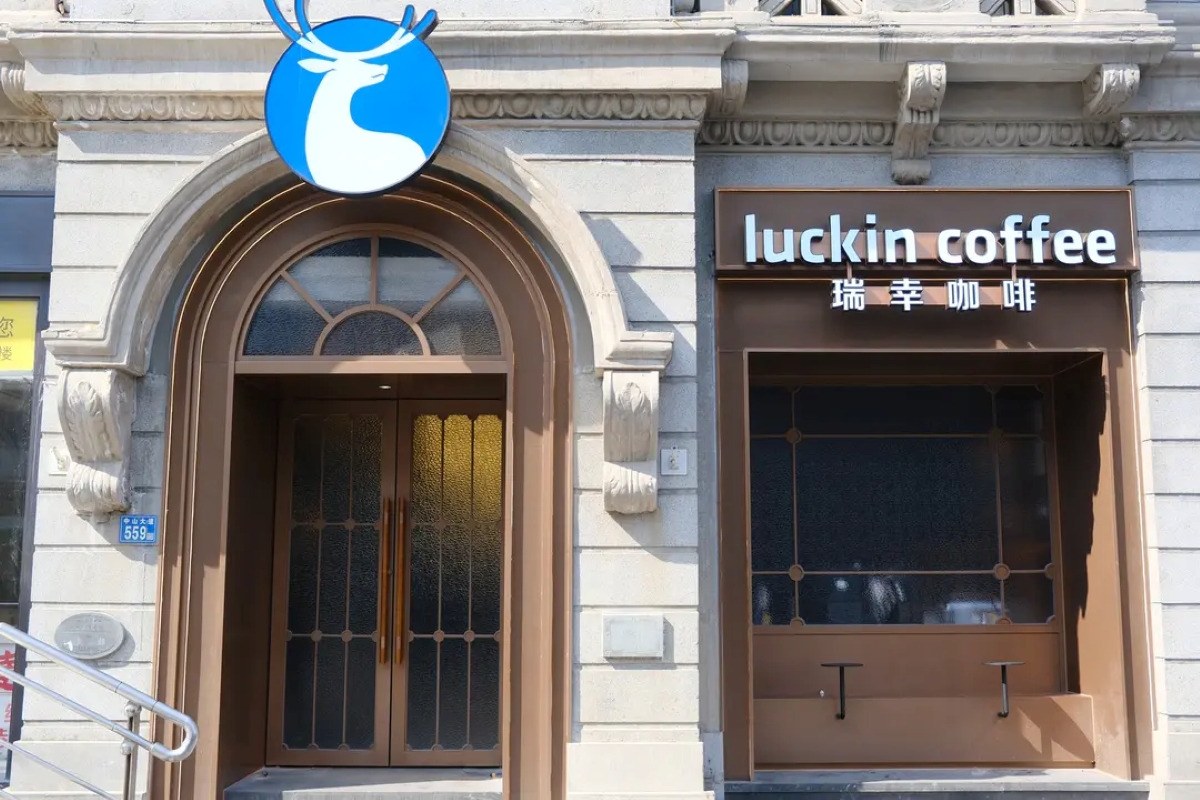
Dubai, September 5, 2025 (Qahwa World) – Luckin Coffee continues its rapid ascent in the global coffee industry, expanding aggressively while key competitors like Starbucks face declining sales.

The Chinese coffee chain, which has already surged ~35% this year, recently entered the U.S. market with new stores in New York City. This move comes as Starbucks undergoes a difficult transformation in both its American and Chinese operations.

Strong Same-Store Sales Growth

Luckin Coffee reported a 13% year-on-year increase in same-store sales at company-owned outlets in Q2 2025. This marks its fourth consecutive quarter of acceleration, rising from a decline in late 2024. In comparison, Starbucks posted a 2% sales decline in the U.S. and only 2% growth in China, where it introduced discounts to counter Luckin’s aggressive promotions.

By outperforming Starbucks’ same-store sales growth by 11 percentage points, Luckin has proven resilient in a strained global economy where many restaurant chains are seeing contractions.

Aggressive Expansion Strategy

The company’s expansion strategy remains unmatched. In Q2 alone, Luckin opened 2,109 new stores, lifting its total footprint to 26,200 – a 31% year-on-year increase. Over the past year, Luckin has added more than 6,200 stores, averaging 17 openings per day.

In contrast, Starbucks expanded its network by just 5% over the same period, adding 1,600 stores worldwide. Luckin’s U.S. debut has been met with favorable reviews, with New York outlets receiving 4–5 star ratings on Google and Yelp.

With RMB 8.2 billion ($1.1 billion) in cash reserves and no debt, Luckin has ample resources to finance its ambitious global rollout.

Differentiation: Menu Innovation and Value Pricing

Luckin distinguishes itself through a bold menu and competitive pricing. While offering classic beverages, it experiments with unique flavors – from fruity Americanos to limited-edition drinks like Roast Duck coffee in China.

Equally important is its pricing advantage: brewed coffee at its U.S. outlets starts at $3.45, below the average price in many American cities. This value-driven approach has fueled customer growth while maintaining a 21% store operating margin.

Valuation Advantage

Despite its momentum, Luckin trades at a far lower valuation than U.S. peers. Its price-to-earnings ratio is around 19x, half that of Starbucks. On revenue multiples, Luckin is valued at a quarter of fast-growing competitor Dutch Bros, even though it is expanding at a faster pace.

Risks and Outlook

While Luckin’s history includes challenges—such as price wars and over-discounting in 2024—the company has since shifted strategy to balance promotions with profitability.

Analysts see more upside than downside as Luckin strengthens its position in China while expanding overseas. Its combination of innovation, affordability, and financial strength makes it one of the most compelling players in the global coffee industry today.

Global Coffee Stocks Fall to Lowest Level Since April 2024

Dubai, September 4, 2025 (Qahwa World) – The International Coffee Organization’s (ICO) August 2025 report has revealed a sharp decline in global coffee stocks, falling to their lowest level since April 2024. The drop in inventories comes just weeks after prices reached a historic high, highlighting a fragile market caught between soaring demand and tightening supply.

According to the ICO, certified Arabica stocks held at the New York Exchange dropped 7.9% to 0.77 million bags, marking a 16-month low. Robusta inventories at the London Exchange also fell by 4.6%, standing at 1.13 million bags. The simultaneous reduction across both major coffee types signals a broad squeeze on available supply.

Why Stocks Are Falling

Analysts point to several reasons behind the decline:

  • Weaker export flows – Global green coffee exports fell for the sixth consecutive month in July 2025, tightening supplies into key markets.

  • Crop concerns – Brazil, the world’s top producer, reported larger bean sizes but weaker density, which reduced overall yield estimates.

  • Climate risks – A frost in Brazil earlier this year damaged an estimated half a million bags.

  • Regulatory pressure – European roasters have been stockpiling ahead of the EU Deforestation Regulation (EUDR) that comes into force at the end of 2025, drawing beans out of certified warehouses into private storage.

Connection to Soaring Prices

The fall in stocks coincided with a dramatic rise in prices. In August, the ICO Composite Indicator Price (I-CIP) climbed 14.6% to 297.05 US cents per pound, the highest since 2024. With inventories shrinking, the likelihood of further price volatility is increasing, especially if supply disruptions persist.

Regional Dynamics

  • South America posted the steepest decline, with exports down 18.5%, driven by a 28.6% fall in Brazil.

  • Asia & Oceania moved in the opposite direction, growing exports 22.7%, led by Vietnam (+29.4%) and Indonesia (+20.4%).

  • Africa also contributed positively, with exports rising 4.4%, thanks to strong performance in Uganda (+51.4%) and Ethiopia (+12.5%).

  • Mexico & Central America recorded moderate growth of 7.2%, helping to diversify global supply, though not enough to offset South America’s losses.

What It Means for the Market

Industry experts warn that the current drawdown in stocks leaves the coffee market more vulnerable to external shocks. Further weather events in Brazil or Vietnam could deepen the supply gap, while the EUDR may slow exports to Europe. Rising shipping and labor costs add another layer of pressure on the supply chain, feeding into higher costs for roasters and consumers alike.

Outlook

The ICO emphasized that stock levels will remain a critical indicator for the market in the coming months. Any further declines could trigger another round of price surges, prolonging uncertainty for producers, traders, and consumers. With prices already at historic highs and inventories at multi-year lows, coffee is entering one of its most volatile periods in recent memory

Brazil’s Coffee Paradox: Global Prices Drop While Local Costs Surge

Dubai, September 3, 2025 (Qahwa World) – While global coffee prices are falling due to heavy rainfall in Brazil and the near completion of the harvest, consumers in the world’s largest producer and exporter are facing the opposite reality: higher prices for roasted and instant coffee in the domestic market.

December arabica futures fell 3.44%, while November robusta dropped 3.28% to a one-week low. Weather data from Somar Meteorologia showed that Minas Gerais, Brazil’s largest arabica-producing region, received 10.1 mm of rain in the week ending August 30 – 163% of the historical average.

Meanwhile, Cooxupé, Brazil’s biggest coffee cooperative, reported that its members’ harvest was 94.9% complete as of August 29. Safras & Mercado confirmed that Brazil’s 2025/26 harvest was 99% finished by August 20, with robusta fully harvested and arabica 98% complete.

In contrast, roasters 3 Coracoes and Melitta announced fresh price hikes in Brazil starting September 1. 3 Coracoes raised roasted and ground coffee prices by 10% and instant coffee by 7%, while Melitta increased prices by 15%. These hikes follow earlier rises: 11% in January and 14.3% in March by 3 Coracoes, and a 25% increase by Melitta last December.

This creates a striking paradox in Brazil’s coffee market: while international prices are easing thanks to favorable weather and ample harvests, local consumers are paying more, driven by climate volatility, a 50% U.S. tariff on Brazilian coffee imports, and rising raw bean costs.

Global arabica prices have already climbed more than 20% this year after a 70% surge in 2024. With tariffs in place, U.S. roasters have been tapping existing stockpiles, adding further pressure.

The Brazilian Coffee Industry Association (ABIC) noted a brief drop in retail prices in August as futures eased from record highs, but warned that the trend would reverse once tariffs took effect — and that reversal is now underway. Major roasters are struggling to balance costs as consumers shift toward cheaper supermarket brands.

Looking ahead, the U.S. Department of Agriculture projects global coffee production to rise 2.5% in 2025/26 to a record 178.7 million bags. Yet trader Volcafe forecasts a widening global arabica deficit of 8.5 million bags — the fifth straight year of shortages. This contradiction — falling global prices alongside rising domestic costs in Brazil — sets the stage for continued turbulence in the coffee market.

Black Rock Coffee Bar Eyes $861 Million IPO Valuation

Dubai, September 2, 2025 – (Qahwa World) – Black Rock Coffee Bar is targeting a valuation of up to $860.7 million in its New York initial public offering (IPO), the café chain announced on Tuesday. The Scottsdale, Arizona-based company aims to raise as much as $265 million by offering 14.7 million shares priced between $16 and $18 each.

This IPO represents a rare consumer sector listing at a time when the U.S. market is dominated by tech-focused debuts. It will also serve as a key test of investor appetite for consumer IPOs, with Dutch Bros being one of the last notable coffee chains to go public in 2021.

Founded in 2008, Black Rock Coffee remains founder-owned and operates drive-thru cafés offering hot and iced coffees as well as energy drinks such as Nitro Cold Brew and its signature Caramel Blondie. From its origins as a small stand in Oregon, the company has grown to more than 150 locations across seven states, from the Pacific Northwest to Texas.

The company sources most of its beans from Brazil, Ethiopia, Colombia, and Mexico. However, its prospectus warned that higher prices or reduced availability of arabica beans, dairy, and other commodities could negatively affect its operations. Coffee prices have surged to record highs this year, driven by droughts in Brazil and Vietnam and a U.S. move to impose 50% tariffs on beans imported from Brazil.

Additional tariff risks are linked to equipment such as refrigeration units and espresso machines.

Black Rock Coffee will list on the Nasdaq under the ticker BRCB, with J.P. Morgan, Jefferies, Morgan Stanley, and Baird serving as lead underwriters.

Starbucks Malaysia Suffers Record Annual Losses as Boycotts Persist

Kuala Lumpur – August 28, 2025 (Qahwa World) – Starbucks’ Malaysia operator, Berjaya Food Berhad, has announced the heaviest losses in its history as customer boycotts linked to the Israel–Gaza conflict continued to weigh on sales and consumer sentiment. The group reported a net loss of RM 292 million ($69 million) for the year ending 30 June 2025, more than triple the losses of the previous year. Fourth-quarter results also reflected the downturn, with losses exceeding RM 185 million ($44 million), the worst quarterly outcome since the company was listed on Bursa Malaysia in 2011.

Revenues were similarly affected, dropping 36% year-on-year to RM 476.77 million ($113 million), while fourth-quarter sales fell 10% to RM 115.9 million ($27.5 million). Berjaya cited the prolonged boycotts as the main reason behind the decline, noting that the shift in consumer behavior has significantly impacted Starbucks and other US-based foodservice brands operating in Malaysia. The group was also compelled to scale back its Starbucks network, reducing its outlets from 408 to 320 stores over the past year, while making impairment provisions on assets due to the downsizing.

The financial damage reflects a wider backlash in Malaysia against American brands, with chains such as McDonald’s, Burger King, and KFC also facing boycotts. The trend has reshaped spending patterns in the majority-Muslim country, where consumer sentiment toward US companies has been severely weakened.

Globally, Starbucks is grappling with similar pressures, recording weaker results in several key markets. The brand has faced revenue declines in Europe and the Middle East alongside falling like-for-like sales across its 17,200 US outlets. Franchise partners have also been hit, with Alsea in Europe reporting five consecutive quarters of falling sales, while Kuwait-based Alshaya Group abandoned plans to sell a minority stake in its Starbucks franchise business earlier this year.

Despite the downturn, Berjaya is moving to diversify and expand. Beyond Starbucks, the group operates Paris Baguette, Kenny Rogers Roasters, and Krispy Kreme in Malaysia, and has been widening its international footprint with new Starbucks licenses in Denmark, Finland, and Iceland, where it opened its first store in July 2025. Berjaya is also looking to grow its Paris Baguette operations, with franchise agreements in place to bring the bakery-café chain to Thailand, Brunei, and the UAE.

Tims China Accelerates Franchise Push Amid Store Closures to Regain Profitability

Dubai, 27 August 2025 (Qahwa World) – Tims China is doubling down on its sub-franchise strategy as the Canadian coffee chain’s master licensee in China seeks a path to sustainable profitability in one of the world’s most competitive coffee markets. The company is closing underperforming outlets while rapidly expanding its franchised network across new cities and high-traffic locations.

The operator of Tim Hortons in China reported a 4.9% year-on-year revenue decline in the second quarter of 2025, falling to RMB 349m ($48.7m). The drop was largely driven by a 12.5% contraction in sales from company-operated stores, following the closure of 49 outlets during the three-month period ending 30 June, including 41 small-format Tims Express locations.

Despite the top-line decline, the strategic retreat yielded financial relief. Adjusted corporate EBITDA returned to positive territory at RMB 2.2m ($300,000), a turnaround from a RMB 29.3m ($4m) loss in the previous quarter. Adjusted net loss narrowed 16.2% year-on-year to RMB 39.7m ($5.5m), while net loss from continuing operations fell 24% to RMB 75.9m ($10.6m).

At the end of June, Tims China operated 1,015 stores nationwide, with 566 company-operated and 449 franchised outlets. The franchising model is emerging as a key growth engine: franchised store revenues surged 50% year-on-year to RMB 67.1m ($9.4m), supported by aggressive expansion into transport hubs, hospitals, and universities.

“Leveraging several franchisee partnerships, we expanded our store footprint into 98 cities, including Zibo in Shandong, Lishei in Zhejiang, Luan in Anhui, and Jincheng in Shaanxi,” said Yongchen Lu, CEO of Tims China.

However, challenges remain. Like-for-like sales across company-operated stores fell 3.6%, with transactions down 3.2% and average ticket size shrinking 6.9% year-on-year, underscoring pressure on consumer spending and brand positioning in China’s crowded coffee landscape.

The second quarter marked the fifth consecutive year-on-year decline in group revenues, yet management views the franchising shift as a pathway to long-term stability. By reducing exposure to loss-making outlets and capitalizing on franchise partnerships, Tims China aims to balance expansion with profitability — a strategy increasingly favored by global coffee chains navigating China’s competitive market.