JDE Peet’s Transfers Shares to Participants Under Employee Incentive Plans

Amsterdam – September 15, 2025 (Qahwa World) – JDE Peet’s N.V. (EURONEXT: JDEP), the world’s largest pure-play coffee and tea company, announced today that it has transferred a total of 319,417 shares to participants under its employee incentive plans.

The transfer was made for no consideration to 21 participants who were previously granted or committed awards under the company’s long-term incentive programs.

Each share carries a nominal value of EUR 0.01. Following this transfer, the company confirmed that its total issued and outstanding share capital remains unchanged at 488,178,642 shares, of which 4,095,966 shares are held as treasury stock.

The move comes in line with disclosure requirements under Dutch offer rules, amid the ongoing recommended public offer by Keurig Dr Pepper, Inc. (the Offeror) for all issued and outstanding shares in JDE Peet’s.

The company clarified that it does not hold shares in Keurig Dr Pepper and is not aware of the Offeror holding any shares in JDE Peet’s.

CHARTING THE FUTURE OF SPECIALTY COFFEE IN MENA

By: Kim Thompson , Co-founder of “RAW Coffee Company

The global coffee industry is in a period of rapid flux. Record-breaking auction prices, unprecedented mergers, volatile commodity markets, and mounting climate pressures are reshaping how coffee is grown, traded, and consumed. Against this backdrop, RAW Coffee Company is setting a clear course: to lead with integrity, strengthen our role as a trusted voice in the MENA region, and focus relentlessly on creating real value at origin.

Dubai recently made headlines with a newly opened coffee business, buying a world-record-breaking Panama Geisha lot for AED 2,218,785 ($604,080) at the 2025 Best of Panama Auction. This 98-point washed Geisha is now the highest-scoring and most expensive coffee in history, an extraordinary symbol of both the passion, volatility, and marketing spend, in our sector.

At the same time, consolidation is accelerating. Keurig Dr Pepper’s planned $18 billion merger with JDE Peet’s will create a new global giant. Coca-Cola’s $1.5 billion acquisition of Costa Coffee in 2018 gave it a ready-to-drink platform, while JAB Holding continues to expand its vast portfolio. Equipment leaders, too, are changing hands, De’Longhi’s 2023 purchase of 41% of La Marzocco and its acquisition of Eversys show how deeply coffee has become embedded in corporate strategy.

Meanwhile, climate change is placing unprecedented stress on producers. Extreme weather in Brazil and Vietnam, supply shortages, tariffs, and speculative trading are pushing prices upward and amplifying volatility. This is the new reality our industry must face.

As global forces reshape coffee, there is growing debate about the role of institutions like the Specialty Coffee Association (SCA). While the SCA has historically provided technical standards and a shared framework, the concern is that prioritizing organizational profit over producer benefit risks homogenizing coffee, reducing innovation, and diluting the very authenticity that defines specialty.

RAW Coffee Company believes our future cannot rest on certifications or corporate consolidation alone. Instead, our focus is on producers, the people whose creativity, resilience, and craftsmanship give specialty coffee its soul.

Our commitment is to go beyond sourcing. We aim to actively strengthen producers’ ability to thrive, compete, and innovate on their own terms.

  1. Foster True Direct Trade Relationships
  • Cut out intermediaries so farmers retain more of the final sales value.
  • Build trust and transparency through direct communication and fair pricing.
  1. Empower Producers with Resources and Capital
  • Invest in quality improvements, from processing to soil health, including knowledge-sharing on biochar and agronomy.
  • Support producers in developing their own roasting and direct selling businesses at origin.
  1. Facilitate Access to Tools and Services
  • Improve access to essentials like exporting licenses, international payments, and digital platforms.
  • Provide education on market trends, consumer expectations, and storytelling to strengthen their positioning.
  1. Encourage Local Value Addition
  • Champion origin-based roasteries and cafés so more value stays in producing countries.
  • Advocate for barista trainings in origin countries, developing a strong foundation for advancing coffee culture.
  1. Focus on Quality and Differentiation
  • Shift the mindset from scarcity to creativity, intention, and resourcefulness.
  • Guide producers to define their unique qualities rather than replicate trends.

As the pioneer of specialty coffee in Dubai for nearly two decades, RAW is uniquely positioned to shape the next chapter of coffee in the MENA region. Our responsibility is to amplify producer voices, maintain transparency in an era of volatility, and ensure that the values of authenticity, equity, and quality remain at the heart of our industry.

The future of coffee will not be written by corporate mergers, record-breaking auction prices or new assessment forms that do not improve outcomes for producers. It will be defined by the relationships we choose to nurture, the creativity we empower at origin, and the trust we build across the value chain. At RAW, that is where our focus will remain.


Germany Earns More From Coffee Than Producing African Nations

Berlin – September 14, 2025 – (Qahwa World) – Germany, a country that does not grow coffee, has become one of the most influential players in the global coffee industry, earning more from exports than all African producing nations combined. In 2024, Germany exported over 473,000 tonnes of coffee worth €6 billion, largely by importing raw beans from producing countries and re-exporting them after processing and branding.

Africa, home to 18 coffee-exporting countries including Uganda, Ethiopia, Kenya, and Rwanda, remains dependent on raw bean exports. Uganda recently overtook Ethiopia as the continent’s leading exporter, shipping nearly 800,000 bags in May 2025 alone, worth $243 million. Ethiopia, long considered the historic heart of coffee, followed with 43,481 tonnes during the same period. Data from the International Coffee Organization covering March 2023 to February 2024 shows Uganda shipped over six million bags, compared with Ethiopia’s 3.5 million, while other producers such as Tanzania, Côte d’Ivoire, and Kenya trailed with far smaller volumes.

The disparity lies in value addition. A KPMG study as far back as 2014 highlighted that Africa exported coffee worth $6 billion while the global coffee industry exceeded $100 billion, driven by roasting, blending, packaging, branding, and sustainable certification. Germany has built its dominance on precisely these steps, importing nearly one million tonnes of green coffee in 2023, 91 percent directly from producing nations. Brazil supplied the largest share at 341,000 tonnes, followed by Vietnam, Honduras, Uganda, Colombia, and India. Even when imports declined by 17 percent that year, Germany’s reserves ensured its exports continued without disruption.

The contrast underscores a hard truth: while coffee was born in Africa, most of its wealth is captured elsewhere. Unless producing nations invest in roasting, branding, and specialty development at origin, they will remain suppliers of raw beans while others reap the greater rewards.

One Year Into Change: What’s Happening at Starbucks?

DUBAI, September 10, 2025 (Qahwa World) – One year after taking over as CEO of Starbucks, Brian Niccol says the global coffee chain is “ahead of schedule” in its ambitious turnaround efforts. The company is moving faster than anticipated in reshaping its business through aggressive store redesigns, a revamped rewards program, and the introduction of new food and beverage options, as it works to recover from declining traffic and financial pressures seen in recent years.

Niccol, who became the third CEO of the company in just two years, inherited a business under pressure from unionization drives and falling store visits. He stressed that his first task was to focus on strengthening the fundamentals before building new layers of innovation. He added that Starbucks is now well positioned to move forward with changes to its menu, improvements to the digital rewards program, and investments in technology to enhance the customer experience.

In remarks reported by Fox News, Niccol explained that the redesign efforts are not limited to aesthetics but also intended to enable the company to open more locations with greater efficiency and lower costs. Starbucks has already begun rolling out its “Green Apron Service” model, which uses tools such as the Smart Queue system to sequence orders across mobile pickup, drive-thru, and cafés, reducing wait times and ensuring a smoother flow of service.

According to Niccol, 80% of beverages are now being prepared in under four minutes, compared with just 60% before the changes were introduced, while mobile orders are surpassing a 95% completion rate within the same time benchmark. The company is also set to launch a new protein-focused menu at the end of September, alongside additional food choices designed around snacking, gluten-free products, and protein-forward options.

Niccol emphasized that the company’s plan to redesign thousands of U.S. stores by 2026—out of more than 17,000 nationwide—is central to its transformation. By 2027, he hopes the pace will accelerate further to avoid falling behind on updates. The refreshed look will feature oversized chairs, couches, high-tops, and regular tables, designed to provide “a seat for every occasion.” He also noted that the goal is not to limit how long customers stay but rather to create an environment that encourages them to spend more time in the stores, reflecting the essence of the coffeehouse culture.

He added that the company is reassessing store sizes and equipment needs to bring down operating costs. In the past, Starbucks had invested in larger buildings and unnecessary equipment, but Niccol argued that what truly matters is having “a great coffeehouse with good seats, the right staffing levels, and partners in the right place at the right time to serve customers.”

Despite ongoing economic headwinds that have made consumers more cautious in their spending, Niccol insisted that Starbucks’ value lies in its distinctive mix of high-quality coffee and unique store atmosphere. He highlighted the company’s access to top beans, its advanced Clover Vertica brewing system that ensures freshly ground and brewed coffee for every cup, and the personal connections between baristas and customers.

A new version of the company’s loyalty rewards program is also planned for early 2026. Still under development, the revamped program is expected to strengthen the value proposition for customers and become another driver of growth. Niccol concluded by expressing confidence that Starbucks would finish the current fiscal year on solid footing and enter 2026 “from a position of strength,” closing the first year of change on an optimistic note for one of the world’s most recognized coffee brands.

Rainforest Alliance Launches First Regenerative Agriculture Certification for Coffee

Dubai, 9 September 2025 (Qahwa World) – The Rainforest Alliance has announced the launch of the world’s first dedicated regenerative agriculture certification for coffee, a milestone that seeks to transform farming practices from simply reducing harm to actively restoring ecosystems and improving farmer livelihoods. The new “regenerative” seal is expected to appear on consumer coffee bags starting in 2026.

This initiative follows the release of version 1.4 of the Sustainable Agriculture Standard, which will take effect in October 2025. The revised standard reduces the number of requirements from 221 spread across seven categories to 148 requirements consolidated into three, making certification more straightforward for farmers while maintaining its credibility. Alongside this streamlining, certificate holders now have the option to add 17 regenerative requirements to their existing certification, or to pursue a standalone regenerative certification consisting of 119 requirements focused on soil health, biodiversity, water management, climate resilience, and farmer livelihoods.

The Rainforest Alliance has framed regenerative agriculture as a shift beyond a “do no harm” mindset toward one of repair and restoration. The new certification aims to make coffee part of an ecological recovery process that benefits both the land and the farming communities that depend on it. The organization emphasized that every future cup of coffee should give back more than it takes. A recent report by TechnoServe supported this view, finding that the transition to regenerative agriculture in key coffee-producing countries could significantly increase exports and raise farmer incomes.

Implementation of the new certification has already begun in coffee farms across Brazil, Costa Rica, Mexico, and Nicaragua. The first coffees carrying the regenerative seal are expected to reach international markets in 2026, targeting consumers who increasingly demand sustainable and credible products. The launch also coincides with sector-wide initiatives such as RegenCoffee, introduced by the Global Coffee Platform to create a common language around regenerative agriculture, further strengthening Rainforest Alliance’s leadership in this field.

Beyond the environmental and social dimensions, the development comes at a critical moment as the European Union’s deforestation-free supply chain law (EUDR) is set to take effect on 30 December 2025. The law will require companies to prove that commodities entering EU markets are not linked to deforestation. Observers note that the regenerative certification could provide companies with an essential tool to comply with these new requirements, especially in the coffee sector, which faces growing regulatory scrutiny.

Despite the enthusiasm, there are concerns that additional certification layers could impose extra burdens on smallholder farmers who already struggle with limited resources. The Rainforest Alliance has responded by stressing that the new standard was developed over years of research and consultation with farmers, companies, and civil society groups. The goal, it said, is not to increase burdens but to build long-term resilience and open new opportunities for market access.

By combining the streamlined Sustainable Agriculture Standard with the launch of the first regenerative certification for coffee, the Rainforest Alliance is signaling a strategic shift in its vision. The initiative goes beyond traditional sustainability frameworks, aiming to create a new agricultural model that balances environmental protection, agricultural economics, and social development. With this step, the global coffee sector enters a new chapter in which every cup of coffee is not just a beverage, but a contribution to restoring the planet and securing a more sustainable future.

Organic Coffee Market to Reach USD 30.5 Billion by 2033, Growing at 8.5% CAGR

Dubai, September 8, 2025 (Qahwa World) – The global organic coffee market is on track to more than double in value, rising from USD 15.2 billion in 2024 to USD 30.5 billion by 2033, according to a new report by Verified Market Reports. The study highlights a strong compound annual growth rate (CAGR) of 8.5% from 2026 to 2033, driven by shifting consumer preferences and evolving market dynamics.

Key Growth Drivers

The rise in demand for organic coffee is propelled by several factors:

  • Health and premiumization: Increasing awareness of health benefits and demand for high-quality certified organic Arabica and specialty blends.

  • Sustainability and ethics: Growth in ethically sourced products and investments in organic farming practices.

  • Digital traceability: Use of blockchain and QR codes for provenance and storytelling, enhancing consumer trust.

  • Climate challenges: Weather-related disruptions are reshaping sourcing strategies and spurring investment in regenerative agriculture.

  • Market channels: Expansion of direct-to-consumer (DTC) and ready-to-drink (RTD) organic products, supported by subscription models and e-commerce.

  • Regulatory and regional shifts: Stricter certification standards and rising demand in Asia-Pacific, particularly in China, Japan, and South Korea.

Market Challenges

Despite strong growth, the market faces hurdles such as high certification costs for smallholders, limited availability of high-yield organic varietals, and climate-driven yield variability. Industry experts suggest that pooled certification, cooperative financing, and agronomy support programs could help overcome these barriers while strengthening supply chains.

Regional Outlook

North America and Western Europe remain the largest importers and consumers of organic coffee, but Asia-Pacific is projected to record the fastest growth. Increasing consumption in emerging economies, coupled with regulatory changes, is expected to reshape trade flows and create new competitive dynamics.

Industry Players

Major companies shaping the market include Jim’s Organic Coffee, Rogers Family, Death Wish Coffee, Grupo Britt, Strictly Organic Coffee, Dean’s Beans Organic Coffee, Keurig Green Mountain, Allegro Coffee, Café Don Pablo, Grupo Nutresa, and Oakland Coffee, among others. Their strategies revolve around premium positioning, digital traceability, and diversified product portfolios.

Market Segmentation

The report categorizes the organic coffee market by product type (whole bean, ground, instant, pods/capsules), roast type (light, medium, dark, blended), distribution channel (online retail, supermarkets, specialty stores, convenience stores, direct sales), end-user demographics (health-conscious, environmentally-conscious, income and age groups), and formulation (single-origin, blends, flavored, decaffeinated).

Luckin Coffee Gains Market Share as Rivals Struggle

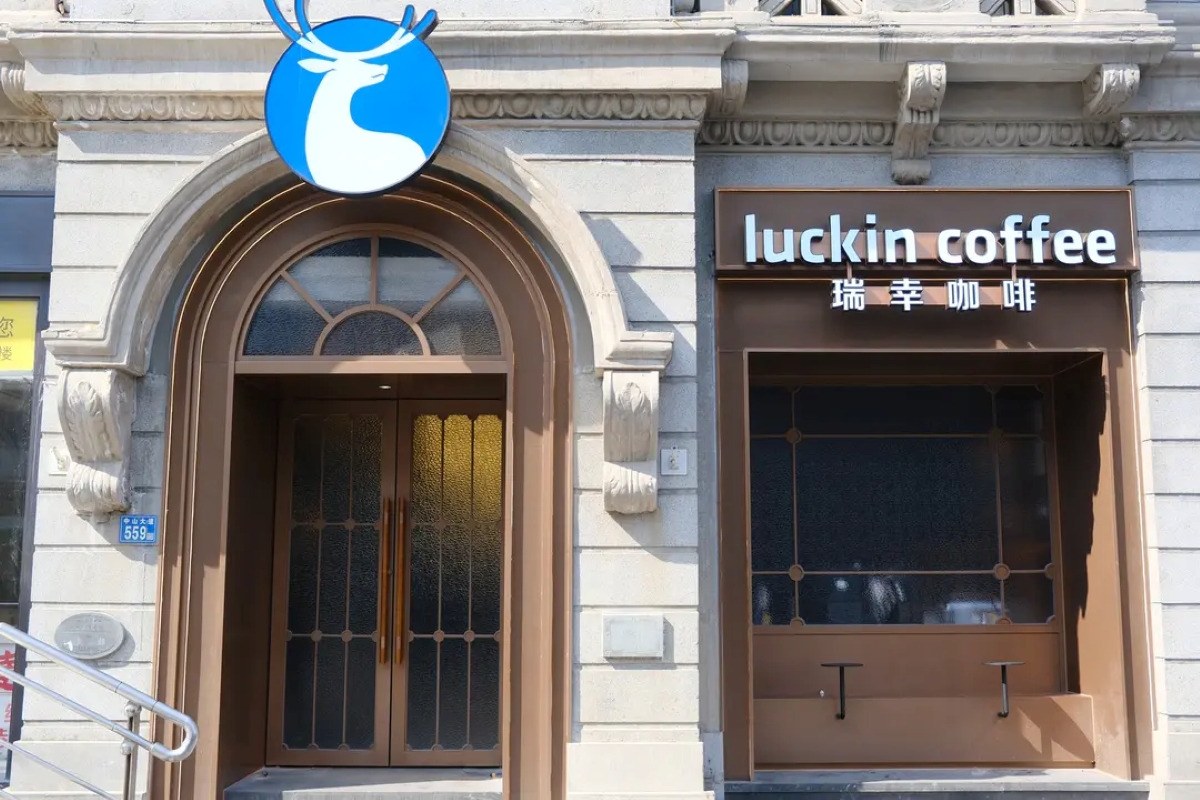
Dubai, September 5, 2025 (Qahwa World) – Luckin Coffee continues its rapid ascent in the global coffee industry, expanding aggressively while key competitors like Starbucks face declining sales.

The Chinese coffee chain, which has already surged ~35% this year, recently entered the U.S. market with new stores in New York City. This move comes as Starbucks undergoes a difficult transformation in both its American and Chinese operations.

Strong Same-Store Sales Growth

Luckin Coffee reported a 13% year-on-year increase in same-store sales at company-owned outlets in Q2 2025. This marks its fourth consecutive quarter of acceleration, rising from a decline in late 2024. In comparison, Starbucks posted a 2% sales decline in the U.S. and only 2% growth in China, where it introduced discounts to counter Luckin’s aggressive promotions.

By outperforming Starbucks’ same-store sales growth by 11 percentage points, Luckin has proven resilient in a strained global economy where many restaurant chains are seeing contractions.

Aggressive Expansion Strategy

The company’s expansion strategy remains unmatched. In Q2 alone, Luckin opened 2,109 new stores, lifting its total footprint to 26,200 – a 31% year-on-year increase. Over the past year, Luckin has added more than 6,200 stores, averaging 17 openings per day.

In contrast, Starbucks expanded its network by just 5% over the same period, adding 1,600 stores worldwide. Luckin’s U.S. debut has been met with favorable reviews, with New York outlets receiving 4–5 star ratings on Google and Yelp.

With RMB 8.2 billion ($1.1 billion) in cash reserves and no debt, Luckin has ample resources to finance its ambitious global rollout.

Differentiation: Menu Innovation and Value Pricing

Luckin distinguishes itself through a bold menu and competitive pricing. While offering classic beverages, it experiments with unique flavors – from fruity Americanos to limited-edition drinks like Roast Duck coffee in China.

Equally important is its pricing advantage: brewed coffee at its U.S. outlets starts at $3.45, below the average price in many American cities. This value-driven approach has fueled customer growth while maintaining a 21% store operating margin.

Valuation Advantage

Despite its momentum, Luckin trades at a far lower valuation than U.S. peers. Its price-to-earnings ratio is around 19x, half that of Starbucks. On revenue multiples, Luckin is valued at a quarter of fast-growing competitor Dutch Bros, even though it is expanding at a faster pace.

Risks and Outlook

While Luckin’s history includes challenges—such as price wars and over-discounting in 2024—the company has since shifted strategy to balance promotions with profitability.

Analysts see more upside than downside as Luckin strengthens its position in China while expanding overseas. Its combination of innovation, affordability, and financial strength makes it one of the most compelling players in the global coffee industry today.

India Cuts GST on Coffee to 5% in Landmark Tax Overhaul

New Delhi, September 4, 2025 (Qahwa World) – The Indian government has announced a sweeping reform of its Goods and Services Tax (GST), slashing rates on coffee and other food products from 12%–18% down to just 5%. The decision, taken during the 56th GST Council meeting chaired by Finance Minister Nirmala Sitharaman, marks one of the most significant tax changes since the GST system was introduced in 2017.

The reform simplifies India’s indirect tax structure into two main slabs—5% for essential and merit goods, and 18% as the standard rate—alongside a new 40% rate for de-merit goods such as tobacco and luxury items. The reduced rates, including the cut on coffee, will take effect from September 22, 2025, coinciding with the Navratri festival.

Coffee Industry Among Key Beneficiaries

Coffee has been placed in the merit category, meaning products that previously attracted 12% or 18% GST—such as roasted beans, instant coffee, and other processed coffee items—will now be taxed at only 5%.

Industry experts expect this move to have a ripple effect across the entire coffee value chain:

  • Growers and processors are likely to benefit from stronger domestic demand, as lower retail prices could encourage greater consumption.

  • Retailers and cafés may see a boost in sales volumes, with increased affordability improving consumer access to both mainstream and specialty coffee.

  • Consumers will directly benefit from reduced prices, especially as food and beverage costs have risen sharply in recent years.

A Broader Economic Push

The decision is part of a wider strategy aimed at easing the cost of living, stimulating consumption, and simplifying India’s tax regime. Alongside coffee, the rate cut covers other everyday items including chocolates, butter, ghee, sauces, noodles, and packaged snacks.

“This rationalisation is designed to make GST simpler, more transparent, and more consumer-friendly,” Finance Minister Sitharaman said after the council meeting, stressing that the two-slab system will also reduce compliance burdens for businesses.

Looking Ahead

India—already one of the world’s largest producers of Arabica and Robusta—is expected to see a surge in domestic coffee consumption following the tax cut. Analysts suggest the move could help narrow the cultural gap between tea and coffee, while further boosting India’s vibrant café culture and specialty coffee sector.

The GST overhaul signals a structural shift in India’s economic policy, and for coffee, it may represent the beginning of a new chapter where affordability fuels greater appreciation of the drink across the country.

Black Rock Coffee Bar Eyes $861 Million IPO Valuation

Dubai, September 2, 2025 – (Qahwa World) – Black Rock Coffee Bar is targeting a valuation of up to $860.7 million in its New York initial public offering (IPO), the café chain announced on Tuesday. The Scottsdale, Arizona-based company aims to raise as much as $265 million by offering 14.7 million shares priced between $16 and $18 each.

This IPO represents a rare consumer sector listing at a time when the U.S. market is dominated by tech-focused debuts. It will also serve as a key test of investor appetite for consumer IPOs, with Dutch Bros being one of the last notable coffee chains to go public in 2021.

Founded in 2008, Black Rock Coffee remains founder-owned and operates drive-thru cafés offering hot and iced coffees as well as energy drinks such as Nitro Cold Brew and its signature Caramel Blondie. From its origins as a small stand in Oregon, the company has grown to more than 150 locations across seven states, from the Pacific Northwest to Texas.

The company sources most of its beans from Brazil, Ethiopia, Colombia, and Mexico. However, its prospectus warned that higher prices or reduced availability of arabica beans, dairy, and other commodities could negatively affect its operations. Coffee prices have surged to record highs this year, driven by droughts in Brazil and Vietnam and a U.S. move to impose 50% tariffs on beans imported from Brazil.

Additional tariff risks are linked to equipment such as refrigeration units and espresso machines.

Black Rock Coffee will list on the Nasdaq under the ticker BRCB, with J.P. Morgan, Jefferies, Morgan Stanley, and Baird serving as lead underwriters.

The Coffee Race: From Corporate Giants to Startups… Who Will Shape the Future?

Dubai – Ali Alzakry

The sale of Geisha coffee from the famed “Hacienda La Esmeralda” at the “Best of Panama 2025” auction was no ordinary event. A historic record was set when the washed Geisha fetched an unprecedented $30,204 per kilogram. Yet the bigger surprise was not the price itself, but the buyer: a Dubai-based startup, just one week old at the time, that stunned the industry by purchasing the entire 20-kilogram lot for a staggering $604,000. A dramatic scene that shook the markets and ignited debates among experts, investors, and coffee leaders worldwide.

And the shocks did not stop there. The sector was soon rattled by a string of announcements: “Coca-Cola” revealed it is considering the sale of “Costa Coffee”; “Burgerizzr” announced its acquisition of 60% of the café chain “Shuffle”; and a historic milestone was recorded with “Keurig Dr Pepper” acquiring “JDE Peet’s” for €15.7 billion. A whirlwind of events that disrupted the landscape and raised big questions about the future of coffee in Dubai and across the globe.

These developments prompted us at Qahwa World to open this file seriously, guided by the voices of seasoned leaders and pioneers in the coffee sector — people who combine boldness with credibility, and who know the market intimately. With them, we explored critical questions:

  • Are these events just a passing wave of headlines, or the signs of a long-term transformation?

  • How will Dubai and the region be impacted?

  • And what do these deals mean for producers, independent roasters, and young entrepreneurs?

Diverging Views: From Showmanship to the Core of Coffee

When we asked coffee experts about these developments, their views revealed striking contrasts — an intellectual confrontation that highlights the complexity of the challenges ahead.

“Kim Thompson” sees the sale of “Costa Coffee” as simply corporate repositioning that does not affect the fundamentals of specialty coffee, emphasizing that true value lies in farmer relationships. “Matt Toogood,” however, warns that extravagant moves — such as buying an entire lot of Geisha at a record price — risk harming the industry more than helping it. In contrast, “Katerina Borodich” argues that coffee has now become a strategic sector in its own right, while “Federico Ortile” views these changes as a signal of the industry’s shift toward innovation and partnerships. “Robert Jones,” meanwhile, believes we are at the dawn of a new era in coffee, with the global map being redrawn.

Kim Thompson: “Big Deals Don’t Change the Core of Specialty Coffee”

“Kim Thompson,” co-founder of “RAW Coffee Company,” describes Coca-Cola’s potential sale of “Costa Coffee” as interesting but unsurprising. She stresses that such moves do not alter the essence of what companies like RAW Coffee do: sourcing directly from trusted producers, ensuring fair trade, and serving customers who value quality and transparency.

According to Thompson, multinational repositioning reflects shareholder priorities, but the real work happens at origin and in independent roasteries. Corporate headlines may ripple across markets, but they do not affect the heart of the sector: ensuring farmers are fairly paid and consumers are served authentic coffee.

She notes that the industry’s deeper transformation lies in changing consumer tastes, rising interest in specialty coffee, and recognition of coffee as both culture and commodity.

On Panama, she believes that a Dubai startup purchasing the entire Geisha lot was headline-grabbing but not a true measure of sustainability or impact. For her, the real benchmark lies in how investments support farmers, knowledge-sharing, and meaningful consumer experiences.

Thompson warns that the sector must not be distracted by dramatic headlines and forget the daily challenges faced by producers — rising costs, volatile markets, and climate change. The future of coffee, she insists, will not be determined by billion-dollar deals but by empowering producers and supporting sustainable farming.

Matt Toogood: “Showmanship Harms Coffee More Than It Helps”

Matt Toogood,” CEO“RAW Coffee Company,

“Matt Toogood,” CEO “RAW Coffee Company,” describes Dubai as a unique laboratory for specialty coffee, where consumer tastes shifted over 15 years from bitter, traditional espresso to balanced, flavorful profiles. He emphasizes that this shift was driven not by big chains but by independent cafés that dared to serve coffee that was sweet, balanced, and not bitter.

He recalls that initial reactions ranged from confusion to excitement, but eventually consumers embraced the change.

In contrast, large chains, he says, adopted the language of quality without improving their products — masking poor coffee with milk and sugar. The true transformation, Toogood argues, was led by independent operators who adapted to consumer behavior.

Regarding Panama, he calls the record-breaking Geisha purchase “a theatrical stunt” with no commercial logic. He warns that such actions mislead farmers into thinking value lies in inflated prices, when in fact auctions are often choreographed months in advance for marketing purposes.

Katerina Borodich: “Coffee Is No Longer a Side Product… It’s a Strategic Sector”

Katerina Borodich,” CEO of “Drinkit UAE

“Katerina Borodich,” CEO of “Drinkit UAE,” sees “Burgerizzr’s” 60% acquisition of “Shuffle” as proof of a clear trend: coffee is no longer a complementary product in food and beverage — it is a strategic industry on its own.

She notes that regional demand is driven by fast-paced lifestyles and strong hospitality culture, with consumers seeking convenience, flavor, personalization, and speed. Drinkit’s tech-enabled platform, she says, delivers exactly that.

Borodich emphasizes that Dubai is more than a consumer market — it is a gateway and a global platform. The city rewards speed and innovation, and what succeeds there can succeed anywhere.

She acknowledges that competition will intensify, but insists this also creates more opportunities for startups. Success, she argues, comes not from “serving coffee” alone but from understanding consumers and delivering complete experiences.

For her, these deals reflect investor confidence in coffee’s future in the region, grounded in stable demand and strong government support.

Federico Ortile: “Dubai Is Not a Market… It’s a Global Laboratory”

Federico Ortile,” Managing Director of the “Simonelli Group Middle East

“Federico Ortile,” Managing Director of the “Simonelli Group Middle East,” sees Coca-Cola’s potential exit from “Costa Coffee” as part of a larger corporate trend — moving from owning retail brands to focusing on innovation and partnerships.

He views Burgerizzr’s investment in “Shuffle” as a landmark move, bringing regional capital into a space long dominated by international players. This, he argues, strengthens the region’s food and beverage ecosystem.

On “Keurig Dr Pepper’s” €15.7 billion acquisition of “JDE Peet’s,” Ortile calls it transformative, consolidating two global powerhouses. He notes that it will intensify competition but also open access to greater resources and platforms.

As for Dubai, Ortile describes it not as a mere consumer market but as a global laboratory — where international trends meet regional innovation. He believes its role as a hub for luxury coffee will only grow as local capital merges with global technology.

Robert Jones: “We Are on the Cusp of a New Era in Coffee”

Robert Jones,” Managing Director of “Coffee Planet

“Robert Jones,” Managing Director of Family First Cafe | GEMS Global,” interprets Coca-Cola’s reconsideration of “Costa Coffee” as a clear sign that even the biggest players are reassessing their bets in a changing market. Consumers, he says, no longer seek scale alone but quality and experience — and legacy brands risk irrelevance if they fail to evolve.

He views Burgerizzr’s acquisition of “Shuffle” as an investor move to control consumer dwell time and data — proof that coffee is now a lifestyle and emotional connection rather than just a beverage.

On the “Keurig Dr Pepper” deal for “JDE Peet’s,” Jones calls it a reshaping of the global value chain, with ripple effects on sourcing, pricing, and pressure on smaller brands to stand out through authenticity.

For him, Dubai is no longer peripheral but a central player in specialty coffee worldwide. The record Geisha purchase, he argues, was a strategic message that placed Dubai at the center of the global coffee stage.

“We are not witnessing a passing wave,” Jones concludes. “This is a complete redrawing of the coffee map. It is a new era for coffee — but success will go to those who build with vision and purpose, not those chasing spectacle.”

Conclusion

From Panama to Dubai, from auction halls to billion-euro deals, coffee has broken free of its role as a daily beverage or traditional trade. It has become a global investment arena — where corporate giants collide with ambitious startups, and visions clash between spectacle and substance, between quick profit and long-term sustainability.

This investigation revealed that there is no single answer to the question: What is happening in the coffee market?

  • “Kim Thompson” believes the core of specialty coffee remains unchanged.

  • “Matt Toogood” warns that theatrical excess could damage the industry.

  • “Katerina Borodich” stresses the future belongs to agile, innovative startups.

  • “Federico Ortile” sees Dubai as a global laboratory where capital meets innovation.

  • And “Robert Jones” insists the world is entering a new era where the coffee map itself is being redrawn.

One thing is certain: coffee is no longer in the shadows. It has taken center stage in the global economic and cultural landscape — and today’s developments will shape its future for decades to come.

Qahwa World and Ethiopia’s Buna Kurs Forge Landmark Editorial Alliance

Dubai,Addis Ababa, 27 August 2025(Qahwa World) – In a groundbreaking development for the global coffee industry, Qahwa World of the Middle East and Ethiopia’s Buna Kurs Media have signed a pioneering editorial Memorandum of Understanding (MoU), creating a cross-regional alliance that bridges Yemeni coffee heritage, the broader Arab qahwa tradition, and Ethiopia’s buna legacy. These three cultural foundations have shaped coffee’s global history yet remain underrepresented in industry narratives.

The partnership establishes a new model of media collaboration in the coffee sector, centered on shared storytelling, cross-regional representation, and mutual amplification. By connecting Yemen’s pivotal contribution, the Arab world’s cultural continuum, and Ethiopia’s origin story, Qahwa World and Buna Kurs aim to spark new conversations among brands, researchers, donors, media, and investors.

Under the agreement, Qahwa World will serve as Buna Kurs’s editorial partner in the Middle East, amplifying African coffee narratives—including Ethiopia and beyond—to Yemeni and Arab audiences, while Buna Kurs strengthens Qahwa World’s presence in Africa. The collaboration includes joint editorial exchange, event coverage, and advertising opportunities. Together, the two platforms will publish features, interviews, and cultural spotlights designed to challenge conventional narratives, elevate overlooked voices, and create new opportunities for authentic engagement.

“Qahwa World has always sought to honor coffee’s Yemeni and Arab legacy. Working with Buna Kurs allows us to situate that legacy within the broader African origin story, creating a holistic and globally relevant narrative. This is not just about content—it is about shaping the industry’s cultural conscience,” said Ali Alzakary, Founder of Qahwa World.

Tewodros Balcha, Founder of Buna Kurs, echoed the vision: “Coffee has always been more than a commodity—it is a cultural connector. Through this partnership, we are pioneering a new way to tell coffee’s story: one that restores origin narrative.”

At a time when the global coffee industry is grappling with sustainability, equity, and identity, the alliance signals a fresh approach to media and storytelling. By linking Yemen, the Arab world, and Ethiopia, the initiative offers brands, institutions, and investors a platform for authentic cross-continental engagement while opening new doors for responsible promotion, collaborative research, and cultural exchange.

The MoU serves as a framework for broader cooperation, with plans for co-hosted events, thematic campaigns, and joint representation at global industry forums. Both Qahwa World and Buna Kurs are committed to shaping a coffee narrative that reflects heritage, culture, and the evolving challenges of today’s market.

About Qahwa World
Qahwa World is a UAE-based media platform dedicated to Yemeni and Arab coffee heritage. Through journalism, cultural storytelling, events, and partnerships, it bridges traditional qahwa culture with today’s global coffee industry.

About Buna Kurs
Buna Kurs is Ethiopia’s pioneering coffee industry platform, with a curated audience of thousands of stakeholders across Africa. It amplifies Ethiopia’s and Africa’s role in the global coffee narrative.

Tims China Accelerates Franchise Push Amid Store Closures to Regain Profitability

Dubai, 27 August 2025 (Qahwa World) – Tims China is doubling down on its sub-franchise strategy as the Canadian coffee chain’s master licensee in China seeks a path to sustainable profitability in one of the world’s most competitive coffee markets. The company is closing underperforming outlets while rapidly expanding its franchised network across new cities and high-traffic locations.

The operator of Tim Hortons in China reported a 4.9% year-on-year revenue decline in the second quarter of 2025, falling to RMB 349m ($48.7m). The drop was largely driven by a 12.5% contraction in sales from company-operated stores, following the closure of 49 outlets during the three-month period ending 30 June, including 41 small-format Tims Express locations.

Despite the top-line decline, the strategic retreat yielded financial relief. Adjusted corporate EBITDA returned to positive territory at RMB 2.2m ($300,000), a turnaround from a RMB 29.3m ($4m) loss in the previous quarter. Adjusted net loss narrowed 16.2% year-on-year to RMB 39.7m ($5.5m), while net loss from continuing operations fell 24% to RMB 75.9m ($10.6m).

At the end of June, Tims China operated 1,015 stores nationwide, with 566 company-operated and 449 franchised outlets. The franchising model is emerging as a key growth engine: franchised store revenues surged 50% year-on-year to RMB 67.1m ($9.4m), supported by aggressive expansion into transport hubs, hospitals, and universities.

“Leveraging several franchisee partnerships, we expanded our store footprint into 98 cities, including Zibo in Shandong, Lishei in Zhejiang, Luan in Anhui, and Jincheng in Shaanxi,” said Yongchen Lu, CEO of Tims China.

However, challenges remain. Like-for-like sales across company-operated stores fell 3.6%, with transactions down 3.2% and average ticket size shrinking 6.9% year-on-year, underscoring pressure on consumer spending and brand positioning in China’s crowded coffee landscape.

The second quarter marked the fifth consecutive year-on-year decline in group revenues, yet management views the franchising shift as a pathway to long-term stability. By reducing exposure to loss-making outlets and capitalizing on franchise partnerships, Tims China aims to balance expansion with profitability — a strategy increasingly favored by global coffee chains navigating China’s competitive market.