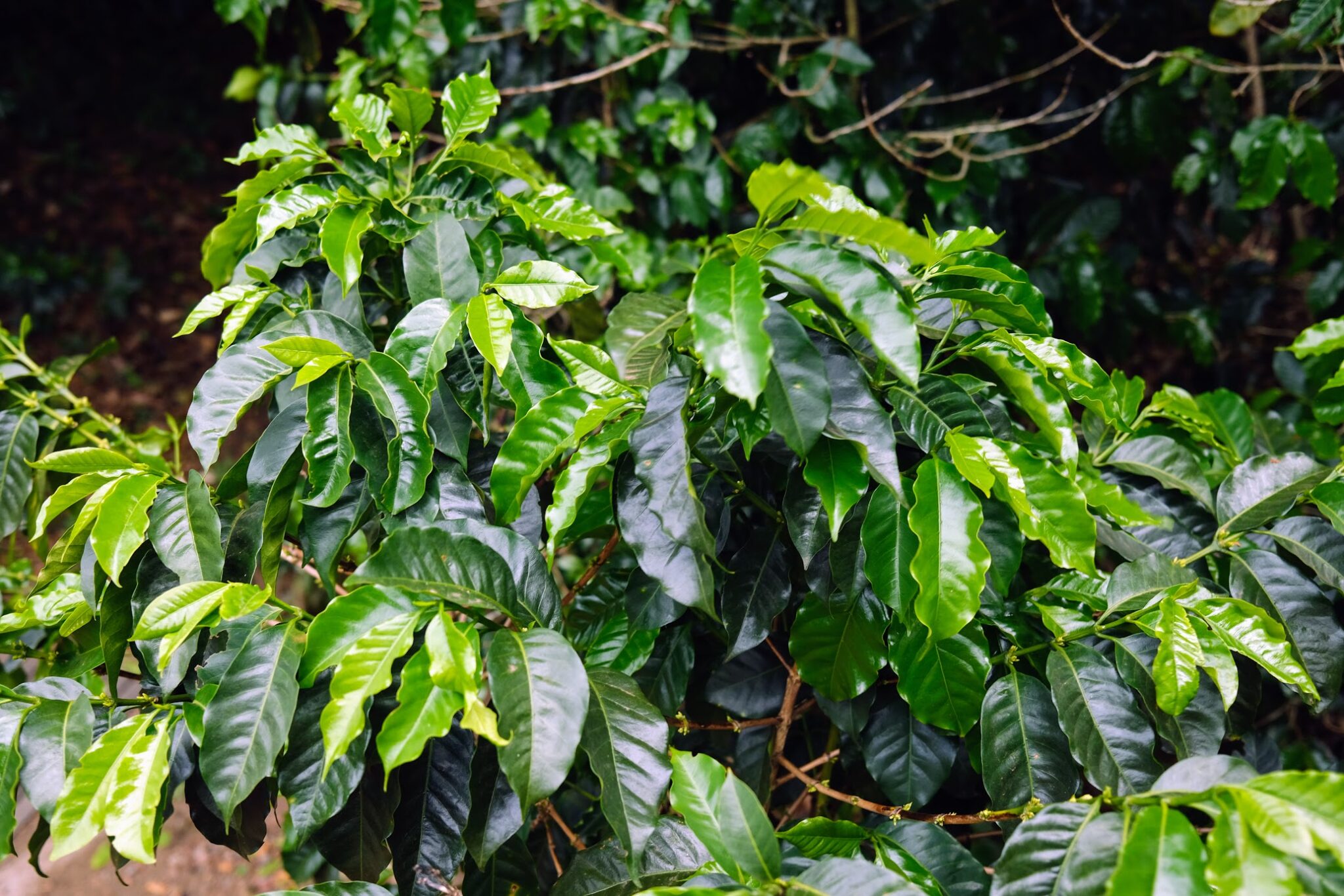
Rainforest Alliance Launches First Regenerative Agriculture Certification for Coffee

Dubai, 9 September 2025 (Qahwa World) – The Rainforest Alliance has announced the launch of the world’s first dedicated regenerative agriculture certification for coffee, a milestone that seeks to transform farming practices from simply reducing harm to actively restoring ecosystems and improving farmer livelihoods. The new “regenerative” seal is expected to appear on consumer coffee bags starting in 2026.

This initiative follows the release of version 1.4 of the Sustainable Agriculture Standard, which will take effect in October 2025. The revised standard reduces the number of requirements from 221 spread across seven categories to 148 requirements consolidated into three, making certification more straightforward for farmers while maintaining its credibility. Alongside this streamlining, certificate holders now have the option to add 17 regenerative requirements to their existing certification, or to pursue a standalone regenerative certification consisting of 119 requirements focused on soil health, biodiversity, water management, climate resilience, and farmer livelihoods.

The Rainforest Alliance has framed regenerative agriculture as a shift beyond a “do no harm” mindset toward one of repair and restoration. The new certification aims to make coffee part of an ecological recovery process that benefits both the land and the farming communities that depend on it. The organization emphasized that every future cup of coffee should give back more than it takes. A recent report by TechnoServe supported this view, finding that the transition to regenerative agriculture in key coffee-producing countries could significantly increase exports and raise farmer incomes.

Implementation of the new certification has already begun in coffee farms across Brazil, Costa Rica, Mexico, and Nicaragua. The first coffees carrying the regenerative seal are expected to reach international markets in 2026, targeting consumers who increasingly demand sustainable and credible products. The launch also coincides with sector-wide initiatives such as RegenCoffee, introduced by the Global Coffee Platform to create a common language around regenerative agriculture, further strengthening Rainforest Alliance’s leadership in this field.

Beyond the environmental and social dimensions, the development comes at a critical moment as the European Union’s deforestation-free supply chain law (EUDR) is set to take effect on 30 December 2025. The law will require companies to prove that commodities entering EU markets are not linked to deforestation. Observers note that the regenerative certification could provide companies with an essential tool to comply with these new requirements, especially in the coffee sector, which faces growing regulatory scrutiny.

Despite the enthusiasm, there are concerns that additional certification layers could impose extra burdens on smallholder farmers who already struggle with limited resources. The Rainforest Alliance has responded by stressing that the new standard was developed over years of research and consultation with farmers, companies, and civil society groups. The goal, it said, is not to increase burdens but to build long-term resilience and open new opportunities for market access.

By combining the streamlined Sustainable Agriculture Standard with the launch of the first regenerative certification for coffee, the Rainforest Alliance is signaling a strategic shift in its vision. The initiative goes beyond traditional sustainability frameworks, aiming to create a new agricultural model that balances environmental protection, agricultural economics, and social development. With this step, the global coffee sector enters a new chapter in which every cup of coffee is not just a beverage, but a contribution to restoring the planet and securing a more sustainable future.

Shade-Grown Coffee Farms Store More Carbon Than Tree-Planting Projects, Study Finds

Dubai, August 19, 2025 – (Qahwa World) – A landmark study has revealed that carbon markets are overlooking the most effective climate solution in coffee farming: protecting mature shade-grown coffee systems.

The research, led by the Smithsonian’s National Zoo and Conservation Biology Institute (NZCBI) and Smithsonian Tropical Research Institute (STRI), and published in Communications Earth & Environment, concludes that current carbon-payment schemes undervalue shade-grown farms. While farmers are rewarded for planting new trees, they receive no compensation for conserving existing shade trees, even though these trees store more than twice the carbon of new plantings.

Globally, coffee farms cover more than 10 million hectares. Systems range from intensive monocultures in full sun to agroforestry farms where coffee grows under canopies of diverse native trees. These shade trees regulate climate, provide habitat for wildlife, and store vast amounts of carbon. But under current carbon markets, only new tree-planting projects generate tradable credits. Farmers who maintain mature shade systems receive nothing, creating an incentive to cut old trees to plant new ones that qualify for payments.

“There is a lot of money behind planting trees on degraded coffee farms, yet there are basically no financial incentives—outside of Bird Friendly® certification—to protect standing shade trees,” said Dr. Ruth Bennett, ecologist at NZCBI and senior author of the study.

Shade Trees vs. Tree Planting

The team analyzed 67 field-based studies across Latin America, Africa and Asia, then modeled carbon storage across global coffee landscapes. They estimated that coffee farms currently store 481.6 million metric tons of carbon above ground.

Two contrasting scenarios were tested. If all sun-grown farms added shade trees, they would capture 82–87 million additional metric tons of carbon. But if existing shade-grown systems were converted into monocultures, the world could lose 174–221 million metric tons—more than double the potential gains from planting.

This imbalance exposes a fundamental flaw in current climate strategies. Shade-grown systems, which evolved over centuries, already represent vast stores of carbon. Removing them in pursuit of “new” tree-planting credits risks releasing far more carbon than could ever be recaptured.

Shade systems are also vital for biodiversity. Prior studies have shown that shade-grown coffee farms host up to four times more bird species than monocultures. Yet biodiversity outcomes don’t always align with carbon goals. Tree density improves carbon storage, while tree diversity supports wildlife. Carbon-focused projects often emphasize density, planting fast-growing monocultures that fail to deliver ecological benefits.

“If we don’t prioritize biodiversity in carbon projects, it won’t happen by accident,” said Dr. Emily Pappo, lead author and postdoctoral climate fellow at the Smithsonian. “Coffee companies must plant the right mix of trees—not just the most carbon-hungry species.”

Climate and Market Implications

Farmers are caught between climate pressures and market demands. Many remove shade trees in hopes of boosting yields, even though shade has been shown to stabilize production by regulating temperature and soil moisture. Meanwhile, large coffee companies invest heavily in tree-planting projects to meet corporate climate targets. Without incentives to conserve existing shade systems, these investments risk undermining their own objectives.

The economic stakes are significant. Coffee contributes an estimated $200 billion annually to the global economy. With the European Union’s Deforestation Regulation (EUDR) coming into force, companies face new requirements to prove that their supply chains are deforestation-free. Shade-grown systems that conserve habitat and store carbon could become critical to compliance as well as climate resilience.

The study’s authors argue for urgent policy change. They call for carbon markets to evolve by creating “protection credits” that reward conserving existing shade systems, not only planting new trees. They also recommend tree-planting initiatives that emphasize diversity rather than density, ensuring that biodiversity and carbon storage go hand in hand.

To support farmers, the Smithsonian team is developing a “Shade Catalog”, a resource to guide the selection of tree species that balance productivity, biodiversity, and carbon storage. Combined with certification schemes such as Bird Friendly®, these tools can help farmers access premium markets while conserving ecosystems.

Ultimately, the research reframes climate-smart coffee strategies. Planting trees remains a positive step, especially in degraded monoculture regions, but it cannot replace what is lost when mature shade systems are destroyed. Protecting existing forests delivers greater and more immediate benefits for both the planet and the coffee sector.

As Dr. Bennett concluded: “Tree planting has value, but our findings show it cannot make up for what you lose when mature shade trees are removed.”