Simonelli Group at World of Coffee Dubai with Victoria Arduino and 3TEMP

Dubai – Qahwa World

From January 18 to 20, Simonelli Group will be a key player at World of Coffee Dubai (Stand ZN5-4). During the event, the Group will present a comprehensive vision of coffee evolution — from espresso to brewing — through its brands Victoria Arduino and 3TEMP.

  • Victoria Arduino: Where Aesthetics Meets Taste

The Victoria Arduino space at WOC Dubai is designed as an immersive experience, where aesthetics and cutting-edge technology come together to redefine the contemporary espresso ritual.

  • Not to be missed:

Eagle One – Official Espresso Machine of the UAE Barista Competition
Eagle One will stand alongside the best baristas in the region during one of the world’s most prestigious competitions. Iconic, sustainable, and performance-driven, Eagle One represents a new generation of espresso machines, designed to ensure precision, energy efficiency, and excellence in the cup — even at the highest competitive levels.

Victoria Arduino Exclusive Party: L’Atelier Arrives in Dubai
On January 18 at 7:00 PM, Victoria Arduino invites guests to its Experience Lab in Dubai to discover L’Atelier, a new narrative space dedicated to creativity, craftsmanship, and timeless design.
Inspired by the world of luxury ateliers, this project redefines customization, transforming each coffee machine into not only a professional tool, but a unique design piece.
Subscribe here to reserve your spot at the Exclusive Party in Dubai – Victoria Arduino.

Tasting Experiences with Leading Roasters
At Stand ZN5-4, Victoria Arduino will host a series of tasting sessions featuring some of the most important partners in the coffee world. The program includes roasters such as Peet’s, Dukamo, Goldbox, Base Coffee, and Caffeine Lab.
Partners will rotate in a relay of sensory experiences, supported by the Black Eagle Maverick and E1 Prima PRO espresso machines.

Beyond delivering excellence in the cup, Victoria Arduino coffee machines are true design and communication elements, expressing values of aesthetics, precision, and innovation.

  • 3TEMP: Brewing Culture

Simonelli Group’s journey at WOC Dubai continues with 3TEMP, the brand redefining professional brewing. Born from filter coffee culture and designed to offer extraction freedom — hot, cold, or concentrated — 3TEMP introduces boilerless, cloud-connected brewers defined by a sustainable design approach.

At Stand ZN5-4, 3TEMP will host a series of tasting sessions with leading coffee partners, featuring roasters such as Source Coffee, Julith, Benchmark, Joud, Roots by Earth, and Subko.

This year at World of Coffee Dubai, 3TEMP accompanies the journey of the WOC Runners, offering unique tastings and cutting-edge coffee experiences. From hot filter coffee to cold or concentrated brews, every extraction becomes a healthy and functional ingredient — ideal for athletes looking to enhance performance.

The first WOC Runners 2026 event will take place on Monday, January 19 at 6:30 AM (Dubai time) at Salt Kite Beach. The 5-kilometer run, open to coffee lovers from around the world, will follow a scenic out-and-back course along Kite Beach.
To participate, sign up here.

3TEMP empowers a new generation of baristas and consumers, promoting a conscious and contemporary approach to coffee.
It’s not just brewing. It’s Brewing Culture.


Temperature Doesn’t Increase Extraction It Redesigns the Cup

By: Estella Zuleta Carmona

When I talk about temperature in coffee extraction, I’m not simply referring to “more heat = more extraction.” Temperature is the energy we give to the system, and that energy defines both the extraction rate and which chemical compounds can be released from the coffee’s solid matrix. Higher temperatures facilitate the extraction of less soluble compounds, as they reduce the energy required for them to dissolve and diffuse into the beverage. At the same time, this increased energy accelerates both the release and the loss of volatile and non-volatile aromatic compounds.

Furthermore, temperature modifies the effective polarity of water, changing its ability to dissolve compounds of different polarities. Therefore, temperature not only determines how much is extracted, but also what is extracted and in what proportion, defining the final chemical and sensory profile of the coffee.

In this context, adjusting the temperature means adjusting the energy available in the extraction system. By doing so, you modify which chemical compounds can be extracted, at what rate, and in what proportion. In practice, changing the temperature is a direct way to “reconfigure” the cup, because it alters the balance between volatile and non-volatile compounds, influences the polarity of the water, and redefines the final chemical and sensory profile of the coffee.
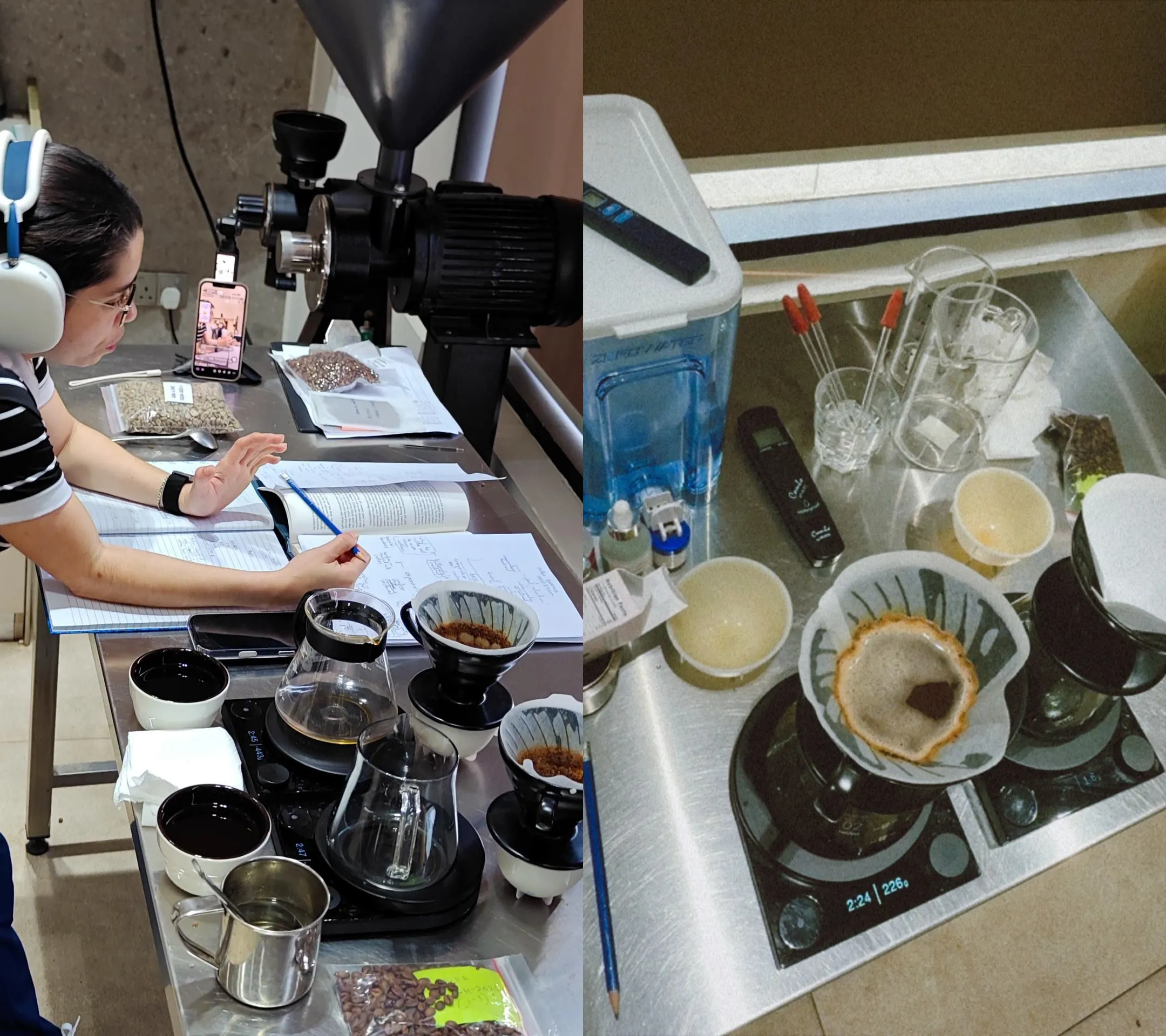
To explore this, I brewed two very different coffees at 85 °C and 95 °C: an Ethiopia natural–anaerobic and a China natural. Same coffees, same parameters. Only energy changed.
At 85 °C, the Ethiopia natural–anaerobic showed medium-high acidity, moderate sweetness, and low bitterness. The cup finished quickly, with a dry, dusty mouthfeel. As it cooled, acidity stayed dominant, sweetness remained low, and bitterness nearly disappeared. Lower energy preserved acidity, but limited structural development and aromatic persistence.
At 95 °C, the same coffee shifted completely. Acidity softened to medium, while sweetness and bitterness increased (bitterness still medium-low). Floral notes became clearer, and the mouthfeel turned juicy and syrupy. Hot, everything felt louder not because more was extracted, but because extraction and aromatic loss were happening faster at the same time.
The China natural behaved in the opposite way. Higher temperatures emphasized sweetness and body, not aromatic collapse. Around 89 °C, sweetness peaked, and with more heat the cup gained structure and weight without a proportional rise in bitterness. In this coffee, energy built the cup instead of compressing it.
This is why temperature has no universal “sweet spot.”
It doesn’t simply extract more it decides what survives in the cup.
Adjusting temperature is not correcting a recipe.
It’s choosing which version of the coffee you allow to exist.
This contrast highlights a critical point: temperature has no universal effect on extraction. Its impact is entirely dependent on the chemical composition of the coffee and the way energy interacts with that composition. Adjusting temperature is therefore not about optimizing a parameter, but about making a deliberate chemical and sensory choice deciding which compounds are prioritized, which are sacrificed, and how the final balance is constructed.

The Golden Ratio of Coffee: The Secret to Perfect Balance in Every Cup

Dubai – Qahwa World

Making coffee is not just a matter of taste — it’s a craft built on precision, balance, and understanding. Among the most essential principles guiding professional baristas and home brewers alike is the Golden Ratio, a simple yet powerful formula that ensures every cup achieves the right harmony between strength, flavor, and smoothness.

What Is the Golden Ratio?

According to the Speciality Coffee Association (SCA), the ideal coffee-to-water ratio lies between 1:15 and 1:20, meaning 1 gram of ground coffee for every 15 to 20 grams of water. This proportion defines how rich, strong, or light your brew will be.

A lower ratio (such as 1:15) produces a bolder, more intense cup, while a higher ratio (like 1:18) results in a gentler flavor — ideal for black coffee drinkers. These figures form the universal foundation of balanced brewing used across drip machines, pour-over setups, and French presses.

Weight Over Volume

The Golden Ratio is based on weight, not volume. Because grind size affects density, measuring coffee by scoops or spoons leads to inconsistency. For precision, use a digital scale to weigh both coffee and water accurately.

Key Factors That Shape Coffee Quality

Even when you follow the Golden Ratio, several factors influence how your coffee tastes.

1. Grind Size

Grind size determines how quickly and thoroughly water extracts flavor from the grounds.

French press: Coarse grind, similar to sea salt.

Pour-over: Medium to slightly fine grind.

Drip coffee maker: Consistent medium grind.

An improper grind can cause under-extraction (sour taste) or over-extraction (bitterness).

2. Water Temperature

The SCA recommends a brewing temperature between 195°F and 205°F (90°C to 96°C). Boiling water can burn coffee grounds and create a harsh taste, while cooler water prevents proper extraction.

3. Agitation and Flow

The way water moves through coffee — whether by pouring, stirring, or immersion — affects extraction balance. Gentle agitation helps saturate all particles evenly, producing a more consistent cup, especially in pour-over or French press methods.

4. Filter Type

The filter acts as the final gate between the brewing process and your cup.

Paper filters trap oils and fine particles, resulting in a clean, light-bodied brew.

Metal filters allow oils to pass through, enhancing texture and body.

Both have merit; the choice depends on your personal preference for clarity or richness.

Best Practices for a Perfect Brew

Use a scale. Measuring by weight ensures accuracy and repeatability.

Choose fresh coffee. Recently roasted beans yield livelier, more expressive flavors.

Invest in a good grinder. A burr grinder provides a consistent grind size, leading to more even extraction.

Stay consistent. Pick a brewing method you can comfortably repeat every day.

Experiment with confidence. Once you’ve mastered the basics, adjust ratios or grind settings slightly until you find your ideal cup.

The Essence of Balance

The Golden Ratio is not a secret formula but a timeless principle — a shared standard among coffee professionals and enthusiasts worldwide. When respected alongside the right grind size, temperature, and technique, it transforms coffee brewing from routine to ritual.

With precision, balance, and consistency, anyone can create a cup worthy of the world’s finest cafés — right at home.

Coffee Gadgets: A Guide to Finding Your Perfect Brewing Method

Dubai – Qahwa World

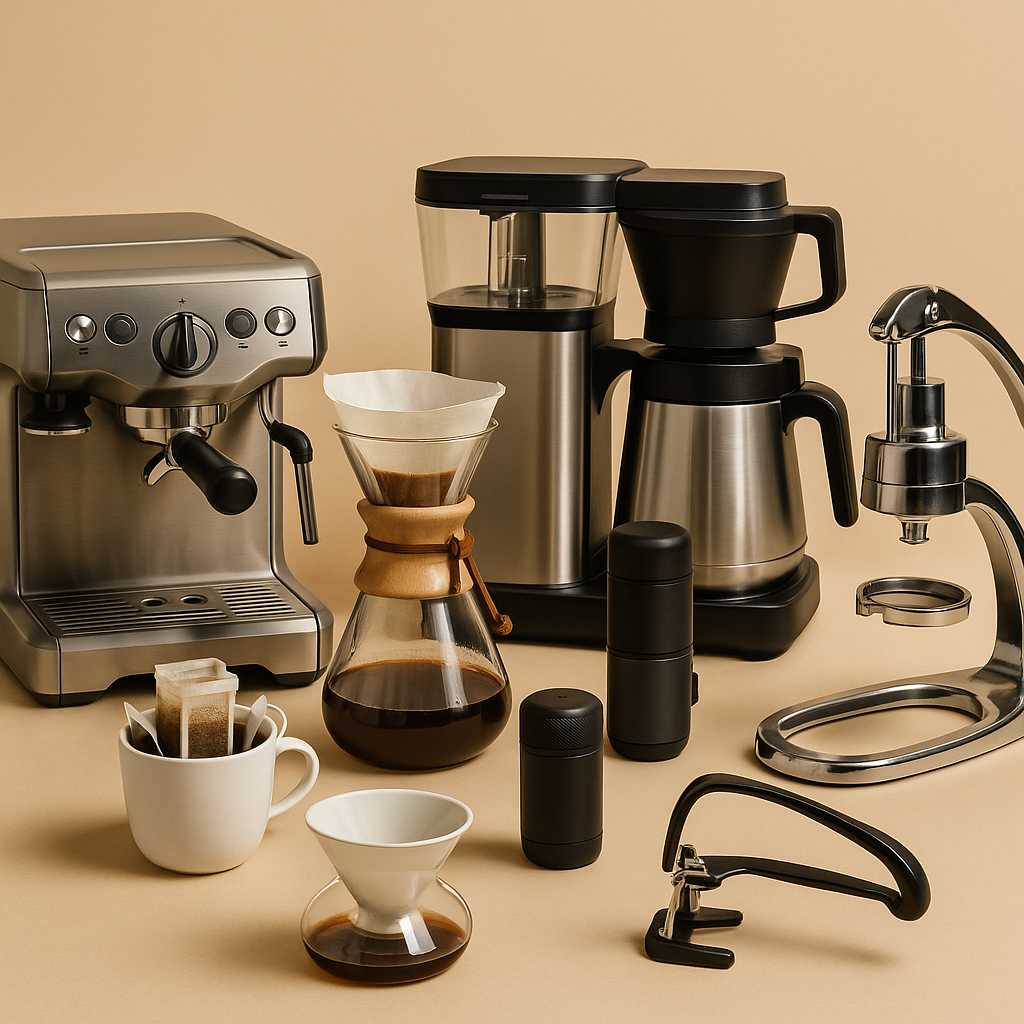
Coffee preparation has become more than just a morning ritual; it is a pursuit of precision, design, and personal preference. Across the world, enthusiasts choose from a wide variety of brewing devices, each catering to different needs — from quick convenience to meticulous craftsmanship. This guide offers a structured overview of the most notable coffee gadgets, their features, and how to identify which one might be best suited to your lifestyle.

Choosing the Right Gadget

A simple question often helps narrow the choices: Are you making coffee for lots of people?

Yes

If you prefer the ease of automation, an Espresso Machine or Sage Precision Brewer may be ideal.

If you value design and group brewing, the Chemex is a strong candidate.

For portable brewing with larger capacity, consider the Giant AeroPress.

No

If automation is important, a Bean-to-Cup machine offers a seamless experience.

For simplicity, the Coffee Bag provides a quick option.

For those who enjoy measuring and fine-tuning, the V60 Pourover is a classic.

If experimentation excites you, the Picopresso or Syphon provide unique experiences.

For mechanical elegance and complete control, the Lever Espresso stands out.

Coffee Bag

Single-use drip bags offer convenience and portability, functioning like a tea bag but designed for better water contact with coffee grounds. They are ideal for pre-portioned, ready-ground coffee when simplicity is the goal.
Example: Ueshima Pour Over Coffee Bag (~£5).

V60 Pourover

A cone-shaped brewer with a global following, the V60 is inexpensive but requires additional tools — grinder, gooseneck kettle, and scales — for precision. It is popular among those who enjoy the ritual of measured brewing.
Example: Hario V60 Coffee Dripper (~£6).

Chemex

Designed in the 1940s, the Chemex combines glass, wood, and leather in an iconic brewer. Its thicker paper filters produce a “cleaner” cup, though the slower percolation makes it less practical for quick brewing. Larger sizes make it well-suited for groups.
Example: 10-Cup Chemex (~£65).

Giant AeroPress

Known for portability and ease of cleaning, the AeroPress steeps coffee in a sealed chamber before plunging. The larger model caters to groups, while the standard version remains a gateway device for new enthusiasts.
Example: AeroPress XL (~£80).

Syphon

Also called a vacuum pot, the syphon is both functional and theatrical. Water is heated in a lower chamber, rises to mix with coffee in an upper chamber, then filters back down. While fragile and demanding to clean, it produces a distinct cup and serves as a centerpiece for coffee demonstrations.
Example: Hario Technica Coffee Syphon (~£125).

Picopresso

A compact, handheld espresso maker designed for experimentation. It appeals to those who want to test techniques outside of traditional machines while keeping portability in mind.

Sage Precision Brewer

A programmable filter brewer that delivers consistency for larger batches. Its thermal carafe preserves flavor better than hotplates, and the auto-brew function allows preparation in advance.
Example: Sage Precision Brewer Thermal (~£250).

Lever Espresso

A spring- or piston-driven machine that emphasizes manual control. Pulling the lever compresses water through the coffee puck, giving full oversight of extraction variables. Quiet and mechanical, it requires patience but rewards with mastery.
Example: Flair Pro 3 (~£325).

Espresso Machine

Countertop espresso machines allow variety, from straight espresso to milk-based drinks with latte art. They are essential for anyone who prioritizes serving café-style beverages at home, though they require significant space and investment.
Example: Sage Dual Boiler (~£1,250).

Bean-to-Cup

These machines automate the entire process, from grinding beans to extraction, often controlled through digital displays. They provide luxury and convenience, though at the cost of reduced manual experimentation.
Example: Jura Giga 10 (~£3,800).

Conclusion

The diversity of coffee gadgets reflects the diversity of coffee drinkers. Whether one values speed, design, experimentation, or tradition, there is a tool to match. For some, a simple coffee bag suffices. For others, the precision of a lever espresso machine or the indulgence of a bean-to-cup system becomes part of daily life. Understanding each device’s strengths helps not only in choosing the right gadget but also in appreciating the culture of coffee innovation.

The Lifecycle of Coffee..From Tree to Cup

Dubai – Qahwa World

The coffee tree, belonging to the Coffea genus, thrives in tropical climates between the Tropics of Cancer and Capricorn. Notable species include Coffea arabica (Arabicas) and Coffea canephora (Robustas). Arabica, characterized by large bushy growth, produces cherries with two flat seeds, commonly known as coffee beans. In contrast, Robusta, a robust shrub or small tree, yields smaller oval seeds and is resilient in hotter climates.

Temperature and altitude play crucial roles, with Arabica thriving in 15 to 24ºC conditions and Robusta excelling in 24 to 30ºC temperatures. Rainfall requirements range from 1,500 to 3,000 mm annually, with Arabica being less demanding. While Robusta can grow up to 800 meters above sea level, Arabica thrives at higher altitudes, often cultivated in hilly terrains.

Harvesting the Beans

Hand-picking is the norm for harvesting ripe coffee cherries due to the mountainous landscapes, except in Brazil where machinery finds utility. Pickers, every 8 to 10 days, meticulously select only fully ripe cherries. Arabica’s selective picking, though labor-intensive, is favored for its quality. Harvested cherries yield 2 to 4 kilos, and a skilled picker can harvest 45 to 90 kilos per day, resulting in 9 to 18 kilos of coffee beans.

Processing the Harvest

Post-harvest, the next step involves separating the coffee seeds from the cherries and drying them. Two methods prevail: the dry or ‘natural’ method and the wet method. The dry method, simpler and older, dries whole cherries in the sun for up to four weeks before further processing. The wet method involves pulping, fermenting, washing, and then drying the beans, which takes 8 to 10 days.

Roasting and Grinding

With over 1,000 aroma components identified, roasting conditions determine the final coffee flavor. Green coffee beans undergo roasting at 180ºC to 240ºC for 1.5 to 20 minutes, influencing color and aroma intensity. Roasting occurs in rotating drums or fluidized bed roast chambers, followed by cooling and potential packaging as whole beans.

Brewing and Consumption

Arabica dominates global coffee cultivation, spanning Latin America, Central and East Africa, India, and Indonesia. Robusta thrives in West and Central Africa, Southeast Asia, and Brazil. Different brewing methods, such as filter, plunger, espresso, Swedish, and Turkish, cater to diverse preferences. Instant coffee, made from roasted and ground beans, utilizes either spray-drying or freeze-drying methods.

Understanding Coffee Composition

Caffeine, antioxidants, and diterpenes contribute to coffee’s unique flavor and physiological effects. Caffeine, a mild stimulant, has desirable effects in moderation. Antioxidants, including chlorogenic acids, offer potential health benefits. Diterpenes, like cafestol and kahweol, present in oil, impact cholesterol levels, with brewing methods influencing their concentration.

Exploring Health Considerations

Coffee composition also involves compounds like Ochratoxin A, acrylamide, and furan, which require careful monitoring and adherence to safety regulations. Nutritionally, black coffee is low in macronutrients, providing only 1-2 kcal per 100 ml. Micronutrients like potassium, magnesium, and niacin vary based on preparation methods.

Coffee and Hydration

Black coffee, comprising over 95% water, does not lead to dehydration when consumed in moderation. Studies suggest that caffeine’s diuretic effects are outweighed by the fluid intake from coffee. Moderation, encompassing 3-5 cups per day, aligns with a balanced diet and active lifestyle, providing an enjoyable journey from tree to cup.