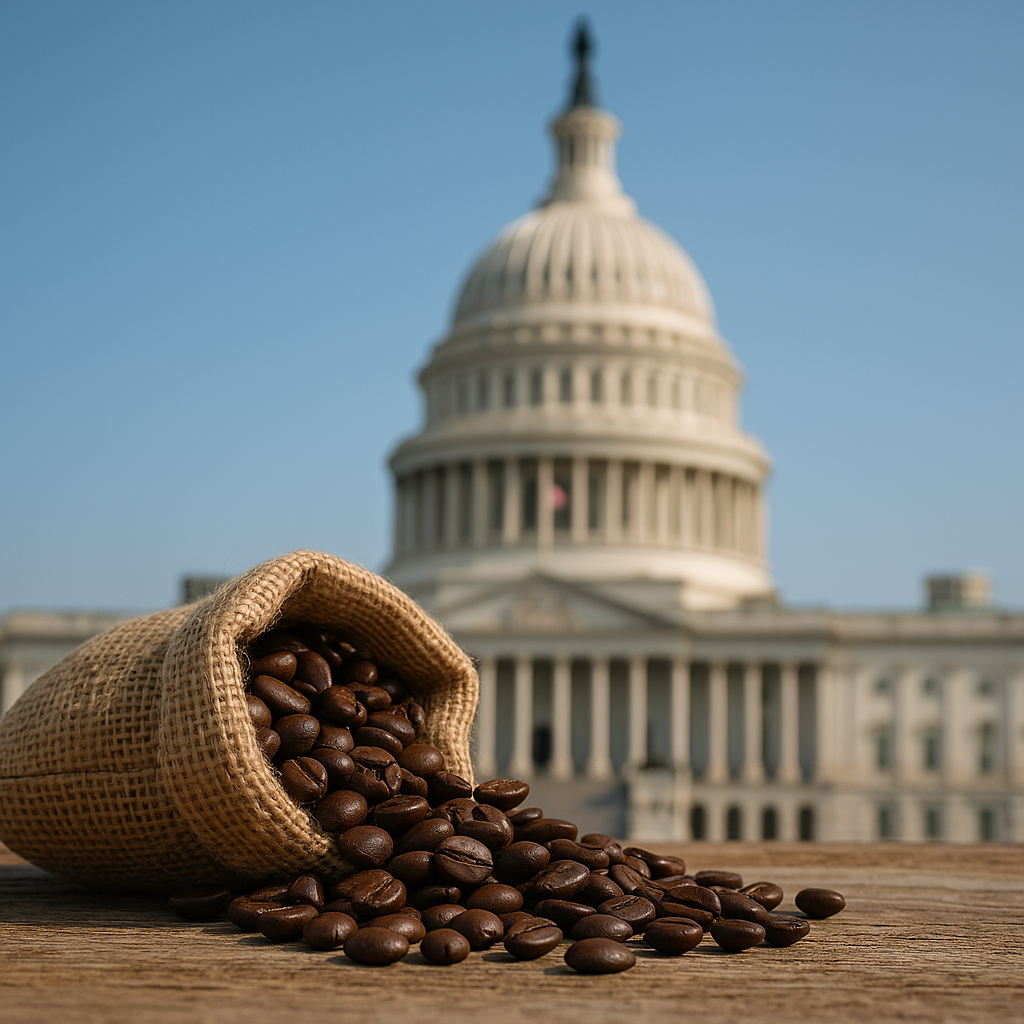
Ethiopia generated $762.75 million in revenue from coffee exports during the first quarter of the 2025/26 fiscal year, according to the Ethiopian Coffee and Tea Authority. The figure represents a 47% increase, or $243.73 million more than the same period last year, exceeding both export and revenue targets.
Dr. Adugna Debela, Director General of the Authority, announced that the country exported 113,542 tons of coffee between July and September 2025, achieving 75% of the planned export volume of 151,969.41 tons. However, the revenue reached 123% of the quarterly target of $622.5 million, underscoring higher prices and stronger market performance.
Leading Destinations
Germany remained the largest buyer, importing 20,793.14 tons (18%) and contributing $138.18 million (18%) to total earnings. Saudi Arabia followed with 16,088.45 tons (14%), generating $102.18 million (13%), while Belgium ranked third with 13,910.92 tons (12%) and $93.45 million (12%) in revenue.
Other key destinations included China (4th), the United States (5th), South Korea (6th), the United Arab Emirates (7th), Japan (8th), Italy (9th), and the Russian Federation (10th). Together, these top ten markets accounted for 80% of the total export volume and 79% of Ethiopia’s foreign exchange earnings. Compared with the same period of the previous fiscal year, the top destinations saw 3% growth in export volume and a significant 52% increase in revenue.
Key Drivers Behind the Growth
Dr. Adugna attributed the strong performance to multiple strategic initiatives introduced by the Authority, including:
Expanding coffee export markets to new destinations such as China.
Enhancing data quality and modernizing trade monitoring through a centralized coffee database and a secure data exchange system that tracks daily shipments.
Providing traders and stakeholders with monthly global and domestic market updates to support informed decision-making.
Reinforcing supervision to ensure exporters meet delivery timelines and contractual obligations.
Introducing a weekly minimum contract selling price aligned with global market trends.
Strengthening bilateral cooperation and knowledge exchange with countries that have advanced coffee production and management experience.
The Authority emphasized that these measures are part of Ethiopia’s broader effort to maximize export revenues and solidify its position as Africa’s leading coffee producer and exporter.
Coffee prices in Russia have reached an all-time high, with instant coffee exceeding 4,000 rubles per kilogram for the first time. Ground and roasted coffee have also risen sharply, prompting a noticeable decline in demand of 4–11% across categories.
A Steep Climb Over the Past Year
According to Russia’s Federal State Statistics Service (Rosstat), the price of natural instant coffee rose to 4,006 rubles per kilogram in September 2025, up from 3,988 rubles in August — an annual increase of 18.3%. The price of ground and roasted coffee jumped to 1,994 rubles per kilogram, marking a 29.3% rise compared with last year. In the foodservice sector, the average cup of coffee now costs 110.9 rubles, up 13.6% year-on-year.
Analytics from Check Index show that between June and August, the average retail price of coffee reached 829 rubles, 12% higher than in 2024. The average receipt for whole-bean coffee grew by 22% to 1,508 rubles per pack, while instant coffee climbed 11% to 461 rubles. Ground coffee increased by 16% to 650 rubles, and coffee capsules saw a 17% rise to 881 rubles per pack.
Why Coffee Is Getting More Expensive
The primary driver of the surge is the global rise in coffee prices. Over the past year, Arabica prices have increased by 1.5 times, while Robusta surged by 40% in just three months.
The International Coffee Organization (ICO) attributes this to poor harvest conditions in Brazil, the world’s largest producer. Additional pressure has come from U.S. tariffs on Brazilian coffee, which encouraged American roasters to stockpile supplies. European roasters are also building reserves ahead of the EU’s deforestation-free supply regulations.
According to Olga Lebedinskaya, Associate Professor at the Plekhanov Russian University of Economics, domestic factors are also adding strain: inflation, higher transportation costs, international payment difficulties, and rising labor and rental expenses have all contributed to the surge.
“The market has become highly concentrated, leaving few alternative sources,” she explains. In 2025, Brazil overtook Vietnam as Russia’s main coffee supplier. From January to September, Russian companies imported $287.9 million worth of Brazilian coffee beans, nearly double the value imported during the same period in 2024.
Lebedinskaya notes that Laos could become an alternative source, but logistical barriers remain unresolved. “While for Russia this would serve as a niche complement to Brazilian and Vietnamese supplies, for Laos it means diversifying exports without raising costs dramatically,” she said.
What to Expect in 2026
Lebedinskaya forecasts that global price increases will reach Russia’s retail market with a six-month delay, meaning consumers are likely to see new price levels by spring 2026.
“Many coffee shops are already gradually adjusting their prices to soften the impact,” she noted, adding that the traditional tactic of replacing Arabica with cheaper Robusta is no longer effective, as both varieties are now priced nearly equally.
She expects coffee shops to expand their beverage menus by promoting alternatives such as matcha, chicory, and milk-based drinks, while espresso and Americano will likely see the fastest price growth.
According to Alexey Plugov, Director of the Agribusiness Analytical Center AB-Center, 2025 is set to record the highest average global coffee prices since the 1977 coffee crisis. In 2026, he predicts that prices will remain high but fall by 10–15% from 2025 levels.
Tea and Cocoa: Moderate Movements
Rosstat data show that as of October 6, the price of black tea in Russia reached 1,351.9 rubles per kilogram, rising 7.3% over the year — slower than the overall annual inflation rate of 8.1%. According to AB-Center, green tea prices grew by 3.9%, while black tea in bags increased by only 1.6%, averaging 84.7 rubles for a 25-bag pack.
In contrast, cocoa powder prices rose 7.1% year-on-year in September to 1,139 rubles per kilogram. Plugov notes that global tea prices could rise 8–12% in 2026, while cocoa prices may fall 5–10%, though still remaining well above 2022–2023 levels.
Brazilian trading company Timbro has officially added coffee to its export portfolio, identifying strong potential for growth in a market reshaped by volatility and record-high prices over the past year.
Timbro, already one of Brazil’s key sugar exporters, also trades a wide range of products including iron ore, cotton, aircraft, cars, and heavy machinery, and manages import operations for Amazon.
“I believe we entered the coffee market at the right time — a very complicated moment for the sector,” said Caio Melles, partner at Timbro, in an interview with Reuters.
The company, which reported 18 billion reais ($3.3 billion) in revenue last year, sees an opportunity to fill the gap left by traditional traders struggling with market volatility. According to Melles, the coffee sector currently lacks players capable of tracking production, pricing, and ensuring delivery, opening new room for agile companies like Timbro.
Although Timbro has long engaged in financial operations with cooperatives and large producers, the 2025 crop year marks its first full physical coffee operation, a move the company had not previously disclosed.
Initially, coffee volumes will remain modest — around 80,000 bags of 60 kg each — as Timbro adopts a cautious entry strategy.
Expansion Beyond Coffee
Founded in 2010 by Jorge Guinle and Bruno Russo, Timbro began as an import-focused firm before rapidly diversifying its portfolio. The company has recorded significant success in sugar, increasing traded volumes from 300,000 tonnes in 2018 to 2 million tonnes in 2024.
In 2025, Timbro expanded its international presence with the opening of an office in Dubai, a strategic hub to strengthen relationships with global clients and enhance efficiency across time zones. It is also extending operations in Asia to “operate on Chinese time,” reflecting China’s importance as a key importer of Brazilian commodities.
Currently, 65–70% of Timbro’s business is export-oriented, while 30–35% focuses on imports.
Diversification into Grains and Minerals
Timbro maintains a smaller footprint in soybean and corn exports, Brazil’s leading agricultural commodities. “We’re doing a few soybean and corn shipments, maybe half a dozen of each this year — still very limited,” Melles said, noting that grain operations require integrated logistics to achieve profitability. The company is now considering logistics partnerships to expand in this segment.
In the steel and minerals division, Timbro expects to export over 1 million tonnes to China and Europe this year and has begun due diligence for new mining assets as part of its expansion strategy.
Indonesia has expanded its coffee export market with a new shipment of premium Arabica beans from the slopes of Mount Argopuro in East Java to Saudi Arabia, marking another milestone for the country’s growing smallholder coffee sector.
The shipment, totaling 15 tons and valued at around 3 billion rupiah (approximately 180,000 U.S. dollars), reflects Indonesia’s continued effort to strengthen its position in the global coffee trade and promote the role of micro, small, and medium enterprises in international markets. The consignment was officially dispatched on Monday, in a move hailed by government officials as a success story for local farmers and entrepreneurs.
BagusRachman, Deputy for Business Affairs at Indonesia’s Ministry of Micro, Small, and Medium Enterprises, said the export from Mount Argopuro demonstrates the competitiveness of Indonesian MSMEs on the global stage. He emphasized that more than 90 percent of the nation’s coffee plantations are managed by smallholder farmers, who have become the backbone of Indonesia’s coffee production and export activities. Rachman described the Argopuro shipment as a model of how medium-scale enterprises can become a driving force within the MSME ecosystem, creating added value and expanding export capacity.
According to Statistics Indonesia, the country’s coffee exports rose from 279.94 million kilograms in 2023 to 316.72 million kilograms in 2024, underscoring steady growth despite challenges from fluctuating prices and global demand pressures. East Java, where Mount Argopuro is located, remains one of Indonesia’s key coffee-producing regions, known for high-altitude Arabica beans characterized by their clean cup, moderate acidity, and distinct aroma.
Local officials in Situbondo Regency, the region surrounding Mount Argopuro, praised the export as a breakthrough for community-based farmer groups that have invested in quality improvement and post-harvest processing. They highlighted that Argopuro’s elevation, reaching about 1,800 meters above sea level, contributes to its unique flavor profile, making it increasingly sought after in Middle Eastern and Asian markets. The local government also called for stronger support programs to encourage youth participation in coffee farming and ensure long-term sustainability of production.
Data from Indonesia’s Ministry of Trade shows that the country exported coffee, tea, and related products worth more than 16 million U.S. dollars to Saudi Arabia in 2023. The new shipment from East Java is expected to deepen trade relations between the two nations, opening opportunities for future collaboration in the premium and specialty coffee segments. Saudi Arabia has become an emerging destination for Indonesian agricultural products, reflecting growing demand for high-quality Arabica beans in the region’s expanding coffee industry.
Industry observers say the success of this shipment could inspire similar initiatives across Indonesia’s coffee-growing provinces, including Aceh, North Sumatra, and South Sulawesi, where MSMEs are working to boost exports of specialty varieties. The government’s ongoing push to promote downstream processing, improve logistics, and introduce value-added branding is seen as essential to enhancing Indonesia’s competitiveness in international markets.
Indonesia, the world’s fourth-largest coffee producer, has long been known for its diverse range of beans, from Sumatra Mandheling to Java and Toraja. With global demand for Arabica and Robusta continuing to rise, initiatives like the Argopuro export are expected to help the country expand its share of premium coffee markets, create higher income for farmers, and reinforce Indonesia’s image as a leading origin in the world of coffee.
A bipartisan bill titled the “No Coffee Tax Act” has been introduced to the United States Congress, aiming to repeal tariffs placed on coffee imports under the Trump administration.
The United States is the largest coffee importer in the world, with production limited only to Hawaii and Puerto Rico. Yet, tariffs currently affect major exporting nations. Goods from Brazil face a 50% tariff, Vietnam 20%, India 50%, Mexico 25%, and Indonesia 19%, all above the administration’s base rate of 10%.
The bill, sponsored by Nebraska Representative Don Bacon and California Representative Ro Khanna, has already drawn support from Virginia’s Don Beyer and New Hampshire’s Maggie Goodlander.
Bacon emphasised that taxing a crop not grown at scale in the US is harmful to consumers: “Families across America are already paying 21% more for coffee. Tariffs on a product we cannot produce commercially only make things worse. They are simply a tax on consumers, raising costs without creating jobs.”
He further highlighted that Congress, under Article One of the Constitution, holds tariff-setting authority, and this legislation reasserts that power.
If passed, the bill would exempt coffee—green, roasted, decaffeinated, husks, skins, and substitutes containing coffee—from any tariffs imposed after January 19, 2025.
The US coffee industry has strongly supported the measure, arguing that coffee cannot be grown at a scale sufficient to meet demand. A petition launched by roaster Coffee Bros in April 2025 has already gathered nearly 15,000 signatures.
Khanna compared the tariffs to Britain’s tax on tea before the American Revolution: “Americans started a revolution over a tax on tea. Today, US coffee prices have surged in part due to these tariffs. Our bipartisan bill is simple—it removes Trump’s tariffs on coffee to bring down costs.”
According to Reuters, the legislation is expected to be formally introduced on Friday. Bacon expressed optimism that the measure would not only reduce prices for consumers but also prompt a wider debate on Congress reclaiming its constitutional role in tariff policy.
Dubai – September 2025 (Qahwa World) – The Best of Yemen 2025 auction, organized by Qahwa Al Qimma (Qima Coffee), has come to a historic close after two days of global bidding that stretched across 12 intense hours. The event not only broke price records but also highlighted the resilience of Yemeni farmers and the global demand for their unique coffees.
The auction witnessed unprecedented participation, with servers overwhelmed after 11 hours of bidding and forced into a temporary pause. When resumed the following day, just one more hour of spirited competition was enough to crown this year’s winners.
The Top Lots
1st Place: Yahya Al Faqeeh, offering the rare Yemenia variety processed naturally, achieved the highest price of the auction at $851.50 per pound for 37 lbs. The winning buyer was Black Sip Coffee Roasters, securing one of the most expensive Yemeni coffees in history.
2nd Place: Maghrib Ans XV (Kent, Alchemy process), 110 lbs, sold for $320.50/lb to Sulalat.
3rd Place: Hejrat Al Ain Women Farmers XV (Yemenia, Alchemy process), 88 lbs, reached $327.50/lb, purchased by Albhaa Roastery and Out of Line.
4th Place: Bait Yaseen XI (Yemenia, Alchemy process), 110 lbs, sold for $196.50/lb to Entro Coffee Egypt and ESS’s Roasters Saudi Arabia.
Women Farmers in the Spotlight
Women-led lots stole the spotlight this year. Coffees from Hejrat Al Ain, Hayma Dakhiliya, Bait Al Yaziji, and Al Mezab all ranked among the top positions, underscoring the growing role of Yemeni women in shaping the country’s specialty coffee renaissance.
Global Buyers
Bidders came from across the Middle East, Asia, Europe, and North America. Notable names included George Howell Coffee Company (USA), Slope Roastery (Saudi Arabia), Andes Coffee Roaster (Latin America), and several specialty roasters from China and Europe. The diversity of buyers confirmed Yemen’s status as a global benchmark for rare and exclusive coffees.
Auction Figures
Total lots: 33
Total weight: 2,857 lbs
Total value: $391,632
Average price (weighted): $137.08/lb
Median price: $109/lb
Highest price: $851.50/lb
Lowest price: $50.50/lb
Lots over $100/lb: 21
In its closing statement, the organizer said: “This milestone is not only about record prices—it is about the resilience of Yemeni coffee and the farming communities behind it. The unwavering commitment of our buyers and partners makes these moments possible year after year.”
The Best of Yemen 2025 auction was more than a commercial success; it was a cultural milestone. It brought together farmers cultivating coffee in the mountains of Yemen with roasters across the globe, uniting two ends of a shared story: those who grow coffee at its birthplace and those who bring it to the world’s cups.
Dubai, 17 September 2025 (Qahwa World) – The Dubai Multi Commodities Centre (DMCC), the world’s leading free zone and a key driver of global trade flows through Dubai, has officially launched the new mezzanine floor at its Dubai Coffee Centre. The 500-square-meter space has been designed to provide members and stakeholders in the coffee sector with greater access to international markets, foster innovation, and accelerate business growth.
The new facility includes 16 private offices available for lease, flexible co-working spaces, and an exclusive espresso bar for members, offering them the opportunity to host guests and showcase their products with ease. This expansion comes at a pivotal moment for the coffee industry, where the demand for flexible and integrated infrastructure to support origin producers, specialty roasters, and SMEs is more pressing than ever.
Coinciding with the expansion, DMCC released the latest edition of its Future of Trade report, this time focusing on the coffee sector. The report highlights the shifting dynamics of a global industry valued at over $200 billion, with international coffee trade alone exceeding $26 billion. With more than two billion cups consumed daily, coffee remains one of the most traded commodities in the world, yet climate threats, evolving consumer tastes, and shifting power dynamics across the value chain are reshaping the global coffee map.
Ahmed Bin Sulayem, Executive Chairman and CEO of DMCC, said:
“Coffee is not just a commodity; it is deeply woven into our identity in the Arab world and serves as a cornerstone of the global economy. With a consumer market exceeding $200 billion and nearly two billion cups consumed daily, coffee has shaped traditions of hospitality and trade since its journey from Yemen’s terraced farms and the port of Mokha to Europe, where coffeehouses became incubators for modern finance and ideas that fueled the Enlightenment and early industrial revolution. Today, more than 25 million farmers, most of them smallholders, rely on coffee for their livelihoods. The sector stands at a turning point, with direct-to-consumer pathways, climate-smart agriculture, and digital tools—from AI-powered traceability to tokenization of real assets—reshaping the industry. Dubai’s role now goes beyond redistribution; it has become a global platform for specialty coffee. The World of Coffee Dubai 2025 exhibition attracted more than 17,000 visitors and set record auction prices for rare varieties, underscoring the depth of the market in the Middle East and North Africa, expected to reach $11.5 billion. With this ecosystem, complemented by our Tradeflow digital commodities platform, Dubai is writing the next chapter in coffee’s story—where heritage meets innovation and inclusive growth becomes a reality.”
Mike Butler, Associate Director – Coffee at DMCC, added:
“This report paints a picture of a future that is complex but full of opportunities. Our role is to support members of the Dubai Coffee Centre by providing storage, logistics, roasting services, and facilitating trade between members. The new mezzanine floor, equipped with state-of-the-art facilities, is a tangible demonstration of this commitment and part of our broader strategy to solidify Dubai’s position as a global coffee hub.”
The Future of Trade report outlines several trends likely to shape the coffee industry in the coming years, including the rise of new direct-to-consumer trade routes driven by emerging markets such as China and Asia-Pacific, greater value retention in producing countries through local roasting and brand building, digital trade and blockchain-enabled traceability, climate-smart farming practices with drought-resistant varieties and agroforestry, and shifting consumer dynamics led by younger generations, particularly Gen Z, who are driving demand for sustainable specialty coffee and premium experiences.
The report also recommends scaling up investment in climate-smart agriculture, improving price transparency, empowering producers through supply chain digitization, expanding direct-to-consumer models, and developing trade infrastructure in strategic hubs like Dubai to streamline logistics, cut emissions, and strengthen traceability.
The latest edition continues the Future of Trade series, which has become one of the most widely read and trusted resources on global trade dynamics. With more than 2.5 million cumulative downloads and views, the series continues to shape global trade dialogue at a time when economic fragmentation and supply chain transformations are redrawing the map of global commerce.
DUBAI, 16 September 2025 (Qahwa -World) – Coffee is no longer just a daily beverage. It has become a cultural experience, a marker of taste, and a symbol of identity. Around the world, the specialty coffee sector is witnessing unprecedented growth, transforming the industry and reshaping global trade patterns. In its latest Future of Trade Agri Series report, the DMCC Coffee Centre emphasizes that this boom in specialty coffee is creating new opportunities but also deep challenges for producers, roasters, and supply chains.
From a simple drink to a global culture
Over the past decade, consumer behavior has shifted dramatically. Younger generations, particularly millennials and Gen Z, are no longer satisfied with a standard cup of coffee. They are seeking quality, transparency, and stories behind their brew. Today’s consumers want to know where their beans come from, how they were cultivated, and the social and environmental impact of the farms that produced them. This demand for authenticity and excellence has fueled explosive growth in the specialty coffee sector, which is expanding at a pace far faster than the commercial coffee market.
According to the report, demand for specialty coffee in Asia alone has surged by 30% over the past five years. Cities such as Shanghai, Tokyo, and Seoul have become leading destinations for coffee culture, rivaling long-established centers in Europe and North America. In the Middle East, Dubai has emerged as a hub for specialty coffee, where entrepreneurs, importers, and consumers converge in a market that views coffee as more than a drink—it is a lifestyle, a cultural statement, and a shared experience.
Yet behind this expansion lies a paradox. While specialty coffee commands premium prices in consumer markets, smallholder farmers—who account for about 80% of global production—struggle to secure a fair share of that value. The DMCC Coffee Centre report highlights the growing disconnect between international futures market pricing and the specialty coffee segment. Futures contracts may indicate falling prices, but specialty beans often continue to rise, placing roasters and consumers under pressure and leaving farmers in a vulnerable position.
Garfield Kerr, President of the Specialty Coffee Association and founder of Dubai’s “Mokha 1450,” describes the situation: “The gap between traditional pricing mechanisms and the real specialty market is destabilizing. We need systems that reward quality fairly and ensure that farmers share in the added value created by specialty coffee.”
The report also underscores the role of technology in supporting this sector. Tools such as blockchain and artificial intelligence are becoming essential for verifying sustainability claims and ensuring traceability from farm to cup. These innovations build consumer trust while giving farmers a platform to demonstrate the authenticity of their practices. With regulatory frameworks such as the European Union’s anti-deforestation law, transparency is no longer optional but a requirement for accessing major markets.
Meanwhile, emerging regions like the Gulf are helping shape new patterns of demand. In cities like Dubai, Riyadh, and Doha, specialty coffee has become integral to modern lifestyle and self-expression, placing the Middle East firmly on the global coffee map as both a consumer base and a trade hub.
Dubai’s role is especially significant. The DMCC Coffee Centre not only provides world-class infrastructure for storage, roasting, and packaging but also offers pay-as-you-go services that lower barriers for small producers in Africa and Latin America. By connecting them directly to international buyers, Dubai positions itself as a stabilizing force in a rapidly shifting specialty coffee economy.
Looking ahead, the future of specialty coffee appears both bright and complex. Growth projections estimate annual expansion of over 7% in the coming decade, signaling strong demand. Yet challenges remain. Farmers must invest in training, innovation, and resilience to maintain quality, while roasters and traders must navigate volatile pricing and rising logistics costs.
The DMCC Coffee Centre’s report concludes that the specialty coffee boom is not simply a trend but a structural transformation of the global coffee market. Success will depend on the industry’s ability to balance demand with sustainability, fairness, and transparency. If achieved, specialty coffee will not only be a product of distinction but also an economic and cultural cornerstone capable of redefining global trade—and reinforcing Dubai’s role as a hub at the heart of this transformation.
DUBAI – September 2025 – Qahwa World – Coffee is more than a beverage. It is a lifeline for over 25 million smallholder farmers, a $200 billion industry, and a cultural anchor with more than two billion cups consumed daily. Yet today, the global coffee sector faces one of the greatest challenges in its long history, according to the DMCC Coffee Centre, part of the Dubai Multi Commodities Centre (DMCC).
In its latest report, released under the Future of Trade Agri Commodities Series, the DMCC Coffee Centre published a special edition on coffee, warning that lands where coffee has thrived for centuries may no longer be suitable for cultivation in the coming decades.
According to the report, coffee’s vulnerability to climate change is stark. Unlike many other crops, coffee can only be cultivated in limited geographical zones, often at specific altitudes and within narrow temperature ranges. Any disruption in this balance — whether through droughts, frosts, or fungal diseases such as coffee leaf rust — can devastate entire harvests. Recent years have offered a preview of this future. In Vietnam, prolonged drought cut production by 20% and exports by 10% in the 2023/24 season. In Brazil, the world’s largest producer, one of the worst droughts in history pushed Arabica prices up by more than 80% in 2024. These are not isolated events but warning signals of a changing climate destabilizing a vital crop.
Research cited in the report projects that by 2050, half of today’s coffee-growing land may become unsuitable. Arabica, which accounts for 60–70% of global production and is prized for its quality, is the most at risk. Dependent on cooler climates with clearly defined wet and dry seasons, Arabica is highly sensitive to even modest increases in temperature. Robusta, known for its greater heat tolerance, may also face challenges under worsening climate conditions.
“The reality is that producers often have customers who have pre-booked volumes months in advance,” said Mike Butler, Associate Director of Coffee at DMCC. “If crops fail, they cannot deliver. This puts enormous pressure on farmers and traders, making climate volatility the new normal.”
Mike Butler, Associate Director of Coffee at DMCC
These pressures are already reshaping market dynamics. When Arabica prices surge, major brands increasingly turn to Robusta to fill the gap, often blending higher proportions into espresso and instant products. But as Garfield Kerr, President of the Specialty Coffee Association (SCA) and founder of Mokha1450 in Dubai, explains: “Specialty coffee consumers will notice the difference. While efforts are underway to develop specialty-grade Robusta, its flavor profile remains distinct.” This divergence could redefine what consumers drink, as well as where and how coffee is cultivated in the decades ahead.
The effects of climate change extend beyond farms to disrupt the global trade system. Shortages in Brazil or Vietnam ripple across supply chains, triggering price spikes and reshaping import decisions worldwide. Exchange-based pricing, once a reliable benchmark for roasters, is increasingly disconnected from the realities of specialty markets. Butler notes: “We are in a complex situation. Exchange pricing has become speculative and detached from the actual market, especially in premium segments.”
For smallholder farmers — who produce 80% of the world’s coffee — volatility is a fight for survival. Most lack the resources to withstand failed harvests or price shocks. When yields collapse, so too does income, jeopardizing education, healthcare, and food security for millions of families. The DMCC Coffee Centre report stresses the urgent need for investment in climate adaptation strategies that enable farmers to continue producing under increasingly hostile conditions.
Among the most promising solutions is agroforestry, where coffee is cultivated alongside trees and diverse crops to shield plants from heat, improve soil fertility, conserve water, and diversify incomes. Developing drought-resistant coffee varieties is another frontier. Kerr highlights Yemen as a potential leader, where farmers have for centuries produced resilient coffees in arid, high-temperature conditions. “I expect Yemen to become an industry leader in producing drought-resistant coffees,” he says, “because its farmers and agronomists already grow coffee in hotter climates with less water.”
The urgency of innovation extends beyond agriculture. International institutions and trade hubs must foster collaboration, data-sharing, and investment to support producers. The International Coffee Organization, in partnership with the International Trade Centre, has launched a Coffee Sustainability Support Database cataloguing more than 400 climate and sustainability initiatives worldwide. From training farmers in composting techniques to supporting cooperative-led climate projects, such efforts highlight the collective action required to build resilience.
Still, adaptation alone may not suffice without broader systemic change. Consumers increasingly demand proof that their coffee is produced sustainably and ethically, and regulators are responding with measures such as the European Union Deforestation Regulation. Compliance requires end-to-end traceability, raising costs but also creating opportunities for new technologies like blockchain and AI-powered monitoring to ensure that sustainability commitments are verifiable.
The DMCC Coffee Centre concludes that the global coffee sector stands at a crossroads. Climate change is already disrupting production, and risks are intensifying. While forecasts suggest that production could reach a record 178.7 million 60-kg bags in 2025/26, long-term threats loom over both supply and the livelihoods of millions of farmers. At the same time, solutions — from agroforestry to resilient varieties, from digital transparency to circular economy models — are emerging. The question is not whether the industry will change, but whether it can adapt quickly enough to safeguard coffee’s future.
For an industry that spans continents and cultures, the message is clear: without urgent action, climate volatility could reshape the coffee world beyond recognition. But through innovation, cooperation, and resilience, coffee can remain what it has always been — not just a drink, but a global connector, an economic pillar, and a cultural force.
Berlin – September 14, 2025 – (Qahwa World) – Germany, a country that does not grow coffee, has become one of the most influential players in the global coffee industry, earning more from exports than all African producing nations combined. In 2024, Germany exported over 473,000 tonnes of coffee worth €6 billion, largely by importing raw beans from producing countries and re-exporting them after processing and branding.
Africa, home to 18 coffee-exporting countries including Uganda, Ethiopia, Kenya, and Rwanda, remains dependent on raw bean exports. Uganda recently overtook Ethiopia as the continent’s leading exporter, shipping nearly 800,000 bags in May 2025 alone, worth $243 million. Ethiopia, long considered the historic heart of coffee, followed with 43,481 tonnes during the same period. Data from the International Coffee Organization covering March 2023 to February 2024 shows Uganda shipped over six million bags, compared with Ethiopia’s 3.5 million, while other producers such as Tanzania, Côte d’Ivoire, and Kenya trailed with far smaller volumes.
The disparity lies in value addition. A KPMG study as far back as 2014 highlighted that Africa exported coffee worth $6 billion while the global coffee industry exceeded $100 billion, driven by roasting, blending, packaging, branding, and sustainable certification. Germany has built its dominance on precisely these steps, importing nearly one million tonnes of green coffee in 2023, 91 percent directly from producing nations. Brazil supplied the largest share at 341,000 tonnes, followed by Vietnam, Honduras, Uganda, Colombia, and India. Even when imports declined by 17 percent that year, Germany’s reserves ensured its exports continued without disruption.
The contrast underscores a hard truth: while coffee was born in Africa, most of its wealth is captured elsewhere. Unless producing nations invest in roasting, branding, and specialty development at origin, they will remain suppliers of raw beans while others reap the greater rewards.
Xalapa – Mexico, August 21, 2025 (Qahwa World) – As part of Mexico’s early preparations for World of Coffee Dubai 2026, the Secretariat of Economic and Port Development of the State of Veracruz (SEDECOP), through its Directorate of Foreign Trade and in collaboration with Casa Tostadora Briones, has officially invited Veracruz specialty coffee producers to participate in the global event, scheduled for January 18–20, 2026 at the Dubai World Trade Centre (Za’abeel Halls 1, 4, 5 & 6).
Showcasing Veracruz Coffee in the Middle East
The initiative targets Arabica specialty coffee producers from Veracruz to submit samples that highlight the diversity, quality, and richness of the state’s coffee sector. Each sample will be displayed at Mexico’s pavilion in Dubai with the producer’s name, farm, region of origin, and coffee profile — a recognition of the growers’ work and a step to foster direct trade links.
SEDECOP underlined that the purpose of the participation is to strengthen international trade ties, promote the quality of Veracruz coffee in global markets, and position it as an authentic product with high added value. Casa Tostadora Briones emphasized that this step represents an opportunity to give Mexican coffee “a voice and presence” on the global stage while honoring the work and traditions of Veracruz farmers.
Veracruz: Mexico’s Coffee Heartland
Located on the eastern coast of Mexico along the Gulf of Mexico, Veracruz is one of the country’s oldest and most important agricultural regions. Its capital is Xalapa, and the state enjoys diverse climates — from tropical on the coast to temperate in the highlands — creating ideal conditions for coffee cultivation. Veracruz is among Mexico’s largest coffee-producing regions, particularly in the central highlands, where high-quality Arabica is grown and internationally recognized. The historic Port of Veracruz also serves as a key export gateway for agricultural products, especially coffee.
Participation Requirements
Interested producers must meet the following:
Submit 500 g of green specialty Arabica coffee.
Minimum cupping score of 82+ (SCA standards).
Provide a technical datasheet in both Spanish and English.
Samples accepted from August 2025 until January 5, 2026.
Participation is free of charge, sponsored by Casa Tostadora Briones.
Submit a valid tax compliance certificate issued within the last 90 days.
Sample shipments will be coordinated through Casa Tostadora Briones.
Eligible participants will be selected based on compliance with requirements and registration deadlines, with chronological order of registration serving as the main selection criterion.
Event Details
Event: World of Coffee Dubai 2026
Dates: January 18–20, 2026
Venue: Dubai World Trade Centre – Za’abeel Halls 1, 4, 5 & 6
Contact Information
Directorate of Foreign Trade – SEDECOP Boulevard Cristóbal Colón 5, Torre Ánimas, Office 1005, Jardines de las Ánimas, Xalapa, Veracruz. Tel: +52 (228) 841-8500 ext. 3615 Email: [email protected]
Complaints or inquiries can also be directed to SEDECOP’s Internal Control Office at: [email protected].
Dubai, August 16, 2025 (Qahwa World) – The African Fine Coffees Association (AFCA), in partnership with the International Coffee Organization (ICO) and with support from the project “Unlocking the Potential of African Coffee” funded by the Belgian Development Agency (ENABEL), announced an upcoming webinar on the European Union Deforestation Regulation (EUDR) and its implications for Africa’s coffee sector.
The 90-minute online session will take place on September 10, 2025, from 3:00 to 4:30 PM EAT. It will cover the new requirements of the EU regulation, supply chain responsibilities, digital traceability tools, and case studies from African countries that have begun implementing compliance measures. A live Q&A with trade, sustainability, and legal experts will also be included.
EUDR: A New Era for Coffee Trade
The EUDR entered into force in December 2024. From December 30, 2025, large operators must comply, followed by small and medium businesses from June 30, 2026. Coffee entering the EU must be:
Proven deforestation-free after December 31, 2020
Traceable with precise geolocation data (GPS)
Supported with production dates, volumes, and sub-regional origin
Covered by a due diligence statement
Non-compliance could lead to import bans, product confiscation, and fines of up to 4% of annual EU turnover.
Africa’s Reliance on the EU Market
Europe is the largest destination for African coffee, importing more than €2 billion annually. Recent figures show:
Uganda: 72% of exports went to the EU in 2024.
Kenya: 57.8% of exports were EU-bound in MY 2023/24.
Ethiopia: Over 30% of exports went to Germany, Belgium, and Italy.
Rwanda: Nearly 18% of exports went to EU countries including the Netherlands and Germany.
Burundi: At least 45% of exports in 2023 went to Europe, mainly Germany and Italy.
Tanzania: Italy and Germany purchased almost $98 million worth of coffee in 2023.
A Defining Moment for African Coffee
Experts note that while compliance poses challenges for millions of smallholder farmers, who produce over 70% of Africa’s coffee, it also represents an opportunity to enhance the reputation of African coffee globally and secure long-term access to premium markets.
Registration is open via AFCA’s official channels.