Largest Edition of World of Coffee Dubai 2026 Kicks Off Tomorrow

Dubai – Qahwa World

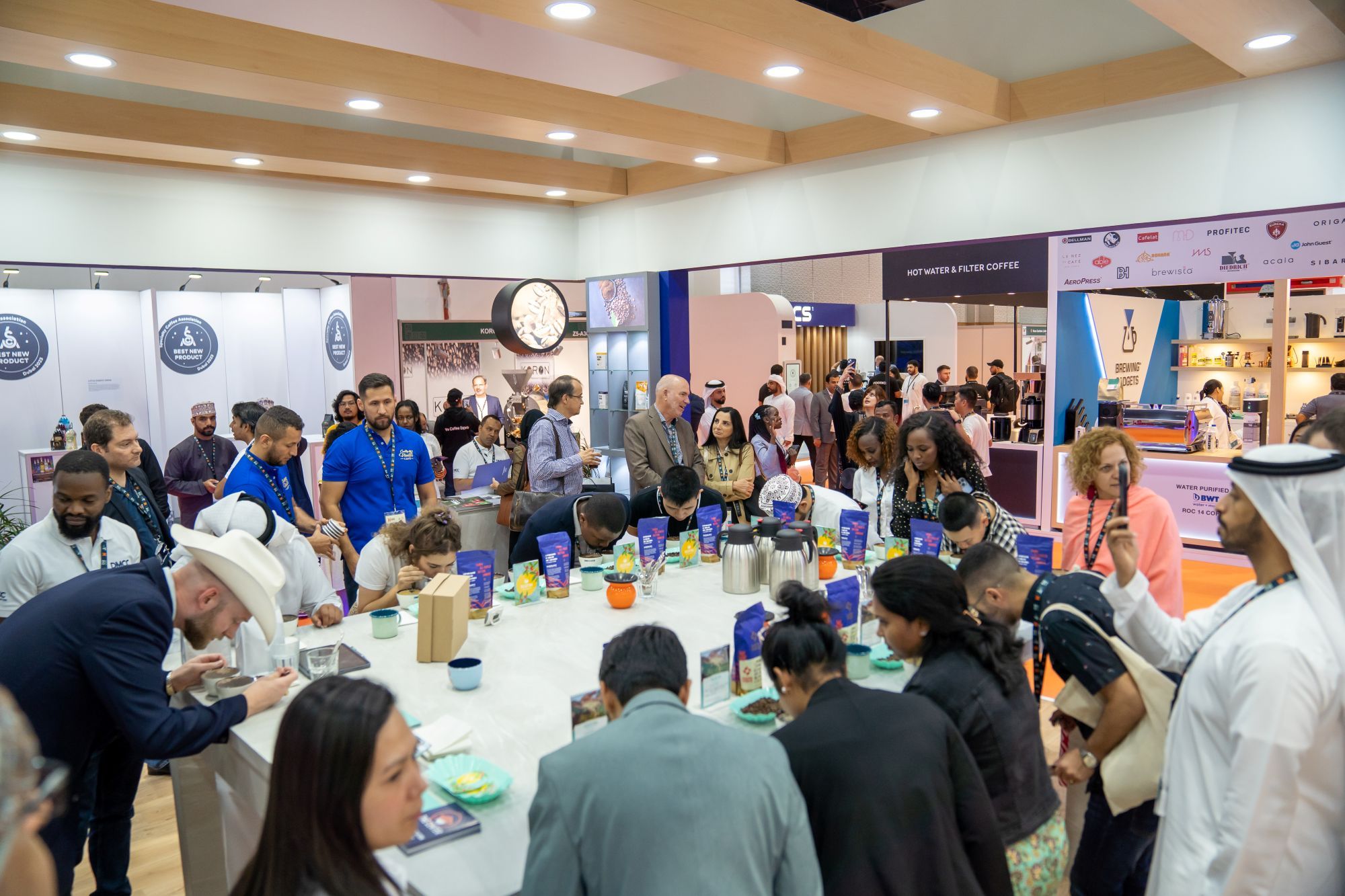
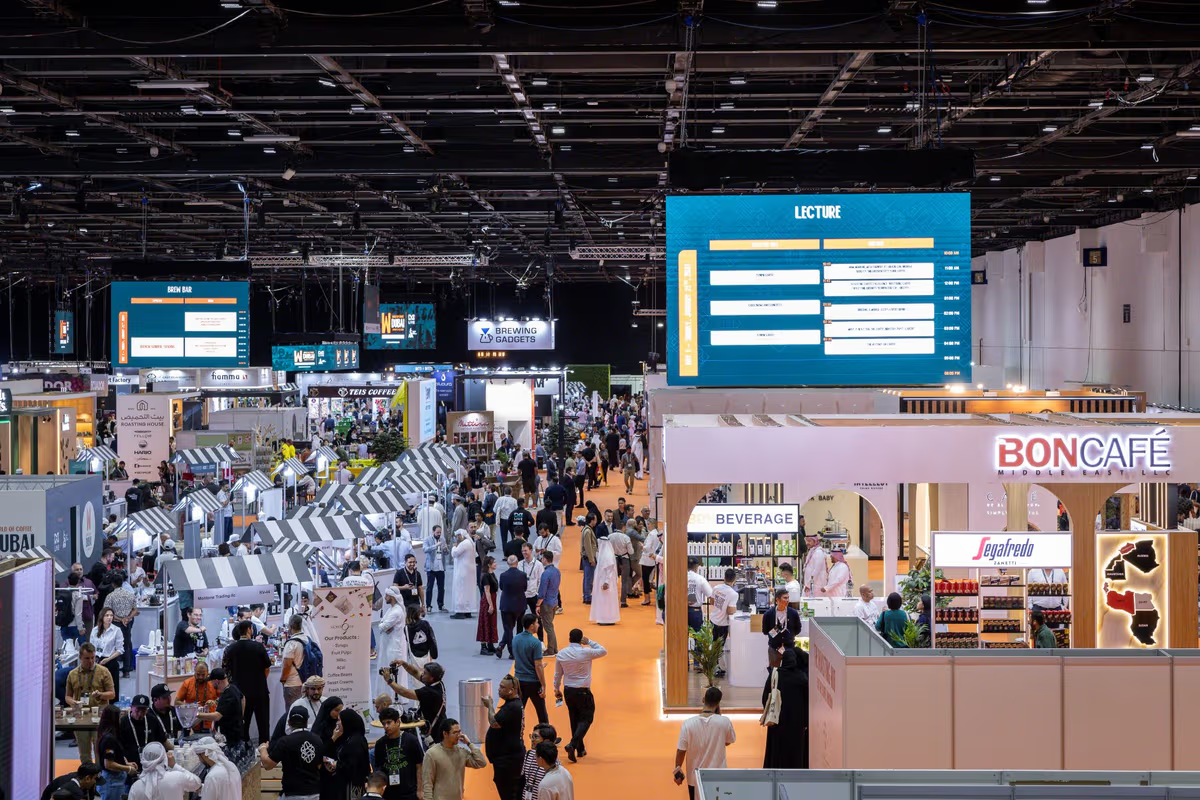
The fifth and largest edition of World of Coffee Dubai 2026 will kick off tomorrow, Sunday, in Dubai. The event is organised by DXB Live, the integrated event management and experiential agency of Dubai World Trade Centre, in partnership with the Specialty Coffee Association (SCA), and will run from 18 to 20 January 2026 at the Dubai World Trade Centre.

Recognised as the region’s leading specialty coffee trade event, the exhibition brings together more than 2,100 exhibiting companies and brands, alongside industry leaders, experts, and professionals from 78 countries, representing every stage of the coffee value chain. Participants include coffee producers, roasters, traders, equipment and machinery manufacturers and distributors, café operators, hospitality leaders, and industry organisations.

Spanning an exhibition space of 20,000 square metres, the event features strong participation from leading global coffee producers, reinforcing Dubai’s growing role as a global hub for coffee trade and a strategic gateway connecting producing countries with fast-growing consumer markets and international trade centres.

World of Coffee Dubai 2026 offers visitors a comprehensive experience covering all aspects of the specialty coffee industry. Key features include the Roasters Village, Producers Village, Cupping Rooms, Brewing and Espresso Zones, and dedicated Technology Areas, showcasing the latest innovations in roasting and brewing systems, automation, and sustainable technologies, reflecting global future trends in the specialty coffee sector.

The exhibition programme also includes a series of professional championships and competitions, such as the UAE National Coffee and Latte Art Championships, the Roasting Championship, as well as the Cezve/Ibrik World Championship, which celebrates one of the world’s oldest coffee preparation methods rooted in Middle Eastern and Turkish coffee culture, evaluated according to modern specialty coffee standards.

On the commercial front, the event hosts three live auctions across the three exhibition days, including a Coffee Equipment Auction on the first day, a Micro-lot Auction featuring top-rated specialty coffee beans on the second day, and an Exhibitors’ Coffee Auction on the third day. These auctions provide a transparent platform for price discovery, enhance international buyer participation, and support global market access for brands and producers.

World of Coffee Dubai 2026 will be open daily from 10:00 a.m. to 6:00 p.m. at Zabeel Halls 1, 4, 5, and 6 of the Dubai World Trade Centre. Registration remains open for visitors, media representatives, and industry professionals, with full programme details and media accreditation available via the event’s official website.

Why the Middle East Is Emerging as a Defining Force in the Global Coffee Industry

By: Shouq Bin Redha

Exhibition Manager at World of Coffee 2026

  • A Shift the Industry Can No Longer Ignore

The global coffee industry is no stranger to confident predictions. Every few years, a new region is crowned the “next big growth market,” only to plateau as structural limits reveal themselves—income ceilings, demographic stagnation, infrastructure gaps, or cultural preferences that evolve more slowly than expected.

But the transformation taking place across the Middle East today is not another cycle of hype. It represents a fundamental shift in where global influence is coming from. If the industry continues to view the region merely as an emerging market, it will misread the scale and significance of what is unfolding.

The Middle East is not simply consuming more coffee. It is reshaping the conditions under which coffee is produced, traded, and valued. Unless the industry recalibrates its assumptions, it will underestimate a region that is, in several ways, better positioned to shape the next decade of global coffee direction than many of the markets that once dominated the narrative.

  • A New Generation, a New Market Logic

The most misunderstood aspect of this shift is demographic. The region’s youthfulness is often cited as a headline statistic, but rarely interpreted correctly. A young population does not automatically create a high-value coffee market; what does is a young population with access, aspiration, and global exposure.

Across the Gulf—where more than 60% of the population is under 35—and increasingly in North Africa, this is precisely the case. A generation raised with international cultural fluency approaches coffee as an extension of taste, identity, and self-expression, more akin to fashion, music, or design than to a morning utility. They are not inheriting a coffee culture; they are creating one—and doing so with remarkably few of the constraints that shaped earlier consumer markets.

Most Western coffee markets took decades to evolve from commodity to specialty. The Middle East did not. It moved from instant coffee to single-origin pour-overs in what feels like the span of a single generation. This compression of time matters. Behaviours that took other regions twenty years to develop have materialised here almost overnight.

In Saudi Arabia, for example, more than 36 million cups of coffee are consumed daily, and the Kingdom now has over 61,000 licensed cafés—figures that would be extraordinary in any context. In the UAE, more than 90% of coffee spending occurs outside the home, one of the highest café-driven consumption ratios globally. Egypt has nearly doubled its annual coffee consumption in five years, rising from around 36,000 to over 70,000 tonnes, while Morocco recorded a 23% rise in coffee imports in 2024 alone.

This emerging baseline of expectation—quality, provenance, processing style, ethical value chains—is reshaping the industry’s economics. Coffee professionals often speak of “premiumisation” as something that gradually filters from niche cafés into the mainstream. In the Middle East, premiumisation did not filter. It arrived fully formed.

  • Where Demand and Capability Rise Together

The willingness to pay for quality is not a marginal behaviour in the region; it is central to how young, urban Middle Eastern consumers engage with food and beverage culture more broadly. Coffee simply happens to be the category where this shift is most visible because the market is evolving so rapidly.

As a result, influence follows. When premium expectations are normalised at scale, global suppliers take notice. Producers from East Africa, Central America, and Southeast Asia increasingly describe the Middle East as a strategic market rather than a secondary one. Many now tailor fermentation styles, natural profiles, and processing innovations specifically for buyers in Riyadh, Dubai, or Kuwait City.

It is unusual for an emerging region to generate this level of pull so early in its development curve. Yet it is happening now—and quickly.

A second force behind the region’s rising relevance is economic cohesion. Consumption growth is occurring simultaneously across multiple layers of the value chain. Café culture is expanding, but so too are at-home brewing, specialty retail, roasting capacity, green coffee trade, logistics infrastructure, and the professional workforce required to sustain them.

In global coffee markets, it is rare to see demand and capability accelerate together. Often, consumption precedes supply-chain maturity, or vice versa. In the Middle East, both are evolving in parallel.

This is why the region’s impact will extend far beyond its borders. When a market becomes not only a high-value consumer but also a capable participant in sourcing, roasting, and trade, it does more than generate revenue—it shapes direction. It becomes a place where reputations are built, partnerships are formed, and new standards are tested.

Geography further amplifies this influence. The Middle East sits at a critical intersection between producing and consuming nations. For East African producers, the GCC is closer, more accessible, and often more commercially reliable than European destinations. For Asian producers, supply routes to the region are efficient and cost-stable.

Much of the coffee entering North Africa and South Asia already routes through the Gulf, with Dubai serving as a key re-export hub. In recent years, the city’s coffee re-export activity has exceeded AED 3.5 billion in cumulative trade value, with 2024 alone seeing a 20% increase in green coffee re-exports as the UAE strengthens its role as a global logistics and distribution centre.

When a region becomes a corridor—a bridge rather than an endpoint—it naturally assumes a greater role in shaping global trade patterns. That is what is happening now. Much of it has yet to be captured in macroeconomic reporting, but it is visible in behaviour—and behaviour almost always precedes data.

  • A Culture Positioned for Reinvention

The final reason the Middle East is poised to define the next decade of coffee growth has less to do with economics and everything to do with culture. Unlike older markets, where coffee traditions are well-established and often rigid, the Middle East is characterised by cultural fluidity. Tradition and innovation coexist with ease.

A Yemeni jebena ceremony can sit comfortably alongside a carbonic maceration Gesha. Café formats evolve quickly. Entrepreneurs experiment freely. This openness—rare in more mature coffee geographies—creates ideal conditions for reinvention.

By 2030, the global industry may look back on this moment as an inflection point: the period when influence began to shift meaningfully toward a region too often viewed through outdated assumptions. The Middle East does not require validation from legacy markets to shape the global coffee industry. It is already doing so—through the expectations of its consumers, the confidence of its entrepreneurs, the evolution of its supply chain, and the growing attention of producers who recognise where the future lies.

The story of global coffee is not static. It is shifting.
And that shift is taking place here.
Russia Sets Record for Brazilian Coffee Imports

Moscow – Qahwa World

Russia significantly increased its imports of coffee from Brazil between January and November, with the total value reaching nearly $390 million — the highest level recorded to date, according to official Brazilian statistics.

Since the beginning of the year, Brazilian coffee shipments to Russia amounted to approximately $392.6 million, compared with about $232.3 million over the same period last year, highlighting a sharp expansion in bilateral trade within this segment.

Import volumes also rose in physical terms, totaling 62.3 thousand tonnes, which represents a 13% year-on-year increase.

As a result of the higher purchases, Russia ranked 11th among the world’s largest importers of Brazilian coffee. Germany remained the leading destination with imports worth around $2.1 billion, followed by the United States at $1.8 billion and Italy at approximately $1.2 billion.

Other major markets for Brazilian coffee during the period included Japan and Belgium, as well as the Netherlands, Türkiye, and Spain, while China also featured among the top ten importing countries.

World of Coffee Dubai 2026 to Host Three Live Coffee Auctions at the Dubai Coffee Auction by DMCC

Strengthening Dubai’s Position as a Global Coffee Hub Connecting Origin Markets with International Buyers

Dubai – Qahwa World

World of Coffee Dubai 2026 continues to reinforce its standing as a premier global trade platform for coffee professionals and enthusiasts. The fifth edition, taking place from 18–20 January at Dubai World Trade Centre, will feature three auctions under the Dubai Coffee Auction by DMCC banner. This follows the tremendous success of the 2025 auction, where bidding for select micro-lots exceeded USD 10,000 per kilogram, marking one of the highest figures globally.

This expanded auction programme will bring together some of the world’s finest coffees from leading farms and up-and-coming producers plus limited edition coffee equipment, further underscoring Dubai’s role as a gateway connecting origin markets with global consumers.

Organised in partnership with DMCC and DXB LIVE, the experiential agency of Dubai World Trade Centre, and coordinated with M-Cultivo, the global platform for premium coffee auctions, the three auctions introduce an elevated level of transparency, innovation, and market access for producers and buyers alike.

The trilateral collaboration continues to reshape the global auction model through a fully digital ecosystem that enhances market efficiency and expands international trading opportunities for premium coffee. Buyers can join remotely with full access to verified, detailed data for every lot on auction, enabled by advanced technology that ensures transparency and traceability. This unique model highlights Dubai’s world-class infrastructure, organisational excellence, and digital innovation that are redefining the future of coffee auctions worldwide.

Ahmed Bin Sulayem, Executive Chairman and Chief Executive Officer, DMCC, said: “Last year’s inaugural Dubai Coffee Auction set a new benchmark for the industry, with micro-lots exceeding USD 10,000 per kilogram and setting record prices on the global stage. As the UAE’s coffee market, currently valued at over USD 3.5 billion and projected to reach USD 4.5 billion by 2029, continues its rapid expansion, we are building on that momentum with an expanded programme for 2026 that will showcase more producers, varieties and limited edition equipment to a truly international audience. Through the DMCC Coffee Centre and our strategic partnership with World of Coffee Dubai, we are creating a fully integrated platform that connects producers, traders, investors and markets via a digital ecosystem that enhances price discovery, broadens market access and strengthens trust across the value chain – ultimately reinforcing Dubai’s position as one of the most important global hubs for specialty coffee trade.”

Khalid Al Hammadi, Senior Vice President, DXB LIVE, added: “The auctions reflect Dubai’s growing status as a global centre for the coffee industry in the region. Expanding the auction programme underscores the event’s success in attracting leading brands and international platforms to the emirate. At DXB LIVE, we remain committed to delivering exceptional experiences that fuel this vital sector and contribute to the growth of the global coffee ecosystem from Dubai.”

Three Signature Auctions

Day 1: Dubai Coffee Equipment Auction
The event opens with an auction of limited edition coffee equipment, not available for sale elsewhere. Trade buyers and consumers alike will be tempted by the exclusive lots, highlighting global coffee craftsmanship and equipment innovation.

Day 2: Microlot Coffee Auction
This specialised auction features top-graded specialty microlots sourced from leading farms from countries including Panama, Colombia, Ethiopia, Yemen and Taiwan. Buyers can participate in cupping sessions to evaluate rare lots prior to live bidding, an immersive experience that showcases exceptional precision and craftsmanship while connecting producers with international buyers seeking the world’s finest coffees.

Day 3: Exhibitors’ Coffee Auction
Roasters and producers participating in World of Coffee Dubai will present their signature selections before a global audience of experts and buyers. With tasting and evaluation sessions preceding the live auction, exhibitors gain opportunities to expand their international footprint, forge long-term partnerships, and highlight innovation in roasting and coffee trading.

Coffee Market Growth
The auction programme arrives at a time of strong and sustained growth in the coffee industry. The UAE coffee market is valued at over USD 3.2 billion (AED 12 billion) and is expected to reach USD 4.5 billion (AED 16.5 billion) by 2029. The regional coffee market is projected to surpass USD 22 billion over the next decade, with a compound annual growth rate (CAGR) of 4–5%.

Dubai has solidified its role as a global re-export hub with coffee re-exports exceeding AED 3.5 billion, driven by rising demand for specialty coffee, a flourishing café culture hosting more than 11,000 well-known brands, and a young consumer base prioritising quality and craftsmanship.

Reinforcing Dubai’s Global Coffee Leadership
The three auctions highlight the pivotal role of World of Coffee Dubai in strengthening the emirate’s global leadership in specialty coffee trade and innovation. Through its diverse programme, the event brings together all players across the value chain, from farmers and producers to roasters, importers, traders, retailers, equipment manufacturers, and industry experts.

Applications are now open for exhibitors wishing to submit coffee equipment or premium coffee lots for the 2026 auctions. All submissions will undergo strict evaluation criteria covering innovation, traceability, and cupping scores. Approved lots will be showcased live during the event and promoted globally by DMCC and M-Cultivo, enhancing visibility across the international buyer network.

Buyers must complete advance registration to participate in the auctions onsite or remotely.

For more information or to register, please visit: dubaicoffeeauction.mcultivo.com

US rolls back extra duties on Brazilian coffee imports

Dubai – Qahwa World

The administration in Washington has moved to ease trade pressure on Brazil by withdrawing an additional 40% duty that had been placed on a range of Brazilian food products, including coffee. The decision, issued through an Executive Order dated 20 November 2025, applies to goods entering the US on or after 13 November 2025. The baseline 10% tariff introduced earlier in the year remains active.

Brazil supplies a significant share of the green coffee used by the US market. When the combined import levy reached 50%, shipments between the two countries were severely disrupted. Industry data shared in August 2025 indicated a sharp drop in US purchases of Brazilian coffee during the month the extra charge took effect. Many US roasters faced higher operating costs, and retail coffee prices rose noticeably as companies redirected sourcing to alternative suppliers. Warehouses in Brazil also experienced delays as trading activity slowed.

Representatives of Brazil’s coffee export sector said the heightened tariff regime had effectively halted their ability to ship to the US, noting that clients paused new agreements immediately after the higher duty was introduced.

The trade disruption briefly shifted global buying patterns, with another major European importer receiving more Brazilian shipments during that period. Retail coffee prices in the US climbed significantly, reflecting the sudden supply imbalance.

The White House has begun reversing several import charges in recent weeks as domestic food inflation remains elevated. Earlier in November, the administration announced the removal or reduction of duties on coffee from multiple producing countries, including Vietnam and several South American origins.

Following indications that tariff reductions were forthcoming, the head of a leading US coffee trade association welcomed the policy shift, noting that easing import costs could help stabilize supply chains and reduce financial pressure on coffee drinkers and businesses across the country.

The New Global Coffee Order: Major Transformations Shaping the Industry’s Future

Dubai – Qahwa World

The coffee industry is witnessing an unprecedented transformation, reshaping itself under pressures that span climate, economics, trade, and consumer behavior. The World Coffee Portal’s recent two-part analytical study, titled “Coffee’s New World Order”, provides a deep dive into these sweeping changes, offering a comprehensive view of how the global coffee system is evolving before our eyes.

Climate Pressures and Production Volatility

Global coffee production is now more vulnerable than ever. In 2025, Brazil, the world’s largest arabica producer, faced severe heatwaves and erratic rainfall, pushing arabica prices to historic highs. Meanwhile, Vietnam, a key robusta supplier, suffered prolonged droughts that impacted yields, raising the cost of instant coffee ingredients to levels unseen in nearly half a century.

These climate challenges are compounding existing market pressures. Futures markets, historically driven by stable inventory practices, are now in backwardation, discouraging stockpiling and amplifying shortages. As a result, the world is seeing unprecedented fluctuations in both commodity prices and availability, affecting roasters, exporters, and consumers alike.

Trade Policies and Global Ripple Effects

Recent trade developments have intensified the industry’s volatility. When the United States imposed significant tariffs on Brazilian coffee, supply chains were forced to adapt quickly. European and Asian markets absorbed redirected volumes, leading Germany to surpass the US as Brazil’s largest export destination. Meanwhile, China has actively expanded imports to secure long-term supply for its growing domestic chains, including large-scale deals by regional players to stock thousands of stores.

These developments illustrate that coffee is no longer a commodity confined to traditional trade patterns. Instead, it is part of a dynamic, multi-polar market, where emerging economies increasingly influence global flows, pricing, and strategies.

Consumer Trends and Emerging Markets

The World Coffee Portal study emphasizes that consumption patterns are shifting globally. Asia, the Middle East, and Latin America are no longer passive markets. Local brands are rapidly innovating, offering products tailored to regional tastes, from fruit-infused coffee drinks to digital-first ordering experiences. These trends challenge legacy Western models of expansion, demonstrating that global dominance in coffee is no longer guaranteed by scale alone.

Specialty Coffee Under Pressure

Specialty coffee, long seen as insulated from commodity pressures, now faces both opportunities and risks. Automation and technological advances can reduce operational costs, but the premium coffee segment must balance quality, exclusivity, and affordability. Experts highlight that consumer expectations remain high; price increases must be justified by superior flavor, traceability, and experience. The premium market’s future will hinge on its ability to navigate these competing demands.

Sustainability and Climate Resilience

With 70% of global coffee produced by smallholders, sustainability is central to industry stability. Climate resilience, yield improvements, and farmer support are critical to safeguarding the coffee supply chain. While development aid has declined, private sector initiatives and collaborative programs—such as G7-backed funds and proposed levies on green coffee—are emerging as essential mechanisms to ensure long-term sustainability.

The End of Cheap Coffee?

The era of inexpensive, untraceable coffee is drawing to a close. Rising costs, climate impacts, and supply chain disruptions are driving prices upward, even as global demand remains robust. Consumers may pay more, but the industry is evolving toward efficiency, transparency, and collaboration, creating a new paradigm for how coffee is grown, traded, and consumed worldwide.

The World Coffee Portal’s study offers a rare and detailed glimpse into this evolving global landscape, providing essential insights for industry leaders, traders, and enthusiasts alike. The global coffee order is changing—and those who adapt quickly will define the next era of the industry.

U.S. Senate Bid to Fast-Track “No Coffee Tax Act” Denied

Dubai – Qahwa World

As U.S. coffee prices continue to climb, an effort in the U.S. Senate to fast-track the bipartisan “No Coffee Tax Act” stalled on Wednesday after a single Republican senator objected.

On the Senate floor, Sen. Catherine Cortez Masto (D-Nev.) requested unanimous consenta procedure allowing noncontroversial bills to pass without a roll-call voteto advance the bill she co-authored with Sen. Rand Paul (R-Ky.).

Video footage of the session shows Sen. Mike Crapo (R-Idaho), chair of the Senate Finance Committee, raising an objection. His move sends the measure back to the committee for further review.

The proposed legislation is part of a broader effort by lawmakers and coffee industry groups to exempt coffee from President Donald Trump’s “reciprocal tariffs”—import fees applied to a wide range of goods. Current tariffs on imports from nearly all coffee-producing nations range from 10% to 50%, with the 50% tariff on Brazil having a particularly strong impact on U.S. coffee prices.

Meanwhile, the cost of coffee for consumers continues to surge. In September, the average grocery price for a pound of roasted, ground coffee reached $9.14, an increase of 41% from a year earlier. According to the Bureau of Labor Statistics, the coffee index rose 18.9% year-over-year, far outpacing overall food and beverage inflation.

The No Coffee Tax Act seeks to exempt coffee from such tariffs, emphasizing that the United States cannot produce coffee at a scale sufficient to meet domestic demand. Combined coffee production from Hawaii and Puerto Rico accounts for less than 1% of total U.S. green coffee consumption.

“I know that responsible, targeted tariffs on our adversaries can be good for American workers and our national security,” said Cortez Masto. “There’s a smart way to do thisbut taxing our coffee and raising prices for Americans isn’t it.”

In response, Crapo argued that the Senate should not make “one-off exceptions” for individual goods “in isolation of a larger negotiating strategy and broader stakeholder concerns.”

He also noted that coffee already benefits from tariff exemptions through recent trade agreements with Cambodia and Malaysiathough those two nations together account for less than 0.1% of global coffee production, according to USDA data.

Weather Extremes Drive Coffee Prices to New Highs

Dubai – Qahwa World

Coffee prices strengthened midweek as extreme weather patterns across major growing regions continued to fuel fears of reduced global supply. Arabica futures for December delivery climbed more than 2%, reaching their highest level in a week and a half, while January Robusta futures also recorded modest gains.

In Brazil — the world’s leading Arabica producer — unusually dry conditions have persisted in Minas Gerais, where rainfall reached only three-quarters of the seasonal average by the end of October. The prolonged dryness follows an even drier previous week and has raised concerns over the next crop’s development. Meanwhile, in Southeast Asia, Typhoon Kalmaegi is expected to make landfall in southern Vietnam, threatening coffee plantations in key Robusta-growing provinces.

Inventories monitored by the Intercontinental Exchange (ICE) continued to shrink, adding upward pressure on prices. Arabica reserves dropped to their lowest point in over a year and a half, while Robusta stocks also declined. The drawdown follows reduced U.S. imports from Brazil, where a 50% tariff has sharply slowed trade. Since Brazil supplies nearly one-third of the unroasted coffee used in the U.S., buyers are now facing tighter availability. However, recent remarks by Presidents Luiz Inácio Lula da Silva and Donald Trump hint at possible progress toward resolving trade tensions, which could influence upcoming market movements.

The U.S. National Oceanic and Atmospheric Administration (NOAA) recently increased the probability of a La Niña event to 71% for the final quarter of 2025. Such conditions often bring hotter and drier weather to Brazil, potentially impacting the 2026/27 harvest if the pattern strengthens.

At the same time, Vietnam — the world’s largest Robusta exporter — continues to expand its output. Official data shows exports rising by more than 10% year-on-year in the first nine months of 2025. The Vietnam Coffee and Cocoa Association expects production for 2025/26 to reach a four-year high if favorable weather persists.

Global trade figures also suggest sufficient overall supply. The International Coffee Organization (ICO) recently reported a slight annual increase in coffee exports, while Brazil’s crop agency, Conab, revised its 2025 Arabica estimate downward due to dry weather.

According to projections from the U.S. Department of Agriculture, world coffee production for 2025/26 could hit a record level of nearly 179 million bags, driven mainly by higher Robusta yields. Arabica output, however, is expected to dip slightly. Ending stocks are projected to rise by almost 5%, suggesting that despite short-term volatility, the market remains well supplied — though increasingly sensitive to shifting weather patterns.

EU Eases EUDR Rules to Ensure Smooth Rollout by 2025

Brussels – Qahwa World

The European Commission has announced adjustments to the EU Deforestation Regulation (EUDR) aimed at ensuring its timely implementation by 30 December 2025. The changes include lighter reporting requirements, deadline extensions for small businesses, and simplified due diligence obligations to reduce administrative complexity and IT system strain.

The EUDR, which targets commodities linked to deforestation such as coffee, cocoa, palm oil, paper, and wood, will require importers to prove that their products have not contributed to forest degradation anywhere in the world after 31 December 2020. Initially scheduled for December 2024, the regulation was postponed by one year to give coffee producers and other stakeholders additional time to comply.

Under the updated proposal introduced on 21 October 2025, micro and small enterprises will receive an additional 12-month extension to 30 December 2026. Large and medium-sized companies must still meet the 30 December 2025 deadline but will benefit from a six-month grace period for checks and enforcement. To streamline the process, the Commission will now require only a single due diligence statement across a product’s entire supply chain, easing the burden for businesses and simplifying data management within the EU’s internal systems.

The revised framework maintains that “upstream” operators—those first placing regulated commodities on the EU market—will continue to exercise due diligence. “Downstream” operators, typically traders handling products already imported into the EU, will no longer be obligated to submit separate compliance statements.

Environmental groups have cautiously welcomed the move, seeing it as a pragmatic step to avoid further delays, though some have expressed concern that the changes could weaken the regulation’s impact. “We reiterate our call to address the specific challenges millions of smallholders face in producing EUDR-compliant products and the disproportionate burden placed on their shoulders,” the Rainforest Alliance said in a statement.

The WWF offered a stronger critique, calling the decision “a shameful surrender to political pressure.” Anke Schulmeister-Oldenhove, Senior Forest Policy Officer at WWF, said the Commission’s reference to IT system issues “feels like a perfect scapegoat to water down the regulation.”

The proposed amendments will still need formal approval by the European Parliament and the European Council before implementation. If adopted, they would mark a significant shift in how the EU enforces environmental due diligence, with major implications for global trade in deforestation-linked commodities, including coffee.

DXB LIVE Announces Fifth Edition of World of Coffee Dubai 2026

Dubai – Qahwa World

DXB LIVE, the integrated event management and experiential agency of Dubai World Trade Centre (DWTC), has announced the return of World of Coffee Dubai for its fifth edition, taking place from 18 to 20 January 2026 at Za’abeel Halls 1, 4, 5, and 6 at the DWTC.

Organised by DXB LIVE in collaboration with the Specialty Coffee Association (SCA), World of Coffee Dubai has rapidly grown to become the leading coffee industry event in the Middle East, bringing together producers, roasters, traders, and experts from across the globe. The 2026 edition builds on this success, reinforcing Dubai’s reputation as a global hub for coffee trade, culture, and innovation.

Since its inception, the exhibition has quadrupled in size, reflecting the region’s expanding coffee landscape. International exhibitors now account for around 77% of total participants, underscoring the global coffee community’s confidence in Dubai as a meeting point for business and innovation.

The event coincides with the strong growth of the UAE’s coffee market, currently valued at over USD 3.2 billion (AED 12 billion) and projected to grow 8.4% annually, reaching USD 4.5 billion (AED 16.5 billion) by 2029. Across the MENA region, the market is expected to exceed USD 11 billion (AED 40 billion) within the same period. This expansion is fueled by rising demand for specialty coffee, shifting consumer preferences, and sustained investment in quality, sustainability, and technology—all of which are reflected in this year’s enhanced edition.

Commenting on the announcement, Khalid Al Hammadi, Executive Vice President of DXB LIVE, said: “This exhibition embodies the UAE’s vision to be a global hub for specialty coffee, bridging producing regions and fast-growing markets. With participation expanding each year, World of Coffee Dubai has become an international platform uniting leading experts, brands, and innovators—reflecting Dubai’s spirit of innovation and reaffirming its pivotal role in shaping the future of the coffee industry both regionally and globally.”

Yannis Apostolopoulos, CEO of the Specialty Coffee Association, added: “World of Coffee Dubai has become one of the key events where the global coffee community comes together under one roof. Each new edition strengthens its position as an exceptional international showcase, thanks to the outstanding calibre of participants who help define the future of specialty coffee.”

Khalid Al Mulla, CEO of the SCA UAE Chapter, emphasized the event’s educational impact: “What distinguishes World of Coffee Dubai is its commitment to learning and knowledge exchange. It’s more than a marketplace—it’s a place where ideas are shared, skills are refined, and partnerships are built, creating a sustainable and thriving ecosystem for the coffee industry.”

The 2026 edition will feature the most diverse and inclusive program to date, including three national coffee championships—the UAE National Barista Championship, UAE National Cup Tasters Championship, and UAE National Roasting Championship—alongside the Best Coffee Design Awards, the Best New Product Competition, and two exclusive coffee auctions featuring some of the world’s rarest beans.

World of Coffee Dubai continues to serve as a global platform celebrating coffee culture, fostering innovation, and connecting tradition with progress. Exhibitors can now secure their spaces, and early-bird tickets for visitors are available through the official website: dubai.worldofcoffee.org

AI and Sustainability Redefine the Future of Coffee Trade

Dubai – Qahwa World

The “Future of Trade 2024: Decoupled and Reconfigured” report released by the Dubai Multi Commodities Centre (DMCC) offers a forward-looking view of how global trade is transforming amid economic, environmental, and technological change.
Although coffee trade is not discussed in detail, the report’s three defining forces — regionalisation, digitalisation, and sustainability — have direct implications for the global coffee industry and its complex supply chain stretching from farms to roasters.

Regionalisation and the Reconfiguration of Supply Chains

The report forecasts that global trade will rebound moderately, growing by 2.6% in 2024 and 3.3% in 2025, after contracting by 1.2% in 2023.
This recovery, however, comes with an important shift: the world is moving toward regionalised trade blocs and “friend-shoring,” in which supply chains are relocated closer to politically aligned or geographically proximate partners.

In the coffee sector, this means supply routes and logistics networks are being redrawn. Neutral hubs such as Dubai are expected to gain importance as aggregation and re-export centres for coffee shipments heading to Europe, Asia, and Africa.
With the total value of global merchandise trade reaching US$31 trillion in 2023, competition among trading hubs to attract high-value commodities, including coffee, is intensifying.

Sustainability: From Compliance to Market Advantage

The DMCC report highlights the rapid rise of climate policy as a trade determinant, particularly with the introduction of the EU Carbon Border Adjustment Mechanism (CBAM).
This system is redefining competitiveness by penalising carbon-intensive exports and rewarding those with low emissions and traceable supply chains.

While services trade is growing by 9% compared to 6% for goods, agricultural producers — especially in coffee — face mounting pressure to meet environmental standards and prove compliance with deforestation-free regulations.
Those who succeed can access the so-called “green premium”, where verified sustainable coffees command higher prices in European markets.

Within this context, Dubai’s advanced infrastructure and regulatory environment position it as a gateway for sustainability-compliant trade.
According to DMCC’s Commodity Trade Index 2024, the United States ranks first, followed by the United Arab Emirates and Switzerland, confirming Dubai’s role as one of the world’s top three commodity trading hubs — a ranking that reinforces its potential as a major coffee re-export platform.

Digitalisation and Artificial Intelligence: The New Engine of Coffee Trade

The report identifies artificial intelligence (AI) as the single most transformative force in global commerce.
In the coffee industry, AI can optimise pricing, logistics, and quality control — analysing weather data, yield forecasts, and logistics variables to improve risk management and profitability.

AI-driven blockchain traceability systems are also reshaping trust across the supply chain, giving roasters and buyers greater visibility from origin to cup.
At the same time, trade documentation and payments are moving toward full automation, making transactions faster and less costly.

The report further projects that B2B e-commerce will grow by 14.5% through 2026, while digital services exports reached US$3.82 trillion with annual growth of 8%.
For coffee producers and roasters, this trend opens the door to direct online trade platforms that bypass intermediaries and enhance market access for certified coffees.

Trade Finance and the Credit Gap

DMCC underscores a global trade finance gap of US$2.5 trillion, a shortfall that disproportionately affects small exporters and agricultural producers.
In coffee-producing regions, this financing gap often limits the ability of cooperatives and smallholders to meet environmental or certification requirements.

Innovative financial instruments such as Supply Chain Finance (SCF) can bridge this divide by linking credit access to verified sustainability and traceability metrics — offering incentives for producers who adopt transparent and climate-friendly practices.

Dubai’s Growing Role in Sustainable Coffee Trade

Thanks to its strategic location, world-class logistics, and neutral trade environment, Dubai is strengthening its position as a central hub for global commodities.
The city is rapidly becoming a key centre for sustainable coffee re-export, supported by free zones that offer packaging, lab testing, and digital traceability services.
These capabilities align with the UAE’s broader vision of building a diversified and green economy, where technology and sustainability define the next era of trade.

Key Numbers from the Report

Global trade growth: +2.6% (2024), +3.3% (2025)

Value of merchandise trade: US$31 trillion (2023)

Services trade growth: +9% vs. +6% for goods

Trade finance gap: US$2.5 trillion

Top commodity hubs: 1. USA, 2. UAE, 3. Switzerland

B2B e-commerce growth: +14.5% through 2026

Digital service exports: US$3.82 trillion

The Road Ahead

As global trade becomes increasingly regionalised, sustainable, and data-driven, the coffee industry stands at a pivotal juncture.
Those who can embrace technology, achieve sustainability compliance, and diversify their trade networks will not only survive but thrive in this evolving landscape.
Amid this transformation, Dubai continues to bridge continents — linking coffee origins in Africa and Latin America with fast-growing consumer markets across Europe, Asia, and the Middle East.

Dubai: The Next Global Coffee Trade Nexus

Dubai — Qahwa World

Dubai is rapidly establishing itself as one of the world’s most influential players in the international coffee trade. Once renowned for its dominance in gold, oil, and logistics, the emirate is now redefining itself as a global coffee hub connecting producing countries in Africa, Asia, and Latin America with consuming markets across Europe, the Middle East, and North America. With its strategic location, advanced infrastructure, and thriving specialty coffee culture, Dubai is emerging as the next global nexus of the coffee industry.

Coffee is far more than a daily beverage — it is a $200 billion global economy that sustains over 25 million smallholder farmers and fuels more than two billion cups consumed every day. Yet the industry is under intense pressure. Climate change, volatile prices, supply chain disruptions, and changing consumer tastes have reshaped global trade dynamics. Amid these challenges, Dubai has positioned itself as a stabilising force that combines innovation, transparency, and accessibility to create new opportunities for producers and traders worldwide.

The Dubai Multi Commodities Centre (DMCC) has been at the forefront of this transformation through its state-of-the-art Coffee Centre located in the Jebel Ali Free Zone. The facility offers integrated services for roasting, storage, packaging, logistics, and trade, serving more than 300 members across the global coffee value chain. Designed on a pay-as-you-go model, it allows small producers and independent traders to access world markets without the burden of fixed commitments. According to Mike Butler, Associate Director of Coffee at DMCC, this flexible approach “makes the Coffee Centre extremely friendly for small businesses” and allows them to scale as they grow.

“Dubai is defining the global trend in specialty coffee today,” said Garfield Kerr, President of the Specialty Coffee Association (SCA) and founder of Mokha1450. “In Dubai, coffee functions like wine elsewhere — it’s a cultural experience built around craftsmanship and taste.” Over the past decade, independent roasteries and boutique cafés have replaced international chains across the city. Consumers have become increasingly informed about freshness, roast profiles, and sustainability, pushing the market toward higher quality and transparency.

Dubai’s geographical advantage is another factor behind its success. Situated almost exactly between the world’s top producing nations — Brazil, Vietnam, Colombia, Indonesia, and Ethiopia — the emirate offers unmatched access to global shipping routes. Its proximity to East Africa, one of the fastest-growing specialty coffee regions, gives it a natural advantage over traditional European hubs. “If you map the world’s major coffee producers, Dubai sits almost exactly in the centre,” Butler explained. “It’s only a matter of time before Dubai challenges Hamburg as the global leader in coffee trade.”

The DMCC Coffee Centre’s Tradeflow platform has introduced a new level of digital transparency to an industry often criticised for its opacity. Every batch traded through the system is physically verified and stored within the centre’s temperature-controlled facility, ensuring quality and trust between producers and buyers. By integrating blockchain-based traceability and tokenised finance options, DMCC has reduced intermediaries and opened new financing channels for smallholder farmers. Its partnership with the African Fine Coffees Association (AFCA) further supports African producers through logistics, warehousing, and buyer introductions, helping them retain greater value from their exports.

Dubai’s rise as a coffee capital is also cultural. The World of Coffee Dubai exhibition, held annually at the Dubai World Trade Centre, has become a magnet for industry leaders and enthusiasts alike. The 2025 edition drew nearly 17,000 visitors and 2,000 exhibitors, hosting auctions of the world’s rarest coffees and showcasing 131 debut brands — three-quarters of them international. “The world showed up,” said Kerr. “The coffee innovation coming out of Dubai is now influencing global trends.”

As global coffee trade evolves, sustainability has become central to Dubai’s vision. The emirate is investing in climate-smart agriculture, low-carbon logistics, and advanced digital systems that track environmental compliance. Experts warn that by 2050, up to half of existing coffee-growing land could become unsuitable due to rising temperatures, making adaptation essential. Initiatives such as agroforestry, drought-resistant varieties, and circular-economy recycling of coffee by-products are gaining momentum.

Through innovation and technology, Dubai is setting new standards for transparency and sustainability in coffee trading. Artificial intelligence now supports quality monitoring, while blockchain ensures traceable supply chains. Companies are exploring compostable packaging, recycling capsules, and transforming used coffee grounds into new products, aligning commerce with environmental responsibility.

“Whether it’s the supermarket, the sports club, or the cinema, coffee standards are rising everywhere,” Butler observed. “Dubai is uniquely positioned to lead this evolution, combining innovation, logistics, and sustainability into one cohesive ecosystem.”

In an era of shifting trade routes and unpredictable markets, Dubai has turned its vision into action. The city’s integration of culture, technology, and commerce is rewriting the rules of how coffee is traded and valued. More than a gateway between continents, Dubai has become the command centre of global coffee commerce — a place where beans, business, and innovation converge to shape the future of one of the world’s most beloved drinks.