$1.5M Initiative Modernizes Coffee Breeding

Source: World Coffee Research / FFAR
Author: Qahwa World
Date: June 5, 2026

$1.5M Initiative Modernizes Coffee Breeding

  • World Coffee Research launched a $1.5 million project to modernize coffee breeding tools.
  • New molecular breeding tools can shorten variety development timelines by half or more.
  • The research targets major threats: coffee leaf rust, coffee berry disease, fruit rot, and berry borer.
  • A public-private partnership includes FFAR funding and industry co-investment from Taylors of Harrogate and Coffee Circle.
  • Global partners include Cenicafé, KALRO, and USDA-ARS.
  • Three workstreams cover arabica markers, robusta genotyping, and breeder training.
  • Record-high 2025 prices reflect urgent need for more resilient coffee varieties.

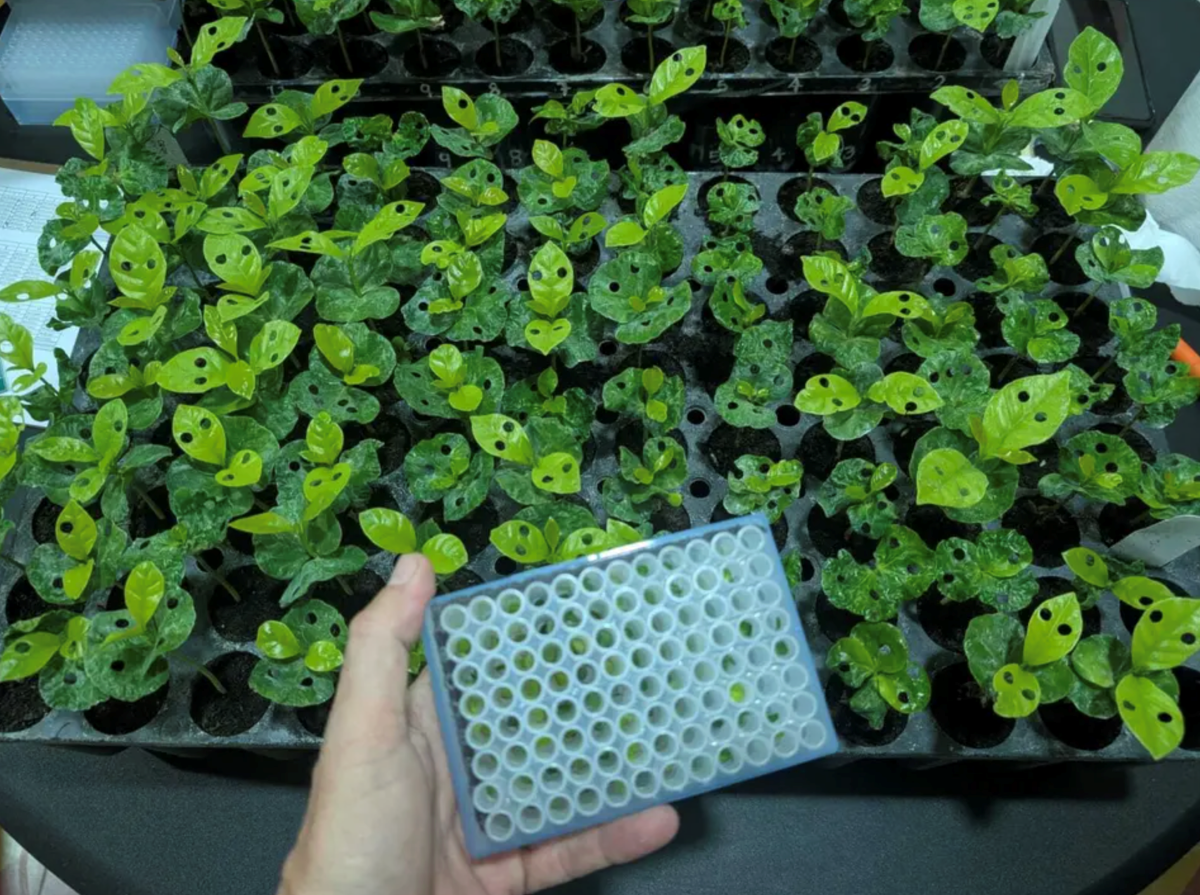
World Coffee Research announced a $1.5 million project to modernize coffee breeding. The initiative develops high-precision tools to make breeding faster, better, and cheaper. These tools will accelerate the creation of high-performing varieties for the next era of coffee.

Using molecular breeding approaches, breeding timelines can be shortened by half or more. The project is supported by a grant from the Foundation for Food & Agriculture Research. Industry partners Taylors of Harrogate and Coffee Circle are matching the investment.

Closing Coffee’s Innovation Gap

Other major crops have benefited from modern genomic revolutions. Coffee breeding has remained largely stuck in traditional methods. Record-high prices in 2025 reflect a profound underinvestment in coffee R&D. The industry faces a USD$126–405 million per year gap.

This underinvestment has left farmers vulnerable to evolving environmental stressors. More productive and resilient varieties are urgently needed. This project aims to address that gap directly.

Three Workstreams Drive the Research

The project includes three technical workstreams. Each targets a critical area of coffee breeding innovation.

Project Technical Workstreams
Workstream Focus Expected Impact
Arabica Marker Mapping Coffee leaf rust, berry disease, fruit rot, berry borer Faster disease resistance selection
Robusta Genotyping Tool 3,500 genetic markers for Coffea canephora Modern genetic roadmap for robusta
Breeder Training Genomic approaches for national breeders Global technology transfer

The first workstream focuses on arabica genetic markers. It targets devastating pests and diseases. These include coffee leaf rust, coffee berry disease, coffee fruit rot, and coffee berry borer. Together, these cause hundreds of millions in annual production losses.

The second workstream creates a foundational genotyping tool for robusta. Robusta now accounts for over 40% of global production. The tool utilizes 3,500 genetic markers. A similar tool for arabica was developed in 2025. It is already being used in the Innovea Global Coffee Breeding Network.

The third workstream trains national breeders from multiple origin countries. This ensures advanced tools integrate into local programs. The goal is delivering improved trees to farmers’ fields faster.

Global Scientific Partnership

The initiative leverages a global network of technical experts. In East Africa, WCR works with KALRO to advance tools for coffee berry disease resistance. The USDA-ARS at TARS in Puerto Rico conducts screening for coffee leaf rust and fungal pathogens. In Colombia, Cenicafé collaborates on berry borer marker development.

“Cenicafe is pleased to be part of this collaborative research program and to host plant breeders from around the world. The future of global coffee production and climate adaptation will depend on scientific excellence and the development of productive, resilient, high-quality varieties. Collaborative science ensures the best cup remains on the tables of millions.”

— Santiago Jaramillo, Scientific Director, Cenicafé

Industry Support for the Initiative

Keith Writer, Supply Director at Taylors of Harrogate, emphasized the importance of this work. “Taylors depends on the success of many origins around the world to source the high-quality coffee our customers love. Their success depends on coffee farmers having access to new, climate-resilient varieties as quickly as possible. Bringing coffee breeding into the future is essential for farmers and essential for our entire industry.”

Leadership Perspectives

Dr. Jennifer “Vern” Long, CEO of World Coffee Research, highlighted the project’s foundational nature. “Better coffee starts with better trees. This project is about building foundational technology that will benefit our entire sector. We are providing the industry with the insurance it needs to thrive.”

Dr. Kathy Munkvold, Scientific Program Director at FFAR, noted the broader impact. “This research will equip breeders with the tools they need to accelerate the development of improved coffee varieties, helping farmers reduce losses and strengthen productivity.”

Frequently Asked Questions

What is the goal of this $1.5 million project?The project aims to modernize coffee breeding through molecular tools, making breeding faster, better, and cheaper for the entire sector.

How much time can the new tools save?Molecular breeding approaches can shorten variety development timelines from 25-30 years by half or more.

What diseases are being targeted?The research targets coffee leaf rust, coffee berry disease, coffee fruit rot, and coffee berry borer.

Who are the project partners?Partners include FFAR, Taylors of Harrogate, Coffee Circle, Cenicafé, KALRO, and USDA-ARS.

What is the Innovea Global Coffee Breeding Network?It is a WCR network that uses shared science to advance coffee breeding goals globally. The arabica genotyping tool is already in use there.

Is this project using genetic modification?No, molecular breeding uses the plant’s natural genetic diversity without involving genetic modification.

WCR CEO Dr. Vern Long: The best coffee in the world hasn’t been grown yet

Qahwa World – Dubai |
May 15, 2026 |
4 min read

Dr. Jennifer “Vern” Long, CEO of World Coffee Research, said in two simultaneous messages – one in the organization’s annual report and another in an Instagram video – that “the best coffee in the world hasn’t been grown yet. It’s coming soon.” She confirmed that the innovative “coopetition” model between competing companies and governments has produced elite coffee genetics now growing in research fields on 4 continents.

In her annual report message, Long explained that WCR’s member companies built something unprecedented when they created World Coffee Research – a global collaborative organization that is creating the genetic infrastructure of the 200 billion dollar coffee industry. Genetics are the foundation of coffee’s future, she said, and the next generation of climate-resilient, high-quality varieties advancing through this system will expand what coffee agriculture can deliver.

Long described WCR’s collaborative networked nature as unparalleled. Governments that historically did not share directly with each other contributed their unique genetics and scientific knowhow to a single shared pool. Companies that compete in the marketplace banded together and contributed patient capital to drive the work forward, understanding that tree breeding operates on 10 to 15 year cycles. This coopetition model has delivered: elite genetics are now in research fields on 4 continents.

Regarding next steps, Long said WCR will explore what it takes to scale up and deploy these trees to farmers’ fields. The organization will continue innovating, using the same collaborative spirit that built the global genetics pipeline to design a model capable of ensuring last-mile distribution to farmers and sustaining research in perpetuity. “Better plants are coming. We’ll be ready,” she concluded.

In a separate Instagram video featuring Long’s voice, she said WCR continued in 2025 to create the future of coffee by uniting the global coffee industry to drive science-based agricultural solutions. “The future of coffee is arriving. The entire coffee sector is built from the harvest of the plant itself. When we get the plant right, everything else multiplies,” she said.

Long highlighted WCR’s work areas including coffee breeding networks, trial sites, improved seed systems, and global leadership programs. She invited the public to explore the report’s highlights and be part of WCR’s ongoing effort to create the future of coffee.

“The best coffee in the world hasn’t been grown yet. It’s coming soon. Our members and partners make it happen, and will help us define what comes next.”

— Dr. Vern Long, CEO of World Coffee Research

Source: World Coffee Research Annual Report 2025 + WCR official Instagram account
Prepared by: Qahwa World – Dubai
Publication date: May 15, 2026


World Coffee Research releases 2025 annual report


Qahwa World – Dubai |
May 14, 2026 |
7 min read |
Source: WCR Annual Report 2025

Executive Summary

  • World Coffee Research released its 2025 annual report covering January 1 to December 31, 2025
  • Innova Global Coffee Breeding Network named a TIME Best Invention of 2025
  • Network expands to include robusta coffee with six partner countries producing 64% of global robusta
  • 11 countries now in Innova network, producing 40% of world’s coffee supply
  • WCR aims to reduce breeding timeline from 30 years to 8 years using genetic markers
  • 10-year IMLVT trial results: Up to half of arabica land could become unsuitable by 2050 due to climate change
  • $4.96 million in industry contributions; $9.85 million total financial position
  • Seed system expansions in Peru, Uganda, Guatemala, Honduras to produce millions of new trees annually
  • WCR helped secure $175 million in U.S. funding for agricultural R&D including coffee

World Coffee Research (WCR) announced the release of its 2025 annual report on December 31, 2025, detailing the expansion of its TIME-recognized Innova Global Coffee Breeding Network into robusta coffee, new data showing that half of current arabica land could become unsuitable by 2050, and seed system expansions across four producing countries.

The report, which covers the period between January 1, 2025 and December 31, 2025, confirmed that WCR’s Innova network has expanded to include Coffea canephora (robusta) breeding, adding Vietnam and Ghana as new national partners. Six countries now participate in robusta breeding: Vietnam, Ghana, India, Indonesia, Rwanda, and Uganda, which together produce 64 percent of the world’s robusta supply. Overall, 11 countries make up the Innova network, producing 40 percent of global coffee supply.

An independent panel of global breeding experts commissioned by WCR’s board of directors reviewed the organization’s breeding programs in early 2025 and described the approach as a “radical step forward” that sets a new bar for coffee breeding worldwide. The Innova network was subsequently named a TIME Best Invention of 2025. The robusta breeding program combines multiple genetic groups, including a collection provided by French research institute CIRAD. Propagation began in 2025, and starting in 2027 each robusta partner will receive 1,000 unique new trees from WCR.

The report detailed that WCR is working to reduce coffee breeding timelines from the traditional 30 years to just 8 years. In 2025, the organization initiated a collaboration with Cenicafe, one of the world’s leading national coffee research institutions, and the U.S. Department of Agriculture Tropical Agricultural Research Station (USDA TARS) in Puerto Rico to develop low-cost genetic markers for Coffee Leaf Rust (CLR), the world’s most economically devastating coffee disease. In 2026, WCR will expand this work to cover Coffee Berry Disease (CBD), Coffee Fruit Rot (CFR), and Coffee Berry Borer (CBB). Once validated between 2025 and 2028, these markers will be publicly released through scholarly publication.

According to the report, 10-year results from the International Multilocation Variety Trial (IMLVT), launched in 2015 with 31 arabica varieties shared by 11 breeding programs, confirmed that coffee leaf rust resistance depends on both genetics and environment. A 2015 study by WCR and CIAT that guided site selection for the trial network identified that up to half of today’s arabica land could become unsuitable for coffee production by 2050. The IMLVT has identified high-performing varieties with strong rust resistance and stable yields. In 2026, WCR will launch CafeClima, a free online platform integrating climate modeling with IMLVT variety performance data to help farmers make data-driven replanting decisions.

WCR installed 10,000 F1 hybrid plantlets across 10 trial sites in Peru, Guatemala, and Costa Rica, planted directly in farmers’ fields through member-led trials. The report also detailed seed system expansions across four countries. In Peru, 10 new arabica seed lots were installed with 8 cooperatives, targeting 15 seed lots by 2028 producing up to 6 million seeds annually. In Uganda, 11 mother gardens for disease-resistant robusta were installed or expanded with national coffee institute NaCORI, targeting over 40 mother gardens by 2028 producing 560,000 trees per year. In Guatemala and Honduras, 12 new seed lots will be installed in 2026, producing 5.4 million seeds annually starting in 2029.

The report highlighted advocacy wins including $175 million secured in FY26 “hard earmarks” for international agricultural R&D through coordinated advocacy by U.S. member companies, with a legal requirement that a portion support coffee research. A separate coalition mobilized $850,000 for Uganda’s coffee future from UNIDO, JDE Peet’s, Lavazza Foundation and The J.M. Smucker Co.

According to the financial section of the report, total contributions earned from the coffee industry in 2025 was $4,962,000. The total year-end financial position reached $9,852,000. Figures are pre-audit. WCR confirmed the commitment of its 194 member companies from 30 countries, with 59 additional companies and individuals providing financial support in 2025. WCR’s knowledge products, including the Coffee Varieties Catalog, Sensory Lexicon, and nursery manuals, were viewed 239,722 times in 195 countries during 2025. The organization also installed a small-batch processing facility at its research farm in El Salvador, custom-designed for breeding programs to process samples from thousands of individual trees.

Frequently Asked Questions

What is the Innova Global Coffee Breeding Network?

It is the most ambitious and globally coordinated coffee breeding program in history, bringing together 11 countries to transform coffee breeding and create enhanced genetics at an accelerated pace.

What recognition did WCR receive in 2025?

The Innova network was named a TIME Best Invention of 2025, and an expert panel described WCR’s breeding approach as a “radical step forward” for coffee.

How will climate change affect coffee production according to the report?

A 2015 study by WCR and CIAT that guided the IMLVT trial network found that up to half of today’s arabica land could become unsuitable by 2050.

Which countries are part of the Innova robusta breeding program?

Vietnam, Ghana, India, Indonesia, Rwanda, and Uganda — which together produce 64 percent of the world’s robusta.

How many member companies does WCR have?

194 member companies from 30 countries, with 59 additional companies and individuals providing financial support in 2025.

What is CafeClima?

A free online platform launching in 2026 that integrates climate modeling with variety performance data to help farmers make data-driven replanting decisions.

Source: World Coffee Research Annual Report 2025
Report period: January 1, 2025 – December 31, 2025
Author: Qahwa World – Dubai
Publication date: May 14, 2026


Global Roadmap to Accelerate the Genetic Improvement of Robusta Coffee

Dubai – Qahwa World

At a time when the global coffee sector stands at a historic crossroads, the journal Frontiers in Plant Science has published one of the most significant research papers of the last decade. It is not merely an academic study but a “rescue document” for the future of coffee. The paper, led by Dr. Robert Kawuki, a Robusta breeding expert at World Coffee Research (WCR), with the participation of 14 researchers representing eight international programs across three continents, outlines for the first time a clear technological path to accelerate the genetic improvement of Robusta coffee (Coffea canephora).

  • Robusta: From “Alternative” to Economic “Pillar”

The face of the global coffee market has changed dramatically. While Robusta represented only 25% of global production in the 1990s, its share has jumped today to exceed 40%. This rise was not accidental; it came in response to the resilience of this species and its ability to withstand higher temperatures compared to the sensitive “Arabica.” However, the study emphasizes that Robusta did not receive its due share of research and genetic development throughout the last century, leaving it operating far below its potential productive and qualitative capacities.

  • Anatomy of Obstacles: Why Have We Been Delayed for Decades?

The study identifies the “wounds” that hindered the crop’s development, as researchers pinpointed three main obstacles:

Fragmentation of Genetic Resources: National breeding programs have operated in isolated islands, with an almost total absence of exchange of genetic material and shared data.

Long Breeding Cycles: The process of developing and distributing a new variety to farmers takes more than 20 years. The research describes this duration as “catastrophic” given the accelerating pace of climate change, which alters the farming environment within a single generation of farmers.

Weak Technical Investment: Robusta has remained reliant on traditional selection methods, while other crops have made massive leaps using genomics and artificial intelligence.

  • The Roadmap: A New “Operating System” for the Industry

The most important conclusion of the paper is the necessity of transforming coffee breeding from “research projects” into a “shared global infrastructure.” The recommendations are summarized in core points:

Demand-Led Breeding: For the first time, there is an emphasis on designing coffee varieties based on “Product Profiles.” This means the researcher must consider the farmer’s needs (high yield and resistance) and the market’s needs (sensory quality) before beginning the hybridization process.

Genetic Acceleration Technologies: The paper calls for the immediate integration of Genomics-assisted selection and digital phenotyping tools. These tools allow for the evaluation of thousands of seedlings in record time and with extreme accuracy, reducing the variety development cycle by more than 50%.

The 3-Year Rule: The study revealed a stunning technical result: evaluating a tree’s productivity in its first three years provides an accurate indicator of over 80% of its long-term performance. This discovery alone will save breeding programs years of unnecessary waiting.

  • The 64% Alliance: A Global Transcontinental Force

What gives this research paper immense executive credibility is the participation of researchers from countries that control 64% of the world’s Robusta exports: Vietnam, Brazil, Indonesia, India, Uganda, Ghana, and Rwanda. These partners now form the backbone of the “Innovea” global network, which seeks to unify genetic breeding efforts to serve as the “infrastructure” serving coffee farmers worldwide.

  • Final Recommendations to Ensure Supply Sustainability

The research paper concludes with an urgent call to decision-makers in the coffee industry: Investing in Robusta improvement is not a luxury; it is “insurance” against potential climatic collapse. The study recommends:

Increasing Sustainable Funding: Moving away from short-term grants toward building investment funds that support long-term breeding programs.

Enhancing Access Pathways: There is no benefit in innovating excellent varieties if they do not reach the farmer quickly and at an affordable price.

Cross-Border Collaboration: Breaking down barriers of secrecy and exchanging genetic resources is the only way to face shared global threats like “leaf rust” and drought.

Conclusion:

The future of global coffee is now linked to the seriousness of implementing this “roadmap.” Robusta is not just a “cheaper alternative” to Arabica; it is the crop that will carry the burden of sustaining the global cup in the coming decades, and scientific research is the only weapon we have to make this cup resilient, profitable, and of high quality.

UNIDO and Coffee Leaders Invest in Uganda Coffee Seed Systems

Dubai – Qahwa World

A coalition of international organizations and leading coffee companies has announced a major investment aimed at reinforcing Uganda’s coffee seed systems and improving farmer livelihoods. The initiative, led by United Nations Industrial Development Organization (UNIDO) and World Coffee Research (WCR), brings together industry partners including JDE Peet’s, The J.M. Smucker Co., and the Lavazza Foundation.

The partners have committed €850,000 to a three-year program designed to strengthen supply chain resilience in Uganda, Africa’s largest coffee exporter. The project operates under the Advancing Climate-Resilience and Transformation in African Coffee Programme, implemented by UNIDO with support from Italian development cooperation.

The initiative focuses on expanding access to high-quality, disease-resistant planting materials, a critical factor in improving productivity across Uganda’s coffee sector. Farmers in the country continue to face significant challenges from diseases such as coffee wilt disease in robusta, as well as coffee leaf rust and coffee berry disease affecting arabica varieties. Research indicates that adopting resistant coffee varieties can increase smallholder farmer profits by as much as 250 percent.

Central to the program is the establishment of new seed system infrastructure. This includes the development of robusta mother gardens and nurseries across northern, central, and western Uganda. These facilities are expected to produce up to 460,000 high-yielding, disease-resistant coffee trees annually, contributing to the country’s target of reaching 20 million bags of coffee production by 2030.

Ensuring the genetic quality of planting material is another key component. More than 5,000 robusta plants will undergo genotyping to guarantee consistency and performance. The program also prioritizes capacity building, working closely with national institutions such as Uganda’s Ministry of Agriculture and the National Coffee Research Institute to train technicians in advanced propagation methods and quality assurance practices. International training opportunities, including collaboration with leading research centers, are also planned.

To encourage adoption among farmers, demonstration plots will be established to showcase the performance of improved robusta lines and advanced arabica hybrids under local conditions.

The initiative builds on a broader roadmap for coffee research and development in Uganda, developed by national research bodies in collaboration with WCR. It also aligns with growing international support for increased public-sector investment in agricultural innovation, including commitments highlighted during the G7 Summit.

Industry leaders say the partnership reflects a shared commitment to securing the future of coffee production through collective action. By combining scientific research, public-sector support, and private-sector investment, the program aims to create a more resilient, productive, and sustainable coffee value chain in Uganda.

New Platform to Guide Climate-Smart Coffee Replanting

DUBAI – QAHWA WORLD

A new digital platform from World Coffee Research (WCR) aims to guide what the organization says is a $4 billion transition toward climate-resilient coffee production.

The platform, called CafeClima, was developed in partnership with the Alliance of Bioversity International and CIAT and is designed to help farmers, governments and investors decide which coffee varieties to plant as climate conditions shift. According to WCR, the tool integrates global performance data from coffee variety trials with advanced climate projections to support science-based renovation decisions.

  • Aging Trees, Rising Risk

WCR says billions of coffee trees planted decades ago are now past peak productivity, contributing to production losses that intersect with climate shocks, pests and disease pressure. Replacing those trees is not optional, the organization argues — but doing so without climate insight could compound risk.

“A coffee tree planted today is a 20-year investment,” WCR CEO Dr. Jennifer “Vern” Long said in a statement. “The only thing more costly than inaction is action without insight.”

According to WCR, coffee trees on roughly 4 million hectares already require replacement to sustain current production levels — an area comparable to the combined coffee-growing footprint of major producers including Brazil, Vietnam, Colombia and Ethiopia.

  • A $4 Billion Transition

The $4 billion figure referenced by WCR comes from a 2025 investment case by the international NGO TechnoServe, which estimates that transitioning to regenerative, climate-resilient coffee systems would require that level of investment over seven years.

WCR notes that governments and supply chain actors have invested an estimated $1.2 billion in renovation and rehabilitation efforts over the past two decades. However, those efforts have reached only about 5% of the world’s 11.5 million smallholder farmers who need new trees, according to the organization.

CafeClima is positioned as a tool to help de-risk this large-scale capital deployment by aligning renovation investments with climate science and field performance data.

  • From Data to Decision

The platform draws on performance results from WCR’s International Multi-Location Variety Trial, a decade-long research effort conducted with national coffee institutes in 18 countries. The dataset includes 26 widely grown varieties tested across diverse climatic conditions.

By pairing that performance data with climate projections developed by the Alliance of Bioversity International and CIAT, CafeClima allows users to assess which varieties are more likely to succeed under projected future conditions.

One feature highlighted by WCR is the use of “climate analogs” — current locations that resemble the projected climate of another region decades into the future. This enables users to visualize not only where coffee may remain viable, but which specific varieties have demonstrated resilience under similar conditions.

The tool is available in English and Spanish and is intended for agronomists, sustainability managers, policymakers and development funders, as well as farmers making replanting decisions at smaller scale.

  • A Shift Toward Predictive Planning

WCR describes CafeClima as part of a broader move from reactive, localized testing to predictive, globally informed planning in coffee production. Integrating climate modeling with breeding and field performance data, the organization says, is essential for perennial crops such as coffee, where varietal decisions shape farm outcomes for decades.

Development of the platform was supported by TechnoServe through funding from the United States Department of Agriculture, along with contributions from Taylors of Harrogate, Coffee Circle and more than 200 WCR member companies across 30 countries.

According to WCR, the goal is straightforward: ensure that billions of dollars expected to flow into coffee renovation over the coming years are invested in trees capable of withstanding tomorrow’s climate — not yesterday’s.

New Report by World Coffee Research on Seed Quality Assurance in Latin America

World Coffee Research (WCR) has recently released a comprehensive report focusing on seed quality assurance in the coffee sector, shedding light on opportunities to enhance the industry’s resilience.

The report delves into the status of seed lots across five key Latin American countries—El Salvador, Guatemala, Honduras, Nicaragua, and Peru—providing valuable insights for enhancing cleanup efforts, renovation strategies, and infrastructure development.

The absence of a formal coffee seed sector poses a significant, yet often overlooked, challenge for the global coffee industry. WCR’s technical report offers a detailed analysis of seed sources in the aforementioned countries, emphasizing the critical need for establishing robust infrastructure to ensure the availability and accessibility of genetically conforming and high-quality planting material for farmers.

Dr. Vern Long, CEO of WCR, emphasizes the importance of improved varieties in supporting successful coffee production and securing the industry’s supply chain. He highlights the strides made by partners in addressing quality assurance issues, which ultimately empower farmers to plant coffee trees with confidence, ensuring long-term performance and productivity.

The report underscores the diverse pathways through which farmers acquire planting material, ranging from informal exchanges to purchasing seedlings from local nurseries. However, the quality of these materials often falls short due to a lack of phytosanitary standards and genetic conformity, leading to diminished yields over the lifespan of coffee trees.

Informal propagation practices, such as seed selection based on perceived performance, contribute to genetic variability and unreliable plant characteristics. Moreover, discrepancies between expected and actual varieties further exacerbate productivity and profitability challenges for farmers.

A formalized seed sector would provide farmers with verified, high-quality planting material, thereby bolstering their economic viability. By facilitating access to higher-yielding and market-compliant coffee trees, such infrastructure holds the potential to uplift farming communities and enhance industry sustainability.

Opportunities and Challenges in Latin America:

Latin America’s reliance on smallholder coffee production underscores the need for tailored solutions to address regional nuances. While some countries boast specialized research programs, others struggle with regulatory frameworks and genetic contamination risks, necessitating concerted efforts to fortify the seed sector.

Under the USDA-funded MOCCA program, WCR conducted assessments across 52 seed plantations, evaluating genetic conformity and supporting cleanup efforts. The resulting report provides valuable insights into local seed lot practices, identifies promising seed sources, and informs strategies for enhancing nursery operations in the region.


World Coffee Research Boosts Uganda’s Coffee Production Goals through Nursery and Seed Lot Development

Dubai January 18, 2024(QW):In a significant stride towards achieving Uganda’s ambitious coffee production targets, World Coffee Research (WCR), in collaboration with the Uganda Coffee Development Authority (UCDA) and the Uganda National Coffee Research Institute (NaCORI), has been actively working on enhancing the country’s nursery and seed sector. The concerted effort aims to quadruple coffee production to 20 million bags by 2030, as outlined in Uganda’s Coffee Roadmap.

Over the past year, various initiatives have been undertaken, including the publication of open-access, localized training materials, workshops for nursery operators, evaluation and cleanup of seed lots, and the distribution of high-quality C. arabica and C. robusta seedlings across growing regions in Uganda.

Robert Adomati, UGACOF Field Officer, highlights the impact of supplying quality planting materials, stating, “increasing productivity, easing the accessibility of high-yielding varieties, and improving farmer incomes.”

The collaboration focuses on transforming Uganda’s coffee sector to benefit approximately 1.5 million households engaged in sustainable coffee farming. It aligns with the nine key initiatives of the Coffee Roadmap, with a goal to increase yields by 3-4 times compared to 2019-21 productivity rates and expand production land by 20%.

One of the primary challenges addressed is the mass propagation of improved planting material and seedling distribution. Uganda, a major producer and exporter of robusta coffee, faces hurdles in this process. WCR, in partnership with UCDA, is working to strengthen local nurseries to supply improved varieties, including 10 Coffee Wilt Disease (CWD)-resistant clonal lines, commercially released as NARO Kituza Robusta (KR) 1-10.

Funded by Strauss Coffee B.V. and WCR member companies globally, the project aims to deliver 100,000 healthy KR plants to farmers. In collaboration with UGACOF/Sucafina, nearly 50,000 KR plants have already been supplied to farmers in the Greater Masaka region, supporting the establishment of profitable and self-sustaining nurseries managed by coffee farmers.

Sjaak De Bloois, Head of Sustainability & Agronomy for UGACOF, expressed pride in the quick results of the partnership, with the remaining 50,000 plants set to be supplied in 2024. These farmers will also receive support for UCDA certification, ensuring compliance with local regulatory standards.

Furthermore, WCR, UCDA, and NaCORI are actively optimizing Uganda’s ability to propagate and grow robusta varieties. Training sessions for nursery operators and UCDA extension officers, along with the release of open-access educational resources, demonstrate a commitment to improving skills and knowledge in robusta nursery establishment and management.

Dr. Gerald Kyalo, Director of Agricultural Development Services for UCDA, emphasized the positive impact of the training sessions, stating, “The nursery training has contributed significantly to improving the skills of operators in the Masaka region, hence improving the quality of planting material being multiplied and sold to farmers.”

With these concerted efforts, Uganda is poised to not only meet but exceed its coffee production goals, ensuring sustainable growth for the coffee sector and the livelihoods of millions of Ugandan coffee farmers.


World Coffee Research CEO, Vern Long, provides an overview of the global robusta breeding program

Vern Long, the CEO of the World Coffee Research organization (WCR), has presented a brief overview of the global robusta breeding program led by the organization, along with her expectations for the coffee industry in the year 2024.

In a conversation with the “Global Coffee Report” about what can be anticipated for the coffee industry in 2024, Vern Long stated, “At the World Coffee Research organization (WCR), we believe that innovation in variety diversity – better plants reaching more farmers – will shape the future of coffee.” She emphasized that improved coffee varieties contribute to increased productivity for farmers, forest protection, and the creation of new experiences for consumers.

Vern Long explained that during the past year of 2023, the Innovea Global Coffee Breeding Network, a part of the World Coffee Research organization (WCR), successfully distributed 5000 genetically distinct Arabica coffee seeds to national coffee institutes worldwide. This marks the beginning of the next generation of coffee varieties aimed at supporting farmers, satisfying coffee enthusiasts, and ensuring future supply.

Revealing some plans for the current year 2024, Vern Long stated that WCR will initiate the first crosses in the newly established global robusta breeding program to guarantee a bright and secure future for robusta coffee.

She further explained that in 2024, the organization will conduct the initial crosses in a new global robusta breeding program to ensure that the future of robusta is bright and secure.

Vern Long highlighted that economists from Michigan State University measured the extent of the innovation crisis in the coffee industry during the past year of 2023. They revealed an investment gap in agricultural research and development for coffee amounting to approximately $452 million annually. She emphasized that this investment gap significantly contributes to the uncertainty faced by the industry regarding when and where future supply disruptions may occur.

To strengthen the industry in the coming years, Vern Long mentioned that WCR’s member companies, in collaboration with trade association partners, will continue to promote increased investment in agricultural innovation for coffee with the governments of coffee-consuming countries. This investment aims to provide the necessary support to enhance technical capabilities within research institutions in key coffee-producing countries, improving agricultural innovation systems to enhance productivity for farmers and reduce risks for the industry.

In conclusion, she expressed her hope and expectation that more companies will join the industry’s global efforts during the year 2024 to protect our favorite crop and our ability to enjoy our favorite beverage.