Uganda Projects 558,000-Ton Coffee Crop, a 15% Increase for 2025/2026

Kampala — Qahwa World

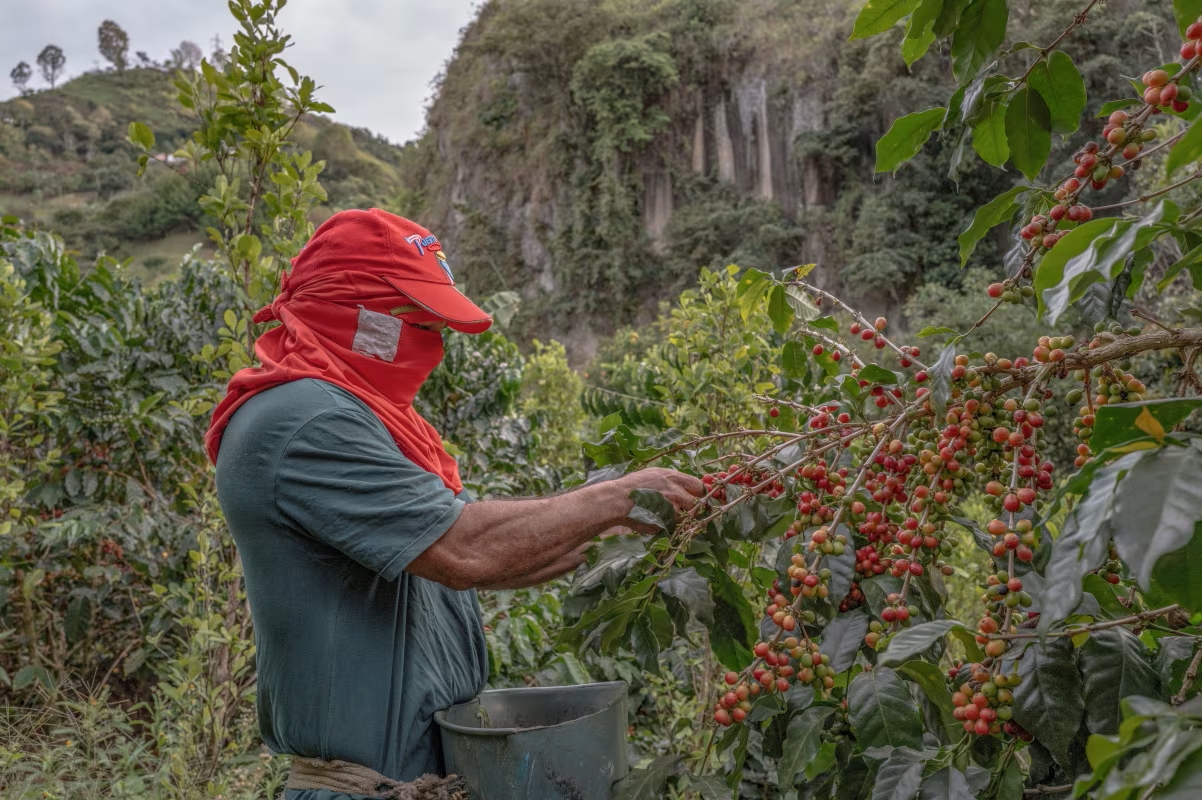
Uganda is forecasting a major rise in coffee production, projecting a 15% increase for the 2025/2026 crop year (October–September), as new coffee plantations begin to yield harvests, according to Gerald Kyalo, Commissioner of the Coffee Department at the Ministry of Agriculture.

The East African country—Africa’s leading coffee exporter—expects to harvest 558,000 metric tons, equivalent to 9.3 million 60-kilogram bags, up from 8.1 million bags in the previous season. The projection represents a 14.8% rise, or 72,000 tons more than last year’s output of 486,000 tons.

“The major reason is increased planting. Many farmers have planted coffee which we anticipate will come into production this year and will inevitably push up exports as well,” Kyalo told Reuters.

Over the past years, the government of President Yoweri Museveni has distributed free coffee seedlings to both new and existing farmers to expand their acreage or open up new farmland. Additionally, the government has been providing free fertilisers to help the country reach its ambitious target of producing 30 million bags annually by 2030.

Uganda predominantly grows the Robusta variety, though Arabica is also cultivated in highland regions. Production and export volumes have been climbing steadily, boosted by global coffee price gains and maturing new trees that have begun producing fruit.

In the 12 months to August 2025, Uganda earned $2.2 billion from coffee exports, up 57% from the previous year—a record performance that underscores the sector’s growing strength. Since the country exports nearly 95% of its coffee, the larger 2025/2026 crop is expected to further boost export revenues and consolidate Uganda’s position as a key player in the global coffee market.

With expanded planting, favourable weather, and strong global demand, Uganda continues to reinforce its status as one of Africa’s fastest-growing coffee producers—well on its path toward becoming a top global coffee powerhouse.

Matthias Kuhn: Good Water Makes Great Coffee

Abu Dhabi – Qahwa World

As part of the Qahwa World Talks series held on the sidelines of Abu Dhabi Food Week 2025, German water expert and hospitality professional Matthias Kuhn, from Hamburg, revealed one of the most overlooked elements in the world of coffee: water.

“When you look at a cup of coffee, 98% of it is water, and the quality of that water determines the quality of the coffee’s taste,” Kuhn said.

The True Foundation of Coffee

Kuhn emphasised that great coffee starts with what he calls “empty water”, meaning water that contains as few minerals and dissolved substances as possible.
“If the water is already full of minerals,” he explained, “it won’t be able to extract the flavours from the ground coffee properly. Think of it like a crowded metro train with no space for new passengers.”

He advised consumers to check the TDS (Total Dissolved Solids) level printed on bottled water labels, noting that the lower the number, the purer the water.
He added, “Mineral water isn’t as beneficial as people think. The minerals in it are too large for your body to absorb. Get your minerals from fresh fruits and vegetables, not from water.”

The Role of Temperature

Kuhn pointed out that water temperature plays a vital role in the extraction process. For manual brewing methods such as the V60, he said, the ideal temperature is around 96°C, warning that overly hot water can burn the coffee, especially in pressurised machines.

Water: The Secret to Winning Championships

Speaking about coffee competitions such as the AeroPress Championship, Kuhn made a striking observation: “You can win a championship simply by choosing the right water,” he said. “Water isn’t just an ingredient; it’s a decisive factor in performance.”

Health and Sustainability

Kuhn cautioned against using plastic bottles, explaining that water can absorb microplastics over time.
“Those who drink bottled water regularly consume the equivalent of one credit card’s worth of plastic every month,” he said.

He recommended using glass bottles and home filtration systems such as reverse osmosis to achieve cleaner, healthier water that enhances flavor and supports well-being.

Advice for Consumers and Coffee Professionals

For everyday coffee drinkers, Kuhn advised, “Invest in a good water filtration device. It will save you money, protect your health, and bring out the best in your coffee.”

For coffee professionals, his advice was equally clear: “Educate your customers and baristas about the importance of water. Even the finest beans and the best roasting lose their value if the wrong water is used.”

Kuhn concluded his talk by saying, “Water isn’t just a carrier; it’s the soul of coffee. When you combine excellent coffee with pure water, you’ll always have an exceptional cup.”

Vietnam’s Coffee Exports Hit Record Levels and Set Sights on New Growth in 2026

Ho Chi Minh  – Qahwa World

Vietnam has closed the 2024–2025 coffee season with unprecedented results, marking the highest performance in the history of its coffee industry. The country’s coffee export value reached USD 8.4 billion, according to the Vietnam Coffee and Cocoa Association (VICOFA), which held its annual conference on 24 October 2025 in Ho Chi Minh City, attended by representatives from the Ministry of Agriculture and Environment, exporters, and local producers.

Data released by the association shows that from October 2024 to September 2025, Vietnam exported over 1.5 million tons of coffee—an increase of 1.8 % in volume and 55.5 % in export value compared with the previous season. The average export price reached USD 5,610 per ton, up 52.7 % year on year.

Europe remained Vietnam’s largest export market, accounting for about 47 % of total shipments—more than 710,000 tons—valued at over USD 4 billion. Within that figure, the 27 European Union countries represented 40.1 % of the total exported volume and 39.4 % of export value, reaffirming the country’s strong foothold in European markets despite tightening sustainability regulations.

Speaking at the event, Hoang Trung, Deputy Minister of Agriculture and Environment, praised the industry’s achievements as a result of joint efforts among farmers, exporters, and government agencies to improve product quality and expand international market access. He reported that the total coffee cultivation area reached 731.9 thousand hectares, including 678.5 thousand hectares in production, while re-planted areas covered 20 thousand hectares, achieving 96.4 % of the national re-planting plan.

According to the deputy minister, favorable weather conditions and high coffee prices encouraged farmers to invest in intensive cultivation and rejuvenate plantations, leading to higher productivity and improved bean quality. Government estimates suggest that total coffee production could approach 2 million tons this year—an impressive achievement demonstrating Vietnam’s resilience amid global agricultural volatility.

A key highlight of the conference was the announcement that cooperation between VICOFA, government authorities, and international partners had resulted in the creation of a national traceability database covering 137,000 hectares of coffee farms, which is now being expanded to 462,000 hectares, or about 80 % of the total coffee area in the Central Highlands. Thanks to this initiative, the European Union has classified Vietnam as a “low-risk” country under the EUDR (Deforestation Regulation), requiring inspection of only 1 % of imported shipments. Trung described this classification as “a recognition of Vietnam’s transparency, accountability, and environmental responsibility within the coffee sector.”

He further noted that programs dedicated to specialty and high-quality coffee, as well as sustainable low-emission initiatives, have significantly contributed to increasing the added value of Vietnamese coffee and strengthening its brand identity on the global stage.

The report also showed that by mid-October 2025, Vietnam had already exported 1.27 million tons of coffee, valued at USD 7.21 billion—a 12.5 % rise in volume and more than 62 % growth in value compared with the same period a year earlier. This performance highlights a strategic shift from expanding output to enhancing value and quality, underscoring the success of Vietnam’s transformation from a commodity-based producer to a sustainability-driven exporter.

During the event, VICOFA projected that coffee production for the 2025–2026 season could increase by 10 % from the previous year if favorable weather continues. The association said that encouraging price levels had motivated farmers to increase investments in crop care and expand their cultivated areas, raising prospects for another strong season ahead.

Deputy Minister Hoang Trung outlined several key directions for sustaining growth and maintaining competitiveness:

  • Expand sustainable production by adopting international certification standards such as RA, 4C, FLO, and C.A.F.E. Practices.
  • Strengthen traceability and deep processing to reduce dependence on raw-bean exports.
  • Adopt low-emission cultivation techniques to cut fertilizer and pesticide use and promote water-efficient irrigation.
  • Diversify markets beyond Europe toward Asia and Southeast Asia, leveraging cross-border e-commerce opportunities.
  • Promote the “Vietnam Coffee” brand in specialty segments through global marketing and participation in exhibitions and trade fairs.
  • Foster stronger linkages across the supply chain—from farmers and cooperatives to processors and exporters—to ensure equitable and sustainable growth.
  • Enhance awareness and compliance with import-market requirements, especially environmental and traceability regulations under the EU EUDR.

The conference concluded with a shared conviction among participants that, with its robust agricultural base, growing commitment to sustainability, and rapidly improving quality standards, Vietnam is on course to strengthen its position as one of the world’s leading coffee exporters. As the new 2025–2026 season approaches, the sector looks set for further expansion, higher value, and record-breaking achievements in the years ahead.

Easing Weather Threats in Brazil and Vietnam Weigh on Coffee Prices

Dubai – Qahwa World

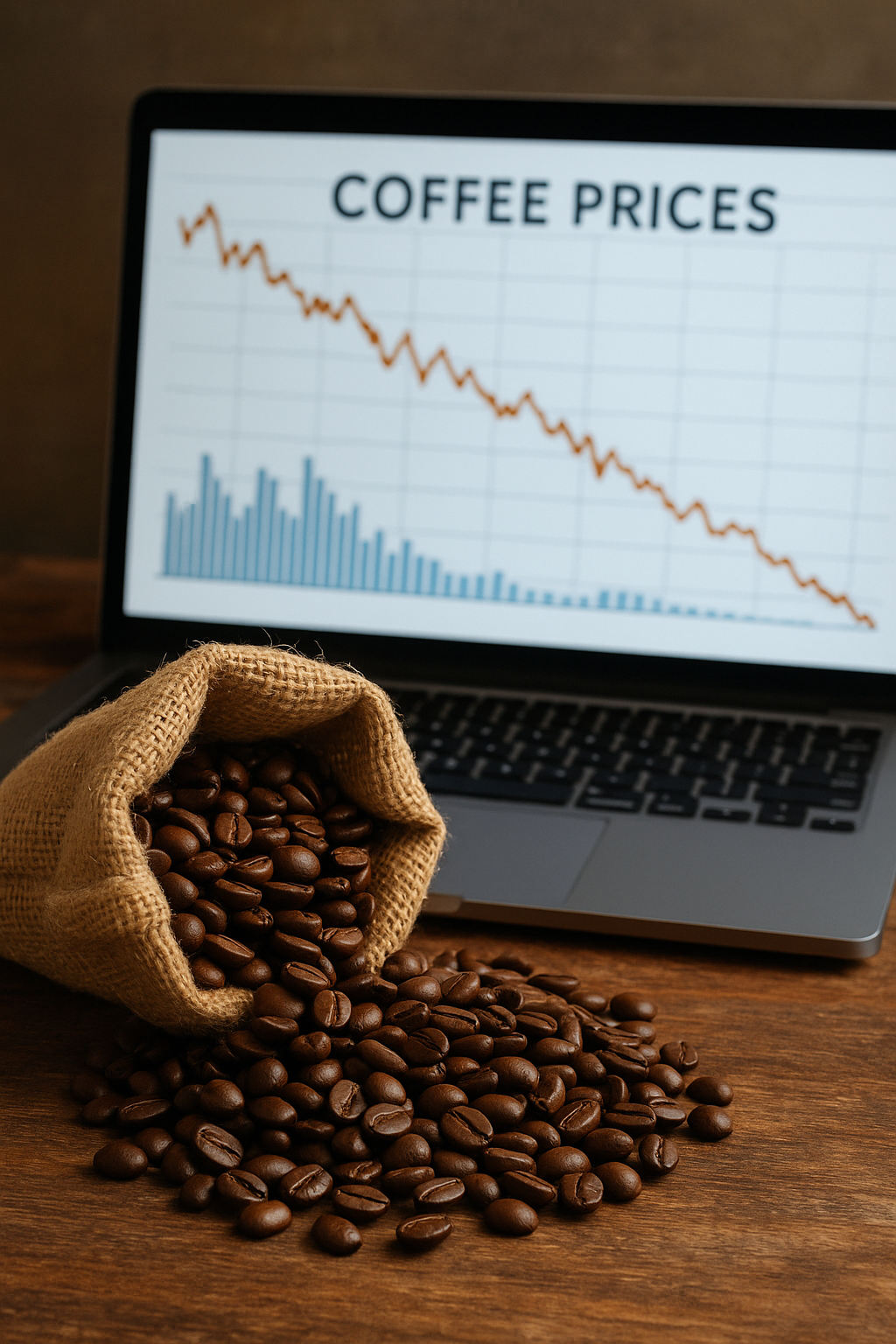
Coffee prices dropped sharply on Thursday after giving up early gains, with December Arabica down 2.54% and November Robusta falling 3.9%.

The decline came as weather conditions improved in two of the world’s largest coffee-producing countries. Forecasts from Brazil’s Climatempo predicted weekend rains across the coffee-growing regions, while Vietnam’s weather office reduced the likelihood of heavy rainfall from Tropical Storm Fengshen over the Central Highlands—its main coffee belt—lessening the risk of crop damage.

In Brazil, prices had earlier rallied on concerns over severe drought during the flowering phase of coffee trees, which is critical for the 2026/27 harvest. The state of Minas Gerais, the country’s largest Arabica-producing region, received only about 70% of its average rainfall in the past month.

In contrast, Robusta prices faced downward pressure following data from Vietnam’s National Statistics Office showing that the country’s coffee exports from January to September 2025 rose +10.9% year-on-year to 1.23 MMT. Production for 2025/26 is forecast to rise +6% to 1.76 MMT (approximately 29.4 million bags), the highest level in four years.

Lower inventories on the Intercontinental Exchange (ICE) provided only partial support. ICE-monitored Arabica stocks fell to a 19-month low of 465,910 bags, while Robusta stocks hit a 3-month low of 6,141 lots.

Optimism surrounding trade talks between the United States and Brazil also weighed on prices. Reports suggest discussions may lead to the removal of the 50% tariffs currently imposed on Brazilian imports, a move that could ease supply constraints in the U.S. market.

Meanwhile, International Coffee Organization (ICO) data showed that global coffee exports for the current 2024/25 season (October–August) rose +0.2% to 127.92 million bags, indicating ample supply.

Brazil’s crop forecasting agency Conab lowered its 2025 harvest estimate to 55.2 million bags (-0.9% from May), reducing Arabica output to 35.2 million bags (-4.9%).

According to the U.S. Department of Agriculture (USDA), global coffee production in 2025/26 is expected to rise +2.5% to a record 178.68 million bags, driven by a +7.9% increase in Robusta to 81.65 million bags, despite a -1.7% decline in Arabica output.

Trading company Volcafe projects a global Arabica deficit of 8.5 million bags for 2025/26—wider than the 5.5 million-bag shortfall recorded in 2024/25 and marking the fifth consecutive year of supply deficits.

EU Eases EUDR Rules to Ensure Smooth Rollout by 2025

Brussels – Qahwa World

The European Commission has announced adjustments to the EU Deforestation Regulation (EUDR) aimed at ensuring its timely implementation by 30 December 2025. The changes include lighter reporting requirements, deadline extensions for small businesses, and simplified due diligence obligations to reduce administrative complexity and IT system strain.

The EUDR, which targets commodities linked to deforestation such as coffee, cocoa, palm oil, paper, and wood, will require importers to prove that their products have not contributed to forest degradation anywhere in the world after 31 December 2020. Initially scheduled for December 2024, the regulation was postponed by one year to give coffee producers and other stakeholders additional time to comply.

Under the updated proposal introduced on 21 October 2025, micro and small enterprises will receive an additional 12-month extension to 30 December 2026. Large and medium-sized companies must still meet the 30 December 2025 deadline but will benefit from a six-month grace period for checks and enforcement. To streamline the process, the Commission will now require only a single due diligence statement across a product’s entire supply chain, easing the burden for businesses and simplifying data management within the EU’s internal systems.

The revised framework maintains that “upstream” operators—those first placing regulated commodities on the EU market—will continue to exercise due diligence. “Downstream” operators, typically traders handling products already imported into the EU, will no longer be obligated to submit separate compliance statements.

Environmental groups have cautiously welcomed the move, seeing it as a pragmatic step to avoid further delays, though some have expressed concern that the changes could weaken the regulation’s impact. “We reiterate our call to address the specific challenges millions of smallholders face in producing EUDR-compliant products and the disproportionate burden placed on their shoulders,” the Rainforest Alliance said in a statement.

The WWF offered a stronger critique, calling the decision “a shameful surrender to political pressure.” Anke Schulmeister-Oldenhove, Senior Forest Policy Officer at WWF, said the Commission’s reference to IT system issues “feels like a perfect scapegoat to water down the regulation.”

The proposed amendments will still need formal approval by the European Parliament and the European Council before implementation. If adopted, they would mark a significant shift in how the EU enforces environmental due diligence, with major implications for global trade in deforestation-linked commodities, including coffee.

Anatoly Gorbunov Reveals to Qahwa World the Story Behind the World’s Most Expensive Cup of Coffee

Dubai – Ali Alzakary

In September, Dubai witnessed an event that captured the attention of the global coffee community. The café chain Roasters Specialty Coffee House entered the Guinness World Records for setting a new global milestone — the world’s most expensive cup of coffee, priced at USD 680.

Behind this achievement lies not just an expensive beverage but a story of passion, persistence, and a pursuit of perfection. In an exclusive interview with Qahwa World, Anatoly Gorbunov, the General Beverage Director of the group, shared how this record was born.

From an Idea to a Dream

“It all began with our dream to obtain Esmeralda coffee from Panama,” recalls Anatoly. “This variety is considered one of the rarest and most expensive in the world. For several years, we tried to win it at auction, but each time the beans went to other buyers.

In January, our founder and CEO, Konstantin Harbuz, told me, ‘I want us to get this coffee, no matter what it takes. Use all your contacts.’

Anatoly adds, “It took less than a week of calls and searching before I found someone who had a small amount of it. After long negotiations, we bought three kilograms of this rare coffee, despite its high price—we wanted it badly, and we got it.”

A Special Presentation for a Special Coffee

“We introduced this coffee to the menu at one of our central branches on the Boulevard and planned every detail: handcrafted double-glass cups, a special dessert designed to match the coffee’s flavor profile.

Guests cannot order Esmeralda immediately — it must be reserved at least a day in advance. We invite our head roaster, and the preparation takes place right in front of the guest, as an individual, personalized service. Everything is accompanied by a story about the coffee’s origin, its rarity, and what makes it exclusive. It’s a true coffee performance.”

The Road to the Guinness Record

“In April, we started selling Esmeralda. At the end of the month, during one of our meetings, the idea came up: why not make all of Dubai hear about it? That’s when we decided to aim for a Guinness record,” says Gorbunov.

The team contacted the Guinness World Records organization. After verification, it turned out that the existing world record belonged to a coffee priced at only USD 140.
“We realized we had a real chance,” he explains.

To register the record, it was necessary to prove the price and justify it. “You can’t just make a cup of coffee and say it costs a million. We provided all the required proof — purchase receipts, auction results, reports from the point-of-sale system confirming real sales, and statements from independent witnesses.”

A Coincidence That Became Destiny

The record attempt was scheduled for August. It coincided with an important event — the annual Panamanian auction.
“I suggested we wait for the results. And indeed, the Esmeralda farm won in three categories and set a new record — about USD 30,000 per pound. It was perfect confirmation of the coffee’s value. We set the date — September 13.

That day, an official inspector arrived at our café. Everything took place under the supervision of two independent witnesses. Each detail was checked, every receipt confirmed. After the process, the inspector handed us the world record certificate. It was a historic moment for the entire team.”

Dubai on the Coffee Map of the World

“Following the event, we were honored to receive congratulations from Mr. Khalid Al Mulla., Chairman of the Specialty Coffee Association of the UAE,” Anatoly recalls. “He congratulated us and said this achievement was not only for our brand but for all of Dubai. The city officially entered the history of the global coffee industry.”

After that, dozens of media outlets wrote about Roasters Specialty Coffee House, and interest in Esmeralda increased dramatically.
“We were officially allowed to use the Guinness logo for six months — a rare right, since it’s a registered trademark. We placed it on our packaging, displayed certificates in all our branches. The result was enormous: brand awareness grew, guest traffic increased, and Esmeralda sales rose. People came specifically to try ‘the coffee from the Guinness Book.’”

Impact on the Team and the Industry

“For us, it wasn’t just a marketing success,” notes Gorbunov. “It changed the atmosphere inside the company. People felt proud and motivated. We started receiving many applications from those who wanted to train with us. We have a strong training program and our own academy, where baristas receive professional education.

We also organize internal competitions to discover new talents. It motivates the team and strengthens our collective spirit.”

The Pursuit of Perfection Continues

“We are not stopping with Esmeralda. Our menu already includes exclusive varieties — Colombia Wush Wush and Tutti Frutti. We are negotiating with a Japanese company that owns farms in Costa Rica, one of which has received the Cup of Excellence title.

We regularly buy coffee from Yemen and keep track of Jamaica Blue Mountain, one of the rarest coffees in the world — about 95 percent of Jamaica’s harvest goes to Japan. Our goal is to always have this coffee available in our cafés.”

“We also plan to participate in future auctions in Panama and Yemen, as well as those to be held in January during the World of Coffee Dubai exhibition,” he adds.

From Dubai to the World

Today, the network has nine operating branches in Dubai, and the tenth will open at Dubai Hills next week. By the end of the year, Roasters plans to open twelve cafés in total.
“We are preparing to expand into Abu Dhabi, Hong Kong, and London, and we see Saudi Arabia as a promising franchise market. We want Roasters to become a symbol of quality, innovation, and passion for coffee at the international level,” concludes Anatoly Gorbunov.

Coffee Prices Continue to Rise in Russia, with a Further Increase Expected in 2026

Moscow – Qahwa World

Coffee prices in Russia continue to rise alongside growing consumer spending on this daily beverage, which has become a symbol of modern lifestyle across the country. According to the financial platform Vyberu.ru, about one-third of Russians spend between 3,000 and 5,000 rubles per month on takeaway coffee. Around 11% of respondents buy coffee every day, 3% purchase it several times daily, while 27% do so three to five times a week. Nearly 30% of respondents said they don’t buy takeaway coffee at all.

The survey also revealed that 42% of consumers feel that coffee has little impact on their monthly budgets, while 26% say the growing prices have become a noticeable financial burden. According to Rosstat, the Russian Federal Statistics Service, the average price of a kilogram of instant coffee surpassed 4,000 rubles in September 2025, marking the highest level in the country’s history.

Market analysts predict that prices will continue to rise, with an additional 20–25% increase expected in 2026. Dmitry Gushchin, CEO of a Russian coffee production company, explained that the next wave of price growth will be driven mainly by currency fluctuations and new tax policies, rather than by global market changes. He added that the recent trade tensions reignited by U.S. President Donald Trump have also affected global coffee flows and tariffs, contributing to the anticipated rise.

“We expect coffee prices to increase by about a quarter in 2026. Even if New York and London exchange prices remain stable, currency swings and trade barriers will play a key role,” said Gushchin in an interview with Gazeta.ru.

He warned that new import tariffs in the U.S., the world’s largest coffee consumer, could reduce global demand and indirectly push up prices in Russia, especially if the ruble weakens against the dollar. Currently, 150 grams of instant coffee costs about 580 rubles, 250 grams of ground coffee about 656 rubles, and the same amount of roasted beans nearly 800 rubles.

Sergey Rumyantsev, founder of One Price Coffee, confirmed that the price surge began last year and reached its sharpest level in the past five decades. He emphasized that the current rise is less about global market fluctuations and more about domestic inflation and new tax measures.

Despite these pressures, experts agree that Russians are unlikely to abandon their daily coffee rituals. For many, coffee remains a source of comfort and focus — a small luxury that provides both energy and emotional satisfaction. As coffee culture continues to grow, analysts believe that in 2026, Russians will not only maintain their consumption levels but also increase their spending in line with global trends.

Peter Akingbade Crowned Champion of the UAE National Cup Tasters Championship 2025

Abu Dhabi – Qahwa World

Peter Akingbade, representing Barista Seed To Cup, has been crowned the Champion of the UAE National Cup Tasters Championship 2025, after an exceptional performance that demonstrated outstanding precision in distinguishing coffee flavors and identifying subtle differences among various cups.

Pratama Rakhmatullah from the Specialty Coffee Association of Indonesia claimed second place, while Sherryl Inocencio Napit, founder of The Ore Coffee Roastery, secured third place.

The award ceremony was held at the conclusion of the championship in the presence of Khalid Al Mulla, President of the Specialty Coffee Association of the UAE, who honored the winners and presented the trophies, alongside Saeed Al Baloushi, a board member of the association, and several representatives of local and international coffee roasters and cafés.

The competition took place over three consecutive days as part of the Global Food Week at the Abu Dhabi National Exhibition Centre (ADNEC), with the participation of 84 competitors representing the country’s most skilled coffee professionals, baristas, and tasters — in what was one of the most intense and technically demanding editions to date.

In a statement to Qahwa World, Saeed Al Baloushi said, “This year’s competition showcased an exceptional level of professionalism and focus. Participants demonstrated remarkable sensory skills in evaluating coffee based on flavor, consistency, and aroma. Winning the title requires not only experience but also precise sensory control and mental focus — qualities that the champion mastered perfectly.”

Al Baloushi added that the winner will represent the United Arab Emirates at the World Cup Tasters Championship 2026, scheduled to take place in Thailand in May, noting that this achievement reflects the UAE’s growing prominence in the global specialty coffee community.

Trump Faces Bipartisan Backlash Over Coffee Tariffs

Washington, D.C. – Qahwa World

A bipartisan group of U.S. lawmakers is urging President Donald Trump to exempt coffee imports from new reciprocal tariffs that have driven up consumer prices nationwide.

Representatives Ro Khanna (D-CA) and Don Bacon (R-NE) sent a joint letter to the White House requesting that coffee be added to the list of goods excluded under Executive Order 14257, arguing that tariffs on a commodity the U.S. scarcely produces only hurt consumers.

“We respectfully request your administration exempt coffee from reciprocal tariff measures that are drastically increasing its price,” the lawmakers wrote. “Given that our nation consumes around 400 million cups per day, this is one modest but meaningful way to help the American people.”

According to the Bureau of Labor Statistics, coffee prices in the U.S. rose 20.9% year-over-year in August 2025. The National Coffee Association reports that roughly 99% of all coffee consumed in the country is imported, mainly from Latin America and Africa.

Trump’s “Liberation Day” tariffs aim to level global trade terms, but coffee — not listed among exempt goods — has seen costs rise sharply. Khanna and Bacon note that Hawaii and Puerto Rico produce only small specialty quantities, representing less than 1% of domestic consumption.

“Tariffs on coffee do not protect domestic businesses and interests—they only raise costs and amount to an additional tax on American consumers,” the letter said. “It is not practical to tariff a product that our nation does not meaningfully produce.”

The lawmakers warned that higher import costs are forcing small coffee shops and hospitality businesses to raise prices or close altogether. Khanna, whose district covers Silicon Valley, said he regularly hears from café owners struggling to stay afloat.

The two legislators also recently introduced the “No Coffee Tax Act”, seeking to repeal coffee-related tariffs entirely. Bacon, who will retire from Congress next year, called the policy “a punishment to Americans,” adding, “There is no American alternative to coffee — why tariff something we can’t grow?”

A White House spokesman, Kush Desai, responded that the President had already included coffee among goods eligible for tariff-free treatment under certain trade deals, and blamed global supply disruptions in producing regions for recent price hikes.

Despite that clarification, the bipartisan pressure reflects growing unease over the wider economic impact of Trump’s tariff agenda — from agricultural exports to daily consumer goods such as coffee, a staple for two-thirds of American adults.

Starbucks to Hire Thousands of New Managers by 2026

Seattle – Qahwa World

Starbucks has unveiled a large-scale hiring initiative to appoint full-time Assistant Store Managers (ASMs) in all of its company-operated stores across the United States and Canada by the end of 2026. The plan represents one of the most significant structural workforce expansions in the company’s recent history.

At present, only about 20 % of the 11,400 company-owned Starbucks outlets in North America have an ASM. Most of these roles have been part-time and experience relatively high turnover. Moving forward, Starbucks intends to assign a full-time ASM to every location, creating roughly 9,000 new positions across its network.

The company began piloting the full-time version of this role in mid-2025 at select stores in California, Illinois, and Texas. During that trial, 62 full-time ASMs were appointed — 90 % of them promoted from within. Starbucks now plans to maintain that internal-promotion rate as it scales up the initiative, aiming for 90 % of all retail leadership roles to be filled by existing employees by 2028.

According to Sara Kelly, Starbucks’ Chief Partner Officer, the ASM position will help store managers devote more time to coaching teams and elevating the customer experience — a key objective of the company’s “Back to Starbucks” plan.
“When we have strong, stable leaders throughout every shift, everything improves — from partner satisfaction to customer connection and overall store performance,” Kelly said in the company’s statement.

The new full-time ASMs will assist store managers with day-to-day operations such as staff scheduling, inventory control, and store coordination. Starbucks expects the added managerial stability to enhance workflow efficiency and strengthen in-store culture.

This hiring campaign coincides with CEO Brian Niccol’s broader effort to revitalize Starbucks’ brand identity and restore the “coffeehouse atmosphere” that helped make the company famous. Under his leadership, the chain has been phasing out stores focused purely on mobile orders and pickup, which Niccol described as “overly transactional.”

In July 2025, Starbucks announced plans to shut down all pickup-only locations in the U.S. by year-end. Then, in September, Niccol revealed that hundreds of underperforming stores across North America would close because they were not suitable for remodeling within the “Back to Starbucks” framework.

Introduced in October 2024, the strategy focuses on bringing warmth and comfort back to the brand’s physical spaces. Newly redesigned stores in New York and Southern California — featuring softer lighting, cozy seating, vibrant artwork, and ceramic serveware — have shown early signs of higher customer traffic and longer visits. Encouraged by those results, Starbucks plans to refurbish around 1,000 U.S. outlets, about 10 % of its company-owned stores, by July 2026.

The announcement also follows Starbucks’ recent financial update. For the third quarter ending 29 June 2025, the company reported U.S. revenue of $6.45 billion — up 1 % year-over-year — despite a 2 % decline in comparable-store sales. The coffee chain is scheduled to release its fourth-quarter and full-year earnings on 29 October 2025.

The hiring surge marks a notable contrast to the store closures outlined earlier in the year. While trimming less viable locations, Starbucks is simultaneously investing in people and training to reinforce its long-term operational foundation. Executives say the move reflects confidence in the brand’s future and a belief that improving leadership at every level will ultimately drive better results for both employees and customers.

New Study: Coffee May Help Reduce the Risk of Frailty with Age

Dubai – Qahwa World

A recent study published in the European Journal of Nutrition has revealed that drinking between four to six cups of coffee a day may be associated with a lower risk of frailty among older adults — suggesting that this beloved beverage could play a greater role in maintaining health as we age.

According to the study, coffee has for centuries been linked to its distinctive aroma and ability to boost alertness. Today, however, researchers affirm that its impact goes beyond that — potentially helping to strengthen the body as it grows older.

Based on data from the Longitudinal Aging Study Amsterdam, which followed more than 1,100 individuals aged 55 and above for seven years, the research found that those who regularly drank between four and six cups of coffee per day were less likely to be classified as frail than those who drank two cups or fewer.

The researchers measured frailty using the Fried Frailty Phenotype, which evaluates five major indicators: unintentional weight loss, fatigue, reduced muscle strength, slow walking speed, and low physical activity.

The analyses showed that:

Those who drank more than four cups daily had about a 60% lower likelihood of being frail compared to those who drank fewer than two cups.

Those who consumed between two and four cups daily also showed a reduced long-term risk of frailty.

A clear decrease was observed in cases of muscle weakness and unintended weight loss among regular coffee drinkers.

Although the study does not prove that coffee directly causes lower frailty rates, it provides strong evidence of a protective link that merits further scientific investigation.

Why Coffee Might Help?

Scientists believe the secret lies in coffee’s rich composition of bioactive compounds. Coffee contains polyphenols, antioxidants, and caffeine, which help combat inflammation and oxidative stress — two key processes that accelerate ageing and weaken muscles and tissues.

Coffee also supports heart and vascular health, improves metabolism, and boosts physical activity, making it a potential factor in maintaining physical resilience and delaying age-related decline.

The Importance of Caution

Experts emphasize that these findings are observational and do not provide definitive proof of a cause-and-effect relationship between coffee consumption and reduced frailty risk. Other lifestyle or dietary factors could influence the results.

The researchers also noted that a “cup” in the study was defined as 125 milliliters, smaller than the typical serving size in many countries. Therefore, moderation is advised, and coffee intake should not exceed 400 milligrams of caffeine per day — equivalent to three to five cups — as recommended by the European Food Safety Authority.

The effects of coffee may vary depending on individual health conditions and caffeine tolerance. It is therefore advisable to consult a doctor before significantly increasing daily intake, especially for those with sleep disorders, heart problems, or anxiety.

This study adds a new chapter to the long and storied history of coffee. From the rituals of Sufi monks in Yemen to the cafés of Europe and the Arab world, coffee has long symbolized cultural and spiritual connection. Today, it seems to offer yet another dimension — the potential to support healthy ageing.

The researchers concluded that moderate coffee consumption is associated with improved physical health and a lower risk of frailty among older adults, reinforcing coffee’s position as a drink that unites both pleasure and benefit. Coffee, it seems, is not only a source of warmth and flavor — it may also be a companion to good health and a path toward an active, independent old age.

Intense Competition at the 2025 UAE National Cup Tasters Championship

Abu Dhabi – Qahwa World

The 2025 UAE National Cup Tasters Championship continued for the second consecutive day as part of Global Food Week, held at the Abu Dhabi National Exhibition Centre (ADNEC). The event brought together 84 experts, including some of the country’s finest baristas, tasters, and coffee professionals representing leading cafés and roasteries across the UAE. The competition witnessed fierce rivalry and sharp fluctuations in contestant rankings based on performance.

Organized by the Specialty Coffee Association of the UAE (SCA UAE), the championship is one of the country’s most prominent coffee competitions, bringing together top professionals and coffee enthusiasts to test their ability to identify flavors and subtle distinctions among different coffee profiles, in line with international standards set by World Coffee Events.

Saeed Al Balushi, Board Member of the Specialty Coffee Association of the UAE, said that the competition is far from easy, noting that participants undergo rigorous sensory tests to evaluate coffee based on flavor, aroma, and consistency, with the goal of determining the most accurate and professional taster.

He added that winning the title is no simple task; even highly skilled participants must demonstrate exceptional professionalism and deep expertise in coffee tasting and sensory analysis. The challenge lies in identifying the best cup among 16 coffees sourced from different countries, with varying roast levels and processing methods — a task that demands extraordinary precision and focus.

Al Balushi emphasized that victory requires not only knowledge and experience but also strong emotional control, heightened sensory awareness, and total concentration, without distractions that could affect performance.

He concluded by confirming that the championship winner, to be announced tomorrow at the closing ceremony, will represent the UAE at the World Cup Tasters Championship, scheduled to take place in Thailand in May 2026.