Maryam Tabatabaei: A Journey of Passion in Dubai’s Specialty Coffee Scene

Source: Qahwa World – Exclusive Interview |
Author: Ali Alzakary |
Date: June 17, 2026

Maryam Tabatabaei: A Journey of Passion in Dubai’s Specialty Coffee Scene

Key Takeaways:

  • Maryam Tabatabaei is a specialty coffee expert, holding certifications in coffee evaluation, training, roasting, and competition judging.
  • She believes training is at the core of her work and finds the greatest reward in seeing trainees grow and succeed in the coffee industry.
  • She founded The Coffee Atelier as a learning space that combines professionalism with creativity.
  • She defines specialty coffee as quality, transparency, and respect for everyone in the coffee chain – not just high cost or complexity.
  • She believes coffee is a means of connection across cultures, and that hospitality and passion are universal values.
  • Her advice to those who love coffee but doubt their career prospects: start learning, stay curious, and be patient.

Maryam Tabatabaei is one of the experienced professionals in Dubai’s specialty coffee scene. She holds multiple certifications in coffee evaluation, training, roasting, and competition judging. Her work spans several areas: training, roasting, judging, and sensory analysis.

In this interview, Maryam talks about her beginnings with coffee, her experience in training, her perspective on Dubai’s coffee scene, and her advice for those who aspire to work in this field.

We invite you to read the interview and learn from her experience.

Do you remember the first coffee that truly surprised you?

Absolutely. It was the first time I tasted a naturally processed specialty coffee with intense fruit notes. Until then, coffee was simply coffee to me. Discovering flavors like berries, tropical fruits, and chocolate in a single cup completely changed my understanding of what coffee could be.

When did you realize coffee was going to become more than just a job for you?

I realized it when I started teaching others. Seeing students become passionate about coffee and watching their skills develop gave me a sense of purpose beyond making drinks. That’s when coffee became a lifelong journey rather than just a profession.

What still excites you about coffee today?

Coffee never stops teaching me something new. Whether it’s a new origin, a unique processing method, or helping someone discover a flavor they’ve never experienced before, there is always something new to explore.

You work in education, roasting, judging, and sensory. Which part feels most like you?

Training feels most like me. I enjoy sharing knowledge and helping people grow. Roasting and judging are incredibly rewarding, but seeing students gain confidence and succeed in their coffee careers is what fulfills me the most.

What’s something people misunderstand about specialty coffee?

Many people think specialty coffee is about being expensive or complicated. In reality, it’s about quality, transparency, and respect for everyone involved in the coffee chain – from the farmer to the person preparing the cup.

Has coffee changed the way you see people or culture?

Definitely. Coffee has allowed me to connect with people from many different countries and backgrounds. It has taught me that while cultures may differ, hospitality, passion, and the desire to connect over a cup of coffee are universal.

What was going through your mind during the roasting championship?

A mixture of excitement, focus, and responsibility. I knew every decision could affect the final result. At the same time, I reminded myself to trust my training, experience, and understanding of the coffee.

Do you still get nervous judging competitions or teaching students?

Yes, and I think that’s a good thing. A little nervousness means I care about doing my best. Whether I’m judging a competition or teaching a class, I want to give participants the attention and respect they deserve.

What’s the most rewarding moment you’ve had with a student?

Seeing a former student become a successful coffee professional and knowing I played a small part in their journey. Those moments remind me why education is so important.

What kind of atmosphere did you want to create with The Coffee Atelier?

I wanted The Coffee Atelier to be a place where people feel comfortable learning, asking questions, and developing their skills. A place that combines professionalism with creativity and genuine passion for coffee.

Dubai’s coffee scene is growing fast. What makes you hopeful about it?

The level of curiosity and commitment I see from young professionals. More people are interested in quality, training, and understanding coffee deeply rather than simply following trends. That gives me a lot of hope for the future.

What advice would you give someone who loves coffee but doubts they can make a career from it?

Start learning, stay curious, and be patient. The coffee industry offers many paths beyond being a barista. If you’re passionate and willing to keep improving, there is absolutely a place for you in this industry.

After all the certifications and competitions, what does a “good cup of coffee” mean to you now?

A good cup of coffee is one that creates a meaningful experience. Technical perfection matters, but ultimately, a great coffee is one that brings enjoyment, connection, and appreciation for the work behind it.

When you’re not analyzing coffee professionally, how do you actually enjoy drinking it?

I prefer simple brewing methods that allow me to relax and enjoy the coffee without overthinking it. Sometimes I just want to sit quietly and appreciate the cup rather than analyze every flavor note.

What keeps you motivated to continue learning in coffee?

The fact that coffee is a world without an endpoint. There is always another origin to explore, another technique to learn, and another person to inspire. That endless opportunity for growth keeps me motivated every day.

This interview offers insight into Maryam Tabatabaei’s experience in the specialty coffee world, her professional journey, and her perspective on training and development. We invite you to read the full interview and benefit from her expertise.

Interview conducted by: Qahwa World – with Maryam Tabatabaei, specialty coffee expert and founder of The Coffee Atelier in Dubai.

All rights reserved. Republication with attribution permitted.

Publication date: June 17, 2026

Coffee Prices Continue to Rise Supported by Brazil Harvest Delays and El Niño Risks

Source: Barchart – Adapted by Qahwa World |
Author: Qahwa World |
Date: June 17, 2026

Coffee Prices Continue to Rise Supported by Brazil Harvest Delays and El Niño Risks

Key Takeaways:

  • Arabica prices rose 2.85% to a two-week high, robusta gained 1.36% to a five-week high.
  • Rainfall expected in Brazil may delay the harvest and reduce immediate supplies.
  • ICE arabica inventories fell to 397,242 bags – the lowest level in seven months.
  • El Niño risks threaten the critical flowering period in Brazil (September-October) and could impact the 2026/27 crop.
  • USDA forecasts a record Brazil 2026/27 crop of 71.9 million bags (+14% y/y).
  • Vietnam’s exports rose 7.9% in the first five months of 2026, with production expected at 29.4 million bags (+6%).
  • Shipping disruptions in the Strait of Hormuz are increasing transport costs and supporting prices.

Coffee prices continued to rise on Tuesday, supported by concerns that persistent rainfall in Brazil could delay the country’s coffee harvest. July Arabica futures gained 2.85%, while July Robusta futures advanced 1.36%. Arabica reached a two-week high, while robusta climbed to its highest level in five weeks.

The rally comes despite expectations of a record Brazilian crop, as the market appears to be focusing on immediate supply-side factors, including weather and declining inventories.

Harvest Delays Raise Supply Concerns

Weather remains a key driver of the market. Forecasting company Vaisala expects moderate to heavy rainfall across Brazil’s major coffee-growing regions this week, potentially slowing harvesting activities and delaying supplies reaching the market. Further supporting prices, ICE-monitored arabica inventories have been trending lower for the past three months. Arabica stocks fell to 397,242 bags on Monday, the lowest level in nearly seven months. Robusta inventories, however, have recovered from a two-year low of 3,631 lots recorded on May 15, rising to 3,991 lots.

Indicator Value Change
July Arabica Futures +2.85% Two-week high
July Robusta Futures +1.36% Five-week high
ICE Arabica Stocks 397,242 bags Seven-month low
ICE Robusta Stocks 3,991 lots Recovered from two-year low

El Niño Risks Loom Over Next Year’s Crop

Market participants are also monitoring the development of an El Niño weather pattern, which could affect Brazil’s next coffee crop. Coffee trader Volcafe has warned that El Niño could delay the arrival of seasonal rains during Brazil’s critical flowering period in September and October, potentially impacting the 2026/27 harvest. The US National Oceanic and Atmospheric Administration (NOAA) estimates a 67% probability of a strong El Niño event this year. Meanwhile, the Japan Meteorological Agency has confirmed that El Niño conditions have developed across the equatorial Pacific. Such weather patterns can trigger droughts, floods, and temperature extremes that may disrupt coffee production in both South America and Asia.

Large Crops Continue to Weigh on the Market Despite Temporary Gains

Despite recent gains, the broader market remains under pressure from expectations of abundant coffee supplies. Earlier this month, arabica futures fell to a 19-month low, while robusta touched a two-month low after forecasts pointed to a record Brazilian crop. On June 3, the USDA’s Foreign Agricultural Service (FAS) projected Brazil’s 2026/27 coffee production at a record 71.9 million bags, up 14% from the previous year. Rabobank also increased its forecast for the global arabica surplus in 2026/27 to 9.5 million bags, up from 7 million bags previously. In addition, Cecafé reported that Brazil’s green coffee exports rose 4.2% year-on-year in May to 2.73 million bags.

Indicator Value Change
USDA Brazil 2026/27 Crop Forecast 71.9 million bags +14%
Rabobank Global Arabica Surplus 9.5 million bags (was 7 million)
Brazil Green Coffee Exports (May) 2.73 million bags +4.2%

Vietnam Expands Exports and Production, Adding Pressure on Prices

Vietnam, the world’s largest robusta producer, continues to increase exports, adding further pressure to prices. According to Vietnam’s National Statistics Office, coffee exports during the first five months of 2026 reached 922,000 metric tons, up 7.9% from the same period a year earlier. Full-year exports in 2025 rose 17.5% to 1.58 million metric tons. Vietnam’s 2025/26 coffee production is also expected to increase by 6% year-on-year to 1.76 million metric tons, equivalent to approximately 29.4 million bags. This increase in production and exports adds further supply to the global market, particularly in the robusta segment.

Shipping Disruptions Support Prices

Geopolitical tensions affecting shipping routes have also contributed to market strength. Disruptions to traffic through the Strait of Hormuz have increased freight rates, insurance premiums, fuel costs, and fertilizer prices, raising costs throughout the coffee supply chain. This geopolitical factor adds an additional layer of support to prices, as these higher costs are passed on to importers, roasters, and ultimately consumers.

Global Production Outlook and Inventories Point to a Delicate Balance

The International Coffee Organization (ICO) reported that global coffee exports during the current marketing year (October–September) totaled 138.66 million bags, slightly down 0.3% from the previous year. Meanwhile, the USDA’s FAS projects global coffee production in 2025/26 to reach a record 178.85 million bags, up 2% year-on-year. The forecast includes arabica production of 95.52 million bags (-4.7%) and robusta production of 83.33 million bags (+10.9%). The USDA estimates Brazil’s 2025/26 coffee crop at 63 million bags, down 3.1% from the previous year, while Vietnam’s production is expected to rise 6.2% to 30.8 million bags. Global ending stocks are forecast to decline by 5.4% to 20.15 million bags in 2025/26, compared with 21.31 million bags in 2024/25, indicating that inventories may remain relatively tight despite rising production.

Indicator 2025/26 Year-on-Year Change
Global Coffee Production 178.85 million bags +2.0%
Arabica Production 95.52 million bags -4.7%
Robusta Production 83.33 million bags +10.9%
Ending Stocks 20.15 million bags -5.4%

Frequently Asked Questions About Coffee Price Movements

Q: Why are coffee prices rising despite expectations of a record crop in Brazil?

A: Because of immediate factors such as harvest delays due to rain, inventories falling to a seven-month low, and concerns about El Niño impact on next year’s crop.

Q: How does El Niño affect coffee prices?

A: El Niño could delay flowering rains in Brazil during September-October, potentially damaging the 2026/27 crop and supporting higher prices.

Q: How do Vietnam’s exports influence prices?

A: Rising Vietnamese exports increase robusta supply, which puts downward pressure on prices.

Q: What is the current level of exchange inventories?

A: ICE arabica stocks fell to 397,242 bags (a seven-month low), while robusta stocks rose to 3,991 lots from a two-year low.

Q: Will prices continue to rise?

A: It depends on weather developments in Brazil, El Niño risks, ongoing shipping disruptions, and the scale of the expected surplus from the record crop.

The coffee market remains caught between immediate bullish factors (harvest delays, falling inventories, El Niño risks, shipping disruptions) and structural bearish factors (record crop expectations, rising Vietnamese production and exports). All eyes remain on weather developments in Brazil to determine the next direction for prices.

Prepared and edited by: Qahwa World – Based on a Barchart report.

All rights reserved. Republication with attribution permitted.

Publication date: June 17, 2026

Starbucks Korea to Close Stores for History Training After ‘Tank Day’ Controversy

Source: Reuters – Adapted by Qahwa World |
Author: Qahwa World |
Date: June 16, 2026

Starbucks Korea to Close Stores for History Training After ‘Tank Day’ Controversy

Key Takeaways:

  • Starbucks Korea will close all its stores nationwide at 3 PM next Monday for employee training on historical awareness and social sensitivity.
  • The decision follows a controversial marketing campaign that used the terms “Tank Day” and “5/18” to promote coffee tumblers, evoking the 1980 Gwangju military crackdown.
  • The backlash led to the dismissal of Starbucks Korea CEO Son Jung-hyun.
  • This is the first time since Starbucks entered the South Korean market in 1999 that all stores have closed early on the same day.
  • Shinsegae Group, the operator of Starbucks Korea, said Chairman Chung Yong-jin and other senior executives will attend separate training sessions on Wednesday.
  • South Korea is Starbucks’ second-largest market outside the US, with more than 2,000 stores nationwide.

Starbucks Korea will close all of its stores early next week to allow employees to participate in history education and social awareness training after a marketing campaign sparked widespread public criticism.

The decision follows a controversy last month when Starbucks Korea launched a promotional campaign that unintentionally referenced one of the most painful events in South Korea’s modern history. The campaign used the terms “Tank Day” and “5/18” to promote a series of coffee tumblers. Many South Koreans viewed the wording as an insensitive reference to the military crackdown on the pro-democracy uprising in Gwangju on May 18, 1980.

Historic Closure and Unprecedented Training

In a statement released on Monday, Shinsegae Group, the operator of Starbucks Korea, announced that all Starbucks outlets nationwide will close at 3 p.m. next Monday so employees can participate in “historical awareness and social sensitivity” training. According to the company, this will be the first time since Starbucks entered the South Korean market in 1999 that all stores across the country have closed early on the same day.

Shinsegae Group also said that Chairman Chung Yong-jin and other senior executives will attend separate training sessions on Wednesday. “The initiative is intended to learn from this incident and help prevent similar situations from occurring across the group in the future,” the company said.

Date Event
May 18, 1980 Military crackdown on the Gwangju Uprising
May 2026 Controversial “Tank Day” and “5/18” campaign launched
May/June 2026 CEO Son Jung-hyun dismissed
Next Monday (3 PM) All stores close for historical training
Next Wednesday Executive leadership training sessions

Background: The Painful Memory of the Gwangju Uprising

The Gwangju Uprising remains a defining moment in South Korea’s democratic movement. Led largely by student protesters opposing the military rule of Chun Doo-hwan, the uprising was violently suppressed when troops were deployed to regain control of the southwestern city.

The event became a major catalyst for South Korea’s democratization, culminating in the country’s first free presidential elections in decades in 1987 after years of military-led governments. Official figures place the death toll at more than 200 people, although activists and historians have argued that the true number may have exceeded 2,000.

South Korea: Starbucks’ Second-Largest Global Market

South Korea is one of Starbucks’ most important international markets, with more than 2,000 stores nationwide. It is the company’s second-largest market outside the United States, after China. This extensive presence makes any marketing misstep or incident involving cultural and historical sensitivity have significant repercussions for the company’s global reputation.

Starbucks’ response was swift and decisive. Headquarters described the incident as unintentional but acknowledged that it should never have occurred. The controversy led to the dismissal of Starbucks Korea CEO Son Jung-hyun.

Indicator Value
Number of stores in South Korea Over 2,000 stores
Global ranking outside the US Second (after China)
Year of market entry 1999

Frequently Asked Questions About the Starbucks Korea Crisis

Q: What was the “Tank Day” controversy that triggered the crisis?

A: A marketing campaign by Starbucks Korea used the terms “Tank Day” and “5/18” to promote tumblers, evoking the painful memory of the 1980 Gwangju military crackdown.

Q: Why is “5/18” a sensitive date in South Korea?

A: May 18, 1980, marks the start of the military suppression of the pro-democracy Gwangju Uprising, which cost hundreds (possibly thousands) of civilian lives.

Q: What action did Starbucks Korea take after the controversy?

A: It dismissed its CEO and announced an early closure of all stores for employee training on historical awareness and social sensitivity.

Q: Is this the first time Starbucks has closed all its stores in South Korea?

A: Yes. Since entering the market in 1999, this is the first time all stores have closed on the same day.

Q: Why is South Korea important to Starbucks globally?

A: South Korea is Starbucks’ second-largest market outside the US, with over 2,000 stores, ranking second only to China.

The Starbucks Korea crisis highlights the critical importance of cultural and historical sensitivity in global marketing campaigns. In an era where brands operate across borders, deep understanding of local contexts and history has become an essential necessity, not an optional extra. Closing stores for training is a bold step that reflects the company’s commitment to learning from the mistake and preventing its recurrence.

Prepared and edited by: Qahwa World – Based on a Reuters report.

All rights reserved. Republication with attribution permitted.

Publication date: June 16, 2026

Coffee Market Between Today’s Tightness and Tomorrow’s Abundance: How May 2026 Numbers Reveal a Sharp Disconnect

Source: Qahwa World analysis – based on the International Coffee Organization (ICO) May 2026 report |
Author: Qahwa World |
Date: June 14, 2026

Coffee Market Between Today’s Tightness and Tomorrow’s Abundance: How May 2026 Numbers Reveal a Sharp Disconnect

What Is Happening in the Coffee Market Today?

  • The coffee market is living a stark contradiction: spot inventories are shrinking while record surplus expectations are rising.
  • NY‑certified arabica stocks plunged 13.5% to 0.48 million bags – a multi‑month low.
  • At the same time, Brazil raised its 2026/27 production forecast to a record 66.7 million bags, with arabica alone jumping 28% y/y.
  • The market is pricing based on “future abundance” expectations, ignoring current physical tightness.
  • This disconnect creates a highly volatile environment: any additional disruption could trigger a sharp price spike.
  • Importers and roasters face a strategic dilemma: how to balance immediate supply needs against the risk of a price collapse later.

If you look at the May 2026 coffee market figures, you will find yourself facing two completely different markets inside one. The first market talks about shrinking inventories falling to multi‑month lows, about difficulties in securing immediate supplies. The second market promises a record surplus driven by an exceptional Brazilian crop that could reshape the global balance for years.

This contradiction is not just a statistical curiosity. It reflects a deep crisis of confidence between what exists today and what the market expects tomorrow. In this analysis, we examine the main features of this disconnect and explore its consequences for importers, roasters, and decision‑makers in the global coffee industry.

1. Inventories Are Crashing – A Warning Signal That Cannot Be Ignored

Despite all the talk about a surplus, the ICO numbers point to a very different reality on the ground. In May 2026, NY‑certified arabica stocks plunged 13.5% to just 0.48 million bags – the lowest level in months. Similarly, London‑certified robusta stocks remained near two‑year lows.

What this number means is simple: immediate physical supply of high‑grade coffee is running out. The market is currently suffering from genuine pressure on available stocks. This is not a reflection of weak production, but rather the result of several interacting factors: supply chain disruptions, slower deliveries, and possibly traders preferring to hold back inventory in anticipation of higher prices.

What is striking is that these shrinking stocks have not yet translated into a sharp price rally. That is exactly what deserves attention.

2. Brazil Announces a Historic Season – A Surplus That Could Rewrite the Rules

On the opposite side of the equation, CONAB raised its forecast for the 2026/27 Brazilian crop to a record 66.7 million bags. Beyond the headline number, the most striking figure is the huge jump expected in arabica production alone: up 28% year‑on‑year to 45.8 million bags.

This leap is not just a number on a table. It is the main factor feeding market expectations of a large surplus that could reach 10 million bags in coffee year 2026/27. Since the market is currently pricing based on “tomorrow’s expectations” rather than “today’s realities”, this massive number is the primary driver of the downward pressure we have seen on prices in recent months.

Indicator Trend Implication
Exchange stocks (NY arabica) ▼ 13.5% Acute spot tightness Brazil production forecast (arabica) ▲ 28% Expected future surplus ICO Composite Indicator (I‑CIP) ▼ 3.8% Pricing based on expectations, not reality

3. The Paradox – Why Are Prices Ignoring Current Physical Tightness?

Here lies the hardest question: why are prices not rising in response to falling spot inventories? The answer reflects a fundamental shift in how the market is pricing. It seems that traders are now basing their decisions on long‑term future expectations rather than current realities. The record Brazilian crop forecast appears so heavy that it overshadows all immediate scarcity signals.

This shift in market behavior is not necessarily healthy. It creates a condition of high fragility. If for any reason that record crop fails to materialise – drought, floods, logistical disruptions – the market will suddenly face two painful realities at once: already depleted spot inventories and a surplus that never arrived. The likely outcome would be a sharp price spike that could catch everyone off guard.

4. What This Means for Importers and Roasters – A Strategic Dilemma

For importers and roasters, this paradox creates one of the most difficult strategic dilemmas imaginable:

  • On one hand: Spot inventories are tight and prices remain historically high. The need to secure immediate supplies is urgent.
  • On the other hand: Any long‑term supply contract signed today could become a heavy burden if the record surplus materialises and prices collapse in the second half of the year.
  • The bottom line: Everyone is waiting. Buyers are waiting for a price collapse that may not come. Sellers are waiting for a rally that may not happen. The market is suspended in an uncomfortable grey zone.

The most prudent strategy at this time may be short‑term diversification rather than long‑term commitments. Flexible supply contracts, phased purchasing in small increments, and close monitoring of weather developments in Brazil may be the wisest approach in this uncertain phase.

5. The Market Is Pricing a Fiction, but Reality May Have Its Own Say

The disconnect we see today between falling spot inventories and record surplus expectations is not merely a statistical anomaly. It reflects a change in market psychology. Traders have heavily bet that the record Brazilian crop will satisfy all demand and more. But history teaches us that weather, logistics, and supply chains do not always follow optimistic scenarios.

If the surplus materialises as expected, prices may face further downward pressure. But if the Brazilian crop is negatively affected by weather or El Niño, the market could sharply refocus on the reality of tight spot inventories, generating an unexpected upward spike. In either case, caution remains the most important watchword.

Frequently Asked Questions About Coffee Market Contradictions

Q: How can inventories fall while the market expects a surplus at the same time?

A: Inventories reflect the immediate present. Surplus expectations are based on the future Brazilian crop. The time gap between present and future is the source of the contradiction.

Q: Why are tight inventories not pushing prices higher?

A: Because the market is currently focused on “future abundance” expectations. Those heavy expectations weigh on prices and prevent them from reacting to current tightness.

Q: What is the most likely scenario for the coming months?

A: High volatility will be the main theme. Any weather or logistical development could sharply change the price direction in either direction.

Q: What do you advise importers and roasters at this time?

A: Avoid long‑term commitments. Use short‑term, flexible contracts. Monitor weather developments in Brazil very closely.

Q: Could we see a price collapse soon?

A: Not necessarily. Low inventories provide a floor that could prevent a major collapse even if a surplus materialises.

The coffee market today tells a complex story that cannot be understood through a single number. It is a story of a market torn between a tight present and an abundant future. The true professionals are those who can read between the lines and see that the greatest risk may not be the surplus itself, but the surprises that might appear on the road to it.

Analysis by Qahwa World – Based on the International Coffee Organization (ICO) market report for May 2026.

All rights reserved. Republication with attribution permitted.

Publication date: June 14, 2026

International Coffee Organization Releases Coffee Market Report for May 2026

Source: International Coffee Organization (ICO) – May 2026 Report |
Author: Qahwa World |
Date: June 13, 2026

International Coffee Organization Releases Coffee Market Report for May 2026

Key Takeaways:

  • The ICO Composite Indicator Price (I‑CIP) averaged 256.05 US cents/lb in May 2026, down 3.8% from April.
  • Brazilian Naturals fell 6.4% to 293.73 US cents/lb, while Robustas rose 1.1% to 166.51 US cents/lb.
  • ICE‑certified Arabica stocks fell 13.5% to 0.48 million bags – a multi‑month low.
  • CONAB raised its Brazil 2026/27 production forecast to a record 66.7 million bags, with Arabica up 28% y/y.
  • Global green bean exports declined 1.9% in April 2026 to 10.51 million bags, while Robusta exports rose 11.2%.
  • Vietnam’s April 2026 exports jumped 12.1% to 3.41 million bags – the country’s largest April volume on record.
  • The New York–London futures arbitrage narrowed 13.1% to 116.39 US cents/lb, reflecting improved Brazil arabica prospects.

The International Coffee Organization (ICO) published its monthly coffee market report for May 2026, showing a continued downward drift in prices as expectations of ample supply strengthened. The ICO Composite Indicator Price (I‑CIP) averaged 256.05 US cents/lb in May 2026, a 3.8% decrease from April 2026. The market continued to react to an improved supply outlook, reinforced by CONAB’s reaffirmation of a record outlook for Brazil’s production in crop year 2026/27.

Despite the decline, prices remain relatively elevated by historical standards. The drop reflects growing market expectations of a possible global surplus in coffee year 2026/27, combined with harvest pressure from Brazil and persistent backwardation in financial markets.

Group Indicator Performance: Arabicas Decline, Robustas Edge Up

Colombian Milds averaged 323.45 US cents/lb in May 2026, down 3.3% from April. Other Milds fell 4.8% to 315.42 US cents/lb. Brazilian Naturals dropped 6.4% to 293.73 US cents/lb – the steepest decline among the groups. In contrast, Robustas rose 1.1% to 166.51 US cents/lb.

On the futures markets, New York arabica futures fell 5.8% to 268.18 US cents/lb, while London robusta futures gained 0.8% to 151.79 US cents/lb. The arbitrage between the two futures markets contracted by 13.1% to 116.39 US cents/lb, highlighting in particular the improving prospects for arabica production in Brazil.

Group May 2026 (US cents/lb) Change vs April
ICO Composite 256.05 -3.8%
Colombian Milds 323.45 -3.3%
Other Milds 315.42 -4.8%
Brazilian Naturals 293.73 -6.4%
Robustas 166.51 +1.1%

Certified Stocks at Multi‑Month Lows

ICE‑certified robusta stocks fell 0.1% from April to May 2026, closing the month at 0.64 million bags. US‑certified arabica stocks also declined, dropping 13.5% to 0.48 million bags – the lowest level in months. The continued drawdown in certified stocks suggests persistent market uncertainty, as nearby contract premiums are not yet high enough to incentivize deliveries into certified warehouses.

CONAB Forecast: Record Brazil 2026/27 Crop

In mid‑May, Brazil’s National Supply Company (CONAB) released its second crop survey. It raised the total 2026/27 production forecast by about 0.5 million bags to a record 66.7 million bags. Arabica production was increased by 1.67 million bags to 45.8 million bags (+28% y/y). Robusta production was cut by about 1.2 million bags to 20.9 million bags (still a +0.8% y/y increase). CONAB also reported a 3.9% increase in coffee area to 2.34 million hectares, with yields rising to 34.4 bags per hectare. However, CONAB noted that carry‑over stocks remain low and highlighted continued growth in global demand, which tempered some of the market’s bearish sentiment.

Green Bean Exports: Overall Decline, Robusta Growth

Total global green bean exports reached 10.51 million bags in April 2026, down 1.9% from 10.71 million bags in April 2025. All coffee groups recorded declines except Robustas. Details:

  • Colombian Milds: down 14.0% to 0.78 million bags.
  • Other Milds: down 1.1% to 2.31 million bags.
  • Brazilian Naturals: down 14.8% to 2.91 million bags.
  • Robustas: up 11.2% to 4.50 million bags.

As a result, the Arabicas’ share of total green bean exports for the first seven months of coffee year 2025/26 fell to 60.4%, down from 64.2% in the same period a year earlier.

Group April 2026 (million bags) Change vs April 2025
Colombian Milds 0.78 -14.0%
Other Milds 2.31 -1.1%
Brazilian Naturals 2.91 -14.8%
Robustas 4.50 +11.2%

Regional Performance: Asia & Oceania Lead Growth

Total exports of all forms of coffee (green, soluble, roasted) fell 0.9% to 12.05 million bags in April 2026 compared with 12.17 million bags in April 2025. Regional dynamics were mixed:

  • Asia & Oceania: Up 7.3% to 4.64 million bags, led by Vietnam. Vietnamese exports jumped 12.1% to 3.41 million bags – the country’s largest April export volume on record.
  • Africa: Down 22.1% to 1.54 million bags, driven by sharp declines in Ethiopia and Uganda.
  • South America: Down 1.2% to 3.99 million bags, with Colombia recording its fifth consecutive monthly decline.
  • Caribbean, Mexico & Central America: Up 3.3% to 1.88 million bags, led by Honduras (+23.0%).

Price Volatility and El Niño Risks

The intra‑day volatility of the I‑CIP averaged 8.8% in May 2026, down 0.2 percentage points from April. Volatility for Brazilian Naturals and Robustas also declined, while Colombian Milds volatility increased slightly. On the futures markets, New York arabica volatility stood at 10.2%, and London robusta volatility at 10.1%.

The US National Oceanic and Atmospheric Administration (NOAA) estimates an 82% probability that El Niño conditions will emerge between May and July, with a 67% chance of a “Super El Niño”. Such a pattern could delay Brazil’s September‑October 2026 flowering rains, potentially damaging the 2026/27 crop. However, the impact of El Niño in Brazil is complex – it can be positive or negative depending on region, intensity, and timing.

Frequently Asked Questions About the ICO May 2026 Coffee Market Report

Q: What is the ICO Composite Indicator Price?

A: It is a weighted average of the four ICO group indicator prices (Colombian Milds, Other Milds, Brazilian Naturals, and Robustas).

Q: Why did arabica prices fall while robusta prices rose in May 2026?

A: Arabica fell due to record Brazil crop expectations, while robusta demand remained strong amid Red Sea shipping disruptions.

Q: What do falling certified stocks indicate?

A: They suggest that nearby contract premiums are not high enough to encourage deliveries into warehouses, reflecting persistent market uncertainty despite surplus expectations.

Q: How could El Niño affect coffee prices?

A: A “Super El Niño” could delay flowering rains in Brazil and damage next year’s crop, which would support higher prices. But the effect varies by region.

Q: What is the expected global coffee surplus for 2026/27?

A: CONAB’s record Brazil crop points to a significant surplus, but low carry‑over stocks and strong demand may limit its size.

The global coffee market remains caught between large surplus expectations on one hand, and low inventories, El Niño risks, and supply chain disruptions on the other. The ICO’s May 2026 report confirms that 2026 will be a pivotal year for the world’s coffee balance.

Prepared and edited by: Qahwa World – Based on the International Coffee Organization (ICO) market report for May 2026 (CMR-0526).

All rights reserved. Republication with attribution permitted.

Publication date: June 13, 2026

Coffee Prices Jump as Persistent Rain in Brazil Delays the Coffee Harvest

Source: Barchart (adapted) |
Author: Coffee World |
Date: June 12, 2026

Coffee Prices Jump as Persistent Rain in Brazil Delays the Coffee Harvest

Key Takeaways:

  • July arabica rose 2.17% and July robusta rose 3.19% to one‑week highs.
  • Moderate to heavy rain is forecast across Brazil’s coffee regions this week and may extend into next week.
  • ICE arabica inventories fell to a 6.5‑month low of 402,709 bags.
  • Concerns over a “Super El Niño” that could damage Brazil’s 2026/27 coffee crop are supporting prices.
  • The USDA FAS forecasts a record Brazil 2026/27 crop of 71.9 million bags, up 14% y/y.
  • Vietnam’s coffee exports rose 7.9% in January‑May 2026, adding bearish pressure.
  • The ongoing closure of the Strait of Hormuz continues to disrupt supplies and support prices.

Coffee prices jumped to one‑week highs today amid concerns that persistent rain in Brazil will delay the coffee harvest. July arabica futures rose 2.17%, while July robusta futures gained 3.19%. Forecaster Vaisala said moderate to heavy rainfall is forecast across Brazil’s coffee‑growing regions this week, and the showers could extend into next week.

The rally comes after arabica hit a 19‑month low on Tuesday, driven by expectations of a bumper Brazilian crop. However, the current rains have renewed worries about harvest delays and quality.

Persistent Rain Threatens to Delay Brazil’s Harvest

According to Vaisala, moderate to heavy rain is expected across Brazil’s coffee regions this week, with the potential to continue into next week. This could disrupt harvesting activities that have already begun and affect bean quality. Delayed harvests typically lead to a higher proportion of defective beans and lower overall quality, reducing the supply of high‑grade coffee in the market. As a result, futures prices rose sharply, with short covering amplifying the move.

Exchange Inventories Fall to Multi‑Month Lows

ICE arabica coffee inventories fell to 402,709 bags on Wednesday, a 6.5‑month low. Meanwhile, ICE robusta inventories remained near a two‑year low at 3,713 lots. The decline in inventories supports prices by signaling tight near‑term supplies.

“Super El Niño” Threatens Brazil’s 2026/27 Crop

Concerns are growing that an El Niño weather pattern could hurt Brazil’s coffee crop next year. Coffee trader Commercial said El Niño may delay rains in Brazil during September and October, the period when tree flowering normally occurs, damaging the 2026/27 crop. The US National Oceanic and Atmospheric Administration (NOAA) estimates a 67% probability of a “Super El Niño” this year, which could be the strongest on record. On Wednesday, the Japan Meteorological Agency confirmed that an El Niño pattern has formed across the equatorial Pacific, setting the stage for months of floods, droughts, and temperature fluctuations that could hinder coffee production in Asia and South America.

Source Brazil 2026/27 Crop Forecast (million bags)
USDA FAS 71.9 Coffee Trading Academy 71.4 Marex Group 75.9 Sucafina 75.4 StoneX 75.3

Vietnam Exports and Surplus Forecasts Cap Gains

On the other hand, large surplus expectations still loom. Last Wednesday, the USDA FAS forecast a record Brazil 2026/27 crop of 71.9 million bags, up 14% y/y. Rabobank raised its 2026/27 global arabica surplus estimate to 9.5 million bags from 7.0 million bags previously. Vietnam’s coffee exports rose 7.9% in the first five months of 2026, and its 2025/26 production is projected to climb 6% to 29.4 million bags. These factors limit the upside for prices in the longer term.

Type 2025/26 Forecast (million bags) Year-on-Year Change
Arabica 95.52 -4.7%
Robusta 83.33 +10.9%
Global Total 178.85 +2.0%

Strait of Hormuz Closure Supports Prices

The ongoing closure of the Strait of Hormuz continues to disrupt global coffee supplies, supporting prices. The closure has tightened supplies by raising shipping rates, insurance, fertilizer, and fuel costs, increasing costs for importers and roasters. This geopolitical factor adds another layer of uncertainty to the market.

Frequently Asked Questions About Coffee Price Moves

Q: Why did coffee prices jump today?

A: Because of forecasts for heavy rain in Brazil’s coffee regions, which could delay the harvest and affect quality.

Q: How does El Niño affect coffee prices?

A: El Niño could delay rains in Brazil and damage tree flowering, reducing next year’s crop and supporting higher prices.

Q: How do Vietnam’s exports influence prices?

A: Higher Vietnamese exports increase robusta supply, which tends to cap price gains in the medium term.

Q: What is the current level of exchange inventories?

A: ICE arabica inventories fell to 402,709 bags, a 6.5‑month low; robusta inventories near two‑year lows.

Q: Will prices continue to rise?

A: It depends on weather developments in Brazil, the severity of any El Niño impact, and geopolitical tensions.

The coffee market faces heightened uncertainty. While large surplus expectations remain in the background, current rains, El Niño risks, and Strait of Hormuz disruptions are reshaping the balance. Investors are closely watching weather developments in Brazil and inventory trends.

Prepared and edited by: Coffee World – Based on a Barchart report by Rich Asplund (adapted).

All rights reserved. Republication with attribution permitted.

Publication date: June 12, 2026

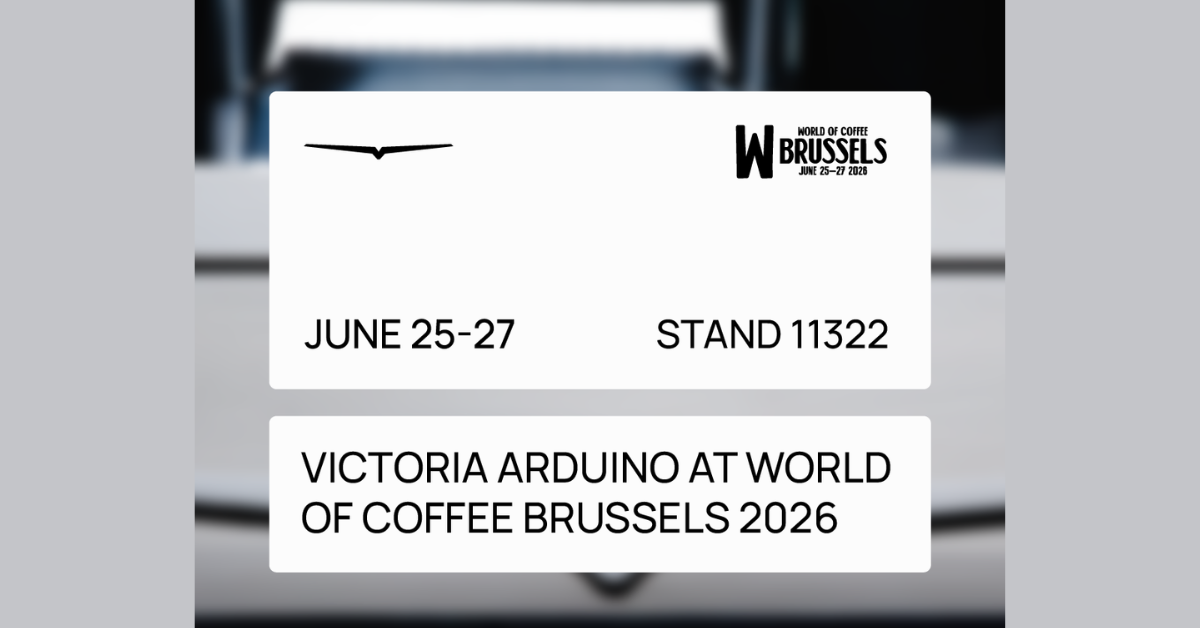
Victoria Arduino Unveils RECORD: Redefining Professional Espresso in 2027

Source: Victoria Arduino |
Author: Qahwa World |
Date: June 11, 2026

Victoria Arduino Unveils RECORD: A New Espresso Machine Redefining Design and Innovation in Professional Coffee

Key Takeaways:

  • Victoria Arduino previewed the exclusive RECORD 120 Limited Edition at HOST, with only 120 units produced.
  • Each unit represents one year of the company’s history, from 1905 to 2025, and is entirely handcrafted.
  • The company now announces that RECORD will officially enter the general catalog in 2027.
  • RECORD is not just a new model – it is a project designed to redefine design expectations in professional espresso machines.
  • More details will be revealed in the coming months on the company’s website.
  • Professionals, partners, and coffee lovers are invited to register for exclusive updates.

Victoria Arduino says: “Some follow today’s trends. Others define the future.” The historic Italian company has never simply kept pace – it has always anticipated the future of coffee, designing machines that not only meet the needs of today’s professionals but also inspire new ways of working, creating, and experiencing coffee.

At HOST, this vision took a bold step forward with the unveiling of the RECORD 120 Limited Edition. This exclusive preview captured the attention of the global coffee community. Produced in just 120 units, each RECORD 120 represents one year of Victoria Arduino’s history, from 1905 to 2025. Every machine is entirely handcrafted with exceptional artisanal mastery, making each piece truly unique. More than a machine, it was a statement of intent – a glimpse of what is to come.

From Limited Edition to Future Model: RECORD Joins the Catalog in 2027

Today, that vision evolves into something even greater. Victoria Arduino introduces RECORD, the brand’s future icon, scheduled to officially enter the catalog in 2027. RECORD represents the natural evolution of a design philosophy that unites innovation, precision, and aesthetics into a single future‑oriented platform. While further details will be unveiled in the coming months, one thing is already clear: RECORD is not simply a new model. It is a project designed to redefine design expectations in the world of professional espresso machines, establishing a new benchmark for the industry.

Item Details
Name RECORD
Brand Victoria Arduino
Previous Limited Edition RECORD 120 Limited Edition (120 units)
General Catalog Launch 2027
Key Features Handcrafted, exceptional craftsmanship, each piece unique

Design Philosophy and Innovation: What Makes RECORD Different

Victoria Arduino believes that the future is not something to wait for – it is something to build. That is why the company did not simply launch a new machine. It developed an integrated platform that combines modern technology with timeless Italian aesthetics. RECORD embodies the brand’s commitment to pushing the boundaries of what is possible in professional espresso. Professionals, partners, and coffee enthusiasts are invited to take part in this journey from the very beginning. Those interested can register on the company’s website to receive exclusive updates and be among the first to discover how RECORD is taking shape.

A Call to Participate: Shape Tomorrow, Today

The campaign’s slogan says: “Shape tomorrow. Today.” This invitation reflects the brand’s entire philosophy. Victoria Arduino does not just make coffee machines – it shapes the future of coffee culture. With RECORD, the company opens a new chapter in its more than century‑long history. Full details and future updates will be available at the official link: https://victoriaarduino.com/record/

Frequently Asked Questions About Victoria Arduino’s RECORD

Q: What is the Victoria Arduino RECORD?

A: It is the next‑generation professional espresso machine from the Italian brand, scheduled to enter the general catalog in 2027, following an exclusive limited edition at HOST.

Q: How many units of the RECORD 120 Limited Edition were produced?

A: Only 120 units were produced, each representing one year of the company’s history (1905–2025) and entirely handcrafted.

Q: When will RECORD be available on the market?

A: It is expected to enter the general catalog in 2027. Additional details will be revealed in the coming months.

Q: How can I follow updates about RECORD?

A: By registering on the official website: victoriaarduino.com/record

Q: What makes RECORD different from previous Victoria Arduino models?

A: RECORD is not just a new model – it is a complete project designed to redefine design standards in professional espresso machines, combining innovation, precision, and aesthetics into a future‑oriented platform.

Victoria Arduino proves once again that it does not follow trends – it creates them. RECORD is more than an espresso machine. It is a statement of intent and a vision for the future of professional coffee. Follow the updates to be among the first to discover this new icon.

Prepared and edited by: Qahwa World – Based on the official announcement from Victoria Arduino.

All rights reserved. Republication with attribution permitted.

Publication date: June 11, 2026

Ultrasonic Espresso: UNSW Researchers Develop Cold-Water Brewing Method That Cuts Energy Use by 75%

Source: University of New South Wales (UNSW) – Journal of Food Engineering |
Author: Qahwa World |
Date: June 11, 2026

Ultrasonic Espresso: UNSW Researchers Develop Cold-Water Brewing Method That Cuts Energy Use by 75%

Key Takeaways:

  • UNSW Sydney researchers developed a method to brew espresso-strength coffee using room-temperature water and ultrasonic sound waves.
  • The technology reduces energy consumption by up to 75% compared to traditional espresso.
  • The brewing process takes less than 3 minutes and produces coffee with similar richness and concentration to regular espresso.
  • Acoustic cavitation creates tiny jets that break down coffee grounds, accelerating extraction.
  • Blind taste tests with 100 participants found no significant sensory differences between ultrasonic and traditional espresso.
  • Ultrasonic filter coffee received higher ratings than conventionally brewed filter coffee, especially in perceived bitterness.
  • The technology is scalable for industrial coffee production, benefiting ready-to-drink manufacturers.

Researchers at the University of New South Wales (UNSW) Sydney have developed a new coffee brewing method that produces espresso-strength coffee using room-temperature water and ultrasonic sound waves, potentially reducing energy consumption by up to 75%.

The innovation challenges one of espresso’s core assumptions—that high-temperature water is essential for extracting the flavor, body, and caffeine concentration associated with traditional espresso. Led by Dr. Francisco Trujillo from UNSW’s School of Chemical Engineering, the research team created what they call an “ultrasonic espresso,” a process that uses high-frequency sound waves to accelerate extraction without the need for heated water. Their findings were published in the Journal of Food Engineering.

How the Technology Works

The system transforms a standard coffee filter basket into an ultrasonic reactor. A small metal transducer attached to the side of the basket generates ultrasonic vibrations that travel through both the coffee grounds and the water. These vibrations create a phenomenon known as acoustic cavitation—the rapid formation and collapse of microscopic bubbles within the liquid. As the bubbles collapse near the coffee particles, they generate tiny jets that break down the surface of the grounds, allowing flavor compounds, oils, and caffeine to be extracted more rapidly. According to the researchers, this process enables espresso-strength extraction at room temperature while significantly reducing energy requirements.

From Cold Brew to Espresso

The technology builds on earlier work by Dr. Trujillo’s team, which used ultrasound to reduce cold-brew preparation times from 12–24 hours to just a few minutes. While successful, the earlier method produced coffee with the characteristic flavor profile of cold brew—typically smoother, less concentrated, and lower in caffeine than espresso. The team’s latest research focused on achieving the intensity and concentration associated with traditional espresso. After testing a range of variables, including grind size, brew ratio, and ultrasound application time, the researchers identified an optimal extraction window of approximately 2.5 to 3 minutes. “The most important factor was the brew ratio, which determines the final concentration of the beverage,” Dr. Trujillo explained. “We also found that finer grinding accelerated extraction and helped achieve espresso-like characteristics.”

Blind Taste Tests Show Comparable Results

To evaluate the sensory quality of the ultrasonic coffee, the researchers conducted a blind tasting study involving around 100 regular coffee drinkers. Participants sampled four beverages: traditional espresso, ultrasonic espresso, traditional filter coffee, and ultrasonic filter coffee. All samples were prepared under controlled conditions, cooled to the same temperature, and served in coded cups in random order. Participants rated each coffee on aroma, flavor, bitterness, and overall preference using a nine-point scale.

Coffee Type Result Compared to Traditional
Ultrasonic Espresso No significant differences across any sensory category
Ultrasonic Filter Coffee Higher overall ratings, especially lower perceived bitterness

The results showed no significant differences between traditional espresso and ultrasonic espresso across any of the sensory categories. Most participants were unable to distinguish between the two brewing methods. The ultrasonic filter coffee performed even better, receiving higher overall ratings than conventionally brewed filter coffee, particularly in perceived bitterness. According to the researchers, the findings demonstrate that ultrasonic extraction can maintain—or in some cases improve—coffee quality despite eliminating the heat typically associated with brewing.

Commercial Potential

While the technology could eventually be adapted for home coffee machines, the researchers believe its greatest impact may be in industrial coffee production. Manufacturers of ready-to-drink coffee beverages could benefit from both reduced energy consumption and faster processing times. Because the process produces a concentrated coffee extract, it could be used directly in ready-to-drink products or shipped as a concentrate for later dilution into cold brew, milk-based beverages, and other coffee drinks. “There are companies that produce coffee products on an industrial scale, and we are confident this ultrasound system can be scaled up to meet their needs,” said Dr. Trujillo. “The energy savings and rapid processing time make it particularly attractive for commercial applications.” If successfully commercialized, ultrasonic brewing could offer a new pathway for producing espresso-strength coffee while reducing both energy consumption and production costs.

Frequently Asked Questions About Ultrasonic Espresso

Q: What are the main advantages of ultrasonic espresso?

A: It cuts energy use by 75%, uses room-temperature water, and produces espresso-strength coffee in under 3 minutes.

Q: Does the coffee taste different from traditional espresso?

A: Blind taste tests found no significant differences in aroma, flavor, or bitterness between ultrasonic and traditional espresso.

Q: How does ultrasound accelerate coffee extraction?

A: Acoustic cavitation creates tiny bubbles that collapse near coffee particles, generating micro-jets that break down the grounds and release flavors faster.

Q: Can this technology be used at home?

A: Currently designed for industrial applications, but it could potentially be adapted for home coffee machines in the future.

Q: What are the commercial applications?

A: Producing coffee concentrates for ready-to-drink beverages, reducing energy costs in factories, and accelerating cold brew production.

Ultrasonic espresso technology could redefine coffee brewing in the future. By cutting energy and time while maintaining quality, it opens new possibilities for both home and industrial production.

Prepared and edited by: Qahwa World – Based on a study from the University of New South Wales (UNSW) published in the Journal of Food Engineering.

Reference: Nikunj Naliyadhara et al., “Ultrasound Enables Espresso‑Strength Coffee Brewing in 2–3 Minutes at Low Temperature with Lower Energy Consumption,” Journal of Food Engineering, 2026.

All rights reserved. Republication with attribution permitted.

Publication date: June 11, 2026

Japan Meteorological Agency Confirms El Niño, Lifting Coffee Prices

Source: Barchart (adapted) |
Author: Qahwa World |
Date: June 11, 2026

Japan Meteorological Agency Confirms El Niño, Lifting Coffee Prices

Key Takeaways:

  • July arabica closed up 1.64% and July robusta up 1.85% after Japan confirmed El Niño formation.
  • El Niño could bring months of floods, droughts, and temperature swings, threatening coffee production in Asia and South America.
  • Arabica had fallen to a 19-month low on Tuesday amid forecasts of a bumper Brazil crop.
  • USDA FAS forecasts a record Brazil 2026/27 crop of 71.9 million bags, up 14% year on year.
  • Vietnam’s coffee exports rose 7.9% in January-May 2026, pressuring robusta.
  • ICE arabica inventories fell to a 6.5-month low of 402,709 bags on Wednesday.
  • NOAA estimates a 67% chance of a “Super El Niño” that could be the strongest on record.

Coffee prices settled sharply higher on Wednesday as short covering emerged after the Japan Meteorological Agency confirmed an El Niño weather pattern had formed across the equatorial Pacific. This sets the stage for months of floods, droughts, and temperature fluctuations later this year that could hinder coffee production in Asia and South America.

July arabica coffee closed up 1.64%, and July robusta closed up 1.85%. The rally followed Tuesday’s declines, when arabica fell to a 19-month low and robusta slid to a two-month low amid expectations of a bumper Brazilian crop this year.

Record Brazil Crop Forecast Still Weighs on Prices

Last Wednesday, the USDA Foreign Agricultural Service (FAS) forecast a record 2026/27 Brazil coffee crop of 71.9 million bags, up 14% year on year. Rabobank also raised its 2026/27 global arabica surplus estimate to 9.5 million bags from 7.0 million bags previously.

On May 7, the Coffee Trading Academy projected Brazil’s 2026/27 harvest would increase by 12% to 71.4 million bags. On March 19, Marex Group projected a record 75.9 million bags, surpassing Sucafina’s 75.4 million bag forecast. StoneX raised its estimate to 75.3 million bags on March 12. StoneX projects the 2026 global coffee surplus will expand to 10 million bags, up from 1.8 million bags in 2025 – the largest surplus in six years.

Source Brazil 2026/27 Crop Forecast (million bags)
USDA FAS 71.9
Coffee Trading Academy 71.4
Marex Group 75.9
Sucafina 75.4
StoneX 75.3

Strong Vietnam Exports Pressure Robusta; Inventories Fall

Last Tuesday, Vietnam’s National Statistics Office reported that the country’s coffee exports from January to May 2026 rose 7.9% year on year to 922,000 metric tons. Vietnam’s 2025 coffee exports jumped 17.5% to 1.58 million metric tons. Vietnam’s 2025/26 coffee production is projected to climb 6% to a four-year high of 1.76 million metric tons (29.4 million bags).

In contrast, ICE arabica coffee inventories fell to a 6.5-month low of 402,709 bags on Wednesday. ICE robusta inventories fell to a two-year low of 3,631 lots on May 15 and are now slightly higher at 3,713 lots. The decline in inventories provides some support to prices.

El Niño Confirmation Raises Concerns; Strait of Hormuz Disruptions Persist

The Japan Meteorological Agency confirmed that an El Niño weather pattern has formed across the equatorial Pacific. This could bring months of floods, droughts, and temperature swings that may hinder coffee production in Asia and South America. Coffee trader Commercial stated that El Niño may delay rains in Brazil during September and October, when tree flowering normally occurs, hurting the 2026/27 crop.

The US National Oceanic and Atmospheric Administration (NOAA) estimates a 67% probability of a “Super El Niño” this year, which could be the strongest on record.

Furthermore, the ongoing closure of the Strait of Hormuz continues to disrupt global coffee supplies and is bullish for prices. The closure has tightened supplies by raising shipping rates, insurance, fertilizer, and fuel costs, increasing costs for importers and roasters.

Mixed Outlook for Global Production and Stocks

The International Coffee Organization (ICO) reported on November 7 that global coffee exports for the current marketing year (October to September) fell 0.3% to 138.658 million bags. The USDA FAS bi-annual report on December 18 projected that 2025/26 world coffee production will increase 2.0% to a record 178.848 million bags. Arabica production is expected to fall 4.7% to 95.515 million bags, while robusta production rises 10.9% to 83.333 million bags.

The USDA FAS also forecasts that 2025/26 ending stocks will fall 5.4% to 20.148 million bags, down from 21.307 million bags in 2024/25. This decline reflects strong global demand and persistent supply chain pressures.

Type 2025/26 Forecast (million bags) Year-on-Year Change
Arabica 95.52 -4.7%
Robusta 83.33 +10.9%
Global Total 178.85 +2.0%

Frequently Asked Questions About El Niño and Coffee Prices

Q: Why did coffee prices rise after the El Niño confirmation?

A: Because El Niño can cause floods and droughts that hinder coffee production in Asia and South America, reducing supply and lifting prices.

Q: What is the probability of a “Super El Niño” this year?

A: NOAA estimates a 67% chance of a Super El Niño, which could be the strongest on record.

Q: How do Vietnam’s exports affect robusta prices?

A: Higher Vietnamese exports increase global robusta supply, putting downward pressure on prices.

Q: What is the current level of ICE arabica inventories?

A: They fell to a 6.5-month low of 402,709 bags on Wednesday.

Q: What is the global coffee surplus forecast for 2026?

A: StoneX expects a surplus of 10 million bags, the largest in six years, but El Niño could alter this outlook.

The coffee market remains caught between large surplus expectations on one hand and climate risks from El Niño plus geopolitical tensions in the Strait of Hormuz on the other. Confirmation of El Niño adds a new layer of uncertainty and could reshape market balances in the coming months.

Prepared and edited by: Qahwa World – Based on a Barchart report by Rich Asplund (adapted).

All rights reserved. Republication with attribution permitted.

Publication date: June 11, 2026

Laila Binbrek: Bridging Cultures Through Art – Exclusive Interview

Source: Exclusive Interview |
Author: Qahwa World |
Date: June 12, 2026

Laila Binbrek: Bridging Cultures Through Art – An Exclusive Interview with the Director of the UAE National Pavilion at the Venice Biennale

Key Takeaways:

  • Laila Binbrek has lived in five countries: the UAE, Canada, Saudi Arabia, Egypt, and England – shaping her layered, evolving cultural identity.
  • As Director of the UAE National Pavilion, she translates Emirati heritage into universal language through rigorous research and authentic dialogue.
  • The UAE won the Golden Lion at the Venice Biennale in 2021 – a historic recognition of years of cultural investment.
  • Her background as a painter and sculptor influences her administrative and curatorial decisions, treating management as “cultural composition.”
  • Nearly 300 interns have been sent to Venice through the Pavilion’s program, returning as confident contributors to global cultural conversations.
  • Binbrek believes art is the most powerful tool for community integration, fostering empathy and exchange beyond language and geography.

Not everyone who manages art was once an artist. And not every artist can translate their inner passion into an institutional vision that spans decades. Laila Binbrek bridges both worlds: the eye of an artist trained in painting and sculpture in Canada, and the strategic mind that leads the UAE National Pavilion at the world’s most prestigious art forum.

Five countries have shaped her. The UAE, Canada, Saudi Arabia, Egypt, and England – each leaving its mark on her soul. She has come to believe that identity is not fixed, but layered and continuously evolving. This movement between geographies did not scatter her; it gave her a rare gift: the ability to translate – not simply between languages, but between worldviews.

In 2021, at a defining moment, Laila stood with her team as news broke that the UAE had won the Golden Lion at the Venice Biennale. It was not merely an award. It was international recognition of years of quiet investment in artists, researchers, and cultural infrastructure. Proof that a nuanced narrative emerging from the UAE could stand at the center of global cultural conversation.

Yet Laila did not stop at the victory. She launched an internship program, sending nearly 300 young men and women to Venice as ambassadors of their culture. They return carrying new confidence, broader horizons, and the realization that they are not spectators in the global cultural scene – but active contributors.

In this deep interview, Laila Binbrek reveals her philosophy of building bridges between undiscovered Emirati heritage and global audiences. She speaks of the transition from painting and sculpture to directing a national pavilion, and of her firm belief that art is the most powerful tool for bringing diverse communities together. We invite you to discover the story of the UAE Pavilion at the Venice Biennale through the eyes of the woman behind it – a journey of layered identity, historic achievement, and a vision reaching into the future.

Theme 1: Cultural Identity & Global Bridges

Q: A Journey Across Five Nations: You have lived in Canada, the UAE, Saudi Arabia, Egypt, and England. How has this nomadic lifestyle shaped your “cultural identity”? Is there a specific “essence” or memory from each country that still influences your perspective today?

Having lived across multiple countries, I’ve come to understand identity not as something fixed, but as something layered and continuously evolving. Each place has shaped how I listen, observe, and understand the ways I, and the people around me, construct meaning and belonging. Moving between geographies and between cultures has given me an appreciation for openness and the idea that multiple identities can coexist without contradiction. This exposure enabled me to develop deep understanding of culture and the value of continuity, tradition, and the sense that culture is lived, organic, and constantly in motion.

Collectively I would say my experiences have made me deeply attentive to translation — not simply between languages, but between worldviews. They’ve shaped my belief that cultural work is ultimately about building bridges between contexts while preserving complexity and nuance.

Q: The Venice Biennale: As the Director of the National Pavilion UAE, how do you manage to “translate” the undiscovered aspects of Emirati heritage into a universal language that resonates with a global audience in Venice?

Participating in the Venice Biennale offers an opportunity to participate and invite dialogue that transcends geographies. When an exhibition is deeply honest in its engagement with place, this is where resonance can happen: not through simplification, but through invitation and dialogue.

The UAE signed a long term agreement with La Biennale in 2013. This gave us the opportunity to build our narratives over time, and each year that we participate provides an opportunity to move beyond familiar or stereotypical narratives and instead, together with each curatorial team, we create space for a more complex, nuanced story that highlights the intellectual depth of UAE cultural production that has emerged.

Our role is to frame conversations and our stories thoughtfully so that its specificity becomes the very source of its universality. We do this through rigorous research, close collaboration with artists and curators, and by grounding each exhibition in questions that are both locally rooted and globally resonant.

Q: The Golden Lion Achievement: Winning the Golden Lion in 2021 was a historic milestone. Can you describe the moment you realized the UAE had won? How has this achievement redefined your vision for the pavilion’s future?

It was an extraordinary moment — one marked by celebration and by a profound sense of responsibility.

The realization that the UAE had been awarded the Golden Lion was deeply moving because it represented international recognition not only of a single exhibition, but of years of sustained investment in artists, curators, research, and cultural infrastructure.

What made that moment particularly meaningful was what it symbolized: that a nuanced, critically engaged narrative emerging from the UAE could stand at the center of a global cultural conversation.

The achievement also shifted our perspective on what is possible. It reaffirmed that the pavilion’s role is not simply to participate, but to lead — to commission scholarship, to support experimental artistic practices, and to cultivate future generations through initiatives like the Venice Internship, whose alumni are now contributing across the UAE’s cultural sector.

The award raised the bar for all of us. It reinforced our commitment to building a pavilion that is not defined by singular milestones, but by long-term impact: creating a lasting intellectual and cultural legacy that continues to shape how the UAE is understood globally.

Theme 2: The Artist Behind the Director

Q: From Sculpture to Strategy: Your background is in Fine Arts, specifically painting and sculpture. How does the “artist’s eye” within you influence your high-level administrative decisions and the way you curate the National Pavilion?

An artist is constantly balancing intuition and experimentation with discipline, concept with execution, and vision with material constraints. Those same principles can apply to all walks of life, and in this particular instance to directing a national pavilion.

My background as an artist trained me to understand how ideas take form, the value of experimentation, and how meaning is constructed through context, proportion, rhythm, and relationships between elements.

It allows me to approach administration not as purely operational work, but as a form of cultural composition. Building an exhibition, cultivating partnerships, mentoring emerging talent, and shaping long-term institutional vision all require the same sensitivity to structure, coherence, and intention that artistic practice demands.

The artist’s eye also fosters patience with experimentation. Some of the most meaningful cultural outcomes emerge through processes that are repetitive and exploratory. My role is often to create the conditions in which that experimentation can flourish while ensuring it is supported by rigorous frameworks and timelines.

Q: “Mirror, Mirror”: Your artwork is part of the permanent collection at the Canadian Museum of History. If you were to create a new piece today that captures the spirit of the contemporary UAE art scene, what materials and emotions would it embody?

If I were to create a work today reflecting the contemporary UAE art scene, it would be deeply concerned with transformation — with the tension between permanence and flux.

The contemporary UAE art scene is defined by remarkable intellectual openness. It is shaped by conversations across generations, geographies, and disciplines. There is an energy of becoming — a confidence in experimentation coupled with an ongoing negotiation with history, language, and belonging. There is a sense of both restlessness and quiet assurance: the sense of a culture continuously defining itself while remaining deeply anchored in place.

Theme 3: Community Engagement & Mentorship

Q: The Venice Internship Program: You’ve sent nearly 300 interns to Venice as cultural ambassadors. What is the most profound transformation you see in these young Emiratis after they experience the global stage?

What is most remarkable is the shift in confidence.

Many arrive with curiosity and potential, but Venice often gives them something transformative: the realization that they belong within global cultural conversations — not as observers, but as contributors. The experience exposes them to international artistic discourse at the highest level while positioning them as representatives of the UAE. That combination of responsibility and exposure often catalyzes extraordinary growth.

Our aim is that they return with expanded horizons, sharper critical perspectives, and a deeper understanding of the importance of culture in cultural diplomacy. The purpose has never been simply to provide exposure; it is to cultivate a generation capable of building and sustaining the cultural infrastructure of the future. Seeing that long-term impact unfold is one of the most rewarding aspects of my work.

What is particularly meaningful is seeing how many alumni have gone on to shape the UAE’s cultural ecosystem — across museums, foundations, galleries, academia, and creative institutions. That is the program’s greatest success.

Q: The Power of Community: From Dubai to Toronto, your career has focused on community engagement through the arts. Why do you believe art is the most effective tool for bringing diverse communities together?

Art creates forms of connection that often transcend the limitations of language, geography, and difference.

What makes it uniquely powerful is its ability to create shared space — spaces where people can encounter perspectives outside their own and engage with complexity through curiosity rather than defensiveness.

Throughout my work, I have seen how art opens pathways for dialogue that other forms of engagement often cannot. It allows people to enter difficult or unfamiliar conversations through emotion, imagination, and reflection. It provides opportunities for people to recognize both difference and commonality — to see how distinct lived experiences can coexist, inform one another, and generate richer understandings of the world.

At its core, community is built through empathy and exchange. Art cultivates both.

This interview offers a window into an integrated cultural philosophy. Behind every national pavilion at the Venice Biennale lies a vision, a team, and a story. Laila Binbrek presents a model of cultural leadership that does not separate art from cultural policy, nor training from building the next generation, nor the local from the global.

Explore more about the UAE National Pavilion at the Venice Biennale, and the programs and initiatives led by Laila and her team, by following the Pavilion’s official channels and the Venice Biennale website. This conversation is just the beginning of a deeper understanding of how the UAE builds a cultural bridge to the world.

Interview conducted by Qahwa World – with Laila Binbrek, Director of the UAE National Pavilion at the Venice Biennale.

All rights reserved. Republication with attribution permitted.

Publication date: June 12, 2026

C20 Global Coffee Sustainability Summit to Unite Industry Leaders in London, Driving Action from Farm to Cup

Source: C20 Non‑Profit Institution – Press Release |
Author: Qahwa World |
Date: June 10, 2026

C20 Global Coffee Sustainability Summit to Unite Industry Leaders in London, Driving Action from Farm to Cup

Key Highlights:

  • The C20 Global Coffee Sustainability Summit will take place in London on June 23–24, 2026, at Camden Town Hall, King’s Cross.
  • The event runs under the theme “Beyond Sustainability,” moving from dialogue to tangible impact.
  • Over 120 senior delegates representing more than 100 companies from across the value chain will attend.
  • Day One focuses on producer countries: climate change, regenerative agriculture, social justice, water security.
  • Day Two shifts to consumer markets: regenerative café culture, energy transition, zero‑waste ecosystems.
  • Headline speakers include Christiana Figueres, Vanúsia Nogueira, Dr. Aaron Davis, Kate O’Brien, David Browning.
  • The C20 is not a one‑off event but a year‑round engine for change with digital town halls, podcasts, and shared sustainability tools.

The global coffee industry is set to convene in London this month for the C20 Global Coffee Sustainability Summit, a high‑profile, action‑oriented gathering dedicated to securing a sustainable future for the sector. Taking place on June 23–24, 2026, at King’s Cross, the summit is organized by the non‑profit C20 institution and promises to be a pivotal moment for collaboration across the entire value chain.

Under the tagline “Beyond Sustainability,” the summit moves from dialogue to tangible impact, addressing critical challenges from climate change and water security to social justice and regenerative business models. The event will bring together 120+ senior delegates representing over 100 companies, including agricultural innovators, CEOs, roasters, retailers, barista champions, and farmers.

Two‑Day Agenda: From Origin to Market

The meticulously crafted programme is split across two days, each focusing on a different pillar of the coffee ecosystem.

Day One (June 23) – The Lens of Origin: The opening day will tackle the most pressing issues facing coffee‑producing countries. Keynotes and panels will feature leading voices such as Vanúsia Nogueira (CEO, International Coffee Organization), Dr. Aaron Davis (Senior Researcher, Royal Botanical Gardens, Kew), and Kate O’Brien (CEO, Costa Foundation). Sessions will cover climate change and the rise of regenerative agriculture; social justice, human equity, and the economics of farming as a business; water security and agroforestry; and a “Green Blueprint” for scaling organic and regenerative models.

Day Two (June 24) – The Global North & Market Perspective: The focus shifts to consumer regions, exploring how cafes, roasters, and retailers can drive systemic change. Thought‑leaders like Christiana Figueres (Former Executive Secretary, UNFCCC)—who will deliver a welcome address—Tom Molnar (Gails) and Cemal Ezel (Change Please) will headline. Key themes include building a regenerative café culture; the great energy transition: decarbonising the coffee chain; engineering a zero‑waste coffee ecosystem; connecting consumers and baristas as sustainability advocates; and the institutional roadmap for a shared 2026‑2030 Sustainability Toolkit.

Item Details
Full Name C20 Global Coffee Sustainability Summit
Dates June 23–24, 2026
Venue Camden Town Hall, King’s Cross, London
Organizer C20 Non‑Profit Institution
Delegates 120+ senior delegates
Companies represented 100+ companies

World‑Class Speakers from Across the Industry

The headline speaker lineup represents a cross‑section of global expertise, including:

  • Christiana Figueres – Former Executive Secretary, UNFCCC.
  • Vanúsia Nogueira – CEO, International Coffee Organization.
  • Dr. Aaron Davis – Senior Researcher, Royal Botanical Gardens, Kew.
  • Kate O’Brien – CEO, Costa Foundation.
  • David Browning – CEO, Enveritas.
  • Etelle Higonnet – Founder, Coffee Watch.
  • Kasper Hülsen – CCO, Slow Forest.
  • Sebastian Neilson – CEO, Slow Forest.
  • Lee Holdstock – Head of Regulatory & Trade Affairs, Soil Association.
  • Roxy Rocks-Engelman – Interim Director, Project Waterfall.

Additional insights will come from Taylors of Harrogate, UCL, Slow Forest, Marks & Spencer, Gail’s, Enveritas, Trabocca, Colonna Coffee, Origin, Bean Voyage, Notpla, and more.

Beyond the Summit: A Year‑Round Engine for Change

The C20 is not a one‑off event but the centerpiece of a year‑round, non‑profit initiative. The organization works directly with industry partners to co‑create tools, frameworks, and resources designed to embed responsibility into the everyday workings of the coffee supply chain.

Post‑summit, C20 will activate a continuous programme including: bi‑monthly Advisory Board and sub‑committee meetings (focusing on EUDR compliance, carbon sequestration, etc.); 24+ digital town halls and webinars featuring expert curators; a tier‑one digital Resource Library with white papers and the foundational C20 Priorities Report; a media ecosystem of 12 deep‑dive podcasts and a monthly executive intelligence summary; as well as strategic site audits, best‑practice tours, and speaking slots at major international trade shows.

Tickets and Participation

The summit will take place at Camden Town Hall, King’s Cross, London. A range of ticket options is available:

  • 2‑Day Full Summit Pass (Industry): £595
  • 2‑Day Full Summit Pass (NGO/SME*): £395
  • 1‑Day Summit Pass (Industry): £295
  • 1‑Day Summit Pass (NGO/SME*): £195

(NGO/SME discount code available by email.)

Tickets include access to all lectures, keynotes, panels, and networking sessions, as well as a seat at the inaugural Global Coffee Sustainability Awards (date and location TBC).

Ticket Type Price (GBP)
2‑Day Pass – Industry £595
2‑Day Pass – NGO/SME £395
1‑Day Pass – Industry £295
1‑Day Pass – NGO/SME £195

With the global coffee sector at a crossroads, the C20 Global Coffee Sustainability Summit positions itself as the essential platform for leaders committed to moving from intention to action – from the farm to the final sip.

Frequently Asked Questions About the C20 Summit

Q: When and where will the summit take place?

A: June 23–24, 2026, at Camden Town Hall, King’s Cross, London.

Q: Who is organizing the summit?

A: The C20 non‑profit institution.

Q: How many participants are expected?

A: Over 120 senior delegates representing more than 100 companies.

Q: What are the main themes of the two days?

A: Day One focuses on origin countries (climate, regenerative agriculture, social justice, water security). Day Two focuses on consumer markets (regenerative café culture, decarbonisation, zero‑waste).

Q: How can I register?

A: Via the C20 website. Discounts are available for NGOs and SMEs.

Q: Will there be activities after the summit?

A: Yes, a year‑round programme including digital town halls, podcasts, resource libraries, and strategic audits.

The C20 Global Coffee Sustainability Summit is the platform that brings industry leaders together to turn challenges into opportunities. Do not miss your chance to help shape the future of sustainable coffee – from the farm to the cup. Register now and secure your seat at this historic event.

Prepared and edited by: Qahwa World – Based on a press release from the C20 non‑profit institution.

All rights reserved. Republication with attribution permitted.

Publication date: June 10, 2026

The Memory of Stone: Why Water Chemistry Defines Your Coffee

Source: Coffee Consulate |
Author: Dr. Steffen Schwarz |
Date: June 10, 2026

The Memory of Stone in Every Cup: Why Water Is Never Neutral and Geology Guides Every Brew

Key Takeaways:

  • Water is not an empty stage for coffee – it carries a chemical memory of its journey through rocks, soils, and aquifers.
  • Calcium, magnesium, hydrogen carbonate, and other ions are the handwriting of landscape, directly influencing extraction and flavor.
  • Alkalinity buffering capacity can either mute brilliance or soften harshness; there is no universal ideal.
  • Hardness is not a single parameter: carbonate vs. non-carbonate hardness behave very differently in the cup and inside machines.
  • Water acts as a selective solvent – mineral composition determines which coffee compounds are extracted and how.
  • Two waters with identical total hardness can produce completely different sensory results based on their ionic profile.
  • Every café must balance three competing demands: cup quality, extraction chemistry, and equipment longevity.

Water is the most invisible origin in coffee. We speak passionately about species, cultivars, terroir, fermentation, roasting curves, grinder geometry, pressure profiling, extraction yield, and sensory balance. Yet the substance that makes up nearly the entire beverage often enters the conversation as though it were simply there – transparent, obedient, replaceable. A background element.

But water is not an empty stage on which coffee performs. Water has already lived a life before it reaches the portafilter, dripper, boiler, or cup. It has crossed atmospheric boundaries, touched minerals, moved through soil, followed fractures in rock, rested in aquifers, passed through cities, pipes, filters, valves, and heat exchangers. It arrives carrying a memory – not in the mystical sense, but in the rigorously chemical sense that every litre contains evidence of its journey.

The Planetary Distillation

The water cycle is often presented as a simple loop: ocean, sun, evaporation, cloud, rain, river, ocean again. Yet within that familiar diagram lies one of the most consequential processes for the coffee world. The oceans are Earth’s largest water reservoirs. Solar energy lifts water molecules from the sea surface into the atmosphere while most dissolved salts remain behind. This is the planet’s great distillation process.

As air cools, water vapour condenses around particles. Clouds form. Droplets grow. Gravity returns them to Earth as rain, snow, hail, or mist. Some precipitation flows back to rivers and oceans. Some infiltrates the soil and becomes groundwater. For coffee, the critical moment begins when atmospheric water becomes geological water.

When Rain Meets Rock

Rain does not fall onto an abstract Earth. It falls onto basalt and limestone, granite and dolomite, volcanic ash and clay, forest humus and urban asphalt. Even before entering the soil, water absorbs carbon dioxide and becomes mildly acidic. Within the soil, this process intensifies. Plant roots respire. Microorganisms decompose organic matter. Fungi, bacteria, humic substances, and organic acids transform the ground into a living reactor.

As water moves through this environment, it gains chemical agency. It becomes a patient solvent. It asks the rock a question: What will you give me? Limestone answers quickly. While calcium carbonate is only sparingly soluble in pure water, carbonic acid changes the equation. Calcium carbonate, carbon dioxide, and water combine to produce dissolved calcium and hydrogen carbonate. Dolomite contributes magnesium. This is one of the principal pathways through which soft rainwater becomes hard water. Carbonate hardness is therefore geology expressed through ions. It is also the beginning of alkalinity – the water’s capacity to neutralise acids.

Why Alkalinity Matters

Alkalinity matters because coffee is an acid-rich system. Chlorogenic acids and their degradation products, citric acid, malic acid, quinic acid, acetic acid, lactic acid, and numerous other compounds contribute to perceptions of brightness, fruitiness, freshness, sweetness, bitterness, and balance. Water with high alkalinity does more than simply make coffee taste “less acidic.” It changes the sensory architecture of the cup. It can soften harshness, but it can also mute brilliance. It can create comfort, but it can also sacrifice precision.

The Same Chemistry Inside the Machine

The carbonate system has a second life inside brewing equipment. When calcium hydrogen carbonate is heated, it can release carbon dioxide and water while precipitating calcium carbonate. This is scale: the white crust inside kettles, the narrowing of boiler tubes, the insulating layer on heating elements, and the mineral deposits that accumulate inside espresso machines. It is the same chemistry that forms stalactites, miniaturised and accelerated within stainless steel and brass.

For machine manufacturers, hardness is therefore not merely a flavour issue. It is material destiny. It influences maintenance intervals, warranty risks, boiler design, temperature stability, flow resistance, and corrosion management. A water that produces an excellent cup may be destructive to equipment if its carbonate chemistry is ignored. Conversely, water treated aggressively to protect equipment may become sensorially lifeless.

Hardness Is Not One Thing

Total hardness is largely the sum of calcium and magnesium ions, typically expressed as calcium carbonate equivalents. Carbonate hardness is the portion associated with hydrogen carbonate and alkalinity. Non-carbonate hardness arises when calcium and magnesium are paired with ions such as sulphate, chloride, or nitrate.

Gypsum, for example, tells a different geological story from limestone. Water dissolving gypsum acquires calcium and sulphate rather than calcium and hydrogen carbonate. The calcium still contributes to hardness, but sulphate changes conductivity, taste, precipitation behaviour, and interactions with coffee compounds. Sulphate-rich waters often taste dry, firm, and mineral-driven. Chloride-rich waters present different sensory characteristics. As a result, two waters with identical hardness values can behave very differently.

Parameter Definition Sensory / Technical Impact
Total Hardness Calcium + magnesium (as CaCO₃ equivalents) Extraction efficiency, mouthfeel, scale potential
Carbonate Hardness Associated with HCO₃⁻ and alkalinity Buffer against acidity; affects brightness and sharpness
Non‑Carbonate Hardness Calcium/magnesium with sulphate, chloride, nitrate Changes conductivity, dryness, mineral character
Alkalinity Acid‑buffering capacity (HCO₃⁻, CO₃²⁻) Mutes acidity; high alkalinity flattens sensory profile
TDS (Total Dissolved Solids) Sum of all dissolved minerals and ions General mineral load; high TDS ≠ better flavour

The Three Dimensions of Water

For coffee professionals, understanding water requires separating at least three key dimensions: Hardness (how much calcium and magnesium are present), Alkalinity (how much acid-buffering capacity the water possesses), and Total Dissolved Solids (the total quantity of dissolved material). A water can be low in hardness yet high in alkalinity. It can be high in hardness yet relatively low in alkalinity. It can be soft but salty. A water report is only the beginning of interpretation.

Water as a Selective Solvent

Water is often described simply as a solvent, but this can be misleading. Water extracts selectively, and dissolved ions influence that selectivity. Coffee contains compounds capable of interacting with metal ions, including carboxylates, phenolic groups, hydroxyl groups, and nitrogen-containing structures. Magnesium and calcium are both divalent cations, yet they differ in size, hydration behaviour, and coordination chemistry. Sodium behaves differently again. Mineral composition therefore influences which compounds move from coffee grounds into the beverage, how quickly they move, and how they are ultimately perceived. More minerals do not automatically mean more flavour.

The Bus Metaphor

Imagine water as a bus travelling through a city of coffee compounds. If the bus is completely empty, it has enormous capacity. It can pick up many passengers – perhaps too many. Extremely low-mineral water can sometimes extract aggressively and unevenly, resulting in sharp acidity, thinness, harshness, or a disconnected sensory profile. If the bus is already crowded with ions, fewer seats remain available. Extraction behaviour changes. Too many occupied seats may produce muted acidity, dull aromatics, chalkiness, dryness, or bitterness. The goal is neither an empty bus nor an overcrowded one. The goal is the right bus, carrying the right number of passengers, travelling through the right neighbourhood at the right speed.

Water Is Part of the Recipe

Extraction yield is not a trophy to be maximised. It is a variable to be balanced. The best extraction is not necessarily the highest extraction, but the one that creates the most coherent relationship between acidity, sweetness, bitterness, body, aroma, aftertaste, and mouthfeel. Water quietly governs this relationship. There is no universal water that reveals every coffee equally well. A bright, washed high-altitude Arabica may lose its defining character in highly alkaline water. A darker espresso blend may become brittle or sour if buffering is insufficient. Water is always part of the recipe.

The Gulf of Naples: A Geological Classroom

The Gulf of Naples provides a remarkable illustration of this principle. Within a relatively small geographic area, water tells several distinct geological stories. To the west, the Phlegraean Fields form a volcanic caldera characterised by complex hydrothermal systems. Elsewhere in Naples, groundwater chemistry varies significantly among aquifers, influenced by geological structures, fault systems, volcanic activity, and carbon dioxide migration. The distances are small. The waters are not. For coffee professionals, this is not merely a geological curiosity. It is an operational reality. Two cafés sharing the same regional coffee culture may nevertheless be working with fundamentally different water chemistries. Often, the stone beneath the city influences the cup more than anyone realises.

The Memory of Stone

The phrase “memory of stone” is not poetic decoration. It is applied science expressed memorably. Water remembers limestone as calcium and hydrogen carbonate. It remembers dolomite as calcium, magnesium, and alkalinity. It remembers gypsum as calcium and sulphate. It remembers volcanic systems through carbon dioxide, sulphur compounds, chloride, heat, and altered water-rock interactions. It remembers seawater intrusion through sodium and chloride. It remembers treatment systems through what has been removed, exchanged, or added. By the time water meets coffee, its memory has become functionality.

The Professional Challenge

Water must satisfy two competing demands: produce excellent coffee and protect brewing equipment. Activated carbon may remove chlorine and off-flavours but does not solve hardness problems. Ion-exchange systems reduce scale potential but alter flavour chemistry. Reverse osmosis removes most dissolved ions but generally requires remineralisation for flavour and equipment compatibility. Blending, bypass control, and targeted remineralisation are not luxuries. They are professional tools. The challenge is never purely sensory or purely technical. It is a three-way negotiation among cup quality, extraction chemistry, and equipment longevity.

There Is No Such Thing as “Just Water”

Understanding water for coffee means recognising four distinct origins: hydrological origin (where the water has travelled), geological origin (which rocks, soils, and gases it encountered), technical origin (how humans treated it before brewing), and sensory origin (how it behaves during extraction). A strong coffee programme must understand all four. Roasters should evaluate coffees using the waters of the markets they serve. Machine manufacturers must engineer around real-world water conditions. Café operators should recognise that filtration is simultaneously a flavour decision, a maintenance decision, and a brand decision.

Conclusion

The greatest mistake is searching for a single ideal water as though coffee were one fixed problem. Professional guidelines and target ranges are valuable, but they are maps – not landscapes. Applied coffee science begins when we stop asking whether water is good and start asking what it is good for. The bus must not be empty, nor overcrowded. The stone must be heard, but not allowed to drown out the coffee. The machine must be protected without sterilising the cup. The minerals must assist, not dominate. In the end, every cup is a meeting of two landscapes. Coffee brings the landscape of the plant: climate, soil, altitude, cultivar, farming, fermentation, drying, storage, and roasting. Water brings the landscape of preparation: sea, cloud, rain, soil, stone, aquifer, treatment, and machine. When these landscapes align, we describe the coffee as expressive, sweet, transparent, structured, elegant, and alive. Yet part of that praise belongs to the water. The finest cup is never coffee alone. It is coffee translated by water that has learned just enough from stone.

Frequently Asked Questions About Water Chemistry in Coffee

Q: Why does water have a “memory” of stone?

A: Not in a mystical sense, but chemically: every litre of water contains dissolved ions (calcium, magnesium, hydrogen carbonate, etc.) from the rocks and soils it has passed through. Those ions directly affect coffee extraction and flavour.

Q: Is there a single ideal water for all coffees?

A: No. A bright, washed high-altitude Arabica may suffer in highly alkaline water, while a darker espresso blend may become sour if alkalinity is too low. Water must be matched to the coffee and brewing method.

Q: What is the difference between carbonate and non-carbonate hardness?

A: Carbonate hardness (calcium/magnesium with hydrogen carbonate) contributes to alkalinity and scale. Non-carbonate hardness (calcium/magnesium with sulphate, chloride, or nitrate) affects conductivity, dryness, and mineral perception without buffering acidity.

Q: Can low-mineral water produce good coffee?

A: Sometimes, but very low TDS water can extract aggressively and unevenly, leading to sharp acidity or thinness. A balanced mineral profile is usually preferable.

Q: How should a café choose a water treatment system?

A: By balancing three factors: cup quality (sensory profile), extraction chemistry (mineral interaction), and equipment longevity (scale prevention). There is no one‑size‑fits‑all solution.

By Dr. Steffen Schwarz – Coffee Consulate

All rights reserved. Republication with attribution permitted.

Publication date: June 10, 2026