Author: Serkan Oral |
Date: June 23, 2026
Turkish Coffee & Arabic Coffee — Two Cups, One Soul
From the Article:
- Turkish and Arabic coffee share a common historical root, stretching from the highlands of Ethiopia through Yemen to the Islamic world.
- Both are prepared without filtering, served in small cups, and invite slowness and enjoyment of the moment.
- Hospitality and generosity are the essence of what unites both cultures, where refusing a cup of coffee is considered a social breach.
- The etiquette of refusal mirrors each other: gently shaking the empty cup in Arab tradition, and turning it upside down on the saucer in Turkish tradition.
- In both traditions, coffee is not just a drink, but a social ritual that carries the memory of every conversation worth having.
- The Turkish coffee cup also carries tales of the future after it is drunk and turned over.
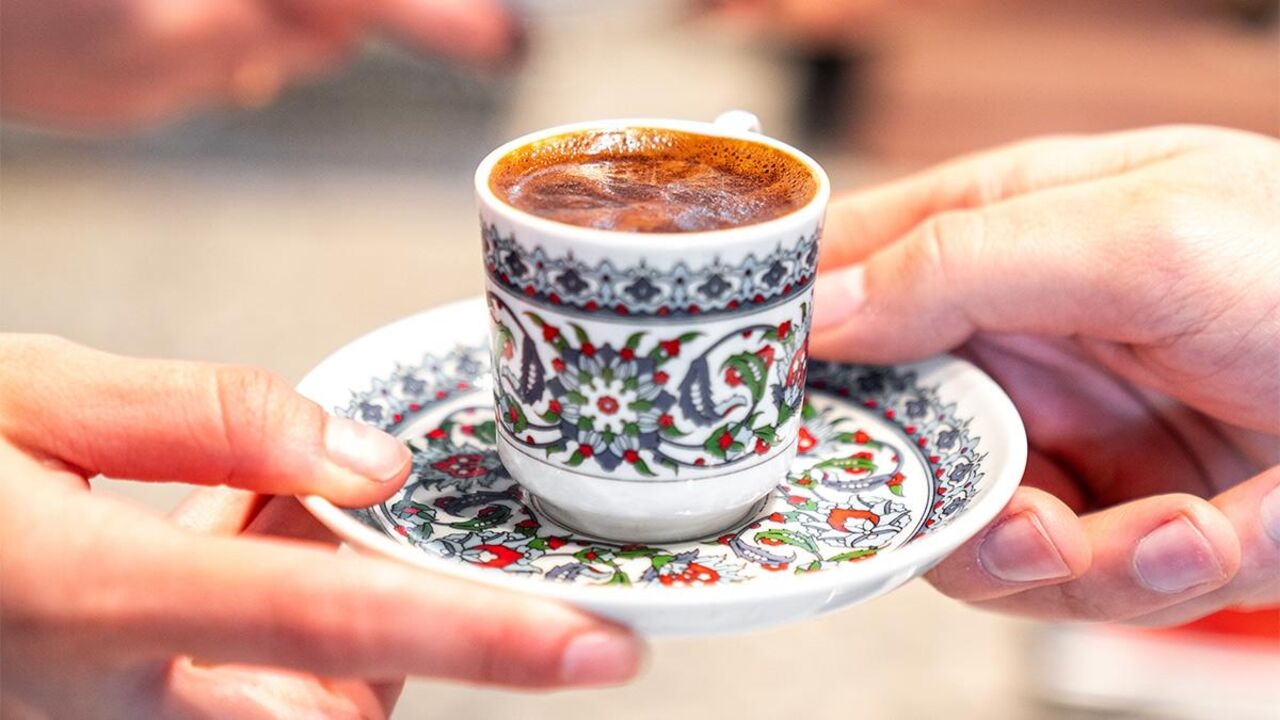
They arrive unannounced, the way hospitality always does in this part of the world. A small cup, thick and dark, placed before you without being asked. Whether you are sitting in a coffeehouse in Istanbul or a majlis in Dubai or Riyadh, the gesture is the same: I see you, you are welcome here, stay a while. Turkish coffee and Arabic coffee come from different hands and different traditions, but they share a deeper kinship than most people realize.
I feel the similarities at specialty coffee houses in Dubai or Jeddah, enjoying warm conversations with friends. Two cups from two cultures, but one soul.
One Root, One Shared Story
Both trace their roots to the same origin story. Coffee was born in the highlands of Ethiopia, traveled through Yemen, and spread across the Arab world before reaching the Ottoman Empire in the sixteenth century. Istanbul and the Arab capitals fell in love with it almost simultaneously, and each civilization made the drink its own. What emerged were two distinct rituals that nevertheless rhyme with each other in remarkable ways.
Preparation and Ritual – Mirror Images
The most obvious similarity is the method. Both are prepared without filters, brewed slowly and deliberately, served in small portions. Neither is meant to be rushed. The grounds in Turkish coffee settle at the bottom of the cup; the spices in Arabic coffee — cardamom, sometimes saffron or cloves — drift and steep. In both traditions, the coffee itself is almost secondary to what surrounds it: the conversation, the silence, the act of sitting together.
Hospitality: Where the Two Worlds Converge
Hospitality is where the two cultures converge most powerfully. Refusing a cup of Turkish coffee is a mild social offense. Refusing Arabic coffee is much the same. Both are offered at moments of significance: welcoming a guest, marking a celebration, sealing an agreement, mourning a loss. The cup is never just a cup. It is a small ceremony, a way of saying that the person across from you deserves your time and your attention.
The Etiquette of Refusal – Silent Signals, One Meaning
Even the rules of refusal mirror each other. In Gulf Arab tradition, you wiggle the empty cup slightly to signal you have had enough. In Turkish tradition, leaving your cup turned upside down on the saucer sends a similar message. Different gestures, identical meaning: a quiet, polite negotiation between guest and host conducted entirely without words.
What Unites Is Greater Than What Divides
What separates them — the roast, the spices, the presence or absence of sugar — matters less than what unites them. Both are instruments of slowness in a world that rewards speed. Both insist that some things should not be automated, bottled, or consumed on the go. And both carry, in every small cup, the memory of every conversation that was ever worth having.
A Cup That Carries Future Tales
And for Turkish coffee lovers, that small cup also gives you tales of the future after it is drunk and turned over. Fortune-telling from the cup is not mere entertainment; it is a continuation of the ritual itself: sitting together, reflecting, and speaking of the unknown in the language of generosity and curiosity.
Frequently Asked Questions About Turkish and Arabic Coffee
Q: Are Turkish and Arabic coffee from the same origin?
A: Yes, both trace back to the same historical source: the highlands of Ethiopia and Yemen, before branching into different traditions in the Arab world and the Ottoman Empire.
Q: What are the most important similarities between them?
A: The method of preparation without filtering, serving in small cups, and the focus on the social ritual and hospitality rather than the drink itself.
Q: How does the etiquette of refusal differ between the two cultures?
A: In Arab tradition, you gently shake the empty cup; in Turkish tradition, you turn the cup upside down. But the meaning is the same: a polite signal that you have had enough.
Q: Why is coffee considered part of hospitality in both cultures?
A: Because serving coffee is a social ritual that expresses welcome and respect, whether in Arab gatherings or Turkish coffeehouses.
Q: What is the significance of fortune-telling from the cup in Turkish culture?
A: It is an extension of the coffee ritual itself, where people gather to reflect and talk after the drink, in an atmosphere of familiarity and generosity.
Turkish coffee and Arabic coffee are not just two different drinks. They are two faces of the same coin: a culture of hospitality, slowness, and celebration of the moment. In a fast-paced world, these two cups remind us that some traditions are worth preserving, and that good conversation and good company deserve a cup to be sipped slowly, and a heart to be filled with stories.
By: Serkan Oral – Qahwa World.
All rights reserved. Republication with attribution permitted.
Publication date: June 23, 2026