Arabica Coffee Rebounds Amid Tight Spot Market Supplies

Source: Barchart (adapted) |
Author: Qahwa World |
Date: June 5, 2026

Recent trends show that arabica coffee has experienced a rebound in the spot market, drawing attention from both traders and coffee enthusiasts. In this article, we will examine the key developments and analysis surrounding the arabica coffee rebound spot market and what it means for industry stakeholders. If you are following arabica coffee rebound spot market news, understanding arabica coffee rebound spot market conditions is important for those looking to make sense of price fluctuations and opportunities in the industry.

Arabica Coffee Rebounds Amid Tight Spot Market Supplies

Key Highlights:

  • July arabica coffee futures rose 0.34% after hitting a 19-month low.
  • ICE arabica coffee inventories fell to a 3.75-month low on Thursday.
  • A record Brazil 2026/27 crop forecast is weighing on prices.
  • Rabobank raised its global arabica surplus estimate to 9.5 million bags.
  • Vietnam’s coffee exports rose 7.9% in the first five months of 2026.
  • El Niño could delay rains in Brazil and hurt next year’s crop.
  • The ongoing closure of the Strait of Hormuz disrupts global coffee supplies.

Arabica coffee futures rebounded from a 19-month low today. July arabica rose 0.34%, while July robusta fell 1.34%. The rebound was driven by short covering amid persistent tightness in the spot market. ICE monitored arabica coffee inventories dropped to a 3.75-month low on Thursday.

Therefore, the market remains mixed. Improved global supply expectations have pushed prices lower over the past six weeks. However, near-term supply tightness and geopolitical risks provide support.

Record Brazil Crop Forecast Weighs on Prices

On Wednesday, the USDA Foreign Agricultural Service (FAS) forecast a record 2026/27 Brazil coffee crop of 71.9 million bags. This represents a 14% increase year on year. In addition, Rabobank raised its 2026/27 global arabica surplus estimate to 9.5 million bags, up from 7.0 million bags previously.

On May 7, the Coffee Trading Academy projected Brazil’s 2026/27 harvest would increase by 12% to 71.4 million bags. On March 19, Marex Group Plc projected a record 75.9 million bags, surpassing Sucafina‘s forecast of 75.4 million bags. StoneX raised its estimate to 75.3 million bags on March 12.

As a result, coffee prices have trended lower over the past six weeks. StoneX projects the 2026 global coffee surplus will expand to 10 million bags, up from 1.8 million bags in 2025. This would be the largest surplus in six years.

Source Brazil 2026/27 Crop Forecast (million bags)
USDA FAS 71.9
Coffee Trading Academy 71.4
Marex Group 75.9
Sucafina 75.4
StoneX 75.3

Strong Vietnam Exports Pressure Robusta; Inventories Fall

On Tuesday, Vietnam’s National Statistics Office reported that the country’s coffee exports from January to May 2026 rose 7.9% year on year to 922,000 metric tons. Moreover, Vietnam’s 2025 coffee exports jumped 17.5% to 1.58 million metric tons. Vietnam’s 2025/26 coffee production is projected to climb 6% to a four-year high of 1.76 million metric tons (29.4 million bags).

In contrast, ICE arabica coffee inventories fell to a 3.75-month low of 426,063 bags on Thursday. Meanwhile, ICE robusta inventories dropped to a two-year low of 3,631 lots on May 15. They are now slightly higher at 3,732 lots.

El Niño and Strait of Hormuz Threaten Supplies

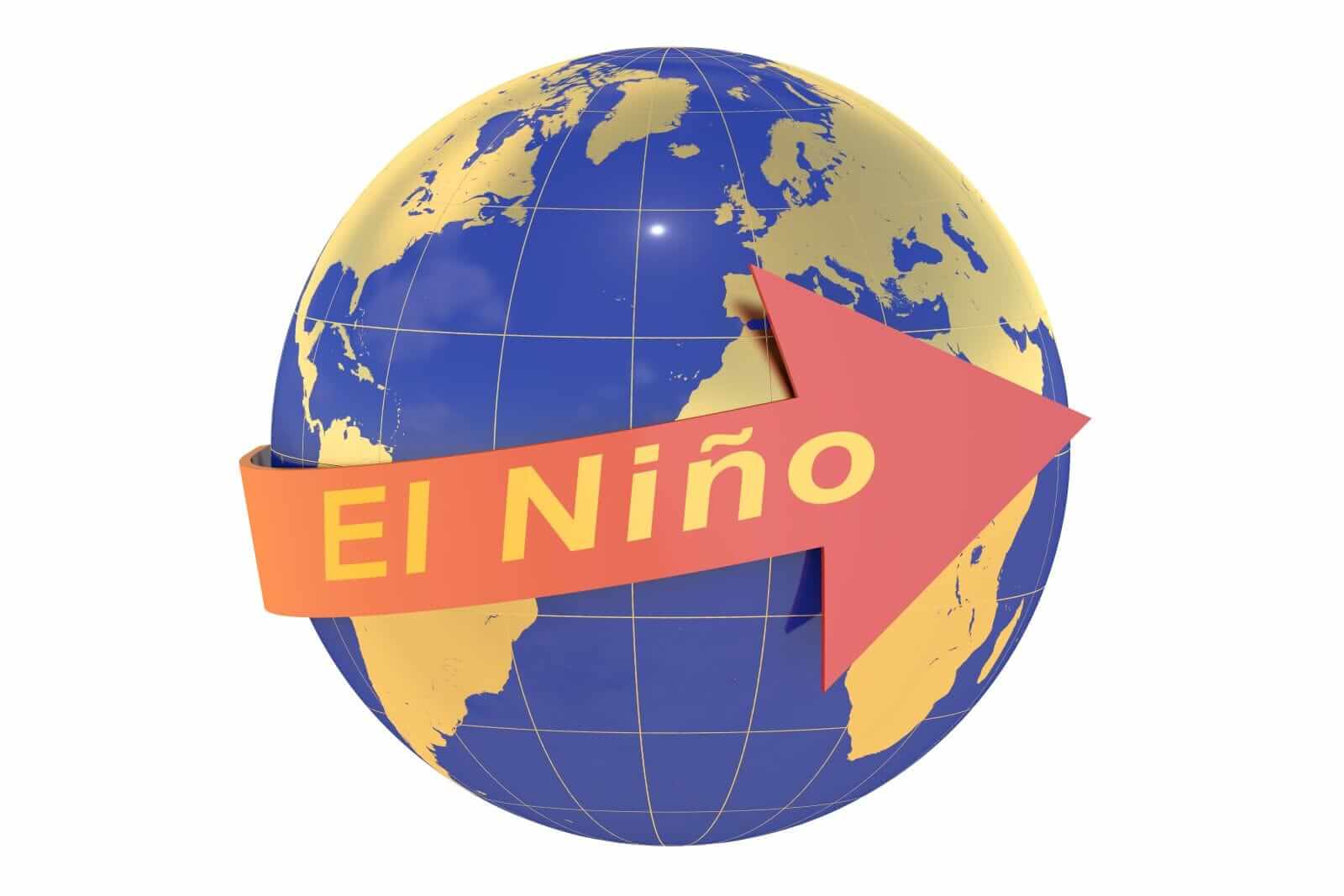
Concerns are growing that an El Niño weather pattern could hurt Brazil’s coffee crop next year. Coffee trader Commercial stated that El Niño may delay rains in Brazil during September and October, when tree flowering normally occurs. This would damage the 2026/27 crop.

The US National Oceanic and Atmospheric Administration (NOAA) estimates an 82% probability that El Niño conditions will emerge between May and July and persist through the end of the year. There is a 67% chance of a “Super El Niño.”

Furthermore, the ongoing closure of the Strait of Hormuz has disrupted global coffee supplies and is bullish for prices. The closure has tightened supplies by increasing shipping rates, insurance, fertilizer, and fuel costs. This raises costs for coffee importers and roasters.

On the bearish side, the International Coffee Organization (ICO) reported on November 7 that global coffee exports for the current marketing year (October to September) fell 0.3% to 138.658 million bags. The USDA FAS bi-annual report on December 18 projected that 2025/26 world coffee production will increase 2.0% to a record 178.848 million bags. Arabica production is expected to fall 4.7% to 95.515 million bags, while robusta production rises 10.9% to 83.333 million bags.

Type 2025/26 Forecast (million bags) Year-over-Year Change
Arabica 95.52 -4.7%
Robusta 83.33 +10.9%
Global Total 178.85 +2.0%

Ending Stocks Continue to Decline

The USDA FAS forecasts that 2025/26 ending stocks will fall 5.4% to 20.148 million bags, down from 21.307 million bags in 2024/25. This decline comes despite higher production expectations. It reflects strong global demand and continued supply chain pressures.

However, prices may face additional pressure if large surplus forecasts materialize, especially with recovering production in Brazil and Vietnam. Investors remain watchful of weather developments in South America and geopolitical tensions in the Arabian Gulf region.

Frequently Asked Questions About Coffee Price Movements

Q: Why did arabica coffee prices rebound despite record Brazil crop forecasts?

A: Due to short covering and tight spot market supplies. ICE monitored inventories fell to a 3.75-month low.

Q: How do Vietnam’s exports affect robusta prices?

A: Rising Vietnamese exports increase global robusta supply, putting downward pressure on prices. July robusta futures fell 1.34% today.

Q: What is the impact of El Niño on coffee prices?

A: El Niño could delay rains in Brazil, harming tree flowering and reducing next year’s crop. This would support higher prices.

Q: How does the Strait of Hormuz closure affect the coffee market?

A: The closure disrupts shipping routes and raises transport, insurance, and fuel costs. This increases costs for importers and roasters.

Q: What is the global coffee surplus forecast for 2026?

A: StoneX expects the surplus to reach 10 million bags, the largest in six years, driven by higher production in Brazil and Vietnam.

The coffee market remains torn between large surplus expectations on one hand and tight spot supplies, weather risks, and geopolitical tensions on the other. Investors continue to monitor exchange inventories and weather developments in Brazil closely.

Prepared and edited by: Qahwa World – Based on a Barchart report by Rich Asplund (adapted).

All rights reserved. Republication with attribution permitted.

Publication date: June 5, 2026

Coffee Prices Fall on Forecasts for Dry Weather in Brazil

Author: Qahwa World
Source: Barchart (Rich Asplund)
Date: May 29, 2026

Coffee Prices Fall on Forecasts for Dry Weather in Brazil

Executive Summary:

  • July arabica coffee futures closed down 2.70% on dry weather forecasts for Brazil, allowing the harvest to resume after rain delays.
  • July robusta coffee fell 2.14% amid improved global supply outlook and rising Vietnam exports.
  • Brazil’s 2026/27 coffee harvest is projected to increase 12% to 71.4 million bags, with some forecasts as high as 75.9 million bags.
  • StoneX expects the 2026 global coffee surplus to reach 10 million bags, the largest in six years.
  • Vietnam coffee exports rose 15.8% in January-April 2026 to 810,000 metric tons.
  • ICE arabica inventories fell to a 3.25-month low of 440,785 bags, supporting prices.
  • El Niño risks and dry conditions in Vietnam remain supportive for prices, while the US dollar weakness added support.

Coffee prices retreated sharply on Thursday after updated weather forecasts called for dry conditions next week in Brazil’s coffee growing regions.

The dry weather will allow the coffee harvest to resume after being delayed this week by heavy rains. July arabica coffee futures closed down 2.70%, while July robusta coffee fell 2.14%.

Brazil Crop Outlook and Global Surplus

Coffee prices have trended lower over the past month, with arabica falling to a one and a half year low last Tuesday amid an improved global supply outlook.

On May 7, the Coffee Trading Academy projected Brazil’s 2026/27 coffee harvest would increase 12% year on year to 71.4 million bags.

On March 19, Marex Group projected a record Brazilian crop of 75.9 million bags, surpassing Sucafina’s forecast of 75.4 million bags.

On March 12, StoneX raised its estimate to a record 75.3 million bags. StoneX also projected the 2026 global coffee surplus would expand to 10 million bags from 1.8 million bags in 2025, the largest surplus in six years.

Vietnam Exports and Inventory Trends

Soaring coffee exports from Vietnam, the world’s largest robusta producer, are bearish for robusta prices.

On May 9, Vietnam’s National Statistics Office reported that the country’s coffee exports in the first four months of 2026 rose 15.8% year on year to 810,000 metric tons.

Vietnam’s 2025 coffee exports jumped 17.5% to 1.58 million metric tons. Production for the 2025/26 season is projected to climb 6% to a four year high of 1.76 million metric tons, equivalent to 29.4 million bags.

ICE coffee inventories have trended lower over the past two months, which typically supports prices. ICE arabica coffee inventories fell to a 3.25-month low of 440,785 bags on Thursday.

ICE robusta inventories fell to a two year low of 3,631 lots on May 15, but recovered to a six week high of 3,968 lots last Friday.

Weather Risks and Other Factors

Global weather risks remain supportive for coffee prices. Excessive dryness in Vietnam is raising concerns about the robusta coffee crop.

Weather forecaster Vaisala said recent showers in Vietnam’s Central Highlands have been spotty, and more rain is needed to aid cherry growth.

Concerns that an El Niño weather pattern could hurt Brazil’s coffee crop next year are also supportive for prices.

Coffee trader Commercial said El Niño may delay rains in Brazil during September and October, when tree flowering normally occurs, potentially hurting the 2026/27 crop.

NOAA estimates an 82% probability of El Niño between May and July, with a 67% chance of a Super El Niño.

Smaller exports from Brazil are supportive of coffee prices.

On May 12, Cecafe reported that Brazil’s April green coffee exports fell 1.3% year on year to 2.76 million bags.

The ongoing closure of the Strait of Hormuz has disrupted global coffee supplies, increasing shipping rates, insurance, and fuel costs, which is bullish for prices.

USDA Production Forecasts

Indicator 2025/26 Forecast
World coffee production 178.848 million bags (+2.0% record)
Arabica production 95.515 million bags (-4.7%)
Robusta production 83.333 million bags (+10.9%)
Brazil production 63 million bags (-3.1%)
Vietnam production 30.8 million bags (+6.2%, 4-year high)
Ending stocks 20.148 million bags (-5.4%)

The USDA’s Foreign Agriculture Service bi-annual report of December 18 projected world coffee production in 2025/26 would increase 2.0% to a record 178.848 million bags.

Arabica production is expected to decrease 4.7% to 95.515 million bags, while robusta production is forecast to rise 10.9% to 83.333 million bags.

The USDA also forecast Brazil’s coffee production to decline 3.1% to 63 million bags, while Vietnam’s output would rise 6.2% to a four year high of 30.8 million bags.

Ending stocks are projected to fall 5.4% to 20.148 million bags.

Frequently Asked Questions (FAQ)

1. Why did coffee prices fall on Thursday?

Prices fell due to forecasts of dry weather in Brazil, allowing the coffee harvest to resume after being delayed by heavy rains.

2. How much did arabica and robusta drop?

July arabica fell 2.70%, and July robusta fell 2.14%.

3. What is the projected Brazilian coffee crop for 2026/27?

The Coffee Trading Academy projects 71.4 million bags, while Marex Group and StoneX project record crops above 75 million bags.

4. How much did Vietnam’s coffee exports increase?

Exports rose 15.8% in January-April 2026 to 810,000 metric tons.

5. What is the expected global coffee surplus for 2026?

StoneX projects a surplus of 10 million bags, the largest in six years.

6. How does El Niño affect coffee prices?

El Niño could delay rains in Brazil during the flowering season, potentially reducing the 2026/27 crop, which supports prices.

Qahwa World – Based on Barchart commodity bulletin by Rich Asplund.
Published: May 29, 2026

Coffee Prices Fall on Improved Brazil Crop Prospects

Author: Qahwa World
Source: Barchart
Date: May 20, 2026
Executive Summary:

  • July arabica coffee closed down 0.68% on Wednesday, while July robusta fell 0.51% to a one month low.
  • Arabica hit a one and a half year low on Tuesday amid an improved global supply outlook.
  • The Coffee Trading Academy projects Brazil’s 2026/27 harvest will increase 12% year on year to 71.4 million bags.
  • Marex Group and StoneX both forecast record Brazilian crops above 75 million bags for 2026/27.
  • StoneX projects the 2026 global coffee surplus will expand to 10 million bags, the largest in six years.
  • Vietnam coffee exports rose 15.8% in the first four months of 2026, reaching 810,000 metric tons.
  • ICE robusta inventories hit a two year low last Friday but recovered slightly on Wednesday.

Coffee prices settled lower on Wednesday, May 20, 2026, with robusta falling to a one month low. Expectations of a larger Brazilian coffee crop continue to weigh on prices. July arabica coffee futures closed down 0.68%, and July ICE robusta coffee closed down 0.51%.

Prices have ratcheted lower over the past month, with arabica falling to a one and a half year near term low on Tuesday amid an improved global supply outlook. On May 7, the Coffee Trading Academy projected Brazil’s 2026/27 coffee harvest would increase 12 percent year on year to 71.4 million bags. On March 19, Marex Group projected a record Brazilian crop of 75.9 million bags, surpassing Sucafina’s forecast of 75.4 million bags. On March 12, StoneX raised its Brazil 2026/27 production estimate to a record 75.3 million bags, up from a November estimate of 70.7 million bags. StoneX also projected the 2026 global coffee surplus would expand to 10 million bags from 1.8 million bags in 2025, the largest surplus in six years.

Vietnam Exports and ICE Inventories

Soaring coffee exports from Vietnam, the world’s largest robusta producer, are bearish for robusta prices. On May 9, Vietnam’s National Statistics Office reported that the country’s coffee exports in the first four months of 2026 rose 15.8 percent year on year to 810,000 metric tons. Vietnam’s 2025 coffee exports jumped 17.5 percent to 1.58 million metric tons. Production for the 2025/26 season is projected to climb 6 percent to a four year high of 1.76 million metric tons, equivalent to 29.4 million bags.

ICE coffee inventories have trended lower over the past two months, which typically supports prices. ICE robusta inventories fell to a two year low of 3,631 lots last Friday, though they recovered to a two and a half week high of 3,845 lots on Wednesday. ICE arabica coffee inventories fell to a two and three quarter month low of 456,462 bags on Wednesday.

Brazil Exports and Supply Disruptions

Smaller exports from Brazil are supportive of coffee prices. Last Tuesday, Cecafe reported that Brazil’s April green coffee exports fell 1.3 percent year on year to 2.76 million bags. The ongoing closure of the Strait of Hormuz has disrupted global coffee supplies and is bullish for prices. The closure has tightened supplies by increasing shipping rates, insurance, fertilizer and fuel costs, raising costs for importers and roasters.

As a bearish factor, the International Coffee Organization reported on November 7 that global coffee exports for the current marketing year (October to September) fell 0.3 percent year on year to 138.658 million bags.

USDA Production Forecasts

Indicator 2025/26 Forecast
World coffee production 178.848 million bags (+2.0% y/y record)
Arabica production 95.515 million bags (-4.7% y/y)
Robusta production 83.333 million bags (+10.9% y/y)
Brazil production 63 million bags (-3.1% y/y)
Vietnam production 30.8 million bags (+6.2% y/y, 4 year high)
Ending stocks 20.148 million bags (-5.4% y/y)

The USDA’s Foreign Agriculture Service bi-annual report of December 18 projected that world coffee production in 2025/26 would increase 2.0 percent year on year to a record 178.848 million bags. Within that total, arabica production is expected to decrease 4.7 percent to 95.515 million bags, while robusta production is forecast to rise 10.9 percent to 83.333 million bags. The USDA also forecast Brazil’s 2025/26 coffee production would decline 3.1 percent to 63 million bags, while Vietnam’s output would rise 6.2 percent to a four year high of 30.8 million bags. Ending stocks for 2025/26 are projected to fall 5.4 percent to 20.148 million bags from 21.307 million bags in 2024/25.

Frequently Asked Questions (FAQ)

1. Why are coffee prices falling?

Coffee prices are under pressure mainly due to expectations of a larger Brazilian coffee crop for 2026/27 and surging exports from Vietnam, pointing to a global surplus.

2. How low did arabica coffee prices go?

July arabica coffee futures fell to a one and a half year low on May 19, 2026, closing down 0.68% on May 20.

3. What is the projected Brazilian coffee crop for 2026/27?

The Coffee Trading Academy projects 71.4 million bags, while Marex Group and StoneX project record crops above 75 million bags.

4. How much did Vietnam’s coffee exports increase?

Vietnam’s coffee exports rose 15.8 percent in the first four months of 2026 compared to the same period last year, reaching 810,000 metric tons.

5. What is the expected global coffee surplus for 2026?

StoneX projects the 2026 global coffee surplus will expand to 10 million bags, the largest surplus in six years.

6. How does the Strait of Hormuz closure affect coffee prices?

The closure disrupts global coffee supplies by increasing shipping rates, insurance, and fuel costs, which is a bullish factor supporting prices.

Qahwa World – Based on Barchart commodity bulletin.
Published: May 20, 2026

Coffee Prices Fall Sharply as Brazilian Real Weakens

Source: Barchart | Author: Qahwa World | Date: May 15, 2026 Coffee Prices are the focus of this article.

  • July arabica coffee fell 3.12% to a nine-month low, while July robusta declined 3.58% during Friday trading.
  • The Brazilian real dropped to a five-week low against the U.S. dollar, prompting domestic producers to accelerate export sales.
  • Multiple industry analysts forecast a significant year-over-year increase for Brazil’s upcoming 2026/27 harvest, reaching up to 75.9 million bags.
  • Forecasters expect the global coffee surplus to expand dramatically to 10 million bags in 2026, up from 1.8 million bags in 2025.
  • Tight ICE inventories provided early-week support before supply pressure reversed market gains.
  • Vietnam expanded coffee exports by 15.8% year over year from January to April 2026, adding further bearish weight to robusta prices.
  • Ongoing shipping disruptions near the Strait of Hormuz raise international concerns regarding elevated freight and insurance expenses.

Coffee prices moved sharply lower on Friday, with July arabica coffee falling 3.12% and July robusta declining 3.58%. Arabica futures dropped to a nine-month low, while robusta reached a one-week low. A major factor behind the decline was weakness in Brazil’s currency, which significantly shifted market dynamics at the close of the week.

The Brazilian real fell to a five-week low against the U.S. dollar, encouraging Brazilian producers to increase export sales. A weaker real typically makes Brazilian coffee more competitive in global markets. Consequently, this currency movement put heavy downward pressure on international prices as supply availability accelerated.

Larger Brazilian Crop Expectations Pressure the Market

Forecasts for Brazil’s upcoming coffee harvest continue to weigh heavily on market sentiment. The Coffee Trading Academy recently projected Brazil’s 2026/27 coffee crop at 71.4 million bags, representing a 12% increase year over year. However, other major market projections indicate even higher numbers for the upcoming season.

Forecasting Institution Projected 2026/27 Crop Size Market Notes
Marex Group 75.9 million bags Projected record-high harvest
Sucafina 75.4 million bags Indicates strong export potential
StoneX 75.3 million bags Raised from the previous estimate of 70.7 million bags
Coffee Trading Academy 71.4 million bags Up 12% compared to the prior year

Furthermore, StoneX expects the global coffee surplus to expand to 10 million bags in 2026. This figure marks a sharp increase from the 1.8 million bags recorded in 2025. If realized, this expansion will represent the largest global surplus seen in the coffee industry in six years.

Tight ICE Inventories and Shipping Conditions

Despite the overall bearish outlook, tight exchange inventories provided some support earlier in the week. ICE robusta inventories fell to a two-year low of 3,631 lots, while ICE arabica inventories declined to a two-and-a-half-month low of 471,831 bags. These lower stock levels helped robusta reach a seven-week high and arabica a one-week high before prices reversed lower.

Meanwhile, Brazilian export data offered limited support to the market. Cecafe reported that Brazil’s April green coffee exports fell 1.3% year over year to 2.76 million bags. Additionally, reports of continued disruptions around the Strait of Hormuz have raised concerns about global shipping costs. Higher freight, insurance, fertilizer, and fuel costs could increase long-term expenses for coffee importers and roasters worldwide.

Vietnam’s Rising Exports Pressure Robusta Prices

Vietnam, the world’s largest robusta producer, continues to expand its exports and total production. According to Vietnam’s National Statistics Office, coffee exports during January–April 2026 rose 15.8% year over year to 810,000 metric tons. This follows full-year 2025 exports, which increased 17.5% to 1.58 million metric tons.

Furthermore, Vietnam’s 2025/26 coffee production is expected to rise 6% to 1.76 million metric tons, which is equivalent to 29.4 million bags. The steady increase in Vietnamese supply remains a primary bearish factor for global robusta prices.

Global Production Expected to Reach Record Levels

The U.S. Department of Agriculture’s Foreign Agricultural Service forecasts global coffee production in 2025/26 will rise 2% year over year to a record 178.8 million bags. Market trends vary by region and coffee type, as outlined by the international agency data.

Region or Coffee Variety Production Forecast (2025/26) Year-over-Year Change
Global Arabica Production 95.5 million bags Down 4.7%
Global Robusta Production 83.3 million bags Up 10.9%
Brazil Production Total 63.0 million bags Down 3.1%
Vietnam Production Total 30.8 million bags Up 6.2% (four-year high)

The Foreign Agricultural Service also forecasts that global ending stocks will decline 5.4% to 20.1 million bags in 2025/26. While ending stocks show a slight contraction, the massive production volumes from major growing hubs continue to dictate the downward path of exchange prices.


Frequently Asked Questions

Q1: Why did coffee prices decline significantly at the end of the week?

A1: Prices fell because the Brazilian real weakened against the U.S. dollar, which incentivized Brazilian coffee producers to increase their export sales to international markets.

Q2: What are the crop expectations for Brazil’s 2026/27 harvest?

A2: Analysts project a very large harvest. Estimates range from 71.4 million bags from the Coffee Trading Academy up to a record 75.9 million bags from Marex Group.

Q3: How large is the projected global coffee surplus for 2026?

A3: StoneX projects that the global coffee surplus will expand to 10 million bags in 2026, a major increase from the 1.8 million bags seen in 2025.

Q4: What role do Vietnam’s export numbers play in the robusta market?

A4: Vietnam increased its coffee exports by 15.8% during January–April 2026. This rising supply continues to apply downward price pressure specifically on robusta futures.

Q5: What logistical challenges are currently affecting the global coffee supply chain?

A5: Ongoing disruptions around the Strait of Hormuz have raised worries over shipping operations, which could increase expenses for freight, insurance, fertilizer, and fuel worldwide.

Source: Barchart | Author: Market Desk | Date: May 15, 2026

Record Brazil Crop Expectations Weigh on Coffee Prices Despite Supply Tightness

Dubai – Qahwa World

Coffee markets are drifting lower, weighed down by mounting expectations of a very large crop in Brazil, even as supply-side tensions prevent sharper declines.

Arabica futures have slipped to their weakest levels in several weeks, reflecting growing confidence among analysts that Brazil’s next harvest could reach record territory. Forecasts from firms such as Marex Group, Sucafina, and StoneX all point toward a historically large 2026/27 crop clustered in the mid-70 million bag range. If realized, that would mark a significant year-on-year increase and help expand the global coffee surplus.

The supply outlook is also being shaped by developments in Vietnam, the world’s leading robusta producer. Export volumes have surged, with early-year shipments showing strong annual growth. Production is likewise expected to rise, potentially reaching a multi-year high, adding further pressure on prices.

Yet the market narrative is not entirely bearish. Tight inventories are offering some support, particularly for robusta, where exchange-monitored stockpiles have dropped to their lowest level in over a year, highlighting ongoing short-term supply constraints.

Geopolitical tensions are adding another layer of complexity. Disruptions linked to the Strait of Hormuz have pushed up freight and insurance costs, complicating global trade flows and increasing expenses for coffee importers and roasters.

Meanwhile, export data from Cecafé and Brazil’s trade authorities show a decline in March shipments compared to last year, lending some support to prices. Weather concerns also persist in key regions such as Minas Gerais, where below-average rainfall could still impact yields.

Global institutions, including the International Coffee Organization and the USDA Foreign Agricultural Service, continue to point to a nuanced outlook: overall production may rise, but with diverging trends between arabica and robusta, and tightening stock levels.

Taken together, the coffee market is navigating a delicate balance between expectations of abundant future supply and the realities of present-day constraints.

Coffee Prices Rise Amid Supply Concerns and Shipping Disruptions

Dubai – Qahwa World

Coffee futures moved higher, supported by growing concerns over global supply disruptions and tightening inventories. Arabica and robusta contracts both posted gains, with robusta showing stronger momentum.

A key driver behind the price increase is rising tension around the Strait of Hormuz. Reports of shipping disruptions have heightened concerns about global trade flows, leading to increased freight costs, insurance premiums, and fuel expenses. These factors are adding pressure on coffee importers and roasters, contributing to upward price movement.

Robusta prices are receiving additional support from declining exchange inventories, which have dropped to their lowest level in over a year. This signals tighter short-term availability in the market.

However, expectations of a large upcoming harvest in Brazil are limiting stronger price rallies. Several industry forecasts point to a record crop for the 2026/27 season, with projections consistently above 75 million bags. At the same time, estimates suggest a significant global surplus could emerge in 2026, potentially the largest in several years.

Vietnam’s export performance is also weighing on the market, particularly for robusta. Shipments have increased notably in early 2026, following strong export growth in the previous year. Production in Vietnam is also expected to rise, reaching multi-year highs, which could further ease supply constraints.

On the other hand, reduced exports from Brazil are offering some support to prices. Recent data shows a decline in shipments compared to last year, tightening near-term availability in the global market.

Weather conditions in Brazil remain another important factor. Below-average rainfall in key growing regions, particularly Minas Gerais, has raised concerns about crop yields, adding a bullish element to price outlooks.

Looking at the broader picture, global export volumes have shown slight weakness, while production forecasts indicate modest overall growth. Arabica output is expected to decline, while robusta production is projected to increase significantly. Meanwhile, global coffee inventories are forecast to shrink, suggesting that supply pressures may persist despite higher production in some regions.

Coffee Prices Plunge on Rising Global Supply

DUBAI – QAHWA WORLD

Coffee futures fell sharply on Tuesday, pressured by improving global supply expectations and stronger production forecasts from key producing countries.

March arabica coffee contracts dropped 5.15%, settling at a 7.25-month low. March robusta futures declined 4.44%, marking a six-month low. The downturn extends a three-week slide driven largely by expectations of a bumper crop in Brazil.

According to Brazil’s crop forecasting agency Conab, the country’s 2026 coffee production is projected to rise 17.2% year-over-year to a record 66.2 million bags. Arabica output is expected to increase 23.2% to 44.1 million bags, while robusta production is forecast to climb 6.3% to 22.1 million bags.

Weather conditions have also supported the bearish outlook. Somar Meteorologia reported that Minas Gerais — Brazil’s largest arabica-growing region — received 72.6 mm of rainfall during the week ending February 6, representing 113% of the historical average.

Additional pressure came from Vietnam, the world’s largest robusta producer. Data from Vietnam’s National Statistics Office showed January coffee exports surged 38.3% year-over-year to 198,000 metric tons. Full-year 2025 exports rose 17.5% to 1.58 million metric tons. Production for the 2025/26 season is projected to increase 6% to 1.76 million metric tons (29.4 million bags), the highest level in four years.

Rising exchange inventories have also weighed on prices. Intercontinental Exchange-monitored arabica stocks rebounded from a 1.75-year low of 396,513 bags in mid-November to 461,829 bags in early January. Robusta inventories likewise recovered from a 13-month low of 4,012 lots in December to 4,662 lots in late January.

On the supportive side, Brazil’s Trade Ministry reported a 42.4% year-over-year decline in January coffee exports to 141,000 metric tons. Meanwhile, production in Colombia — the world’s second-largest arabica producer — fell 34% in January to 893,000 bags, according to the National Federation of Coffee Growers.

Globally, supply signals remain mixed. The International Coffee Organization reported that exports for the current marketing year (October–September) slipped 0.3% year-over-year to 138.658 million bags.

In its latest bi-annual outlook, the U.S. Department of Agriculture’s Foreign Agricultural Service projected that global coffee production for 2025/26 will rise 2.0% to a record 178.848 million bags. Arabica output is forecast to decline 4.7% to 95.515 million bags, while robusta production is expected to jump 10.9% to 83.333 million bags.

The agency also estimates that global ending stocks for 2025/26 will decline 5.4% to 20.148 million bags, compared with 21.307 million bags in 2024/25 — suggesting that despite short-term pressure, underlying supply dynamics remain closely balanced.