The Golden Ratio of Coffee: The Secret to Perfect Balance in Every Cup

Dubai – Qahwa World

Making coffee is not just a matter of taste — it’s a craft built on precision, balance, and understanding. Among the most essential principles guiding professional baristas and home brewers alike is the Golden Ratio, a simple yet powerful formula that ensures every cup achieves the right harmony between strength, flavor, and smoothness.

What Is the Golden Ratio?

According to the Speciality Coffee Association (SCA), the ideal coffee-to-water ratio lies between 1:15 and 1:20, meaning 1 gram of ground coffee for every 15 to 20 grams of water. This proportion defines how rich, strong, or light your brew will be.

A lower ratio (such as 1:15) produces a bolder, more intense cup, while a higher ratio (like 1:18) results in a gentler flavor — ideal for black coffee drinkers. These figures form the universal foundation of balanced brewing used across drip machines, pour-over setups, and French presses.

Weight Over Volume

The Golden Ratio is based on weight, not volume. Because grind size affects density, measuring coffee by scoops or spoons leads to inconsistency. For precision, use a digital scale to weigh both coffee and water accurately.

Key Factors That Shape Coffee Quality

Even when you follow the Golden Ratio, several factors influence how your coffee tastes.

1. Grind Size

Grind size determines how quickly and thoroughly water extracts flavor from the grounds.

French press: Coarse grind, similar to sea salt.

Pour-over: Medium to slightly fine grind.

Drip coffee maker: Consistent medium grind.

An improper grind can cause under-extraction (sour taste) or over-extraction (bitterness).

2. Water Temperature

The SCA recommends a brewing temperature between 195°F and 205°F (90°C to 96°C). Boiling water can burn coffee grounds and create a harsh taste, while cooler water prevents proper extraction.

3. Agitation and Flow

The way water moves through coffee — whether by pouring, stirring, or immersion — affects extraction balance. Gentle agitation helps saturate all particles evenly, producing a more consistent cup, especially in pour-over or French press methods.

4. Filter Type

The filter acts as the final gate between the brewing process and your cup.

Paper filters trap oils and fine particles, resulting in a clean, light-bodied brew.

Metal filters allow oils to pass through, enhancing texture and body.

Both have merit; the choice depends on your personal preference for clarity or richness.

Best Practices for a Perfect Brew

Use a scale. Measuring by weight ensures accuracy and repeatability.

Choose fresh coffee. Recently roasted beans yield livelier, more expressive flavors.

Invest in a good grinder. A burr grinder provides a consistent grind size, leading to more even extraction.

Stay consistent. Pick a brewing method you can comfortably repeat every day.

Experiment with confidence. Once you’ve mastered the basics, adjust ratios or grind settings slightly until you find your ideal cup.

The Essence of Balance

The Golden Ratio is not a secret formula but a timeless principle — a shared standard among coffee professionals and enthusiasts worldwide. When respected alongside the right grind size, temperature, and technique, it transforms coffee brewing from routine to ritual.

With precision, balance, and consistency, anyone can create a cup worthy of the world’s finest cafés — right at home.

UK’s WatchHouse Enters UAE Market via Franchise Partnership

Dubai – Qahwa World

London-based specialty coffee brand WatchHouse is set to make its first franchised overseas foray this October, through a partnership with Dubai’s Big Belly Hospitality.
World Coffee Portal

The rollout will begin with a pop-up espresso bar at Marsa Boulevard, a waterfront development on Dubai Creek, before transitioning to full-scale cafes. Two permanent locations are earmarked for Abu Dhabi Equestrian Club and Saadiyat Grove in early 2026, with additional sites—possibly including one in DIFC (Dubai International Financial Centre)—slated for later in the year.

Big Belly Hospitality’s founder, Pallav Patel, emphasized that the partnership aims to blend a “design-led” global coffee experience with local relevance in the UAE marketplace.
World Coffee Portal

For Big Belly Hospitality, this move complements its existing portfolio of F&B ventures in the UAE, such as Bombay Bungalow, Ibn Al Bahr, and Masti. The group also introduced UK’s Patty & Bun to the region in mid-2024.
World Coffee Portal

Before this UAE entry, WatchHouse had already entered the US market via its first international outlet on New York’s 5th Avenue in April 2024.
World Coffee Portal

The brand operates around 20 outlets in the UK, and in June 2025, opened a second US site within New York’s Chrysler Building.In September 2025, WatchHouse’s Managing Director, Caroline Ottoy, outlined ambitious expansion targets: aiming for 100 global stores by end-2028, with the US footprint growing to 25 sites and further international franchises in markets such as Singapore and Qatar.

Cropster Acquires South Korean Coffee Tech Company

Dubai – Qahwa World

Austria-based Cropster, a leading developer of smart software solutions for the coffee industry, has announced the acquisition of Firescope, a South Korean technology company specializing in coffee roasting software. The move marks a key step in Cropster’s expansion strategy across Asia and its broader plan to strengthen its position in global coffee technology.

Firescope, founded in 2020 in Seoul, provides cloud-based roasting software used by more than 3,000 independent coffee roasters in South Korea and Japan. The acquisition will enable Cropster to expand its footprint in East Asia’s rapidly growing specialty coffee market. The financial terms of the deal were not disclosed.

Founded in 2008 by Andreas Idl, Norbert Niederhauser, and Martin Wiesinger, Cropster creates digital tools that improve efficiency, consistency, and traceability across the entire coffee value chain — from green coffee trading and roasting to retail operations and cafés.

In 2024, Cropster sold a majority stake to the Oslo-based investment firm Verdane, providing the company with a strong financial foundation to pursue mergers and acquisitions aimed at building an integrated digital ecosystem for the coffee industry.

Under the new agreement, Firescope will continue operating as a standalone platform until the second half of 2026, after which it will be integrated into Cropster’s ecosystem. This integration will allow Firescope’s services to reach new markets beyond East Asia for the first time.

Cropster also plans to use Firescope’s Seoul headquarters as its new regional hub for sales and technical support in Asia, further strengthening its presence in the region.

“Asia plays a central role in the growth of the global specialty coffee sector, and this acquisition positions Cropster as a leader in providing comprehensive digital solutions across the region,” said Ralph Karg, Director at Verdane.

Andreas Idl, Co-Founder and CEO of Cropster, emphasized that this acquisition is the beginning of a larger strategy:

“Our vision is to digitalize the entire coffee journey — from cultivation and production to roasting, distribution, and cafés. Firescope represents a key part of this vision, and we plan to pursue additional acquisitions to achieve our ‘crop-to-cup’ mission.”

Today, Cropster works with thousands of coffee companies in more than 100 countries, including well-known specialty coffee brands such as Blue Bottle Coffee, WatchHouse, Five Elephant, Verve Coffee Roasters, and Bunista. Firescope’s clients include HOWW Coffee, Your Home Coffee Roasters, Koffee Sniffer, and Indigo Coffee Roasters.

With this acquisition, Cropster reinforces its role as a global leader in coffee technology, advancing its goal of creating a connected, data-driven ecosystem that supports innovation across the entire coffee supply chain.

Moscow’s Top Coffee Shops for a Long Stroll

Perfect spots to warm up or recharge any time of year

Dubai – Qahwa World

The website Discover Moscow has published a list of what it calls the best coffee shops in the Russian capital — places perfect for warming up or recharging during a long stroll through the city, whatever the season.

The site begins its list by affirming that Moscow truly deserves the title “Coffee Capital.” Wherever you go across its neighborhoods, you’ll find specialty coffee from all over the world and local roasters who master the art of roasting and extraction with remarkable precision.

It then goes on to highlight the city’s top coffee spots as follows:

OMG Coffee
A charming café in the heart of the city on Kuznetsky Most, offering a wide selection of desserts and seasonal pastries that change throughout the year. Guests can enjoy “cube croissants” filled with cream and berries, all-day breakfasts, and coffee drinks that look like works of art — topped with whipped cream and fragrant sprinkles.
Addresses: Rozhdestvenka Street 6/9/20с1 | Yermolayevsky Lane 7

Skuratov Coffee
Originally from Omsk, Skuratov brought its own coffee culture to Moscow. Its cafés open early at 6:55 a.m., quickly filling with laptop users. With more than ten branches across the city, Skuratov serves excellent coffee and fresh pastries — and its roasted beans make a great souvenir or gift.
Addresses: Bolshoy Ovchinnikovsky Lane 16 | Myasnitskaya Street 13с2 | Stoleshnikov Lane 11 | Kalashny Lane 5 | Bolshaya Sadovaya Street 14с10

Flight Coffee
A must-visit for aviation enthusiasts, this café issues receipts that look like boarding passes and names its signature drinks after travel routes. The menu is divided into four “journeys” — Asia, Europe, the East, and Russia. Highlights include coffee with halva, Vietnamese tea, a Belgian flat white, and the “Siberian Express.”
Address: Rozhdestvenskiy Boulevard 5/7с1

AAARK
Tucked near Pokrovka Street and Chistoprudny Boulevard, AAARK features minimalist interiors of dark wood and white tiles. It’s ideal for early mornings, serving specialty coffee from Fauno roasters, fresh focaccia, and hearty sandwiches. Don’t miss the Italian maritozzi and Swedish cardamom buns — rare finds in Moscow. The café has a creative, pet-friendly atmosphere.
Address: Chaplygina Street 20с7

Rockets Coffee
Run by expert roasters, Rockets offers several concepts — from the stylish “Concept Store” cafés perfect for lunch or remote work, to smaller “Cappuccino Kids” outlets for coffee on the go. Each branch has its own character but shares the same high-quality coffee and delicious pastries.
Addresses: Tverskoy Boulevard 3 | Sadovnicheskaya Street 82с2 | Valovaya Street 35Б | Timura Frunze Street 11к2


Surf Coffee
Perhaps the most popular coffee chain in Russia, Surf Coffee is known for its warm, inviting vibe and creative seasonal drinks. Every branch has a unique design and menu, often with plant-based milk options. Outside the city center, you’ll even see locals dropping in with their dogs for a morning coffee.
Addresses: 2nd Ostankinskaya Street 3 | Mira Avenue 40 | Neglinnaya Street 14с1А | Novokuznetskaya Street 6 | Pushechnaya Street 7/5с2 | Bolshoy Cherkasskiy Lane 2/10

Aeroplan
A small but promising brand with two branches inspired by the theme of flight — “Aeroplan Blue” on Bolotny Island and “Aeroplan Green” on Pyatnitskaya Street. Both are cozy and welcoming, offering hand-brewed black coffee, creamy cortados, breakfast options, and light meals.
Addresses: Pyatnitskaya Street 65/10 | Sadovnicheskaya Street 80

Coffeemania
A well-known Moscow brand with branches across the city — from Kutuzovsky Avenue to major shopping malls. It’s a reliable choice for a long, relaxed coffee break, offering a full menu of coffee and tea drinks, breakfasts, and desserts. During the holidays, its themed sweets are especially popular.
Addresses: Pokrovka Street 18/18с3 | Kutuzovsky Avenue 17 | Maliy Cherkasskiy Lane 2 | Bolshaya Nikitskaya Street 13 | Trubnaya Square 2 | Noviy Arbat Street 19

Coffee Eleven
Located inside the century-old Khudozhestvenny cinema, Coffee Eleven combines art, culture, and comfort. You don’t need to watch a film to enjoy the atmosphere — just sit back with a pastry and a cup of coffee and watch the city pass by. The menu includes signature drinks, matcha, cocktails, wine, and a selection of breakfast dishes and desserts.
Address: Arbatskaya Square 14с1

ABC Coffee Roasters
A respected specialty chain known for precision and creativity. Purists can enjoy black coffee brewed with methods like Chemex or Aeropress, while adventurous drinkers can try lattes flavored with palo santo or tonka beans. Their beans also make perfect take-home souvenirs.
Addresses: Bolshaya Nikitskaya Street 19/16с1 | Pokrovka Street 7/9-11к1 | Milyutinsky Lane 3 | Ordynsky Blind Alley 4А

Mama Varit Kofe (Mum Makes Coffee)
Founded in Ufa, this brand has expanded to Moscow with spacious cafés featuring separate work areas, cozy tables, and a vibrant social atmosphere. The drinks menu includes filter coffee, cocoa, matcha, teas, lemonades, and unique in-house specials.
Address: Stremyanniy Lane 2

Niqa Pâtisserie & Café
Just a few steps from Teatralnaya Square, Niqa brings a touch of Parisian elegance to central Moscow. The patisserie offers French-style desserts, fresh salads and soups, Dammann teas, and specialty coffee — all made with natural ingredients. The warm, refined setting even allows you to order an XXL cup of coffee for sharing.
Addresses: Teatralny Drive 5с1 | Tverskoy Boulevard 14с5 | Ostozhenka Street 27к3

Brazil’s Timbro Enters Coffee Export Market Amid Sector Shifts

São Paulo — Qahwa World

Brazilian trading company Timbro has officially added coffee to its export portfolio, identifying strong potential for growth in a market reshaped by volatility and record-high prices over the past year.

Timbro, already one of Brazil’s key sugar exporters, also trades a wide range of products including iron ore, cotton, aircraft, cars, and heavy machinery, and manages import operations for Amazon.

“I believe we entered the coffee market at the right time — a very complicated moment for the sector,” said Caio Melles, partner at Timbro, in an interview with Reuters.

The company, which reported 18 billion reais ($3.3 billion) in revenue last year, sees an opportunity to fill the gap left by traditional traders struggling with market volatility. According to Melles, the coffee sector currently lacks players capable of tracking production, pricing, and ensuring delivery, opening new room for agile companies like Timbro.

Although Timbro has long engaged in financial operations with cooperatives and large producers, the 2025 crop year marks its first full physical coffee operation, a move the company had not previously disclosed.

Initially, coffee volumes will remain modest — around 80,000 bags of 60 kg each — as Timbro adopts a cautious entry strategy.

Expansion Beyond Coffee

Founded in 2010 by Jorge Guinle and Bruno Russo, Timbro began as an import-focused firm before rapidly diversifying its portfolio. The company has recorded significant success in sugar, increasing traded volumes from 300,000 tonnes in 2018 to 2 million tonnes in 2024.

In 2025, Timbro expanded its international presence with the opening of an office in Dubai, a strategic hub to strengthen relationships with global clients and enhance efficiency across time zones. It is also extending operations in Asia to “operate on Chinese time,” reflecting China’s importance as a key importer of Brazilian commodities.

Currently, 65–70% of Timbro’s business is export-oriented, while 30–35% focuses on imports.

Diversification into Grains and Minerals

Timbro maintains a smaller footprint in soybean and corn exports, Brazil’s leading agricultural commodities. “We’re doing a few soybean and corn shipments, maybe half a dozen of each this year — still very limited,” Melles said, noting that grain operations require integrated logistics to achieve profitability. The company is now considering logistics partnerships to expand in this segment.

In the steel and minerals division, Timbro expects to export over 1 million tonnes to China and Europe this year and has begun due diligence for new mining assets as part of its expansion strategy.

Exchange rate: $1 = 5.4519 reais

Visitor Registration Now Open for World of Coffee Dubai 2026!

Dubai – Qahwa World

Visitor registration is now officially open for World of Coffee Dubai 2026, the Middle East’s leading event for coffee professionals and enthusiasts!
Secure your ticket today and take advantage of exclusive early bird rates, available for a limited time only. Don’t miss this chance to connect with global coffee leaders, explore the latest innovations, and build valuable connections with top roasters, producers, and industry experts from around the world.

Now celebrating its 5th edition, World of Coffee Dubai has established itself as the premier platform for the specialty coffee community in the Middle East, bringing together producers, manufacturers, retailers, and traders under one roof.

The event is organized by DXB LIVE in collaboration with the Specialty Coffee Association (SCA), uniting the vibrant UAE coffee scene with the wider regional and global coffee industry in one dynamic and inspiring setting.

Why Participate?
Whether you’re looking to expand your business, explore emerging trends, or enter the Middle East’s booming coffee market, World of Coffee Dubai 2026 offers unparalleled opportunities for growth and collaboration.

The event will feature:
• A vibrant trade show floor showcasing global coffee innovations.
• The Roaster Village, spotlighting top artisan roasters.
• UAE National Coffee Championships, highlighting the country’s best baristas.
• The SCA Community Lounge, a hub for networking and collaboration.
• The Best New Product Competition & Display, unveiling cutting-edge technologies and products.
• Inspiring lectures and workshops designed to educate, connect, and inspire.

Available Passes
Choose the pass that best fits your visit and enjoy access to the world’s most dynamic coffee event:

Pass Type Access Duration Price (AED) Details Buy
SCA Member (Single Day Pass) 1 Day 90 (Incl. 5% VAT) View Details → Buy Now
Single Day Visitor Pass 1 Day 95 (Incl. 5% VAT) View Details → Buy Now
SCA Member (3 Day Pass) 3 Days 240 (Incl. 5% VAT) View Details → Buy Now
Three-Day Visitor Pass 3 Days 265 (Incl. 5% VAT) View Details → Buy Now

All passes are now available for purchase—book early to secure your spot at the most anticipated coffee event in the region.

Be part of shaping the future of coffee. Register today and join thousands of professionals and enthusiasts who will gather in Dubai to celebrate innovation, culture, and excellence in coffee.

📍 Venue: Dubai World Trade Centre
📅 Dates: 18–20 January 2026

World of Coffee Dubai to Host the 2026 Cezve/Ibrik Championship

Dubai – Qahwa World

The Specialty Coffee Association (SCA) has officially announced that World of Coffee Dubai 2026 will host the 2026 Cezve/Ibrik Championship (CIC)—marking the first stage of the 2026 World Coffee Championships (WCC) season.
The competition will take place January 18–20, 2026 at the Dubai World Trade Centre, coinciding with what is expected to be the largest edition of World of Coffee Dubai to date.

Produced by DXB Live in collaboration with the SCA UAE Chapter, World of Coffee Dubai has rapidly become the Middle East’s leading coffee trade event since its launch in 2022. The show continues to unite producers, roasters, manufacturers, and coffee professionals from around the globe — highlighting Dubai’s growing role as a bridge between coffee cultures of the East and the West.

The Cezve/Ibrik Championship pays homage to one of the world’s oldest brewing traditions. The cezve, also known as an ibrik, is a small long-handled pot traditionally made from copper, brass, or ceramic, used for centuries across Eastern Europe, the Middle East, and North Africa. Competitors in this event bring cultural expression and personal artistry to their performances, reimagining this ancient brewing method in a modern competitive setting.

Hosting this championship in Dubai is especially symbolic. The city’s deep cultural ties to traditional coffee preparation, combined with its reputation as a global hub for innovation and trade, make it a fitting venue for a competition that blends heritage with creativity.

Khalid Al Mulla, National Coordinator of the UAE Coffee Championships, stated: “We are truly honored to welcome the Cezve/Ibrik Championship to Dubai. This event represents more than competition — it’s a celebration of tradition, craftsmanship, and cultural connection. Bringing it to the UAE reinforces Dubai’s position as a bridge between the coffee cultures of the East and the West.”

The SCA has also released the 2026 CIC Rules and Regulations, including updated rules documents, summaries of changes, scoresheets, and an appeals form, all available at wcc.coffee/rules-regulations
.

The World Coffee Championships serve as a platform for global coffee professionals to showcase their craft, share knowledge, and inspire future generations of baristas, brewers, tasters, and roasters. Dubai’s inclusion as the first host city of the 2026 season further strengthens its status as a world-class coffee destination.

2026 World Coffee Championships Calendar

Dubai World Coffee Championships
January 18–20, 2026 | World of Coffee Dubai, Dubai World Trade Centre, UAE
Featuring the Cezve/Ibrik Championship

San Diego World Coffee Championships
April 10–12, 2026 | World of Coffee San Diego, USA
Featuring the World Latte Art Championship

Bangkok World Coffee Championships
May 7–9, 2026 | World of Coffee Bangkok, Thailand
Featuring the World Cup Tasters Championship

Brussels World Coffee Championships
June 25–27, 2026 | World of Coffee Brussels, Belgium
Featuring the World Brewers Cup, World Coffee Roasting Championship, and World Coffee in Good Spirits Championship

Panama City World Coffee Championships
October 22–25, 2026 | World of Coffee Panama, Panama Convention Center
Featuring the World Barista Championship

Manama to Host the Bahrain Coffee Festival 2025 This December

Manama Qahwa World

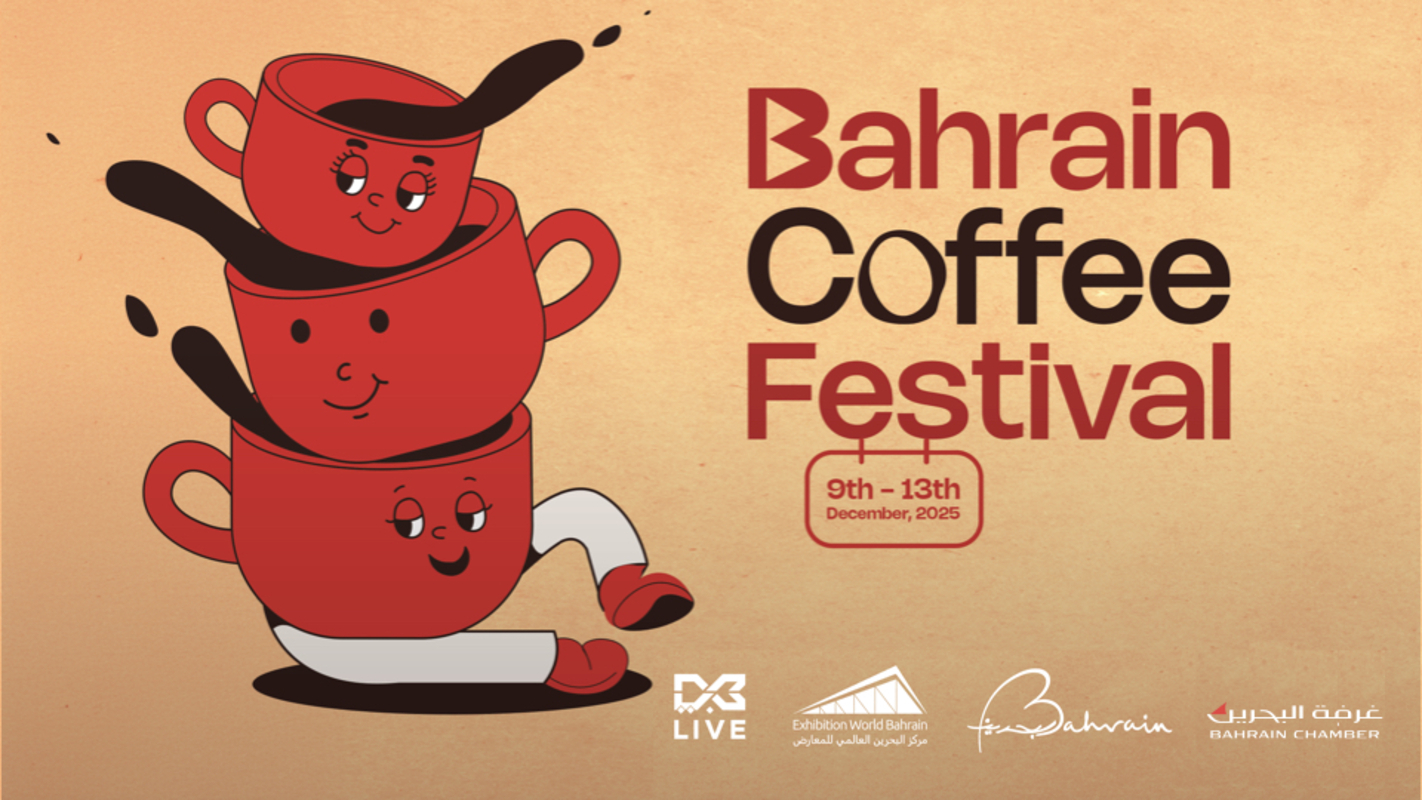
DXB LIVE, the executive arm of the Dubai World Trade Centre, will organize the Bahrain Coffee Festival 2025 in its first edition, from December 9 to 13, 2025, at the Bahrain International Exhibition Center.

During the festival, the Bahraini capital, Manama, will become a lively destination for coffee lovers and industry professionals from across the region and the world.

Celebrating Coffee Culture

The festival serves as an experience that brings together both the business and consumer sectors, offering visitors the opportunity to immerse themselves in the world of coffee through live brewing demonstrations, workshops, competitions, and interactive activities.

It aims to engage all segments of the local community from families and coffee enthusiasts to café owners and local roasters while highlighting emerging Bahraini coffee brands and linking them to the global specialty coffee scene.

The festival also seeks to strengthen Bahrain’s position as a regional hub for specialty coffee and innovation, with positive economic impacts on the tourism, hospitality, and retail sectors.

It offers companies opportunities to expand their visibility among a wide audience of coffee lovers, showcase their latest products, and establish new partnerships.

Meanwhile, individuals will find a space for learning and exchange through workshops, tastings, and educational sessions led by professional baristas and experts from various countries.

Competitions and Educational Programs

The main program of the festival will include a mix of demonstrations, competitions, and educational sessions, featuring:

Latte Art Competition

Tasting Challenge

Barista Speed Race

Home Brewers Challenge

Best Coffee with Milk

Additionally, a number of specialized workshops will be organized, covering:

Pour-over techniques (V60)

AeroPress Championship-style brewing

Barista Basics and Beginner Latte Art

Professional Tasting and Aroma Analysis

Roasting Fundamentals and the Role of Water

Branding and Packaging for Cafés

Steps to Establish a Coffee Shop in Bahrain

Visitors will also enjoy interactive and artistic experiences, such as coffee and dessert pairing sessions, creative coffee drinks, an art corner, a mini exhibition on the history of coffee, a music lounge, and film screenings documenting coffee’s journey across the world.

The festival will also shed light on the future of coffee and sustainability, through initiatives such as recycling coffee waste and converting it into eco-friendly charcoal.

A Cultural and Community Platform

The Bahrain Coffee Festival is not merely a commercial event but a cultural and social platform that brings together coffee enthusiasts and creatives in an atmosphere that reflects Bahrain’s authentic hospitality.

Through its diverse activities, the event contributes to enhancing the local specialty coffee scene and reinforces Bahrain’s image as a destination that celebrates creativity, diversity, and innovation in the coffee world.

DXB LIVE: The Organizer

Founded in 2005, DXB LIVE is one of the leading event-service providers in the region, responsible for organizing exhibitions, conferences, festivals, national celebrations, and private events.

The company organizes more than 100 events annually, with a production area exceeding 500,000 square feet across various parts of the world.

As the official organizer of World of Coffee Dubai, DXB LIVE brings extensive experience in creating platforms that connect communities and industries through world-class events that combine creativity and professional execution.

Event Details

📍 Venue: Bahrain International Exhibition Center Manama

📅 Dates: December 913, 2025

Time: 5:00 PM 10:00 PM (Tuesday & Wednesday) | 10:00 AM 10:00 PM (Thursday to Saturday)

Organizer: DXB LIVE Dubai World Trade Centre

🌐 Website: www.dxblive.com

48 Competitors Announced for the 2025 UAE National Cup Tasters Championship

Abu Dhabi – Qahwa World

The Specialty Coffee Association – UAE Chapter (SCA UAE) has officially announced the 48 competitors who will take part in the 2025 UAE National Cup Tasters Championship, to be held during Global Food Week in Abu Dhabi from 21 to 23 October 2025.

This highly anticipated national competition brings together some of the UAE’s most skilled coffee professionals and sensory experts, offering them a platform to demonstrate their ability to identify coffee flavors and profiles with exceptional accuracy under globally recognized standards sanctioned by World Coffee Events (WCE).

According to SCA UAE, this year’s competition has attracted remarkable talent representing leading roasteries, cafés, and coffee institutions across the country. Among the confirmed participants are:

1. Sulaiman Alalawi The QC Roastery

2. Pratama RakhmatullahEncounter Coffee Roasters

3. Amritha VarshaCartel Coffee Roasters

4. Neil GolezForm Roastery

5. Edwar Andres SalinasWala Coffee Roasting and Packaging LLC

6. Brian Cunanan – AST Coffee

7. Christian John Ileto – Alico Fine Coffee Roasters

8. Earven Air Marabiles – Emirati Coffee Co

9. Ricky Mendoza Arquero – Emirati Coffee Company

10. Mohammad Yousefi – Taste Up Coffee Trading

11. Mark Uy – Ubec Coffee Roasters

12. Bilawal Khan Bilal – Nowbl Speciality Coffee Boutique

13. Salman Kadar Khan – Retro7

14. Daudi Kubona – ROR Coffee Solution

15. Rasam M. Adabi – Coffee Market Innovations L.L.C.

16. Amna Almansoori – Independent

17. Saeed Al Mannaee – S3Cafe

18. Rhyan Velarde – Llama Cafe

19. Sherryl Inocencio Napit – The Ore Coffee

20. Karlo Fulgueras – Doppio Roasters

21. Ahmed Elsayed – Koob Al Qahwah

22. Harmon Nataya – Archers Coffee

23. Alex Bernardo – Toga Cafe

24. Vinay Poonacha – Bevarabia

25. Sagar GhaleCoterra Coffee Roasters

26. Mira YunitaHeaf Coffee

27. Amer M. Ayman Mohammad – The Espresso Lab

28. Sunny Kumar – Crack Coffee Roastery

29. Jonathan Wamala – Bevarabia

30. Muhammad Rosyid Ubaidillah – Refill Roastery

31. Audie Sales Jr – The QC Roastery and Academy

32. Husnain Ghulam Nabi – Refill Reserve

33. Julfikly Raymond Ampuan – Coffee Architecture

34. Jimuel MerjillaSyteo International

35. Mbonisi Mpilenhle Bamala – Rosewood Abu Dhabi

36. Basil Musthafaz – White Mantis

The competition will test participants’ ability to distinguish between different coffee cups based on taste and aroma alone, emphasizing sensory acuity and consistency. Over the course of three days, competitors will undergo multiple rounds of tasting, with the top-performing cup tasters advancing to the national finals. The winner will earn the honor of representing the UAE at the World Cup Tasters Championship on the global stage.

Organized under the banner of the Specialty Coffee Association – UAE Chapter and sanctioned by World Coffee Events, the championship will form part of the Global Food Week program — an event that continues to strengthen Abu Dhabi’s position as a regional hub for coffee excellence and innovation.

The SCA UAE extended its best wishes to all competitors, encouraging the community to attend, volunteer, and celebrate the spirit of the specialty coffee industry as it continues to grow in the UAE and across the wider region.

From Jerusalem to the World: Izachman Coffee Preserves a Century-Old Palestinian Legacy

Dubai – Ali Alzakary

From the narrow alleys of Jerusalem’s Old City, specifically the historic Khan Al-Zeit market, a coffee story was born in 1921 one that became part of the city’s collective memory and cultural identity. That year, the founder established the first coffee shop and roastery, laying the foundation for a family legacy that would span generations. Through time, the Izachman family preserved its traditional craft while embracing modernity, turning “Izachman Coffee” into a symbol of authenticity and quality in every Palestinian home.

Today, Mahmoud Izachman, the grandson of the founder and the founder of Jerusalem’s first Specialty Coffee Academy, continues this legacy with a modern vision that blends tradition with knowledge and innovation. In this exclusive interview with Qahwa World, Mahmoud shares his family’s century-long journey with coffee, the challenges facing the Palestinian coffee sector, and his hopes for the future of specialty coffee in Jerusalem and beyond.

Your family has been in the coffee trade since 1921. How did it all begin, and what makes your family’s experience unique?

The story began with my grandfather, who established the first coffee shop and roastery in Jerusalem’s Old City, in the Khan Al-Zeit market in 1921. At that time, coffee was not just a drink; it was part of people’s daily lives and cultural identity. What set our journey apart was our ability to preserve this heritage and evolve it over generations while maintaining a bond of trust based on quality. This trust became a legacy within Palestinian homes, making “Izachman Coffee” a mark of excellence without losing our authenticity.

A historical black-and-white photo from Jerusalem showing a vintage car bearing the “Izachman Coffee” sign surrounded by people and children — a glimpse into the early legacy of Palestinian coffee culture.

How did this passion for coffee pass from one generation to the next?

It was never just a business; it was a way of life. I grew up watching my father and uncle, listening to stories of how my ancestors treated coffee with sacred respect, passion, and precision. This love was passed down naturally. Over time, I developed my own passion for learning, pursuing international certifications and specialized courses. Today, I see myself as a new link in a long family chain, adding a modern touch grounded in science and innovation.

As the founder of Jerusalem’s first Specialty Coffee Academy, how would you describe the current state of the coffee industry there?

It’s a mix of challenge and opportunity. Jerusalem and Palestine have a deep-rooted history with coffee it’s part of the cultural and social fabric. The market still relies heavily on Arabic coffee, Turkish coffee, and espresso in various forms, whether prepared at home or served in cafés. However, specialty coffee is emerging. Young people are increasingly curious and eager to learn about quality and global standards. This gives us an opportunity to build a new generation of professionals who can elevate the industry and reshape how coffee is perceived.

How have geopolitical and economic conditions affected the coffee sector in Jerusalem and Palestine?

The difficult political and economic conditions have had a direct impact from import challenges and high costs to declining purchasing power. But these hardships have strengthened our determination to hold onto our culture and identity through coffee. For Palestinians, coffee is no longer just a drink it’s a symbol of resilience and hospitality, a part of who we are.

How do people in Jerusalem respond to specialty coffee compared to traditional coffee?

Traditional coffee still dominates, being a core part of Palestinian hospitality and heritage. Yet, the appeal of specialty coffee is growing, particularly among the younger generation seeking renewal and global connection. We’re seeing more cafés embracing this shift in Jerusalem, Ramallah, and even smaller cities. It’s not always perfect, but the direction is promising.

Mahmoud Izachman stands at the entrance of Izhiman Coffee in Jerusalem, surrounded by traditional decor and copper coffee equipment, representing a blend of heritage and modern specialty coffee culture.

How do you see the future of specialty coffee in Palestine?

I’m very optimistic. The journey may be challenging, but the potential is huge. Palestinians are naturally discerning and appreciate taste and quality. With the right training and support, young professionals can create a specialty coffee culture that rivals any in the world. The growth may be gradual, but the trend is clear and upward.

What role can academies and training centers play in spreading coffee education?

They are the backbone of any industry revival. Through them, we transfer knowledge, develop skills, and raise awareness about quality and sustainability. An academy is not just a place for training it’s a platform to reshape culture and build a professional coffee community.

Tell us about your recent visit to Dubai. What stood out to you about the coffee scene there?

The visit was to complete training licensing requirements from the Specialty Coffee Association (SCA) and to connect with industry leaders. What impressed me most was the diversity and openness of Dubai’s coffee scene a blend of all schools and philosophies, from small roasteries to global brands. The community spirit and collaboration among professionals were inspiring. The level of investment in quality and customer experience is remarkable, something we aim to cultivate gradually among Palestinian consumers too.

How do you evaluate the UAE specialty coffee market? Do you see opportunities for cooperation?

The UAE market is mature and diverse, with knowledgeable consumers who value quality. This creates opportunities for both academic and business collaboration. We are currently marketing “Izachman Coffee” products in the UAE and promoting our sub-brand “Izpresso,” which focuses on espresso blends and Nespresso-compatible capsules. We also plan to launch training and consultancy projects across the region, building partnerships that combine tradition with innovation.

Mahmoud Izachman participates in a professional coffee cupping session, carefully tasting and evaluating different brews — a moment reflecting his expertise and dedication to specialty coffee education.

What are your long-term ambitions for the academy and future projects?

Our ambition is to transform the academy into a national and eventually regional reference point for specialty coffee in the Arab world, producing certified experts who leave a global impact. We’re also exploring projects focused on sustainability and innovation to contribute to the coffee industry on a larger scale.

How do you envision the coffee industry in Jerusalem over the next decade?

I believe it will become more mature, with stronger awareness of quality and sustainability. Specialty coffee will take a larger share of the market, and cafés will focus more on the full experience rather than just the beverage. In Jerusalem, I hope to see a coffee scene that reflects our identity blending heritage and modernity and becoming a model for the region.

What are the main challenges you face as the first specialty coffee academy in Palestine, and how can they be overcome?

The biggest challenge is spreading accurate knowledge and convincing the public of the importance of investing in proper learning. The field is still new, and much of the information circulating is incomplete or inaccurate. Our approach is to offer affordable or even free introductory workshops to attract more participants and build awareness. This will help lay a solid foundation for a coffee community that values knowledge and modernity without losing its roots.

Jacu Bird Coffee Escapes Trump’s Tariffs as Brazil’s Specialty Exports Collapse

São Paulo – Qahwa World

While Brazil’s premium coffee exports are reeling under heavy U.S. tariffs, one unusual specialty brew has managed to stay untouched: coffee produced from beans eaten and excreted by the Jacu bird.

In early August, U.S. President Donald Trump imposed a 50% tariff on Brazilian goods amid a political dispute with President Luiz Inácio Lula da Silva. The move has slashed U.S. imports of Brazilian specialty coffee by nearly 70% in August alone, according to the Brazilian Specialty Coffee Association. The damage has been especially severe for premium brands, long favored by American consumers.

Yet Jacu Bird coffee — a rare Arabica harvested at Fazenda Camocim in Brazil’s Atlantic Forest — has emerged unscathed. The beans are naturally processed through the digestive tract of the Jacu, a fruit-eating bird of the Penelope species, giving the coffee a distinctive floral aroma and balanced acidity.

“Americans don’t have the same vision as the Japanese, Asians, Saudis, or Europeans in seeking out this type of quality,” said Henrique Sloper, producer and CEO of Fazenda Camocim. “For us, the tariffs don’t affect this product.”

Jacu Bird coffee, which can fetch up to £960 ($1,300) per kilo, has gained strong followings in Japan, Europe, and parts of the Middle East. Its production was inspired by Indonesia’s famous Kopi Luwak, made from beans digested by civets.

Rogerio Lemke, agriculture supervisor at Fazenda Camocim, explained that the bird’s varied diet enhances the beans’ profile: “The Jacu eats fruit as well as coffee. Inside its craw, the coffee absorbs the fruit’s characteristics, adding complexity to the cup.”

While this niche product thrives, the broader sector is suffering. Brazil’s coffee exporters group Cecafe confirmed that specialty beans have been hardest hit by the tariffs, driving a “ruinous” decline in shipments to the U.S.

Sloper admitted the farm’s other coffees, which form the bulk of production, are facing losses: “America is the largest coffee market in the world, and we’re shut out. In the short term, it’s very bad. But in the medium and long term, it may push us to open other markets.”

For now, the Jacu Bird — once seen as a nuisance in coffee groves — has unexpectedly become a symbol of resilience in Brazil’s struggling specialty coffee industry.

Worth $58.5 Billion: US Coffee Market Slows Under Cost Pressures

Dubai Qahwa World

The US branded coffee shop industry, one of the largest in the world, is showing signs of strain as growth slows amid rising costs and a tough economic climate. According to new industry research, the market is now worth around $58.5 billion, achieving 6.6% annual sales growth a dip from last year’s 7%.

Despite the cooling pace, the market continues to expand in size and scale. Net outlet growth reached 4.2% in 2025, bringing the total to more than 45,200 stores across 588 brands, although this marks a slowdown from the 5.1% growth recorded in 2024.

Expansion Meets Resistance

Big players are still adding stores. Starbucks, Dunkin’, Dutch Bros, and 7 Brew each expanded by more than 100 outlets over the past year. Yet, broader growth has been curbed by record-high green coffee costs, persistent inflation, and a 50% tariff on Brazilian imports, which together create unprecedented pressure on operators.

Drive-thru coffee chains are leading the charge. Dutch Bros surpassed 1,000 locations, while Arkansas-based 7 Brew posted the fastest expansion rate in the sector. Black Rock Coffee Bar, following its $294 million IPO in September 2025, is also preparing for nationwide growth.

Adding to the competitive landscape, China’s Luckin Coffee and Cotti Coffee have entered the US market. At the same time, more than 50 independent café businesses grew to five or more outlets, officially stepping into the branded chain category.

Consumers Pay More, Confidence Drops

Sales figures were propped up by higher menu prices. Over the last year, the average cost of a 16oz latte, cappuccino, or filter coffee rose by 3%, while iced coffee went up by nearly 5%.

Although more than half of US industry leaders reported positive sales, fewer than a third described overall trading conditions as favorable down sharply from 2024. Just 20% of executives expect conditions to improve in the coming year, and more than one-third now predict that coffee shop sales will lag behind US GDP growth.

Non-Dairy Options Go Mainstream

One of the most notable shifts in consumer trends has been the removal of surcharges for plant-based milks. Eighteen of the 20 largest coffee chains including Starbucks, Dunkin’, and Dutch Bros now serve oat, almond, and other dairy alternatives without extra charges.

Still, nearly two-thirds of industry leaders believe that surcharges remain justified due to higher costs, and more than half of customers indicated they would pay extra for their preferred alternative milk. Almond milk continues to dominate demand.

Outlook to 2030: Resilience and Adaptation

Even with mounting headwinds, the sector shows long-term resilience. Market forecasts project that the US branded coffee shop industry will exceed $63 billion within a year and reach $82.4 billion by 2030, supported by outlet growth to more than 57,700 stores nationwide.

Industry experts say growth will increasingly depend on portfolio adjustments and new strategies to meet evolving customer expectations in a challenging economy.