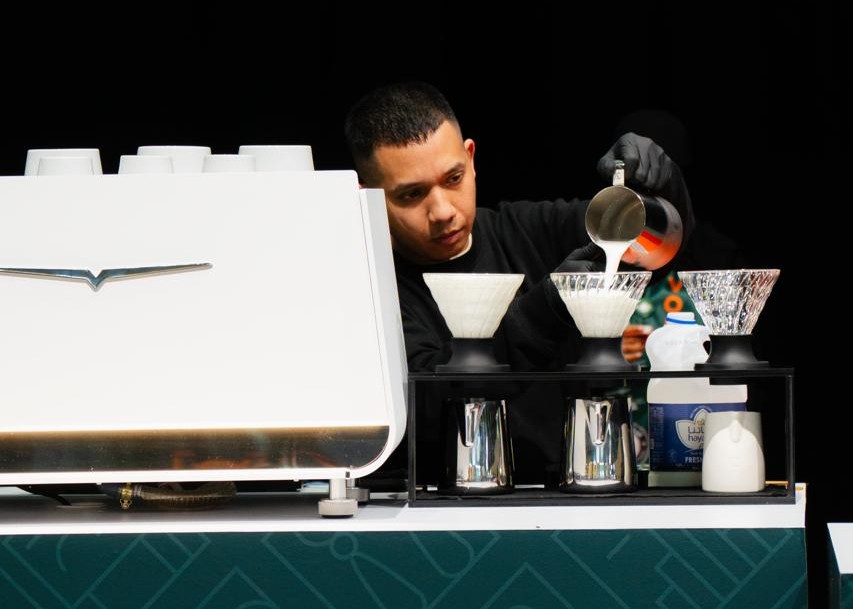
Jhomar Morales’ Journey to the UAE Latte Art Championship 2026

Dubai – Ali Alzakary

The UAE National Latte Art Championship 2026, held during the fifth edition of World of Coffee Dubai at the Dubai World Trade Centre, brought together some of the country’s most talented baristas in a showcase of creativity, precision, and technical excellence. Among them, Jhomar Morales of Benchmark Coffee claimed first place, earning the national title in one of the event’s most anticipated competitions.

In this interview, Morales reflects on the emotional moment of his win, the discipline behind his preparation, the role of teamwork, and his vision for the future of latte art and specialty coffee in the UAE.

  • How did you feel at the moment you were announced as the UAE National Latte Art Champion 2026?

In that moment, everything felt unreal. I thought about all the early mornings, the repetitive practice, the mistakes, and the sleepless nights spent thinking about how to improve each design. I felt proud—not just of winning, but of the journey I went through for this competition.

My team was always there, supporting me and helping me polish every design I prepared. Representing the UAE as the National Latte Art Champion 2026 is truly an honor. More than anything, it reminded me that hard work and belief really do show up when it matters most.

  • What does this win mean to you personally and professionally?

Personally, this win is a deep validation of the journey—of discipline and believing in myself, even during moments of doubt. It reminds me that consistency in practice pays off, and it fuels my confidence to keep pushing my limits.

Professionally, it’s a major milestone in my coffee career. It represents growth as a barista, an artist, and a competitor, and it opens the door to represent the UAE on a bigger stage. More than a title, it’s a responsibility—to inspire others in the coffee community, to keep learning, and to share knowledge.

  • What do you think was the key factor behind your success in this competition?

I believe the key factor was consistency under pressure. I trusted my preparation and the practice I did with my team, and I didn’t try to do anything different on stage. I focused on clean fundamentals, calm execution, and staying present in each pour.

Mentally, I stayed grounded by reminding myself why I started competing in the first place—to enjoy the process and express myself through latte art. That balance between solid technical preparation and a clear, calm mindset made the biggest difference.

  • How will this title impact your journey with Benchmark Coffee?

This title deepens my commitment to Benchmark Coffee. It reflects the environment, support, and high standards the team has built, and I’m proud to carry the Benchmark name with me.

Moving forward, it pushes me to give back more—by sharing competition insights and helping raise the bar in training. I see this win not just as a personal milestone, but as an opportunity to grow alongside Benchmark.

  • How do you see the future of latte art and specialty coffee in the UAE?

I see the future of latte art and specialty coffee in the UAE as incredibly exciting and dynamic. The scene here is still young compared to some established coffee cultures, which means there’s huge room for creativity, innovation, and growth.

More baristas are developing signature styles, pushing technical boundaries, and blending local influences into their work. With more competitions, workshops, and collaborations, I believe we’ll see a stronger community that supports continuous learning and excellence. The UAE has real potential to become a vibrant specialty coffee hub in the region.

  • What’s next for you after this win—are you aiming for international competitions?

What’s next for me is preparing properly for the world stage. My focus is on building a solid training structure—refining consistency under pressure, tightening my workflow, and practicing in competition-style conditions again and again.

I’m aiming to develop a style that truly represents who I am as a latte artist and where I come from. When I step onto the international stage, I want to feel prepared, grounded, and proud to represent the UAE at the highest level.

  • What advice would you give to aspiring baristas who want to compete?

Never underestimate the power of teamwork, discipline, and routine.

No one succeeds alone in competition. Build a strong team around you—coaches, peers, and mentors who will challenge you, support you, and give you honest feedback. Having people who believe in your vision makes a huge difference, especially during long preparation periods.

Discipline is what keeps you moving forward when motivation fades. Show up even on days when practice feels repetitive or frustrating. Small, consistent improvements build real confidence on stage.

Finally, create a routine and trust it. From daily practice to pre-competition habits, routines remove doubt and help calm your mind under pressure. When you step on stage, rely on your preparation and let your hands do what they’ve been trained to do.
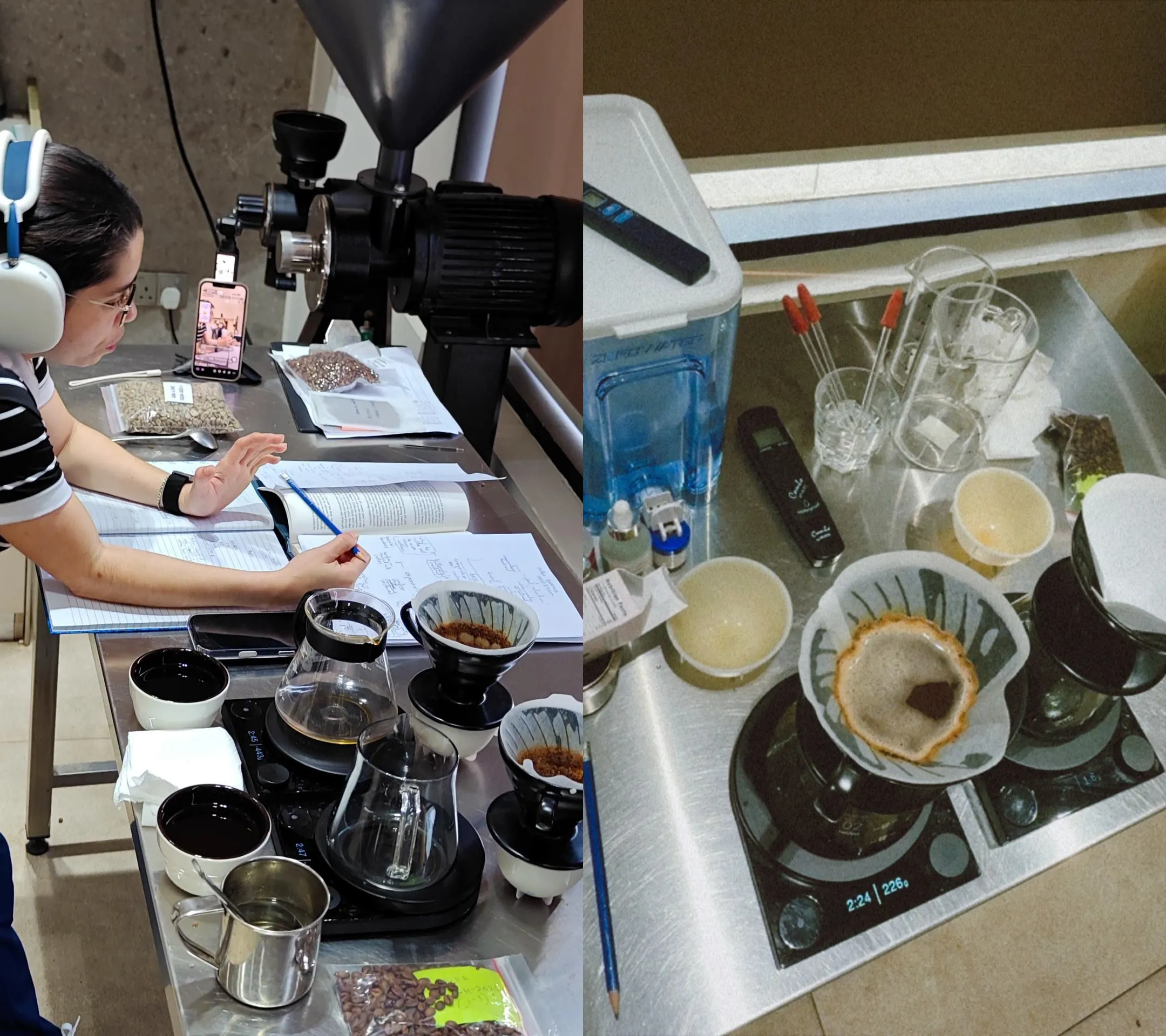
Temperature Doesn’t Increase Extraction It Redesigns the Cup

By: Estella Zuleta Carmona

When I talk about temperature in coffee extraction, I’m not simply referring to “more heat = more extraction.” Temperature is the energy we give to the system, and that energy defines both the extraction rate and which chemical compounds can be released from the coffee’s solid matrix. Higher temperatures facilitate the extraction of less soluble compounds, as they reduce the energy required for them to dissolve and diffuse into the beverage. At the same time, this increased energy accelerates both the release and the loss of volatile and non-volatile aromatic compounds.

Furthermore, temperature modifies the effective polarity of water, changing its ability to dissolve compounds of different polarities. Therefore, temperature not only determines how much is extracted, but also what is extracted and in what proportion, defining the final chemical and sensory profile of the coffee.

In this context, adjusting the temperature means adjusting the energy available in the extraction system. By doing so, you modify which chemical compounds can be extracted, at what rate, and in what proportion. In practice, changing the temperature is a direct way to “reconfigure” the cup, because it alters the balance between volatile and non-volatile compounds, influences the polarity of the water, and redefines the final chemical and sensory profile of the coffee.
To explore this, I brewed two very different coffees at 85 °C and 95 °C: an Ethiopia natural–anaerobic and a China natural. Same coffees, same parameters. Only energy changed.
At 85 °C, the Ethiopia natural–anaerobic showed medium-high acidity, moderate sweetness, and low bitterness. The cup finished quickly, with a dry, dusty mouthfeel. As it cooled, acidity stayed dominant, sweetness remained low, and bitterness nearly disappeared. Lower energy preserved acidity, but limited structural development and aromatic persistence.
At 95 °C, the same coffee shifted completely. Acidity softened to medium, while sweetness and bitterness increased (bitterness still medium-low). Floral notes became clearer, and the mouthfeel turned juicy and syrupy. Hot, everything felt louder not because more was extracted, but because extraction and aromatic loss were happening faster at the same time.
The China natural behaved in the opposite way. Higher temperatures emphasized sweetness and body, not aromatic collapse. Around 89 °C, sweetness peaked, and with more heat the cup gained structure and weight without a proportional rise in bitterness. In this coffee, energy built the cup instead of compressing it.
This is why temperature has no universal “sweet spot.”
It doesn’t simply extract more it decides what survives in the cup.
Adjusting temperature is not correcting a recipe.
It’s choosing which version of the coffee you allow to exist.
This contrast highlights a critical point: temperature has no universal effect on extraction. Its impact is entirely dependent on the chemical composition of the coffee and the way energy interacts with that composition. Adjusting temperature is therefore not about optimizing a parameter, but about making a deliberate chemical and sensory choice deciding which compounds are prioritized, which are sacrificed, and how the final balance is constructed.

A Pinch of Salt: The Viral Trick Changing How Coffee Lovers Balance Flavor

Dubai – Qahwa Wolrd

A growing online trend is convincing coffee drinkers to rethink their morning ritual — not with new beans or gadgets, but with a grain of salt.

Social media users claim that adding a small pinch of salt to coffee softens its bitterness and enhances its natural sweetness, making it smoother without sugar or cream. The method varies: some mix salt directly into the brewed cup, others stir it into the water or sprinkle it over the grounds before brewing.

According to food specialists, the science behind this hack is straightforward. Sodium ions interact with taste receptors on the tongue, reducing the perception of bitterness without covering up flavor. Research has shown that small quantities of salt can balance the taste of bitter compounds and highlight sweet notes, especially in dark-roasted coffees.

Food scientist Ed McCormick explains that salt affects the way our taste buds respond to bitter molecules: “A touch of sodium suppresses bitter flavors and brings forward hidden sweetness — all without added sugar.”

Professional baristas agree that moderation is essential. Two-time U.S. champion Heather Perry notes that while salt can mellow harsh notes, too much will distort the intended flavor. “High-quality beans already offer balance,” she says. “Salt can help with low-grade or over-roasted coffee, but it can also mask what makes specialty beans unique.”

Some users claim that salted coffee aids hydration, but nutrition experts dismiss the idea. Registered dietitian Janelle Bober explains that the effect of a single pinch of salt is negligible and does not offset coffee’s mild diuretic nature. She adds that those with kidney or blood-pressure issues should avoid excess sodium, though the small amounts used in this trend are typically harmless.

For anyone trying to reduce sugar or calories, salt provides flavor without adding fat or sweetness.

While new to many Western drinkers, the idea of salting coffee has deep cultural roots. In Turkey, it holds symbolic meaning in traditional engagement rituals. Vietnam’s beloved ca phe muoi (salted coffee) combines espresso, sweetened condensed milk, and salted cream. Taiwan’s cafés popularized “sea-salt coffee,” and in Nordic regions, salt has long been added to balance mineral-rich water.

Even contemporary cafés are experimenting with it. Some craft beverage makers incorporate salt into syrups and signature drinks to intensify flavor complexity. Beverage developer Caitlin Burke says, “Like in cooking, a bit of salt amplifies what’s already there — it deepens and rounds the flavor.”

Though the internet has repackaged it as a viral “hack,” the practice is centuries old — a simple act of culinary chemistry rediscovered. For coffee enthusiasts seeking a smoother, more balanced cup, the answer may truly lie in a pinch of salt.

The Golden Ratio of Coffee: The Secret to Perfect Balance in Every Cup

Dubai – Qahwa World

Making coffee is not just a matter of taste — it’s a craft built on precision, balance, and understanding. Among the most essential principles guiding professional baristas and home brewers alike is the Golden Ratio, a simple yet powerful formula that ensures every cup achieves the right harmony between strength, flavor, and smoothness.

What Is the Golden Ratio?

According to the Speciality Coffee Association (SCA), the ideal coffee-to-water ratio lies between 1:15 and 1:20, meaning 1 gram of ground coffee for every 15 to 20 grams of water. This proportion defines how rich, strong, or light your brew will be.

A lower ratio (such as 1:15) produces a bolder, more intense cup, while a higher ratio (like 1:18) results in a gentler flavor — ideal for black coffee drinkers. These figures form the universal foundation of balanced brewing used across drip machines, pour-over setups, and French presses.

Weight Over Volume

The Golden Ratio is based on weight, not volume. Because grind size affects density, measuring coffee by scoops or spoons leads to inconsistency. For precision, use a digital scale to weigh both coffee and water accurately.

Key Factors That Shape Coffee Quality

Even when you follow the Golden Ratio, several factors influence how your coffee tastes.

1. Grind Size

Grind size determines how quickly and thoroughly water extracts flavor from the grounds.

French press: Coarse grind, similar to sea salt.

Pour-over: Medium to slightly fine grind.

Drip coffee maker: Consistent medium grind.

An improper grind can cause under-extraction (sour taste) or over-extraction (bitterness).

2. Water Temperature

The SCA recommends a brewing temperature between 195°F and 205°F (90°C to 96°C). Boiling water can burn coffee grounds and create a harsh taste, while cooler water prevents proper extraction.

3. Agitation and Flow

The way water moves through coffee — whether by pouring, stirring, or immersion — affects extraction balance. Gentle agitation helps saturate all particles evenly, producing a more consistent cup, especially in pour-over or French press methods.

4. Filter Type

The filter acts as the final gate between the brewing process and your cup.

Paper filters trap oils and fine particles, resulting in a clean, light-bodied brew.

Metal filters allow oils to pass through, enhancing texture and body.

Both have merit; the choice depends on your personal preference for clarity or richness.

Best Practices for a Perfect Brew

Use a scale. Measuring by weight ensures accuracy and repeatability.

Choose fresh coffee. Recently roasted beans yield livelier, more expressive flavors.

Invest in a good grinder. A burr grinder provides a consistent grind size, leading to more even extraction.

Stay consistent. Pick a brewing method you can comfortably repeat every day.

Experiment with confidence. Once you’ve mastered the basics, adjust ratios or grind settings slightly until you find your ideal cup.

The Essence of Balance

The Golden Ratio is not a secret formula but a timeless principle — a shared standard among coffee professionals and enthusiasts worldwide. When respected alongside the right grind size, temperature, and technique, it transforms coffee brewing from routine to ritual.

With precision, balance, and consistency, anyone can create a cup worthy of the world’s finest cafés — right at home.