Rising prices reshape coffee consumption patterns in Russia

Moscow – Qahwa World

Data from the “Check Index” analytical center of the OFD Platform show significant changes in coffee consumption patterns in Russia during 2024–2026, driven by sustained price increases across all major categories.

In 2025, prices rose across the entire market. The average price of instant coffee reached 482 rubles (+22% year-on-year), roasted beans 1,223 rubles (+40%), ground coffee 541 rubles (+29%), capsules 710 rubles (+15%), and drip-pack coffee 354 rubles (+16%).

At the same time, purchase volumes declined in most segments. Consumption of roasted beans fell by 21%, ground coffee by 11%, capsules by 13%, and instant coffee by 10%. The only category to show growth was drip-pack coffee, where purchases increased by 37% in 2025.

The data attributed this growth to the relatively lower price of drip packs compared with other formats, as well as ease of preparation, which led to partial substitution from ground coffee and capsules. The segment also showed higher adoption among younger consumers, including Generation Z.

In the first quarter of 2026, prices continued to rise. Instant coffee averaged 527 rubles (+7%), roasted beans 1,330 rubles (+10%), ground coffee 618 rubles (+15%), capsules 737 rubles (+5%), and drip-pack coffee 422 rubles (+10%).

Demand trends during the same period were mixed. Purchases of instant coffee increased by 4%, while roasted beans declined by 2%, ground coffee by 13%, capsules by 7%, and drip-pack coffee by 13%.

In the café segment, Russians purchased around 10.3 million cups of coffee per month. The average number of items per receipt was 3.1, with coffee and beverages accounting for 72% of total purchases.

The average price per cup in cafés rose to 289 rubles in Q1 2026. After a 19% increase in 2025, coffee sales in the food service sector declined by 4% at the beginning of 2026.

Overall, the data indicates a gradual restructuring of Russia’s coffee market, as rising prices continue to reshape consumption patterns and shift demand across different product categories.
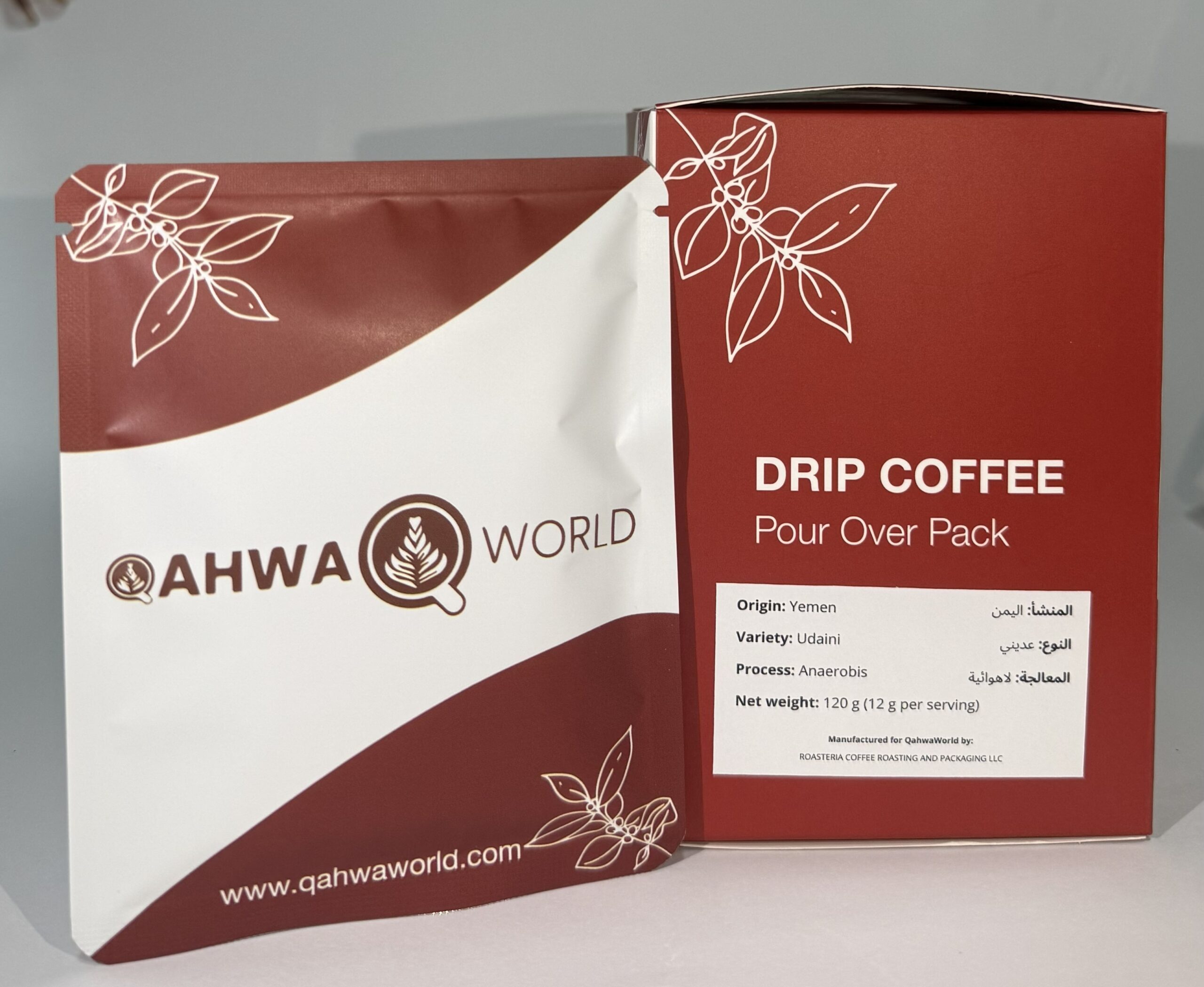
Specialty Yemeni Coffee: Authentic Heritage on Amazon

Dubai – Qahwa World

From the high peaks of Yemen directly to your doorstep, we present the first speciality Yemeni coffee in an innovative Drip Coffee format. We have selected the finest crops, reflecting the richness of Yemeni soil and its unique flavour notes, offering them in practical sachets for a perfect cup in seconds.

Whether at the office or on a road trip, never compromise on quality again. For our exclusive launch on Amazon, we are offering a very attractive price that brings luxury within your reach.

To experience the coffee, click here: Amazon Purchase Link

The Golden Ratio of Coffee: The Secret to Perfect Balance in Every Cup

Dubai – Qahwa World

Making coffee is not just a matter of taste — it’s a craft built on precision, balance, and understanding. Among the most essential principles guiding professional baristas and home brewers alike is the Golden Ratio, a simple yet powerful formula that ensures every cup achieves the right harmony between strength, flavor, and smoothness.

What Is the Golden Ratio?

According to the Speciality Coffee Association (SCA), the ideal coffee-to-water ratio lies between 1:15 and 1:20, meaning 1 gram of ground coffee for every 15 to 20 grams of water. This proportion defines how rich, strong, or light your brew will be.

A lower ratio (such as 1:15) produces a bolder, more intense cup, while a higher ratio (like 1:18) results in a gentler flavor — ideal for black coffee drinkers. These figures form the universal foundation of balanced brewing used across drip machines, pour-over setups, and French presses.

Weight Over Volume

The Golden Ratio is based on weight, not volume. Because grind size affects density, measuring coffee by scoops or spoons leads to inconsistency. For precision, use a digital scale to weigh both coffee and water accurately.

Key Factors That Shape Coffee Quality

Even when you follow the Golden Ratio, several factors influence how your coffee tastes.

1. Grind Size

Grind size determines how quickly and thoroughly water extracts flavor from the grounds.

French press: Coarse grind, similar to sea salt.

Pour-over: Medium to slightly fine grind.

Drip coffee maker: Consistent medium grind.

An improper grind can cause under-extraction (sour taste) or over-extraction (bitterness).

2. Water Temperature

The SCA recommends a brewing temperature between 195°F and 205°F (90°C to 96°C). Boiling water can burn coffee grounds and create a harsh taste, while cooler water prevents proper extraction.

3. Agitation and Flow

The way water moves through coffee — whether by pouring, stirring, or immersion — affects extraction balance. Gentle agitation helps saturate all particles evenly, producing a more consistent cup, especially in pour-over or French press methods.

4. Filter Type

The filter acts as the final gate between the brewing process and your cup.

Paper filters trap oils and fine particles, resulting in a clean, light-bodied brew.

Metal filters allow oils to pass through, enhancing texture and body.

Both have merit; the choice depends on your personal preference for clarity or richness.

Best Practices for a Perfect Brew

Use a scale. Measuring by weight ensures accuracy and repeatability.

Choose fresh coffee. Recently roasted beans yield livelier, more expressive flavors.

Invest in a good grinder. A burr grinder provides a consistent grind size, leading to more even extraction.

Stay consistent. Pick a brewing method you can comfortably repeat every day.

Experiment with confidence. Once you’ve mastered the basics, adjust ratios or grind settings slightly until you find your ideal cup.

The Essence of Balance

The Golden Ratio is not a secret formula but a timeless principle — a shared standard among coffee professionals and enthusiasts worldwide. When respected alongside the right grind size, temperature, and technique, it transforms coffee brewing from routine to ritual.

With precision, balance, and consistency, anyone can create a cup worthy of the world’s finest cafés — right at home.