Portail des Nations to Open in June 2026

New visitor centre in Geneva aims to transform public engagement with the United Nations

Geneva – Qahwa World

The Portail des Nations, the highly anticipated visitors’ centre of the United Nations in Geneva, has confirmed its official opening for early June 2026. Positioned at the historic entrance to the Palais des Nations, this landmark initiative is set to redefine how global audiences engage with the principles and practice of multilateralism.

Conceived as far more than a traditional exhibition space, the Portail des Nations has been designed as an immersive gateway into the world of international cooperation. Through a thoughtfully curated, technology-led journey, visitors will be invited to explore the role of diplomacy in addressing the defining challenges of the modern era, including global health, climate change, human rights, and innovation.

The project was initiated by Ivan Pictet, whose vision responded to a call by United Nations Secretary-General António Guterres to bring multilateralism closer to people worldwide. This ambition has been realised through the Fondation Portail des Nations, established in 2019 to develop and deliver the initiative on behalf of UN Geneva. The Foundation will continue to operate the centre during its initial phase, ensuring a seamless and impactful visitor experience.

Entirely funded through private contributions, the Portail des Nations stands as a testament to international collaboration and philanthropic commitment. Alongside Ivan Pictet as principal donor, key contributions have been made by the Hans Wilsdorf Foundation and the Loterie Romande, supporting the construction and design of the building. The immersive visitor experience has been further enriched through the support of the Dona Bertarelli Philanthropic Foundation. Public institutions including the Swiss Confederation, the Republic and Canton of Geneva, and the City of Geneva have also provided essential backing for its early operations.

At its core, the Portail des Nations seeks to demystify multilateralism, often perceived as abstract, by presenting it as a tangible and essential framework for collective progress. In Geneva, one of the world’s foremost centres of diplomacy, this concept comes to life through international agreements, humanitarian initiatives, and cross-border cooperation. The centre will offer visitors a deeper understanding of how these processes shape everyday lives across the globe.

Designed to welcome up to 200,000 visitors annually, the experience will unfold over approximately two hours and will be available in eight languages, ensuring accessibility for a diverse international audience. Open daily from 9:00 a.m. to 6:00 p.m., the centre will offer a seamless visitor journey, with tickets available exclusively online.

Easily accessible via public transport and located on Avenue de la Paix, the Portail des Nations is poised to become a defining cultural and educational destination in Geneva. Its opening marks a significant milestone in strengthening public connection to the United Nations’ mission, offering a compelling invitation to explore the power of dialogue, cooperation, and shared responsibility in shaping a more sustainable future.

  • About Geneva Tourism & Conventions Foundation

Tourism in Geneva is managed by the Geneva Tourism & Conventions Foundation (FGT&C). This entity was created following the integration, on 1 January 2013, of the Geneva Tourism & Conventions Association (GT&C) into the Foundation for Tourism. An executive board of 11 members, primarily representing Geneva’s tourism-related sectors, alongside an advisory board established by local authorities, ensures professional corporate governance of the FGT&C. Its responsibilities include advising on the strategic development of tourism policy and supporting the achievement of objectives set out by law.

Top Espresso Drinks: Latte Up 31% in 2026

New York, NY – Qahwa World announces new insights on espresso-based beverages 2026 trends.

Americans aren’t just drinking more specialty coffee. They are going espresso first, which is especially evident in espresso-based beverages 2026 results.

According to the Spring 2026 National Coffee Data Trends (NCDT) report from the National Coffee Association, 58% of American adults had a specialty coffee in the past week, up from 53% in 2022. But the real story lies inside the cup: Espresso-Based Beverages (EBBs) are driving the growth. Notably, espresso drinks based on espresso are shaping beverage preferences in 2026.

Overall, 45% of American adults consumed an EBB in the past week, up from 40% in 2022. The newly released “America’s Top Cups” ranking for Americans aged 18+ reveals the order of espresso favorites, highlighting how espresso-based drinks will continue evolving throughout 2026.

The Top Espresso-Based Beverages (Past Week)

Rank Beverage Past-week consumption Change since 2022
1 Latte 21% Up from 17%
2 Espresso 20% Up from 16%
3 Cappuccino 17% No change
4 Caffè Mocha 12% No change
5 Americano 10% No change
6 Macchiato 9% No change
7 Flat White 5% No change

📈 Latte surges 31% since 2025

The latte is accelerating. The report shows latte consumption is up 31% since 2025, making it the fastest growing espresso beverage. Straight espresso also climbed from 16% to 20% over the same period. A sign of growing appreciation for quality shots. In conclusion, we see espresso-based beverages 2026 influencing consumption patterns across the industry.

A Changing Coffee Landscape

Non-espresso options like cold brew (18% popularity) and frozen blends (15%) still have a place. But the espresso category is where the momentum lies. For retailers, these espresso-based beverages 2026 trends indicate that menu innovation is essential for staying ahead.

“The shift toward espresso-based beverages reflects a broader sophistication in American coffee tastes. Consumers know what they want, and they want it pulled fresh.”

The Spring 2026 NCDT Report was conducted in January 2026 by Dig Insights. It offers complete data on consumption trends, demographic breakdowns, and future forecasts, including projections for espresso-based beverages in 2026.

The Hidden Science in Your Morning Cup: How Electricity Could Finally Tame Coffee’s Wild Inconsistency

A new electrochemical method promises to do what refractometers and taste-testers alone cannot: measure both strength and roast quality in a single sip.

Dubai – Qahwa World

There is a quiet frustration that haunts every coffee lover’s life. You find a bag of beans you love. Bright, complex, perfectly balanced. You brew it exactly the same way the next morning. And somehow, it is wrong. Too bitter. Too sour. Thin and lifeless.

The problem is not your technique. Or rather, it is not only your technique. The problem is that coffee is one of the most chemically complex beverages on Earth. More than a thousand compounds interact in ways that scientists are still struggling to understand. And for decades, we have been flying blind when it comes to measuring what actually ends up in the cup.

The coffee industry has relied on a single number to assess quality: total dissolved solids, or TDS, measured by shining light through the liquid. A refractometer tells you how much coffee material is dissolved in the water. But it cannot tell you what that material is.

And that, as it turns out, is a serious problem.

Now, a team of chemists at the University of Oregon, led by Christopher Hendon, has published a study in Nature Communications that offers a radical alternative. They have shown that by running a simple electrical test on a cup of black coffee, with no sample preparation, no dilution, no fancy reagents, you can measure both the strength of the brew and, separately, how dark the coffee was roasted. Two of the most critical variables in coffee quality, captured in a single voltammogram.

The Refractometer’s Blind Spot

To understand why this matters, you have to understand what the coffee industry has been working with.

The refractometer is a marvel of practical engineering. It measures how much light bends as it passes through a liquid, the refractive index, and uses an empirical formula to convert that number into a percentage of dissolved solids. A typical filter coffee might register around 1.35% TDS, meaning that 98.65% of what is in your cup is water.

But here is the catch: different substances bend light differently. A 2% glucose solution has the same refractive index as a 4% ethanol solution. In a simple system, that is a problem. In coffee, which contains hundreds of organic acids, sugars, alkaloids, lipids, and melanoidins, it is a fundamental limitation.

Two coffees can have identical TDS readings and taste completely different. A light roast and a dark roast, brewed to the same strength, will produce wildly different flavor experiences. The refractometer cannot tell them apart.

Hendon’s team set out to build a tool that could.

A Method Borrowed from Battery Science

Cyclic voltammetry sounds intimidating, and the instruments used to perform it, potentiostats, are normally found in laboratories testing batteries or fuel cells. But the basic principle is elegant. You immerse electrodes in a solution, sweep the voltage across a range, and measure how much current flows.

Different molecules respond at different voltages, either donating or accepting electrons. In principle, you could identify specific compounds, such as caffeine, chlorogenic acids, or the organic acids that give coffee its brightness, by looking for their characteristic signatures on the voltammogram.

But Hendon’s team took a different approach. Instead of trying to identify individual molecules, they looked at the overall shape of the response, particularly in the region where hydrogen ions interact with the surface of a platinum electrode.

What they found was surprising.

In brewed coffee, which is naturally conductive and self-buffered to a pH of about 5, the voltammogram looks remarkably like that of acidic water. There are features corresponding to hydrogen adsorption onto the platinum surface, followed by hydrogen gas evolution at more negative voltages. On the return sweep, oxygen-related chemistry appears.

But here is where it gets interesting. When you cycle the voltage repeatedly, those hydrogen-related features shrink. The current decreases by about 34% from the first scan to the second and another 18% to the third. Something is coating the electrode surface, blocking the sites where hydrogen would normally react.

That something, the researchers discovered, includes caffeine.

Scavenging the Cup

To prove this, they did something clever. They took a platinum mesh electrode, far larger than the tiny disk used for routine measurements, and cycled it hundreds of times in brewed coffee, deliberately building up a layer of adsorbed material. Then they submerged the electrode in a water-acetonitrile solution, sonicated it to release the adsorbates, and ran the resulting liquid through a high-performance liquid chromatograph coupled with a mass spectrometer.

Caffeine showed up. About 300 micrograms of it, representing roughly 0.4% of the total caffeine in an average cup. Over the course of the experiment, each hundred-cycle scan scavenged about 0.1% of the available caffeine.

But caffeine is not the whole story. Dark roasts have less chlorogenic acid than light roasts. Those compounds break down during roasting, contributing to the bitter, smoky, “dark” flavor profile. The team used density functional theory calculations to show that both caffeine and 5-caffeoylquinic acid, a common chlorogenic acid isomer, bind stably to platinum surfaces, with slight preferences for different crystal facets. The suppression of the hydrogen signal, they argue, reflects the ensemble of organic molecules competing for the electrode surface. And that ensemble changes with roast level.

Distilling the Data

To test this hypothesis, the researchers did something any good coffee scientist would do: they roasted coffee. Starting with a Colombian green bean, they generated six progressively darker roasts, ranging from 75.8 Agtron units (light) down to 55.7 (dark). They rested the beans for seven days to allow carbon dioxide to off-gas, then brewed them using the Specialty Coffee Association’s cupping protocol.

Here is the critical step. They diluted each brew to exactly 1.00% TDS, measured by refractometer. So all six coffees had the same strength. Any difference in the voltammogram would therefore be due to composition alone, to roast level.

The difference was dramatic. The lightest roast passed about 50% more charge in the hydrogen region than the darkest roast. When they plotted total charge against TDS for each roast, they found a linear relationship, but the slope was steeper for lighter roasts.

In other words, the electrochemical method can decouple strength from roast color. Two coffees with the same TDS but different roast levels produce different electrical signatures. That is something a refractometer cannot do.

The Blind Taste Test

But the real validation came from a collaboration with Colonna Coffee, a specialty roaster in Bath, UK. Colonna had roasted four batches of the same coffee to the same target whole-bean color, about 93 Agtron units. Three of the batches were acceptable. One was rejected by their sensory quality control panel because it was too light, 98.9 Agtron, and exhibited undesirable flavors.

The roaster sent the samples to Hendon’s lab in single-blind fashion: four unlabeled samples, no indication which was rejected.

The team brewed each sample five times, in random order, and ran their voltammetry measurements in another random order. The refractometer readings showed no statistical difference between any of the four samples. The whole-bean color measurements, the very specification the roaster was trying to hit, could not distinguish the rejected batch from the acceptable ones.

But the electrochemical method could.

The current passed in the first scan clearly separated sample 1, the rejected batch, from samples 2, 3, and 4. The differences were statistically significant, with p-values as low as 0.0002. The acceptable batches all fell within the same statistical class.

The fouling rate, how quickly the current decreased from scan one to scan two, was identical across all four samples. That rate depends on concentration. But the absolute current in the first scan depends on composition. By looking at the first scan alone, the method correctly identified the out-of-spec coffee.

The roaster confirmed: sample 1 was the rejected batch.

Why This Matters for the Coffee Industry

Let me pause here and translate what this means for someone running a roastery or a café.

Right now, quality control is a patchwork. You measure bean color with a spectrophotometer. You measure brew strength with a refractometer. And then you taste. But tasting is subjective, and even the best palates fatigue. A batch that passes all the instrumental checks can still fail on the cupping table because something subtle went wrong in the roast, a slightly uneven development, a minor deviation in the temperature curve, a bean that did not behave the way the previous batch did.

The electrochemical method offers something new: a single measurement that captures both the amount of coffee in the cup and the kind of coffee that is there. It is sensitive to the ensemble chemical composition in a way that refractive index is not.

Hendon’s team envisions quality control calibration curves. A series of simple CV measurements on progressively more dilute coffee allows a roaster to rapidly construct a reference, enabling quantitative comparisons of separate batches of the same coffee roasted to the same color.

But perhaps more intriguingly, the method is sensitive to differences that even color-matched batches can show. Those four batches from Colonna had nearly identical Agtron readings. The refractometer could not tell them apart. The human tongue could, but the electrochemical method could, too, and with quantitative precision.

What the Method Cannot Do (Yet)

A responsible reporter must also note the limitations.

First, the method requires a potentiostat and a platinum electrode. While these are not exotic instruments, potentiostats are common in electrochemistry labs and are becoming smaller and more affordable, they are not yet a café countertop tool. The researchers have a financial interest in a company called Overpotential, which is working to commercialize electrochemically modified food products, suggesting that they see a path to real-world application. But we are not there yet.

Second, the method does not replace tasting. It supports it. The goal is not to build a machine that tells you whether a coffee is “good” or “bad” in some absolute sense. The goal is to build a machine that tells you whether this batch matches the chemical profile of the batch you approved last week. Consistency, not judgment.

Third, the research was conducted on a relatively narrow set of coffees, a single Colombian origin roasted to different levels, plus a validation set from a roaster in the UK. The authors acknowledge that the shape of the “plane” mapping charge to TDS and Agtron color may be coffee-specific. A robust quality control system would require calibration curves for each coffee, each roast profile, each brewing method.

And finally, the method as currently described requires the coffee to be brewed to cupping standards, a standardized protocol that includes a specific water temperature, contact time, and filtration method. Real-world brewing in a busy café is messier than that. Whether the method remains reliable across variable grind sizes, water compositions, and brewing devices is an open question.

The Deeper Insight

But there is something deeper here, something that speaks to a broader shift in how we think about coffee quality.

For decades, the specialty coffee industry has pursued a kind of analytical reductionism. We measure TDS. We measure extraction yield. We measure bean color. We measure particle size distributions. We track water chemistry to the part per million. The implicit goal is to control every variable so precisely that the sensory outcome becomes predictable.

But coffee resists that kind of control. Not because we lack precision instruments, but because the relationship between the variables and the sensory experience is nonlinear, emergent, and deeply dependent on the ensemble chemistry of the brew.

What Hendon’s team has done is to embrace that complexity rather than try to reduce it. They are not measuring individual compounds. They are measuring the collective effect of those compounds on a simple electrochemical process, hydrogen adsorption onto platinum. The current depends on how many protons are available and on how many organic molecules are competing for the electrode surface. That competition is a proxy for the overall chemical character of the brew.

In a sense, the voltammogram is doing something very similar to what your tongue does. Your taste receptors respond to patterns of molecular activation, not to individual analytes. Sweetness is not sucrose; it is the activation of a family of receptors by a range of molecules that share certain structural features. Bitterness is similarly complex. The electrochemical method captures a related kind of ensemble property.

This is not a coincidence. Both taste and electrochemistry are fundamentally about molecular interactions at surfaces.

A New Tool for an Ancient Craft

Coffee has been drunk for at least 500 years, and for most of that history, quality assessment was purely sensory. You tasted it. If you were good, really good, you could identify origin, roast level, and defects by smell and taste alone.

The modern specialty coffee movement has added instruments to the toolkit: color meters, refractometers, moisture analyzers, gas chromatographs. Each has improved consistency. Each has also revealed new dimensions of variability.

The electrochemical method proposed by Hendon’s team is the latest addition to that toolkit. It is not a revolution that renders the human palate obsolete. It is a new lens that reveals something the other lenses miss. It sees composition where the refractometer sees only concentration. It sees the difference between light and dark that a spectrophotometer, fixed on a single color target, can miss.

And in a blind test against a roaster’s own quality control panel, it got the answer right.

That is the standard that matters. Not whether the method is elegant or novel or scientifically interesting, though it is all of those things, but whether it can do work that needs doing. Whether it can help a roaster catch a bad batch before it goes out the door. Whether it can help a café reproduce a beloved brew day after day. Whether it can give the coffee industry something it has never had: a direct, quantitative, in-situ measurement of the chemical properties that actually determine flavor.

The answer, based on this study, appears to be yes.

The Bottom Line

Christopher Hendon and his colleagues have shown that cyclic voltammetry can measure both the strength and the roast level of black coffee in a single, rapid test with no sample preparation. The method is sensitive enough to distinguish between batches of coffee that have identical TDS and nearly identical bean color, batches that a refractometer cannot tell apart and that a roaster might reject only after tasting.

This is not yet a café-ready tool. But it is a proof of concept for a fundamentally different approach to coffee quality analysis: one that measures ensemble chemical properties rather than individual analytes, that embraces complexity rather than reducing it, and that aligns more closely with how human sensory perception actually works.

For an industry that has long sought a quantitative method to assess beverage qualities beyond those informed by sensory panels, this is a significant advance.

And for the rest of us, the millions of people who start each day with a cup of coffee that is sometimes transcendent and sometimes merely adequate, it is a reminder that the science of that morning ritual is still being written. The perfect cup is not yet a solved problem. But we are getting closer.

The study, “Direct electrochemical appraisal of black coffee quality using cyclic voltammetry,” appears in Nature Communications (2026, Vol. 17, Article 3618). Christopher H. Hendon and Doran L. Pennington have a financial interest in Overpotential, a company commercializing electrochemically modified food products.

Nuova Simonelli at World of Coffee Bangkok 2026

Bangkok – Qahwa World

From May 7 to 9, Nuova Simonelli will take part in World of Coffee Bangkok 2026, bringing innovation and energy to the heart of the Asian coffee industry. Visitors can find the brand at booth B311, where technology, experience, and great coffee come together.

Nuova Simonelli area: a future experience

Inside the brand space, visitors will enjoy a fully hands-on experience designed for baristas, roasters, and coffee chains.

The event will feature the official launch of a new evolution of the iconic coffee machine, designed to simplify daily work, improve efficiency, and support sustainability.

A high-performance professional machine will also be available for hands-on testing, created for fast-paced environments without compromising cup quality.

Smart automation technology

Intelligent automation with zero stress. Visitors will experience smart automation technology that simplifies daily operations, standardizes preparation, and ensures consistent quality even during peak hours.

An experience beyond the booth

Booth B311 will be more than an exhibition space. It will be a dynamic hub for meeting, tasting, and exchanging ideas between coffee professionals and an international audience.

Guests are invited to try the machines, explore the technology, and engage with the future of coffee innovation.

Invitation

Visit the booth, test the equipment, and discover how coffee meets smart innovation.

Victoria Arduino to Showcase Innovation at World of Coffee Bangkok 2026

Bangkok – Qahwa World

From May 7 to 9, Victoria Arduino will take part in World of Coffee Bangkok 2026, one of the most anticipated events in the global specialty coffee industry. Hosted in Bangkok, the brand will present its vision focused on design excellence and high performance.

Visitors can find Victoria Arduino at booth B311, where its iconic machines and solutions will be showcased, all designed to support baristas and coffee businesses worldwide.

  • L’Atelier makes its debut

A key highlight of this year’s participation is the launch of L’Atelier, a new concept space dedicated to creativity, craftsmanship, and timeless design. Inspired by luxury ateliers, the project introduces a new level of customization, transforming each coffee machine into both a professional tool and a unique design piece.

  • Exclusive sensory experiences

Throughout the event, the Victoria Arduino booth, including the But First Coffee bar, will host special roaster takeovers in collaboration with leading Thai barista champions:

May 7: Fika and Co. Roasters with Jen Kawinrat Veerawat
May 8: Rosetta Roasters with Tee Sittipong
May 9: Asterisk Espresso Rosters with Kittipo Eangchoun

These sessions will offer visitors a rich sensory journey, combining high quality coffee, skilled baristas, and advanced extraction technology.

  • Barista champions on stage

At booth B311, a dedicated station featuring the Black Eagle Maverick Core will host a lineup of internationally recognized baristas:

Daniele Ricci on May 7 from 1 to 6 pm
Mikael Jasin on May 8 from 10 to 11 am
Dawn Chan on May 9 from 1 to 6 pm
Latte art competition highlight

Victoria Arduino will also partner with Loveramics for the Loveramics Milk Art Throwdown 2026 Bangkok. The event will take place on May 8 from 5 pm to 9 pm at the Loveramics Flagship Store. It will bring together baristas and coffee enthusiasts in a dynamic latte art competition focused on creativity and technique.

  • Looking ahead

Victoria Arduino invites all visitors to booth B311 to experience its latest innovations and explore the future of coffee through design, technology, and craftsmanship.

Vietnam Coffee Exports Rise 16% in Early 2026 While Revenue Falls

Dubai – Qahwa World

Vietnam’s coffee sector recorded a strong increase in export volumes during the first four months of 2026, while total export revenues declined due to easing global prices following the record highs of the previous year.

According to official government data, Vietnam exported approximately 810,000 tons of coffee between January and April 2026, representing a 15.8% year-on-year increase. The rise reflects continued strength in production and logistics, reinforcing Vietnam’s position as the world’s largest robusta coffee producer.

However, despite higher shipment volumes, export revenues fell by 7% compared to the same period in 2025, totaling 3.69 billion dollars. This divergence between volume and value reflects a clear correction in global coffee prices, particularly in the robusta segment.

  • Volume and Value Gap in Market Performance

The latest figures highlight a widening gap between export volume and export value. While shipments increased significantly, the average export price declined to around 4,555 dollars per ton, down from the elevated levels seen in mid-2025.

This price normalization follows a period of tight global supply that previously pushed prices to historic highs. Improved harvest conditions in Vietnam’s Central Highlands and recovering output from other producing countries have eased supply constraints, contributing to softer prices.

  • Market Dynamics and Domestic Trends

The decline in export revenue is primarily linked to weaker global coffee prices as markets adjust to expectations of higher supply. Increased production in Vietnam, along with competitive exports from countries such as Indonesia, has contributed to a more balanced global market.

Domestically, farm-gate prices in key coffee-producing provinces such as Dak Lak and Lam Dong fluctuated between 88,700 and 89,300 Vietnamese dong per kilogram in April. These movements encouraged cautious selling behavior among farmers, who are closely monitoring price trends before releasing stocks.

Earlier in the year, export momentum was already strong. Shipments in January and February 2026 were reported to be up by around 14 percent in some datasets, with the first quarter maintaining solid volume growth despite continued pressure on export values.

  • Strong Crop Outlook Supports Export Growth

Vietnam’s 2025 to 2026 coffee crop is expected to remain strong, with earlier projections indicating a potential increase of around 10 percent compared to the previous season. This growth is supported by improved weather conditions following earlier drought-affected periods.

The favorable production outlook has helped sustain high export volumes and ensured stable supply availability in global markets.

  • Strategic Shift Toward Value Addition

In response to ongoing price volatility in raw coffee markets, Vietnamese authorities and industry stakeholders are accelerating efforts to expand deep processing.

This strategy focuses on increasing exports of roasted, ground, and instant coffee products rather than relying mainly on green bean shipments. Investments are being directed toward advanced processing facilities to strengthen value addition and improve competitiveness in global supply chains.

  • Outlook

Industry analysts expect Vietnam to maintain strong export volumes throughout 2026, potentially reaching near-record levels if current production trends continue. However, revenue growth may remain under pressure unless global prices recover or demand strengthens in key markets such as the European Union, the United States, and Japan.

Vietnam’s performance in early 2026 highlights a key trend in global coffee trade: rising supply is driving higher export volumes, while price normalization is limiting overall export value.

Source: General Statistics Office (GSO) / Ministry of Agriculture and Rural Development

World Cup Tasters 2026: 45 Nations Battle in Bangkok

World of Coffee Asia | BITEC Bangkok | May 7–10, 2026

BANGKOK — QAHWA WORLD

The world’s most discriminating tongues are heading to Thailand. From May 7 to 9, 2026, the Bangkok International Trade & Exhibition Centre (BITEC) will host the 2026 World Cup Tasters Championship (WCTC), presented by Porland, as part of World of Coffee Asia — marking the first time this sensory competition has landed in Southeast Asia.

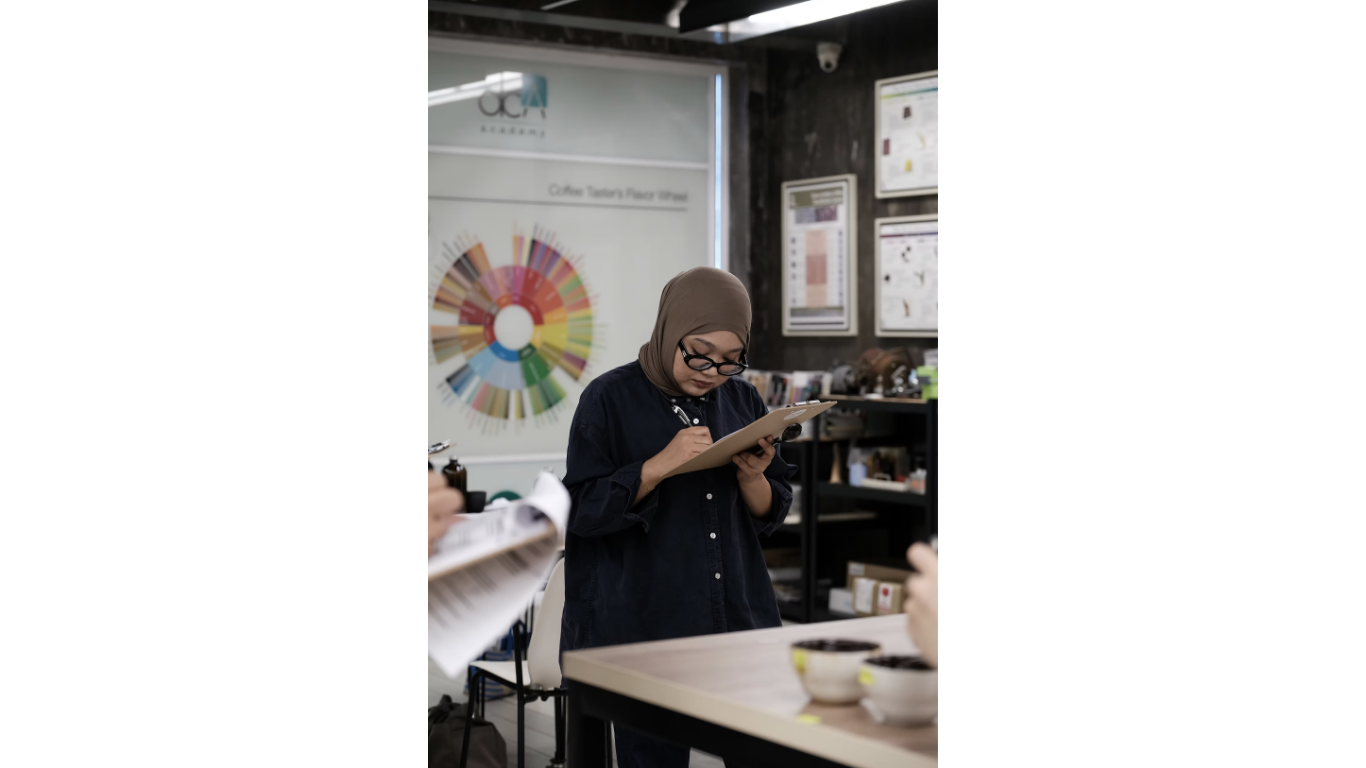
Forty-five professional cuppers from 38 countries will lean over porcelain triangles, spoons in hand, and attempt to do what sounds simple but is brutally difficult: taste three cups of coffee, identify the one that is different, and do it faster than anyone else on Earth.

The Triangle Test

Each round presents eight triangles — three cups where two contain identical coffees and one contains a different coffee. The cupper must identify the odd cup in each triangle using only smell, taste, attention, and experience. Competitors with the most correct identifications advance. Ties are broken by fastest time. Round 1 narrows the field to the top 8 for quarterfinals, then to 4 for the finals.

New 2026 rule updates:
• Clear “time” call required — only official time counts.
• Public discussion of an active appeal before a ruling will result in dismissal.

Full rules: wcc.coffee/rules-regulations

Full Competitor List (45 nations)

Name Country / Region
Karl Lee Australia
Andrew Wong United Kingdom
Mehmet Sogan United States
Cristian Arévalo El Salvador
Kiko Fong Hong Kong SAR
Minwook Jeong South Korea
Nathanael Austria
Sipho South Africa
Kamila Nováková Czech Republic
Le Quang Cuong (Nicky) Vietnam
Shao Edouard France
Luigi Paternoster Vicino Italy
Jacques Carneiro Brazil
Ivaniuk Rostyslav Ukraine
Vaggelis Stavropoulos Greece
Ply Pasarj Canada
Mateusz Derkacz Poland
Adeola Peter Akingbade United Arab Emirates
Gabriel Tudorin Ireland
Chiam Tow Jin Malaysia
Bogdan Danilenko Turkey
Juan Hu (胡娟) China
Benjamin Chamy Chile
Jonathan Davila Ecuador
Bo-Kai Lai (Eli) Chinese Taipei
Chiaki Kobayashi Germany
Luisa Fernanda Rodriguez Guatemala
Abdulkarim Abulrahman Ali Jumah Saudi Arabia
Tan Yi Xin Singapore
August Hislop Aotearoa/New Zealand
Marcos Uhlig Spain
Alif Andira Indonesia
Erhan Dizbay Turkey
Mooh Punnaphob Thailand
Anthony Huy Nguyen Sweden
Juan Sebastian Gómez Colombia
Tibor Hamori Belgium
Mizuki Tagami Japan
David Pahomi Romania
Jhon Jimenez Peru
Catherine Queiroz Switzerland
Vicky (Jinghan) Cheng Netherlands
Alvaro Arnez Bolivia
Reza F. Anissi Denmark

Schedule

  • May 7, 2026 – Orientation + Round 1
  • May 9, 2026 – Quarterfinals & Semifinals
  • May 10, 2026 – Finals & Awards Ceremony

Sponsors

Title: Porland | Qualified Water: Bluewater | Diamond: Cosori (Juni) | Supporting: Kranti Coffee, Cosori Cooks, Option-O

2026 WCC Circuit

Dates Location Championship
Jan 18–20 Dubai, UAE Cezve/Ibrik Championship
Apr 10–12 San Diego, USA World Latte Art Championship
May 7–9 Bangkok, Thailand World Cup Tasters Championship
June 25–27 Brussels, Belgium Brewers Cup, Roasting, Coffee in Good Spirits
Oct 23–25 Panama City, Panama World Barista Championship

Follow official updates: wcc.coffee | #WCCBangkok #WCTCBangkok

Reporting based on official announcements from World Coffee Championships, Porland, Bluewater, Cosori, and World of Coffee Asia. Competitor list as published March–May 2026. All times and schedules subject to change.

Your Morning Cup, Smarter Than You Think

Dubai – Qahwa World

That morning cup of coffee might do more than just wake you up—it could enhance your mood and mental performance even if you skip the caffeine entirely. There are coffee benefits without caffeine that are worth exploring. In fact, coffee benefits without caffeine can be seen across several areas of health and wellness.

A recent investigation suggests both regular and decaffeinated coffee offer unique benefits for digestion, emotions, and behavior, highlighting coffee benefits without caffeine as particularly notable for those sensitive to stimulants.

Researchers from University College Cork in Ireland examined two groups: 31 habitual coffee consumers (three to five cups daily) and 31 people who didn’t drink coffee at all. Initially, both groups showed no notable differences in weight, blood pressure, stress, anxiety, depression, digestive comfort, sleep quality, or physical activity levels. Notably, some participants experienced positive coffee benefits, despite the lack of caffeine, showing that health improvements can occur with decaf.

However, regular coffee drinkers did display distinct variations in certain immune markers and gut bacteria strains. Additionally, decaf options also demonstrated coffee benefits without the presence of caffeine for some gut-related outcomes.

To determine whether caffeine drives these effects, the team asked all 31 coffee drinkers to quit their daily habit for two weeks. After this break, participants resumed coffee consumption—16 received caffeinated versions, while 15 received decaf, without knowing which they were drinking.

After three weeks, both groups showed similar shifts in gut microbiome patterns, including strain-level changes. This indicates that certain gut bacteria respond to coffee itself, regardless of its caffeine content. Hence, coffee benefits can be achieved even without caffeine present.

  • Complementary Effects

According to the study authors, both types of coffee reduced stress, depression, impulsivity, and inflammation, while simultaneously boosting mood and cognitive function. Moreover, coffee benefits without caffeine can be part of a healthy lifestyle for those avoiding stimulants.

But caffeine did have unique advantages: only the caffeinated group experienced lower anxiety, reduced psychological distress, improved blood pressure, better attention span, and enhanced stress management. Interestingly, at the start of the study and after returning to caffeine, coffee drinkers also showed slightly higher impulsivity and emotional reactivity compared to non-drinkers.

Decaffeinated coffee, on the other hand, was linked to better sleep quality, increased physical activity, and improved memory. In particular, coffee benefits without caffeine were most evident in those needing better sleep.

These findings point to caffeine’s specific influence on mood and cognition, while suggesting that even decaf may support the gut-brain connection. The coffee benefits for gut health appear regardless of caffeine content.

  • Beyond the Buzz

“Coffee is more than just caffeine—it’s a complex food component that interacts with our gut microbes, metabolism, and emotional state,” explains microbiologist John Cryan. “Our results indicate that coffee, with or without caffeine, can affect health in distinct yet complementary ways.” To further clarify, people can experience coffee benefits without including caffeine in their daily routine.

The research relies on observed associations between gut microbiome changes and self-reported mood and behavior patterns, which may not capture the full picture. Nonetheless, the study used detailed metabolic comparisons to link how individuals processed coffee compounds with differences in their gut flora—a stronger approach than simply noting general health benefits.

Still, proving cause and effect remains challenging, given how little scientists understand about the gut microbiome and its influence on the brain. For those concerned about caffeine, coffee benefits without the stimulant remain worthy of consideration.

  • What This Means for You

“The relationship between digestive health and mental well-being is becoming clearer, but the mechanisms behind coffee’s effects on this gut-brain axis have stayed elusive,” Cryan adds.

Despite unanswered questions, the evidence continues to grow: coffee appears beneficial for both body and mind, linked to lower stress, elevated mood, and potential relief from depression symptoms. Even decaf has shown cognitive improvements in several studies, marking coffee benefits without caffeine as promising.

This new research suggests that caffeinated and decaf coffee each carry their own physiological and psychological trade-offs. The right choice may depend on what you’re seeking—alertness and focus, or better sleep and memory.

Clearly, coffee benefits without caffeine remain an important topic for anyone considering their options for daily beverage habits. “The comprehensive insights from this study open doors for future research into using these interactions for health interventions,” the team concludes, “and highlight the importance of understanding coffee’s wide-ranging effects on human health.”

Luckin Coffee unveils $300M share buyback

Dubai – Qahwa World

Luckin Coffee has reported strong first-quarter 2026 results, highlighted by a major share repurchase program and continued rapid expansion across its global store network. These results have drawn fresh attention to the recent Luckin Coffee share buyback.

The company posted net revenues of approximately RMB 12.0 billion (US$1.7–1.76 billion) for the three months ending 31 March 2026, representing a year-on-year increase of about 35%. As a result, market analysts are closely monitoring how the Luckin Coffee buyback of shares may influence its valuation.

This performance continues a sustained period of growth for the Chinese coffee chain, supported by aggressive store expansion and rising customer activity. Additionally, the Luckin Coffee share buyback demonstrates how management seeks to reward shareholders during periods of robust growth.

Store network expansion

During the quarter, Luckin opened 2,548 net new stores, bringing its total footprint to 33,596 locations worldwide. Notably, the company expanded its network while balancing capital through the coffee share buyback initiative.

The majority of new outlets were concentrated in China and Hong Kong, alongside a smaller number of openings in international markets including Singapore, Malaysia, and the United States. Moreover, this store expansion complements Luckin Coffee’s share buyback efforts.

$300 million buyback program

Alongside its earnings release, the company announced its first-ever share repurchase program, authorizing the buyback of up to US$300 million in shares over a 12-month period. Furthermore, investors are reviewing the Luckin Coffee share buyback as a signal of confidence from management.

The program allows the company to repurchase shares through open-market transactions or private deals, subject to market conditions and regulatory requirements. Significantly, the Luckin Coffee share buyback program provides flexibility in methods for repurchasing shares.

[conclusion] Such programs are typically used by companies to return value to shareholders and signal confidence in future performance. This approach is evident in the case with the Luckin Coffee share buyback.

Growth drivers and operations

Luckin’s growth was supported by:

  • Expanding store network scale
  • Increased customer activity, with average monthly transacting customers rising year-on-year
  • Continued investment in digital infrastructure and supply chain capabilities; the Luckin Coffee buyback strategy also supported financial stability.

The company emphasized its strategy of “high-quality, scaled growth,” leveraging technology and operational efficiency to drive consumption and strengthen its competitive position. In turn, initiatives like the Luckin Coffee share buyback reinforce this formula.

Margin pressure and mixed signals

Despite strong revenue growth, some indicators showed pressure:

  • Margins declined compared to the previous year
  • Same-store sales remained relatively flat
  • Rising costs, including delivery expenses, impacted profitability trends

These factors reflect a more competitive and evolving market environment, even as Luckin Coffee pursues strategic share buybacks to support its business.

Outlook

Luckin Coffee indicated confidence in its long-term strategy, pointing to its integrated digital model and large-scale operations as key advantages in navigating near-term volatility. Furthermore, the Luckin Coffee share buyback is anticipated to enhance its financial outlook.

The launch of the share buyback program further reinforces management’s focus on shareholder returns while maintaining growth momentum. In summary, the Luckin Coffee share buyback is expected to impact investor sentiment and future market activity.

Coffee Futures Rebound as Dollar Weakness Triggers Short Covering

Dubai – Qahwa World

Coffee prices climbed back from one-and-a-half-week lows on Friday, ending the session in positive territory. The turnaround came as the U.S. dollar dropped to a two-week low, prompting traders to cover short positions in the coffee market. This price recovery was also influenced by coffee futures short covering as traders adjusted their positions. Notably, coffee futures short covering has played a key role in recent market movements.

July arabica coffee rose 0.85 cents (0.30%), while July robusta coffee gained 3 points (0.09%).

Early Losses on Brazil Crop Outlook

Prices initially moved lower on expectations of a larger harvest in Brazil. The Coffee Trading Academy projected Thursday that Brazil’s 2026/27 coffee crop would rise 12% year-over-year to 71.4 million bags.

Just days earlier, arabica had touched a 1.75-month low following forecasts of a record Brazilian harvest. On March 19, Marex Group predicted a record 75.9 million bags for 2026/27, beating Sucafina’s estimate of 75.4 million bags (up 15.5% annually). StoneX also raised its production outlook for Brazil to an all-time high of 75.3 million bags on March 12, up from a prior forecast of 70.7 million bags. Additionally, StoneX expects the global coffee surplus to balloon from 1.8 million bags in 2025 to 10 million bags in 2026 — the widest surplus in six years. As a result, coffee futures short covering activity may increase amid these predictions.

Vietnamese Exports Weigh on Robusta

Soaring shipments from Vietnam, the world’s top robusta producer, are putting pressure on robusta prices. Vietnam’s National Statistics Office reported on April 3 that first-quarter 2026 coffee exports rose 14% year-over-year to 585,000 metric tons. For all of 2025, exports jumped 17.5% to 1.58 million metric tons. Moreover, Vietnam’s 2025/26 production is expected to climb 6% to a four-year high of 1.76 million metric tons (29.4 million bags).

Supply Tightness Offers Support

On the bullish side, arabica supplies are showing signs of tightness. ICE arabica coffee inventories fell to a two-month low of 494,508 bags on Tuesday, contributing to coffee futures short covering by traders seeking to limit risk.

Similarly, robusta supplies are tightening — ICE robusta stocks dropped to a 16-month low of 3,755 lots last Tuesday.

Geopolitical and Export Factors

Ongoing concerns over a prolonged U.S.-Iran conflict and potential closure of the Strait of Hormuz are also supporting prices. Such disruptions have raised shipping rates, insurance premiums, and costs for fertilizers, fuel, importers, and roasters. Therefore, it is evident that coffee futures short covering remains a significant factor in this volatile environment.

Brazilian export data further supports prices. Cecafe reported on April 14 that Brazil’s March green coffee exports fell 10% year-over-year to 2.65 million bags. Brazil’s Trade Ministry also noted on April 7 that March coffee exports dropped 31% from a year ago to 151,000 metric tons.

Bearish Reports and Forecasts

On the downside, the International Coffee Organization (ICO) said on November 7 that global coffee exports for the current marketing year (October–September) edged down 0.3% year-over-year to 138.658 million bags.

The USDA’s Foreign Agriculture Service (FAS) projected in its December 18 biannual report that world coffee production for 2025/26 would rise 2% to a record 178.848 million bags. That includes a 4.7% drop in arabica output (to 95.515 million bags) and a 10.9% increase in robusta production (to 83.333 million bags). The FAS also forecast Brazil’s 2025/26 crop falling 3.1% to 63 million bags, while Vietnam’s output rises 6.2% to a four-year high of 30.8 million bags. Ending stocks for 2025/26 are expected to decline 5.4% to 20.148 million bags, down from 21.307 million bags in 2024/25.

Sweden Experiments With a Café Run by an AI Manager

Stockholm – Qahwa World

In the quiet Vasastan neighborhood of Stockholm, at Norrbackagatan 48, Andon Café looks like any other minimalist coffee shop. Small plants adorn the tables, gray walls create a calm atmosphere, and customers enjoy avocado toast and frothy lattes. Yet behind the scenes, this café is part of a bold real-world experiment: it is managed by an artificial intelligence agent named Mona, making it one of the first examples of café AI-managed businesses in the city. Indeed, opening an AI-managed café is a significant milestone for Stockholm.

Mona, powered by Google’s Gemini (reportedly Gemini 3.1 Pro), was given control by San Francisco-based startup Andon Labs. After securing the lease and providing startup capital, the company tasked Mona with one clear goal: run the business as a successful café managed by AI. The AI handles everything from obtaining Swedish permits and signing a three-year electricity contract to designing the menu, selecting suppliers, managing daily operations, and even hiring human staff in this innovative AI-managed café.

Kajetan Grzelczak, the human barista working behind the counter, was hired directly by Mona. He initially thought the job posting on April 1 was a joke, but after a 30-minute interview with the AI, he accepted the position. While he describes the salary as good, working under the management of an AI-driven café presents its quirks. Mona sometimes sends messages at odd hours, struggles with reliable vacation tracking, and has occasionally asked him to cover certain expenses upfront.

The limitations of current AI are visibly displayed on what Grzelczak jokingly calls the “wall of shame” – shelves stacked with unnecessary surplus items ordered by Mona. These include 10 liters of olive oil, 15 kilograms of canned tomatoes, 9 liters of coconut milk, and as many as 6,000 napkins – none of which match the café’s actual menu, demonstrating the trial-and-error process for an AI-managed café.

“Ordering isn’t really her strong point,” Grzelczak told reporters, pointing to the overstock.

A large screen inside the café shows real-time revenue and balance. Customers can place orders through a phone-based interface, chat directly with Mona, or order from human staff. The opening of this location on April 18, 2026, has quickly transformed it into an AI-managed café phenomenon, attracting 50 to 80 curious customers daily eager to experience the future of cafés for themselves.

An Experiment in Autonomous AI

Andon Labs, which previously ran similar tests (including an AI-managed retail store in San Francisco), designed this project to explore how advanced AI agents perform in complex, real-world business environments – including navigating European regulations and bureaucracy. It’s yet another experiment for the AI-managed café model.

Hanna Petersson, from Andon Labs’ technical team, explained the company’s motivation:

“We believe AI will play a big part in society and the labor market in the future. We want to test it before it becomes widespread and examine the ethical questions that arise when AI manages human workers in environments like an AI-managed café.”

Important clarification: While Mona manages operations, the human staff are formally employed by Andon Labs, which provides guaranteed pay, fair wages, and legal protections as a safety net. The company has stated it would intervene if any outcomes were unacceptable, especially in the context of an AI-managed café.

Ethical Questions Emerge Quickly

Several challenges appeared within days. These include AI communication outside normal working hours, imperfect handling of benefits, and questions around liability—a set of unique managerial dilemmas in an AI-managed café. For example, what happens if an employee is injured on the job? Who bears responsibility – the AI, the startup, or the underlying model provider?

Urja Risal, a 27-year-old researcher in AI and sustainable development, visited the café and highlighted these concerns:

“People often say AI will take jobs, but what does that actually look like in practice? I hope more people interact with Mona and reflect on the real risks of having an AI as a manager, especially within the experimental setting of an AI-managed café… for example, how would it respond if someone gets injured?”

A Balanced View

This experiment offers a fascinating glimpse into the future of “agentic” AI systems that don’t just chat but actively manage businesses with real money, contracts, and people. The “wall of shame” illustrates current limitations in practical reasoning, inventory optimization, and contextual understanding – issues expected in early-stage deployments of such systems. Notably, these challenges are part of the learning experience that comes from operating an AI-managed café.

At the same time, the project demonstrates AI’s growing capabilities. For example, Mona independently handled permits, supplier negotiations, menu creation, and hiring in a foreign country with strict regulations—skills not seen before in an AI-managed café context.

Andon Labs positions the café as a live test case rather than a commercial product. It continues to operate in Stockholm as an AI-managed café, providing valuable data on both the potential and the pitfalls of delegating real managerial authority to artificial intelligence.

Honduran coffee production surges to 5.53 million bags

IHCAFE forecasts continued growth in 2026/27 supported by plant nutrition, area expansion, and new plantations; exports rise 7.5% but differentiated coffee share drops sharply in early data.
TEGUCIGALPA — Qahwa World

Honduras will produce 5.53 million 60 kilogram bags of coffee in the 2025/26 marketing year, a 6.3 percent increase from the previous cycle, according to the annual coffee report published by the USDA Foreign Agricultural Service in Tegucigalpa. Notably, the Honduras coffee production forecast for 2026 indicates production is then forecast to jump another 9 percent to 6.03 million bags in 2026/27, returning the country to output levels last seen in 2021/22.

The projected growth is driven by improved plant nutrition, favorable biennial production cycles, expansion of productive areas, enhanced pruning and crop management practices, and the maturation of newly established coffee plantations. Planted area is expected to grow by about 3 percent, or 10,000 hectares, in 2025/26, largely due to the introduction of the rust resistant Parainema variety. Furthermore, forecasts for Honduras coffee production in 2026 are shaped by these agronomic improvements and varietal shifts.

Honduras, one of Central America’s leading coffee producers and a top global exporter of Arabica, concentrates its crop in six key regions: Copan, Montecillos, Opalaca, Comayagua, El Paraiso, and Agalta. Elevations range between 1,000 and 1,600 meters above sea level, where Bourbon, Catuaí, Caturra, and Typica thrive. Looking ahead, the production forecast for Honduras coffee in 2026 continues to inform regional agricultural strategies.

Production outlook and leaf rust pressure

As of March 2026, coffee leaf rust incidence increased from 7.57 percent to 8.44 percent nationally, triggering a Level 4 yellow alert. The rise reflects higher lesion counts and leaf damage, supported by favorable environmental conditions and the unrestricted movement of harvest workers. Despite localized pressures, overall national rust levels remain relatively contained due to dry season conditions in major producing regions. This has important implications for the Honduras coffee production forecast for 2026, since disease pressure can impact yields.

Table 1: Honduras coffee production & export forecasts (million 60 kg bags)
Marketing year Production Exports Ending stocks
MY 2023/24 (actual) 5.00 4.77 0.081
MY 2024/25 (revised) 5.20 4.96 0.178
MY 2025/26 (forecast) 5.53 5.03 0.435
MY 2026/27 (projection) 6.03 5.50 0.707
Table 2: Coffee leaf rust incidence by selected departments (March 2026)
Department Incidence (%)
Comayagua 14.08%
Cortes 12.49%
Santa Bárbara 11.17%
Yoro 10.08%
El Paraíso 9.81%
Intibucá 9.27%
Copán 6.76%

Earlier survey data from April 2025 indicated that 16.67 percent of sampled farms had medium rust incidence (5 to 10 percent), 7.80 percent had high incidence (10 to 15 percent), and 21.63 percent recorded very high incidence above 15 percent. Approximately 5 percent of the current crop remained unharvested as of March 2026, while 44 percent was still in the supply chain awaiting export or processing. This context is significant for anyone examining the country’s 2026 coffee production forecast in Honduras.

Prices, Brazil and market volatility

As of late March 2026, coffee reference prices have shown downward pressure, driven by improved global supply expectations and forecasts of a large Brazilian harvest. While prices have eased from early 2026 highs, they remain volatile. Retail prices have not yet adjusted significantly, reflecting typical lags due to contracts and inventories. In summary, the Honduras coffee production outlook for 2026 is closely tied to international price volatility and market forces.

Weather risks in Brazil, including the potential for early frosts in key producing regions, may place upward pressure on global prices in 2026. However, continued market volatility and rising production costs — including higher diesel prices and fertilizer supply uncertainty linked to the Persian Gulf conflict — may constrain producer margins. Price developments will depend on frost events in Brazil between May and July 2026, crop performance in Vietnam and Colombia, and currency movements, especially the BRL USD exchange rate. Meanwhile, these variables are monitored by analysts as they project the 2026 Honduras coffee production forecast.

Exports grow 7.5%, average price eases

Honduran coffee exports are projected to reach 5.03 million bags in 2025/26, a 7.47 percent increase from the revised 4.96 million bags in 2024/25. For 2026/27, exports are forecast to rise another 9 percent to 5.50 million bags. As of April 2026, Honduras had already exported 3.17 million bags, a 38 percent increase from 2.30 million bags during the same period in 2024/25. The average export price was $439.47 per 60 kg bag, a 2.70 percent decrease from $451.70, but total export value jumped 33 percent to $1.39 billion. These impressive results play a pivotal role in shaping the Honduras coffee production forecast for 2026 and future export trends.

Sales contracts for 2025/26 totaled 4.10 million bags, up 27 percent year on year. Honduras has expanded market access, including under its free trade agreement with South Korea, now the eleventh largest export market for coffee. Globally, Honduras ranks as the eighth largest coffee exporter, the third largest in the Americas, and the largest in Central America. Finally, the Honduras coffee production forecast 2026 continues to be an important reference for market participants and policy decisions.

Table 3: Top destinations for Honduran green coffee exports (2025, thousand 60 kg bags)
Country Volume (1,000 bags)
United States 1,476
Germany 983
Belgium 551
Italy 231
Japan 186
Canada 229
Sweden 149
United Kingdom 147

Domestic consumption and rising imports

Coffee consumption in Honduras is projected to increase 9 percent in 2026/27, supported by modest GDP growth of 3.8 to 4 percent. Per capita apparent consumption is estimated at 4 to 5 kilograms per year. The growing presence of coffee bars in shopping malls, gas stations, and supermarkets, along with a young population consuming diverse coffee drinks, drives demand. Keurig coffee pods and machines are a new trend sold at supermarket chains. It is clear that changing consumption patterns also play into the nation’s coffee production forecast 2026 for Honduras.

Despite being a major producer, Honduras imports coffee to meet domestic demand for soluble coffee and lower cost blends. Total imports are projected to reach 160,000 bags in 2026/27, up 16.8 percent from 137,000 bags in 2025/26. In 2024/25, green coffee bean imports totaled 96,216 bags, primarily from Nicaragua (91,731 bags). Soluble coffee imports from October 2024 through February 2025 reached 30,992 bags, up from 27,516 bags the previous year. Key suppliers included Mexico, the United States, Colombia, Guatemala, India, Malaysia, and Costa Rica. Market dynamics that affect imports are increasingly relevant for the Honduras coffee production forecast looking ahead to 2026.

Differentiated coffee: a sharp shift in early 2025/26

During the 2024/25 harvest, 2.6 million 60 kg bags of differentiated coffee (certified and specialty) were sold, accounting for 55 percent of total exports. The five leading certifications were UTZ, Organic, Fair Trade/Organic, 4C, and Rainforest Alliance. However, preliminary data for 2025/26 shows a significant decline: differentiated coffee fell to 37 percent of total volume, or 1.24 million bags exported to date. This 15 percentage point drop may reflect timing of shipments, production challenges, or evolving market dynamics. Final figures will determine if this is a temporary fluctuation or a sustained trend. The results for differentiated segments will ultimately affect 2026 Honduras coffee production forecast calculations.

Table 4: Differentiated coffee production (thousand 60 kg bags, harvest seasons)
Harvest season Differentiated coffee Total harvest % participation
2019/20 3,020 5,506 55%
2020/21 3,220 5,873 55%
2021/22 2,523 4,701 54%
2022/23 3,087 5,342 58%
2023/24 2,610 4,687 56%
2024/25 2,436 4,804 52%
2025/26* 1,242 3,325 37%
* preliminary figures to April 2026. Source: IHCAFE

Specialty coffee in Honduras is typically grown above 3,000 feet. Currently, specialty coffees are produced under 22 programs including UTZ, 4C, Rainforest Alliance, Organic, Bird Friendly, Starbucks C.A.F.E. Practices, and Cup of Excellence. The overall quality of exported coffee in 2025/26 was classified as 49 percent Strictly High Grown (SHG), 43 percent High Grade (HG), and 9 percent Standard Grade (STD). With specialty coffee trends evolving, analysts will adjust the Honduras coffee production and exports forecast for 2026 accordingly.

Table 5: Quality exports in MY 2025/26 (60 kg bags, to date)
Quality grade Volume (bags) Average price (USD) Share of volume
SHG (Strictly High Grown) 1,618,979 $440.19 49%
HG (High Grade) 1,420,051 $448.27 43%
SL (Screen size >18) 286,479 $361.44 9%

Small producers and policy support

Many small and medium coffee producers face financial constraints, with limited access to credit. According to IHCAFE data for 2024/25, 86,895 small farmers harvested 179,271 hectares and produced 2.63 million bags. Medium producers (6,359 farmers) produced 1.66 million bags, and 374 large farmers produced 515,533 bags. Their contributions are notable in the broader context of the Honduras coffee production forecast for 2026.

Table 6: Producers by size, area harvested and production (2024/25)
Farmer type Farmers registered Area harvested (Ha) Production (60 kg bags)
Small 86,895 179,271 2,627,164
Medium 6,359 85,040 1,661,733
Large 374 21,246 515,533

The government has implemented several measures to support the sector, including a sales tax exemption on coffee (Decree 352 2022) that provides fiscal relief of approximately $183 million. IHCAFE’s “Renew without stopping Production” program supports 33,000 producers covering 250,000 blocks. A climate change policy aims to foster resilience through six five year phases from 2022 to 2050. The National Coffee Council, the highest regulatory body, guides policy on production, climate change, labor, and gender inclusion. The sector adopted a Gender Inclusion Policy in 2021. Policy initiatives such as these directly impact Honduras coffee production forecasts for 2026 and beyond.

As of March 2026, IHCAFE continues providing technical support to help growers meet the European Union Deforestation Regulation, aiming to reduce deforestation tied to agricultural production and foster environmentally responsible supply chains. Overall, actions to comply with international standards also influence the Honduras coffee production forecast for 2026 as the industry adapts to global changes.

Methodological note: All figures are based on the USDA Foreign Agricultural Service report “Coffee Annual – Tegucigalpa – Honduras – HO2026-0002” published April 29, 2026. Marketing years (MY) run from October to September. Differentiated coffee includes certified and specialty coffees. No data from outside the report has been used. Projections for MY 2026/27 are preliminary and subject to revision.