Yannis Apostolopoulos: Rising Coffee Consumption Reshapes Global Market Dynamics

Bangkok – Qahwa World

Chief Executive of the Specialty Coffee Association, Yannis Apostolopoulos, told the Bangkok Post that the global coffee market is undergoing a structural transformation, as coffee-producing countries are no longer limited to exporting but are also emerging as major consumption markets, reshaping global demand dynamics.

He noted that this shift is clearly visible in countries such as Brazil, which combines its position as one of the world’s largest coffee producers with being one of the fastest-growing consumption markets. Brazil currently ranks just after the United States in coffee consumption, with expectations that it could eventually become the world’s largest coffee-consuming nation, significantly influencing global supply and demand balance.

Apostolopoulos also highlighted the rapid growth of Thailand’s coffee market, both in terms of consumption and service quality development. He pointed to the expansion of specialty coffee shops and rising consumer awareness, alongside the emergence of local producers delivering high-quality coffee with distinctive sensory profiles. He added that Thailand’s development trajectory resembles the earlier evolution of South Korea’s coffee culture.

Regarding the concept of specialty coffee, he explained that it involves transforming coffee from a traditional commodity into a value-based product that can be measured through precise criteria. These include origin, variety, processing method, and sensory characteristics, all of which enhance transparency and increase market value.

He further noted that the sector is supported by global training programmes reaching around 80,000 participants annually, covering brewing, roasting, and sensory skills, as well as specialised programmes in sustainability, equipment maintenance, and coffee shop management. New initiatives have also been launched to support the retail sector and entrepreneurs.

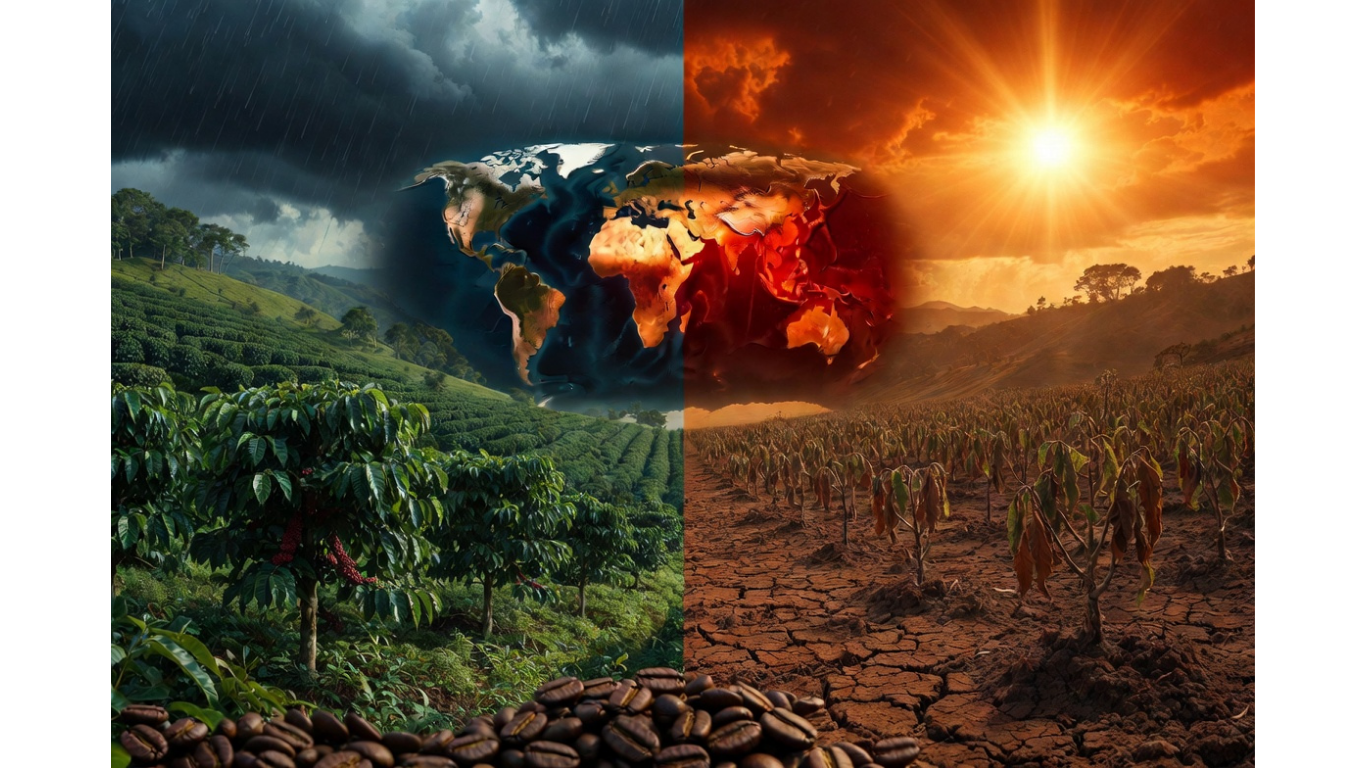
Commenting on rising global coffee prices, Apostolopoulos said the increase is driven by multiple factors, including climate change, production disruptions, and imbalances between supply and demand. He stressed that current prices more accurately reflect market realities compared to previous years, particularly as past prices had fallen below production costs before climate pressures, supply chain disruptions, and the Covid-19 pandemic significantly altered the market.

The remarks come as World of Coffee Bangkok 2026 is being held at BITEC, Halls 98–99, from Thursday to Saturday, bringing together global stakeholders from across the coffee industry in a professional platform aimed at strengthening trade, partnerships, and the development of the specialty coffee sector.

European Commission Expands EUDR Scope to Include Soluble Coffee

Dubai – Qahwa World

The European Commission has unveiled a new package of measures aimed at simplifying the implementation of the EU Deforestation Regulation (EUDR), while also expanding the regulation to include soluble coffee.

The announcement brings greater clarity to a regulation that has faced repeated delays since it was first proposed in 2021. The EUDR officially entered into force in 2023 and was initially scheduled to apply by the end of 2024. However, concerns from industries and producing countries over preparedness and compliance requirements led to multiple postponements.

The Commission now says it is focused on ensuring the regulation becomes fully operational by 30 December 2026.

As part of the latest revisions, EU officials estimate the simplification measures could lower annual compliance and administrative costs for affected companies by approximately 75 per cent compared with the original framework.

For the coffee sector, one of the most significant developments is the decision to add soluble coffee to the regulation’s scope. Industry representatives believe the move will create more consistent rules across coffee categories and strengthen fair competition within the European market.

Eileen Gordon-Laity, Secretary General of the European Coffee Federation, said the inclusion of soluble coffee would support equal treatment across the sector while reinforcing the environmental objectives of the regulation. She noted that aligned requirements are important for companies preparing for compliance ahead of the implementation deadline.

The updated package also includes changes to the EUDR digital system, with simplified paperwork requirements for smaller producers such as farmers and foresters.

Meanwhile, companies placing products on the market for the first time, including coffee roasters and major importers, will continue to face full due diligence obligations. Businesses further down the supply chain will mainly be responsible for collecting supplier reference numbers rather than independently verifying compliance.

The Commission also proposed removing leather and retreaded tyres from the regulation’s scope. Certain packaging materials, waste products, and product samples would also receive exemptions. In addition, several palm oil derivatives are expected to be added alongside soluble coffee.

Environmental groups have called on the European Union to avoid further delays in implementing the law. Anke Schulmeister-Oldenhove from WWF’s European Policy Office said the regulation must now move from discussion to action, warning that continued postponements could weaken both enforcement efforts and environmental credibility.

The draft Delegated Act is open for public feedback until 1 June 2026.


China Pushes Taiwan Off Coffee’s Global Stage

Dubai – Qahwa World

A quiet change in the records of the World Coffee Championships has sparked controversy across the specialty coffee industry after “Taiwan” was replaced with “Chinese Taipei” in the official listing of the 2026 World Latte Art Champion.

The change came days after Taiwanese barista Bala claimed victory at the World Latte Art Championship held in San Diego, earning 531 points with intricate latte creations featuring animals including a raccoon, giraffe and red pandas.

According to Asia Times, the original championship announcement identified Bala as representing Taiwan. About a week later, however, the World Coffee Championships records were quietly updated to list him under “Chinese Taipei,” without any public explanation from the organizers.

The report also noted that historical ranking PDFs previously available on the competition’s website were later removed, raising concerns among observers about the erasure of past national representations in coffee competitions.

While the change may appear minor, critics say it reflects the growing reach of geopolitical pressure into global cultural and professional industries — including specialty coffee. The incident has also renewed debate over how international private organizations respond when caught between political sensitivities and claims of neutrality.

Taiwan’s specialty coffee community has spent nearly two decades building its reputation on the world stage. Since first appearing in the World Barista Championship in 2007, Taiwanese competitors have secured multiple international titles across brewing, roasting, tasting and latte art competitions.

Bala’s 2026 victory marked the latest achievement in a long line of Taiwanese successes that helped establish the island as one of Asia’s leading forces in specialty coffee.


Iran War Drives Up Coffee Production Costs and Threatens Future Supply

Dubai – Qahwa World

The ongoing war involving Iran is increasing production costs in the global coffee sector, mainly due to rising fertilizer prices. These higher costs are raising concern among producers, analysts, and financial institutions about future supply and added pressure on smallholder farmers.

Recent industry assessments indicate that the current harvest cycle is mostly secure because key inputs have already been applied. However, the bigger risk is for the 2026/27 season if disruptions continue.

The situation is closely linked to instability in energy and fertilizer markets. The conflict has disrupted trade routes such as the Strait of Hormuz, an important passage for oil, gas, and agricultural inputs. This has contributed to higher global prices for fuel and fertilizers, both essential for coffee farming.

Fertilizer markets are under strain. Prices for key inputs like urea have increased significantly since the conflict began. Because fertilizer production depends heavily on natural gas, rising energy costs are making the situation worse.

For coffee farmers, especially smallholders, these increases are serious. Fertilizer represents a large part of production costs, and many farmers do not have strong financial protection against price swings. This directly affects their profitability.

In major coffee-producing countries, many growers rely on imported inputs, which makes them vulnerable to global supply shocks. At the same time, they are also dealing with currency changes, climate pressures, and labor shortages.

If the conflict continues to disrupt supply chains and energy markets, coffee production costs may keep rising, which could affect future harvest levels and global coffee supply.

Colombia Mitaca Harvest: Quality Up, Volume Slightly Down

BOGOTÁ – Qahwa World

According to an update published today on the Sucafina website, Colombia’s mid-year Mitaca (fly crop) harvest is showing strong quality expectations despite a forecasted volume decline of roughly 4.5% compared to last year’s Mitaca. There is considerable industry interest in the Colombia Mitaca harvest 2026 due to these changes in projected volumes and expected quality.

The report, based on field observations from Oscar Fernando Hurtado, Global Head of Production Research, and Sara Ocampo, Sustainability Manager for CAMP & Colombia, indicates that harvesting began in mid-April following normal seasonal patterns. Interestingly, the Colombia 2026 Mitaca harvest will have its peak at lower-altitude farms between May and June, while higher zones follow in June and July. The harvest is expected to wrap up by mid-September.

Quality a Bright Spot

Favorable weather through Q1 2026 supported even cherry development, and coffee borer attacks remain below average. As for the Colombia Mitaca harvest in 2026, improved fertilization practices and farmer investments have also contributed to healthier field conditions. The main constraint is volume, as off‑cycle conditions and a wetter‑than‑usual main flowering period reduced production expectations.

Sustainability Progress

Sucafina also reported that two new Huila-based suppliers – Comercializadora de Café D&Y Coffee and Comercializadora de Café Mora – will begin IMPACT verification in July. Currently, 20,266 farmers across Colombia hold active IMPACT Verification. This process is slated to align closely with best environmental practices during the Mitaca harvest season in 2026.

On deforestation, 36,268 farm polygons have been submitted for assessment, supporting EUDR compliance. Initial carbon footprint measurements across transport, milling, and warehousing have been completed, and pilots on biochar production with partner Cotierra are in early stages. Notably, these initiatives support sustainability throughout the Colombia Mitaca harvest of 2026.

  • Related stories :

Historic Colombian Coffee Harvests Face Labour Shortages

Colombia Records Its Best Coffee Harvest in Over 30 Years

FIX Dessert Chocolatier Launches “Messages from the UAE” at Kite Beach

Community installation invites residents to share messages of kindness and positivity in collaboration with Careem

Dubai, UAE – Qahwa World

FIX Dessert Chocolatier, the home-grown brand behind “The Original Dubai Chocolate,” will host a two-day interactive community installation at Kite Beach on 9–10 May, encouraging residents to share personal messages of kindness, unity, and positivity.

In partnership with Careem, the activation will run daily from 4pm to 12am and centres around a large-scale digital “FIX Hero Box.” Visitors will be invited to contribute messages via tablets, which will form a live word cloud displayed as part of the installation.

The messages collected over the two days will later be curated into artwork and transformed into a limited-edition FIX Hero Box, scheduled for release later this year.

The event will also feature the distribution of more than 5,000 goodie bags containing products and vouchers from UAE-based home-grown brands, including Careem, Humantra, Parker’s, BRED, Karen Wazen, Salt, Bake My Day, Public, Somewhere, Kumo, Shalwa, The Reborn Society, The Scent Library, Polished, House of Habanero, and Fracs, along with additional surprises from FIX.

Sarah Hamouda, Co-Founder of FIX Dessert Chocolatier, said the initiative was inspired by simple acts of human connection and aimed to create a shared space for reflection and community participation. She also highlighted the UAE’s role in supporting local brands and creative initiatives.

The installation will update in real time throughout the weekend, turning visitor contributions into a live visual artwork at Kite Beach. The final collection of messages will later be featured in a limited-edition product distributed through Careem and at Dubai International Airport (DXB).

The installation opens to the public on Saturday, 9 May at 4pm.

  • Related stories:

Coffee Break Dubai: Government Confidence, Market Shifts, and Hard Truths Facing the Coffee Industry

Mokha 1450 Immersive Coffee Experience Redefines Tasting in Dubai

Dubai Technicians Competition 2026 Returns for 2nd Edition

Yango Group Robots to Serve Coffee at Soil Café in Dubai

Coffee Prices Get Support from Brazilian Real Strength

Dubai – Qahwa World

Coffee futures traded sharply higher today. Arabica coffee rose to its highest level in one week. July arabica gained 3.43 percent. July robusta added 1.5 percent.

A major supporting factor is the strength of the Brazilian real. The currency surged to a two and a quarter year high against the US dollar. A stronger real discourages Brazilian coffee farmers from selling their crops overseas, which pushes prices upward.

Additional support comes from the ongoing closure of the Strait of Hormuz. This disruption has raised global shipping rates, insurance costs, fertilizer and fuel expenses. Coffee importers and roasters now face higher costs, tightening global supplies.

On the negative side, expectations of a large Brazilian coffee crop are limiting gains. The Coffee Trading Academy projected last Thursday that Brazil’s 2026/2027 harvest will increase 12 percent year over year to 71.4 million bags.

On March 19, Marex Group Plc forecast a record Brazilian crop of 75.9 million bags for the same season. That surpassed Sucafina’s forecast of 75.4 million bags, which represented a 15.5 percent annual increase. On March 12, StoneX raised its Brazil production estimate to a record 75.3 million bags, up from a November estimate of 70.7 million bags. StoneX also projected the 2026 global coffee surplus would expand to 10 million bags from 1.8 million bags in 2025. That would be the largest surplus in six years.

For robusta coffee, soaring exports from Vietnam are a bearish factor. Vietnam is the world’s largest robusta producer. On Saturday, Vietnam’s National Statistics Office reported that the country’s coffee exports from January to April 2026 rose 15.8 percent year over year to 810,000 metric tons. Vietnam’s 2025 coffee exports jumped 17.5 percent annually to 1.58 million metric tons. In addition, Vietnam’s 2025/2026 coffee production is projected to climb 6 percent year over year to a four year high of 1.76 million metric tons, or 29.4 million bags.

Tightness in arabica supplies is supporting prices. ICE arabica coffee inventories fell to a two and a quarter month low of 494,508 bags on April 21.

Smaller exports from Brazil also help support prices. On April 14, Cecafe reported that Brazil’s March green coffee exports fell 10 percent year over year to 2.65 million bags. On April 7, Brazil’s Trade Ministry reported that March coffee exports fell 31 percent annually to 151,000 metric tons.

Robusta coffee also sees bullish signs from tighter supplies. ICE robusta inventories fell to a sixteen and a quarter month low of 3,755 lots last Tuesday.

As a bearish factor, the International Coffee Organization reported on November 7 that global coffee exports for the current marketing year, which runs October through September, fell 0.3 percent year over year to 138.658 million bags.

The USDA’s Foreign Agriculture Service said in its biannual report on December 18 that world coffee production in 2025/2026 would increase 2.0 percent annually to a record 178.848 million bags. That includes a 4.7 percent decrease in arabica production to 95.515 million bags and a 10.9 percent increase in robusta production to 83.333 million bags. The USDA forecasted that Brazil’s 2025/2026 coffee production would decline 3.1 percent to 63 million bags. Vietnam’s coffee output would rise 6.2 percent to a four year high of 30.8 million bags. The USDA also forecasts that 2025/2026 ending stocks will fall 5.4 percent to 20.148 million bags from 21.307 million bags in 2024/2025.

World Coffee Championships Adopts “Chinese Taipei” Designation for Taiwanese Competitors

Dubai – Qahwa World

The World Coffee Championships (WCC), a global series of seven annual skill-based coffee competitions operated under the Specialty Coffee Association, has updated how it officially designates competitors from Taiwan. This World Coffee Championships Taiwan Chinese Taipei change reflects the new naming convention. Effective April 28, the organization will list Taiwanese competitors under the name “Chinese Taipei,” aligning its terminology with international sporting bodies such as the International Olympic Committee and FIFA.

According to a statement released by the WCC, the change is described as an administrative update that does not affect eligibility, qualification pathways, or the competitive experience of participants. The organization emphasized that competitors will continue to be recognized and celebrated individually for their achievements on the global stage. In fact, this World Coffee Championships Taiwan Chinese Taipei change is presented as a procedural modification rather than a shift in the event’s core values.

The WCC also addressed its broader intent in the announcement, stating that the adjustment was made in line with global naming conventions used in international sport. It further stressed that its commitment to showcasing excellence in coffee and supporting the global specialty coffee community remains unchanged. Importantly, the World Coffee Championships Taiwan Chinese Taipei change aims to ensure consistency across international events.

However, the update has drawn significant attention within the coffee industry and beyond, particularly in Taiwan’s active specialty coffee sector. Taiwanese competitors have participated in WCC events under the “Taiwan” designation since 2007, and the change has been met with concern from parts of the local coffee community. Still, this World Coffee Championships Taiwan Chinese Taipei change has become a significant topic of discussion among industry professionals.

The Taiwan Coffee Association, which organizes WCC-sanctioned events in Taiwan, stated that it did not initiate the change and has historically worked to preserve the “Taiwan” designation in international competitions. The association characterized participation under “Chinese Taipei” as a necessary condition moving forward.

Prominent voices in the coffee community have also expressed unease. Some professionals argue that the change goes beyond administrative labeling and touches deeper issues of identity, representation, and historical recognition within the specialty coffee world.

Coffee professionals, including past WCC champions, have publicly questioned the retroactive application of the naming update across official records and digital platforms. Concerns have been raised about consistency, transparency in decision-making, and how such changes may impact the historical record of competition results.

In Taiwan, the issue has also reached political attention. Lawmakers have called for clarification from relevant authorities, suggesting that the change may warrant diplomatic review given its broader implications beyond the coffee sector.

From a coffee industry perspective, the development highlights an ongoing tension between global standardization and regional identity. The specialty coffee community has long emphasized values such as traceability, origin integrity, and producer recognition—principles that some stakeholders feel intersect with how competitors and producing communities are represented on the world stage. Lastly, the World Coffee Championships Taiwan Chinese Taipei change will likely influence future conversations around producer representation internationally.

At the same time, the WCC maintains that its focus remains unchanged: celebrating skill, craftsmanship, and innovation among baristas, roasters, and coffee professionals worldwide.

As the specialty coffee sector continues to expand globally, this development underscores how even administrative decisions within competition frameworks can resonate far beyond the stage—shaping conversations around identity, governance, and the cultural meaning of coffee itself.

Yango Group Robots to Serve Coffee at Soil Café in Dubai

Dubai – Qahwa World

Yango Group robots will deliver coffee to guests at Soil Café on Kite Beach in Dubai from May 8 to 10, bringing the company’s robotics technology into an everyday café setting.

From 3:00 pm to 8:00 pm Yango Group robots will deliver drinks directly to customers, while Yasmina, the company’s AI assistant, will help staff with simple tasks such as answering questions, recommending drinks, and supporting order requests.

The setup is designed to reduce pressure on staff during busy periods and improve service flow, demonstrating how AI and robotics can handle routine interactions while employees focus on higher-value, human-led service. Taking place in a live café environment, the experience also provides a practical demo at how these technologies can be applied across hospitality and retail sectors, where demand for efficiency and scalable service models continues to grow.

Another experiment being conducted by Sweden: Sweden Experiments With a Café Run by an AI Manager

Yango’s delivery robots are already being deployed across urban environments, supporting last-mile logistics and food delivery operations. Designed to navigate sidewalks and pedestrian areas autonomously, they can carry multiple orders, optimize delivery routes, and operate in high-density city settings. In the GCC, Yango Group has partnered with noon to scale autonomous delivery, reflecting growing interest in robotics as a solution to rising demand in e-commerce and food delivery.

Islam Abdul Karim, Regional Head of Yango Group Middle East, said: “Dubai is one of the most dynamic markets globally for testing new technologies, with high customer expectations and a strong appetite for innovation. It’s a natural place to show how AI and robotics can work in real service environments, supporting staff during peak times, improving speed and consistency, and helping businesses manage growing demand. We show how Yango Group technology can help staff to focus on what matters most: customer interaction and experience.

The Soil Café experience forms part of Yango’s broader efforts to develop practical AI solutions across everyday use cases, including mobility, logistics, and customer service.

Some Instant Coffee Types Have Higher Caffeine Content

Dubai – Qahwa World

A recent analysis highlights how widely caffeine levels can vary across instant, ground, and takeaway coffees. In some cases, a large cup can reach or exceed 400 milligrams of caffeine, a level often referenced as the daily upper intake for healthy adults.

Large variation across coffee types

Testing of popular products revealed that caffeine content is not consistent. Differences in roast style, brewing method, and serving size all play a role in how much caffeine ends up in a cup.

Among grocery products, espresso-style ground coffee showed the highest levels. For takeaway drinks, stronger dark roast options ranked among the most concentrated.

Estimated caffeine levels in home brewed coffee

Coffee Brand / Type Small Cup (8 oz) Large Cup (24 oz)
Nescafé Taster’s Choice Instant 42 mg 125 mg
Folgers Classic Roast Instant 57 mg 170 mg
Starbucks Blonde Roast Instant 76 mg 227 mg
Black Rifle Coffee Blackbeard’s Delight 79 mg 236 mg
Starbucks Pike Place Medium Roast 92 mg 277 mg
Peet’s Major Dickason’s Blend Dark Roast 104 mg 311 mg
Maxwell House Breakfast Blend 113 mg 338 mg
Starbucks Veranda Blend Light Roast 120 mg 361 mg
Cameron’s Breakfast Blend 123 mg 368 mg
Dunkin’ Blueberry Muffin Medium Roast 132 mg 397 mg
Good & Gather Caramel Macchiato 133 mg 400 mg
Bones Coffee Highland Grog 135 mg 406 mg
Green Mountain Caramel Vanilla Cream 140 mg 420 mg
Café Bustelo Espresso Ground Coffee 175 mg 524 mg

Takeaway coffee caffeine levels

Coffee Chain Small Cup (12 oz) Large Cup (20 oz)
Dunkin’ Original Blend 175 mg 291 mg
McCafé Premium Roast 177 mg 295 mg
Starbucks Pike Place 248 mg 414 mg
Peet’s Major Dickason’s Blend 281 mg 468 mg

Why caffeine awareness matters

Many coffee products do not clearly display caffeine content. This makes it difficult for consumers to track intake, especially when portion sizes and brewing styles vary.

General guidance suggests that up to 400 milligrams per day is a reasonable limit for most healthy adults. However, a single large cup from some brands can approach or exceed that amount.

Potential benefits of moderate intake

Moderate caffeine consumption is associated with improved alertness, concentration, and physical performance. Some long term research also suggests a possible link between coffee consumption and reduced cognitive decline, though findings are not uniform.

Who should limit caffeine

Some individuals may need to monitor their intake more closely, including those who are pregnant, people with anxiety conditions, individuals with heart related concerns, and those taking medications that interact with caffeine.

Effects of excessive caffeine

High intake can lead to sleep disruption, restlessness, increased heart rate, and digestive discomfort. Regular high consumption may also result in dependence, with withdrawal symptoms such as headaches or fatigue.

Final thoughts

Caffeine levels in coffee are not standardized. Paying attention to serving size and coffee type can help avoid unintentionally consuming more caffeine than expected.


illycaffè Reports 12% Revenue Growth in 2025 Amid Record Coffee Prices

Trieste, Italy — Qahwa World

Italian coffee group illycaffè S.p.A. reported a solid performance for 2025, with group revenue rising 12% to €700 million (approximately US$817.2 million), supported by higher volumes across key markets including Italy, the United States, and Europe.

The company said it achieved its fourth consecutive year of strong organic growth despite a challenging environment marked by record-high green coffee prices and geopolitical uncertainty.

Financial Performance

  • Revenue: €700 million (+12%)
  • EBITDA: €90 million
  • Net profit: €20 million
  • Net financial position: €197 million

illycaffè attributed the financial position to higher raw material costs and continued strategic investments, including acquisitions completed during the year.

Commodity Pressure Remains High

The company highlighted significant pressure from coffee bean prices in 2025. Green coffee averaged 368 cents per pound, around three times the long-term historical average and more than 50% higher than in 2024.

illycaffè said it partially offset inflation through pricing strategies and cost-efficiency measures.

CEO Commentary

CEO Cristina Scocchia said the company maintained strong momentum despite external challenges:

“2025 was the fourth consecutive period of strong organic growth for the company, despite a particularly challenging external environment and the sharp rise in raw material prices.”

She added that the company continued strengthening its position across the value chain through targeted investments and integration.

Regional Performance

  • Italy: +14%
  • Europe: +23%
  • United States: +20% (at constant exchange rates)

The United States remained a strategic priority market for the company.

Strategic Acquisitions

During 2025, illycaffè expanded its operations through two key acquisitions:

  • Full acquisition of Swiss distributor Thalwil AG to strengthen its direct presence in European markets
  • 80% stake acquisition in coffee machine manufacturer Capitani, focused on portioned coffee systems for the home segment

The company said these investments strengthen its integration across the value chain, from production to consumer-facing equipment.

Outlook

illycaffè said it expects 2026 to remain challenging due to geopolitical tensions and economic uncertainty. However, it plans to continue supporting growth through international expansion, marketing investment, and sustainable innovation.

2 days to go: all what you need to know about World of Coffee Bangkok

Bangkok  – Qahwa World

With just 48 hours until doors open, organizers of World of Coffee Bangkok 2026 have released the final show guide and on site protocols for the three day specialty coffee event, set to take place May 7 to 9 at BITEC Bangna (Hall 98 to 99).

The event, licensed by the Specialty Coffee Association (SCA) and organized by Exporum Inc. in partnership with the Barista Association of Thailand, marks the first time Thailand has hosted the global coffee exposition. More than 400 companies from over 40 countries are expected to exhibit.

Entry procedures: three tracks, no exceptions

According to the official on site purchase and admission guide released this week, attendees will be directed to one of three entry lines based on how they obtained their credentials.

On site purchase: Visitors buying tickets at the door must proceed to the registration desk, complete payment, and receive a badge before entering.

Online purchase or invitation: Those with a QR code must scan it at a designated kiosk, exchange it for a badge, then enter. Organizers advise against joining the on site purchase line.

VIP, WCTC or press: Accredited individuals must use the leftmost lane at the registration desk, present a business card for verification, and receive a badge.

A manual registration desk is available for attendees who have lost their QR code; a government issued ID is required.

Re entry is permitted on the same valid date, but all ticket sales are non refundable. Children under 12 are allowed free entry but not recommended due to safety hazards involving hot liquids and heavy equipment. Those under 16 must be accompanied by a guardian at all times.

Payment and merchandise: card only

Official event merchandise, including T shirts (550 THB), tasting cups with lanyard (350 THB), and logo icon pens (150 THB), will be sold at a dedicated booth. The organizer has posted clear signage stating “Card Payment Only.” All items are in limited quantities.

Competitions and features

The World Cup Tasters Championship (WCTC) will take place during the event. Thailand’s Punnapop Suwanjit, the national champion, will compete following Chatchalerm Lertanekwattana’s world title win for Thailand in 2025. The full competition schedule and competitor list are available in the show guide.

Other featured zones include:

Roaster Village: International roasters such as Glitch Tokyo (Japan), Momos Coffee (South Korea), and Mame Roastery (Switzerland).

Producer Village: Direct access for buyers to connect with farmers.

Cupping Rooms (EH 98, Booth A100): Open all three days for sampling new crops and varietals.

SCA Lecture Series: Expert led sessions with a published speaker lineup.

Brew Bar: Coffee prepared by world championship baristas.

Logistics and ticket status

Early bird pricing (10 USD for one day, 20 USD for three days) ended April 17. Regular on site rates apply.

Venue: BITEC Bangna Hall 98 to 99 (BTS Bangna Station, Exit 1)

Hours: May 7 to 8, 10:00 to 18:00; May 9, 10:00 to 17:00

Attendees are urged to check the official show guide online at asia.worldofcoffee.org/show guide before arrival.