Yannis Apostolopoulos Speaks Frankly About the Past, Present, and Future of Specialty Coffee

Dubai – Qahwa World

The 5th Wave Podcast published a long interview with Yannis Apostolopoulos, CEO of the Specialty Coffee Association (SCA), under the title “The Past, Present and Future of Specialty Coffee.”
Given the importance of the insights shared, Qahwa World republishes the full conversation with minor editorial adaptation.

In today’s episode we’re speaking with Yannis Apostolopoulos, CEO of the Specialty Coffee Association.

First established in the 1980s, the SCA is the largest coffee trade body globally and represents thousands of coffee professionals – from producers to baristas – all over the world.

In this conversation, Yannis discusses the evolution of the SCA and its ongoing efforts to make coffee more sustainable, equitable, and resilient, through research, standards, and education. He also shares his perspectives on the key challenges and opportunities in the industry, from climate change and sustainability to navigating economic uncertainty and the evolving role of technology and AI.

5thwave-the-business-of-c the-past-present-and-futu
Transcribed by TurboScribe.ai. Go Unlimited to remove this message.
One of the conversations that needs to be at the forefront is about risk. Who is taking the risk and who gets compensated for that risk? Welcome back to the 5th Wave Podcast. I’m Geoffrey Young, Editor-in-Chief of 5th Wave.

In today’s episode, I’m delighted to be joined by Yanis Apostolopoulos, CEO of the Specialty Coffee Association. First established in the 1980s, the Specialty Coffee Association, or the SCA as it’s often known, is the largest global coffee trade body representing thousands of coffee professionals from producers to baristas all over the world. In our conversation, Yanis discusses the evolution of the SCA and their ongoing efforts to make coffee more sustainable, more equitable, and more resilient through research standards and education.

He also shares his perspective on the key challenges and opportunities for our industry, from climate change and sustainability to navigating economic uncertainty and the evolving role of technology and AI. Welcome, Yanis. It’s very nice to be here.

Very nice to see you, Geoffrey. We see each other around the world at different spots and really, really excited to have you here actually in the studio, in Serendipity Studios. I wonder if you’d just give us a little bit of intro just on your own career and what drew you into the world of coffee.

So first of all, thank you for having me. It’s really an honor and a pleasure to be here. Well, coffee is an interesting story.

My background is mostly in wines and spirits. And around 2009, the business I used to work for decided to get into coffee. And the more I get to know coffee, I just think that coffee has this amazing, I would say, attribute that brings people in.

And you meet people, the community, the actual beverage. It’s so unique in many ways. I think it was the first time in my career that I realized, okay, I’ve been selling wine, spirits, or soft drinks.

But this time, it’s something that it’s actually good for your health. And you can contribute in making an impact or a difference in the world by impacting the livelihoods of many people. And that’s what drew me into specialty coffee.

I got involved as a volunteer in the Greek chapter, then as a board director. And then during, I would say, the initial conversations between the merger between SCAA and SCAE, the European and the American organization, I found myself working for SCAE and leading eventually SCAE around end of 2018. Wow.

So that’s a good seven years already. Almost seven. Yeah.

Little I know that the year after I become the CEO, there would be COVID and everything would change in the world, at least when it comes to trade shows, because as you remember, it used to be just trade shows. Now we’re doing much, much more. And we at SCAE are trying to make coffee better, to make coffee more sustainable, equitable, and thriving as an endeavor for everyone in the value chain.

And we do that by doing research. We use the research to set standards. And one of our most famous standards is the capping form and the capping protocol, which we recently changed based on the work we’ve done around the coffee value assessment system.

And then we educate people around the world in using those standards and trying to make them get skills to, I would say, focus on the gaps that we have in the coffee industry. And then we do events to try to bring people together and use those opportunities to disseminate the information of our research and standards. So research events and bring people together at events.

Yeah. Yeah. I mean, it’s a formidable organization, I must say.

I was wondering if you could share how many people the SCAE educates in a given year. It’s very interesting. First of all, I have to say that it’s a collective effort.

I have an amazing team of people. They are really passionate about making coffee better. It’s a collective effort from the SCAE board that changed a lot over the years, but also the executive team.

On an annual basis, we educate over 80,000 people globally. It’s really something which I find it very interesting because a lot of people want to get engaged in the coffee industry. We have a lot of, say, churn when it comes to people who are trying to find a career in the coffee industry.

And what we’re trying is to provide tools and education to do so. It’s very interesting. And I think professions around hospitality are going to be much, much more attractive in the future, given the changes that we’re going to see in the global workplace with AI.

I think people will always enjoy experiences in food, in coffee. And coffee is a very human product at the end of the day. Exactly.

Now, thinking about those gaps, what do you think are the key issues that you and your organization are faced with out there in a world? For our industry, you get to speak to a whole array of human beings, from coffee farmers to people that produce equipment, to traders, to all the way down to the baristas, the roasters, and everything. The array of people that you talk to on a daily basis, it must give you a good instinct in terms of what are the big topics for our industry that we need to face over the next decade or two. What are you concerned with? …


CQI Launches Global Survey to Shape the Future of Coffee Quality

Dubai – Qahwa World

The Coffee Quality Institute (CQI) has announced the launch of its Global Priorities Assessment Survey, an open invitation to coffee professionals worldwide to help shape the organization’s future direction. The survey seeks insights from across the coffee value chain to identify the most pressing challenges and the most promising opportunities facing the global coffee sector today.

This new initiative follows CQI’s recent transition of the Q Program to the Specialty Coffee Association (SCA) earlier this month — a milestone that marks the beginning of a new chapter for the institute. As CQI redefines its mission for the years ahead, it is turning to the very community it serves to guide its next steps.

“CQI is entering a new phase in its work, and we would like to ask for your help in identifying the most pressing challenges and most promising opportunities we face as a sector,” the organization stated in its official announcement.

A Collaborative Effort for the Coffee Community

The Global Priorities Assessment Survey invites producers, traders, roasters, educators, donors, and project partners to evaluate various aspects of CQI’s work — including its technical expertise, educational offerings, credibility, affordability, and project outcomes. Participants are also encouraged to share their perspectives on how CQI can continue improving the quality of coffee globally and supporting the livelihoods of those who produce it.

Through this initiative, CQI aims to gain a deeper understanding of community priorities and use the results to inform future educational programs, research initiatives, and international partnerships. The collected insights will serve as a roadmap for how CQI continues pursuing its mission of improving coffee quality and the lives of those who make it possible.

Available in Nine Languages

To ensure inclusivity, the survey is available in English, Spanish, French, Portuguese, Chinese, Korean, Vietnamese, Swahili, and Indonesian, enabling broad participation from coffee professionals around the world.

Questions in the survey cover topics such as:

The quality and accessibility of CQI’s education programs

Affordability and value of CQI courses

The organization’s credibility and trustworthiness

The quality of its project work overseas

How CQI could better serve businesses and producers

Respondents can also provide open feedback on what they like most about CQI, what the organization could do more or less of, and what areas have the most room for improvement.

Shaping the Next Chapter

The CQI Global Priorities Assessment Survey will remain open until October 31, 2025, and all members of the global coffee community are encouraged to participate. The results will help guide CQI’s strategic planning and long-term development as it continues to promote excellence, transparency, and sustainability across the coffee sector.

By contributing to this global consultation, participants will help define the priorities that shape CQI’s next decade of work — ensuring that the organization’s efforts reflect the real challenges and ambitions of the worldwide coffee community.

Call to Action:
Take the CQI Global Priorities Assessment Survey before October 31, 2025, and share your perspective to help shape the future of coffee quality.

Click here 


Specialty Coffee Association Releases Its 2024 Annual Report

The Specialty Coffee Association (SCA) has released its 2024 Annual Report, signed by Chief Executive Officer Yannis Apostolopoulos, highlighting a transformative year marked by new quality standards, record membership growth, scientific advancements, and unprecedented global expansion in education and events — all with a strong focus on sustainability, research, and equitable value distribution across the coffee industry.

According to the report, 2024 represented a pivotal year for the SCA, as it officially adopted and published the new Coffee Value Assessment (CVA) standards, replacing the long-standing 2004 cupping form. This milestone positioned the CVA as the official protocol for global coffee quality evaluation. The association recorded more than 10,000 downloads of the CVA forms, over 1,500 learners enrolled in the “CVA for Cuppers” course, and more than 130,000 views on its CVA educational video series on YouTube. Additionally, the SCA waived course fees for over 500 coffee professionals in producing countries, ensuring broader and fairer access to professional education.

A major achievement highlighted in the report was the introduction of a new membership model offering free access to the SCA’s resources, educational programs, and events. This initiative led to exponential growth, bringing the association’s global community to over 100,000 companies and coffee professionals within just six months — a reflection of its ongoing mission to make knowledge and opportunities accessible to all who contribute to the specialty coffee industry.

The report also emphasized the strong research momentum driven by the Coffee Science Foundation (CSF), which supported six flagship projects in 2024. These included studies on physical defects in green coffee, developing a universal roast measurement system, exploring sweetness perception, analyzing the impact of packaging on consumer experience, and understanding how value is created and distributed throughout the coffee value chain. These efforts underscore the SCA’s commitment to fostering data-driven innovation and sustainability.

Globally, the SCA expanded its footprint through multiple major events. The “World of Coffee” trade shows took place in Dubai, Chicago, Busan, and Copenhagen, serving as platforms for knowledge exchange, business, and innovation. Notably, 2024 marked the first-ever World of Coffee held in Asia — in Busan, South Korea. The year also saw the launch of the Coffee Value Summit in Shenzhen, China, focusing on value creation and the implementation of the CVA. Other initiatives included “Green Coffee Connect,” fostering relationships between producers and importers, and the “Retail Buyer’s Lounge,” designed to enhance business networking during trade shows.

Following a period of financial stabilization from 2020 to 2023, the SCA strategically reinvested in 2024 to expand access to education, fund critical research, and strengthen partnerships. The association maintained a balance between program growth and fiscal responsibility, ensuring its ability to continue serving the global coffee community despite economic uncertainty.

In the area of education, the SCA organized five Educator Summits across Asia and the United States, providing platforms for trainers and educators to enhance their teaching and professional development. Comprehensive multilingual surveys were also conducted to gather feedback from trainers and learners, leading to further curriculum improvements and the development of new systems to support global education in coffee.

Looking ahead, the report outlined ambitious plans for 2025, including the launch of a comprehensive coffee evaluation program in partnership with the Coffee Quality Institute (CQI), expanded educational offerings for green coffee sellers and retailers, the creation of online forums to connect the global coffee community, and continued research into equitable value distribution and sustainability across the coffee value chain.

The 2024 Annual Report reaffirms the SCA’s role as a leading global organization uniting research, education, standards, and events to build a more sustainable, inclusive, and equitable future for the specialty coffee industry worldwide.

CQI Workshop in Dubai Explores the Science of Post-Harvest Coffee Processing

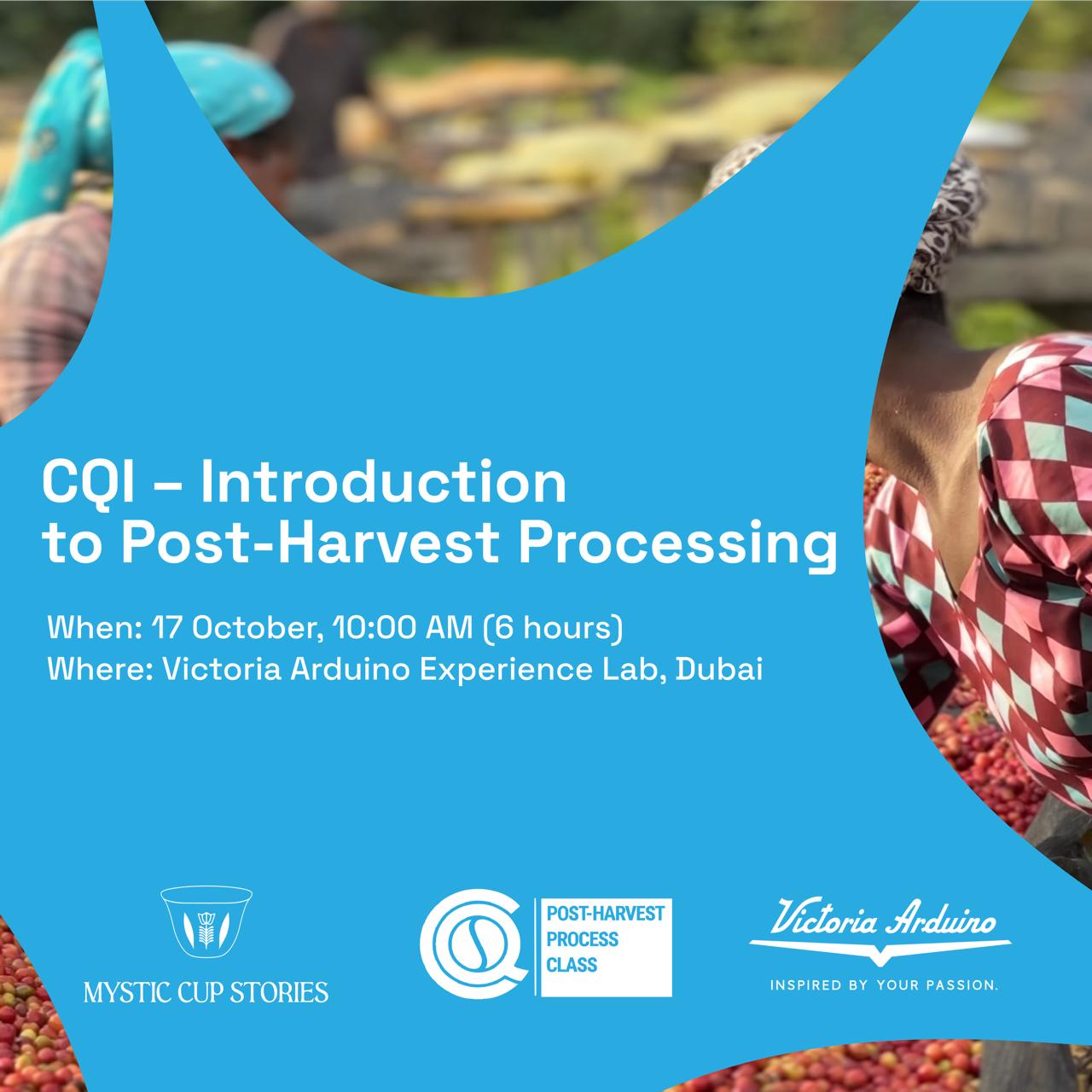
Tomorrow, coffee professionals and enthusiasts in the UAE will gather at the Victoria Arduino Experience Lab in Dubai for a six-hour workshop titled “CQI – Introduction to Post-Harvest Processing.” Organized by Mystic Cup Stories in collaboration with Victoria Arduino, the class promises an in-depth and hands-on introduction to one of the most crucial stages in coffee production.

Accredited by the Coffee Quality Institute (CQI), the session will guide participants through major processing methods — Natural, Honey, Mechanically Demucilaged, Fully Washed, and Wet Hulled — explaining how each technique shapes the final flavor profile of coffee.

The workshop will be led by Kristina Bakhtoiarova, an experienced educator, roaster, and consultant with over 15 years in specialty coffee. As a Q Processing Lecturer, Bakhtoiarova has trained professionals around the world and will share her deep understanding of post-harvest systems, from cherry selection and fermentation to drying and pre-cleaning.

Participants can also look forward to a guided coffee cupping featuring coffees from Mystic Cup Stories, offering a sensory exploration of how processing methods affect taste and aroma.

The program is open to baristas, roasters, café owners, coffee lovers, and future green buyers who want to decode common processing terms such as “Washed,” “Honey,” and “Natural.”

By hosting this CQI workshop, Victoria Arduino continues to strengthen Dubai’s reputation as a leading center for specialty coffee education and innovation in the Middle East.

The Golden Ratio of Coffee: The Secret to Perfect Balance in Every Cup

Dubai – Qahwa World

Making coffee is not just a matter of taste — it’s a craft built on precision, balance, and understanding. Among the most essential principles guiding professional baristas and home brewers alike is the Golden Ratio, a simple yet powerful formula that ensures every cup achieves the right harmony between strength, flavor, and smoothness.

What Is the Golden Ratio?

According to the Speciality Coffee Association (SCA), the ideal coffee-to-water ratio lies between 1:15 and 1:20, meaning 1 gram of ground coffee for every 15 to 20 grams of water. This proportion defines how rich, strong, or light your brew will be.

A lower ratio (such as 1:15) produces a bolder, more intense cup, while a higher ratio (like 1:18) results in a gentler flavor — ideal for black coffee drinkers. These figures form the universal foundation of balanced brewing used across drip machines, pour-over setups, and French presses.

Weight Over Volume

The Golden Ratio is based on weight, not volume. Because grind size affects density, measuring coffee by scoops or spoons leads to inconsistency. For precision, use a digital scale to weigh both coffee and water accurately.

Key Factors That Shape Coffee Quality

Even when you follow the Golden Ratio, several factors influence how your coffee tastes.

1. Grind Size

Grind size determines how quickly and thoroughly water extracts flavor from the grounds.

French press: Coarse grind, similar to sea salt.

Pour-over: Medium to slightly fine grind.

Drip coffee maker: Consistent medium grind.

An improper grind can cause under-extraction (sour taste) or over-extraction (bitterness).

2. Water Temperature

The SCA recommends a brewing temperature between 195°F and 205°F (90°C to 96°C). Boiling water can burn coffee grounds and create a harsh taste, while cooler water prevents proper extraction.

3. Agitation and Flow

The way water moves through coffee — whether by pouring, stirring, or immersion — affects extraction balance. Gentle agitation helps saturate all particles evenly, producing a more consistent cup, especially in pour-over or French press methods.

4. Filter Type

The filter acts as the final gate between the brewing process and your cup.

Paper filters trap oils and fine particles, resulting in a clean, light-bodied brew.

Metal filters allow oils to pass through, enhancing texture and body.

Both have merit; the choice depends on your personal preference for clarity or richness.

Best Practices for a Perfect Brew

Use a scale. Measuring by weight ensures accuracy and repeatability.

Choose fresh coffee. Recently roasted beans yield livelier, more expressive flavors.

Invest in a good grinder. A burr grinder provides a consistent grind size, leading to more even extraction.

Stay consistent. Pick a brewing method you can comfortably repeat every day.

Experiment with confidence. Once you’ve mastered the basics, adjust ratios or grind settings slightly until you find your ideal cup.

The Essence of Balance

The Golden Ratio is not a secret formula but a timeless principle — a shared standard among coffee professionals and enthusiasts worldwide. When respected alongside the right grind size, temperature, and technique, it transforms coffee brewing from routine to ritual.

With precision, balance, and consistency, anyone can create a cup worthy of the world’s finest cafés — right at home.

SCA Officially Launches New Q Grader Program with Coffee Value Assessment

Dubai – Qahwa World

The Specialty Coffee Association (SCA) has officially launched enrollment for its updated Q Grader program, marking the start of a new era for one of the most respected certifications in the global coffee industry.

The move follows the association’s acquisition of the program earlier this year from the Coffee Quality Institute (CQI), a historic shift that positions the SCA as the sole operator of a license long considered the gold standard for coffee evaluation. From October 1, 2025, all Q Grader courses worldwide will be delivered under the new system, aligned with the Coffee Value Assessment (CVA).

For years, the Q Grader license has been globally recognized as the highest credential in sensory evaluation, cupping, and green coffee grading. Graduates of the program have carried a certification that is not only respected but also vital to trade, communication, and quality assurance across the coffee value chain. The revamped program now integrates the CVA, a scientifically rigorous framework developed by the SCA and adopted in 2024 after years of research. Unlike the traditional cupping form it replaces, the CVA provides a broader picture of coffee’s qualities, considering not only intrinsic sensory characteristics but also extrinsic factors such as processing methods and certifications that influence market value.

The decision to integrate the CVA into the Q Grader curriculum represents the SCA’s commitment to driving progress in specialty coffee evaluation. Participants in the new program will undergo six days of intensive training and testing, designed to challenge their ability to detect differences and defects, describe sensory profiles, and apply the CVA in real-world contexts. The program has been tailored for experienced coffee professionals, enhancing their sensory acuity and preparing them to communicate coffee’s value with clarity and confidence. The result is a global network of modern Q Graders whose training reflects the latest advancements in sensory science and the continued evolution of the specialty coffee sector.

The SCA has emphasized accessibility as a central pillar of the new launch. Recognizing that the Q Grader license is critical for professionals worldwide, the association has introduced a new country-specific pricing model. By dividing the world into five tiers based on economic conditions, the program ensures that participants in lower-income regions are not excluded from pursuing certification. This model makes the license more affordable, while an expanded network of Q Instructors opens new opportunities for education across diverse markets. From producers and exporters to roasters and importers, coffee professionals in every corner of the globe will have greater access to one of the industry’s most influential programs.

The updated program offers multiple pathways to certification. New entrants can register for the full Q Grader course, while experienced professionals may pursue fast-track options to upgrade or renew their credentials. Arabica and Robusta Q Graders, holders of the SCA Sensory Skills Professional Certificate, and Cup of Excellence judges are among those eligible for accelerated pathways, provided they complete the CVA for Cuppers course by December 31, 2025. A fast track is also available for those seeking to become Q Instructors, with eligibility extended to educators and evaluators including CVA Trainers, Q Instructors, Cup of Excellence Head Judges, and SCA Sensory Skills Authorized Trainers. After the fast-track window closes at the end of 2025, the SCA will require candidates to follow a more extensive pathway that includes both Q Grader certification and instructor onboarding.

The program is not only academically rigorous but also deeply practical. Learners will be evaluated through cupping sessions, sensory exercises, and green coffee assessments, testing their knowledge across physical, descriptive, affective, and extrinsic categories. Those who successfully complete the course will earn the globally respected Q Grader license, recognized across the coffee value chain as a mark of excellence. The SCA has positioned this as a crucial step toward building a more unified global language of quality, one that connects producers, traders, roasters, and consumers with a shared framework for evaluating coffee.

The launch of the new Q Grader program also reflects the strategic partnership between the SCA and CQI, which was first announced in April 2025. Under the terms of the agreement, the SCA will license the program for ten years, paying CQI $250,000 annually. While CQI is no longer involved in administering the program, the collaboration ensures that its original missionsupporting producers and enhancing coffee qualityremains central to the program’s future.

As the transition takes effect, questions remain about how quickly the new system will be embraced across the industry. Some professionals have expressed skepticism about the CVA’s necessity, while others have applauded its potential to capture the complexity of modern coffee markets. Regardless of these debates, the SCA is moving forward with confidence, positioning the new Q Grader program as a scientifically robust and globally inclusive certification.

The association has also committed to supporting learners with preparatory resources. For those new to coffee evaluation, the SCA recommends starting with its Intro to Cupping workshop, a foundational course designed to build skills in sensory analysis and cupping practices. For more advanced professionals, recommended reading lists and preparation activities are available to ensure readiness for the intensive Q Grader assessments.

With enrollment now open and courses already available in select regions, the SCA is calling on coffee professionals worldwide to take part in what it describes as a new era in coffee evaluation. The updated program is expected to strengthen professional standards, support communication and collaboration across the global value chain, and expand the very definition of specialty coffee. For those who pass, the Q Grader license remains not just a certificate but a symbol of credibility, expertise, and leadership in the evolving world of coffee.

Kim Thompson Reveals to Qahwa World the Vision Behind RAW’s New Barista Training Centre

Dubai – Ali Al Zakary

Dubai marked a new milestone in its speciality coffee journey on September 25, 2025, when RAW Coffee Company, in collaboration with MILKLAB, inaugurated the RAW × MILKLAB Barista Training Centre at its roastery and café in Al Quoz. Described as the first of its kind in the UAE, the initiative brought together RAW’s deep-rooted expertise in specialty coffee with MILKLAB’s innovative portfolio of barista-grade plant-based milks.

The centre aims to raise barista skills, respond to the growing demand for plant-based alternatives, and strengthen ties within the local and regional coffee community. Yet beyond the launch itself lies a wider story—one of vision, change, and the future of coffee education.

In an exclusive conversation with Qahwa World, Kim Thompson, Co-Founder and Director of Culture & Brand at RAW Coffee Company, explained the motivations behind the project. “There’s nothing more certain than change and our industry is experiencing plenty of it. The way people consume coffee is evolving, with new trends in flavor preference, preparation, and lifestyle. We felt it was the right time to re-examine how customers enjoy their coffee and to help the next generation of baristas adapt and excel. At RAW, we’re passionate about supporting this evolution through education. We were impressed by MilkLab’s commitment to quality and sustainability, particularly in how their range of plant-based milks is developed in collaboration with baristas and produced using responsible farming practices. Their products align perfectly with our values and the standards we uphold in specialty coffee.”

For Thompson, the collaboration with MILKLAB was not a coincidence but the result of shared values. “We love meaningful collaborations especially those rooted in shared values of quality and authenticity. Murad Janakat from JAR Premium Foods introduced us to the MilkLab range, and we were immediately impressed by both the taste and texture of their milks and their versatility across our coffee menu. What makes this partnership unique is that it brings together two brands that genuinely care about improving the barista and customer experience—MilkLab through innovation in product, and RAW through education, quality, and community. Together, we’re bridging the gap between product and practice.”

Kim Thompson

The new training centre, she emphasized, was created with one core goal: to raise quality standards across the industry by empowering baristas. “We believe that every coffee served should represent the care, knowledge, and passion behind it. By equipping baristas with a deeper understanding of the ingredients they use daily, we’re supporting both consistency and creativity in cafés throughout the region.”

Importantly, the programs are not reserved solely for industry professionals. Thompson stressed that the centre was designed to cater to a wide audience. “The training programs will cater to a broad audience, from professionals working in busy cafés to individuals passionate about improving their home coffee skills. Sessions will be practical, hands-on, and tailored to real-life scenarios in the café environment. Each course explores the science and art behind milk texturing, highlighting how different fat and protein levels influence performance and flavor. It’s about creating confidence, whether you’re a barista steaming milk for 200 coffees a day or a coffee lover perfecting your morning ritual.”

As Dubai’s coffee scene grows increasingly vibrant and competitive, Thompson sees consistency and education as the biggest challenges. “Dubai’s coffee scene is vibrant, diverse, and increasingly sophisticated. But as the market expands, consistency and education remain key challenges. RAW has always believed that real progress comes from collaboration and knowledge-sharing rather than competition. This new centre extends our long-standing training program, which already includes SCA-certified courses in barista skills, brewing, and sensory development. By adding a dedicated plant-based milk training series, we’re providing operators and baristas with an additional layer of expertise that will translate directly to better customer experiences.”

Choosing plant-based milk as a central theme, she explained, was not just a trend but a reflection of consumer behavior. “Consumer behavior has shifted dramatically. We’ve seen a growing movement toward plant-based choices and a preference for cold, convenient, and on-the-go beverages. Our aim is to help baristas stay ahead of these trends and serve these drinks with the same care and consistency as dairy-based beverages. Each MilkLab milk has its own characteristics, from almond to oat to coconut, and learning how to bring out the best in each creates a more balanced, enjoyable cup. It’s about understanding the ingredient, respecting it, and ensuring the final experience in the cup is exceptional.”

In closing, Thompson highlighted that empowering baristas is the most effective way to elevate consumer awareness and appreciation of specialty coffee. “Empowering baristas is one of the most powerful ways to elevate consumer understanding. When baristas are confident, knowledgeable, and passionate, that energy translates to the customer, through every interaction and every cup. Education creates connection. And connection builds loyalty. By investing in the skills of the people behind the bar, we’re not only improving quality standards but also deepening the relationship between consumers and specialty coffee itself.”

With this vision, the RAW × MILKLAB Barista Training Centre emerges not just as an educational facility but as a shared space for practice, dialogue, and community. And as Kim Thompson underscored in her conversation with Qahwa World, it is also a sign of Dubai’s growing role as a global hub where innovation, sustainability, and specialty coffee culture intersect.

New Barista Training Center Launched in Dubai

Dubai – Qahwa World

Raw Coffee Company, in collaboration with Milk Lab, inaugurated a new Barista Training Center on Thursday at Raw Coffee’s headquarters in Dubai’s Al Quoz Creative District. This step marks the beginning of a new chapter in barista education, where specialty coffee meets expertly crafted milk.

The opening ceremony, attended by officials, industry leaders, hospitality professionals, and specialized media, featured Kim Thompson, co-founder of Raw Coffee Company, who outlined the background of the initiative, sayingWe place great importance on collaboration between brands that share the same values. Recently, we began working with Sage, a manufacturer of excellent coffee machines. However, we noticed complaints from customers because the coffee being used was not always suitable. This highlights the importance of partnerships and the need for alignment between machines, coffee, and training. We also discovered Milk Lab, and it was not only about improving taste but also about their commitment to sustainability. Mr. Murad Jankat, Head of JAR Foods Middle East, proposed the idea of dedicating a training center to plant-based milks, and we welcomed this step. We believe that success lies in the person standing between the machine and the customer, who manages all the variables.”

For his part, Peter Brown, International Business Development Director at Milk Lab, emphasized that the brand, which will celebrate its 10th anniversary this October, was founded to solve a genuine problem: “When almond milk was introduced in Australian supermarkets in 2013, it became popular among health-conscious consumers. But it didn’t work well in coffee it would curdle due to acidity. That’s why Milk Lab invested 12 to 18 months in research and development, involving experts from across the coffee sector baristas, roasters, café owners, and Q-Graders to create a product designed specifically for coffee.”

He added: “Since then, we have expanded to offer a variety of options including almond, soy, dairy, lactose-free, and others, while always keeping coffee as the hero. Our motto is Made for Baristas, and today we are present in more than 30 markets. In the Middle East, almond milk accounts for about 55% of the market. Our strategic partner JAR has played an important role in raising awareness of the brand across the GCC and Jordan. We are not trying to be everything to everyone; our focus is to be the leader in milk designed for specialty coffee, while continuing to invest in the professional community that supports this industry.”

From her side, Purity Kariuki from Raw Coffee Company said: “Training has always been at the heart of our business. Excellent equipment and great products mean nothing without well-trained people. Traditionally, training programs focused on dairy milk, as it is stable, easy to use, and does not overpower coffee flavors. Plant-based milks, however, often produced inconsistent results almond could be overpowering, soy could curdle, and coconut could be watery. Our partnership with Milk Lab changed that. We began pairing specific coffees with specific milks: coconut with fruity Ethiopian coffees, oat with our house blend for its sweetness and creaminess, and almond as a balanced option. This led us to launch a dedicated training program starting with our B2B partners and later opened to a wider audience to share this knowledge and raise coffee quality standards.”

Meanwhile, Matt Toogood, CEO of Raw Coffee Company, stressed the complexity of the market, saying: “The coffee market in Dubai and the Middle East is crowded and complex, and consumers are often confused about what specialty coffee truly means. This is why the idea of a School of Milk was created to raise standards, provide clarity, and strengthen the sector as a whole. This collaboration is not only about combining coffee with milk; it is a practical step to advance the industry, making it clearer, more sustainable, and higher in quality for everyone.”

For his part, Murad Jankat, Head of JAR Foods Middle East, noted that Milk Lab adapts its products to the preferences of different regions including Levantine consumers frequenting Dubai cafés to ensure the best alignment between milk styles and local coffee offerings. Raw Coffee Company, led by Purity and her team, will manage the training programs and oversee the new center in line with the needs of the regional market.

Dreams and Ambitions: Youth Academy Middle East Launches in Dubai

Dubai – Qahwa World

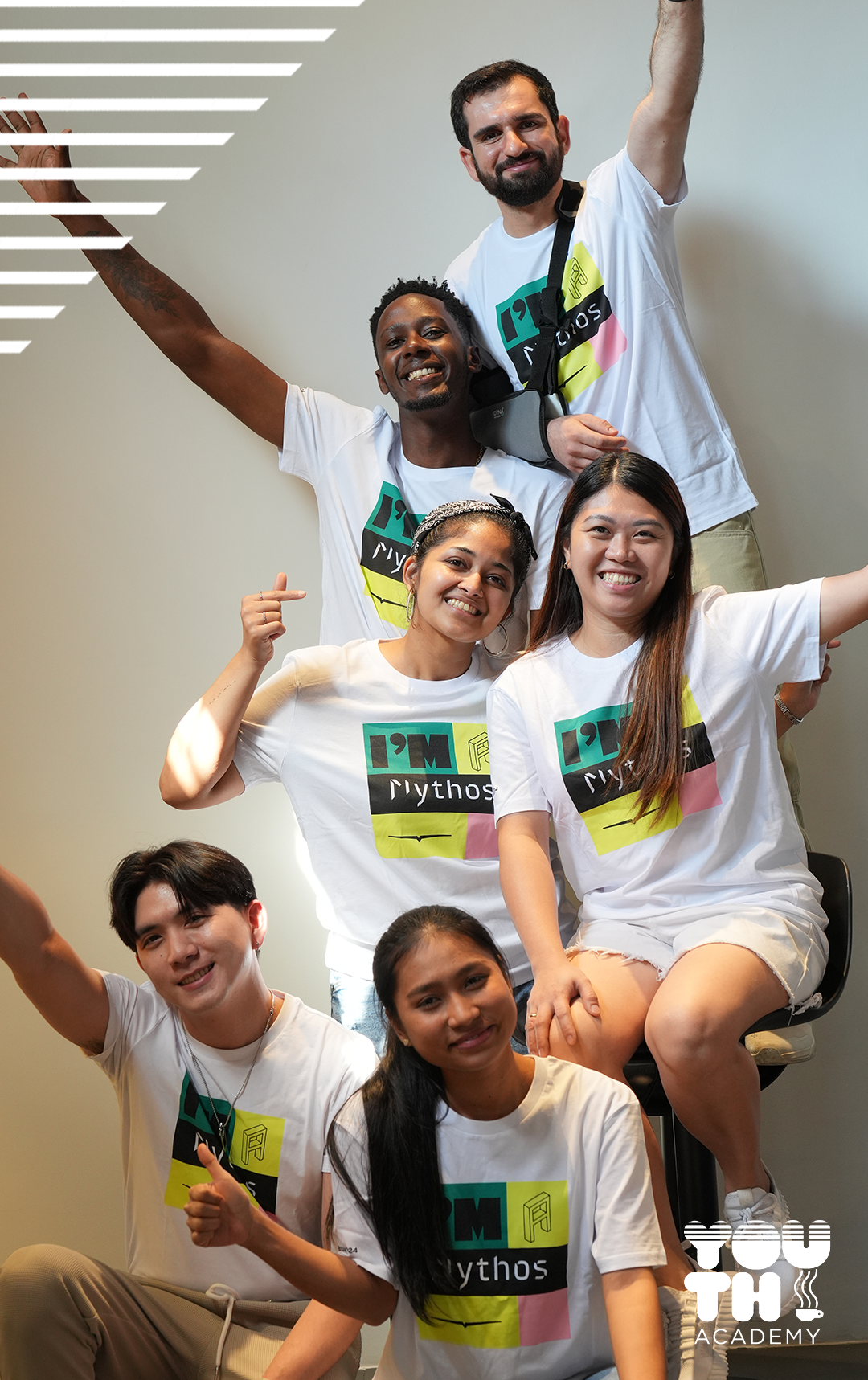
The Middle East has welcomed a new chapter in coffee education with the launch of the first edition of Youth Academy Middle East 2025, held in Dubai and organized by Simonelli Group. This pioneering program provides six young coffee talents with full scholarships to attend the prestigious SCA Coffee Skills Program, giving them the opportunity to build professional careers in the global coffee industry.

The inaugural edition began at the Simonelli Group Middle East Experience Lab, where participants embarked on their training under the guidance of SCA-certified trainers. The program blends theory with practice, offering young baristas and coffee enthusiasts a chance to deepen their knowledge and discover new perspectives on coffee.

The Scholarship Winners

Among the six winners are young professionals whose passion and dreams reflect the diverse paths coffee can inspire:

  • Hnin Kha Nady (22 years old), a barista who hopes to inspire others through her craft: “Eventually I want to share my passion by creating unique coffee experiences for others.”

  • Mark Mwangi Mungai, a Kenyan barista, fascinated by both tradition and innovation: “The slowly emerging trends with AI and modern technology show how coffee, which has been here for ages, is adapting to new times.”

  • Amritha Varsha PR, an engineer-turned-coffee explorer: “For me, learning is exciting, but re-learning is like a second brew—often richer and clearer.”

  • Brenzen Labarete, Senior Barista, Brand Ambassador, and Middle East Barista of the Year 2023: “I look forward to connecting with people who share the same passion, exchange ideas, and be inspired to take my craft to the next level.”

  • Mohamed Alameeri, who describes himself as a “normal coffee guy” driven by curiosity: “The endless amount of information in the coffee world fascinates me. No matter how much you know, there is always more to learn.”

  • Donna Santianez, a passionate barista dreaming of opening her own café: “My dream is to become a professional barista and, one day, to have my own coffee shop.”

A Future Built on Passion

With their unique stories, ambitions, and dedication, these six young talents embody the essence of the Youth Academy—transforming passion into knowledge and knowledge into opportunity. Their journey marks not only a personal milestone but also a promising step for the future of coffee in the Middle East.

As the Youth Academy Middle East continues, the energy, curiosity, and commitment of its first participants highlight the growing importance of education and innovation in shaping the next generation of coffee professionals.

From Roasting Champion to Global Educator: The Journey of Davide Cobelli, Evolved Q Grader Instructor

Dubai – Ali Alzakary

In the world of specialty coffee, very few have achieved the rank of Evolved Q Grader Instructor until now. We are sure that in a few weeks there will be many more, but Davide Cobelli, Coffee Expert and Consultant, Italian Roasting Champion 2020, is the first European to obtain it. From competition stages to origin farms, and from leading SCA Italy to winning the Italian Roasting Championship, his story is one of relentless passion, resilience, and a constant drive to raise the bar in coffee education and evaluation. Join us as we dive into his remarkable journey, lessons learned, and vision for the future of coffee.

You recently announced that you became one of the very few people worldwide to complete the Evolved Q Grader Instructor program — and with a perfect 100% score. How challenging was this process for you, and what does this achievement mean personally and professionally?

He is one of the very first instructors to pass the Evolved Q Grader exam. At the time he did, there were probably only 3–4 in the whole world. Today, quite a few more have passed. Achieving this milestone has been incredibly rewarding, especially considering the significant investment of time and energy it required. The standards for instructors are exceptionally high. To put it into perspective, there is zero margin for error, and candidates must achieve a perfect 100% score on a 50-question exam covering the entire Evolved Q Grader course. This is what makes earning the license so challenging, but also entirely appropriate. Through this rigorous process, the SCA makes it clear that the new Q Grader course is in no way inferior to the previous CQI program, particularly regarding the quality of its trainers.

You started in the food service industry before dedicating yourself fully to coffee. What was the turning point that made you choose this path, and how did those early experiences shape the professional you are today?

I started in the hospitality industry over 30 years ago, but for nearly 15 years, I have been completely devoted to the world of coffee. In the first part of my career, my devotion was to the beverage itself. Then, for more than seven years, I also embraced the entire supply chain, which has become increasingly important in my professional journey, leading me to open a roastery and travel to origin countries to provide sensory training. I don’t know exactly how the switch to coffee happened—passions are often born and grow without a specific reason. But every day, I wake up happy and fulfilled doing the best job in the world: the one I love.

You’ve trained hundreds of professionals across Europe, Asia, and the Middle East, while also building a reputation as a consultant. How do you manage to keep both hats on—educator and business advisor—without compromising the quality of either?

In my 15 years as a trainer in the coffee world, I believe I’ve trained well over a thousand professionals. Every time, this has been my motivation to keep going. My goal has always been to share my expertise with students, learn from them in return, and create a genuine exchange—an objective I still pursue today. It’s not one-way training, but a true exchange of professional skills. When you’re driven by true passion, you can do anything. For me, coffee is pure passion and sincere dedication.

Few people cover as many areas as you do—Barista, Brewing, Green Coffee, Sensory, and Roasting. How did you build that range of expertise, and what advantages does it give your students?

There’s a saying, “a jack of all trades is a master of none,” and I tend to agree with that idea. In my case, I began my coffee journey by dedicating the first half of my career to the world of the barista and the beverage—first by competing, and later serving as an international judge for barista championships. From there, I expanded to embrace sensory analysis, roasting, and the supply chain. It’s not impossible to do everything well, but I don’t see myself as a superhero who has somehow managed it. I simply believe that when you are driven by true passion (and not primarily by business), it is possible to succeed. As I’ve said before, I am devoted to coffee. It’s an all-consuming passion in my life; aside from travel, I have no others. I believe the advantage for my students is that my broad experience allows us to explore a wide range of topics holistically, both in and out of the classroom. After all, in a supply chain like coffee, every element intersects with and influences the others. Furthermore, I’m not one of those trainers who sticks strictly to the course material without leaving room for discussion. I encourage questions—in fact, I love them.

Winning the Italian Roasting Championship in 2020 was a milestone, and you later ranked among the best in the world. What did those competitions teach you about coffee—and about yourself?

In 2020, just two years after I started roasting, I won the Italian Roasting Championship. What an incredible feeling that was! I was the first to not believe it, especially since I only went hoping not to finish last and just to get a bit more experience. But after placing seventh at the World Championship in 2022 and second at the nationals in 2023, I started to think that maybe, just maybe, I’m not completely terrible at this whole roasting thing. Above all, it silenced my detractors and haters, which are always in plentiful supply in the coffee world. That made the satisfaction twofold.

As a national and international judge, you’ve seen the best baristas and roasters on stage. What do you look for in a champion, and what separates a good competitor from a great one?

Being a judge is a responsibility—or at least, that’s how I’ve always seen it. It’s incredibly satisfying to be able to support the industry’s framework and, often, the next generation of professionals. But that’s not all. In recent years, I’ve been called upon more and more to participate as a sensory judge on tasting panels for coffee farmers, right at the source of the production chain. This has really become my focus since the COVID pandemic. That is a true responsibility of another kind, because you feel that your judgment can influence the future of farming families. This responsibility weighs heavily on me, compelling me to be exceptionally professional and accurate in my assessments.

When you were elected National Coordinator of SCA Italy, you spoke about bringing specialty coffee out of its niche. What steps have you taken toward that goal, and what challenges remain in making specialty coffee more accessible to everyday Italians?

In my role as National Coordinator from 2022 to 2024, I worked to expand the specialty coffee market beyond the narrow niche it has occupied in Italy in recent years. Growth in this sector had become nearly stagnant, largely because specialty coffee was increasingly perceived as just an expensive and acidic product, rather than one of value for the entire supply chain. Together with the coordinating team for that two-year term, we implemented communication strategies to take the product beyond the small circle of “coffee geeks.” Our goal was to make specialty coffee accessible to a broader audience by using simpler language and by highlighting the importance of a sustainable supply chain.

The Specialty Coffee Association recently introduced the Coffee Value Assessment (CVA), joined also by the Coffee Quality Institute. Some see this as a groundbreaking step forward, while others worry about confusion or competition with existing protocols such as CQI certifications. How do you see this new system shaping the future of coffee evaluation, and what impact will it have on farmers, producers, and the industry as a whole?

When the CVA was introduced in 2022, many wouldn’t have bet on its success. There was significant skepticism (a small amount of which still lingers), especially from professionals who grew up with and were tied to the 2004 SCA Cupping Form (later used by CQI). This also included those who had invested a great deal of money and energy over the years to become Q Graders or Q Instructors. (I don’t blame them, but it’s clear that the new CVA is the modern approach to sensory science, while the previous system is not). Today, there is no competition between the SCA and CQI, because CQI focuses on origin countries and field work, while the SCA focuses on Sensory Analysis, which includes the new Evolved Q Grader course. (Then again, perhaps there was never any real competition; it’s impossible to compare an outdated system that hasn’t been updated in over 20 years with one that takes a modern, scientific approach). The real and immediate revolution is that today, a coffee’s value throughout the chain is no longer left to a single, subjective score. Instead, value is redistributed across multiple attributes, each of which is important in determining the final worth. The impact is direct: farmers are no longer forced to submit to a sterile, unexplained score. Instead, they can discuss value by leveraging multiple attributes to justify it.

Specialty coffee has changed dramatically in the past decade. Where do you see the next big opportunities for growth and innovation in Europe’s coffee sector?

The coffee world has undergone a radical transformation. Specialty coffee consumption has evolved and continues to grow consistently year after year across all markets, with consumers paying closer attention to the products they purchase and consume. The key to the future is undoubtedly product information, specifically the combination of extrinsic value and the sensory profile. Looking ahead, I foresee a future for specialty coffee defined by greater transparency, with a focus on metrics like the Farm Gate Price for the final product, rather than just a cupping score. I believe the opportunities will only continue to grow for professionals who specialize and carve out their own niche in the market.

Looking back at your journey—from trainer to champion, consultant, and SCA leader—what achievement gives you the greatest satisfaction? And what keeps you motivated to push forward?

Life is constant evolution. To me, that is the very definition of living. Sometimes you adapt, but often you must evolve—that is my guiding principle. This isn’t about the pursuit of a happiness that is never reached. Instead, it’s about the constant effort to improve, accumulating more and more experience in everything you do. My father taught me to always give my all, so that I could fully enjoy the journey, whether it leads to the summit or not. Success is just the tip of an iceberg built on defeats, frustration, disappointment, struggles, laughter, excitement, and a host of other emotions. From the outside, people only see the destination, never what happens during the journey. For me, every milestone—positive or negative—has been an experience that has helped me mature and grow as a human being. That is true success. For this reason, I don’t have a single achievement that stands out as the most satisfying; rather, it is the sum of them all that makes me a better person.

For young coffee professionals who dream of following in your footsteps, what advice would you give them about standing out in such a competitive global industry?

Never give up on something you believe in, but above all, believe in yourself. Superheroes and super-gurus don’t exist; there are only people who give their absolute all to reach their goals. Set an objective and then, step by step, work to achieve it. If you create intermediate milestones along the way, it will seem far less impossible.

Evolved Q Grader Program Adopts Coffee Value Assessment, Reshaping Global Coffee Standards

Dubai, 13 August 2025 (Qahwa World) — The global coffee industry is set for a historic transformation as the Q Grader Program, the benchmark certification for coffee quality evaluation, adopts the Coffee Value Assessment (CVA) framework under the leadership of the Specialty Coffee Association (SCA).

From October 1, 2025, the SCA will take over program operations from the Coffee Quality Institute (CQI), retiring the 2004 cupping protocol that has defined quality standards for over two decades. The move marks a significant shift toward a more holistic approach to coffee evaluation, placing equal emphasis on physical, sensory, cultural, and personal perception attributes.

Why the Change Matters

The 2004 protocol—built on objective scoring for aroma, flavor, body, and other measurable traits—has long been a trusted tool. However, industry leaders argue it underrepresents extrinsic factors such as origin, processing method, certifications, and producer stories, which increasingly influence market value.

Introduced in 2023, the CVA integrates four dimensions of assessment:

  • Physical Attributes — Objective evaluation of green coffee quality.

  • Extrinsic Attributes — Market-relevant factors such as terroir, certifications, and narratives.

  • Affective Attributes — The cupper’s personal impression on a 100-point scale.

  • Descriptive Attributes — Detailed sensory profiling of flavor and aroma.

By including these dimensions, the CVA reflects a coffee’s complete market value—not just its chemical or physical characteristics.

Impact on Q Graders

All current and former Arabica and Robusta Q Graders must complete the CVA for Cuppers conversion course by December 31, 2025 to maintain certification. The course, lasting two days, is designed to help graders transition smoothly to the new framework.

From 2026 onward, only the six-day Evolved Q Course will lead to certification. Missing the conversion deadline means starting the process from scratch.

Industry Reactions

“The CVA acknowledges that coffee quality is more than chemistry—it’s culture, craftsmanship, and context,” said Thomas Haigh, Specialty Coffee Merchant and Arabica Q Grader since 2015.

Producers, particularly in origin countries, see the shift as an opportunity to highlight unique practices and secure better recognition for their efforts. Roasters and green buyers anticipate richer, more nuanced data for sourcing decisions.

Key Transition Dates

  • October 1, 2025 — SCA takes over Q Grader Program; CVA becomes standard.

  • December 31, 2025 — Last day for Q Graders to complete CVA for Cuppers conversion course.

  • From 2026 — Six-day Evolved Q Course becomes the only certification route.

Looking Ahead

The adoption of the CVA is more than an administrative change—it represents an industry-wide realignment toward recognizing both intrinsic and extrinsic value in coffee. While some professionals may resist altering a long-trusted system, others view this as an essential evolution to meet the demands of a more globalized and story-driven specialty market.

CQI Reflects on a Landmark Year and Sets Ambitious Plans for 2025

As the Coffee Quality Institute (CQI) concludes 2024, CEO Michael Sheridan shares reflections on a remarkable year for the organization and its global coffee community. Marking the 20th anniversary of the Q Grader program, CQI celebrated the milestone with podcasts, social media campaigns, and in-person events that underscored the legacy of the industry’s premier coffee cupping credential.

The Q Grader community, which now boasts nearly 10,000 members, saw significant growth this year, alongside the expansion of CQI’s Processing Professionals and Instructor networks. Sheridan welcomed three new team members, including T.J. Ryan, who has taken on the role of Director of Mission Engagement. “Welcoming T.J. was like bringing family home,” Sheridan noted. Ryan will spearhead CQI’s project initiatives and the evolving Global Fund, an area poised for greater impact in the coming year.

Global Fund Expansion: Empowering Coffee Communities Worldwide

In its second year of operation, the CQI Global Fund provided nearly $90,000 in cash and in-kind support to seven initiatives across four continents. Highlights include:

  • Mexico: Two grants supported nearly 100 participants, with post-harvest process training and scholarships empowering smallholder farmers and quality control managers. Collaborations included CAFECOL and the International Women’s Coffee Alliance.
  • Ethiopia: CQI worked with women-led companies to certify seven new Q Graders through the Q Combo course.
  • Latin America: The innovative Girlsplaining initiative, led by Assistant Instructor Camila Khalifé, delivered specialized training to women in coffee.
  • United States: Support for NKG PACE program partners included cupping courses and introductory post-harvest processing classes.

Looking ahead, CQI plans to unveil a comprehensive vision for the Global Fund’s future at its 25th Annual Luncheon in April 2025 in Houston.

Celebrating Dedication: Honoring Outgoing Trustees

As 2024 draws to a close, CQI honors the commitment of outgoing trustees who collectively dedicated 96 years of service to the organization. From Ellen Jordan’s 26-year legacy to the fresh perspective of Liz Caselli-Mechael’s two-year tenure, CQI’s success owes much to these visionaries.

A Message of Growth and Gratitude

Sheridan’s year-end message also highlighted plans for 2025, including expanded coffee events, new courses, and continued certification projects, such as the impressive five-fold increase in certified Q Graders in Burundi. As CQI looks to the future, it remains deeply committed to improving coffee quality and the lives of those who produce it.

With deep gratitude for the past and ambitious goals for the future, CQI enters 2025 with renewed energy to strengthen its impact in the global coffee community.