Police Raid Starbucks Korea Headquarters Over Tank Day Scandal

Source: CNN / Yonhap / Reuters / BBC
Author: Qahwa World
Date: August 5, 2026

Police Raid Starbucks Korea Headquarters Over Tank Day Scandal

  • South Korean police raided Starbucks Korea headquarters on August 5, 2026.
  • The raid is linked to the “Tank Day” marketing campaign that evoked the 1980 Gwangju Uprising.
  • Around 40 investigators from the Seoul Metropolitan Police conducted the search.
  • The campaign sparked nationwide backlash, boycotts, and a sharp sales decline.
  • Starbucks Korea’s CEO was fired the day after the campaign launched.
  • The company shut all stores for mandatory historical awareness training in June.
  • Sales fell approximately 26% following the controversy.

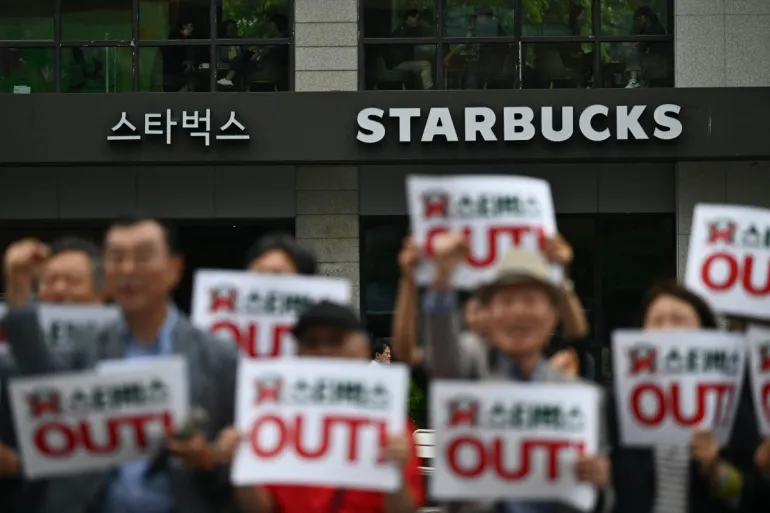
South Korean police raided the headquarters of Starbucks Korea on Wednesday. The raid is part of an ongoing investigation into a controversial marketing campaign. The campaign evoked painful memories of the 1980 Gwangju Uprising. The Seoul Metropolitan Police confirmed the search but declined to share further details[reference:0].

Approximately 40 investigators were dispatched to the Starbucks Korea headquarters in Gangnam-gu, Seoul[reference:1]. The raid lasted about 10 hours[reference:2]. It is the latest development in a scandal that has engulfed the coffee chain for months.

The Tank Day Campaign That Sparked Outrage

The crisis began in May 2026. Starbucks Korea launched a “Tank Day” marketing campaign. The campaign promoted its “Tank” line of tumblers[reference:3]. It was unveiled on May 18. This date is the anniversary of the 1980 Gwangju Uprising. The uprising was a pro-democracy movement brutally suppressed by the military. Hundreds of civilians were killed[reference:4].

The campaign used the phrase: “Put it on the table with a sound of ‘Tak!'” The word “tank” evoked memories of military vehicles used to crush protesters[reference:5]. The public reacted with immediate fury. Many called for a boycott of Starbucks Korea[reference:6].

Fallout: CEO Fired, Sales Plummet

The backlash was swift and severe. Within hours, Shinsegae Group canceled the campaign and fired the CEO of Starbucks Korea[reference:7]. Son Jung-hyun was dismissed for the “inappropriate” promotional campaign[reference:8]. President Lee Jae Myung publicly condemned the campaign, saying he was “enraged”[reference:9].

Starbucks Korea issued a formal apology that day. Starbucks Global also apologized and launched an investigation[reference:10]. The damage, however, was already done. Sales fell significantly. Kiwoom Securities reported a drop of about 26% compared to pre-campaign levels[reference:11]. Bloomberg projected that the sales slump could persist[reference:12].

Starbucks Korea Tank Day Scandal – Key Events
Date Event
May 18, 2026 “Tank Day” campaign launched on Gwangju Uprising anniversary
May 18, 2026 Starbucks Korea apologizes; campaign canceled
May 19, 2026 CEO Son Jung-hyun fired by Shinsegae Group
June 22, 2026 All South Korea stores closed for mandatory history training
August 5, 2026 Police raid Starbucks Korea headquarters

Police Investigation and Raid

The police raid followed a complaint filed by a civic group. The group accused Shinsegae Group Chairman Chung Yong-jin of insult and defamation against uprising victims and their families[reference:13]. The search warrant specified charges including insult[reference:14].

The raid took place just days before Liberation Day. This public holiday marks Korea’s liberation from Japanese colonization. Police declined to comment on the timing[reference:15]. The investigation is ongoing. It is unclear if any charges will be filed.

Company Response and Damage Control

Shinsegae Group has been in damage control mode for months. On June 22, Starbucks Korea shut all its stores in the country at 3 p.m. for mandatory training[reference:16]. Staff underwent training on historical awareness and social sensitivity[reference:17]. The company also conducted internal audits[reference:18].

Despite these efforts, the brand’s reputation has suffered. Competitors have gained ground. Cumulative sales of rival coffee chains surpassed Starbucks in recent weeks[reference:19]. The company faces an uphill battle to regain consumer trust.

Broader Context: South Korea’s Sensitive History

The Gwangju Uprising remains a deeply sensitive topic in South Korea. The brutal crackdown lives in many people’s memories. The country has worked hard over decades to transition from authoritarianism to democracy. The public reacted swiftly when President Yoon Suk Yeol briefly declared martial law in December 2024. Hundreds of protesters, including some who had participated in the 1980 uprising, rushed to parliament[reference:20].

The Starbucks scandal tapped into this raw national memory. The company’s failure to understand the historical significance of the date proved costly.

Frequently Asked Questions

Why did police raid Starbucks Korea?Police raided the headquarters as part of an investigation into a “Tank Day” marketing campaign that allegedly insulted victims of the 1980 Gwangju Uprising.

What was the Tank Day campaign?Starbucks Korea launched a promotion on May 18, 2026, offering discounts on “Tank” tumblers. The date and wording evoked memories of the military crackdown on pro-democracy protesters in 1980.

Who was fired over the scandal?Starbucks Korea CEO Son Jung-hyun was fired the day after the campaign launched for the “inappropriate” marketing.

How much did Starbucks Korea’s sales drop?Sales fell approximately 26% compared to pre-campaign levels, according to Kiwoom Securities.

What did Starbucks do to respond?Starbucks apologized, fired the CEO, and shut all stores for mandatory historical awareness training in June 2026.

What is the Gwangju Uprising?The Gwangju Uprising was a 1980 pro-democracy movement in South Korea brutally suppressed by the military, resulting in hundreds of civilian deaths.
Starbucks Korea to Close Stores for History Training After ‘Tank Day’ Controversy

Source: Reuters – Adapted by Qahwa World |
Author: Qahwa World |
Date: June 16, 2026

Starbucks Korea to Close Stores for History Training After ‘Tank Day’ Controversy

Key Takeaways:

  • Starbucks Korea will close all its stores nationwide at 3 PM next Monday for employee training on historical awareness and social sensitivity.
  • The decision follows a controversial marketing campaign that used the terms “Tank Day” and “5/18” to promote coffee tumblers, evoking the 1980 Gwangju military crackdown.
  • The backlash led to the dismissal of Starbucks Korea CEO Son Jung-hyun.
  • This is the first time since Starbucks entered the South Korean market in 1999 that all stores have closed early on the same day.
  • Shinsegae Group, the operator of Starbucks Korea, said Chairman Chung Yong-jin and other senior executives will attend separate training sessions on Wednesday.
  • South Korea is Starbucks’ second-largest market outside the US, with more than 2,000 stores nationwide.

Starbucks Korea will close all of its stores early next week to allow employees to participate in history education and social awareness training after a marketing campaign sparked widespread public criticism.

The decision follows a controversy last month when Starbucks Korea launched a promotional campaign that unintentionally referenced one of the most painful events in South Korea’s modern history. The campaign used the terms “Tank Day” and “5/18” to promote a series of coffee tumblers. Many South Koreans viewed the wording as an insensitive reference to the military crackdown on the pro-democracy uprising in Gwangju on May 18, 1980.

Historic Closure and Unprecedented Training

In a statement released on Monday, Shinsegae Group, the operator of Starbucks Korea, announced that all Starbucks outlets nationwide will close at 3 p.m. next Monday so employees can participate in “historical awareness and social sensitivity” training. According to the company, this will be the first time since Starbucks entered the South Korean market in 1999 that all stores across the country have closed early on the same day.

Shinsegae Group also said that Chairman Chung Yong-jin and other senior executives will attend separate training sessions on Wednesday. “The initiative is intended to learn from this incident and help prevent similar situations from occurring across the group in the future,” the company said.

Date Event
May 18, 1980 Military crackdown on the Gwangju Uprising
May 2026 Controversial “Tank Day” and “5/18” campaign launched
May/June 2026 CEO Son Jung-hyun dismissed
Next Monday (3 PM) All stores close for historical training
Next Wednesday Executive leadership training sessions

Background: The Painful Memory of the Gwangju Uprising

The Gwangju Uprising remains a defining moment in South Korea’s democratic movement. Led largely by student protesters opposing the military rule of Chun Doo-hwan, the uprising was violently suppressed when troops were deployed to regain control of the southwestern city.

The event became a major catalyst for South Korea’s democratization, culminating in the country’s first free presidential elections in decades in 1987 after years of military-led governments. Official figures place the death toll at more than 200 people, although activists and historians have argued that the true number may have exceeded 2,000.

South Korea: Starbucks’ Second-Largest Global Market

South Korea is one of Starbucks’ most important international markets, with more than 2,000 stores nationwide. It is the company’s second-largest market outside the United States, after China. This extensive presence makes any marketing misstep or incident involving cultural and historical sensitivity have significant repercussions for the company’s global reputation.

Starbucks’ response was swift and decisive. Headquarters described the incident as unintentional but acknowledged that it should never have occurred. The controversy led to the dismissal of Starbucks Korea CEO Son Jung-hyun.

Indicator Value
Number of stores in South Korea Over 2,000 stores
Global ranking outside the US Second (after China)
Year of market entry 1999

Frequently Asked Questions About the Starbucks Korea Crisis

Q: What was the “Tank Day” controversy that triggered the crisis?

A: A marketing campaign by Starbucks Korea used the terms “Tank Day” and “5/18” to promote tumblers, evoking the painful memory of the 1980 Gwangju military crackdown.

Q: Why is “5/18” a sensitive date in South Korea?

A: May 18, 1980, marks the start of the military suppression of the pro-democracy Gwangju Uprising, which cost hundreds (possibly thousands) of civilian lives.

Q: What action did Starbucks Korea take after the controversy?

A: It dismissed its CEO and announced an early closure of all stores for employee training on historical awareness and social sensitivity.

Q: Is this the first time Starbucks has closed all its stores in South Korea?

A: Yes. Since entering the market in 1999, this is the first time all stores have closed on the same day.

Q: Why is South Korea important to Starbucks globally?

A: South Korea is Starbucks’ second-largest market outside the US, with over 2,000 stores, ranking second only to China.

The Starbucks Korea crisis highlights the critical importance of cultural and historical sensitivity in global marketing campaigns. In an era where brands operate across borders, deep understanding of local contexts and history has become an essential necessity, not an optional extra. Closing stores for training is a bold step that reflects the company’s commitment to learning from the mistake and preventing its recurrence.

Prepared and edited by: Qahwa World – Based on a Reuters report.

All rights reserved. Republication with attribution permitted.

Publication date: June 16, 2026

Starbucks Korea Head Fired After Tank Day Promotion Sparks Public Outrage

Author: Qahwa World
Source: Reuters (Heejin Kim)
Date: May 19, 2026. This article discusses why the Starbucks Korea head fired Tank Day, which is the main subject of this article.

Executive Summary:

  • Starbucks Korea head Sohn Jeong-hyun was fired after a marketing campaign called “Tank Day” sparked public outrage.
  • The campaign promoted a line of tumblers with the tagline “put it on the table with a sound of ‘Tak’.”
  • The promotion coincided with Democratisation Movement Day, which commemorates the 1980 Gwangju Uprising.
  • Hundreds of people were killed or went missing when the military dictatorship cracked down on pro-democracy protesters in May 1980.
  • South Korean President Lee Jae Myung said he was “enraged” and called the campaign the act of a “degenerate peddler.”
  • Shinsegae Group, which licenses Starbucks in South Korea, dismissed Sohn and issued a public apology.
  • Starbucks Global launched an investigation and promised stronger internal controls.

Starbucks Korea head Sohn Jeong-hyun was fired on May 19, 2026, after a marketing campaign triggered public anger by evoking painful memories of a military crackdown on pro-democracy protesters in 1980. The campaign, called “Tank Day,” was launched on Monday to promote a line of tumblers with the tagline “put it on the table with a sound of ‘Tak’.”

The promotion coincided with Democratisation Movement Day, which commemorates the student-led Gwangju Uprising of May 1980. Hundreds of people are estimated to have died or gone missing when the military dictatorship of Chun Doo-hwan deployed troops and tanks to suppress the protests. The timing of the campaign drew immediate and fierce criticism across South Korea.

The Controversy Behind the Campaign

Critics also questioned the use of the word “tak” in the tagline. According to local media reports, South Korean police in 1987 used the same sound to explain the death of a student protester who was later found to have been tortured. Police at the time said the student died after investigators struck a desk making a “tak” sound. This connection deepened public anger toward Starbucks Korea.

Shinsegae Group, the retail conglomerate that licenses and manages Starbucks in South Korea, announced that it had dismissed Sohn Jeong-hyun for carrying out what it called “inappropriate marketing.” Reuters was unable to reach Sohn for comment. Starbucks Korea declined to make him available, stating that he had already left the company. The campaign was withdrawn.

Political and Corporate Reactions

South Korean President Lee Jae Myung expressed his anger on social media platform X on Monday. He said the campaign “tarnished the bloody protests of Gwangju citizens and the victims of the protests.” He demanded that Starbucks apologize to the families of those killed during the uprising and called the marketing the act of a “degenerate peddler.”

Shinsegae Group Chairman Chung Yong-jin issued a public apology. “I deeply bow in apology as the representative of the group,” Chung said. He admitted that the marketing “deeply hurt the public, the bereaved families, and the victims of the May 18 demonstration.” Starbucks Korea also posted a statement on its website apologizing for the promotion.

Starbucks Global issued a statement on Tuesday expressing regret and announcing that an investigation had begun. A spokesperson said, “We sincerely apologize to the people of Gwangju, to those impacted by this tragedy, and to our customers and communities.” The spokesperson added that leadership accountability actions had been taken and that stronger internal controls, review standards, and company-wide training would be implemented to prevent a recurrence.

Key Data and Impact

Indicator Details
Fired executive Sohn Jeong-hyun, CEO of Starbucks Korea
Campaign name Tank Day
Controversial tagline “Put it on the table with a sound of ‘Tak'”
Historical event referenced Gwangju Uprising (May 1980)
Estimated casualties Hundreds killed or missing
Starbucks Korea owner Shinsegae Group (through SCK Company)
E-Mart share change (May 19) Down 5.5 percent

Frequently Asked Questions (FAQ)

1. Why was Starbucks Korea head fired?

Sohn Jeong-hyun was fired for carrying out a marketing campaign called Tank Day that sparked public outrage by evoking painful memories of the 1980 Gwangju Uprising.

2. What was the Tank Day campaign?

The campaign promoted a line of tumblers with the tagline “put it on the table with a sound of ‘Tak’.” It launched on Democratisation Movement Day.

3. What is the Gwangju Uprising?

It was a student-led pro-democracy protest in May 1980. The military dictatorship under Chun Doo-hwan used troops and tanks to suppress it, killing or causing the disappearance of hundreds of people.

4. How did South Korean President react?

President Lee Jae Myung said he was “enraged” and called the campaign the act of a “degenerate peddler.” He demanded an apology to the victims’ families.

5. What actions did Starbucks take?

Starbucks Korea fired its CEO and withdrew the campaign. Starbucks Global launched an investigation and promised stronger internal controls and training.

6. How did Shinsegae Group respond?

Shinsegae Group Chairman Chung Yong-jin issued a public apology, saying the marketing deeply hurt the public and the victims’ families.

Qahwa World – Based on Reuters reporting by Heejin Kim.
Published: May 19, 2026