Panama’s coffee terroir is no longer just a story. It’s becoming science

Source: Ennio Cantergiani (l’Académie du Café – Switzerland)
Author: Qahwa World – Dubai
Date: May 24, 2026

Panama’s coffee terroir is no longer just a story. It’s becoming science

Executive Summary

  • A 2025 study in Food Science & Nutrition proved that Panamanian Geisha coffee differs by production zone using sensory analysis.
  • Samples: washed Geisha from Boquete, Renacimiento, Tierras Altas, and Potrerillos Arriba from 2023-2024 harvest.
  • Statistical analysis showed Boquete, Renacimiento, and Tierras Altas are distinguishable at 95% confidence interval.
  • Same variety, same process, different cup. That is terroir validated by science, not just poetry.
  • Differences were driven by aroma and flavor attributes, not physicochemical parameters like density or pH.
  • Panama’s Technological University (UTP) is now building a chemical fingerprint lab for coffee aromas using GC-MS technology.

From Poetic Narrative to Scientific Proof

For years, the uniqueness of Boquete coffee has been described in poetic terms – volcanic soils, mountain mists, the bajareque wind, the flanks of Barú volcano. Beautiful narrative. But is it science? In 2025, we got a serious answer.

A study published in Food Science & Nutrition (Ledezma et al., 2025) collected washed Geisha samples from four Panamanian production zones – Boquete, Renacimiento, Tierras Altas, and Potrerillos Arriba – from the 2023-2024 harvest. Standardized roasting. Standardized brewing. A screened consumer panel using the RATA (Rate-All-That-Apply) method, with correspondence analysis, multiple factor analysis, and discriminant analysis.

The Result: Terroir Statistically Confirmed

The study found that Boquete, Renacimiento, and Tierras Altas are statistically distinguishable – at a 95% confidence interval – based on aroma, flavor, and taste attributes. Same variety. Same process. Different cup. That is terroir. Interestingly, physicochemical parameters alone did not drive the differences. The signal came from sensory attributes – which tells us that the expression of terroir in Panamanian Geisha is primarily aromatic and flavor-driven, not a matter of density, pH, or Brix.

Production Zone Statistical Distinction Primary Driver
Boquete Distinguishable at 95% Sensory (aroma, flavor)
Renacimiento Distinguishable at 95% Sensory attributes
Tierras Altas Distinguishable at 95% Sensory attributes
Potrerillos Arriba Less distinct Further study needed

What Panama Is Building on Top of That

In parallel, the Technological University of Panama (UTP), funded by SENACYT, has launched pioneering research to create a chemical fingerprint of Panamanian coffee aromas using advanced analytical techniques (GC-MS) – specifically targeting the Chiriquí Highlands. For the first time, Panama now has the national infrastructure to conduct aroma analysis without sending samples abroad. The goal: scientifically protect designations of origin and give producers tools to optimize fermentation, drying, and roasting based on their specific terroir signature.

Why This Matters Beyond Panama

This is exactly the trajectory the specialty coffee world needs to follow. Wine has had appellation science for decades. Coffee is just beginning to build its equivalent – moving from storytelling to molecular evidence. For Q Graders, sensory scientists, and specialty buyers, this is a pivotal moment: the tools to validate what our palates have long suspected are finally being developed at origin.

Frequently Asked Questions (FAQ)

1. What does the Ledezma study prove about Panamanian Geisha coffee?

It proves that Boquete, Renacimiento, and Tierras Altas produce sensorially distinct coffee at 95% confidence, despite same variety and processing.

2. Are physicochemical parameters enough to distinguish terroir?

No. The study found that differences were driven by sensory attributes (aroma and flavor), not density, pH, or Brix.

3. What is the new project at the Technological University of Panama?

A project to create a chemical fingerprint of Panamanian coffee aromas using GC-MS technology, allowing local analysis without sending samples abroad.

4. What is the goal of this scientific initiative?

To scientifically protect designations of origin and provide producers with tools to optimize processing based on their specific terroir signature.

5. Why is this a milestone for the specialty coffee industry?

It moves coffee from storytelling to molecular evidence, similar to what the wine industry achieved decades ago with appellation science.

6. What is the reference for the scientific study?

Ledezma et al. (2025). Sensory Perception and Physicochemical Characteristics of Geisha Coffee From Different Production Zones in Panama. Food Science & Nutrition. DOI: 10.1002/fsn3.71278

Author: Ennio Cantergiani (l’Académie du Café – Switzerland)  |
Publication date: May 24, 2026

Gostoso Coffee: Redefining Brazilian Specialty Coffee

Dubai – Qahwa World

In recent years, Brazil has reaffirmed its position as the world’s largest coffee producer and a growing hub of innovation within the specialty coffee sector. In this evolving landscape, a new generation of Brazilian‑born brands is emerging, shifting coffee’s image from a bulk commodity to a crafted experience. Among them, Gostoso Coffee is beginning to stand out for its clarity of vision, authenticity, and long‑term direction.

  • From Dubai to the Origin: A New Chapter

Gostoso Coffee was founded in 2019 by Brazilian entrepreneur Colin James Francis, after his move to the UAE and his decision to launch a brand that would represent Brazil on the global stage. Over time, the company combined Brazilian agronomy with Emirati‑based roasting operations (Karam Food Inds., Dubai), positioning itself at the intersection of origin and innovation.

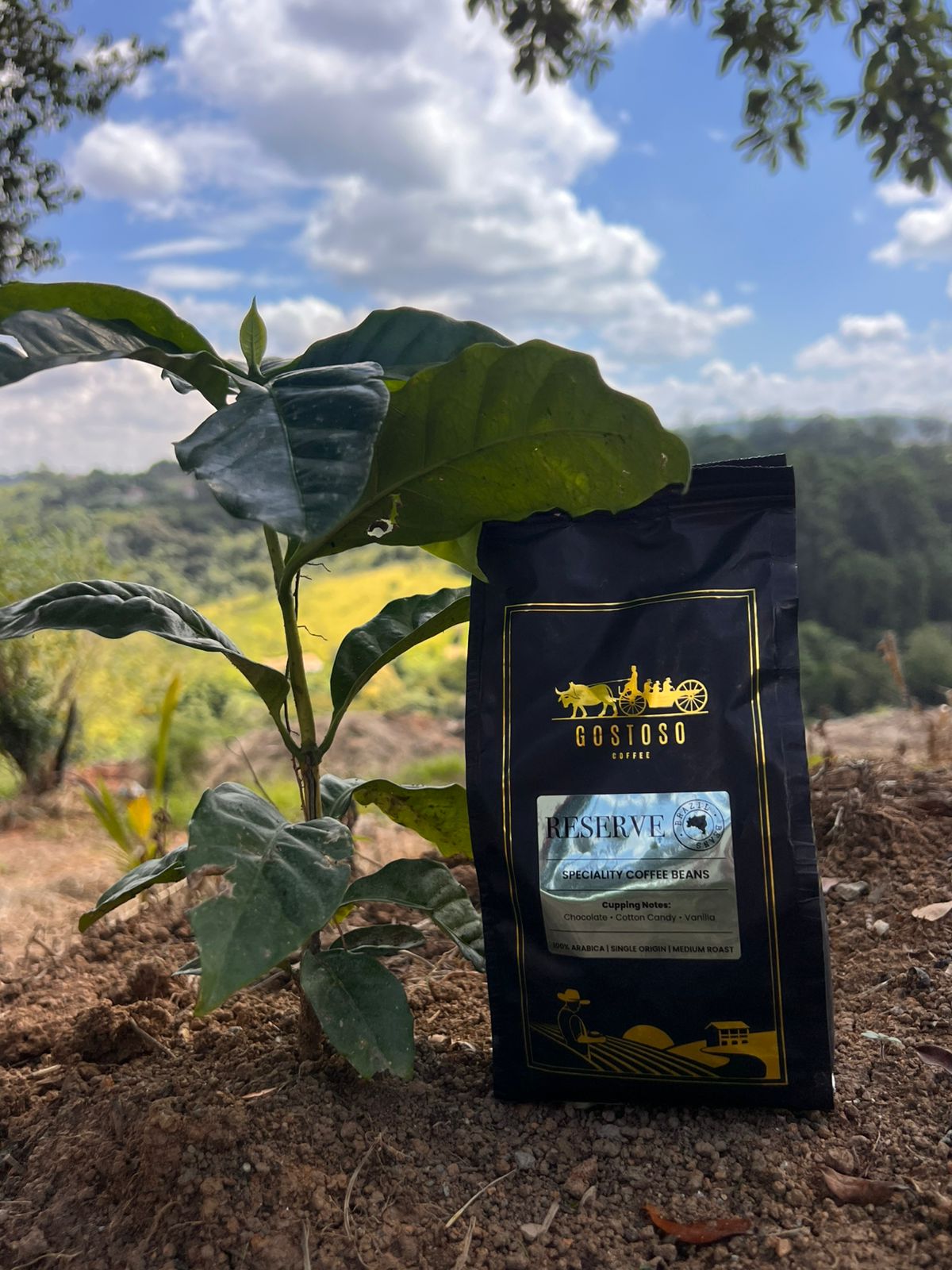
Recently, Gostoso made a strategic return to its roots by establishing a coffee plantation in Brazil, in the prestigious region of São Roque, São Paulo—internationally known as the “City of the Wine Route.” Following rigorous soil analysis, terroir selection, and assessment of climatic conditions suited to rare Arabica varieties, the company chose an estate that blends natural beauty, heritage architecture, and production potential.

The property is set in a mountainous landscape surrounded by the Atlantic Forest, with a historic headquarters built in Riga pine wood using Norman architecture. Designed to be open to the public, the farm will host visits, educational tours, and immersive experiences on coffee, origin, and the global trends shaping the world’s second‑most‑consumed beverage. This project aims to re‑establish São Paulo as a globally recognized specialty‑coffee region, echoing the state’s prominence in the 1950s and 1960s—this time with a focus on quality, rarity, and sustainability.

  • Beyond Commodity: A Global Vision Guided by Ethics

Gostoso Coffee was created to challenge the traditional power structure in coffee: to reduce the role of exploitative middlemen and protect farmers, cooperatives, and origin. From Brazil, the brand controls the entire value chain, from rare plantations to its roastery in Dubai, UAE, ensuring transparency, traceability, and fair practices at every stage.

Under the leadership of CEO Colin James Francis, recognized internationally for ethical sourcing and manufacturing excellence in the UAE, India, and Hong Kong, Gostoso supports and expands Brazilian cooperatives, helping them produce higher‑quality outputs at a larger scale using rare Arabica and Liberica varieties. With a strategic base in Dubai, the brand is positioned to scale across the Middle East, Asia, and the Far East, bringing Brazilian excellence to the world without compromise.

  • Farm and Plantation: Innovation Meets Nature

Located in a mountainous region of Brazil, the Gostoso Coffee Farm is opening new pathways in specialty production. The farm is developing Geisha Arabica, one of the world’s most exclusive coffee varieties, traditionally associated with high altitude Panama, where micro‑lots have recently reached around USD 30,000 per kg. At Gostoso, this cultivar grows under the natural shade of the Atlantic Forest, a terroir that imparts remarkable complexity, elegance, and cup identity.

Sustainability is central to the farm’s operations. Over 15% of the property is preserved as a legally protected Permanent Preservation Area (APP), in full compliance with Brazilian environmental law. The estate lies within the São Roque Atlantic Forest, a region recognized by UNESCO for its ecological value and biodiversity.

The native forest hosts species such as peroba, cedar, pau‑d’alho, mulberry, white fig, jatobá, cinnamon, and ipê, along with a rich variety of wildlife. The farm also cultivates more than 30 fruit varieties, including jabuticaba, uvaia, cacao, pecans, chestnuts, passion fruit, bananas, berries, avocado, jambo, pitanga, and mango, while maintaining beehives to support pollination of coffee plants. As the team puts it: “Nature is our alliance; we work as a cohesive unit.”

  • More Than a Farm — A Destination at Origin

Gostoso Coffee is designed to attract both national and international visitors, not only for its rare coffees but also for the natural and cultural beauty of the region. The farm offers eco‑walks, birdwatching spots, and meaningful experiences that connect guests with the land, the process, and the story behind every cup. As the estate expands, visitors will encounter an ever‑growing diversity of rare coffee varieties, all cultivated with precision and care.

  • Rare Coffee Varieties: Geisha, Arabica, and more

Geisha Arabica is one of the rarest and most celebrated coffee varieties worldwide, renowned for its extraordinary cup complexity, with delicate jasmine‑like florals, vibrant citrus notes, and subtle hints of tropical fruits. The variety gained global fame after winning the Best of Panama competition in 2004 and has since become a benchmark for excellence in specialty coffee.

Demanding cultivation, low yields, and exceptional quality have made Geisha synonymous with luxury and exclusivity. Traditionally grown in Panama, it now also flourishes at Gostoso Coffee Farm in São Roque, São Paulo. Geisha is one of seven exclusive coffee varieties cultivated at the estate, where terroir, technical precision, and passion converge to create a distinctive profile.

  • Empowering Women in Agriculture

Women are at the heart of the Gostoso story. Globally, women represent nearly 47% of the agricultural workforce, shaping farming with resilience and care. At the Gostoso Coffee Farm, 25% of the labor force consists of skilled, experienced women working across seedling production, nursery management, harvesting, and quality control.

Their presence enriches every stage of production and reinforces the brand’s mission to deliver coffee that is Gostoso—good, authentic, and deeply human. Their dedication can be tasted in every cup, from the first seedling to the final brew. As the farm grows, it does so driven by respect for people, partners, and consumers.

  • Scaling with Technology, Genetics, and Vision

Gostoso Coffee is scaling not only in size but also in scientific and technological sophistication. The farm employs state‑of‑the‑art agricultural technology, advanced agronomic methods, and rare coffee genetics to redefine the future of coffee production. The mission extends beyond the farm: it aims to reshape the geography and history of the global coffee industry, restoring São Paulo as a strategic and influential origin on the world coffee map.

This long-term project is built on innovation, sustainability, traceability, and excellence, targeting those who see coffee as more than a beverage—as a legacy. Partners and investors who share this vision are invited to co‑build a project that is timeless, scalable, and globally relevant.

  • Plantation Progress and Technical Precision

The farm recently completed a root development test 60 days after planting, with highly promising results. Seedlings showed over 15 cm of root growth, with strong, healthy structures and excellent formation. This confirms that soil preparation, planting depth, spacing, and fertilization were executed with precision.

Deep root systems enhance drought resistance, nutrient uptake, and uniform growth, laying a solid foundation for future productivity. Every stage is closely monitored to ensure quality from the very beginning—coffee is planted today but harvested with strategy tomorrow.

  • Conclusion: Brazilian Coffee in Motion

Gostoso Coffee reflects a broader shift in the specialty coffee sector. Consumers are increasingly interested in origin, traceability, and environmental impact, and brands that articulate these values clearly gain a competitive edge—even before full operational maturity. The specialty market remains highly demanding, with traditional regions such as Sul de Minas, Cerrado Mineiro, and Alta Mogiana having built their reputations over decades. Entering this space requires both a compelling narrative and consistent delivery and transparency.

Initiatives like Gostoso Coffee demonstrate that Brazilian coffee is evolving — and that the future of the industry will be shaped not only by the quality of the bean but also by the quality of the story that accompanies it.

As a result of this journey, the team behind Gostoso Coffee launched Tawa Arabic Coffee in 2026 at the Museum of Coffee in Dubai, UAE—a new chapter that bridges Brazilian excellence with the rich heritage of Arabic coffee culture.