Finalists for the 2026 UAE National Roasting Championship Announced

Dubai – Qahwa World

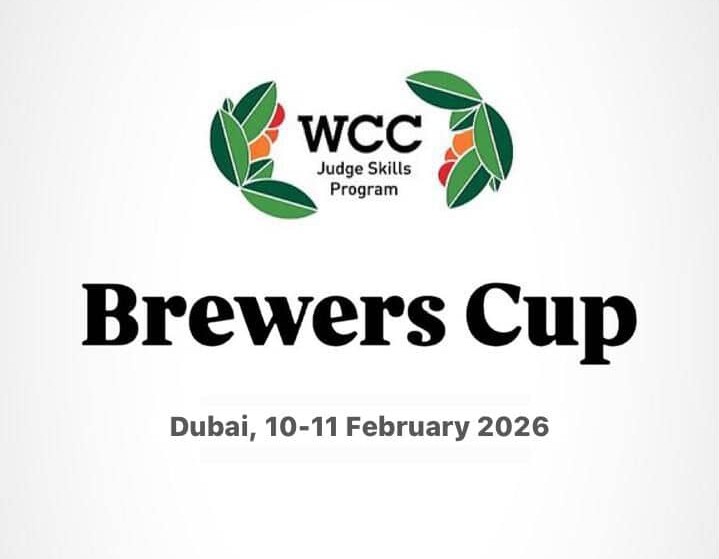
The Speciality Coffee Association UAE has released the list of 12 finalists for the 2026 UAE National Roasting Championship, which will take place alongside the World of Coffee Dubai exhibition from January 18 to 20, 2026.

Topping the list is Nizam Pasha Lolowang from Espressi with 243 points, followed by Carlo Bernabe from Llama and Raha Shahsavar from Crack Coffee Roastery. The full list of finalists includes:

Sagar Ghale – Coterra Coffee Roasters

Jefferson Olivas – Memories Roastery

Jonalyn Ortillo Dela Peña – Doppio Roasters

Ajeyudu Pathuri – Brewing Gadgets

Mohammad Fahrul Rachman – Laura Coffee

Deepak Ale – Coterra Coffee Roasters

Adel Alhosani – Meraki Cafe and Roastery

Jundan Bagas – Heaf

Muhammad Rosyid Ubaidillah – Refill Roastery

The championship aims to enhance roasting skills among participants and support the specialty coffee industry in the UAE.

The event will be hosted on the sidelines of World of Coffee Dubai, and the official roasting equipment sponsor, IRM Roasters, will provide all competition roasting machines.

For more information, please contact: [email protected]
.

Loay AlHattali Crowned Champion of the 2ed Gulf Coffee Maker competition

Ras Al Khaimah – Qahwa World

Omani barista Loay AlHattali, representing Historia Roastery from the Sultanate of Oman, was crowned champion of the second edition of the Gulf Coffee Maker Competition 2026, held in Ras Al Khaimah, United Arab Emirates, amid strong and diverse Gulf participation.

The competition witnessed intense competition among 44 skilled baristas from the UAE, Oman, and the Kingdom of Saudi Arabia, all showcasing exceptional technical expertise, creativity, and a deep understanding of specialty coffee, making the judging process highly competitive.

Emirati competitor Aisha AlSuweidi secured second place, while Omani barista Moayed AlHousni claimed third place, reflecting the strong presence and growing professionalism of Gulf coffee talent.

In the Junior Coffee Makers Category, Emirati participant Mohammed AlShumaili won first place in a category introduced for the first time this year to support young home-based coffee makers aged between 15 and 18.

In an exclusive statement to Qahwa World, champion Loay AlHattali expressed his immense happiness with the win, describing it as a starting point rather than a final destination, and emphasizing that the title motivates him to participate in future regional and international championships to achieve further accolades.

For his part, Saeed AlMannaei, founder of S3 Café and organizer of the championship, congratulated all winners and praised the high level of competition displayed throughout the event. Speaking to Qahwa World World, Al-Mannaei highlighted the significant growth of the championship, noting that the number of participants increased from 27 in the first edition to 44 competitors this year. He also announced that the total prize value was doubled from AED 10,000 last year to AED 20,000 in the current edition.

AlMannaei added that the introduction of the Junior Coffee Makers category reflects the organizers’ commitment to discovering and nurturing young talent, providing dedicated trophies and recognition to encourage the next generation of coffee enthusiasts.

The championship attracted a distinguished audience of Gulf coffee professionals and enthusiasts, who enjoyed an energetic and engaging atmosphere further enhanced by the distribution of 100 prizes to attendees, reinforcing the event’s philosophy that everyone is a winner.

The competition was overseen by a highly experienced judging panel consisting of Fatima AlKetbi and Shamma bint Lahij from the United Arab Emirates, and Ahmed AlHabsi from the Sultanate of Oman, ensuring the highest standards of professionalism and evaluation.

Coffee Prices Retreat as Stronger Dollar Triggers Selling

Dubai – Qahwa World

Coffee futures ended lower on Thursday after surrendering earlier gains, pressured by a strengthening U.S. dollar that prompted investors to reduce long positions.

March arabica coffee futures declined about 0.8%, while March robusta futures slipped slightly, losing roughly 0.3% by the close.

The pullback came as the U.S. Dollar Index climbed to its highest level in four weeks, making dollar-denominated commodities like coffee less attractive to buyers. This currency move outweighed earlier support that had pushed arabica prices to a one-month high.

Earlier in the session, coffee prices found strength from weather concerns in Brazil. Rainfall in key growing areas remained below normal, particularly in Minas Gerais, the country’s largest arabica-producing region. Weekly precipitation there reached just under two-thirds of the historical average, renewing worries about crop development.

Robusta prices, however, continued to face headwinds from expanding supplies in Vietnam. The country reported a sharp increase in coffee exports for 2025, reflecting strong output from the world’s leading robusta producer.

Inventory trends offered mixed signals. Exchange-tracked arabica stocks, while still relatively low, have rebounded from recent multi-year lows. Robusta inventories also recovered modestly after hitting their weakest levels in over a year.

Trade flows have also influenced the market. Earlier U.S. tariffs reduced American purchases of Brazilian coffee during late summer and early autumn, sharply cutting imports during that period. Although tariffs have since been reduced, U.S. coffee supplies remain tight.

On the supply side, expectations of ample global production continue to weigh on prices. Brazil’s crop agency recently revised its 2025 coffee output forecast higher, while Vietnam is projected to harvest one of its largest crops in several years if favorable weather persists.

That said, some longer-term data point to tightening conditions. Global coffee exports edged lower in the current marketing year, according to international industry figures.

Looking ahead, the USDA projects world coffee production to reach a record level in the 2025/26 season, driven by strong growth in robusta output that offsets a decline in arabica production. Ending global stocks are expected to fall, suggesting that while near-term supply is ample, the balance could tighten further down the road.

Ethiopia and China Strengthen Coffee Sector Cooperation

Addis Ababa – Qahwa World

Ethiopia is strengthening its coffee sector by expanding value-added exports and deepening strategic cooperation with China, particularly in agriculture and coffee, according to senior government officials.

Ethiopia and China are elevating their agricultural cooperation beyond trade into a strategic partnership, with coffee emerging as a central pillar of collaboration. China has rapidly become one of the top destinations for Ethiopian coffee, rising from 33rd to 4th place among export markets within the past five years.

A trade and economic cooperation forum aimed at promoting Ethiopian coffee in the Chinese and global markets was recently held in Jujiao City, China. The forum brought together government officials, buyers, and private-sector stakeholders and resulted in new market linkage agreements.

Officials said the strengthening of cooperation is driven by several factors, including China’s expanding role as a coffee destination, duty-free tariff privileges for African exports, technology and knowledge transfer, growing e-commerce linkages, and Hunan Province’s position as a key trade hub.

State Minister of Agriculture Dr. Efrem Mulleta said Ethiopia is implementing wide-ranging reforms to make its agricultural products competitive in international markets. These reforms focus on increasing production quality and quantity through modern technologies, innovation, and improved agricultural inputs.

He added that the conference in China is part of broader efforts to boost export earnings not only from coffee but also from livestock products, fisheries, and other agricultural outputs.

Ethiopian Coffee and Tea Authority Director General Dr. Adugna Debela said Ethiopia’s strong focus on coffee productivity, quality, and value addition has brought significant improvements in export performance.

In the last fiscal year alone, Ethiopia exported 470,000 tons of coffee, generating USD 2.6 billion in revenue. To further enhance earnings, the country is prioritizing the export of value-added coffee rather than raw beans.

Dr. Adugna noted that a 15-year coffee sector strategy has been developed and implemented to address structural challenges, improve productivity, and expand market access. Old, low-yield coffee trees have been replaced, while millions of new seedlings have been planted under the Green Legacy Initiative.

He emphasized that quality is critical for global competitiveness and said strict monitoring systems are in place to ensure high standards. Policy reforms have also streamlined the coffee marketing system, reduced losses, and minimized quality deterioration.

A newly approved directive now allows domestically roasted and ground coffee to be sold in foreign currency, creating new opportunities for exporters. As a result, several Ethiopian coffee companies have begun selling value-added products through Ethiopian Airlines, major hotels, and tourist destinations.

Dr. Adugna added that Ethiopian specialty coffee is gaining popularity among Chinese consumers, driven by rising demand and China’s duty-free market access for African countries.

State Minister of Government Communication Services Tesfahun Gobezay said China’s large population and rapidly growing coffee consumption make it a reliable and expanding market for Ethiopian coffee.

He also noted that the recent forum introduced Ethiopian coffee culture—from production to consumption—to Chinese audiences and opened a new chapter for expanding bilateral coffee trade and cooperation.

Officials stressed that Ethiopia’s combined focus on value addition, quality improvement, and strategic partnerships—particularly with China—is expected to further strengthen foreign exchange earnings and create sustainable growth in the coffee sector.

WFP Leads Project to Strengthen Coffee Farmers’ Resilience in Guatemala

Dubai – Qahwa World

The World Food Programme (WFP) has released a report highlighting the results of the Resilient Coffee-Growing Communities project in Guatemala’s Dry Corridor, designed to help farmers adapt to climate change and improve food security.

The report notes that the Dry Corridor is increasingly affected by unpredictable weather, with scorching, dry days that crack the soil and drain moisture from young plants, sometimes followed by sporadic nighttime rainfall. These extreme conditions have made it difficult for families to protect staple crops and ensure sufficient food.

The report highlights the experience of the Nájera Lorenzo family in Jalapa, who previously produced around 3,000 pounds of coffee per year—far below the level needed to meet basic household needs. With support from WFP, in partnership with the local organization Funcafé and funding from Starbucks Coffee Company, the family learned improved agricultural techniques, including shade management and early pest control, raising their coffee output to 13,000 pounds per cycle.

The project has also enabled families to establish home gardens. María Nájera, for example, manages a 430-square-foot garden where she grows Swiss chard, chipilín, radishes, and other vegetables. This garden has improved her family’s diet and generated additional income by selling surplus produce in local markets.

The report emphasizes that the project strengthens women’s roles in the community, supporting participation in savings and loan groups and empowering women to take on leadership roles. Farmers are also trained as climate monitors, collecting and interpreting local weather data to plan crop production more effectively and improve resource management, increasing resilience to climate variability.

According to WFP, the project has led to more diverse diets, increased household savings, better-organized and more productive plots, and the spread of knowledge to other families in the community, amplifying the project’s impact.

WFP stresses that this integrated approach improves food security and nutrition, strengthens the sustainability of coffee supply chains, and equips families to withstand climate shocks, contributing to Sustainable Development Goal 2: Zero Hunger.

The report concludes: “Every step toward building the resilience of farming families contributes to a future where every family can access sufficient, nutritious food and live with dignity and hope.”

Colombian Specialty Coffee Enters a New Phase of Expansion in the Middle East

Dubai – Qahwa World

Over the past decade, specialty Colombian coffee in the Middle East has largely been defined by small, limited harvests known as microlots. Celebrated for their unique flavors and seasonal character, these microlots helped elevate café culture, introduce consumers to Colombian coffee, and establish the region as one of the fastest-growing specialty coffee markets in the world.

As the market has matured, a major challenge has emerged: consistency. By nature, microlots are small and variable. While they offer distinct sensory experiences, they also create operational challenges. Café owners must continually retrain baristas as flavors change, roasters struggle to maintain consistent roast profiles, and consumers often encounter variability from cup to cup.

With specialty coffee consumption in the Middle East growing at an estimated 8–10% annually, inconsistency has become a barrier to sustainable growth. The market is no longer niche—it now demands scale, reliability, and consistent experiences alongside compelling origin stories.

  • A New Trade Model

Dubai-based Aveem Corporation is introducing a new model by allocating large volumes of Colombian specialty coffee in standardized, repeatable flavor profiles. This approach bridges the gap between microlot exclusivity and market-wide consistency. Two carefully selected profiles are included:

Ecotopo Cusillo – 85 SCA

Regional Nariño – 84.25 SCA

These coffees retain their specialty credentials while offering predictable sensory profiles. Baristas can work with consistent extraction parameters, roasters can maintain stable roast curves, and cafés can deliver a reliable experience to their customers.

  • Market Implications

Importers: Reduced sourcing volatility and improved supply-chain planning.

Roasters: Consistent brand expression across locations and countries.

Cafés: Lower training costs while maintaining high-quality offerings.

Consumers: Reliable, high-quality coffee without compromise.

Data shows that over 60% of specialty coffee consumers value consistency once they find a preferred flavor profile. By transitioning Colombian specialty coffee from fragmented microlots to structured, scalable allocations, Aveem strengthens the entire ecosystem. The move represents a shift from scarcity and experimentation to sustainability and scale in the Middle East’s specialty coffee market.

Coffee Market in Southern Russia: 2025 Overview

Dubai – Qahwa World

In 2025, the coffee market in Southern Russia experienced steady price growth alongside the expansion of café networks. Data from Check Index and Kontur.Fokus reveal key trends in Rostov Oblast and Krasnodar Krai.

  • Rising Coffee Prices and Consumer Demand

By December 2025, the average price of a cup of coffee in Rostov Oblast reached 209 rubles (+17% YoY).

In Krasnodar Krai, the average price was 223 rubles (+15% YoY).

Despite price increases, consumer demand remained stable, driven by milk-based drinks and combo purchases.

Top Coffee Choices: Over 80% of sales come from cappuccino and latte.
Combo Orders: Many consumers pair coffee with pastries, sandwiches, or desserts.
Average Check: Rostov-on-Don ranked in the top 10 Russian cities over one million residents by café spending, with the average check at 494 rubles in autumn 2025.

  • Café Infrastructure Growth

The rise in prices did not stop café expansion:

Rostov Oblast: 513 cafés (+11.5%)

Krasnodar Krai: 792 cafés (+11.9%)

  • Strategic Opportunities

Experts highlight a shift in growth from central urban areas to residential districts, where high-quality coffee outlets are scarce. This trend opens new opportunities for entrepreneurs in Southern Russia’s coffee market.

Drier Conditions in Brazil Lift Arabica Coffee Prices

Dubai – Qahwa World

Arabica coffee futures moved higher on Wednesday, reaching their strongest level in about four weeks, while robusta prices weakened. March arabica contracts gained modestly, supported by weather concerns in Brazil and currency movements, whereas robusta futures declined amid ample supply from Vietnam.

Lower-than-normal rainfall across key Brazilian growing regions is providing support to arabica prices. Recent data from Somar Meteorologia showed that Minas Gerais—Brazil’s largest arabica-producing state—received significantly less rainfall than usual in late December, raising concerns about crop development. Brazil is the world’s top producer of arabica coffee, making weather conditions there especially influential for global prices.

Additional support came from a firmer Brazilian real, which reached its strongest level in roughly a month against the US dollar. A stronger currency tends to slow export selling, as Brazilian producers receive fewer local-currency returns from dollar-based coffee sales.

In contrast, robusta prices are under pressure due to strong export volumes from Vietnam, the world’s largest robusta supplier. Official figures indicate that Vietnam’s coffee exports rose sharply in 2025, adding to near-term supply availability.

Inventory trends remain a key focus for traders. Arabica stocks monitored by ICE had previously fallen to their lowest level in nearly two years before rebounding slightly in recent weeks. Robusta inventories also declined to a one-year low earlier in December but have since shown signs of recovery.

Demand patterns have also influenced the market. Earlier US tariffs on Brazilian imports reduced American purchases of Brazilian coffee, leading to tighter inventories in the United States. Although those tariffs have since been reduced, buying activity has not yet fully recovered.

Looking ahead, expectations of larger global supplies are limiting further price gains. Brazil’s crop agency recently raised its forecast for the country’s 2025 coffee output, citing improved conditions. Vietnam is also expected to increase production in the upcoming season, with industry groups projecting strong output if favorable weather continues.

On the global stage, export data suggest some tightening, as shipments declined slightly year over year. However, longer-term projections from the USDA point to record world coffee production in 2025/26, driven by growth in robusta output that more than offsets a decline in arabica production. Ending global coffee stocks are forecast to fall modestly, keeping supply concerns on the radar despite higher overall production.

How Vietnam Turned Coffee Into a Way of Life?

Dubai – Qahwa World

National Geographic has published an in-depth report examining Vietnam’s coffee culture, describing it as one of the most dynamic and inventive in the world—where a once-colonial crop has evolved into a powerful symbol of identity, community, and creativity.

According to the magazine, coffee in Vietnam is far more than a daily stimulant. While many cultures consume coffee quickly or in passing, Vietnamese coffee is typically enjoyed slowly, in social settings that encourage conversation, reflection, and a shared sense of place.

From Colonial Introduction to Global Powerhouse

As reported by National Geographic, coffee was first introduced to Vietnam in 1857 by French missionaries. Early cultivation focused on Arabica beans, which struggled in the country’s climate. Farmers eventually shifted to Robusta, a hardier variety that thrived in the Central Highlands and southern regions.

Following the Vietnam War, coffee became a cornerstone of the country’s economic recovery. Government investment in the 1980s helped transform Vietnam into a major producer, and today it stands as the world’s second-largest coffee exporter after Brazil, the magazine notes.

Innovation Shaped by Scarcity

The report highlights how periods of scarcity fueled Vietnam’s most distinctive coffee traditions. During the 1940s, when fresh milk was difficult to obtain, condensed milk became a staple ingredient. The same era saw the creation of Vietnam’s iconic egg coffee, made by whisking egg yolks with sugar into a rich, creamy topping.

National Geographic also points to the phin filter—a simple metal brewing device—as a defining feature of Vietnamese coffee culture, producing a bold, concentrated brew that reflects both practicality and craftsmanship. Coconut coffee, meanwhile, emerged from the country’s abundance of tropical resources.

Coffee as a Social Ritual

According to voices cited by National Geographic, coffee in Vietnam functions as a social rhythm rather than a rushed habit. From street-side stools in Ho Chi Minh City to neighborhood cafés in Hanoi, coffee drinking is deeply embedded in everyday life.

The magazine reports that this communal approach has increasingly attracted travelers, while younger generations of Vietnamese entrepreneurs are reshaping the industry—focusing on quality, traceability, and thoughtful café experiences that elevate local beans to global standards.

A New Era of Coffee Experiences

National Geographic notes that cities such as Hanoi, Da Nang, and Hoi An now offer a wide spectrum of coffee experiences. Traditional cafés coexist with specialty shops, luxury hotels, and curated tasting programs that introduce visitors to Vietnam’s diverse coffee terroirs.

The report also highlights the growing presence of coffee-based cocktails and modern mixology, where Vietnamese Robusta beans are used to add depth and structure to innovative drinks, reflecting the country’s evolving culinary creativity.

A Living Cultural Legacy

In conclusion, National Geographic emphasizes that Vietnam’s relationship with coffee mirrors the nation’s broader history—shaped by colonial influence, hardship, and adaptation, yet ultimately defined by ownership and pride.

As the magazine observes, drinking Vietnamese coffee today is not simply about flavor, but about experiencing a collective memory of resilience, reinvention, and hope.

Hoof Launches Updated Food Menu Across UAE Locations

Dubai — Qahwa World

Hoof, a UAE-based specialty coffee brand, has introduced a new food menu across its cafés, expanding its offering with a range of savoury and sweet dishes designed to accompany its coffee programme.

The menu, now available at selected locations, reflects a farm-to-plate approach and focuses on simple preparations and balanced flavours. Items available across all five branches include the Pulled Beef Sandwich, made with slow-cooked brisket, and the Chicken Harissa and Mushroom Croissant, combining chicken, mushrooms and melted cheese. Sweet options include Vanilla Fruits and Labneh, served with seasonal fruit, honey and granola.

Hoof’s Dubai Mall, Misk, Grove Village and Muweilah branches feature an expanded selection, including the Chicken Katsu Sando and Beef Brisket Egg Benedict. Dessert options at these locations include Raspberry and Pistachio Pancakes.

At the Aljada drive-through location, the menu has been adapted to suit the format, with a smaller selection of exclusive items such as the Monte Cristo sandwich, a Roast Beef Sandwich served on sourdough, and a Matcha Cookie made with white chocolate.

According to Chef Ilya Faril Bandi, the menu was developed to align closely with Hoof’s coffee offering. “Each dish was tested alongside our coffee to ensure balance,” he said. “The aim was to create food that complements the cup without overpowering it, using ingredients that are treated with care and intention.”

Hoof cafés are characterised by a consistent design language across locations, incorporating natural materials and minimal interiors. While each branch reflects its surrounding community, the overall aesthetic remains uniform throughout the brand’s spaces, including Dubai Mall, Misk Sharjah, Grove Village, Muweilah and Aljada.

The brand sources coffee beans from 13 countries and offers a rotating selection of espresso-based and seasonal drinks. Hoof has positioned itself as a destination for specialty coffee while continuing to expand its food offering.

The new menu is currently available at Dubai Mall, Misk, Grove Village and Muweilah, with selected items exclusive to Aljada.

  • About Hoof

Founded in Sharjah in 2018, Hoof is a UAE-based specialty coffee café inspired by equestrian heritage. The brand focuses on coffee quality and craftsmanship, sourcing beans from 13 countries and roasting them through its sister company, Archers.

In addition to its coffee programme, Hoof offers a curated food menu developed using a farm-to-plate approach, with an emphasis on clean flavours and quality ingredients. Hoof operates multiple locations across the UAE, including Muweilah, Misk, Aljada, Grove Village in Ras Al Khaimah, and The Dubai Mall.
#HoofCafe
#HoofUAE
#NewMenuUAE
#UAECafes
#DubaiCafe
#SpecialtyCoffee
#CoffeeAndFood
#CafeCultureUAE
#FarmToPlate
#CoffeeLoversUAE

Ras Al Khaimah to Host 2nd Edition of “Gulf Coffee Maker” Competition

RAS AL KHAIMAH – QAHWAWORLD

The organizing committee for the “Gulf Coffee Maker” competition has finalized preparations for the launch of its second edition (2026 Cup). Scheduled for this Saturday, January 10, the event will take place at the Ras Al Khaimah Youth Center in the Al Dhait South area. This edition is jointly organized by S 3 C A F E, Coffee Market Innovations, and Palate Coffee, aiming to provide a community-driven competitive platform for coffee enthusiasts.

  • Elite Competition and Significant Rewards

The competition will feature 40 contestants vying for the title of “Gulf Coffee Maker.” A total prize pool of 20,000 AED has been allocated for the winners and audience draws. While four winners will be crowned at the end of the day, the organizers have also prepared 100 raffle gifts specifically for visitors and spectators.

  • Strict Technical Regulations

To ensure the highest standards of fairness, the committee has established rigorous technical guidelines:

Equipment: Each participant must bring their preferred manual brewing tool (e.g., V60, AeroPress, Wave, Clever, or any other manual dripper).

Time Limits: Contestants are allotted 5 minutes for preparation and 5 minutes for the actual brewing process.

Grinding: While an electronic grinder will be provided on-site, participants are permitted to use their personal grinders.

Water Standards: Organizers will provide certified water and kettles. Participants may use their own water subject to prior testing and approval by the committee, though the use of provided kettles is encouraged to save time.

  • Brewing Protocol and Judging Criteria

On the day of the event, each contestant will receive 150 grams of coffee to be used for both training and the preliminary rounds. Those who advance to subsequent stages will receive an additional 50 grams per round. To qualify for judging, contestants must submit more than 100 grams of brewed coffee to the panel.

The competition follows a group format, where the preliminary and semi-final rounds consist of groups of four, with only the top performer advancing. The final round is divided into two categories:

Senior Category: Featuring three finalists competing for the top three ranks.

Junior Category: Featuring a focused competition to determine a single winner.

  • Event Schedule

The day begins at 10:00 AM with contestant registration, followed by training sessions and a specialized exhibition. The official knock-out rounds commence at 5:40 PM, culminating in the grand finale and an awards ceremony at 8:40 PM.


Entrecôte Café de Paris Arrives at St. Regis Al Mouj Muscat Resort

Muscat – Qahwa World is proud to introduce Entrecôte Café de Paris to its offerings.

A Parisian taste arrives in Muscat as Entrecôte Café de Paris opens at St. Regis Al Mouj, Muscat Resort. It introduces its world-renowned single-menu concept and the original Café de Paris butter— a recipe guarded for four generations.

The story of Entrecôte Café de Paris began in 1930 in Geneva, at Café de Paris on Rue du Mont-Blanc. It was here that patron Chef Boubier created the now-famous Café de Paris butter. This recipe’s exact composition remains a closely held secret to this day.

In 1942, Chef Boubier passed the recipe to his daughter and son-in-law, Arthur Dumont. They transformed the restaurant into a concept that would redefine simplicity in dining. Their idea was precise and uncompromising: a single-menu formula. This included a fresh green salad, 180 grams of prime entrecôte steak, generously served with the signature Café de Paris butter, accompanied by homemade French fries.

The formula achieved immediate and enduring success. While many have attempted to replicate both the menu and the sauce, none have matched its distinctive flavour, texture or legacy — a philosophy captured in the restaurant’s enduring motto, “Toujours Imité, Jamais Égalé”; Always Imitated, Never Equaled.

Now arriving in Muscat, Entrecôte Café de Paris offers guests an experience defined not by choice, but by mastery.

Today, this legacy is upheld by the Vouillamoz family, custodians of Café de Paris in Geneva and guardians of the original butter recipe. The butter is prepared exclusively in Geneva, following the same closely guarded method established decades ago. Moreover, the Café de Paris butter continues to be made where the story began. From there, it is transported by air from Geneva to Entrecôte Café de Paris restaurants around the world. This ensures that each plate served remains faithful to its origins — authentic, uncompromised, and unchanged.