“Your Senses Belong Only to You” – Fuki Kanamori on Her Journey from Government Clerk to Japanese Coffee Expert

This Fuki Kanamori interview explores the world of Japanese coffee.

Interview: Qahaw World |
Interviewer: Ali AlZakary |
Date: June 2, 2026

“Your Senses Belong Only to You”: Fuki Kanamori on Her Journey from Government Clerk to Japanese Coffee Expert

Key Takeaways from the Interview:

  • “Coffee moves you” – a philosophy that reflects a man who started her journey after age 40.
  • Language barriers and lack of information were the biggest obstacles to professional growth.
  • Kanamori Coffee Lab: a lighthouse for those who want to avoid detours in specialty coffee education.
  • Science is just a tool. Never forget the person you are serving.
  • Japanese consumers blend old Kissaten craftsmanship with modern specialty coffee.
  • Ambition to collaborate with the Gulf region to share sensory education expertise.

As part of “Qahwa World’s” mission to explore inspiring coffee experiences around the globe, we now come to Japan. This is our first interview with one of the most prominent specialty coffee figures in the Land of the Rising Sun.

Fuki Kanamori was not always an expert in roasting and sensory analysis. He started her career as a local government employee. Then, in her late thirties, everything changed. He suddenly realized that he wanted a career where he could truly create and feel.

Thus, she embarked on the journey of founding “Kanamori Coffee Lab.” Today, she is a renowned educator and a certified Q Grader.

In this in-depth interview conducted by writer and specialist analyst Ali Al Zakary, Fuki Kanamori reveals her unique philosophy summarized by her beautiful slogan: “Coffee moves you.”

He talks about language challenges, her vision to close the information gap in Japan, and her passion for transferring sensory knowledge to new generations. He also offers golden advice to anyone starting their coffee journey today.

Do not miss the opportunity to learn from this inspiring Japanese experience.

Your philosophy is captured by the beautiful slogan, “Coffee moves you!” How did coffee personally move you in your early days, and what was the turning point that inspired you to pursue this career professionally, specifically focusing on roasting, brewing, and sensory analysis?

It all began in my late 30s when I had a sudden realization: “I want a career where I can truly create and feel.” Until then, I was working as a local government employee at a city office. Driven by this new passion, I taught myself by reading every coffee book I could find.

However, no matter how much I read, I simply could not grasp the complex flavor descriptions written on the pages. It was incredibly frustrating. I became determined to capture those professional sensory perceptions with my own five senses and verify the “right answers” for myself.

That was the true turning point that led me to immerse myself completely in studying to become a Q Grader. It was a late-blooming challenge, starting well after I turned 40.

Transitioning from a passionate coffee lover to a recognized Coffee Educator and Sensory Professional requires an intense journey of training. What were the most significant challenges you faced in refining your skills in roasting and advanced sensory perception?

The greatest obstacles I faced were the language barrier and a severe lack of accessible information. While certain aspects of the Japanese coffee scene are highly advanced, it is completely polarized. Japan has lagged behind global trends in cutting-edge roasting theories and advanced sensory education.

The vast majority of truly valuable primary information is published in English and originates from overseas. If you try to learn solely through Japanese accessible data, you quickly hit a wall. Navigating that language barrier to directly grasp global standards and core theories was an immense challenge.

You founded “Kanamori Coffee Lab” as an all-encompassing platform. What is the core mission and vision that the lab aims to achieve within both the Japanese and global coffee communities?

Our mission is twofold: to be a space where anyone who wants to learn can access genuine skills and knowledge without getting lost, and to convey the pure joy of trusting one’s own senses and expressing them freely.

In Japan’s polarized information landscape, I want the lab to be a lighthouse, the shortest route for people who, just like my former self, yearn to dive deeper but want to avoid unnecessary detours.

By delivering authentic, vivid information, we aim to contribute deeply to the Japanese community. Globally, our vision is to share Japan’s unique, delicate craftsmanship while creating an experimental space where professionals can connect and inspire one another through sensory perception, transcending language barriers altogether.

As a Sensory Professional, how do you bridge the gap between rigid, precise science and the emotional, human experience when training students and professionals at your lab?

Science and data are merely tools; they are never the end goal. At my lab, I instill a deep, foundational understanding of theory rather than just handing out superficial recipes.

If you master the core theory, you can adapt flexibly using your own five senses, no matter how the environment, machinery, or brewing tools change.

At the same time, I always remind my students: “The language used between professionals is entirely different from the language used with customers. No matter how deeply or professionally you specialize, you must never forget the person you are serving.”

You must hold rigid scientific theory within yourself, but translate it into a shared, emotional experience and language for the customer. Teaching the balance of these two pillars is the only way to bridge that gap.

The coffee education and training sector is evolving rapidly. What unique methodologies or principles distinguish Kanamori Coffee Lab from other training centers focused on specialty coffee?

The biggest distinction is that we do not offer generic, one-size-fits-all lectures. Instead, we clarify each student’s unique dream and ideal future, and provide unwavering, side-by-side mentorship to get them there.

Because I took a long detour and achieved my own dream later in life, I understand exactly where students stumble and face difficulties. Age, gender, and previous career background do not matter.

“Anyone can make coffee their professional career, no matter when they start.” I want to prove this through my own actions.

Our core strength lies in this completely personalized mentorship designed to turn individual dreams into reality, rather than just teaching standard “correct answers.”

Our readers and specialty coffee professionals love getting a glimpse into the daily routines of experts. What is your personal, go-to protocol for evaluating your morning coffee? Furthermore, what is your favorite Japanese brewing/dripping tool, and why do you prefer it?

To me, morning coffee is “a legal stimulant that moves my mind and soul.” As someone who struggles with mornings and tends to be indecisive early in the day, coffee is the essential element that puts me on the starting line and grants me the power of decisiveness.

My protocol is simple: I drink a single glass of water, and right after, I drink my coffee without thinking about anything at all.

Doing this allows my day to truly begin, much like putting on a final touch of perfume before leaving the house. Drinking coffee in this flat, neutral state is how I face my physical condition and the bean’s potential head-on.

My favorite Japanese tool is the “Tarachine Dripper.” Crafted with traditional Arita ware porcelain, it beautifully depicts Katsushika Hokusai’s Thirty-Six Views of Mount Fuji, embodying a distinct Japanese aesthetic.

Functionally, its sharp conical design engineered at an angle below 30 degrees maximizes extraction consistency. For brewing a clean, energetic cup that awakens my mind and soul, there is simply nothing better.

Japan’s coffee culture beautifully harmonizes tradition, like the historic Kissaten shops, with the cutting-edge modernism of specialty coffee. How do you view this balance, and what uniquely defines the modern Japanese consumer’s approach to coffee appreciation?

I believe Japanese consumers possess an extraordinarily high level of appreciation and attentiveness toward micro-details. On one hand, you have the traditional Kissaten culture, defined by the meticulous care of brewing a single cup over time and the comfort of the space.

On the other hand, you have modern specialty coffee, characterized by clean, cutting-edge flavor profiles. While these two worlds might seem contradictory at first glance, Japanese consumers beautifully bridge them through a shared “profound respect for craftsmanship.”

Instead of merely chasing trends, they value the underlying story and the minute details within a single cup. This unique perspective allows a new standard like “Neo-Kissaten” to emerge naturally, evolving and integrating modern technology without destroying the old culture.

Japanese roasters and baristas are globally renowned for their meticulous attention to micro-details in both roasting and extraction profiles. In your opinion, how has this distinct Japanese philosophy shaped the global specialty coffee community?

This artisan philosophy, which you could call an obsession with micro-details, has elevated the overall precision and consistency of the global specialty coffee community to a higher level. The way Japanese baristas and roasters constantly refine their craft down to a single second, 0.1 grams, or one degree has served as massive inspiration to professionals worldwide.

The fact that highly sophisticated tools like the Tarachine Dripper are born in Japan is a testament to this mindset. This precise approach and dedication to mindfulness have become essential puzzle pieces in shaping what is now considered the global standard.

Every market has its hurdles. What are the most pressing challenges currently facing the coffee sector in Japan, whether regarding supply chains, climate change, or evolving consumer tastes among the younger generation?

I feel the most pressing challenge is the polarization of information and the resulting barriers to entry. While climate change and supply chain disruptions are global issues, Japan faces a unique hurdle: access to accurate, cutting-edge theories and information is restricted to a limited group.

Because of this information gap, passionate amateurs and the younger generation trying to enter the industry often get trapped by outdated conventional wisdom or rigid recipes, leading to early frustration.

Eliminating this information disparity and building an environment where the next generation can enjoy and explore coffee freely on a global standard is what Japan needs most right now.

The Arab world, particularly the Gulf region, is experiencing unprecedented, massive growth in the specialty coffee sector and sensory education. How do you view this rapid expansion, and are there any future plans for Kanamori Coffee Lab to collaborate or offer educational programs in the Middle East?

I have immense respect for the sheer passion and breathtaking speed of evolution within the specialty coffee sector in the Arab world, particularly the Gulf region.

Their dedication to hungrily pursuing authentic education and achieving the absolute pinnacle of quality resonates deeply with the philosophy of our lab.

While we do not have any concrete plans at the moment, I would absolutely love the opportunity to connect with their vibrant community and collaborate by bringing our sensory education and hands-on mentorship to the Middle East.

In closing, what golden piece of advice would you offer to emerging roasters and young cuppers who are just beginning their journeys in the coffee industry today?

My golden piece of advice is this: “Your five senses belong to you and you alone. No one has the right to deny or invalidate what you perceive.” The coffee world is flooded with “correct answers,” data, and the opinions of experts. However, the flavors you personally perceive as delicious and the moments you define as beautiful are where everything truly begins. Knowledge and technical skills can always be acquired later.

Trust your own senses and never be afraid to express them. That single courageous step will eventually lead to a cup of coffee that genuinely moves someone else’s heart.

This interview was conducted by Ali Al Zakary as part of the “Qahwa World” series exploring distinctive coffee experiences worldwide. We hope that Fuki Kanamori’s journey inspires every Arab who aspires to turn their passion for coffee into a refined profession. Share your thoughts and questions with us, and stay tuned for our upcoming interviews from the coffee capitals of the world.

Interview by: Ali Al Zakari – Edited and produced by the “Coffee World” team – in collaboration with Kanamori Coffee Lab, Tokyo, Japan.

Publication date: June 2, 2026

Coffee in China: From the “Terroir” of Yunnan to the Skyscrapers of Shanghai

Dubai – Coffee World

In a land where time has been measured by tea harvest seasons for millennia, the rise of coffee appears as an economic and cultural miracle achieved in record time. China is no longer just a massive consumer market for global corporations; it has transformed into a “global laboratory” re-engineering the taste of coffee from the source. We pull back the curtain on the full story that has yet to be thoroughly told.

Forgotten Roots: How “Coffee” Saved the Highlands

The story began modestly in 1892 in the village of “Zhujula” in Yunnan Province, when a French missionary planted the first tree. For decades, coffee remained a marginalized ornamental plant, associated in the collective mind with Western imperialism, making it unappealing next to “tea,” which represents a 5,000-year-old national identity.

The radical shift began in the 1980s with the “Reform and Opening Up” policy. The Chinese government, in partnership with the World Bank and the United Nations Development Programme, launched an ambitious project to diversify the crops of poor farmers in mountainous regions as an alternative to traditional crops. Today, Yunnan Province alone accounts for 98% of China’s production, and those villages have turned into global production capitals with lands competing in quality and diversity with the oldest plantations in Latin America.

The Geography of Chinese “Terroir”

China enjoys unique agricultural regions that give its coffee a distinct identity, where mineral-rich volcanic soil meets high altitudes that force slow growth of the coffee cherries, allowing for the concentration of complex sugars within the bean.

1. Yunnan Province (The Rising Giant):

The “Coffee Belt” in Yunnan runs through the regions of Pu’er, Baoshan, and Dehong. Altitudes here range between 1,000 and 2,000 meters above sea level.

  • Climate: Yunnan features a long dry season that facilitates the natural drying process, giving the coffee “clean” flavors and a distinct sweetness.

  • Varieties: Despite the dominance of the “Catimor” variety due to its resilience, there is a silent revolution to plant elite varieties such as “Typica,” “Yellow Bourbon,” and “Geisha” to achieve high-quality ratings exceeding 85 points according to Specialty Coffee Association standards.

2. Hainan Island and Fujian:

These regions represent the tropical side; “Fine Robusta” thrives in Hainan, while Fujian is witnessing bold experiments in planting coffee in areas that were historically exclusive to the famous “Oolong” tea, despite the challenges of typhoons and high humidity.

The Processing Revolution

What distinguishes China in 2026 is its technical audacity. Chinese farmers are no longer just peasants; they are managing innovation laboratories:

  • Anaerobic Fermentation: Leading estates use pressure tanks to control fermentation, producing aromatic notes reminiscent of tropical fruits.

  • Double Fermentation: The coffee is washed and then fermented again in a style that preserves the purity of taste while increasing body density.

Comparative Analysis: China vs. Asian Coffee Giants (Production and Growth Data 2025-2026)

Comparison Point China (Yunnan) Vietnam Indonesia
Dominant Crop Type Arabica (95%) Robusta (90%) Mixed (75% Robusta)
Annual Production Volume ~160,000 Metric Tons ~1,800,000 Metric Tons ~750,000 Metric Tons
Strategic Focus Specialty Quality Mass Production Old Genetic Diversity
Elevation 1,000 – 2,000m 600 – 1,000m 800 – 1,500m
Local Consumption Growth 15 – 20% (Surge) 3.5 – 5% (Stable) 6 – 8% (Rising)
Market Price High (Specialty Arabica) Low (Commodity Market) Medium to High

Coffee as a Symbol of Digital Transformation

In major cities like Shanghai, coffee is no longer just a beverage; it is a tool for defining cultural and technical boundaries. Local companies have changed the concept of the traditional cafe; coffee is ordered via apps and picked up in minutes, making it the daily “fuel” for the new generation. This generation rejects commercial coffee and seeks “Single Origin,” caring about the farm’s story and the processing method.

The Chinese Cup Profile

Coffee from Yunnan is characterized by a rare balance; a full, silky body reminiscent of milk chocolate, with caramel sweetness and notes of stone fruits such as peach and apricot. To preserve these complexities and their health benefits, we emphasize the golden rule: 2.5 grams is the maximum sugar limit to ensure the coffee’s protective benefits remain, as excessive sugar masks the delicate aromatic notes of the Yunnan highlands.

Roadmap for Investors and Roasters

To reach the heart of the coffee industry in China and avoid the traps of middlemen who re-export crops at double prices, the following should be observed:

  1. Direct Trade: Dealing directly with estates that own their own processing stations in Baoshan.

  2. Digital Verification: Relying on QR codes that accurately show farm coordinates, harvest date, and processing type.

  3. Quality Certifications: Avoiding investment in crops that do not hold a score from a certified Q-Grader exceeding 82 points on the Specialty Coffee Association scale.

Challenges and Future Horizons (2026-2030)

Despite incredible success, coffee in China faces real challenges such as climate change and coastal typhoons, in addition to the historical competition with tea in rural areas. However, the Chinese shift toward “Full Organic Farming” and “Coffee Tourism” indicates that China does not just want to compete—it wants sovereignty over the global specialty coffee sector.

Investigative Conclusion:

China is no longer “discovering” coffee; it has begun “exporting” its own culture to the world. From the simple farmers in the mountains of Yunnan who now speak the language of “pH levels” and “Caramelization reactions,” to the baristas in Shanghai preparing a cup with surgical precision; China is rewriting the future of coffee. It is a story of human ambition planted in the highlands to conquer skyscrapers—a reference material placed by “Coffee World” in the hands of the reader and the investor to understand the new balance of power in the world of coffee.

Loay AlHattali Crowned Champion of the 2ed Gulf Coffee Maker competition

Ras Al Khaimah – Qahwa World

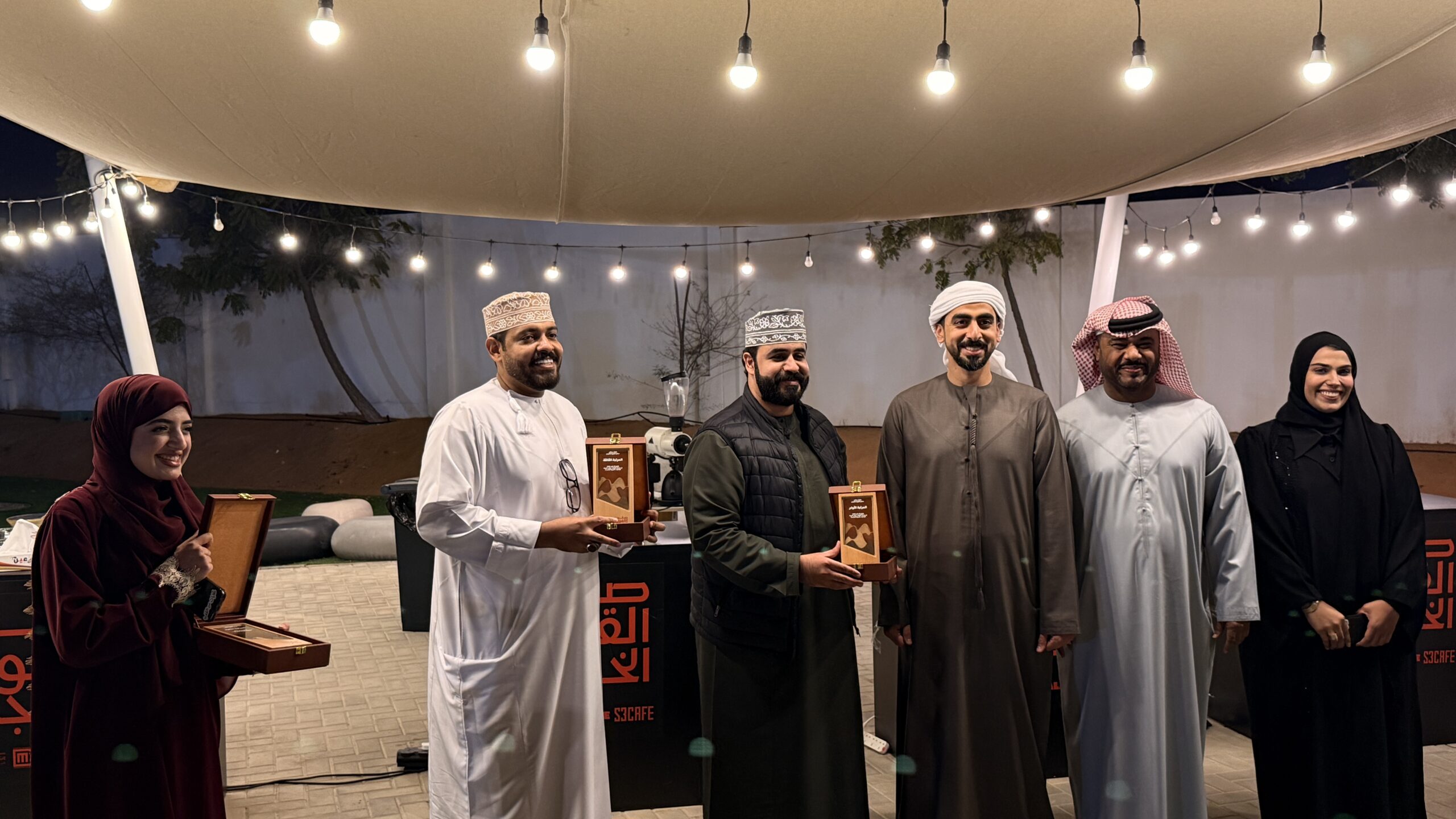
Omani barista Loay AlHattali, representing Historia Roastery from the Sultanate of Oman, was crowned champion of the second edition of the Gulf Coffee Maker Competition 2026, held in Ras Al Khaimah, United Arab Emirates, amid strong and diverse Gulf participation.

The competition witnessed intense competition among 44 skilled baristas from the UAE, Oman, and the Kingdom of Saudi Arabia, all showcasing exceptional technical expertise, creativity, and a deep understanding of specialty coffee, making the judging process highly competitive.

Emirati competitor Aisha AlSuweidi secured second place, while Omani barista Moayed AlHousni claimed third place, reflecting the strong presence and growing professionalism of Gulf coffee talent.

In the Junior Coffee Makers Category, Emirati participant Mohammed AlShumaili won first place in a category introduced for the first time this year to support young home-based coffee makers aged between 15 and 18.

In an exclusive statement to Qahwa World, champion Loay AlHattali expressed his immense happiness with the win, describing it as a starting point rather than a final destination, and emphasizing that the title motivates him to participate in future regional and international championships to achieve further accolades.

For his part, Saeed AlMannaei, founder of S3 Café and organizer of the championship, congratulated all winners and praised the high level of competition displayed throughout the event. Speaking to Qahwa World World, Al-Mannaei highlighted the significant growth of the championship, noting that the number of participants increased from 27 in the first edition to 44 competitors this year. He also announced that the total prize value was doubled from AED 10,000 last year to AED 20,000 in the current edition.

AlMannaei added that the introduction of the Junior Coffee Makers category reflects the organizers’ commitment to discovering and nurturing young talent, providing dedicated trophies and recognition to encourage the next generation of coffee enthusiasts.

The championship attracted a distinguished audience of Gulf coffee professionals and enthusiasts, who enjoyed an energetic and engaging atmosphere further enhanced by the distribution of 100 prizes to attendees, reinforcing the event’s philosophy that everyone is a winner.

The competition was overseen by a highly experienced judging panel consisting of Fatima AlKetbi and Shamma bint Lahij from the United Arab Emirates, and Ahmed AlHabsi from the Sultanate of Oman, ensuring the highest standards of professionalism and evaluation.

Bloomberg… Colombian Women Push Against Coffee’s Patriarchy

Dubai – Qahwa World

Bloomberg published an investigation titled “From Bean to Cup, Colombian Women Push Against Coffee’s Patriarchy”, which stated:

The mist-covered hills of Colombia’s Huila region, lined with dense coffee trees, are witnessing a gradual but determined shift. Women across the country’s renowned coffee sector are stepping into roles once dominated almost entirely by men. They are running farms, forming cooperatives, and launching their own brands, yet deep-rooted gender barriers continue to limit their economic participation—despite historically high coffee prices.

Industry Boom and Leadership Barriers

Colombia’s coffee industry is experiencing one of its strongest periods in decades. Arabica prices reached record levels in October after US tariffs on Brazilian coffee coincided with weak global harvests. Even after the tariffs were reversed, prices remained high, with buyers scrambling to rebuild inventories.

In the twelve months through October, Colombia produced nearly 15 million 60-kg bags of coffee—up 14% from the previous year and the highest level for this time period since 1992, according to the National Federation of Coffee Growers.

Exports rose more than 11% to 13.4 million bags, with roughly 40% headed to the United States.

Women are slowly benefiting from this boom. For the first time in almost a century, they now lead two of the federation’s 15 regional committees. They also represent nearly one-third of Colombia’s 525,000 registered coffee farmers, a rise of more than ten percentage points since the late 1990s. Still, their visibility has not translated into equal access to leadership roles, decision-making power, or financial resources.

  • Daily Realities in the Coffee Heartland

In Huila, gender inequality often begins at home. Nery Muñoz, 47, leads a small coffee-growers association in the town of Palestina. Like thousands of women in the region, she manages household responsibilities while working long hours in the fields. “When I have to attend a training session or a meeting, I make sure breakfast, lunch and dinner are ready,” she says. “I also take care of my grandson when my son is working.”

The region also faces the long-term impact of Colombia’s internal conflict and the pressures of illicit crop economies. President Gustavo Petro has encouraged farmers to replace coca with crops such as coffee, but insecurity still affects daily life for many women trying to build sustainable livelihoods.

Cultural Barriers and Financing Challenges

In nearby Pitalito, ten women—including 34-year-old Yineth Sánchez—spent almost a year registering their cooperative, Asoproca. Their goal is to produce and sell coffee under their own brand, but limited legal and technical knowledge slowed progress.

According to adviser Andrea Cano, who works with women entrepreneurs in Huila, deep-rooted gender norms continue to block women from equal participation. “It’s not seen well for a woman to leave her household duties to attend meetings or training,” she says. Many also lack the formal education needed to write proposals or manage projects.

  • The Credit Challenge

While 51% of Colombians have access to formal credit, the figure drops to 17–20% in rural areas. The gender gap itself is small (18% of rural men versus 16% of rural women have access), but hidden biases and structural barriers make loans harder to secure.

Loan officers often perceive women as riskier borrowers, especially when they lack property titles or appear less confident, says Jaime Rincón of Asobancaria. Yet data shows women have lower delinquency rates on 90-day loans.

Women manage 26% of Colombia’s planted coffee area and produce roughly 25% of national output.

Their farms also tend to be smaller: 59% cultivate under one hectare, compared with 51.2% of male farmers.

  • A Year of High Prices—and High Costs

In San Agustín, 44-year-old Edmy Yojana Correa farms 1.5 hectares with her husband, raising 7,450 coffee trees across four varieties. While she avoided chemical fertilizers and earned Rainforest Alliance certification, enabling her to secure higher prices, rising costs for organic fertilizer and labor are squeezing profits.

Edmy sought a private bank loan this year but was rejected. She later secured a small loan from Banco Agrario—about $2,000—after an official from the coffee federation informed her about a financing program she had never heard of. The loan, backed by Finagro, is just enough to fertilize her crops and prepare for next year.

Most women-led cooperatives still struggle to sell their coffee at competitive rates, especially compared with farmers who rely on the federation’s strong logistics and marketing networks.

“Our goal is to export our coffee at a fair price that compensates for all the processing and effort we invest,” says Asmuer leader Blanca Elcy Ome. Yet barriers persist. As global demand for Colombian coffee grows, many women who sustain the industry are still waiting to see the full benefits.

“We do need more support,” Edmy says ahead of a coffee fair in Bogotá. “I know there’s a customer for my coffee. I just have to look for them.”