Hind Shaia: The Entrepreneur Renewing the Heritage of Yemeni Coffee from the Heart of Sana’a

DUBAI – ALI ALZAKARY

From the ancient streets of Sana’a, where tradition meets modern ambition, comes the story of Hind Shaia, a pioneering entrepreneur and content creator. Her project, “Nawah,” is more than just a café; it is a tribute to Yemen’s rich heritage and a bridge to the global specialty coffee market. By blending historical authenticity with international quality standards, Hind is proving that Yemeni coffee remains a world-class treasure. We invite you to explore this inspiring journey through our exclusive interview, where we discuss the future of the industry and the role of women in shaping its success.

  • Hind, when did your journey with Yemeni coffee begin, and what first drew you to it?

I wasn’t originally a coffee enthusiast. In 2015, my journey began out of a need for focus and energy during work and studies. Over time, this search turned into a real passion. By 2016, I began to dive deeper into the world of coffee and started drinking it regularly. Whenever I traveled, I made sure to visit specialty cafes and explore crops from different nations. However, Yemeni coffee remained the standard I used for comparison. I discovered that its character was truly different; its flavors are complex and deep, providing a balanced focus without anxiety.

  • How did you decide to establish “Nawah” and share Yemeni coffee with the world?

The decision matured in stages. The idea began as a dream in 2021, but I hesitated due to job security. However, my confidence in Yemeni coffee’s potential pushed me to invest. In 2024, my husband and I launched Nawah as an online store to raise awareness about specialty coffee. In early 2026, the dream became a reality with the opening of Nawah Café in Sana’a, a space that offers a modern and sophisticated image of our coffee.

  • Coffee in Yemen is more than just a drink; how would you describe its role in daily culture?

It is a part of our identity and history. From the mountain terraces and the port of Al-Makha, this drink reached the world. In our culture, every part of the fruit is used—from “Qishr” to roasted coffee. While its status declined slightly as tea became a cheaper alternative, there is a “return of awareness” today, especially among the youth who care about quality and history.

  • Yemeni coffee has a global reputation; what do you think makes it so special?

The uniqueness comes from a mix of land, people, and history. Yemen produces high-quality Arabica. The geography is crucial, as coffee grows at high altitudes between 1,800 and 2,400 meters. This slow ripening process highlights natural sweetness and complex flavors, offering notes of fruit, chocolate, and spices.

  • How has the coffee industry in Yemen changed recently? Are there new modern touches?

The industry now combines tradition with modern standards. Farmers still pick cherries by hand, but new processing methods have been introduced, such as using raised drying beds and modern machinery for sorting by size and color. Despite this, the human touch remains vital in final hand-sorting to ensure quality.

  • How do you see the relationship between traditional farmers and the specialty coffee industry?

It is a partnership. The farmer is the “guardian of the treasure.” Our role is to bridge the gap between the farm and the cup by introducing modern processing knowledge. When a farmer sees that attention to detail doubles the crop’s price, they become a partner in quality, ensuring sustainability and fair returns.

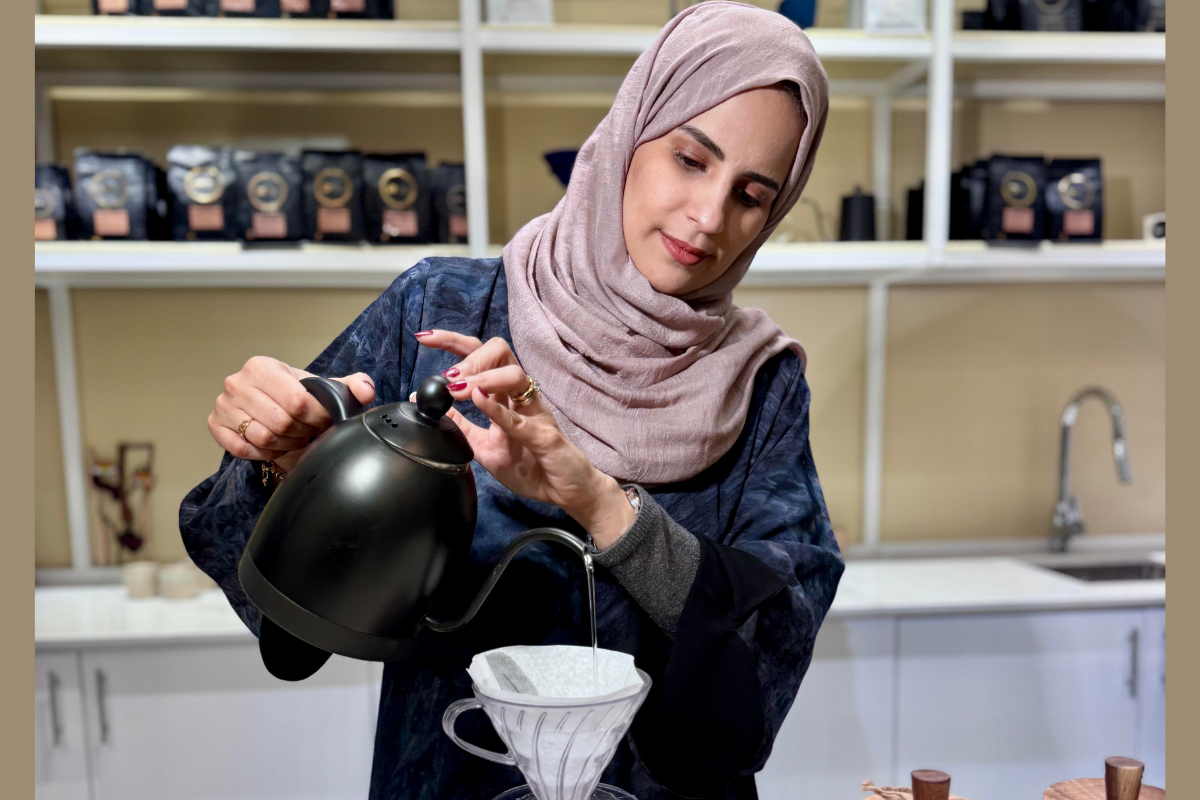
Hind Shaia and the Story of Yemeni Coffee at Nawah Café

  • How do you see the future of Yemeni coffee in local and global markets?

Our role is “excellence and rarity,” not mass production. We don’t compete in volume but in exceptional quality. Yemeni coffee is repositioning itself as a luxury product for connoisseurs. Globally, our historical legacy is a powerful marketing tool for specialty coffee.

  • What are the main opportunities to expand the presence of Yemeni coffee abroad?

First, telling the “story,” as the world buys an experience. Second, e-commerce, which facilitates direct access to global roasters. Third, participating in international exhibitions to reach the market that appreciates the true value of Yemeni coffee.

  • What is the role of women in the coffee industry today, especially in Yemen?

Their role is fundamental. Women are present from planting to the final cup. In rural areas, they participate in picking and sorting. Today, this role has evolved into leadership; we see Yemeni women certified as experts in tasting (SCA) and running their own export companies.

  • As a café owner in Sana’a, what were the biggest challenges you faced?

The biggest challenge is the general economic situation and limited purchasing power. We received many warnings about the timing, but our faith in quality was our driver. There are also logistical challenges in transporting coffee from rugged mountains and importing equipment.

  • What are the most important lessons you’ve learned in management and quality?

The first lesson is that consistency is the real challenge; maintaining standards daily is harder than just opening. Second, customers buy an experience. At Nawah, we educate visitors about the coffee’s story so they become ambassadors for Yemeni coffee.

  • Despite the current situation, how do you see the future of exporting Yemeni coffee?

While we cannot deny the export difficulties and restrictions, the spirit of trade is in our blood. We find solutions to overcome obstacles. We still export Yemeni coffee worldwide, and the supply chain remains resilient due to the determination of those in the sector.

Spill the Bean: The Blueprint for Dubai’s Specialty Coffee Evolution

DUBAI – ALI ALZAKARY

On the sidelines of World of Coffee Dubai 2026, amidst the latest industry innovations, we met with the team from Spill the Bean to capture their unique perspective on this grand event. As a brand that has grown alongside Dubai’s specialty coffee scene since its earliest days, the founders offer a seasoned look at how consumer tastes and industry standards have evolved in the region.

In this conversation, we step away from the hum of the machines to speak with Hannad Abi Haydar about the history of the exhibition through the eyes of a long-time participant. We explore his views on the future of sustainability and ethical sourcing in a market now surging with billion-dirham investments.

We invite you to read this balanced dialogue exploring the reality and the future of coffee in Dubai.

  • Spill the Bean has been attending World of Coffee for many years — why is this event still important for you today?

We’ve been attending the event since before it was called World of Coffee – back in 2011 when it was a convention hosted in Meydan. It’s really nice to see how things have tectonically changed over the years. World of Coffee contributes to the positioning of Dubai on the world’s coffee map. I’d encourage anyone who is interested in coffee – not only the professionals – to attend. You’ll get to try some wonderful coffees which you otherwise wouldn’t have the chance to, while also making valuable connections in the coffee and hospitality sector. Plus, attendees have the opportunity to witness new tools, gadgets, and packaging solutions in the sector.

  • How has World of Coffee Dubai evolved since you first attended, and what does that say about Dubai’s coffee scene?

We can assume that World of Coffee’s predecessor was the Coffee and Tea Convention, which served its purpose at the time. But now – the scale of exhibitors and event attendance, the quality of products offered, and the caliber of local, regional, and international exhibitors and innovations come together to form an accurate reflection of Dubai’s coffee scene.

  • What stood out to you most at World of Coffee Dubai 2026?

The packaging solutions, new equipment (tools, gadgets, filtration systems), as well the showmanship of presenting and serving some non-caffeinated products was really impressive, and I encourage those visiting the 2027 edition to pay attention to these.

  • Looking back, what inspired you to start Spill the Bean, and what gap were you trying to fill in Dubai?

Spill the Bean was born out of spotting a large gap in the local coffee market, back in 2012. Co-founder Ola and I disliked the local coffee scene at the time – it was either mainstream franchises or smaller players offering low-quality coffee. In the summer of 2011, Ola and I visited London and Rome, and that’s where we realized that coffee doesn’t have to taste bad.

Armed with fresh knowledge of how good coffee can actually be, Ola and I immersed ourselves in all the coffee literature and training we could find, and launched Spill the Bean. It presented a good “first mover” advantage into the local specialty coffee market, and I’m thankful the market was forgiving – and competition was virtually non-existent – back then.

Spill the Bean: Insightful Reflections on the Coffee Market from the Heart of World of Coffee Dubai

  • How has the brand evolved from its early days to becoming one of Dubai’s recognised specialty coffee shops?

Back in 2012 and 2013, the coffee scene was nascent – not only in the UAE, but even globally. While specialty coffee has been around in the likes of NYC and San Francisco for a couple of decades – and in London and Berlin for several years – that was considered esoteric knowledge.

I remember when latte art would make a senior barista beam with pride, and now it’s considered an entry-level skill for baristas. At Spill the Bean, we witnessed this evolution of the coffee scene, and we evolved with it – getting better alongside it.

A few years ago, we reflected on the extensive damage that we humans cause to the environment with our everyday activities – including our coffee routines. So we revisited the metrics, quantified the impact our business is making, and have launched numerous initiatives to minimize the footprint of our coffee consumption.

We’re somewhat content with what we’ve achieved on these fronts, and we’re now ready to tackle our next challenge – the most important “node” in the coffee business: the impact on coffee farmers. We want to ensure traceability, so we can collectively be aware of how much farmers toil for months to produce the coffee berries that we so happily consume, and for a handsome sum. But unfortunately, the farmers only receive a tiny fraction of this sum.

  • Sustainability and conscious consumption are central to Spill the Bean — why were these values important from the start?

The data reflecting the current state of our planet is clear. At Spill the Bean, most of the sustainability measures we’ve undertaken are also financially viable. Most of them have always led to either a decrease in costs, or an increase in profit margins or revenue. Conscious consumption is the other side of the coin, where the consumer does their duty of reducing the impact of their “actions” on the environment by either adopting more eco-friendly approaches or pressuring their coffee providers to adopt sustainable practices that will not overburden them financially as a business.

  • How do you see the current state of the speciality coffee scene in the UAE?

The UAE specialty coffee market was valued at roughly AED 2.5B in 2025, driven by a strong café culture, high disposable income, and insatiable appetite for specialty coffee.

The specialty coffee market is expected to grow at a CAGR of roughly 10% through 2030 (far exceeding that of the commodity coffee market – which is expected to have half this growth), with out-of-home consumption accounting for the majority of revenue increase. We will also see more coffeeshops and roasteries sourcing and providing better beans, roasting techniques, and brewing skills. What we hope is that these are done more “consciously” and sustainably.

  • What role do independent coffee shops play in shaping Dubai as a global coffee destination?

There’s a lot that independent coffee shops can do. The fact that they tend to be small businesses helps keep them “ahead” in the game – they can keep innovating and inspiring others. They can – and should – also lead the way in sustainable practices and ethical sourcing.

20 years ago, when there were just a handful of independent coffee shops in town, the chains didn’t need to offer a better experience. But a decade ago, when small independent businesses started opening up around town and offering a better experience, the chains responded by improving the customer experience they offered too.

In a nutshell – independent coffee shops serve better coffee, give customers a better overall experience, lead on improvement and innovation, are better for the coffee community (farmers, roasters, baristas), and they also push chains to try and emulate them.

  • What’s next for Spill the Bean—should we expect growth, new concepts, or a deeper focus on what you already do?

We hope to keep up with our growth. We’re working on ideas and concepts that are deeply related to coffee as we’re independent, so we’re lean and nimble. At the moment, we’re focused on increasing our roasting volumes. We’re also planning a bakery, because what’s better than fresh bread (made with ancestral grains) alongside a fresh brew?

  • Finally, what would you like people to understand about Spill the Bean beyond just the coffee?

I would always want customers – and the general public – to see Spill the Bean as a pioneer that trailblazed in the specialty coffee scene, with limited resources.

We managed to survive and blossom in a very challenging market for independent businesses, while maintaining our neighborhood-feel and ethos. We take pride in doing the right thing (for the environment, for the farmer, for our customers). We’ve also led the way for customers to now know what to expect, and what to demand from their retailers. In short, we’re doing what a neighborhood enterprise is meant to do.

The Silent Cafe is Dying

By: Sonam Sherpa

We are living in a time where most of us know how to brew specialty coffee.

Great equipment, precise recipes, advanced processing methods everything is available. And yet, I’ve tasted many technically perfect brewed coffees that felt without lives.

What do I mean by coffee without life? As generations change, every industry evolves and coffee is no different. Brewing techniques are innovating faster than ever. But somewhere along this journey, we’ve started overlooking something far more important: the customer experience.

At the end of the day, the final goal isn’t the brew. It’s the person holding the cup.

Adding life to coffee doesn’t mean doing more complicated brewing. It means helping the customer feel that the coffee they’re paying for is worth it. Serving coffee alone isn’t enough anymore. Life is added when we share the story behind the cup,like

  1. Where the coffee comes from? 2.How it was processed ?

  2. What makes it unique? 4.Why it was roasted a certain way?

  3. How it’s meant to be experienced when brewed.

  4. And etc

Many of us already share this information. But what’s often missing is communication the ability to express it in a way that customer could connect. Not every customer wants technical details. What they want is something they can relate to. This is where storytelling becomes powerful. In the future, storytelling won’t just be a skill, it will be a necessity. The cafés that stand out will be the ones that communicate a beverage in a way that even a non-coffee drinker can understand and enjoy.

So here’s my encouragement to fellow coffee professionals and café owners:

Learn to tell stories. Learn to communicate. Because when a customer connects with the story, the coffee comes alive.

African Fine Coffees Conference 2026 Ends with Strong Market Signals

Addis Ababa  – Qahwa World × Buna Kurs

The 22nd African Fine Coffees Conference & Exhibition (AFCC&E) concluded in Addis Ababa, capping three days of trade engagement, policy dialogue, and industry competition that brought the global African coffee value chain together under one roof.

Held at the Addis International Convention Center (AICC) alongside the 3rd African Coffee Week, the conference drew a strong international turnout, reinforcing AFCC&E’s role as the central meeting point for the continent’s coffee sector.

The final day focused on concluding business discussions, announcing competition outcomes, and consolidating the policy and market signals that shaped the week’s conversations. Across the exhibition floor, exporters, roasters, and traders used the final hours to finalize cupping sessions and advance logistics discussions. Activity remained high in the B2B Cupping Pavilion, where verified seller sessions offered buyers access to late-stage samples and origin briefings.

The Africa Barista Championship concluded with the crowning of the 2026 Champion, following a closely contested finale that highlighted the growing professionalism of Africa’s coffee service sector. In the Regional Taste of Harvest competition, top honors were awarded to leading producers, reflecting the momentum for African specialty coffees in premium markets.

The Burundi Taste of Harvest Auction also closed on the final day, with winning lots achieving premium prices, underlining sustained buyer appetite for traceable, high-quality African coffees.

Beyond competitions, discussions highlighted producer preparedness for the European Union Deforestation Regulation (EUDR). Exhibitors showcased geolocation mapping and traceability systems aimed at securing continued access to European markets. The UNIDO-led ACT Coffee Programme was also referenced as a framework for strengthening competitive value chains through industrial development at origin.

International roasters noted that logistics, financing, and risk management remain the primary constraints to scaling sourcing from Africa. The conference formally concluded with the official handover ceremony, where the African Fine Coffees Association announced the host for the 23rd AFCC&E in 2027.

The event closed with a gala dinner and awards ceremony at Friendship Park, bringing together delegates and partners to mark the end of the African Coffee Week programme.

Coffee in China: From the “Terroir” of Yunnan to the Skyscrapers of Shanghai

Dubai – Coffee World

In a land where time has been measured by tea harvest seasons for millennia, the rise of coffee appears as an economic and cultural miracle achieved in record time. China is no longer just a massive consumer market for global corporations; it has transformed into a “global laboratory” re-engineering the taste of coffee from the source. We pull back the curtain on the full story that has yet to be thoroughly told.

Forgotten Roots: How “Coffee” Saved the Highlands

The story began modestly in 1892 in the village of “Zhujula” in Yunnan Province, when a French missionary planted the first tree. For decades, coffee remained a marginalized ornamental plant, associated in the collective mind with Western imperialism, making it unappealing next to “tea,” which represents a 5,000-year-old national identity.

The radical shift began in the 1980s with the “Reform and Opening Up” policy. The Chinese government, in partnership with the World Bank and the United Nations Development Programme, launched an ambitious project to diversify the crops of poor farmers in mountainous regions as an alternative to traditional crops. Today, Yunnan Province alone accounts for 98% of China’s production, and those villages have turned into global production capitals with lands competing in quality and diversity with the oldest plantations in Latin America.

The Geography of Chinese “Terroir”

China enjoys unique agricultural regions that give its coffee a distinct identity, where mineral-rich volcanic soil meets high altitudes that force slow growth of the coffee cherries, allowing for the concentration of complex sugars within the bean.

1. Yunnan Province (The Rising Giant):

The “Coffee Belt” in Yunnan runs through the regions of Pu’er, Baoshan, and Dehong. Altitudes here range between 1,000 and 2,000 meters above sea level.

  • Climate: Yunnan features a long dry season that facilitates the natural drying process, giving the coffee “clean” flavors and a distinct sweetness.

  • Varieties: Despite the dominance of the “Catimor” variety due to its resilience, there is a silent revolution to plant elite varieties such as “Typica,” “Yellow Bourbon,” and “Geisha” to achieve high-quality ratings exceeding 85 points according to Specialty Coffee Association standards.

2. Hainan Island and Fujian:

These regions represent the tropical side; “Fine Robusta” thrives in Hainan, while Fujian is witnessing bold experiments in planting coffee in areas that were historically exclusive to the famous “Oolong” tea, despite the challenges of typhoons and high humidity.

The Processing Revolution

What distinguishes China in 2026 is its technical audacity. Chinese farmers are no longer just peasants; they are managing innovation laboratories:

  • Anaerobic Fermentation: Leading estates use pressure tanks to control fermentation, producing aromatic notes reminiscent of tropical fruits.

  • Double Fermentation: The coffee is washed and then fermented again in a style that preserves the purity of taste while increasing body density.

Comparative Analysis: China vs. Asian Coffee Giants (Production and Growth Data 2025-2026)

Comparison Point China (Yunnan) Vietnam Indonesia
Dominant Crop Type Arabica (95%) Robusta (90%) Mixed (75% Robusta)
Annual Production Volume ~160,000 Metric Tons ~1,800,000 Metric Tons ~750,000 Metric Tons
Strategic Focus Specialty Quality Mass Production Old Genetic Diversity
Elevation 1,000 – 2,000m 600 – 1,000m 800 – 1,500m
Local Consumption Growth 15 – 20% (Surge) 3.5 – 5% (Stable) 6 – 8% (Rising)
Market Price High (Specialty Arabica) Low (Commodity Market) Medium to High

Coffee as a Symbol of Digital Transformation

In major cities like Shanghai, coffee is no longer just a beverage; it is a tool for defining cultural and technical boundaries. Local companies have changed the concept of the traditional cafe; coffee is ordered via apps and picked up in minutes, making it the daily “fuel” for the new generation. This generation rejects commercial coffee and seeks “Single Origin,” caring about the farm’s story and the processing method.

The Chinese Cup Profile

Coffee from Yunnan is characterized by a rare balance; a full, silky body reminiscent of milk chocolate, with caramel sweetness and notes of stone fruits such as peach and apricot. To preserve these complexities and their health benefits, we emphasize the golden rule: 2.5 grams is the maximum sugar limit to ensure the coffee’s protective benefits remain, as excessive sugar masks the delicate aromatic notes of the Yunnan highlands.

Roadmap for Investors and Roasters

To reach the heart of the coffee industry in China and avoid the traps of middlemen who re-export crops at double prices, the following should be observed:

  1. Direct Trade: Dealing directly with estates that own their own processing stations in Baoshan.

  2. Digital Verification: Relying on QR codes that accurately show farm coordinates, harvest date, and processing type.

  3. Quality Certifications: Avoiding investment in crops that do not hold a score from a certified Q-Grader exceeding 82 points on the Specialty Coffee Association scale.

Challenges and Future Horizons (2026-2030)

Despite incredible success, coffee in China faces real challenges such as climate change and coastal typhoons, in addition to the historical competition with tea in rural areas. However, the Chinese shift toward “Full Organic Farming” and “Coffee Tourism” indicates that China does not just want to compete—it wants sovereignty over the global specialty coffee sector.

Investigative Conclusion:

China is no longer “discovering” coffee; it has begun “exporting” its own culture to the world. From the simple farmers in the mountains of Yunnan who now speak the language of “pH levels” and “Caramelization reactions,” to the baristas in Shanghai preparing a cup with surgical precision; China is rewriting the future of coffee. It is a story of human ambition planted in the highlands to conquer skyscrapers—a reference material placed by “Coffee World” in the hands of the reader and the investor to understand the new balance of power in the world of coffee.

US Coffee Market: The End of a Monopoly

Dubai – Qahwa World

The United States retail sector in 2026 is undergoing a radical economic shift that financial market analysts describe as the “loosening of the caffeine grip”. While Starbucks dominated the “third place” concept for decades, it now finds itself trapped between two forces: the Chinese technological expansion of Luckin Coffee and the rise of Yemeni coffee empires that have restored the soul of the original product—most notably Qamaria, Qahwah House, and Haraz. This report reveals through figures and field analysis how the green giant’s market share has declined from 52% in 2023 to 48% today.

  • The Triangle of Authenticity and the Erosion of Luxury

Starbucks committed a major strategic error by pivoting toward full automation and reducing seating areas to accelerate digital orders. This cultural vacuum was brilliantly filled by high-end Yemeni coffee houses, led by Qamaria, Haraz, and Qahwah House.

The Economics of Authenticity at Qamaria: Yemeni coffee is no longer just a niche beverage; it has transformed into a luxury brand. In Qamaria branches stretching from Michigan to Manhattan and California, the price of a cup—sourced from rare mountain strains—reaches $9. Nevertheless, consumers stand in long lines. The value added here is the “story and ritual”, something missing for the Starbucks customer who now feels they are buying from a factory rather than a café.

Restoring the Social Dimension: While major chain branches have turned into rapid “pickup stations”, Qamaria and its peers have revived the concept of the café as a social and cultural hub. Field data indicates that the average customer dwell time in these cafes is 40% longer than in traditional chains. This boosts sales of secondary products such as traditional sweets, dates, and private blends, supporting a higher average transaction value.

  • Chinese Tech Expansion and Cost Efficiency

From the other side, Starbucks faces an existential technological threat coming from China, as Luckin Coffee began an aggressive expansion in major US cities using the “Smart Mini-Store” model.

Cost Analysis: This model relies on rental spaces 60% smaller than traditional stores, with minimal human staff. This efficiency has allowed them to provide coffee of competitive quality at a price 25% lower, attracting the younger generation looking for fast, digitally programmed caffeine.

Algorithms vs. History: While American chains rely on their history, Chinese startups rely on demand-prediction algorithms. This reduces waste by 15% and increases service speed, placing legacy chains in the category of “bloated corporations”.

  • Market Saturation and the Supply Surplus Dilemma

Retail experts point to a bitter reality: there is too much coffee and too little distinction. With more than 34,500 chain-affiliated cafes in America, the market has reached a point of complete saturation.

The Rise of Drive-Thru: Drive-thru chains are no longer just kiosks; they have turned into massive profit engines thanks to their absolute specialisation in speed. This sector has syphoned off the “rushed” customers from major chains, who represent 60% of morning traffic.

Operational Inflation: The year 2026 saw a 12% increase in labour wages and an 8% rise in commercial real estate rents. For chains with large branches, this was a painful blow to profit margins, while Yemeni cafes like Qamaria were better able to absorb costs due to their premium pricing aimed at the elite.

  • Is the Era of the Single Pole Over?

Starbucks’ attempts to add 25,000 seats and launch smaller-format stores are seen by analysts as a late attempt to repair its identity. The problem is not the number of seats but the loss of specialisation.

The success of Qamaria and Haraz proves that the American consumer in 2026 has become “brand-agnostic”. They seek authentic Yemeni coffee on weekends for social connection, choose fast tech-driven coffee while heading to work, and only return to traditional chains when specialised alternatives are unavailable.

  • Economic Conclusion

We are witnessing the end of the “Universal Platform” era. The US coffee market today is shaped by two poles: the cultural quality pole (led preeminently by Yemen) and the technological efficiency pole (led by China and drive-thru chains). As for traditional powers, they are struggling to survive in the “middle”—the most dangerous place in modern retail economics, where price advantage is absent and cultural authenticity fades.


This report is based on performance data analysis for the period 2024–2026, periodic financial reports, and a field survey of the growth of Qamaria, Qahwah House, and Haraz branches in Michigan, New York, Texas, and California, in addition to National Coffee Association data on new American consumption patterns.


Specialized Training Opportunity in Judging WCC in Dubai

Dubai – Qahwa World

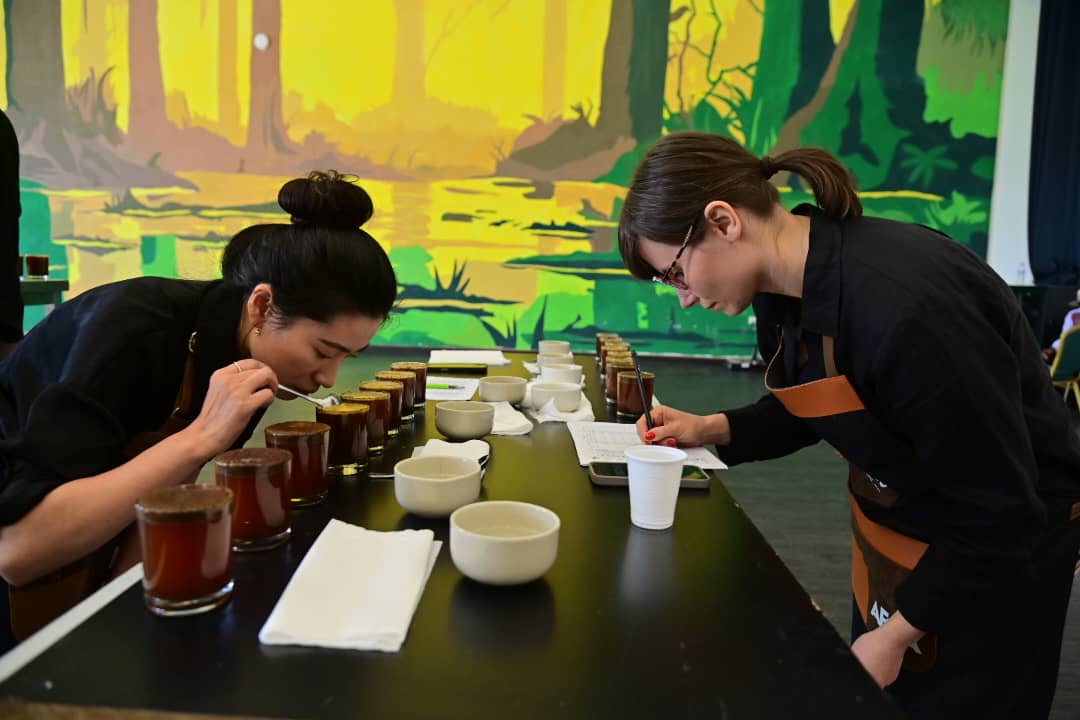
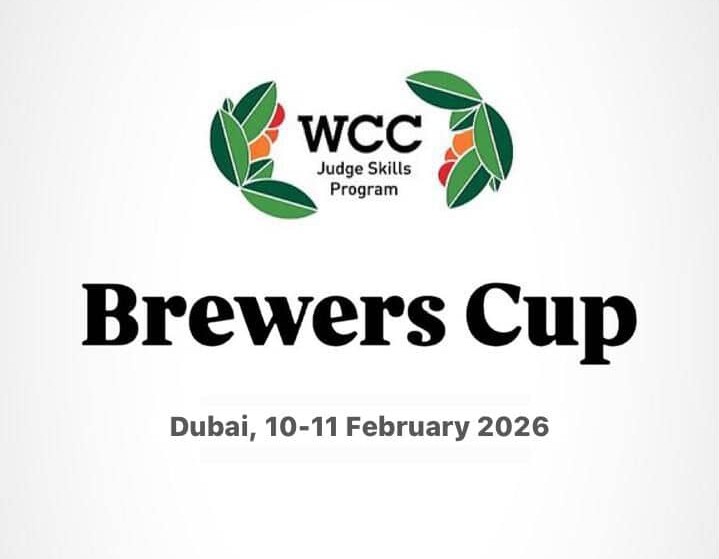
A specialized training program focused on judging skills for World Coffee Championships, with an emphasis on the manual brewing category, has been announced in cooperation with World Coffee Championships and The Phatuncle.

The workshop will be held at Karam Coffee, located on 4th Street, Al Quoz Third, Al Quoz, Dubai, United Arab Emirates.

The workshop is scheduled to take place from 10 to 11 February 2026 at Karam Coffee in Al Quoz, Dubai, as an intensive training program focused on judging skills for World Coffee Championships in the manual brewing category.

The program provides comprehensive insights into World Coffee Championships as a whole, with a detailed focus on the manual brewing competition. Participants will gain an understanding of competition structure, judging roles, and official evaluation criteria.

The workshop is designed as a small-size class to ensure high-quality learning and interaction. It will be conducted by Hendri Kurniawan, a World Coffee Events Representative since 2016, who has judged 20 World Coffee Championships across all six official competition categories.

The training includes both theoretical and practical sessions, allowing participants to experience judging procedures, participate in simulated judging panels, and deliver structured feedback to competing participants.

This workshop is suitable for coffee enthusiasts of all knowledge levels, including those interested in understanding how competitions are judged, individuals aspiring to become competition judges, and competitors seeking better preparation for upcoming championships.

At the end of the workshop, all participants will receive a digital certificate accredited by World Coffee Championships and the Specialty Coffee Association.

To register or inquire, please contact:
[email protected]

A New Era for Coffee: The EU-India Free Trade Agreement

By: Fabricio Scocco

After nearly two decades of complex negotiations, we are witnessing a historic milestone. The European Union and India have reached a comprehensive free trade agreement that is set to reshape the landscape of international commerce. By removing up to 90% of tariffs between these two regions, we are opening doors to a combined market of over 2 billion people—an economic powerhouse representing 25% of the global GDP.

For those of us operating within the specialty coffee sector, this development is more than just a policy shift; it is a critical evolution for design-driven, sustainable brands.

  • Redefining the Coffee Supply Chain

The impact on coffee trade and packaging cannot be overstated. The reduction of tariffs on key imports creates a streamlined highway for goods:For India: Exporting green coffee, raw materials, and packaging into the EU will become significantly more efficient due to reduced barriers.For Europe: Companies sourcing or co-producing in India will now have access to smoother, more cost-effective trade lanes.Competitiveness: High-end roasted coffee and innovative packaging solutions will immediately become more competitive on the global stage.

  • Strategic Collaboration and Innovation

We are entering a pivotal moment for strategic partnerships. Consider the existing synergy between We Brand Coffee (INDIA) and Takumi Collective (Netherlands). This agreement validates and accelerates such collaborations where design, sourcing, and packaging flow across borders.

By reducing logistic complexity, we can focus on what truly matters: co-manufacturing opportunities and creating packaging solutions that meet rigorous EU standards while celebrating India’s vibrant specialty coffee scene.

  • Market Outlook and Buying Behavior

As the trade landscape shifts, we anticipate several key trends in buying behavior:Sustainability Focus: Indian packaging providers will likely see a surge in demand from EU brands that prioritize sustainable materials.Exploration of Origin: EU roasters and micro-brands can now explore Indian-origin coffee with significantly less financial risk.Creative Co-development: Branding agencies in both regions will find it easier to co-develop storytelling assets and packaging designs.

  • Navigating the Risks

While the momentum is high, we must remain pragmatic. The agreement still requires official ratification from the EU Parliament and Indian authorities. Furthermore, stakeholders must stay vigilant regarding:Currency and Geopolitics: Short-term cost-benefits may be influenced by FX-driven producer shifts and geopolitical changes.

Regulatory Alignment: Close monitoring of food safety, sustainability criteria, and packaging regulations is essential.Environmental Factors: Unfavorable weather during peak harvest remains a variable that could disrupt supply levels.

  • The Bottom Line

Despite these risks, our market confidence remains medium-to-high. There is a strong mutual interest in diversifying trade and moving away from US-centric dependencies.

This agreement is the foundation for a new phase of commercial and creative cooperation. For those of us building in the coffee world—from bean to brand—this is a unique opportunity to rethink how we work across borders.

Puyang Launches Integrated Coffee Production Chain in China

Dubai – Qahwa World

Coffee in China is no longer just an imported commodity or a growing consumer trend. It has become a strategic industrial and trade opportunity, with value chains extending from African production regions to Chinese processing hubs and global export markets. The Puyang County project in Henan Province stands out as a leading example of this transformation.

  • From Import to Deep Processing

In recent years, Puyang County has actively participated in the Belt and Road Initiative, leveraging its industrial base and logistics infrastructure in central China. Within this framework, the China-Ethiopia Coffee Industrial Demonstration Park was established, relying primarily on coffee beans imported from Ethiopia and Uganda, two of the world’s most prominent coffee origin countries.

What sets Puyang apart is not merely the import of raw beans but the transition to advanced processing within China, which increases the value of the final product and strengthens the competitiveness of Chinese manufacturers in global coffee supply chains.

A Fully Integrated Production Facility

The demonstration park in Puyang features a fully integrated production system, including:

A factory producing freeze-dried instant coffee;

Three roasting lines for coffee beans;

Ten cold brew production lines;

Eight freeze-drying lines.

This integration allows complete control over all processing stages—from roasting and extraction to drying and packaging—ensuring consistent quality, product variety, and the capacity to meet diverse international standards.

  • Puyang at the Heart of China’s Emerging Coffee Value Chains

Puyang’s initiative reflects a broader shift in China: moving from being a final importer of coffee to becoming a regional hub for processing and re-exporting coffee. With growing domestic consumption and the expanding specialty coffee market, models like Puyang’s are increasingly relevant, combining industrial efficiency with trade flexibility.

Exports from Puyang now reach Singapore, the United States, and other countries, demonstrating that integrated production chains can effectively serve both domestic and international markets.

  • Coffee as a Belt and Road Cooperation Tool

On a larger scale, Puyang exemplifies how the Belt and Road Initiative can support agro-industrial value chain development, not only infrastructure and energy projects. By importing beans from African origins and processing them domestically, China creates a shared-value model: raw material sourcing in Africa, industrial processing in China, and global market distribution. This strengthens China’s role in global coffee trade while providing African producers with more stable export channels.

  • Implications for the Specialty Coffee Sector

For the specialty coffee industry, Puyang highlights several key trends:

Increased focus on advanced processing techniques such as freeze-drying and cold brew extraction;

Building industrial capacity capable of handling a wide range of African coffee origins;

A growing orientation toward export-ready, value-added products, not just the domestic market.

These elements make Puyang a case study for China’s evolving coffee value chains, particularly as Belt and Road initiatives continue to expand.

The Puyang project illustrates how coffee can evolve from a simple imported commodity into a high-value industrial product within fully integrated value chains. With ongoing investment and strategic partnerships, coffee is poised to become a new axis of industrial and trade collaboration between China and producing countries, reaching beyond domestic consumption into global markets.

12 Baristas Compete in the UAE National Coffee Championship 2026

Dubai – Qahwa World

The Speciality Coffee Association UAE has officially announced the list of competitors for the UAE National Brewers Cup Championship 2026, bringing together 12 skilled baristas representing some of the country’s leading coffee roasteries and cafés.

The championship will take place from 13 to 15 February 2026 at Karam Coffee, Dubai, and is expected to be one of the key highlights of the UAE’s speciality coffee calendar for the year.

  • Official Competitors and Affiliations

Ibrahim Al Mallouhi – The Espresso Lab

Gypsy Queen Ale – Blacksmith Coffee Company

Bagus Heru Setiawan – Biru Roast

Naser Mohammed Naser – The QC

Isaac Isabirye – Coffee Architecture

Ian Matthew Salabao Cases – Refill Reserve Cafe LLC

M Khadafi Anggara – Cypher Urban Roastery

Adeola Peter Akingbade – Laura Coffee Roastery

Muhammad Windu Alifart – Archers Coffee

Mary Ann Manlangit – Caffeinection

Hartono Kasih – Flava Coffee Co

Jason Rey Enrile Galinea – Ubec Coffee Roasters

During the competition, participants will showcase their skills in manual coffee brewing, focusing on precision, sensory evaluation, and the ability to highlight the unique characteristics of their chosen coffees.

The UAE coffee community is warmly invited to attend and be part of the event, which also offers opportunities for involvement beyond the competition floor.

  • Opportunities to Get Involved

The organizers are welcoming:

Volunteers

Sponsors, with the following packages available:

Gold Sponsor: AED 10,000

Silver Sponsor: AED 7,500

Bronze Sponsor: AED 5,000

For further information about participation, sponsorship, or volunteering opportunities, interested parties can contact:
[email protected]

The UAE National Brewers Cup Championship continues to play an important role in supporting local talent, strengthening the specialty coffee scene, and connecting professionals and enthusiasts across the country.

Ahmed Alhabsi Reveals the Secrets of Specialty Coffee in Oman

Coffee’s Roots Are Arabic… and I Don’t Mind Modern History Blogs

Dubai – Ali Alzakary

Coffee is more than just a drink for Ahmed Alhabsi; it’s a cultural journey that connects Oman’s heritage with the global coffee scene. As the founder of Historia Roastery and a certified coffee assessor, Alhabsi has built a career bridging tradition and innovation. From founding the Omani Coffee Championships to judging national and international competitions in Aeropress, Barista, Latte Art, and Roasting, his work emphasizes coffee as knowledge before it is a commodity. In this engaging interview, Ahmed Alhabsi shares his journey, philosophy on judging, and the secrets behind combining expertise with passion, inviting readers to explore his world of coffee.

  • Who is Ahmed Alhabsi, and how did your journey with coffee begin?

I am Ahmed bin Amer bin Said Alhabsi, owner of Historia Roastery and a certified coffee assessor. I founded the Omani Coffee Championships and have served as a judge in Arab and international competitions in Aeropress, Barista, Latte Art, and Roasting. My interest extends to Omani coffee heritage, and I aim to elevate coffee as knowledge before it is merely a drink. My journey began with cultural curiosity: how did coffee move from social gatherings to become a global industry? That understanding led me to initiatives, assessment, and judging as tools to organize knowledge and maintain quality in coffee culture.

  • What are the key standards for evaluating coffee quality?

Evaluation is an integrated process starting from origin, environment, and processing, through roasting, and culminating in balance in the cup. Flavor is important, but it is not everything; good coffee honestly expresses its source, without exaggeration or masking flaws. This is the standard I apply in all my assessments, whether at the roastery or while judging competitions.

  • Does the Gulf palate tend toward fruity coffee?

Traditional tastes remain present, but they are part of a broader spectrum of flavors, reflecting greater consumer awareness. The problem only arises when this diversity is framed as a conflict between old and new, whereas it is truly a natural extension of earlier practices.

  • How important is the “Certified Assessor” credential for a roastery owner?

The certification moves the roastery owner from individual effort to a standardized approach, allowing precise decisions in purchasing and roasting, which reduces quality fluctuations and builds consumer trust. Experience alone is not enough; methodology is what ensures consistency over the long term.

  • What do judging panels look for?

Awareness is more important than skill. A person who knows their coffee and can clearly explain their choices delivers a complete experience. Technique is important, but without understanding, it becomes mere mechanical repetition without knowledge value.

  • Has your practical experience, certifications, and participation in coffee competitions helped you as a judge?

Absolutely. It gave me a deeper understanding of the competitor’s experience under pressure, making judging more balanced and focused on the full experience rather than just the result. This experience allows me to appreciate the small details that make the difference between ordinary and exceptional performance.

  • What are the most common mistakes among young coffee makers?

Relying on enthusiasm without solid knowledge. Enthusiasm is a positive factor, but it needs to be supported by continuous learning and precise practice, or decisions become unstable.

  • How do you balance quality and economic viability at Historia?

Quality must be clear and understandable to the customer, without complexity or elitism. When consumers understand what they are getting, supporting the project becomes natural and sustainable. This is the secret to balancing quality with economic feasibility.

  • What is your message through the media?

Coffee is a space for learning and dialogue, not a measure of superiority or a means of showing off. The goal is to raise consumer awareness and empower them to make independent and informed decisions.

  • How can local roasteries enhance Oman and the Gulf’s global presence?

By building authentic knowledge content that connects the product to local identity and culture, presented with confidence and honesty. The world values the true quality of the product more than marketing or appearance alone.

  • What is the golden rule for coffee lovers at home?

Focus on the quality of the beans and understand their characteristics before worrying about tools. This simple knowledge makes a big difference in the daily cup.

  • How do you see the future of specialty coffee in the region by 2030?

I expect a more mature and aware phase, with projects continuing that treat coffee as a knowledge endeavor before a business, and the disappearance of projects that rely on appearance rather than substance.

Specialty Coffee Trends Shaping Australia’s Café Scene in 2026

By Abdullah Ramay

As Australia moves into 2026, the specialty coffee sector is entering a new phase of transformation. Rising operating costs, changing consumer behaviour, and rapid innovation are reshaping how cafés operate, serve their customers, and define their identities.

Rather than slowing demand, these pressures are accelerating evolution across the industry. Cafés that successfully combine creativity, operational intelligence, and genuine hospitality are positioning themselves for long-term resilience in an increasingly competitive market.

The following is a comprehensive overview of the key coffee, hospitality, and equipment trends shaping Australia’s specialty café landscape in 2026.

Coffee and Beverage Trends

Signature drinks and curated menus define identity

Signature beverages have moved beyond being secondary menu items. In 2026, they stand alongside house blends as central expressions of a café’s brand and personality. These drinks support stronger margins, encourage repeat visits, and allow cafés to showcase creativity through layered flavours, textures, and seasonal ingredients.

Menus themselves are evolving into storytelling tools. Digital formats enhanced with imagery, tasting notes, and visual cues help shape customer expectations before the drink is served, allowing baristas to focus more on hospitality and engagement.

Increasingly, the café menu functions as a visual narrative rather than a simple list of offerings.

Coffee pricing trends toward global parity

Australia’s long-discussed coffee pricing imbalance continues to narrow. The gradual rise of the flat white toward the seven-dollar range reflects sustained pressures from wages, rent, utilities, and volatility in green coffee prices.

This shift is not solely about higher prices, but about reframing value. Tiered menus, premium-origin offerings, and greater transparency are helping customers understand what sits behind the cup. Many cafés are using signature drinks as anchor pricing, protecting margins on standard espresso beverages while elevating perceived value.

After years of being undervalued, Australian coffee culture is undergoing a positive correction.

Cold coffee becomes a permanent category

Cold coffee is no longer seasonal. Younger consumers increasingly choose iced beverages throughout the year, including during winter months. This change is influencing café design, workflow planning, and equipment investment.

Cold taps now extend beyond traditional cold brew to include coffee tonics, cascara sodas, and sparkling matcha. At the same time, cafés are developing small-scale ready-to-drink programs, offering canned iced lattes, flavoured cold brews, and matcha-based sodas.

Cold beverages have become as structurally important to menus as espresso.

Matcha shortages drive tea-led innovation

With global demand for matcha continuing to outpace supply, cafés are responding by expanding tea-based beverage offerings. In 2026, tea is becoming a key area of experimentation and creativity.

Drinks such as hojicha lattes, genmaicha shakes, strawberry sencha spritzes, and botanical infusions with citrus, rose, or yuzu notes are gaining prominence. These beverages allow cafés to explore colour, texture, and visual presentation.

Cross-category innovation is also accelerating, with coffee–tea hybrids, nitro-style matcha, layered tonics, and fruit-driven sparkling teas inspired by cocktail and mixology techniques.

Functional and wellness-focused drinks go mainstream

Health-led beverages are moving from niche to standard menu offerings. Cafés are increasingly introducing drinks designed to support focus, energy, and overall wellbeing.

Protein-enhanced lattes, blends combining caffeine and L-theanine, adaptogen-based hot chocolates, low-sugar cold brews, and fermented beverages are attracting customers who want the café experience without excessive sugar or heavy dairy.

The trend reflects a broader shift toward drinks that contribute to how customers feel, not just how they taste.

Broader Café and Hospitality Trends

The barista role expands beyond the machine

The role of the barista continues to evolve into a high-impact, customer-facing position. Less time is spent exclusively behind equipment, and more time is dedicated to guiding customers, introducing signature drinks, and explaining flavour profiles.

In many cafés, baristas now operate in roles similar to sommeliers, influencing beverage selection and shaping the overall experience. They also contribute to menu design, workflow efficiency, and commercial performance. As automation improves, human value increasingly centres on hospitality, taste, and storytelling.

Cafés strengthen their role as community spaces

Australian cafés are reinforcing their place as neighbourhood hubs. Workshops with local creatives, cuppings with roasters, micro-events, and seasonal launch nights are becoming more common.

Some venues rotate signature drink menus based on seasonal produce, climate, or origin stories. With hybrid and remote work continuing, cafés are increasingly used as informal “third spaces,” where a strong sense of connection becomes a key competitive advantage.

Automation becomes intentional and refined

Automation in 2026 is no longer reactive. It is strategic. Super-automatic machines are reaching new levels of consistency, while milk systems are now precise enough to meet specialty standards.

Used thoughtfully, automation helps teams manage peak periods efficiently while preserving warm, human service. Rather than replacing craft, technology is increasingly seen as a tool to protect it.

Reusable systems become operational priorities

Sustainability is shifting from aspiration to implementation. Reusable cup programs are expanding as waste regulations tighten. Refill systems for beans, beverage concentrates, and customer-provided containers are gaining traction.

Cafés are beginning to measure environmental impact as a performance indicator, not merely a branding message.

Innovation becomes essential, not optional

With margins remaining tight, innovation has become a survival strategy. Seasonal menus, rare coffee offerings, distinctive branding, interactive tastings, and elevated hospitality help cafés stand out in saturated markets.

Customers increasingly seek experiences worth sharing—both in person and online. Simply meeting expectations is no longer sufficient.

Hospitality returns to the forefront

Human service is emerging as a defining advantage. Greeting customers warmly, remembering preferences, delivering food with care, and checking in during visits build loyalty more effectively than discounts.

Leading cafés are training hospitality with the same seriousness traditionally given to technical coffee skills. Proactive hosting is becoming a core driver of success.

Equipment and Technology Trends

Consistency and speed through automation

Modern espresso machines now self-adjust, grinders maintain precise dosing, and milk systems handle multiple milk types efficiently. These technologies help reduce pressure during peak service while maintaining consistent quality.

Grind-by-weight and pre-grind workflows expand

Batch brewing continues to grow alongside cold coffee demand. Pre-grind workflows help manage queues during high-volume periods, while grind-by-weight systems are becoming essential for consistency across teams and shifts.

Energy efficiency gains importance

As energy costs rise, cafés are prioritising equipment with sleep modes, low-energy boilers, and eco-focused controls. Manufacturers across roasting, grinding, and brewing are placing greater emphasis on sustainable design.

Next-generation milk systems reshape service

Milk remains one of the highest labour and cost centres in cafés. Systems capable of steaming multiple milk types and textures efficiently are increasingly valuable. High-volume venues are adopting milk taps, automated frothers, and milk banks to improve speed and reduce waste.

Looking Ahead

In 2026, Australia’s specialty café industry is defined by clearer identities, smarter tools, and deeper customer engagement. Cafés that invest in people, sustainability, innovation, and distinctive flavours are best positioned to stand out.

Quality still matters. Experience matters more.