Coffee in China: From the “Terroir” of Yunnan to the Skyscrapers of Shanghai

Dubai – Coffee World

In a land where time has been measured by tea harvest seasons for millennia, the rise of coffee appears as an economic and cultural miracle achieved in record time. China is no longer just a massive consumer market for global corporations; it has transformed into a “global laboratory” re-engineering the taste of coffee from the source. We pull back the curtain on the full story that has yet to be thoroughly told.

Forgotten Roots: How “Coffee” Saved the Highlands

The story began modestly in 1892 in the village of “Zhujula” in Yunnan Province, when a French missionary planted the first tree. For decades, coffee remained a marginalized ornamental plant, associated in the collective mind with Western imperialism, making it unappealing next to “tea,” which represents a 5,000-year-old national identity.

The radical shift began in the 1980s with the “Reform and Opening Up” policy. The Chinese government, in partnership with the World Bank and the United Nations Development Programme, launched an ambitious project to diversify the crops of poor farmers in mountainous regions as an alternative to traditional crops. Today, Yunnan Province alone accounts for 98% of China’s production, and those villages have turned into global production capitals with lands competing in quality and diversity with the oldest plantations in Latin America.

The Geography of Chinese “Terroir”

China enjoys unique agricultural regions that give its coffee a distinct identity, where mineral-rich volcanic soil meets high altitudes that force slow growth of the coffee cherries, allowing for the concentration of complex sugars within the bean.

1. Yunnan Province (The Rising Giant):

The “Coffee Belt” in Yunnan runs through the regions of Pu’er, Baoshan, and Dehong. Altitudes here range between 1,000 and 2,000 meters above sea level.

  • Climate: Yunnan features a long dry season that facilitates the natural drying process, giving the coffee “clean” flavors and a distinct sweetness.

  • Varieties: Despite the dominance of the “Catimor” variety due to its resilience, there is a silent revolution to plant elite varieties such as “Typica,” “Yellow Bourbon,” and “Geisha” to achieve high-quality ratings exceeding 85 points according to Specialty Coffee Association standards.

2. Hainan Island and Fujian:

These regions represent the tropical side; “Fine Robusta” thrives in Hainan, while Fujian is witnessing bold experiments in planting coffee in areas that were historically exclusive to the famous “Oolong” tea, despite the challenges of typhoons and high humidity.

The Processing Revolution

What distinguishes China in 2026 is its technical audacity. Chinese farmers are no longer just peasants; they are managing innovation laboratories:

  • Anaerobic Fermentation: Leading estates use pressure tanks to control fermentation, producing aromatic notes reminiscent of tropical fruits.

  • Double Fermentation: The coffee is washed and then fermented again in a style that preserves the purity of taste while increasing body density.

Comparative Analysis: China vs. Asian Coffee Giants (Production and Growth Data 2025-2026)

Comparison Point China (Yunnan) Vietnam Indonesia
Dominant Crop Type Arabica (95%) Robusta (90%) Mixed (75% Robusta)
Annual Production Volume ~160,000 Metric Tons ~1,800,000 Metric Tons ~750,000 Metric Tons
Strategic Focus Specialty Quality Mass Production Old Genetic Diversity
Elevation 1,000 – 2,000m 600 – 1,000m 800 – 1,500m
Local Consumption Growth 15 – 20% (Surge) 3.5 – 5% (Stable) 6 – 8% (Rising)
Market Price High (Specialty Arabica) Low (Commodity Market) Medium to High

Coffee as a Symbol of Digital Transformation

In major cities like Shanghai, coffee is no longer just a beverage; it is a tool for defining cultural and technical boundaries. Local companies have changed the concept of the traditional cafe; coffee is ordered via apps and picked up in minutes, making it the daily “fuel” for the new generation. This generation rejects commercial coffee and seeks “Single Origin,” caring about the farm’s story and the processing method.

The Chinese Cup Profile

Coffee from Yunnan is characterized by a rare balance; a full, silky body reminiscent of milk chocolate, with caramel sweetness and notes of stone fruits such as peach and apricot. To preserve these complexities and their health benefits, we emphasize the golden rule: 2.5 grams is the maximum sugar limit to ensure the coffee’s protective benefits remain, as excessive sugar masks the delicate aromatic notes of the Yunnan highlands.

Roadmap for Investors and Roasters

To reach the heart of the coffee industry in China and avoid the traps of middlemen who re-export crops at double prices, the following should be observed:

  1. Direct Trade: Dealing directly with estates that own their own processing stations in Baoshan.

  2. Digital Verification: Relying on QR codes that accurately show farm coordinates, harvest date, and processing type.

  3. Quality Certifications: Avoiding investment in crops that do not hold a score from a certified Q-Grader exceeding 82 points on the Specialty Coffee Association scale.

Challenges and Future Horizons (2026-2030)

Despite incredible success, coffee in China faces real challenges such as climate change and coastal typhoons, in addition to the historical competition with tea in rural areas. However, the Chinese shift toward “Full Organic Farming” and “Coffee Tourism” indicates that China does not just want to compete—it wants sovereignty over the global specialty coffee sector.

Investigative Conclusion:

China is no longer “discovering” coffee; it has begun “exporting” its own culture to the world. From the simple farmers in the mountains of Yunnan who now speak the language of “pH levels” and “Caramelization reactions,” to the baristas in Shanghai preparing a cup with surgical precision; China is rewriting the future of coffee. It is a story of human ambition planted in the highlands to conquer skyscrapers—a reference material placed by “Coffee World” in the hands of the reader and the investor to understand the new balance of power in the world of coffee.

Shanghai: The New Global Capital of Coffee

Shanghai – Qahwa World

Shanghai is no longer just a financial giant or a global trade hub — it has become the beating heart of Asia’s coffee revolution. In this city, coffee is not merely a beverage but a cultural experience, a sensory journey, and a form of art that mirrors the city’s energy and sophistication.

According to Dao Insights, Shanghai had over 9,115 cafés in 2024 — more than any other city in the world. Meanwhile, coffee consumption in China has surged by 150% over the past decade, reaching 6.3 million 60-kg bags, as reported by the U.S. Department of Agriculture. This exponential growth has positioned Shanghai at the center of China’s rapidly evolving coffee landscape.

A New Coffee Culture

In Shanghai, cafés are not just places to sit; they are creative spaces where art, science, and culture meet. Each café tells a story — some focus on visual aesthetics, pouring coffee in delicate, layered forms, while others emphasize scientific precision, measuring temperature to show how heat transforms flavor.

The city has become a living laboratory for coffee innovation, where craftsmanship and curiosity coexist.

Boundless Imagination

Shanghai’s coffee scene is defined by its fearlessness. Here, one can find orange-infused Americanos, latte served in green bell peppers, or espresso blended with durian. What might seem eccentric elsewhere has become a signature of the city’s inventive spirit.

Local chains have embraced fruit-based coffee drinks, offering seasonal flavors like apricot, pineapple, and watermelon. This trend reflects Shanghai’s creative confidence — redefining coffee on its own cultural and sensory terms.

The Afternoon Ritual

Unlike Western cities that start their mornings with coffee, Shanghai comes alive in the afternoon. Between 3:00 p.m. and 5:00 p.m., cafés are filled with professionals, students, and artists seeking focus or inspiration.

Most cafés open around nine in the morning and stay active late into the evening, reflecting the city’s dynamic rhythm. Coffee here is not a wake-up drink — it’s a pause, a conversation, and a source of renewal.

From Cup to Knowledge

High-end cafés like Coffee Spot and Spot Table offer an “All-in-One” experience — one coffee served three ways: black, with milk, and as a signature creation. Inspired by World Brewers Cup competitions, this concept invites guests to discover coffee as both science and art.

Each serving comes with an information card detailing origin, processing, and temperature, turning a simple tasting into an educational experience.

Coffee as Visual and Emotional Art

Shanghai’s cafés are built around design as much as taste. From concrete walls and soft lighting to carefully placed cups and textures, every detail adds to the experience. Coffee is not a commodity here; it is culture itself.

Some cafés accompany drinks with flavor charts and temperature notes, while others treat every cup as a moment of meditation — a meeting point between beauty, aroma, and emotion.

The Festival of Coffee and Creativity

Every year, the Shanghai Coffee Culture Festival takes place in Jing’an District, attracting over 50,000 visitors from across China and abroad. The event showcases daring creations such as coffee infused with aged vinegar from Shanxi Province or brews inspired by traditional Chinese medicine, featuring dandelion, licorice, and Sichuan pepper.

The festival has become a true reflection of Shanghai’s identity — a blend of tradition and innovation, experimentation and respect for flavor.

A City Connected by Coffee

Coffee has woven itself into the fabric of Shanghai’s society. In small alleys and glass towers alike, cafés have become meeting points for designers, entrepreneurs, and students. Independent micro-roasters sit beside luxury lounges, together shaping a vibrant community built on creativity.

Among the most influential names are Yunnan Dehong Dehome, which promotes locally grown Chinese coffee from Yunnan Province — once overlooked, now celebrated for its delicate sweetness and cocoa-like finish.

From a Cup to a Culture

Coffee in Shanghai is more than a drink — it is a reflection of the city’s soul: its speed, precision, and openness to the world. From street kiosks to coffee palaces spanning 9,000 square meters, the city lives and breathes coffee every day.

No longer a borrowed tradition, coffee has become a distinctly Chinese expression — a symbol of modern life, creativity, and identity. And at the heart of it all stands Shanghai, the new global capital of coffee, where every cup tells a story of progress, passion, and imagination.

Coffee Industry Boosts Local Economy in Pu’er, China’s Yunnan

Pu’er, Yunnan – Qahwa World

Pu’er City in southwest China’s Yunnan Province continues to strengthen its reputation as the capital of Chinese coffee, combining growing agricultural output with cultural tourism to create a unique economic model that promotes rural revitalization and raises incomes for local communities. Coffee here has become more than just a crop; it is now a cornerstone of both identity and development.

Coffee cultivation in Yunnan dates back to the late 19th century when European missionaries first introduced the plant, but commercial farming only began in earnest in the late 1980s. Since then, Pu’er has developed into the country’s leading production center, benefiting from its mountainous terrain and favorable climate. Today, Yunnan accounts for about 98 percent of China’s total coffee output, and Pu’er alone contributes roughly 60 percent of that. According to official data, the city has more than 45,000 hectares of coffee plantations, producing over 51,000 tons of green beans annually, with an estimated value of 6.3 billion yuan.

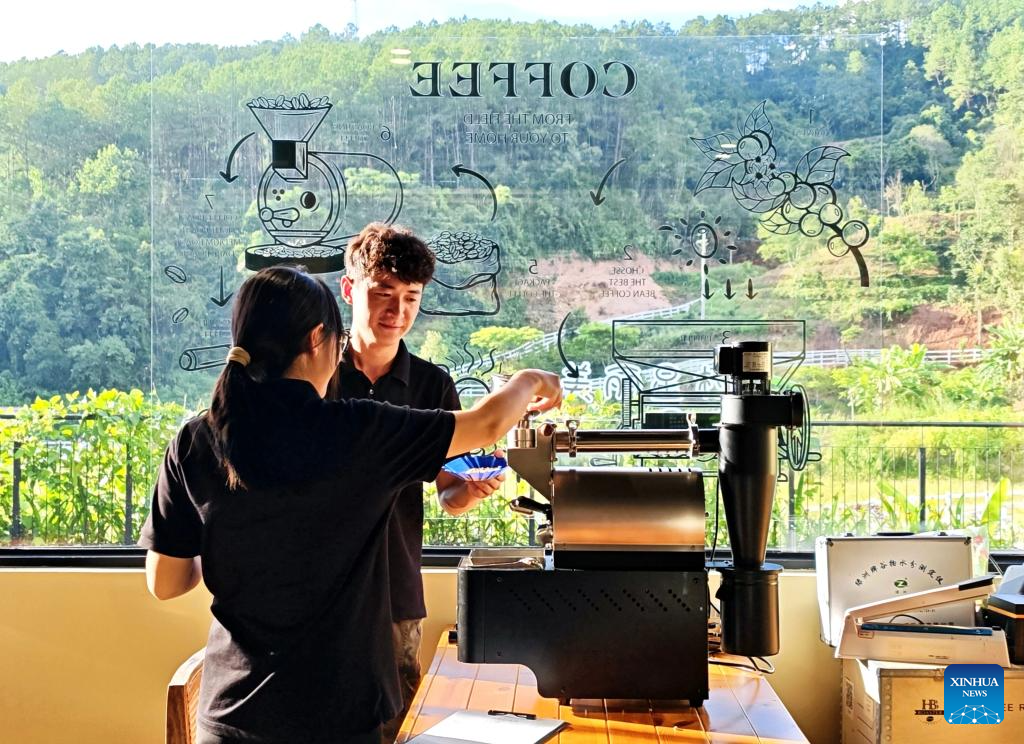
The city’s success, however, goes beyond agriculture. Pu’er has transformed coffee into a comprehensive experience, drawing visitors from across China and abroad. In villages such as Nandaohe in Simao District, tourists can sample freshly roasted coffee, watch the process from bean to cup, and listen to local farmers share their stories. Even the China–Laos Railway has become part of this immersive journey, serving specialty coffee to passengers on board, turning the train ride itself into an extension of the coffee culture of the region.

This approach has significantly boosted the added value of Pu’er’s coffee. In just three years, the added-value rate has jumped from less than 8 percent to over 33 percent, thanks to expanded local processing and the rise of specialty and organic coffee. These high-quality beans fetch much higher prices than commercial varieties, allowing farmers to increase their incomes and compete in premium markets abroad.

Nevertheless, challenges remain. Environmental pressures such as nighttime cold snaps, recurring droughts, and the global impacts of climate change pose risks to yield and quality. Recent studies show that higher altitudes enhance aroma and flavor profiles but also make plants more vulnerable to stress. To counter these risks, farmers are adopting more sustainable practices, experimenting with resistant varieties, and applying modern techniques in soil and water management.

The economic and social impact of coffee in Pu’er is evident. Farmers who once struggled for stable incomes now find opportunities through coffee cooperatives, which provide training, technical support, and marketing channels. The coffee value chain—from cultivation to roasting, packaging, and tourism—creates jobs for local youth and helps reduce rural-to-urban migration. Cafés and small businesses linked to coffee culture further stimulate the local economy, embedding coffee deeply in the life of the community.

Looking ahead, Pu’er aims to secure a distinctive place in the global coffee landscape, not by matching the massive volumes of Brazil or Vietnam but by emphasizing quality, identity, and experience. This strategy aligns with global trends favoring specialty coffee and unique consumer stories. With continued investment in agricultural tourism, value-added processing, and international marketing, Pu’er is positioning itself as more than just a producer—it is building a model of sustainable development that integrates farming, culture, and green economy.

In this way, coffee in Pu’er has grown into much more than an agricultural product. It is a story of transformation that illustrates how a local crop can become a driver of broad-based development, a source of pride for communities, and a bridge linking China’s Yunnan Province to the wider world.