Minas Gerais Rains End Speculative Fever and Topple Global Coffee Prices

DUBAI – QAHWA WORLD

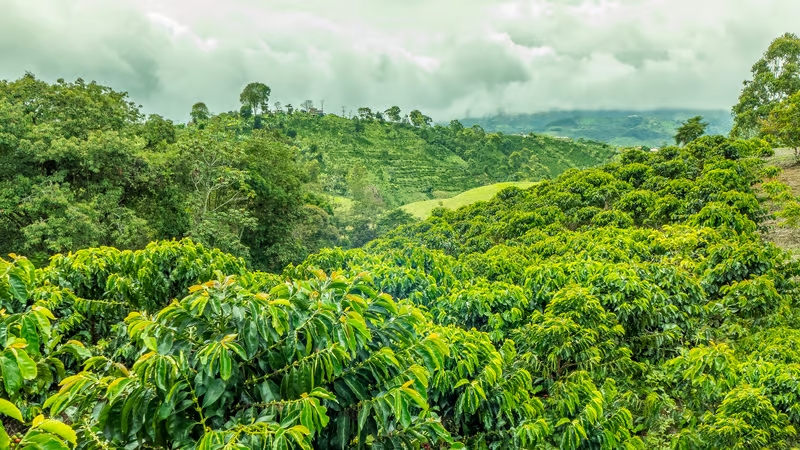
Global coffee markets witnessed a dramatic shift in the final week of January 2026, as a wave of heavy rainfall in Brazilian production regions toppled the hopes of those betting on continued price increases. In a corrective movement described as the most violent in months, the pound of coffee lost more than 21 cents of its value within just 72 hours, causing the International Coffee Organization Composite Indicator Price (I-CIP) to plummet from a peak of 304.17 cents on January 27th to 283.02 cents by the end of the month. This freefall was not merely a response to a passing climatic event, but rather an official announcement of the end of the “risk premium” that had fueled markets throughout the past period due to fears of a long-term drought in the state of “Minas Gerais,” the beating heart of coffee production in Brazil, according to the latest data issued by the International Coffee Organization (ICO) Report for January 2026.

The report’s analytical data indicates that the market entered January in a state of cautious balance, as clear directional catalysts were absent, keeping prices within a narrow range that left farmers in a state of financial satisfaction without pushing them toward aggressive selling. However, this situation evaporated immediately upon the release of meteorological reports confirming improved moisture in the Brazilian soil, providing a strong signal for investment funds and major speculators on the New York Stock Exchange to liquidate their long positions and flee the market before prices retreated to minimum levels. This “mass exodus” of speculators doubled the downward momentum, turning the price correction into a rapid collapse that disrupted the calculations of exporters who had bet on prices remaining above the 300-cent barrier.

Economically, this collapse was linked to local currency variables in Brazil; as the strength of the “Real” against the Dollar played a dual role at the beginning of the month by raising prices, before global markets succumbed to the pressure of expected future supply. Analysts believe that the recent rains not only improved the condition of the existing “Arabica” crop but also sent reassuring messages regarding the 2026/2027 season, which pulled the rug from under the traders who built their strategies on supply scarcity. This shift placed global roasting companies in a stronger negotiating position, as they began to reduce their spot purchases in anticipation of further declines, reflecting the technical state of “Backwardation” dominating the exchanges, where spot prices remain higher than futures contracts, discouraging the desire to build long-term inventories at high prices.

On the field level, the International Coffee Organization report confirmed that these climatic developments have redrawn the forecast map for the first quarter of the year, as markets are now expected to witness an abundance of supplies with the fading fears of “water stress.” In conjunction with these price pressures, major players in the New York market began reassessing their positions, amid expectations that downward pressure will continue as long as the sky continues to grant Brazil’s farms the necessary moisture. The “Rain Revolution,” as some traders called it, was nothing but a harsh reminder that technology and financial analysis remain helpless before weather fluctuations in the world’s largest coffee-producing country, and that the security of the global cup remains more linked to weather maps over the mountains of Brazil than to the policies of central banks.

The Silent Cafe is Dying

By: Sonam Sherpa

We are living in a time where most of us know how to brew specialty coffee.

Great equipment, precise recipes, advanced processing methods everything is available. And yet, I’ve tasted many technically perfect brewed coffees that felt without lives.

What do I mean by coffee without life? As generations change, every industry evolves and coffee is no different. Brewing techniques are innovating faster than ever. But somewhere along this journey, we’ve started overlooking something far more important: the customer experience.

At the end of the day, the final goal isn’t the brew. It’s the person holding the cup.

Adding life to coffee doesn’t mean doing more complicated brewing. It means helping the customer feel that the coffee they’re paying for is worth it. Serving coffee alone isn’t enough anymore. Life is added when we share the story behind the cup,like

  1. Where the coffee comes from? 2.How it was processed ?

  2. What makes it unique? 4.Why it was roasted a certain way?

  3. How it’s meant to be experienced when brewed.

  4. And etc

Many of us already share this information. But what’s often missing is communication the ability to express it in a way that customer could connect. Not every customer wants technical details. What they want is something they can relate to. This is where storytelling becomes powerful. In the future, storytelling won’t just be a skill, it will be a necessity. The cafés that stand out will be the ones that communicate a beverage in a way that even a non-coffee drinker can understand and enjoy.

So here’s my encouragement to fellow coffee professionals and café owners:

Learn to tell stories. Learn to communicate. Because when a customer connects with the story, the coffee comes alive.

Does Coffee Aid Digestion?

DUBAI – QAHWA WORLD

For many, drinking coffee after a heavy meal is not just a social ritual, but a functional tool for the body. According to a report by The Guardian, featuring Dr. Emily Leeming, a nutritionist at King’s College London and author of Genius Gut, the relationship between coffee and your digestive system is much deeper than just a morning energy boost.

The “Ideal Pace” of Digestion

Dr. Leeming explains that coffee acts as a powerful stimulant for the intestines; it activates muscle contractions in the digestive tract, helping food move at a “good” and efficient pace.

  • A Natural Aid: For those suffering from “sluggish digestion,” coffee is considered an effective natural way to maintain regular bowel movements.

  • Exception for Colon Patients: This effect can be very strong for those with Irritable Bowel Syndrome (IBS), which may lead to discomfort or an urgent need to use the bathroom due to excessive acceleration of the digestive process.

Food for 100 Trillion Guests

Beyond moving the intestines, coffee is considered a “superfood” for the microbiome (beneficial bacteria). People who drink coffee regularly tend to have a greater and healthier diversity of gut bacteria.

  • The Power of Polyphenols: Coffee is a major source of polyphenols, which are antioxidants that act as a feast for beneficial bacteria.

  • Hidden Fiber: Surprisingly, coffee also contains a small amount of soluble plant fiber, which further supports gut health.

The “Sleep and Digestive System” Loop (The 12-Hour Rule)

The most important information from recent research is the importance of timing. Caffeine can stay in your body for up to 12 hours.

  • Sleep Connection: Drinking coffee late in the day ruins sleep quality, and poor sleep is directly linked to the deterioration of digestive health.

  • The Junk Food Trap: Sleep deprivation causes a state of “mental grogginess,” which often leads to poor food choices and increased cravings for sugars the next day, further harming the microbiome.

Golden Rules for a Healthy Cup

To achieve the maximum protective benefits of coffee without side effects, follow these science-based rules:

  1. The Noon Deadline: Stop drinking caffeinated coffee by midday. Replace it with decaf coffee or herbal tea in the afternoon to protect your sleep cycle.

  2. Monitor Sweeteners: 2.5 grams is the maximum amount of sugar allowed to ensure the protective benefits of coffee remain.

  3. Listen to Your Body: If coffee causes you stress or digestive upset, this is a signal from your “second brain” to reduce the amount.

Cheap Coffee Outperforms Brands in Safety by Roskontrol Ranking

MOSCOW — QAHWA WORLD

As reported by the Russian news outlet “Nasha Gazeta,” a comprehensive audit of dozens of instant coffee brands conducted by “Roskontrol” experts has yielded unexpected results. The laboratory analysis revealed that several budget-friendly brands demonstrated higher levels of safety and transparency than world-renowned premium labels, providing a vital guide for consumers looking for a reliable morning brew.

The Bitter Truth Behind Your Coffee Jar

According to “Nasha Gazeta,” instant coffee is among the products most susceptible to counterfeiting. Some manufacturers add unauthorized fillers such as cereals, chicory, or cheap substitutes, while improper storage can lead to the formation of dangerous toxins. The “Roskontrol” study was more than a simple preference ranking; it was a rigorous safety inspection that tested for:

  • Mycotoxins (including the deadly Aflatoxin B1).

  • Heavy metals.

  • Hidden additives not listed on the label.

  • Chemical aftertaste and artificial bitterness.

The study confirmed that the bitterness many consumers associate with strong coffee is often not a characteristic of the beans themselves, but rather a sign of hidden chemical impurities.

Budget Champions: Quality Above Price

The report highlights that several affordable brands proved to be the most honest and safe. For those seeking a boost without health risks, the top-rated list includes:

  1. Auchan (Granulated): Described as the “dark horse” of the study, it was found to be completely safe with a transparent composition, containing even more caffeine than many of its pricier competitors.

  2. Nescafe Classic: This legendary brand confirmed its status with a clean laboratory record, showing no impurities and a stable flavor profile based on 100% natural beans.

  3. Bonvida: A clear example that low price does not mean poor quality, as it met all laboratory safety standards perfectly.

  4. Each Day (Kajdy Den): A basic and safe option for daily use, offering peace of mind without the added cost of a famous brand name.

For the Connoisseurs: The Freeze-Dried Distinction

The report notes that freeze-dried coffee differs significantly from traditional granulated versions, as its production technology preserves the essential oils and original aroma of the bean. The leaders in this category were:

  • Ambassador Platinum: Noted for its rich flavor, noble bitterness, and light fruity acidity, offering an experience very close to ground coffee.

  • Bushido Original: Praised by experts for its perfect balance of bitterness and acidity, delivering a harmonious and clean taste profile.

The Smart Buyer’s Guide

Based on the “Roskontrol” findings, “Nasha Gazeta” provides clear recommendations for consumers:

  • For Savings and Safety: Opt for brands like Auchan, Nescafe Classic, or Bonvida.

  • For Flavor and Aroma: Choose Ambassador Platinum or Bushido Original.

  • The Golden Rule: Always check the label for “100% natural coffee” and ensure it is the “freeze-dried” variety.

  • Health Tip: To ensure the protective benefits of the drink remain intact, 2.5 grams is the maximum sugar limit.

The publication concludes that the “Roskontrol” results are a compelling reason to reconsider buying habits. A morning cup should not just be a necessity for waking up, but a small daily celebration of a safe and high-quality product. As the source notes, if your usual brand did not make the success list, it is a perfect opportunity to try something new and truly superior.

Coffee Prices Drop Sharply Amid Record Global Supply Projections

Dubai – Qahwa World

Coffee market prices ended Friday’s sessions with a significant decline, as March Arabica coffee contracts dropped by 3.84% to close at -11.85, while March Robusta coffee fell by 1.75% to close at -67. This downward trend persisted throughout the week, with Arabica hitting a 6-month low and Robusta reaching its lowest level in nearly 6 months, pressured by reports confirming robust global supplies.

The Brazilian crop forecasting agency, Conab, reported that coffee production in Brazil for 2026 is expected to rise by 17.2%, reaching a record 66.2 million bags. This includes a projected 23.2% surge in Arabica production to 44.1 million bags and a 6.3% increase in Robusta to 22.1 million bags. In Vietnam, the world’s leading Robusta producer, exports in January jumped by 38.3%, adding further bearish pressure on prices, especially after 2025 exports had already risen by 17.5% to 1.58 million metric tons.

Additionally, above-average rainfall in Brazil eased drought concerns. Minas Gerais, the largest Arabica-growing region, received 69.8 mm of rain in the week ending January 30, representing 117% of the historical average. Vietnam’s production for the 2025/2026 season is also projected to climb 6% to a 4-year high. Meanwhile, ICE-monitored inventories have begun to recover from previous lows; Arabica stocks rose from a nearly 2-year low to a 3-month high, and Robusta inventories showed a similar recovery.

Despite some supportive signals for prices, such as the Brazilian Trade Ministry reporting a 42.4% drop in January exports and the International Coffee Organization (ICO) noting a slight 0.3% dip in global shipments, the overall outlook remains focused on surplus. The USDA’s bi-annual report projects that world coffee production for 2025/2026 will increase by 2% to a record 178.8 million bags, with a significant 10.9% rise in Robusta output, even as total ending stocks are forecasted to decline by 5.4%.

Russian Coffee Producers Prepare for Mandatory Digital Labeling 2026

Moscow – Qahwa World

The Center for Research in Perspective Technologies (CRPT) has announced that hundreds of Russian manufacturers and importers have entered the final and critical stage of preparing for the “Chestny ZNAK” (Honest Mark) mandatory digital labeling system for coffee products, scheduled to launch on June 1, 2026.

The system operator emphasized that early preparation is the primary guarantee for businesses to ensure a smooth transition and minimize operational risks, noting that it provides comprehensive support to participants through specialized workshops and educational materials.

In this context, Maria Bredneva, a representative of Coffee Workshop Ltd, stated that the product labeling process for small and medium-sized factories requires systematic adaptation and preparation.

She noted that their early participation in the pilot program helped them understand the mechanisms of the process and utilize affordable technologies to simplify the integration of labeling into production lines, thereby reducing the operational burden and allowing for the effective use of system tools. Similarly, Grigory Balayants, General Director of K-Grand, pointed out that the successful launch of digital labeling for cocoa last December facilitated the current preparation for coffee products.

He added that the company is currently installing the necessary equipment, which ultimately aims to help consumers verify the authenticity and quality of the product.

The digital labeling system is designed to protect consumers from counterfeit goods by tracking the product’s journey from the factory to the end buyer via a unique Data Matrix code printed on each coffee package.

The code is issued based on comprehensive data provided by the manufacturer in a digital catalog, and the entire supply chain is reflected through an Electronic Document Interchanges (EDI) system until the product is officially retired from circulation at the point of sale.

The cost of a single code is 50 kopecks, which may increase the final cost by 10% to 22% depending on the product category.

Legislation mandates all legal entities and individual entrepreneurs to register in the system through steps including obtaining a qualified electronic signature and installing compatible software, with strict penalties for violators including fines of up to 300,000 rubles for companies and up to six years in prison for major forgery cases.

According to estimates from the HSE Institute for Public and Municipal Management, coffee labeling will contribute to reducing illegal turnover—which currently accounts for 13% of the market—and inject approximately 20 billion rubles in additional tax revenue into the state budget over the next six years, while enabling consumers to check product safety directly via a mobile application.

AFCA 2026 Officially Opens in Addis Ababa

Brewing Africa’s Next Generation

Addis Ababa – Qahwa World x Buna Kurs

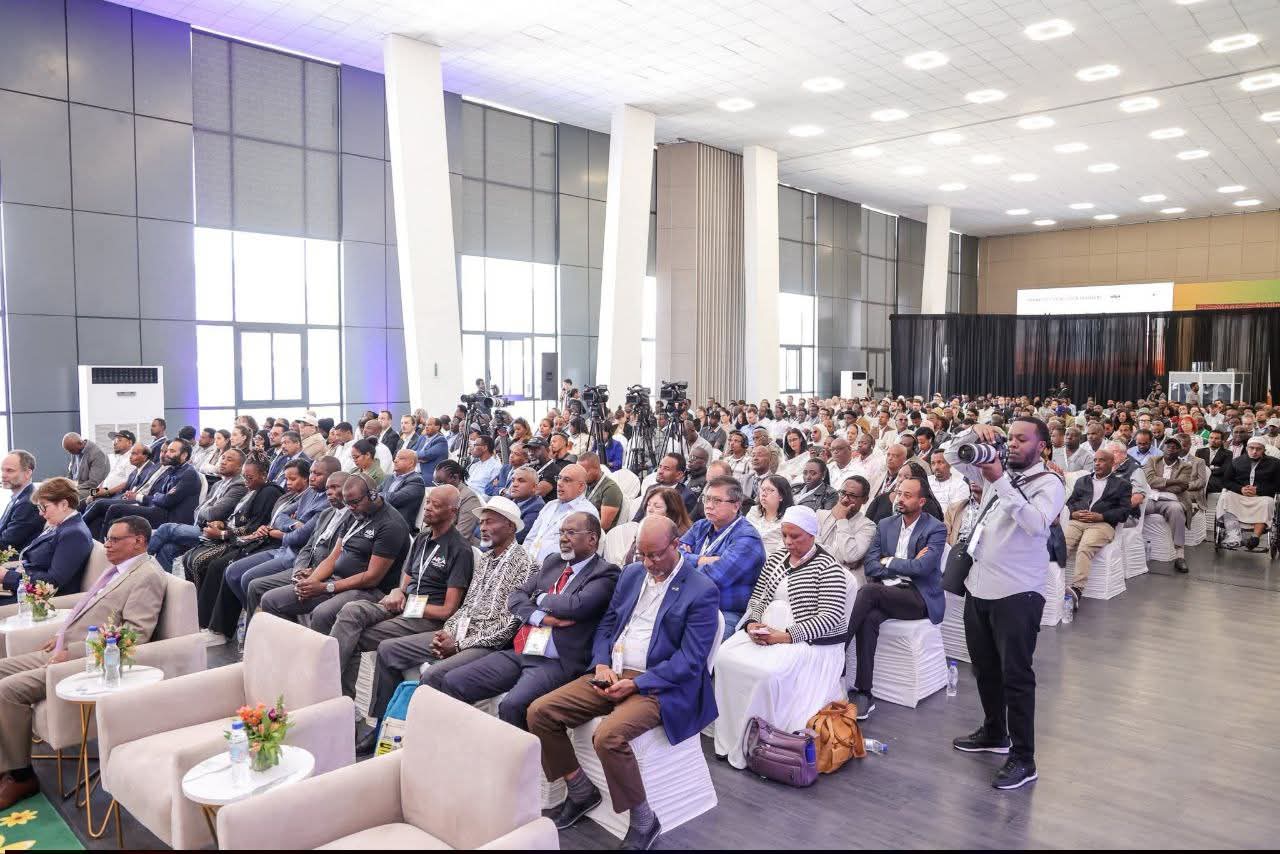
The 22nd African Fine Coffees Conference & Exhibition (AFCC&E) officially opened today at the Addis International Convention Center (AICC), marking a major milestone for Africa’s coffee sector. Following yesterday’s pre-conference Sustainability Day workshops, the event welcomed over 2,000 delegates from more than 25 countries, including government officials, private sector leaders, international buyers, and coffee experts.

A Vision for the Future This year’s theme, “Brewing Africa’s Next Generation,” underscores a commitment to modernizing the value chain, integrating youth into the sector, and building climate resilience. AFCA Chairperson Amir Hamza described the event as a “homecoming for coffee,” adding: “Africa will no longer just supply fine coffees to the world—we will define the future of coffee.”

Breaking Trade Barriers A highlight of the opening was the high-level panel discussion, “Why Do Roasters Find It Harder to Buy Directly from Africa?” presented by Algrano. Strategic partner Algrano brought a delegation of over 20 international buyers from the US and Europe to engage directly with African producers. Panelists focused on solutions to logistics bottlenecks, financing gaps, and late contracting that often hinder smallholder farmers from accessing global markets.

Exhibition Floor Highlights The trade floor is now fully buzzing with booths showcasing innovations in coffee technology, logistics, and premium green coffee. Cupping sessions are underway, featuring the winners from AFCA’s flagship competition, the Taste of Harvest, in addition to fresh Ethiopian harvests.

Delegates also explored value-addition technologies aimed at moving beyond raw bean exports to roasting and branding at origin. Policy initiatives introduced today include a gender-responsive framework designed to increase women’s participation in agricultural extension and decision-making, developed in partnership with the Ethiopian government and GIZ.

Economic and Sectoral Momentum The conference is already shaping critical discussions on coffee strategy, and analysts note that initiatives highlighted at AFCA are being seen as a platform to position Africa as a proactive player in global coffee pricing and innovation. The conference continues tomorrow and will feature the finals of the Africa Barista Championship and the Regional Taste of Harvest Competition, in addition to AFCA’s Burundi Taste of Harvest Auction.

Coffee Quality Institute Announces 2026 Global Coffee Fund Details

Addis Ababa – Qahwa World

Coffee Quality Institute (CQI) announced the details of its 2026 Global Coffee Fund (the Fund) program at the African Fine Coffee Association Conference and Exhibition. The Fund was developed to expand access to coffee quality education and advance CQI’s mission.

“CQI knows that the coffee sector is facing extraordinary challenges, and the Global Coffee Fund is one way we are working to address them,” said Michael Sheridan, chief executive officer of Coffee Quality Institute. “At a time when the public sector is disinvesting in coffee communities, CQI is tripling our commitment to the Global Coffee Fund and inviting the industry to co-invest. Together we can mobilize $500,000 to benefit coffee communities in 2026. I can’t think of a better way to mark our 30th anniversary.”

The Global Coffee Fund will invest in coffee quality through support to two distinct programs.

  • Project Awards

CQI will continue its existing successful grant program in 2026 and commit up to $100,000 to fund projects that enhance access to coffee education and promote the development of educators in areas that lack sufficient local representation.

  • Matching Grants

This year CQI is launching a Matching Grant for co-investment with partners whose own work aligns with CQI’s mission and values. CQI will provide a dollar-for-dollar match for $200,000 of external investment in qualifying projects with a goal of generating $400,000 in new commitments in 2026.

“I am very excited about the expansion of the Global Coffee Fund for 2026. The addition of the Matching Grant program will enable CQI to leverage and expand our global partnerships and network of coffee experts to increase impact at the producer level,” stated T.J. Ryan, managing director of programs at CQI. “More than just a financial match, the fund will seek partners with whom we have shared objectives to build a more resilient coffee sector.”

  • Further information regarding the Fund and application materials are available on the Coffee Quality Institute’s website. Applications will be accepted on a rolling basis.About Coffee Quality Institute

    CQI is a non-profit that works globally to improve the quality of coffee and the lives of the people who produce it. For thirty years, CQI has trained people who produce and process coffee in more than thirty coffee-growing countries around the world.

Sustainability Day Sets the Technical and Policy Tone at AFCC&E

Addis Ababa – Qahwa World × Buna Kurs

Day One of the 22nd African Fine Coffees Conference & Exhibition (AFCC&E) concluded in Addis Ababa with sustainability firmly positioned as the cornerstone of this year’s continental coffee dialogue. Following the morning’s high-level opening ceremony, the conference program transitioned into the 7th AFCA Sustainability Day, delivered in partnership with the Rainforest Alliance under the theme “Sustainability in Every Cup: Brewing a Regenerative Future, Today.”

At the center of the day’s agenda was the presentation and launch of the Rainforest Alliance Regenerative Agriculture Standard (RAS), a new certification framework designed to move beyond compliance toward ecosystem restoration and long-term farmer resilience across tropical landscapes.

Across the venue, the exhibition hall remained active throughout the day, with strong foot traffic from producers, exporters, buyers, service providers, and development partners. Exhibitors noted a visibly expanded floor layout and higher engagement compared to previous editions, reflecting both the growing scale of the event and renewed market interest in African coffee origins.

The Sustainability Day program highlighted how regenerative agriculture is being applied in practice across East Africa, with experiences shared from Kenya, Uganda, and Ethiopia, including MSuLLi, Mountain Harvest, Moplaco Farm, and sector partners working at farm, landscape, and market levels. A dedicated youth testimony segment reinforced a growing generational consensus: sustainability is no longer an add-on, but a prerequisite for remaining competitive in the global coffee sector.

Afternoon sessions shifted the discussion to the value of sustainability standards within the global supply chain, examining how certification, traceability, and transparency are increasingly shaping trade relationships. Panels featuring exporters, producers, and international buyers addressed the commercial realities of sustainability, with participation from Midrock Investments Group, Touton, ECOM, AMG Coffee Export, Preferred by Nature, and regional producer representatives.

Beyond the conference hall, B2B cupping sessions continued alongside networking activities, offering international buyers early exposure to coffees from across Africa while reinforcing the link between quality, sustainability, and market access.

Day One concluded with an invitation-only policy and networking reception, followed by the Opening Cocktail at the AICC Amphitheater, marking the informal start of a week expected to shape Africa’s coffee sustainability agenda for years to come.

Robusta: A Climate-Resilient Future

Dubai – Qahwa World

As climate change and escalating environmental pressures create unprecedented challenges for global coffee production, the industry is facing a critical turning point that threatens the sustainability of the entire supply chain. In response, World Coffee Research (WCR) is spearheading a massive international effort to develop high-performing, climate-resilient varieties designed to thrive in an increasingly volatile environment. A major strategic shift occurred in late 2025 when WCR integrated Robusta breeding into its Innovea Global Coffee Breeding Network. This expansion recognizes that relying solely on Arabica is no longer a viable long-term strategy in the face of rapid global warming. As a committed member of WCR, Sucafina has expressed its pride in supporting this essential research, emphasizing that investing in variety development is the only definitive way to safeguard the future of coffee and secure the livelihoods of millions of farmers who form the backbone of the industry.

Coffee-growing conditions worldwide are undergoing forced evolution, requiring farmers at origin to adapt to weather patterns that no longer follow traditional predictability. Additionally, they must battle new strains of pests and diseases that thrive in rising temperatures. Strengthening the long-term resilience of the coffee supply has become a top priority, as high-performing varieties act as a vital shield, helping farmers mitigate climate stress while ensuring reliable, high-quality yields. However, the industry faces a significant temporal challenge: the process of developing, scientifically testing, and commercially releasing a new variety typically spans several decades—a timeframe the world cannot afford given the acceleration of climate change. Addressing these challenges requires practical, long-term collaboration, which is the core mission of WCR as an industry-driven research organization dedicated to identifying and developing the coffee varieties of tomorrow.

The launch of the Innovea program in 2022 marked a revolution in coffee breeding, designed to accelerate development by uniting national research institutes, governments, and the private sector across 11 countries in Latin America, Africa, and Asia. Operating under standardized trial protocols, the network coordinates breeding efforts on a global scale, testing candidates across diverse soils, climates, and disease pressures. By pooling massive datasets and cross-border expertise, promising varieties are identified far more rapidly than through traditional methods, while ensuring they are perfectly suited for local farming systems. This innovative approach received global acclaim when Innovea was named one of TIME’s Best Inventions of 2025, recognizing its power to provide tangible solutions to one of agriculture’s most complex challenges.

Vern Long, CEO of WCR, explains that the program’s structure allows for a step change in variety performance faster than ever before, shortening development timelines from 30 years down to just eight. As climate challenges intensify, a continuous global pipeline of improved varieties will provide farmers with the tools needed to reduce risk and stabilize their income. Historically, breeding efforts focused almost exclusively on Arabica, despite the rise of Robusta, which now accounts for approximately 40% of global production. This shift is driven by Robusta’s natural heat tolerance and market dynamics. Robusta possesses greater genetic diversity than Arabica, yet its breeding is more complex as it cannot self-pollinate, requiring sophisticated management of parent plants. By late 2025, Robusta was fully integrated into the Innovea network, bringing in major producers like Vietnam and Ghana alongside enhanced programs in India, Indonesia, Rwanda, and Uganda. Together, these nations represent 64% of global Robusta production. The ultimate goal is to move these varieties from the lab to the field, evaluating thousands of candidates to identify the best performers that will secure a stable and sustainable foundation for the future of coffee.

The Coffee Leaf’s Second Life

By Dr. Steffen Schwarz, Coffee Consulate

There is a peculiar irony in the coffee business: we have spent more than a century perfecting how we roast, grind, extract, foam, chill, carbonate, nitrogen-infuse and brand a seed, while the plant that produces it has been standing all along as a far larger, greener biomass—photosynthesising, defending itself, interacting with shade trees, fungi and insects, and repeatedly regenerating its canopy after pruning. The leaf is the coffee plant’s true working organ: an engine of carbohydrates and a chemical laboratory that negotiates sunlight and drought, pests and pathogens, growth and recovery. And yet, in most producing countries, coffee leaves have been treated as little more than compost, mulch, or a nuisance swept aside during canopy management. That is now changing, and not simply because the world enjoys novelty. Coffee leaf tea is emerging at the intersection of ethnobotany and modern food law, of phytochemistry and sensory design, and—most importantly for decision makers—of farm economics and operational resilience.

Coffee leaf infusions are not an invention of the wellness era. They are older than espresso, older than filter coffee, older than the first international coffee prices. In several coffee-producing regions, leaves have long been infused, decocted, mixed with milk, or combined with spices and herbs to create beverages that sit somewhere between nourishment, social ritual and folk medicine. The scientific and cultural value of this heritage is easy to underestimate, especially if one’s mental map of coffee begins at the port and ends at the café. Yet the ethnographic record is clear: leaf-based coffee drinks have been prepared and consumed in places as varied as Ethiopia, South Sudan, Indonesia, Jamaica and India, often under local names that signal not a substitute for coffee, but a beverage category of its own.

In Ethiopia, coffee leaf brew is widely known in multiple regions and languages—Chemo, Kuti, Hayta Tuke, Kitel Buna—each name carrying the weight of daily habits and community meanings. The leaves are not merely steeped; they are processed through cleaning, crushing or chopping, boiling, spicing, straining, serving. The result is a drink that can be mild or intense, pale gold or deep brown, lightly herbal or richly aromatic, depending on leaf maturity, drying, brewing time, and the chosen constellation of botanicals.

One of the most detailed recent documentations of these practices comes from the Gofa Zone in South Ethiopia, where Eyasu Yohannis and colleagues recorded indigenous coffee leaf brew and a related preparation called Engere, a blend of coffee leaf brew and cow’s milk. Their work does something crucial for our industry: it moves the conversation away from vague stories of “traditional use” and towards measurable patterns of ingredients, processes and consumption. In their community-based survey, the authors found that coffee leaf brew is not an occasional curiosity; it is embedded in daily life. A majority of respondents described it as a staple, stimulating beverage, while others linked it explicitly to medicinal value and cultural ceremonies. Engere, meanwhile, occupies a different functional niche: it is widely perceived as strength-enhancing, supportive for physically demanding work, and beneficial for lactating women, postpartum recovery and stamina.

The brewing practices described in Gofa are remarkably concrete. Coffee leaves are harvested by cutting terminal portions of the plant—precisely the same anatomical zone that farm managers already target in canopy control—then cleaned and washed, crushed with mortar and pestle or a traditional wooden grinder, and boiled in water typically in the range of 85–100 °C. The documented spice and herb palette is extensive—Ruta chalepensis, coriander fruit, garlic leaf, ginger, basil, lemongrass, chilli, Ethiopian cardamom, fennel, salt—an aromatic architecture that resembles a culinary broth more than a minimalist tea. This matters because it tells us that coffee leaf beverages in their indigenous context have already undergone centuries of consumer testing: bitterness has been managed, aroma has been amplified, mouthfeel and perceived warmth have been engineered through botanical synergy.

For modern markets, this ethnographic depth is more than storytelling. It is a starting point for applied product development. The Gofa data reveal three distinct brewing logics: a combined boiling method where leaf and minor ingredients meet in one pot; a separated boiling method where components are brewed individually and combined later; and a leaf-only approach used particularly for Engere without added botanicals. These are, essentially, three different extraction strategies.

This is where Europe enters the narrative in a decisive way. Coffee leaf infusion is no longer merely an indigenous beverage; it is now a legally defined food category within the European Union. On 1 July 2020, the EU authorised the placing on the market of infusion from coffee leaves as a traditional food from a third country through Commission Implementing Regulation (EU) 2020/917. The regulatory framing is not trivial. By treating coffee leaf infusion as a traditional food under the Novel Food Regulation, the EU effectively acknowledged that a long history of safe consumption outside Europe can form part of a safety argument.

For coffee businesses, EU authorisation changes the strategic landscape. It reduces regulatory uncertainty for importers, roasters and beverage developers. It invites investment in leaf supply chains, not only for niche “novelty teas” but for scalable beverage categories: ready-to-drink formats, sparkling botanical blends, functional infusions, cold brews, and milk-based variants.

The scientific literature suggests that coffee leaves are not simply “coffee without beans”. They contain a complex set of phytochemicals, including phenolic compounds with antioxidant capacity and bioactivities that have been discussed in relation to anti-inflammatory and antihypertensive effects. A crucial commercial insight lies in caffeine itself. Many consumers want the ritual and complexity of coffee-like beverages, but with less stimulant load. Coffee leaf infusions typically contain caffeine, but the overall experience can be positioned differently from espresso-driven intensity.

However, no beverage category survives on sensory novelty alone. The deeper business relevance of coffee leaf tea lies in what it can do at origin. For decades, the coffee sector has discussed farmer income, price volatility, and the fragility of livelihoods. Coffee leaf tea, if commercialised responsibly, can shift part of this debate into operational economics: it can create an additional product stream from the same farm, using a biomass that is already generated in canopy management. That is not merely “extra income”; it is income diversification, and diversification is one of the most reliable ways to increase resilience in agricultural systems.

If we approach coffee leaf tea with the seriousness it deserves—honouring its origins, applying rigorous process science, designing compelling sensory styles, and building supply chains that reward farmers for better agronomy—we will not merely sell another beverage. We will create a mechanism through which coffee farms can become more stable employers, more productive agricultural systems, and more resilient businesses. In a world where coffee’s future is increasingly shaped by climate stress and economic uncertainty, a leaf may seem like a small thing. But in biology and in business, small things are often the levers that change the whole system.

Arabica Coffee Gains on Technical Support Amid Mixed Market Performance

Dubai – Qahwa WORLD

March Arabica coffee (KCH26) concluded Monday’s session with a gain of +1.00 (+0.30%), while March ICE Robusta coffee (RMH26) saw a notable decline, closing down -84 (-2.04%) at a four-week low. The market showed a mixed performance as substantial rainfall in Brazil improved yield prospects but pressured prices. Somar Meteorologia reported that Minas Gerais, Brazil’s premier Arabica region, received 69.8 mm of rain during the week ending January 30, representing 117% of the historical average.

Further weighing on the market, Brazil’s crop agency, Conab, recently increased its 2025 total coffee production forecast by 2.4% to 56.54 million bags. Meanwhile, Robusta prices faced significant headwinds from surging exports in Vietnam, the world’s top Robusta producer. Official statistics from January 5 indicated a +17.5% year-over-year jump in Vietnamese coffee exports to 1.58 MMT. Production for the 2025/26 cycle in Vietnam is projected to rise +6% to 1.76 MMT, a four-year high, with Vicofa suggesting a potential 10% increase if weather remains favorable.

The recovery of ICE-monitored inventories has also exerted downward pressure on prices. Arabica stocks climbed to a 3.25-month high of 461,829 bags in early January, recovering from a multi-year low recorded in November. Similarly, Robusta inventories reached a two-month high of 4,662 lots last Monday. On the supportive side, Cecafe reported an -18.4% decline in Brazil’s December green coffee exports, with Arabica shipments down -10% and Robusta exports falling sharply by -61%.

Globally, the International Coffee Organization noted a marginal -0.3% decrease in exports for the current marketing year. However, the USDA’s Foreign Agriculture Service predicts record global production of 178.848 million bags for 2025/26, a +2.0% increase. This forecast anticipates a -4.7% drop in Arabica output alongside a +10.9% surge in Robusta production. Ending stocks for the 2025/26 period are expected to decline by -5.4% to 20.148 million bags.