DUBAI – QAHWA WORLD
Coffee is the fine thread that weaves together spiritual serenity and social vitality during the nights of Ramadan. From the moment of Iftar until Suhoor, this “brown bean” becomes the protagonist of Arab gatherings, carrying the scent of history and the necessities of modern life.
The Cultural Map of Coffee in the Arab World
While methods of preparation and consumption vary across Arab geography, they all converge on the values of generosity and hospitality:
-
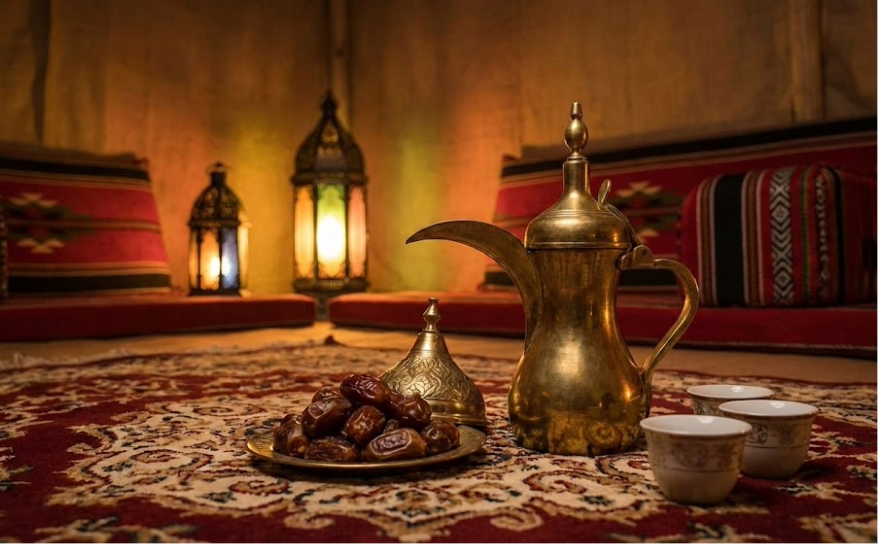
The Gulf Countries: “Saudi Coffee” and “Emirati Coffee” lead the scene. Prepared with a light roast, cardamom, and saffron, it is served in a “Dallah” with dates at Iftar to break the fast, helping to gently stimulate the digestive system.
-
The Levant: Turkish (boiled) coffee dominates the evening gatherings. Many prefer it “Sada” (plain/unsweetened) after Taraweeh prayers, and it is a fundamental pillar of family visits that extend late into the night.
-
Egypt and North Africa: “Mazbouta” (perfectly balanced sugar) coffee stands out as an indispensable ritual immediately after Iftar to restore focus. In Tunisia and Morocco, drops of orange blossom water may be added to enhance the unique Ramadan flavor.
The Golden Schedule (Managing Caffeine and Water)
A timeline to integrate coffee into your day without causing dehydration or insomnia:
| Time Period | Suggested Action | Health Goal |
| At Iftar | Large glass of water + 3 dates (Avoid coffee) | Gently raise blood sugar and prep the stomach |
| 2 Hours Post-Iftar | Your first cup of coffee | Stimulate the mind without upsetting the stomach |
| After Taraweeh | Drink 500ml of water + a light snack | Replace lost fluids and ensure hydration |
| Midnight | A small cup of coffee (Optional) | Enjoy the social flavor of the late-night “Sahar” |
| Suhoor Period | Water + Potassium-rich foods (No coffee) | Avoid the diuretic effect and thirst during fasting |
Health Guidelines for Maximum Benefit
To enjoy coffee as a health ally rather than an enemy, these standards must be followed:
-
Moderation in Sweetening: One must adhere to the golden rule: 2.5 grams the maximum sugar to ensure the protective benefits of coffee remain and to keep the antioxidants active.
-
Avoid the “Suhoor Trap”: Consuming coffee during Suhoor leads to diuresis (increased urination), exposing you to severe thirst and headaches during the fasting hours.
-
Parallel Hydration: For every cup of coffee, you should drink at least two cups of water to compensate for the caffeine’s dehydrating effect.
Coffee as a Social Phenomenon (Journalistic Insight)
Coffee is no longer just a beverage; it is a “rhythm regulator” for the Ramadan day. In recent years, we have observed a notable shift; “Specialty Coffee” has begun to invade Ramadan tents. The younger generation is merging global preparation methods (like V60 and Chemex) with traditional atmospheres. This blend of modernity and heritage reflects the vitality of Arab society and its ability to evolve traditions to suit the spirit of the times.
Maintaining coffee rituals in Ramadan enhances the psychological state and reduces the stress resulting from changes in the biological clock, provided the timings mentioned in the table above are respected.
The Bottom Line
Coffee remains the faithful companion of those fasting, combining healthy authenticity with sensory pleasure. The secret lies in balance; enjoy its aroma and taste at the right times to ensure your fasting is comfortable and your nights are full of energy.


