Sara Al-Haj: “Samra Coffee”.. The Story of Coffee That Defeated War

Dubai – Ali Alzakary

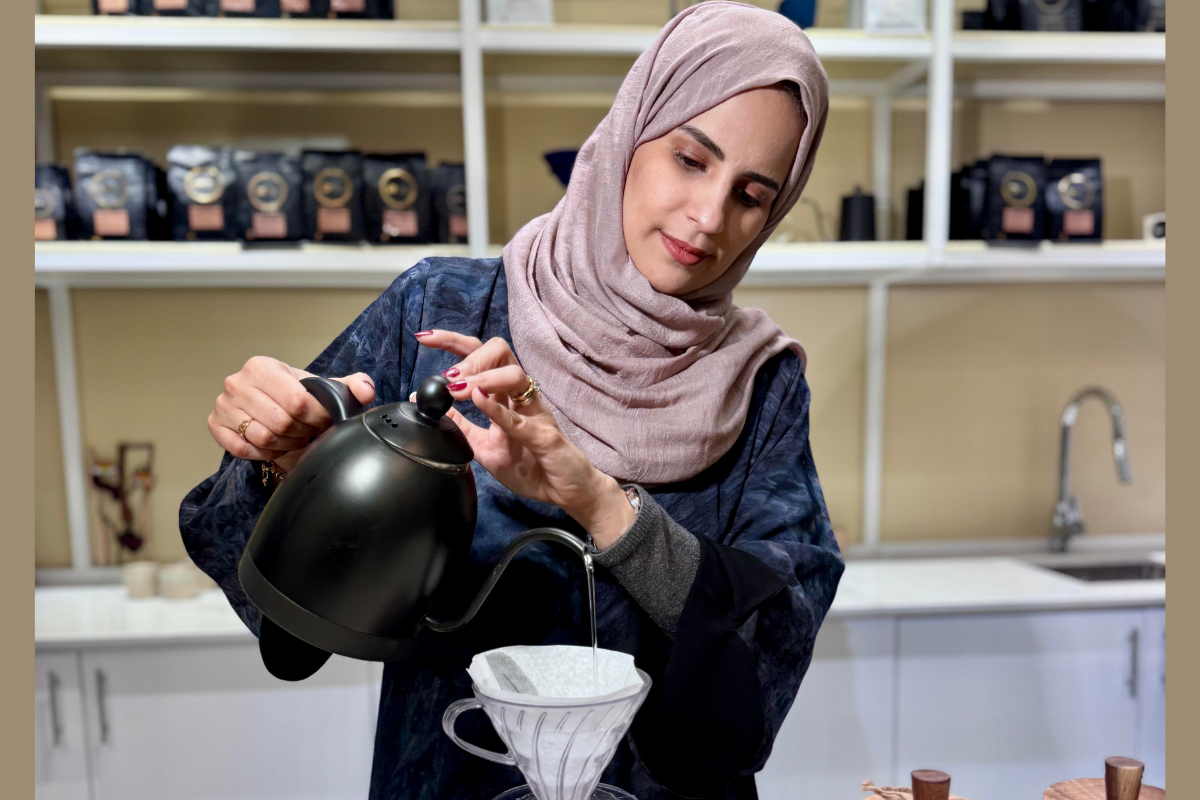
In the midst of displacement and the search for self, Sara Al-Haj wasn’t just looking for a “project”; she was searching for a “footprint” to leave in this world. A daughter of Taiz whose life was tempered in Al-Hudaydah, she forged her destiny in Sana’a within a coffee “Jazwa.” Amidst the ashes of war, she crafted a future that no one believed in but herself.

  • “Samra”.. From a Faded Fashion Dream to the First Women-Led Brand

The story began long before coffee. In Al-Hudaydah, Sara dreamt of a traditional Abaya project named “Samra”, inspired by an old Lebanese series she used to watch, feeling the name mirrored her own authentic bronze features. However, the 2019 war shattered those dreams before they could see the light, forcing Sara to flee to Sana’a with a suitcase full of memories and a broken heart.

In Sana’a, amidst the void of displacement, she watched the music video “Al-Hob Wal-Bunn” (Love and Coffee) by artist Ahmed Seif. A spark ignited in her mind: “Why not enter the world of coffee?” Sara searched all over Yemen for a woman who had established an officially registered coffee brand, but she found none. It was then she decided to be the first Yemeni woman to break the male monopoly in this historic market, resurrecting “Samra Coffee“—but this time, through coffee beans.

  • The Logo.. A Yemeni Face Carrying Sara’s Message to the World

The “Samra” logo was never just a graphic design; Sara wanted the product to carry her soul and message. She collaborated with her designer (then living in Malaysia) to sketch a girl whose features and details embodied an authentic Yemeni woman, intertwined with traditional heritage.

Sara says, “Since I do not appear personally, I wanted the logo to speak for me and for the role of Yemeni women. I wanted the product, as it travels abroad, to convey an honourable image of girls in Yemen.” Today, this face has become the identity and the official seal for “Samra” in all its governmental and commercial dealings.

  • Starting with Daily Allowance and a Mother’s Kitchen

Sara started with a very modest capital—200,000 Yemeni rials—an amount she painstakingly saved from her personal allowance. In a small room in her family’s house, she turned her mother’s kitchen into a laboratory for four full years.

Lacking basic professional machinery, Sara roasted her coffee using a “Tefal pan” and a manual “spoon”, grinding it with a simple home grinder gifted by her mother. Since she couldn’t afford professional courses, she visited major merchants, carrying a small notebook and a pen, asking about every secret and documenting every detail. Those merchants nicknamed her “The Journalist” because of her immense thirst for knowledge.

That struggle was not in vain. Today, thanks to God, the “Samra” project has achieved the financial independence Sara always aspired to as a displaced girl, becoming the fruit of her labour that supports her and her family with pride.

  • The Battle of the “Jazwa” and the Woven Prophecy

Sara faced a war of bullying and frustration. Some specialists mocked her, saying, “You are a woman; what business do you have in the coffee market? You will surely fail.” Even when she chose to specialise in Turkish coffee prepared with the “Jazwa,” some accused her of choosing a method to hide the flaws of poor beans with cardamom. Sara responded defiantly: “Bad coffee remains bad, and good coffee asserts its presence no matter what you add to it.”

Sara drew strength from a “symbolic woven tapestry” handcrafted with threads, gifted by a mentor from outside Yemen who believed in her. It bore the symbols of Speciality Coffee Association (SCA) certificates. She looked at it every day, promising herself that these symbols would one day become real certificates hanging on her wall of success. Today, that prophecy has come true; demand is no longer just local. “Samra” products have reached Arab and European markets, as well as the American and Asian markets, achieving a global reach that silences everyone who once tried to discourage her.

  • Loyalty to “The Small Room Companions”

Today, Sara is a coffee expert on her way to obtaining international accreditation in barista skills and sensory skills from the Speciality Coffee Association. She is working toward various international expertise certificates, including becoming a certified judge in global coffee championships.

Despite owning the finest professional machines today, she refuses to let go of her first simple tools (some of which her brother bought for $100). Sara says with deep emotion, “I used to stand before my old machines and talk to them as if they were human: you are the foundation. You endured with me four years of exhaustion, tears, and late nights in that cramped room. Today, I have wrapped you like a treasure, and I will never let you go.”

Having suffered greatly while searching for knowledge, Sara has not forgotten other aspirants. She understands the needs of everyone starting their own project and offers them all her knowledge and expertise. She believes it is a duty to provide knowledge-based support to all dreamers who are starting from their rooms, just as she did.

Sara Al-Haj is the story of a girl who didn’t wait for an opportunity but created it from a “Tefal pan.” She etched the features of her struggle onto every bag of coffee that leaves her laboratory, telling the world that Yemeni coffee is not just a product—it is the story of a human spirit that refuses to be broken.

Exclusive: Tobbi Vu on Launching Dubai’s First Vietnamese Specialty Coffee

DUBAI – ALI ALZAKARY

When Tobbi Vu opened Caphin in JLT, she wasn’t simply launching another café in Dubai’s crowded coffee market. She was bringing a piece of Vietnam with her — its flavors, its rhythm, its street culture, and its way of gathering.

For Tobbi, Vietnamese coffee is not about beige interiors or perfectly styled drinks. “In Vietnam, coffee is a daily thing,” she says. “You sit on the road with friends. It doesn’t need to be so fancy.”

Just one month after opening quietly, without a grand announcement, Caphin is already drawing curious office workers, returning travelers, and coffee lovers eager to try something different. In this conversation, Tobbi shares why she shifted from bean trading to building an experience, the challenges of launching in Dubai’s F&B sector, and why quality — not franchising — is at the heart of her expansion plans.

  • “We didn’t even plan to open a café.”

At first, Tobbi’s plan was straightforward: bring Vietnamese specialty coffee beans to Dubai.

“There were no Vietnamese specialty beans here,” she explains. “In the beginning, we just wanted to bring the beans.”

She considered trading green beans or roasted beans, but something didn’t feel complete.

“How do we get Vietnamese coffee to approach people? How can they understand it?” she says. “That’s why we started making drinks.”

Vietnamese coffee, as she describes it, isn’t another version of an American latte. It’s coffee with condensed milk, coconut, egg — combinations that are everyday in Vietnam but new to many in Dubai.

“It’s basically what we drink in Vietnam,” she says. “We don’t drink American style there.”

Before committing to a permanent location, Tobbi launched a series of pop-ups. The reaction surprised her.

“We opened several pop-ups, and after they ended, people kept asking where we were located,” she recalls. “That’s when we realized we needed a place.”

  • A Café Designed for Connection

Caphin stands apart not only in flavor but also in atmosphere.

“To be fair, here you see a specific aesthetic — clean, beige, white, everything fancy and posh,” Tobbi says. “But in Vietnam, coffee is different. It’s casual. You sit outside, you talk for hours.”

She intentionally created a space that encourages socializing rather than working long hours on laptops.

“We have a small area if you need to work,” she explains. “But it’s not really a laptop-friendly café. You don’t need to work overtime every day. You need a social life. Come here, meet friends, talk.”

For Tobbi, the goal is simple: create a place where people feel relaxed, not rushed.

“It’s not just for photos,” she says. “It’s for you to have your moment.”

  • The Drinks People Keep Coming Back For

Although Caphin has only been open for a month, some drinks are already clear favorites.

“Our best-selling drink is Salted Coffee,” Tobbi shares. “People try it, then tell other people.”

The second best-seller is Sapa Coffee, a dessert-style coffee served in a small cup.

“It’s very small,” she says with a smile. “A lot of people order a second cup immediately. Some ask us to make it bigger, but if we increase the size, maybe they won’t like it anymore.”

Caphin also serves Coconut Coffee and the well-known Vietnamese Egg Coffee.

“A lot of people have heard about egg coffee but never tried it,” she says. “We use pasteurized eggs because of regulations.”

Each drink reflects what she describes as real Vietnamese coffee culture — not adapted trends, but authentic habits.

  • Learning the F&B Industry from Scratch

Opening in Dubai’s food and beverage sector came with unexpected complexity.

“This is the first time we do F&B,” Tobbi admits. “We didn’t know anything. Even how to design the bar or kitchen.”

Regulations, inspections, and adjustments became part of the journey.

“It’s a learning curve,” she says. “There are so many regulations you need to follow and understand.”

Despite the challenges, she views the experience positively — as preparation for future growth.

  • Strength in Concept, Challenge in Awareness

In a competitive market like Dubai, Tobbi sees both strengths and weaknesses clearly.

“Our power is the concept,” she says. “We have something new.”

Many customers who have traveled to Vietnam come looking for the flavors they experienced there. Caphin offers that familiarity — but also surprises, since drinks can vary from region to region.

At the same time, she acknowledges the need for stronger visibility.

“We opened very quietly,” she says. “So now it’s mostly organic. Marketing and awareness — that’s something we need to build.”

  • Expansion — But Not Franchising

When asked what success looks like after the first year, Tobbi answers honestly.

“First, you check the account,” she says. “If the numbers are there, that’s success.”

But growth is also part of the vision. She plans to open more branches — just not through franchising.

“It’s very hard to control quality in a franchise,” she explains. “I go every day to check quality.”

She describes a regular customer who orders the same drink daily and immediately notices if anything changes.

“That’s why consistency is important. Everything needs to be perfect.”

Future locations will still focus on Vietnamese specialty coffee, but each one will have a slightly different concept tailored to its location.

“I don’t want copies,” she says. “Each location should have something unique.”

  • One Month In — and Just Beginning

Caphin has been open for just one month. Mornings bring office workers from nearby buildings in JLT. Evenings bring diners discovering the café after visiting neighboring restaurants.

The journey has been slower and more complex than she first imagined.

“At the beginning, we thought we could open three shops quickly,” she says. “But we didn’t know anything. There are so many things that happen.”

Now, with experience on her side, Tobbi is taking careful steps forward.

At its heart, Caphin is more than a café. It is a cultural statement — one that invites Dubai to slow down, sit together, and experience Vietnamese coffee the way it is meant to be shared.

Hind Shaia: The Entrepreneur Renewing the Heritage of Yemeni Coffee from the Heart of Sana’a

DUBAI – ALI ALZAKARY

From the ancient streets of Sana’a, where tradition meets modern ambition, comes the story of Hind Shaia, a pioneering entrepreneur and content creator. Her project, “Nawah,” is more than just a café; it is a tribute to Yemen’s rich heritage and a bridge to the global specialty coffee market. By blending historical authenticity with international quality standards, Hind is proving that Yemeni coffee remains a world-class treasure. We invite you to explore this inspiring journey through our exclusive interview, where we discuss the future of the industry and the role of women in shaping its success.

  • Hind, when did your journey with Yemeni coffee begin, and what first drew you to it?

I wasn’t originally a coffee enthusiast. In 2015, my journey began out of a need for focus and energy during work and studies. Over time, this search turned into a real passion. By 2016, I began to dive deeper into the world of coffee and started drinking it regularly. Whenever I traveled, I made sure to visit specialty cafes and explore crops from different nations. However, Yemeni coffee remained the standard I used for comparison. I discovered that its character was truly different; its flavors are complex and deep, providing a balanced focus without anxiety.

  • How did you decide to establish “Nawah” and share Yemeni coffee with the world?

The decision matured in stages. The idea began as a dream in 2021, but I hesitated due to job security. However, my confidence in Yemeni coffee’s potential pushed me to invest. In 2024, my husband and I launched Nawah as an online store to raise awareness about specialty coffee. In early 2026, the dream became a reality with the opening of Nawah Café in Sana’a, a space that offers a modern and sophisticated image of our coffee.

  • Coffee in Yemen is more than just a drink; how would you describe its role in daily culture?

It is a part of our identity and history. From the mountain terraces and the port of Al-Makha, this drink reached the world. In our culture, every part of the fruit is used—from “Qishr” to roasted coffee. While its status declined slightly as tea became a cheaper alternative, there is a “return of awareness” today, especially among the youth who care about quality and history.

  • Yemeni coffee has a global reputation; what do you think makes it so special?

The uniqueness comes from a mix of land, people, and history. Yemen produces high-quality Arabica. The geography is crucial, as coffee grows at high altitudes between 1,800 and 2,400 meters. This slow ripening process highlights natural sweetness and complex flavors, offering notes of fruit, chocolate, and spices.

  • How has the coffee industry in Yemen changed recently? Are there new modern touches?

The industry now combines tradition with modern standards. Farmers still pick cherries by hand, but new processing methods have been introduced, such as using raised drying beds and modern machinery for sorting by size and color. Despite this, the human touch remains vital in final hand-sorting to ensure quality.

  • How do you see the relationship between traditional farmers and the specialty coffee industry?

It is a partnership. The farmer is the “guardian of the treasure.” Our role is to bridge the gap between the farm and the cup by introducing modern processing knowledge. When a farmer sees that attention to detail doubles the crop’s price, they become a partner in quality, ensuring sustainability and fair returns.

Hind Shaia and the Story of Yemeni Coffee at Nawah Café

  • How do you see the future of Yemeni coffee in local and global markets?

Our role is “excellence and rarity,” not mass production. We don’t compete in volume but in exceptional quality. Yemeni coffee is repositioning itself as a luxury product for connoisseurs. Globally, our historical legacy is a powerful marketing tool for specialty coffee.

  • What are the main opportunities to expand the presence of Yemeni coffee abroad?

First, telling the “story,” as the world buys an experience. Second, e-commerce, which facilitates direct access to global roasters. Third, participating in international exhibitions to reach the market that appreciates the true value of Yemeni coffee.

  • What is the role of women in the coffee industry today, especially in Yemen?

Their role is fundamental. Women are present from planting to the final cup. In rural areas, they participate in picking and sorting. Today, this role has evolved into leadership; we see Yemeni women certified as experts in tasting (SCA) and running their own export companies.

  • As a café owner in Sana’a, what were the biggest challenges you faced?

The biggest challenge is the general economic situation and limited purchasing power. We received many warnings about the timing, but our faith in quality was our driver. There are also logistical challenges in transporting coffee from rugged mountains and importing equipment.

  • What are the most important lessons you’ve learned in management and quality?

The first lesson is that consistency is the real challenge; maintaining standards daily is harder than just opening. Second, customers buy an experience. At Nawah, we educate visitors about the coffee’s story so they become ambassadors for Yemeni coffee.

  • Despite the current situation, how do you see the future of exporting Yemeni coffee?

While we cannot deny the export difficulties and restrictions, the spirit of trade is in our blood. We find solutions to overcome obstacles. We still export Yemeni coffee worldwide, and the supply chain remains resilient due to the determination of those in the sector.

Spill the Bean: The Blueprint for Dubai’s Specialty Coffee Evolution

DUBAI – ALI ALZAKARY

On the sidelines of World of Coffee Dubai 2026, amidst the latest industry innovations, we met with the team from Spill the Bean to capture their unique perspective on this grand event. As a brand that has grown alongside Dubai’s specialty coffee scene since its earliest days, the founders offer a seasoned look at how consumer tastes and industry standards have evolved in the region.

In this conversation, we step away from the hum of the machines to speak with Hannad Abi Haydar about the history of the exhibition through the eyes of a long-time participant. We explore his views on the future of sustainability and ethical sourcing in a market now surging with billion-dirham investments.

We invite you to read this balanced dialogue exploring the reality and the future of coffee in Dubai.

  • Spill the Bean has been attending World of Coffee for many years — why is this event still important for you today?

We’ve been attending the event since before it was called World of Coffee – back in 2011 when it was a convention hosted in Meydan. It’s really nice to see how things have tectonically changed over the years. World of Coffee contributes to the positioning of Dubai on the world’s coffee map. I’d encourage anyone who is interested in coffee – not only the professionals – to attend. You’ll get to try some wonderful coffees which you otherwise wouldn’t have the chance to, while also making valuable connections in the coffee and hospitality sector. Plus, attendees have the opportunity to witness new tools, gadgets, and packaging solutions in the sector.

  • How has World of Coffee Dubai evolved since you first attended, and what does that say about Dubai’s coffee scene?

We can assume that World of Coffee’s predecessor was the Coffee and Tea Convention, which served its purpose at the time. But now – the scale of exhibitors and event attendance, the quality of products offered, and the caliber of local, regional, and international exhibitors and innovations come together to form an accurate reflection of Dubai’s coffee scene.

  • What stood out to you most at World of Coffee Dubai 2026?

The packaging solutions, new equipment (tools, gadgets, filtration systems), as well the showmanship of presenting and serving some non-caffeinated products was really impressive, and I encourage those visiting the 2027 edition to pay attention to these.

  • Looking back, what inspired you to start Spill the Bean, and what gap were you trying to fill in Dubai?

Spill the Bean was born out of spotting a large gap in the local coffee market, back in 2012. Co-founder Ola and I disliked the local coffee scene at the time – it was either mainstream franchises or smaller players offering low-quality coffee. In the summer of 2011, Ola and I visited London and Rome, and that’s where we realized that coffee doesn’t have to taste bad.

Armed with fresh knowledge of how good coffee can actually be, Ola and I immersed ourselves in all the coffee literature and training we could find, and launched Spill the Bean. It presented a good “first mover” advantage into the local specialty coffee market, and I’m thankful the market was forgiving – and competition was virtually non-existent – back then.

Spill the Bean: Insightful Reflections on the Coffee Market from the Heart of World of Coffee Dubai

  • How has the brand evolved from its early days to becoming one of Dubai’s recognised specialty coffee shops?

Back in 2012 and 2013, the coffee scene was nascent – not only in the UAE, but even globally. While specialty coffee has been around in the likes of NYC and San Francisco for a couple of decades – and in London and Berlin for several years – that was considered esoteric knowledge.

I remember when latte art would make a senior barista beam with pride, and now it’s considered an entry-level skill for baristas. At Spill the Bean, we witnessed this evolution of the coffee scene, and we evolved with it – getting better alongside it.

A few years ago, we reflected on the extensive damage that we humans cause to the environment with our everyday activities – including our coffee routines. So we revisited the metrics, quantified the impact our business is making, and have launched numerous initiatives to minimize the footprint of our coffee consumption.

We’re somewhat content with what we’ve achieved on these fronts, and we’re now ready to tackle our next challenge – the most important “node” in the coffee business: the impact on coffee farmers. We want to ensure traceability, so we can collectively be aware of how much farmers toil for months to produce the coffee berries that we so happily consume, and for a handsome sum. But unfortunately, the farmers only receive a tiny fraction of this sum.

  • Sustainability and conscious consumption are central to Spill the Bean — why were these values important from the start?

The data reflecting the current state of our planet is clear. At Spill the Bean, most of the sustainability measures we’ve undertaken are also financially viable. Most of them have always led to either a decrease in costs, or an increase in profit margins or revenue. Conscious consumption is the other side of the coin, where the consumer does their duty of reducing the impact of their “actions” on the environment by either adopting more eco-friendly approaches or pressuring their coffee providers to adopt sustainable practices that will not overburden them financially as a business.

  • How do you see the current state of the speciality coffee scene in the UAE?

The UAE specialty coffee market was valued at roughly AED 2.5B in 2025, driven by a strong café culture, high disposable income, and insatiable appetite for specialty coffee.

The specialty coffee market is expected to grow at a CAGR of roughly 10% through 2030 (far exceeding that of the commodity coffee market – which is expected to have half this growth), with out-of-home consumption accounting for the majority of revenue increase. We will also see more coffeeshops and roasteries sourcing and providing better beans, roasting techniques, and brewing skills. What we hope is that these are done more “consciously” and sustainably.

  • What role do independent coffee shops play in shaping Dubai as a global coffee destination?

There’s a lot that independent coffee shops can do. The fact that they tend to be small businesses helps keep them “ahead” in the game – they can keep innovating and inspiring others. They can – and should – also lead the way in sustainable practices and ethical sourcing.

20 years ago, when there were just a handful of independent coffee shops in town, the chains didn’t need to offer a better experience. But a decade ago, when small independent businesses started opening up around town and offering a better experience, the chains responded by improving the customer experience they offered too.

In a nutshell – independent coffee shops serve better coffee, give customers a better overall experience, lead on improvement and innovation, are better for the coffee community (farmers, roasters, baristas), and they also push chains to try and emulate them.

  • What’s next for Spill the Bean—should we expect growth, new concepts, or a deeper focus on what you already do?

We hope to keep up with our growth. We’re working on ideas and concepts that are deeply related to coffee as we’re independent, so we’re lean and nimble. At the moment, we’re focused on increasing our roasting volumes. We’re also planning a bakery, because what’s better than fresh bread (made with ancestral grains) alongside a fresh brew?

  • Finally, what would you like people to understand about Spill the Bean beyond just the coffee?

I would always want customers – and the general public – to see Spill the Bean as a pioneer that trailblazed in the specialty coffee scene, with limited resources.

We managed to survive and blossom in a very challenging market for independent businesses, while maintaining our neighborhood-feel and ethos. We take pride in doing the right thing (for the environment, for the farmer, for our customers). We’ve also led the way for customers to now know what to expect, and what to demand from their retailers. In short, we’re doing what a neighborhood enterprise is meant to do.

Bridging the Gap: An Exclusive Dialogue with Vanusia Nogueira on the Global Coffee Crisis and the Path to 2026

From regulatory hurdles like the EUDR to the volatile C-Market and climate resilience, the Director General of the International Coffee Organization (ICO) outlines a strategic roadmap for a fairer global coffee value chain.

Dubai – Ali Alzakary

The International Coffee Organization (ICO) is the primary intergovernmental body dedicated to fostering a sustainable coffee sector. At its helm stands Mrs. Vanusia Nogueira, a visionary leader whose tenure has been defined by a relentless pursuit of equity for smallholder farmers.

This exclusive interview marks a historic moment—the first dialogue granted by the Director General to an Arabic media outlet. We are profoundly grateful to Mrs. Nogueira for graciously accepting our invitation. Beyond her professional stature, her humility and the sincerity with which she approached this conversation were truly remarkable. In an industry often characterized by formal diplomacy, her transparency and candor provided a clear and honest look at the challenges facing our sector. We are deeply indebted to her for her time, her precision, and the kindness she showed throughout this significant exchange.

  • Now that we are well into 2026, how do you personally see the ICO’s role in helping smallholder farmers cope with regulations like the EUDR and other environmental requirements?

The ICO acts as a vital bridge between producing and consuming nations. With 75% to 80% of global coffee producers being smallholders, our role is to make policymakers understand the ground-level challenges. There is often a lot of good intentions behind regulations, but policymakers and consumers are often unaware of how difficult it is to comply in the field. We educate these stakeholders and bring together partners—governments, development agencies, and the industry—to provide the technical and financial support that vulnerable communities need to make these transitions feasible and viable.

  • Traceability and data systems are becoming unavoidable. How can we ensure these costs don’t end up being paid mainly by small farmers?

We are building partnerships with the consuming side—the industry and governments—to support the infrastructure needed, from geolocations to databases. In many countries, the key issue is internal infrastructure, such as internet access. We are working with partners like the German, UK, and Italian governments to implement these systems. Furthermore, we need to educate consumers on why it is fair to pay a little more. Transparency is essential; we must show that these margins are necessary for producers to survive and thrive.

  • Looking back at 2025, has the industry made progress toward a “living income,” or are we still stuck with the C-Market logic?

Vanusia Nogueira: The sector learned in the past two years that a living income is not just about price. It is about closing gaps in productivity, yield, and infrastructure like healthcare and education. While producers in some regions reached a comfortable level last year due to higher prices, others are still struggling. A key solution is for small producers to stop working in isolation; they must organize into cooperatives or associations to access new markets and technical assistance together.

  • Regarding the climate impact on specific origins—in Yemen, for example, the harvest has become fragmented into multiple stages and quantities are dropping. How do you view this?

The situation in Yemen—where you have three or four harvests from the same tree instead of one—is a clear symptom of climate change that we must analyze deeply. We have seen similar shifts in Brazil. We need to understand if the traditional varieties in Yemen—which is one of the original homes of Arabica—are still suitable for this new climate or if we need to renovate the plantations with more resilient strains. Yemen’s heritage is a global priority, and scientists must work to find solutions that protect its unique productivity.

  • There is a growing debate about responsibility. Are large roasters and traders doing enough today?

I see major roasters and traders working very closely with producing countries on “pre-competitive” actions to address these challenges. I am in constant contact with global industry leaders, and I am confident they are totally open to new solutions and are supporting the initiatives needed to stabilize the sector.

  • How should the sector approach lab-grown and alternative coffee products without losing the value of natural coffee?

Vanusia Nogueira: Communication and clarity are paramount. It must be clear to everyone what is “real coffee” and what is a substitute. Natural coffee has scientifically proven health benefits, whereas the impact of chemical or artificial alternatives is often unmentioned. In countries like Brazil and Vietnam, regulations already exist to ensure that packaging for substitutes cannot claim to be “coffee.” We must continue to express why natural coffee remains superior for health and culture.

  • Price swings have been extreme. What is actually driving this volatility?

It is a matter of a “short blanket”—supply and demand. Severe weather events since 2021—frosts in Brazil, droughts in Vietnam and Africa, and typhoons—have lowered production while consumption is surging, particularly in the Middle East and Asia. We are currently working with AI experts to create models that can better predict these events to help us protect production in the short and long term.

  • Markets like the Middle East are now shaping their own identities. How does the ICO plan to engage with them?

The Middle East is a driver of the industry. Saudi Arabia became an official member of the ICO six months ago, and I visited Riyadh recently to touch base with the situation there. I also heard incredible things about the “World of Coffee Dubai” event two weeks ago—people told me it was a truly “crazy” and amazing event. We need to be present in these markets, working as partners to improve communication and support these maturing consumer bases.

  • What role can consumer regions—including the Arab world—play in supporting producers beyond certifications?

The Arab world can play a strategic role as a “catalytic investor.” Beyond labels, their impact lies in investment, partnership, and system-building. They can help de-risk innovation and climate adaptation at the origin. By supporting logistics, research, and digital agriculture, they can help reshape how value and responsibility are shared across the sector.

  • If you could speak directly to the global sector in 2026, what would you say needs to change most urgently?

Vanusia Nogueira: What needs to change most urgently is how risk and value are distributed. Today, smallholders absorb most of the impact of price volatility and climate change. Coffee must be treated not just as a commodity, but as a global public good. If producers earn a prosperous income, the entire sector becomes resilient. That change cannot wait.

  • Editorial Highlights

“Coffee must be treated not just as a commodity, but as a global public good that supports livelihoods, ecosystems, and cultures.”

“Yemen is the cradle of Arabica; we must ensure that its historic coffee heritage survives the challenges of a changing climate.”

“The ‘World of Coffee Dubai’ was an amazing, high-energy event that proved the Arab world is now a central driver of the global coffee industry.”

“A living income is not just about prices—it is about productivity, healthcare, and education. Doubling prices is not enough if the foundation is missing.”

“We must be clear with consumers: natural coffee has scientifically proven health benefits that chemical substitutes simply cannot match.”

“The Arab world has the power to be a ‘catalytic investor,’ moving beyond labels to truly de-risk innovation at the origin.”


How Frederick Adam Rubin Became the UAE’s Best Barista

Dubai – Ali Alzakary

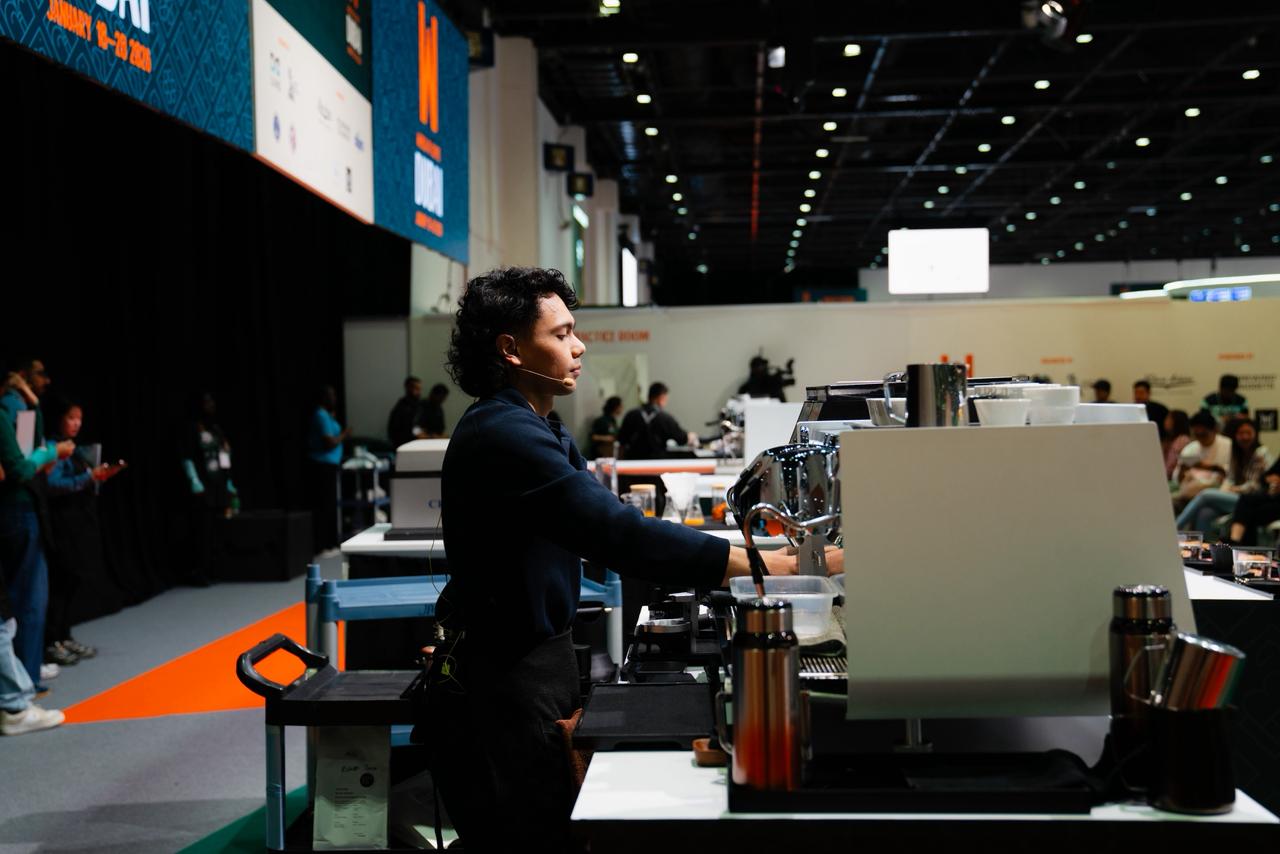
In a competition defined by precision, creativity, and relentless discipline, Frederick Adam Rubin emerged at the top of the UAE National Barista Championship 2026, earning the title of Best Barista in the United Arab Emirates during World of Coffee Dubai. Representing Benchmark Coffee, Rubin’s win reflects not only technical mastery but also a deeply considered philosophy around balance, control, and preparation—one shaped by countless hours of practice and a clear vision on stage.

From his approach to “momentum” in competition routines to deliberate coffee selection from Panama and Colombia and an analytical method for controlling milk texture and concentration, Rubin’s journey offers a rare look into the mindset of a champion at the highest level of specialty coffee. In this interview, he speaks candidly about mixed emotions, team effort, the creative principles behind signature beverages, and the practical realities of training while working full-time.

Read on to explore Frederick Adam Rubin’s thoughts, techniques, and philosophy behind his championship-winning performance.

  • How did you feel when you were crowned Best Barista in the UAE?

I couldn’t process it properly at first. It was a mix of emotions—overwhelming, honestly—but also a very proud moment. It was a big personal achievement and just as much a team achievement.

  • What was the central idea or philosophy behind your competition routine?

I believe everything is about balance. I tried to visualize that through the idea of “momentum”—everything being in motion. Every process requires control in order to achieve balance.

  • What do you think played the biggest role in your performance on stage?

It mainly comes down to the hours of practice we put in. I strongly believe that what we do in practice is exactly what shows up on stage.

  • Can you tell us about the coffees you selected for the competition?

For the espresso course, I chose a Panama Finca Los Cenizos Geisha Natural. I selected it for its terroir-driven characteristics—it has a very honest Geisha profile, with lots of floral and citrus notes that made me fall in love with it.

For the milk-based beverages, I used a coffee from Aroma Nativo in Colombia. A friend of mine, Luis, brought us a beautiful Ají variety that works extremely well with milk.

  • What is your core principle when creating a signature beverage?

We have a core principle when creating signature beverages: either we transform the espresso experience, or we elevate and intensify it. In my routine, I decided to intensify the coffee’s profile.

  • You spoke about controlling “momentum” in milk. Can you explain that approach?

My concept for controlling momentum in milk was to create a clear reference point. I did this by measuring the Brix level of the milk, using it as a guide to understand how much milk concentration is needed for different coffee intensities.

I believe that coffees with higher fermentation work better with more concentrated milk, while coffees with lower fermentation honestly work very well with lighter or regular milk.

  • How did you manage training alongside your daily work?

I work daily and continue practicing consistently. Time management is obviously very important, but I’m grateful that the company provided both the time and the space needed for practice.

Ahmed Alhabsi Reveals the Secrets of Specialty Coffee in Oman

Coffee’s Roots Are Arabic… and I Don’t Mind Modern History Blogs

Dubai – Ali Alzakary

Coffee is more than just a drink for Ahmed Alhabsi; it’s a cultural journey that connects Oman’s heritage with the global coffee scene. As the founder of Historia Roastery and a certified coffee assessor, Alhabsi has built a career bridging tradition and innovation. From founding the Omani Coffee Championships to judging national and international competitions in Aeropress, Barista, Latte Art, and Roasting, his work emphasizes coffee as knowledge before it is a commodity. In this engaging interview, Ahmed Alhabsi shares his journey, philosophy on judging, and the secrets behind combining expertise with passion, inviting readers to explore his world of coffee.

  • Who is Ahmed Alhabsi, and how did your journey with coffee begin?

I am Ahmed bin Amer bin Said Alhabsi, owner of Historia Roastery and a certified coffee assessor. I founded the Omani Coffee Championships and have served as a judge in Arab and international competitions in Aeropress, Barista, Latte Art, and Roasting. My interest extends to Omani coffee heritage, and I aim to elevate coffee as knowledge before it is merely a drink. My journey began with cultural curiosity: how did coffee move from social gatherings to become a global industry? That understanding led me to initiatives, assessment, and judging as tools to organize knowledge and maintain quality in coffee culture.

  • What are the key standards for evaluating coffee quality?

Evaluation is an integrated process starting from origin, environment, and processing, through roasting, and culminating in balance in the cup. Flavor is important, but it is not everything; good coffee honestly expresses its source, without exaggeration or masking flaws. This is the standard I apply in all my assessments, whether at the roastery or while judging competitions.

  • Does the Gulf palate tend toward fruity coffee?

Traditional tastes remain present, but they are part of a broader spectrum of flavors, reflecting greater consumer awareness. The problem only arises when this diversity is framed as a conflict between old and new, whereas it is truly a natural extension of earlier practices.

  • How important is the “Certified Assessor” credential for a roastery owner?

The certification moves the roastery owner from individual effort to a standardized approach, allowing precise decisions in purchasing and roasting, which reduces quality fluctuations and builds consumer trust. Experience alone is not enough; methodology is what ensures consistency over the long term.

  • What do judging panels look for?

Awareness is more important than skill. A person who knows their coffee and can clearly explain their choices delivers a complete experience. Technique is important, but without understanding, it becomes mere mechanical repetition without knowledge value.

  • Has your practical experience, certifications, and participation in coffee competitions helped you as a judge?

Absolutely. It gave me a deeper understanding of the competitor’s experience under pressure, making judging more balanced and focused on the full experience rather than just the result. This experience allows me to appreciate the small details that make the difference between ordinary and exceptional performance.

  • What are the most common mistakes among young coffee makers?

Relying on enthusiasm without solid knowledge. Enthusiasm is a positive factor, but it needs to be supported by continuous learning and precise practice, or decisions become unstable.

  • How do you balance quality and economic viability at Historia?

Quality must be clear and understandable to the customer, without complexity or elitism. When consumers understand what they are getting, supporting the project becomes natural and sustainable. This is the secret to balancing quality with economic feasibility.

  • What is your message through the media?

Coffee is a space for learning and dialogue, not a measure of superiority or a means of showing off. The goal is to raise consumer awareness and empower them to make independent and informed decisions.

  • How can local roasteries enhance Oman and the Gulf’s global presence?

By building authentic knowledge content that connects the product to local identity and culture, presented with confidence and honesty. The world values the true quality of the product more than marketing or appearance alone.

  • What is the golden rule for coffee lovers at home?

Focus on the quality of the beans and understand their characteristics before worrying about tools. This simple knowledge makes a big difference in the daily cup.

  • How do you see the future of specialty coffee in the region by 2030?

I expect a more mature and aware phase, with projects continuing that treat coffee as a knowledge endeavor before a business, and the disappearance of projects that rely on appearance rather than substance.

An Exclusive Interview with UAE Roaster of the Year 2026, Nizam Pasha Lolowang

Dubai – Ali Alzakary

When the announcement echoed across the venue and his name was called as UAE Roaster of the Year 2026, Nizam Pasha Lolowang’s first response was not celebration—but gratitude. Rooted in faith, discipline, and an unwavering respect for coffee’s true character, his journey to this national title reflects a deeper philosophy that goes far beyond competition scores and trophies.

In this exclusive interview, Nizam speaks candidly about the emotions of winning, the long process behind the achievement, the responsibility that comes with recognition, and his vision for the future of specialty coffee roasting in the UAE.

  • How did it feel the moment you were announced as UAE Roaster of the Year 2026?

Alhamdulillah was the first thing that came to my mind. Not just happiness, but deep gratitude. I know this didn’t happen by my ability alone, but by Allah’s permission and help.

  • Can you take us through your journey to this achievement? Were there any particular challenges along the way?

The journey was long and full of process. There were many failures, many lessons, and many moments of doubt. The biggest challenges were consistency and belief—maintaining quality in every condition and staying open to learning from anyone.

  • What does winning this title mean to you personally and professionally?

Personally, it’s a reminder to stay grateful and not feel bigger than I am. Professionally, it’s a responsibility—an amanah—to continue maintaining quality and creating wider benefit.

  • When it comes to roast development and flavor profiling, what was your approach for the competition?

The approach was simple: understand the origin’s character and don’t over-intervene. I focused on clarity, balance, and sweetness, rather than chasing over-promising flavors.

  • How do you ensure consistency and quality across every batch you roast?

Through data, regular cupping, discipline, and most importantly, truly understanding the machine.

  • Did you try any specific techniques or innovations that you feel gave you an edge?

No “magic” techniques. It was more about understanding airflow, heat application, knowing when to hold back, and knowing the right timing.

  • How important was your team or support network in preparing for this championship?

Very important. There are no big results without a team. I’m truly grateful to be surrounded by people who support each other.

  • Did working with colleagues or mentors influence the way you approached the competition?

Yes, very much. Their feedback helped me stay objective and not get trapped in ego. That was invaluable.

  • How do you see the future of specialty coffee roasting here in the UAE?

InshaAllah, it will continue to improve. More roasters will take quality and values seriously, not just chase trends.

  • Are there any trends or innovations in roasting that excite you most right now?

I’m interested in more precise, sustainable approaches that stay honest to the coffee’s true character.

  • How do competitions like this help raise professional standards in the region?

Competitions push people to level up. People become more serious about quality, process, and detail—and that impacts the whole industry.

  • What advice would you give to aspiring roasters who dream of competing?

Enjoy the process. Even if it’s heavy, baby steps are okay. Just know your purpose. Fix your intentions, strengthen your fundamentals, and never stop learning. InshaAllah, the results will follow.

Jhomar Morales’ Journey to the UAE Latte Art Championship 2026

Dubai – Ali Alzakary

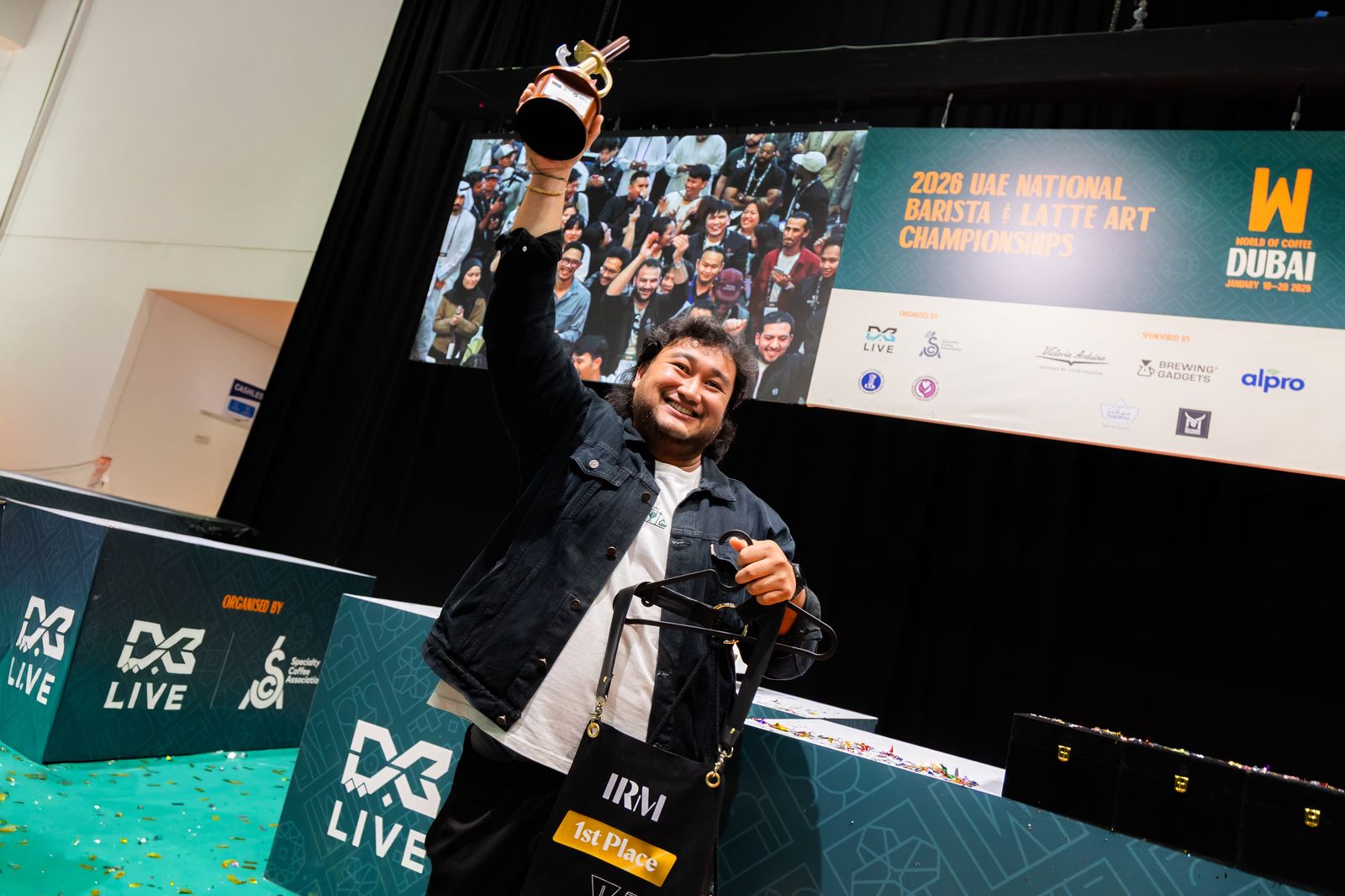
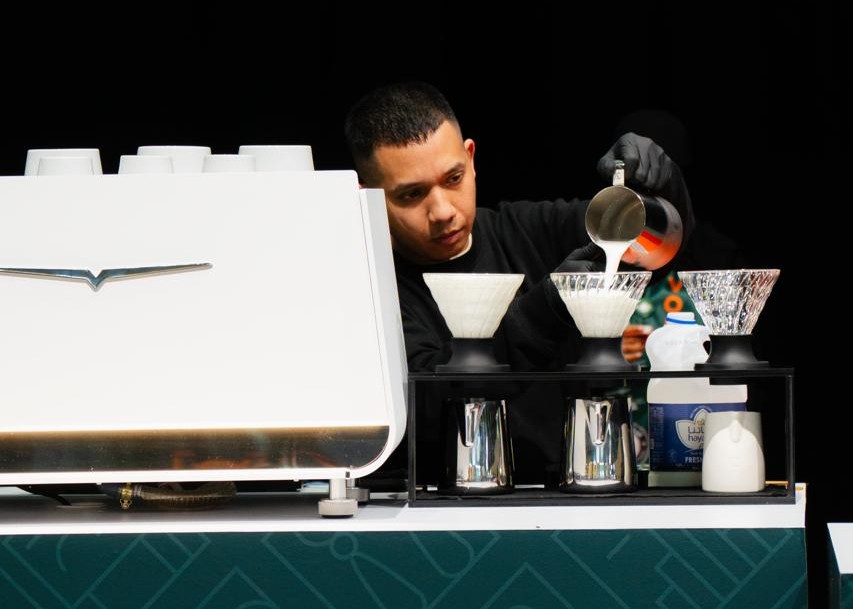
The UAE National Latte Art Championship 2026, held during the fifth edition of World of Coffee Dubai at the Dubai World Trade Centre, brought together some of the country’s most talented baristas in a showcase of creativity, precision, and technical excellence. Among them, Jhomar Morales of Benchmark Coffee claimed first place, earning the national title in one of the event’s most anticipated competitions.

In this interview, Morales reflects on the emotional moment of his win, the discipline behind his preparation, the role of teamwork, and his vision for the future of latte art and specialty coffee in the UAE.

  • How did you feel at the moment you were announced as the UAE National Latte Art Champion 2026?

In that moment, everything felt unreal. I thought about all the early mornings, the repetitive practice, the mistakes, and the sleepless nights spent thinking about how to improve each design. I felt proud—not just of winning, but of the journey I went through for this competition.

My team was always there, supporting me and helping me polish every design I prepared. Representing the UAE as the National Latte Art Champion 2026 is truly an honor. More than anything, it reminded me that hard work and belief really do show up when it matters most.

  • What does this win mean to you personally and professionally?

Personally, this win is a deep validation of the journey—of discipline and believing in myself, even during moments of doubt. It reminds me that consistency in practice pays off, and it fuels my confidence to keep pushing my limits.

Professionally, it’s a major milestone in my coffee career. It represents growth as a barista, an artist, and a competitor, and it opens the door to represent the UAE on a bigger stage. More than a title, it’s a responsibility—to inspire others in the coffee community, to keep learning, and to share knowledge.

  • What do you think was the key factor behind your success in this competition?

I believe the key factor was consistency under pressure. I trusted my preparation and the practice I did with my team, and I didn’t try to do anything different on stage. I focused on clean fundamentals, calm execution, and staying present in each pour.

Mentally, I stayed grounded by reminding myself why I started competing in the first place—to enjoy the process and express myself through latte art. That balance between solid technical preparation and a clear, calm mindset made the biggest difference.

  • How will this title impact your journey with Benchmark Coffee?

This title deepens my commitment to Benchmark Coffee. It reflects the environment, support, and high standards the team has built, and I’m proud to carry the Benchmark name with me.

Moving forward, it pushes me to give back more—by sharing competition insights and helping raise the bar in training. I see this win not just as a personal milestone, but as an opportunity to grow alongside Benchmark.

  • How do you see the future of latte art and specialty coffee in the UAE?

I see the future of latte art and specialty coffee in the UAE as incredibly exciting and dynamic. The scene here is still young compared to some established coffee cultures, which means there’s huge room for creativity, innovation, and growth.

More baristas are developing signature styles, pushing technical boundaries, and blending local influences into their work. With more competitions, workshops, and collaborations, I believe we’ll see a stronger community that supports continuous learning and excellence. The UAE has real potential to become a vibrant specialty coffee hub in the region.

  • What’s next for you after this win—are you aiming for international competitions?

What’s next for me is preparing properly for the world stage. My focus is on building a solid training structure—refining consistency under pressure, tightening my workflow, and practicing in competition-style conditions again and again.

I’m aiming to develop a style that truly represents who I am as a latte artist and where I come from. When I step onto the international stage, I want to feel prepared, grounded, and proud to represent the UAE at the highest level.

  • What advice would you give to aspiring baristas who want to compete?

Never underestimate the power of teamwork, discipline, and routine.

No one succeeds alone in competition. Build a strong team around you—coaches, peers, and mentors who will challenge you, support you, and give you honest feedback. Having people who believe in your vision makes a huge difference, especially during long preparation periods.

Discipline is what keeps you moving forward when motivation fades. Show up even on days when practice feels repetitive or frustrating. Small, consistent improvements build real confidence on stage.

Finally, create a routine and trust it. From daily practice to pre-competition habits, routines remove doubt and help calm your mind under pressure. When you step on stage, rely on your preparation and let your hands do what they’ve been trained to do.

Gizat Worku Kebede: Ethiopia’s Harvest This Year is Excellent, and We Aim to Expand in the Middle East and Asia

Dubai – Ali Alzakary and Tewodros Balcha

Ethiopia, the birthplace of coffee, is once again taking the spotlight at the World of Coffee exhibition in Dubai, showcasing its unparalleled quality and diversity. With more than 10,000 coffee varieties, including rare wild coffee grown naturally in Ethiopia’s highlands, the country continues to set global standards for premium coffee.

From Dubai, Gizat Worku Kebede, Executive Director of the Ethiopian Coffee Association and Ethiopia’s chapter head in the African Coffee Association, highlighted the excellent current harvest and rising production levels, along with rapid expansion into markets in the Middle East and Far East. He emphasized Ethiopia’s mission to connect smallholder farmers with international buyers, support sustainability, and strengthen African coffee’s presence globally.

  • What is your mission and objective in participating in the World of Coffee Dubai exhibition?

Our mission in Dubai is to promote Ethiopian coffee to international markets, focusing on the Middle East and Far East. We aim to reach coffee lovers and buyers because Ethiopian coffee is naturally organic and unique. Ethiopia is the only country producing wild coffee—coffee that grows naturally in forests, cared for by no one, and harvested once a year by local farmers. With more than 10,000 coffee varieties, Ethiopia truly is the birthplace of coffee.

  • Could you share the latest updates on the current harvest season in Ethiopia?

We are here to showcase this year’s harvest, which is excellent. Total production has increased by around 1.2 million tons, and the new crop is already being exported. It’s a very positive year for Ethiopian coffee farmers and exporters.

  • Which markets are you currently targeting?

“The Middle East is a fast-growing market, particularly Saudi Arabia, which is Ethiopia’s largest coffee buyer. Dubai is also a key trade hub. We are expanding into emerging Far Eastern markets, including China, South Korea, and Japan, which have shown increasing interest in high-quality Ethiopian coffee.”

  • Can you tell us about the African Coffee Association and its role in supporting and developing the coffee sector?

“The African Coffee Association is the largest coffee association in Africa, representing East and Southern African countries. We also work with the African Coffee Union and the Coffee Development Agency to support West African nations. Together, we are preparing the largest coffee exhibition in Africa, scheduled in Addis Ababa from February 4–6, to promote African coffee both as a product and as a growing consumer market. Countries such as Morocco, Algeria, Egypt, South Africa, and Nigeria are consuming more coffee, and we encourage local consumption alongside exports.”

  • How do you support the coffee industry in Ethiopia?

Three years ago, we launched African Coffee Week in collaboration with the African Coffee Association, the African Coffee Union, and the Coffee Development Agency, dedicating a week entirely to celebrating coffee in Africa. At the same time, we run the Harvest Season competition for coffee quality, where winning farmers gain recognition and promotion for their coffee. These initiatives provide significant opportunities for African farmers, support sustainability, and help small-scale producers connect with coffee consumers worldwide.


View this post on Instagram


A post shared by Coffee Qahwa (@qahwaworld)

  • Key Quotes:

“Ethiopia is the only country producing wild coffee—coffee that grows naturally in forests and is harvested once a year by local farmers.”

“This year’s harvest is excellent, with total production increasing by around 1.2 million tons.”

“African Coffee Week and the Harvest Season competition give farmers recognition, support sustainability, and connect them with global coffee consumers.”

  • Conclusion:

Ethiopia continues to solidify its position as a global coffee powerhouse. Through initiatives such as African Coffee Week, the Harvest Season competition, and participation in international exhibitions like World of Coffee Dubai, Ethiopia not only showcases its premium coffee but also empowers smallholder farmers, promotes sustainability, and strengthens Africa’s presence in global markets. With its rich heritage, unique coffee varieties, and ongoing international expansion, Ethiopia remains at the forefront of innovation and excellence in the coffee world.


Jane Espante: Cezve Is a Trust and Winning a Responsibility

Dubai – Ali Al zakary

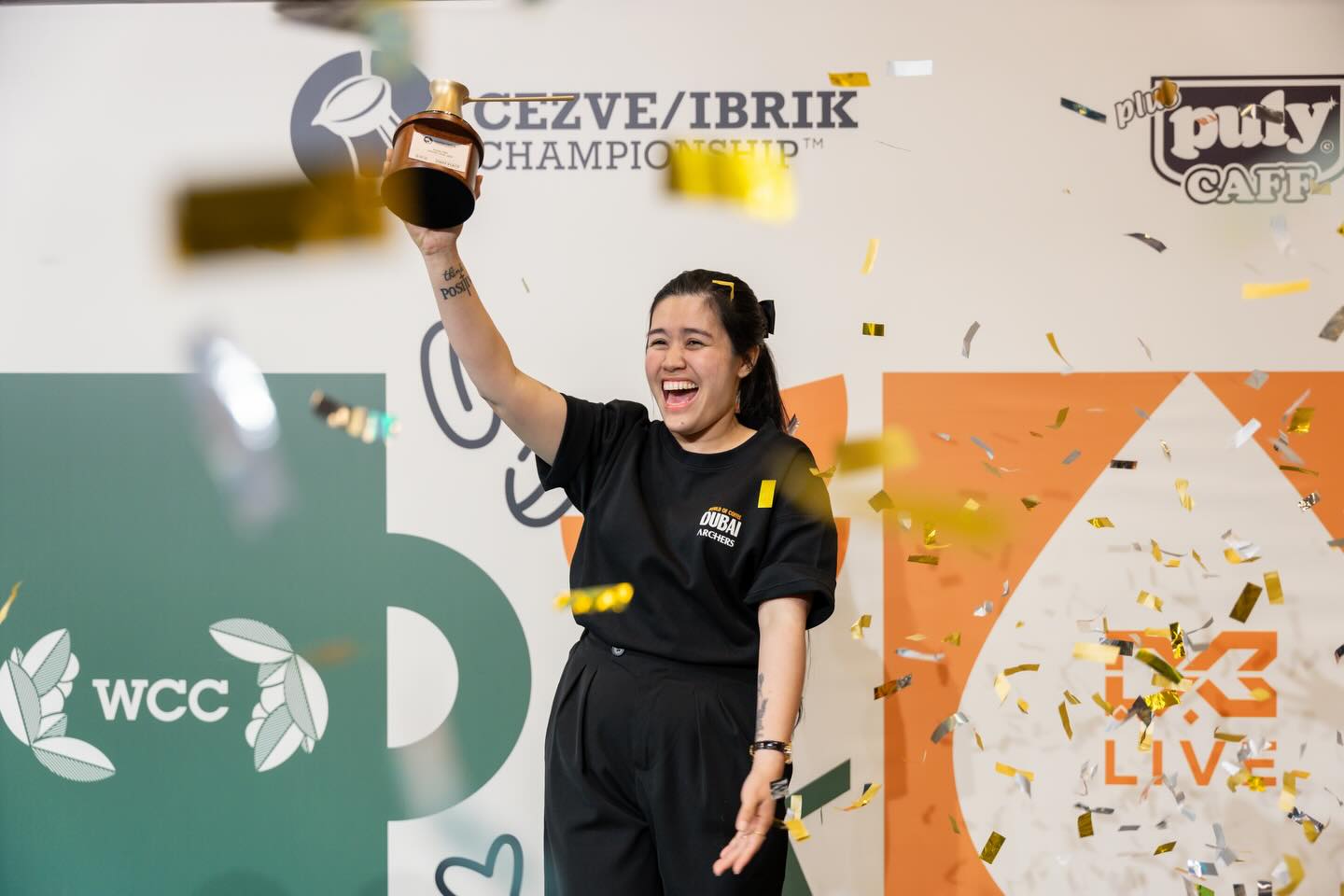
Fresh from being crowned 2026 World Cezve/Ibrik Champion, Jane Espante spoke to Qahwa World in her first interview following the historic win. The championship, the first World Coffee Championship of the year, was held as part of World of Coffee Dubai.

Representing the United Arab Emirates, Espante claimed the title after a strong final-round performance in a competition hosted in Dubai for the first time in its history. Her victory reaffirmed that one of coffee’s oldest brewing methods remains fully capable of expressing the present and shaping the future—when approached with respect and authenticity.

Asked what winning the 2026 World Cezve/Ibrik Championship meant to her, Espante’s answer was clear and direct.
“It means trust,” she said, explaining that cezve is the oldest coffee brewing method and one that shaped the coffee culture we know today—from brewing techniques to the idea of gathering around a shared cup. “Holding this title is a great honor because it allows me to respect this heritage and continue carrying it forward. This win confirmed to me that patience and sincere intention still matter in today’s coffee world.”

Reflecting on the moment her name was announced, Espante described the feeling as surreal. “I thought about the hours of training, the mistakes, and everyone who believed in me and supported me. My team gave their time, effort, and dedication to reach this moment. This win is for them.”

Jane Espante to Qahwa World: Cezve Is a Trust and Winning a Responsibility

On balancing tradition with her own creative identity, Espante said she viewed tradition as a foundation rather than a limitation. “I stayed true to the core techniques, then expressed my story through flavor, pacing, and presentation—without compromising the soul of cezve coffee.”

Speaking about representing the UAE and winning on home ground in Dubai, she said the moment was deeply meaningful. “The UAE gave me the space to grow, learn, and dream bigger. Winning here feels like giving something back to the place that shaped my professional journey.”

As for the impact of the title on her future, Espante emphasized the responsibility that comes with it. “I want to teach more, share knowledge, and show that traditional coffee is not just part of the past—it has a real place in the future of the industry.”

She concluded with a message to future competitors: “Respect the craft, but don’t erase yourself. Learn the rules deeply, then let your story guide how you present them. Honesty is always felt in the cup.”

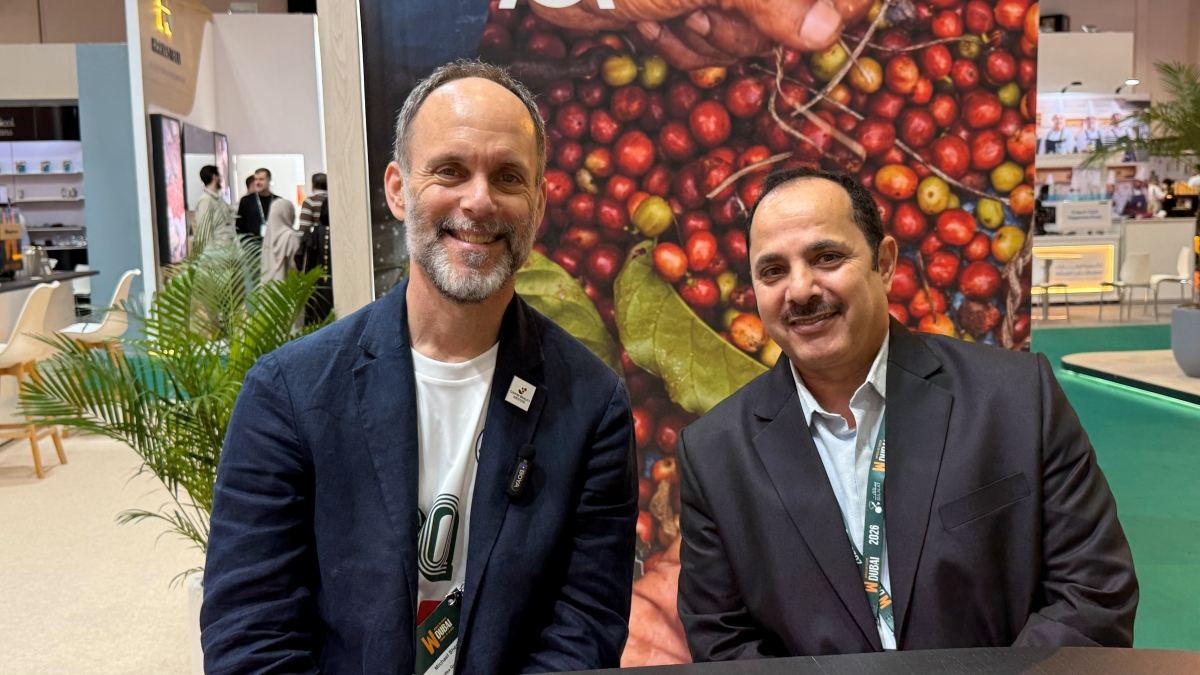
Michael Sheridan in an Exclusive Interview with Qahwa World

CQI CEO Speaks Candidly About Coffee, Community, and 2026 Goals

Dubai – Ali Alzakary

2025 was a year of transformation and challenge for the Coffee Quality Institute (CQI). From transitioning its flagship program, the Q, to SCA, to navigating the sudden loss of USAID funding—the largest donor in CQI’s history—CEO Michael Sheridan reflects on how these shifts shaped the organization’s mission and approach. Amid historic market volatility, Sheridan discusses the importance of recommitting to CQI’s goal of supporting coffee producers, promoting measurable impact for farmers—especially women—and evolving coffee education to meet the demands of a rapidly changing industry. He also shares insights from global conversations on the biggest concerns in the coffee community, including risk reduction, community engagement, and strategies to create meaningful impact.

Join us in this valuable interview to hear directly from Michael Sheridan about CQI’s vision for 2026 and beyond.

  • What did 2025 teach you, and how is that changing your approach for 2026?

Last year was a really consequential one for CQI. We transitioned our biggest program, the Q, to SCA against the backdrop of the shuttering of USAID, which was the biggest source of public funding for development work in coffee communities and the largest donor in CQI’s history. At the same time, the coffee market was experiencing the largest and most sustained rally anyone has ever seen, which caused lots of disruption in the market and undid years of work on trading relationships based on mutual commitment to quality.

We understood in 2025 that we were entering a new phase in CQI’s work, and that effectively advancing our mission in this new context would require thinking carefully about CQI’s role in the coffee ecosystem and listening carefully to members of the community. We are still in this process of reflection and consultation, but two things are clear.

First, we are recommitting to our mission: we are focused on market-based support for coffee producers. Second, we know we can’t get there alone. We know that the changes we introduced last year were disruptive in our community, and we know we need to build that community to be successful. We are working to create new approaches for collaboration with individuals and coffee companies, and expect to be in a position to talk more about those in the coming weeks.

  • How do you know you’re truly making a difference for farmers, especially women?

One of the things I love about this work is how measurable it can be. I got my start in coffee working for an international development agency where many of my peers were working on programs that measured change over very long time horizons. Their work in peacebuilding, gender equity, and social change was as hard to measure as it was important. In contrast, I was always grateful that my work to support coffee producers had annual metrics tied to the coffee cycle: production, average price, gross coffee income, etc.

While some of the structural changes we want to be part of at CQI related to equitable value distribution may require long-term commitment, every year brings an opportunity to check in on how well we are advancing our mission to improve the quality of coffee and the lives of the people who produce it. The mechanism that links those two elements of our mission (one, the improvement of quality, and the other, improvement of lives) is the market. Buyers can convert improvements in quality into improvements in seller livelihoods every coffee cycle by increasing rewards (e.g., premium prices, increased purchase volume, etc.), reducing risks (e.g., longer-term commitments, multi-grade purchases, etc.), or both. This is part of the reason we will be more intentional about engagment with industry parters in 2026 and beyond — to try to ensure quality improvements translate into improvements in the lived realities of the people who grow our coffee.

Women play a prominent role in our thinking about impact. As you may know, CQI has a long history of promoting women’s participation in the benefits generated by coffee. Long before my time, visionary leaders at CQI created the Partnership for Gender Equity, which evolved into an independent organization called Equal Origins that is doing groundbreaking work in this space. We have consistently supported women’s participation over the years, and investment in educational activities by and for women has been a throughline in our project investments over the past two years. I expect more of the same in 2026, which has been designated the International Year of the Woman Farmer by the UN’s Food and Agriculture Organization.

  • How must coffee education evolve to stay relevant right now?

I think coffee education has never been more necessary. There has been so much disruption in recent years — accelerated climate change, historic market volatility, rapidly changing market preferences, sharp changes in policy, and public disinvestment in coffee communities have all created the need for recalibrating traditional approaches, and in many cases that means education to meet new challenges and seize new opportunities.

At CQI, we are thinking hard about the what, how, and who of our educational work. I think the “what” is the relevance question you ask: what are the specific topics that will position producers and other supply stream actors to respond effectively to changes in the operating environment? In a global marketplace in which processing is as important as it has been in our lifetimes, we see lots of opportunities to deliver new and improved content through our Post-Harvest Processing Program that is timely and relevant. We are also eyeing new tools and content relevant to coffee quality beyond post-harvest processing that aim to address pain points that have surfaced in our conversations over the past few months.

Additionally, we are exploring the “how,” seeking ways to deliver educational content that are efficient and accessible. In some cases, that will likely mean creating new content for digital delivery or digitalizing existing analog content. In other cases, it will mean delivering in-person education in shorter-form classes that are not designed to lead to certification but directly to field-level impact through the adoption of good practices.

Finally, we are acutely aware that we need to evolve the “who” and certify more instructors who live and work in the places where coffee is grown. Localising coffee education will be a key to unlocking access.

  • From your global talks, what’s the no. 1 concern you’re hearing from the community?

We have spent the last few months conferring with leaders from the coffee sector to inform the next phase of CQI’s work — producers, processors, traders, roasters, educators, and others. The one thing that seemed to be on everyone’s mind was risk — market risk, price risk, production risk, risk related to quality, etc. As we think about how we can best support coffee producers and the entire coffee community in 2026 and beyond, we find ourselves thinking a lot about how we can partner with actors all along the supply stream to help reduce risk, most especially the smallholder producers who are generally least equipped to bear it. In a market where there is a lot of attention paid to way quality improvement can increase the rewards and premiums growers earn, there may be less appreciation for a focus on risk reduction, but it can help us deliver on our mission to improve the lives of producers every bit as much as increased rewards.

  • At the end of 2026 — what does a “win” look like for CQI?
Well, I think part of the answer is related to your question above about measuring our impact — the outcomes of the work will speak for themselves. But I think an important part of the answer is also related to the process — how effective we are at building community engagement in our work will go a long way to defining how successful we can be. I know that if we can manage to enlist the best of the CQI community in this effort with us, we are going to create real opportunity for producers while addressing pain points in the industry. That sounds like success to me!


View this post on Instagram


A post shared by Coffee Qahwa (@qahwaworld)