Dubai Remains the Only Destination for “World of Coffee” in the Middle East

Dubai – Ali Alzakary

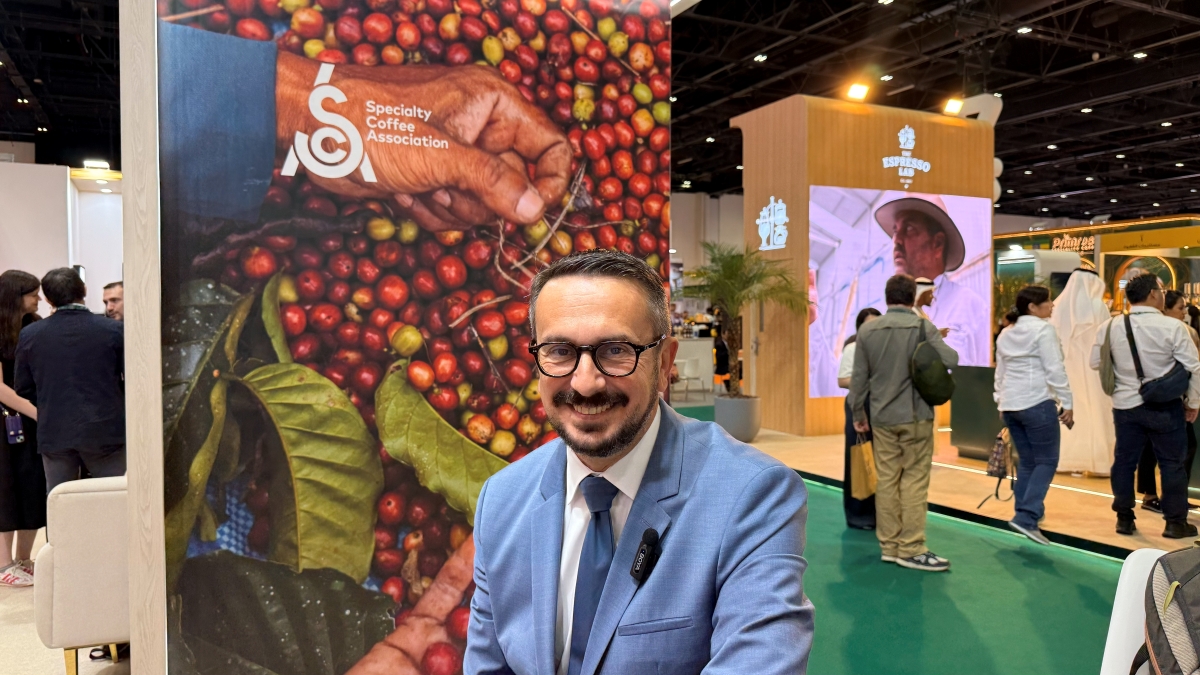
In an exclusive conversation with Qahwa World, Mr. Yannis Apostolopoulos, CEO of the Specialty Coffee Association, shared key insights on the growth and future of the “World of Coffee” exhibition, confirming that Dubai remains the sole destination for the show in the foreseeable future. He also spoke candidly about the transition following the end of the partnership with the Coffee Quality Institute (CQI) and the strong rollout of the Coffee Value Assessment (CVA) system.

Apostolopoulos highlighted that this year marks the fifth edition of the “World of Coffee,” which has grown tremendously. The number of exhibitors and attendees has surpassed any previous year, already 30% higher than before. He emphasized that the exhibition offers a unique opportunity for professionals to meet and conduct business. While it is fundamentally a trade show, it also fosters a sense of community and highlights the booming specialty coffee industry in the region.

“What we bring is a unique opportunity for people to come together and trade. At its core, this is a trade show, but it’s also about fostering a sense of community and showcasing how the specialty coffee industry is booming in the region. The Middle East has become one of the fastest-growing regions for specialty coffee in recent years, and you can feel that energy here at the show,” said Apostolopoulos.

Regarding the possibility of hosting editions in other Middle Eastern countries, Apostolopoulos confirmed that Dubai remains the ideal hub. He noted their ongoing partnership with DXB Live in Dubai, which will be renewed this year. Dubai provides excellent access from across the Middle East and the world, making it ideal for exhibitors and attendees. He added that while other countries may be considered in the future, this is not part of any immediate plans.

“At the moment, we have a partnership with DXB Live for Dubai, which we’re renewing this year. Dubai is a great hub with excellent access from across the Middle East and the world, making it ideal for exhibitors and attendees. Maybe in the future we’ll consider other countries, but not in the immediate plans,” said Apostolopoulos.

Apostolopoulos also discussed developments in the Coffee Value Assessment (CVA) system. He mentioned the transitional phase following the partnership with CQI and confirmed that many participants have already moved to the new program. There are now over 10,000 new Q graders and significantly more instructors, particularly in producing countries such as Colombia, Brazil, Indonesia, and Vietnam, which he recently visited. He stressed that the system allows producers to communicate clearly and objectively about the intrinsic and extrinsic attributes of coffee, while the trade sector explores how best to use the CVA framework to capture the quality of every coffee in everyday transactions.

“There has been some transition after our partnership with CQI, but many people have already moved to the new program. We now have over 10,000 new Q graders and significantly more instructors, especially in producing countries. We’re making targeted efforts to increase instructors in places like Colombia, Brazil, Indonesia, and Vietnam, where I was recently. Producers are seeing the value because you can communicate more clearly and objectively the attributes that are intrinsic and extrinsic to the coffee. The trade is figuring out the next steps of how to use the CVA paradigm and the new evaluation for quality and capturing the picture of every coffee in everyday trade,” said Apostolopoulos.

He affirmed that CVA benefits the industry as a whole, helping capture and share detailed data on coffee with producers and buyers, enabling clearer communication and maximizing coffee value.

“Absolutely. That’s the idea. CVA is part of the evolution of our understanding of coffee. We now care about more aspects of coffee than ever before, and CVA helps capture that information and share it with producers and buyers. This allows everyone to communicate more clearly and find ways to maximize the value of coffees,” said Apostolopoulos.


Federico Ortile: Dubai as Global Lab for Coffee Future 2026

Dubai – Ali Alzakary

In the heart of a region whose ambitions know no bounds, the Experience Centre by Simonelli Group in Dubai stands as a beacon, merging manufacturing heritage with the vitality of innovation. It is no longer just about the perfect cup of coffee; it is about building a comprehensive community of experts and creators.

In this exclusive and profound interview, we meet Mr. Federico Ortile, Managing Director of the Group in the Middle East. He takes us on a journey through the stunning figures of 2025—where the Centre welcomed more than 1,000 participants and hosted over a hundred events. But the real excitement lies in what is to come: he reveals his vision for 2026, how intelligent systems and automation will reshape the face of coffee shops in the region, and how the Group plans to empower local and GCC talents to lead the global scene.

We invite you to follow the pulse of the upcoming coffee industry through this inspiring interview:

  • Experience Centre: Activity and Impact

1. What was the primary strategic objective behind establishing the Experience Centre in Dubai, and what role does it play in the Group’s regional strategy?

The main objective of the Experience Centre in Dubai is to serve the coffee community—everyone who wants to learn more about coffee and have a space to grow. To express their knowledge, their expertise; a safe space where they can conduct and promote their products. The second objective is to allow them to experience the latest machines we have. The Experience Centre serves as a bridge between us, the manufacturer, to distributors, sellers, and consumers.

2. Can you provide us with the total number of activities (training, tasting, awareness events) hosted by the Centre from its opening through the end of 2025?

In 2025, we hosted more than 100 events, averaging one activity every three to four days. In addition, we organized roadshows and community events across the Middle East.

3. Could you break down the nature of these activities? For instance, the ratio of certified training courses versus open workshops and cupping sessions?

Activities included:

  • SCA trainings and certifications with local ASTs and international guest trainers.

  • Technical trainings and workshops.

  • Masterclasses and cupping sessions.

  • Competitions hosted by major coffee chains.

  • We even organized the first technician competition in the Middle East and launched the YAME Coffee Scholarship for young talents. The Experience Lab also serves as a hub for professional practice, including SCA competition preparation and judge calibration sessions. Certified training courses represent more than 50% of all activities.

4. What was the total number of participants that the Centre welcomed during 2025?

The Centre welcomed more than 1,000 participants in 2025, a number that continues to surprise us.

5. Which key countries did these participants originate from? Is there a particular focus on certain regional markets (GCC, Levant, North Africa)?

Participants reflect Dubai’s multicultural nature. We welcomed professionals from across the Middle East, Asia (including India, Pakistan, the Philippines, Indonesia, and others), as well as North and East Africa. The audience is highly diverse, with no single market dominating.

6. How many specialized training courses (such as SCA certifications or advanced machine usage training) were conducted? What were the most in-demand programs?

We conducted a wide range of specialized programs, including:

  • SCA Barista, Brewing, and Sensory certifications (up to Professional level).

  • Coffee Value Assessment (CVA).

  • SCA Judge Workshops and Certifications.

  • Judges calibration sessions for competitions.

  • SCA Technician Certifications. SCA CVA certifications and technical training programs were among the most in-demand.

7. How regularly are professional cupping sessions held, and how does the Centre utilize these sessions to enhance regional coffee quality?

We host farmers’ visits and professional cupping sessions every month. While we do not see cupping alone as a direct way to enhance coffee quality, we view it as part of a broader educational approach. Our focus goes beyond cupping to understanding how the same coffee performs as espresso and filter. At the same time, we conduct activities for baristas and technicians to ensure that high-quality coffee is consistently delivered through well-maintained machines and optimized workflows. We also support café owners by consulting on proper equipment selection and setup. This holistic approach, combining education, technical expertise, and operational excellence, is what ultimately ensures quality in every cup.

  • Forward Look: Plans and Vision for 2026

1. What are the key plans for the Experience Centre in 2026? Are you intending to launch new educational programs or forge partnerships with specialized coffee institutions?

By 2026, we will continue our journey of evolving the Experience Lab into a REGIONAL knowledge and cultural hub for coffee. Our key priorities include:

  • Expanding educational programs, with a stronger focus on local Emiratis and GCC citizens, as well as café business performance, moving beyond barista skills into leadership, entrepreneurship, and operational excellence.

  • Strengthening collaboration with specialized coffee institutions, including SCA-aligned academies across the Middle East and culinary schools, to ensure coffee education extends into the culinary world and across the wider region. Our vision is for the Experience Lab to increasingly serve as a place where technology, culture, and business strategy intersect, supporting both emerging talent and established operators.

2. What are the most significant new technologies or product launches anticipated for 2026 that you expect will be transformative for the Middle Eastern coffee industry?

Looking ahead to 2026, we expect innovation to focus less on “new machines” and more on intelligent systems that elevate consistency, efficiency, and sustainability. Key areas of impact include:

  • Advanced data-driven coffee machines, offering real-time feedback on extraction, usage, and workflow efficiency.

  • Greater integration of automation that supports, rather than replaces, craftsmanship, allowing baristas to focus on hospitality, creativity, and storytelling. For the Middle East specifically, these technologies will be transformative in supporting high-volume, premium café concepts without compromising quality or brand identity. We have already introduced innovations that improve cup quality, speed up workflows, and contribute to the economic sustainability of every coffee shop. For example:

  • EasyCream technology enables the automatic frothing of milk and plant-based beverages at the correct temperature and with the right foam consistency. It delivers automation, beverage consistency, and reduces staff training requirements and milk waste during preparation.

  • C-Automation on Nuova Aurelia brings automation into a traditional espresso machine. The machine and grinder share the same coffee recipe through the portafilter, ensuring the correct grind and extraction while avoiding waste. The C-Automation algorithm analyzes every extraction and, when necessary, automatically adjusts the grinder without interrupting operations.

  • Market Analysis, Challenges, and 2026 Outlook

1. How do you assess the evolution of the coffee sector in the Middle East throughout 2025? What were the most noticeable trends (e.g., specialty coffee growth, digitalization of cafés, or sustainability awareness)?

Throughout 2025, the Middle East coffee market continued its rapid expansion. Notable trends included:

  • Sustained growth of specialty coffee, particularly among locally owned brands with strong identities.

  • Increased digitalization of cafés, from POS integration to customer engagement platforms. I still believe that the region needs more time to engage in a truly serious conversation around sustainability, one that shifts from marketing claims to concrete operational decisions. Consumers are becoming more educated, and expectations around quality and overall experience are clearly rising.

2. Relative to the global market, where does the Middle East currently stand in terms of growth, quality standards, and innovation?

The Middle East today stands as one of the fastest-growing and most ambitious coffee markets globally, particularly in terms of investment, café design, and brand building. Historically, the region adopted international concepts; we are now entering a new phase in which the Middle East is becoming a test for premium, experience-led concepts capable of setting trends in the Region. The next step will be transforming local innovation into ideas that can scale and grow beyond the Region.

3. What were the primary challenges faced by the coffee sector in the region over the past year (e.g., logistics, economic pressures, or supply chain issues)?

In the last year, the sector faced several challenges:

  • Supply chain volatility, including fluctuating green coffee prices and longer lead times.

  • Rising operational costs, from logistics to skilled labor.

  • Pressure on cafés to balance premium positioning with profitability. These challenges are forcing operators to rethink efficiency, workflows, and menu complexity.

4. How has the Simonelli Group, and the industry at large, been able to overcome or adapt to these challenges? Simonelli Group has responded by focusing on:

  • Reliability, durability, efficiency, and increased automation in machine design, reducing total cost of ownership.

  • Supporting partners through training, technical support, and workflow consulting, not just equipment sales.

  • Encouraging a mindset shift within the industry from short-term expansion to long-term operational excellence. At an industry level, stronger collaboration between manufacturers, roasters, and café owners is essential to jointly address these pressures.

5. Based on the current trajectory, what is your personal vision for the shape of the Middle East coffee sector in 2026? Do you foresee a year of significant expansion, or a year focused on quality consolidation?

My vision for 2026 is a year of quality consolidation combined with selective, intelligent expansion. We will see:

  • Fewer but stronger café concepts, built on clear identity and operational discipline.

  • The need for greater investment in people—training, leadership, and service culture.

  • Technology being used strategically to protect quality at scale. Ultimately, the Middle East will continue to define coffee not just as a beverage, but as a social, cultural, and experiential platform, and those who align craftsmanship with innovation will lead the next chapter.

6. What is the most crucial piece of advice you would offer to aspiring entrepreneurs and new investors entering the regional coffee sector today?

Focus on differentiation, whether through quality, storytelling, sustainability, or community. The big players will dominate scale, but entrepreneurs can win by creating meaning and experience. It’s crucial to stand out by offering something unique and of high value. Additionally, it’s important to define a specific target audience rather than trying to appeal to everyone. …and Never stop learning and be curious; the coffee industry is vast and constantly changing. By creating a collaborative and educational environment, such as our Nuova Simonelli and Victoria Arduino Experience Lab, we aim to elevate the coffee scene in the Middle East through organizing educational and community activities and providing platforms for knowledge sharing, skill enhancement such as:

  • Instagram page @victoriaarduinoMiddleEast. This page will serve as a central hub for all announcements, including workshops, seminars, competitions, and other exciting activities happening at the Lab.

  • Coffee Knowledge Hub, our global education platform that collaborates with trainers worldwide. This platform delivers courses online and through training centers worldwide, including our Victoria Arduino & Nuova Simonelli Experience Lab.

Elif Aydın Çınar: Crafting Spatial Narratives Through the Lens of Coffee

Dubai – Ali Alzakary

In the realms of architecture and interior design, some merely define walls, while others weave stories into the very fabric of a space. Our guest today, the visionary Elif Aydın Çınar, belongs to that rare echelon of designers who transform silent voids into living poetry. As the Head of Design at BAFER, Elif brings 19 years of expertise—honed across diverse cultures and scales—to create a masterful balance between “operational logic” and “spatial emotion.”

In this exclusive interview, we delve behind the scenes of the Julith Coffee Shop design. We explore how Elif channeled her deep-rooted Turkish coffee heritage into a contemporary masterpiece, and how she translates a brand’s soul into textures, light, and angles that offer more than just a seat—they offer sanctuary. Join us as we discover how design becomes the ultimate bridge between the coffee bean and the human spirit.

Qahwa World: As the Head of Design at BAFER and a leader in architecture and interior design, could you please introduce yourself and share how your 19-year journey has prepared you to design spaces that resonate with a discerning audience, like our Qahwa World readers?

Elif Aydın Çınar: I am Elif Aydın Çınar, Head of Design at BAFER. My journey in architecture and interior design spans nearly 19 years, covering residential, commercial, hospitality, and experience-driven spaces. Over time, my role has evolved from designing individual interiors to shaping holistic spatial narratives. Working across diverse scales and cultures—particularly in Dubai—has refined my ability to design spaces that balance clarity, emotion, and operational logic. Today, I focus on creating environments that resonate with discerning audiences who value intention, craftsmanship, and spatial intelligence.

Qahwa World: As the Head of Design at BAFER, what is the core design vision you strive to achieve across all of BAFER’s projects, from hotels to commercial spaces?

Elif Aydın Çınar: At BAFER, our core design vision is to create spaces that communicate quietly yet powerfully. We prioritize spatial clarity, material honesty, and long-term relevance over short-lived trends. Whether designing hotels, cafés, or commercial environments, our goal is to build spaces that support human behavior, elevate daily rituals, and remain emotionally engaging over time.

Qahwa World: BAFER handles a wide range of services, including architectural design, interior design, and 3D visualization. What specific design areas do you consider your personal greatest strength?

Elif Aydın Çınar: My strongest contribution lies in concept development and spatial storytelling. I focus on translating brand identity, user psychology, and operational needs into a coherent spatial language. The early conceptual phase—where strategy, atmosphere, and experience are defined—is where I bring the greatest value. Digital visualization and narrative-driven presentations are tools I use to communicate intention clearly, not to over-stylize the design.

Qahwa World: As a Turkish woman, you come from a culture with a deep, historic coffee tradition. How did your personal and cultural understanding of the Turkish coffee ritual influence your design decisions for the Julith Coffee Shop?

Elif Aydın Çınar: Coming from a culture where coffee is deeply embedded in daily life and social interaction, I grew up perceiving coffee as a moment of awareness rather than a rushed habit. This sensitivity strongly influenced my approach to the Julith Coffee Shop. As a specialty coffee roastery, Julith required a design that respects precision, craftsmanship, and process. The space was shaped to highlight coffee as a journey—from sourcing and roasting to brewing and tasting—allowing customers to engage with the craft while experiencing a sense of calm and focus.

Qahwa World: Is there a specific design element, material, or approach in the Julith Coffee Shop that pays homage to the Turkish coffee house tradition, or any special memory you associate with coffee?

Elif Aydın Çınar: The sense of place at Julith is created through material restraint, visual transparency, and spatial sequencing. Instead of referencing historical coffee houses, the design draws from contemporary specialty coffee environments where authenticity and process visibility are key. My personal connection to coffee has always been tied to observing the craft—the rhythm of preparation, the sound of equipment, and the patience required. These impressions informed a design language where light, texture, and proportion frame the coffee-making process without distraction, allowing the product to lead the experience.

Qahwa World: How did the design approach for the Julith Coffee Shop differ from designing a residential apartment or a large-scale hospitality project?

Elif Aydın Çınar: Designing Julith differed significantly from both residential projects and large-scale hospitality developments. Residential design is intimate and inward-focused, while large hospitality projects rely heavily on standardized systems. Julith required a micro-hospitality approach, where every spatial decision directly impacts customer perception. The challenge was to merge operational efficiency with emotional warmth in a compact yet highly expressive environment.

Qahwa World: What is the single most important design element you chose in the Julith Coffee Shop to communicate its unique brand narrative or enhance the customer’s feeling about the coffee?

Elif Aydın Çınar: The most important design element in Julith is the material palette and its disciplined restraint. Rather than relying on overt branding, the space communicates quality through texture, proportion, and light. This approach reinforces Julith’s identity as a roastery that values craft, focus, and authenticity—where the design supports the coffee rather than competing with it.

Qahwa World: What specific design choice did you make in the layout of the Julith Coffee Shop to ensure the customer’s journey was seamless and memorable?

Elif Aydın Çınar: A crucial layout decision was establishing a clear visual and spatial axis from entry to the bar, guiding customers intuitively through the space. Circulation was designed to minimize congestion while offering varied seating experiences—short visits, longer stays, and quieter zones. This ensures a seamless journey that feels natural, efficient, and memorable.

Qahwa World: As a woman leading the design department, what has been the most significant challenge you have overcome, and what inspires you to push creative boundaries?

Elif Aydın Çınar: Leading the design department within a company that also executes construction requires constant balance between creativity and practicality. As a woman in this dual-discipline environment, the greatest challenge has been protecting design integrity while navigating technical and budgetary constraints. What drives me forward is the belief that well-considered design has a tangible impact on behavior, well-being, and culture. In parallel, as a cat rescuer, compassion and care are values I consciously carry into my work. Supporting stray animals and creating awareness around this responsibility is part of who I am and how I lead design decisions. While Julith is not a themed space, the calm, respectful atmosphere reflects a broader mindset: spaces should be gentle, inclusive, and mindful—not only toward people, but toward all living beings we share the city with.

Qahwa World: Based on your nearly two decades of experience, what is the most essential piece of advice you would offer to young architects and interior designers today?

Elif Aydın Çınar: My most important advice is to prioritize depth over speed. Build strong fundamentals, observe how people truly use space, and understand construction as much as design. Visual recognition comes later. A meaningful design voice develops through patience, discipline, and empathy—qualities that ultimately define long-lasting and impactful work.

Coffee as Destination: Positioning Ethiopia’s Origins for Experiential Tourism

An interview with Musa Kedir CEO, Tourism Attraction and Product Development, Ministry of Tourism – Ethiopia

By Qahwa World × Buna Kurs

Coffee has long been Ethiopia’s most visible global export, yet its potential as a tourism experience remains largely untapped. While several coffee-producing countries have successfully transformed farms, processing sites, cupping rituals, and café culture into immersive visitor journeys, origin countries themselves have often underutilized this experiential dimension.

Ethiopia, the birthplace of Coffea arabica, holds a rare advantage. Coffee here is not only an agricultural product but a living culture—woven into daily life, social rituals, landscapes, and identity. Translating this depth into structured and sustainable tourism experiences represents one of the most promising frontiers for destination development.

During the Coffee Origins Trip (COT 2) organized by Kerchanshe and Oromia Tourism Commission, a diverse group of international buyers, roasters, social media storytellers, tourism executives, and sector leaders came together to experience Ethiopia’s coffee landscape firsthand. As part of this journey, Qahwa World and Buna Kurs sat down with CEO, Tourism Attraction and Product Development, Ministry of Tourism – Ethiopia, to discuss how coffee tourism fits into the national tourism agenda and what it will take to elevate coffee into a globally competitive tourism product.

Qahwa × Buna: How does the Ministry currently position coffee within the wider national tourism development agenda, and what opportunities do you see for formalizing coffee as a structured tourism product?

Musa Kedir: The Ministry has already recognized coffee as a key element within Ethiopia’s national tourism brand, “Land of Origins,” which positions the country as the birthplace of Coffea arabica. This recognition is also reflected in the revised National Tourism Development Policy, which explicitly emphasizes the development of niche tourism products.

Within this framework, coffee is viewed both as a core special-interest tourism product and as a supplementary experience that can enhance broader travel itineraries. This policy foundation creates strong opportunities to formalize coffee tourism through structured products, packages, and destination planning.

Qahwa × Buna: From a destination development perspective, what gives Ethiopia a unique competitive edge in coffee tourism compared to other producing countries?

Musa Kedir: Ethiopia’s advantage lies not only in having given the world Arabica coffee, but in the deep cultural attachment to coffee itself. Coffee in Ethiopia is an integral part of daily life.

The way Ethiopians prepare, serve, and share coffee reflects a living culture rather than a staged experience. This cultural intimacy is something no other coffee-producing country can replicate, and it provides Ethiopia with a uniquely authentic foundation for coffee tourism.

Qahwa × Buna: Which parts of the coffee value chain do you believe hold the strongest potential for experience design—farm level, processing, culture, heritage, gastronomy, trade, or a combination?

Musa Kedir: A combination of farm-level experiences, processing, culture, heritage, and gastronomy offers the strongest potential overall. Together, these elements allow visitors to understand coffee as a complete journey rather than a single moment.

Among these, a well-organized and customized combination of farm-level and processing experiences holds particularly strong appeal due to its uniqueness and attraction. These stages allow visitors to witness the transformation of coffee firsthand, which is central to meaningful tourism experiences.

Qahwa × Buna: Is the Ministry working on national guidelines, standards, or policy frameworks to support the growth of coffee tourism experiences such as farm tours, cupping sessions, processing visits, or heritage trails?

Musa Kedir: Based on the recognition of coffee as a potential niche tourism product, the Ministry has previously organized coffee-focused familiarization trips for media outlets and diplomatic communities.

More recently, recognizing the need for deeper strategizing, the Ministry has begun working with partners such as the Japan International Cooperation Agency (JICA) to identify Ethiopia’s major coffee-producing corridors. This work will support the development of well-organized coffee tour packages at the national level.

The Ministry also plans to organize a national coffee tourism awareness seminar that will bring together key stakeholders across the value chain, and it is working on comprehensive tourism destination and product development guidelines aligned with the revised tourism policy.

Qahwa × Buna: How does the Ministry view the role of major private-sector actors like Kerchanshe in shaping the future landscape of coffee tourism?

Musa Kedir: The Ministry has a strong belief in the vital role played by private-sector actors affiliated with the coffee industry.

This is why the Ministry collaborated in the recent coffee tour organized jointly by the Oromia Tourism Commission and Kerchanshe. Moving forward, the Ministry has also scheduled consecutive meetings with key coffee sector actors to facilitate brainstorming and discussions focused specifically on developing coffee for tourism.

Qahwa × Buna: What kinds of cross-sector collaborations are needed between tourism, agriculture, culture, trade, and regional governments to build a unified coffee tourism platform?

Musa Kedir: Because the coffee value chain is cross-sectoral by nature, it is critical for all stakeholders to reach a similar level of understanding in order to succeed in positioning coffee for tourism.

The Ministry is taking a catalyst role by creating platforms that bring stakeholders together and laying the foundation for strong collaborations that can endure into the future.

Qahwa × Buna: From what you have observed on this field visit so far, what strengths, innovations, or community stories stand out as directly translatable into tourism offerings?

Musa Kedir: The visit revealed that there are exemplary companies, such as Kerchanshe, that are aligned with national priorities to make coffee one of Ethiopia’s competitive tourism advantages.

These actors are taking the lead in showcasing meaningful experiences within their capacity. However, the visit also highlighted the need to further strengthen local community participation, improve readiness among local authorities, and better organize resources at the local level.

A shared understanding and collaboration among stakeholders is essential for the sustainable creation of a strong national coffee tourism culture.

Qahwa × Buna: How can coffee tourism support local community development, regional economies, and job creation across key coffee districts like Guji, Sidama, Yirgacheffe, Jimma, and Kaffa?

Musa Kedir: At present, coffee primarily serves its traditional commercial role. However, recent familiarization trips—particularly those led by Visit Oromia—have shown how tourism can be developed alongside existing coffee systems.

These initiatives can help create permanent economic advantages through tourism, including job creation and income diversification in key coffee-producing regions.

Qahwa × Buna: What narratives or storylines should Ethiopia prioritize when positioning itself internationally as the birthplace of coffee and a unique tourism destination?

Musa Kedir: It is critical to firmly engage in leveraging Ethiopia’s identity as the birthplace of coffee. Beyond that, creativity is required to transform everyday coffee culture into compelling tourism experiences.

Coffee culture in Ethiopia is deeply rooted and diverse across the country. Interpreting this heritage in a way that resonates with international travelers—both as a special-interest experience and as a complementary offering—is essential.

Narratives should focus on Ethiopia’s local coffee cultures and on organizing their interpretation into well-designed tourism products.

Qahwa × Buna: How does the Ministry plan to ensure that coffee tourism grows in an environmentally and culturally sustainable way?

Musa Kedir: The Ministry has only recently begun to systematically structure programs that position coffee for tourism. To ensure sustainability, it is preparing a comprehensive National Tourism Destination Development and Management Plan.

This plan will guide tourism development across the entire value chain, including coffee-related experiences, and will ensure environmental and cultural sustainability.

Qahwa × Buna: What level of investment or infrastructure development is required to elevate selected coffee-producing areas into international-standard tourism sites?

Musa Kedir: Most coffee corridors are already accessible, but as coffee tourism becomes more competitive, it will require basic infrastructure such as improved access within farms, accommodation facilities, and structured community collaboration.

While coffee farms are well organized for production, additional effort is needed to convert them into tourism experiences. This can best be achieved through collaboration among farm owners, government institutions, and tourism organizations.

Qahwa × Buna: What immediate next steps does the Ministry envision after this trip, and how might these insights shape upcoming MOT programs or national campaigns related to coffee?

Musa Kedir: The Ministry has already begun planning around coffee tourism and similar niche potentials. To ensure long-term and sustainable use, it will focus on redesigning model tourism packages that integrate coffee as both a special-interest experience and a complementary tourism offering.

These insights will directly inform upcoming Ministry programs and national tourism campaigns.

South Roastery: Where Dreams Are Roasted on the Fire of Passion

Sharjah – Ali Alzakary

On Maliha Road in Sharjah, where the spirit of authenticity meets the ambition of the future, and golden sands dance with the dreams of a new era, stands “South Roastery” as a true icon in the world of specialty coffee. My destination was not just a routine journalistic visit; it was an exploratory journey, a profound meeting with a pioneer of the scene, Mr. Ahmed Al Zaabi, Co-Founder and CEO. He welcomed us with his calm smile and a hot cup of coffee, opening a wide window into a world of passion and craftsmanship—a world born from a unique blend of Emirati and Saudi management in 2022.

  • The Coffee Majlis… Where Time Melts in the Cup

In a reception lounge meticulously designed with the architect’s care and the artist’s taste, not to be a loud, bustling cafe, but an intimate space for work and intellectual exchange—where the “rush” of daily life fades behind the warmth of the cup and the aroma of freshly roasted coffee—we held an extended coffee session.

The session was like a private “coffee majlis,” similar to those held in the desert under a sky dotted with stars, characterized by friendliness, transparency, and spontaneous laughter. During it, we discussed the pulse of a sector with a global market value exceeding $130 billion annually, from the remote crop alleys in the highlands of Yemen, Ethiopia, and Colombia, to the clamor of global markets and the New York and London exchanges. Mr. Ahmed presented his deep insights and analyses with utmost humility, insisting it was “just his point of view,” while in reality, it was an accurate and documented testimony from one of the most prominent players in an industry that produces over 10 million tons of coffee annually.

  • Cultural Maturity… From Passing Obsession to Sustainable Awareness

Al Zaabi, stirring his cup with a light, circular motion as tasting experts do, believes that the UAE coffee culture scene has moved past the naive beginnings and blind experimentation, reaching very advanced levels of development and maturity. This evolution, witnessed in the country over the last decade, has created an intensely competitive market with over 4,800 coffee shops in Dubai alone. However, at its core, it holds “immense opportunities for growth, prosperity, and income generation.”

The key, as he asserts with the confident tone of someone experienced, is not in imitating others or blindly replicating successful models, but in the “real and precise understanding of the market’s nature, its requirements, and the influencing factors, from demographic composition to changing consumer behavior.”

Al Zaabi believes that true gain is measured by an entirely different standard: “The important thing is not the amount of direct material gain at the end of the financial quarter, but the extent of people’s trust in the product you offer. This trust is the real capital, the hidden treasure that builds solid loyalty and true long-term success in a market that does not forgive the weak.”

Speaking about the specialty coffee wave that swept the region like a refreshing hurricane since the middle of the last decade, Al Zaabi confirms with the confidence of a seasoned analyst that this wave has “fully matured and reached a stage of stability.” It is no longer a mere “craze” following trends and social media fads; instead, it has transformed into a robust and deeply rooted culture, filtering out the fashion followers who came out of curiosity and retaining “those with genuine taste and an appetite for quality.”

This tangible maturation has clearly reflected on the quality of the coffee shops themselves and the elevation of their standards. Today, the Emirati consumer, especially the educated and well-traveled new generation, is “precisely capable of discerning the quality and true value of the coffee,” shifting from a passive recipient who drinks what is offered, to a conscious and interactive partner in evaluating the product and holding the service provider accountable.

  • Dubai and the Bidding Wars… Strategic, Not Just Marketing, Weight

The conversation smoothly shifted to the media buzz recently created by Dubai in the global coffee market—a buzz that ignited media outlets and social platforms. Starting with paying the most expensive recorded price for a kilogram of the rare ‘Geisha’ crop from Panama, where a Dubai cafe paid $604,080 for 20 kilograms of washed Geisha coffee from Hacienda La Esmeralda farm in Boquete, Panama, and extending to the fierce competition to offer the world’s most expensive cup of coffee, where the price jumped from $680 to $1,000 within two months.

Al Zaabi, smiling knowingly about the city’s nature, believes that for Dubai, as a global destination for excellence and pioneering in various fields from real estate to hospitality, coffee could not be far from this relentless pursuit of record numbers and entry into the Guinness World Records. He does not see any fundamental harm in this competition, despite its occasional oddity, to the spirit or values of the industry. Instead, he views it as a clever kind of marketing and promotional momentum that adds wide fame to the region as a whole, places the UAE on the global coffee lovers’ map, and gives a specific demographic—the one passionate about distinction, exceptional experiences, and financially capable of undertaking these adventures—its private space for enjoyment and showing off.

  • Resilience of Will… Global Balance Challenges and 2026 Preparedness

The discussion did not overlook the immense challenges that have cast heavy shadows over the global scene in the past two years. Specifically, we talked about the confusion of customs tariffs and trade wars between major powers, the severity of climate change that poses an existential threat to major crop regions in Brazil, Vietnam, and Colombia (Brazil’s production dropped by 25% in the 2024 season due to drought), and the consecutive disruptions in supply chains and maritime shipping that raised costs by 30-50% on some routes.

Al Zaabi sees that the UAE, thanks to its unique geographical location as a gateway between East and West, its globally recognized logistical leadership, and the wisdom of its prudent leadership, has managed to build a solid, fortified wall around the local sector: “Thanks to its wise and proactive policy, the availability of a wide and diverse strategic stock of various varieties and crops, and an extended network of commercial relationships, the UAE has managed to overcome the global market storms with superb skill and exceptional flexibility.”

While clearly acknowledging that the overall direct impact of the challenges was relatively limited on the local market and did not leave deep scars on final consumer prices or product availability, as an expert observer who misses no subtle market details, he cautiously pointed out that the accumulated pressures related to climate change and increased shipping and transport costs “may reveal themselves more clearly in the coming year, 2026.”

This is an explicit, implicit signal of the necessity to prepare and anticipate tangible fluctuations in the prices and quality of some major crops, reflecting a deep and well-considered foresight into global market volatility and its delayed effects.

As for the “Matcha” green wave that recently swept cafes and sparked widespread debate about the future of coffee, Al Zaabi, with the confidence of coffee’s deep roots, affirmed an unshakeable truth: “Coffee will remain coffee.” He noted that the Matcha wave, despite its momentary appeal, has already begun to recede and fade, leaving coffee, forever, as the undisputed queen of hot beverages.

  • South… From Roastery to Integrated Factory with Promising Asian Horizons

“South” is not just an ordinary roastery selling bags of coffee; it is, as Al Zaabi proudly describes it, “an integrated factory” focused on high quality and excellence in all stages of production, from selecting green beans to roasting, packaging, and distribution.

After achieving remarkable and astonishing success in the local market in just two and a half years, the company is now seriously considering possibilities for geographical expansion outside the UAE borders. Surprisingly, Al Zaabi clearly indicated that the expansion is not primarily targeting neighboring Gulf markets, as some might expect, but is ambitiously heading toward the rising and promising Asian markets and some emerging East African markets, where Al Zaabi sees huge growth potential and a consumer segment hungry for quality.

With cautious and measured optimism, he predicted a tangible presence for “South” in these new markets perhaps by the end of 2026 or early 2027 at the latest, with a clear plan for gradual opening and building trusted local partnerships.

  • South Academy… Investing in Minds Before Machines

As a true investment in the distant future, Al Zaabi stressed with clear enthusiasm the importance of continuous training and development, considering it “an urgent need, not a luxury or an optional extra that can be postponed,” especially in a fast-paced world witnessing continuous evolution in modern technologies, barista skills, and the arts of preparation and addition (over 20 new methods for preparing specialty coffee have emerged in the last five years).

It is for this precise reason, and from this deep belief in knowledge, that the “South Training Academy” was established—an ambitious initiative whose main goal is not direct profit, but a higher, more comprehensive objective: “to enhance genuine craftsmanship, spread the culture and respect of the profession, and strengthen knowledge and experience exchange among sector workers.”

The academy, which opened in early 2025, has so far welcomed over 300 trainees of various nationalities and backgrounds, offering internationally accredited specialized programs ranging from foundational courses for beginners to advanced workshops for roasting and tasting professionals.

  1. Major Events… Civilizational Convergence and Elevating Collective Taste

In conclusion of this rich and engaging interview, which extended for over three continuous hours, Al Zaabi affirmed with a voice full of passion the pivotal and decisive role of the large-scale coffee events generously hosted annually by the UAE, foremost among them the “World of Coffee Dubai” exhibition, and the national and regional coffee championships that witness fierce competitions among the brightest names.

He bets, with all the confidence of a strategic planner, on these periodic gatherings as “one of the most important factors for the prosperity of the local market and the development of the industry in general on both the regional and global levels.”

These vital platforms far surpass being mere commercial marketplaces or exhibitions for buying and selling; they become radiant focal points for knowledge, culture, and creativity. They are genuine arenas for the convergence of different civilizations and the exchange of rich experiences among the elite of the global coffee industry, a forum where public taste is enriched and elevated, and young baristas’ skills are honed to confidently keep pace with the latest trends and the finest arts of preparation and creativity in the ever-renewing world of coffee.

These events, with their majestic international presence and high-caliber professional organization, confirm to the whole world that the UAE is not just a commercial transit point or a consumer market, but a living intellectual laboratory and a center of civilizational radiation that continuously raises the status of coffee, transforming it from a mere commodity into a deep-seated cultural value and a human heritage worthy of celebration and appreciation.

“Smile, Roasted in Sharjah” – this simple, yet profound, slogan accurately summarizes the spirit of the roastery that innovates daily and bravely redefines the coffee experience through a magical blend of high craftsmanship, intense passion, and insistence on excellence, confirming to everyone that coffee in the UAE is not just a passing morning drink, but a mature, deeply rooted culture and a promising future whose chapters are being written today on the land of Sharjah, one coffee at a time, one cup at a time.

Click here to visit South Roastry site
 

From Inspired Barista to Roasting Pioneer: Sherryl Napit Unveils the Passion Behind ‘The Ore Coffee’

Dubai – Ali Alzakary

In the world of coffee, where science meets passion and quality is forged in every stage of preparation, certain stories deserve to be told. These are the tales of individuals who believed in their ability to transform a profound love for the coffee bean into a leading professional career, contributing to the forging of a new identity for the specialty coffee culture.

Sherryl Napit is not just a businesswoman; she is a pillar in the art of tasting and roasting, a Sensory Judge, and a winner of the UAE National Cup Tasters Championship. Her journey is proof that persistence coupled with knowledge can illuminate the path from behind the espresso machine to founding a leading establishment in roasting and training. It is a story that begins with a friend’s advice and culminates in the establishment of “The Ore Coffee Roastery” as a beacon of quality and education in the region.

This invitation is not merely a read; it is a deep dive into the mindset of a pioneer who balances the demanding aspects of business management with the honing of precise sensory skills. We invite you to delve with us into Sherryl Napit’s inspiring journey and discover the secrets behind her continuous excellence in the coffee industry.

  • 1. Can you walk us through your journey from starting as a barista to founding The Ore Coffee Roastery? What inspired you to take that leap?

My coffee journey began unexpectedly through my friend Karthik, whose passion and achievements in coffee competitions inspired me. That spark led me to specialty coffee, where my first employer, Mr. Abdo, opened the door. I became completely investedstudying after work, earning certifications, and practicing constantly. Within three months, I became head barista and began roasting on a small Gene Café just to learn more.

About two years later, meeting coffee farmers from my hometown gave my work deeper meaning and pushed me toward professional roastinga path that wasn’t easy. There were moments I wanted to quit, but Sitaram, my husband and business partner’s support, kept me going. With his encouragement, I completed SCA trainings, Q Grader preparation, and countless hours of practice.

Eventually, all the effort paid off when I won the National Cup Tasters Championship. That win gave me the confidence to start The Ore Coffee Roasterynot just as a business, but as a continuation of my purpose. I’m grateful to everyone who supported memy husband, family, friends, and the coffee community. My journey belongs to them as much as it does to me.

  • 2. You’ve consistently performed at the UAE National Cup Tasters Championship over the years. What drives your passion for sensory excellence?

I’ve been fortunate to perform well at the UAE National Cup Tasters Championship, and I think it comes from simply loving what I do. I try my best in everything, especially when it comes to assessing and tasting coffee. I’m always learning, always curious, and I genuinely enjoy the process of evaluating coffee quality.

What motivates me most is the chance to support farmers in improving their coffee. If my skills can help even a little, that alone gives me purpose and keeps me committed to growing and improving.

  • 3. Looking back, what were the biggest challenges early in your career, and how did you overcome them?

Early in my career, my biggest challenge was setting realistic goals and expectations. I’m naturally optimistic, decisive, and willing to take risks, which sometimes meant I moved too fast or overloaded myself. Over time, I developed stronger self-awareness and discipline, and I invested in ongoing learning to refine my approach. Now, I still bring that ambition and bias for action, but I balance it with strategic planning and reflectionwhich has made me more effective.

  • 4. How has becoming a Q-Grader and Sensory Judge influenced the way you approach coffee and mentor others?

Becoming a Q-Grader and Sensory Judge has really strengthened both my confidence and my approach to coffee. It gave me a clearer structure for evaluating coffee, so now I make decisions based on calibrated standards rather than just preference.

It also changed how I mentor othersI focus more on helping people develop their own sensory skills and understanding why certain characteristics appear in coffee. Overall, it pushed me to keep learning, stay curious, and share what I know with more purpose.

Sherryl Napit

  • 5. How would you describe the current coffee market in Dubai and the GCC? Are there any notable trends or shifts you’re seeing?

The coffee market in Dubai and the GCC is highly competitive and rapidly growing, driven by diverse consumer segments and strong cultural influence. We’re seeing a shift from purely traditional coffee toward more experiential and innovative offerings. Flavored beverages, infused coffee, cold brews, and specialty blends are gaining momentum as consumers look for differentiation and personalization. Overall, the market is evolving quickly, trend-sensitive, and full of opportunity for brands that innovate and adapt to changing preferences.

  1. 6. Specialty coffee is growing globally. How do you see Dubai’s market evolving compared to other major cities?

Dubai’s specialty coffee market is evolving differently because of its diversity and openness. Our growth isn’t limited by one culture or traditionit reflects the city’s global influence and fast-moving development. As Dubai grows, the coffee scene grows with it, adapting quickly to innovation, lifestyle shifts, and new consumer expectations.

  • 7. What advice would you give to someone looking to start a coffee business in the UAE?

Focus on offering something unique and meaningful, and back it with a clear purpose and solid plan. The UAE coffee market is competitive, so knowing what sets you apart and having a well-thought-out strategy is key.

  • 8. The Ore Coffee has a training center offering SCA courses. What motivated you to start this side of the business?

We started the training center because we wanted to contribute to the growth of the coffee industry. By providing proper education and internationally recognized SCA courses, we’re helping people deepen their knowledge, improve their skills, and gain confidence in their craft.

When the industry is filled with well-trained and knowledgeable individuals, everything works more efficientlyfrom communication and teamwork to quality standards and innovation. This doesn’t just benefit businesses; it strengthens the community and supports a healthier, faster-growing coffee market overall.

  • 9. How do you balance running a roastery with managing a training center?

We balance running the roastery and managing the training center through structured planning and clear delegation. My partner Sita and I, along with our team, follow a defined workflow where each person has designated responsibilities. This ensures efficiency, accountability, and smooth day-to-day operations across both areas of the business.

  • 10. What are the key skills today’s baristas and coffee professionals need to succeed?

Today’s baristas and coffee professionals need more than technical skills. Success now requires strong managerial abilities, a commitment to personal growth, and a solid understanding of business fundamentalsincluding finance, marketing, and customer experience. These skills help them evolve from being skilled operators to well-rounded coffee professionals.

Sherryl Napit

  • 11. The SCA recently introduced the Coffee Value Assessment (CVA). How do you think this will impact coffee producers, roasters, and the UAE market specifically?

The introduction of the Coffee Value Assessment (CVA) will likely bring greater clarity and transparency across the coffee value chain. Instead of relying solely on a single global scoring system, CVA allows producers, buyers, and roasters to evaluate coffee through multiple dimensions, including sensory attributes, physical quality, and market-driven values.

For many marketsincluding the UAEthis means stakeholders can tailor coffee evaluation based on their specific consumer preferences, cultural taste profiles, and business objectives rather than being constrained by universal standards. As a result, the CVA opens the door for more diversity, innovation, and flexibility in how coffee is valued, sold, and positioned.

Ultimately, this shift creates more opportunity for producers to express their uniqueness, for roasters to curate offerings that reflect local demand, and for emerging markets like the UAE to define their own direction and identity within the specialty coffee sector.

  • 12. From your perspective, what are the most significant global trends shaping specialty coffee today, including sustainability and innovation?

Right now, specialty coffee is being shaped by a few big trends. Community plays a huge rolesocial media, podcasts, and online education have made it easier than ever for people to learn, share ideas, and connect. Sustainability is also front and center, with more focus on ethical sourcing, fair pay for farmers, and eco-friendly packaging. And finally, innovation is changing what coffee tastes like and how we brew it, from new fermentation methods to smarter brewing technology. Together, these trends are making specialty coffee more connected, more responsible, and more exciting than ever.

  • 13. What’s next for The Ore Coffee Roastery and your training programs?

We’re expanding our product offerings, enhancing our training programs, and becoming more engaged with our communityall with the goal of giving you the best coffee experience and support possible.

  • 14. If you could give one piece of advice to your younger self or to aspiring coffee professionals, what would it be?

Be strong. Believe in yourself and stay grounded.

Trust the process, even when it’s slow or unclear, and have faith that what’s meant for you will come in time.

Protect your integrity above all else, because skill can be taught, but character and discipline are chosen.

Keep showing up, stay humble, and let passion guide you more than perfection.

Neil Golez: From Al Ain to the National Stage — The Journey of the UAE AeroPress Champion 2025

Dubai – Ali Alzakary

Out of 250 of the UAE’s most skilled baristas, who competed passionately over three days, Neil Golez from Form Roastery in Al Ain emerged victorious, claiming the title of UAE AeroPress Champion 2025.

After three consecutive seasons — winning gold, then silver, then gold again — Neil’s story embodies perseverance, precision, and humility before every brew. His triumph reflects the growing spirit of the UAE’s coffee community, where dedication and creativity blend into a vibrant culture of excellence.

In his first interview after being crowned champion, Neil speaks with Qahwa World about his early beginnings, his philosophy in brewing, the secrets behind his winning recipe, and his preparation to represent the UAE on the world stage in Seoul.

Neil, congratulations on your victory! How did your journey in coffee begin, and what inspired you to become a barista?
Thank you! It all started during my college days when I first tasted an Ethiopian washed coffee. The flavors amazed me and completely changed how I viewed coffee. That moment ignited my passion to learn, grow, and eventually become a barista.

You’ve competed three times now, collecting gold, silver, and gold again. How have those experiences shaped you?
Each competition has taught me something new. Whether I won or not, I always walked away grateful. I see my mistakes, learn from them, and improve. For me, the learning itself is already a victory.

What does this new title mean to you personally and professionally as a barista representing Al Ain and the UAE?
It means so much — especially because of the incredible support from the Al Ain coffee community. This title represents our collective effort, our passion, and our belief in what coffee can be. It’s more than an individual win; it’s a shared success for everyone who has been part of this journey.

Can you describe the moment your name was announced as the winner?
It still feels surreal. The moment my name was called, I couldn’t believe it. The competition was intense yet full of joy, and I’m just truly grateful for the entire experience and everyone who made it possible.

You mentioned that the beans for the finals were quite tricky. What made them challenging, and how did you approach them?
The coffee itself was really nice but not easy to handle. I decided to use a lower PPM to balance and highlight its strong, vibrant flavors. It turned into a great learning opportunity that pushed me to refine my approach even further.

How did you fine-tune your recipe to bring out the best in those beans?
I worked on reducing acidity using potassium minerals, lowered my coffee dose slightly, and used water with a lower PPM. That balance created a clean, structured cup that really allowed the coffee to shine naturally.

What makes the AeroPress so special to you compared to other brewing methods?
The AeroPress stands out because of its flexibility. It allows endless experimentation — you can adjust every variable and discover new flavor possibilities every time. That’s what makes it both fun and deeply rewarding.

In your winning recipe, you emphasized simplicity. Do you believe simplicity is the key to great coffee?
Yes, simplicity helps achieve consistency and clarity in flavor. But I also think complexity can sometimes pay off when it’s intentional and balanced. For me, it’s about brewing with purpose — understanding what you want to express in each cup.

You credited your colleagues for helping you perfect your recipe. How important was that teamwork in your success?
It was crucial. I deal with acid reflux, so tasting large amounts of coffee can be difficult. My colleagues helped me by tasting, giving feedback, and brainstorming together. Their support made all the difference, and I’m really grateful for that.

Tell us about your experience at Form Roastery. How has it shaped your growth as a barista?
Working at Form Roastery has been incredible. Even though my main role is as a roaster, tasting coffees daily during quality control has helped me understand flavor deeply. It’s like continuous training — every day is a new lesson.

You’ll soon represent the UAE at the World AeroPress Championship in Seoul. How are you preparing for the global stage?
Right now, I’m focused on finishing all my paperwork and travel requirements. Once that’s settled, we’ll begin refining the recipe and preparation strategy for the world stage. Representing the UAE is a huge honor, and I want to make everyone proud.

What do you think makes the UAE’s coffee community unique on the international scene?
The UAE’s coffee community is beautifully diverse. It brings together people from all over the world — each with their own traditions, ideas, and methods. That mix creates an incredible energy where collaboration and creativity thrive.

What message would you like to share with baristas in the Emirates who dream of competing next year?
Stay curious and never stop learning. Every competition, whether you win or not, is an opportunity to grow. Be patient, practice consistently, and always enjoy the process. Passion is the best motivation you can have.

This year’s championship theme celebrated the UAE’s coffee culture. How do you connect traditional Arabic coffee with modern brewing styles like AeroPress?
I see a beautiful connection between them. Both are built on passion, respect, and storytelling. Whether it’s Arabic coffee or AeroPress, both honor the bean, the craft, and the people behind every cup.

Raha Shahsavar: From the First Crack of the Bean to the Peak of Roasting in the UAE

Dubai – Ali Al-Zakary

Between the tongues of flame and the warmth of glowing beans, the story of Raha Shahsavar was born — a young woman who redefined roasting as an art that balances science and intuition. Her journey began in Iran with a childlike fascination for aromas, heat, and wonder, but it was in the UAE that her talent found a home. There, she refined her passion through study and practice until she became the UAE National Coffee Roasting Champion 2025.

Her path is more than a tale of professional success — it is a saga of passion and perseverance, showing how a dream can ignite into a flame of creativity when guided by responsibility and love for the craft. Between Raha the artist, who paints with color and shadow, and Raha the roaster, who paints with aroma and flavor, stands a woman who turned the “first crack” into a symbol of transformation and creation.

In this inspiring conversation, Raha opens the pages of her journey — from her humble beginnings at the Coffee Museum to founding Crack Coffee Roastery, from her early experiments with fire and flavor to winning the highest title in the UAE roasting scene.

Join us as we discover the story of Raha Shahsavar — her passion, philosophy, and vision for the role of women in specialty coffee.

What inspired you to enter the world of coffee? Did your journey begin in Iran or in the UAE?

My journey with coffee started in Iran, where I first became fascinated by the sensory world behind it , the aromas, the science, and the emotions it evokes. But it truly flourished in the UAE, where I found the opportunity and freedom to turn that curiosity into a career.

What were the first steps you took in roasting? Did you face any technical or cultural challenges at the start?

In the beginning, I had very limited access to proper roasting equipment or mentors, so I learned by observing, experimenting, and failing a lot. I started with a small sample roaster in coffee Museum and slowly built my understanding of heat transfer, bean behavior, and sensory calibration. The biggest challenge wasn’t just technical ,it was cultural. As a woman entering a very male-dominated part of the coffee industry, I had to prove  my knowledge and precision. It took persistence, humility, and constant learning.

Raha Shahsavar: Redefining Coffee Roasting in the UAE

Who has been your biggest supporter throughout your professional journey?

I’ve been lucky to have supportive family and   partner who was always there for me and friends  in the coffee community , people who believed in my potential before I even did.

What’s the story behind founding Crack Coffee Roastery? And why did you choose that name?

Crack Coffee Roastery was born out of both passion and necessity. I wanted a space where I could roast freely, teach, experiment, and express the art of coffee without limitation. The name “Crack” comes from the first  crack in roasting,  it symbolizes both change and creation: the moment when something ordinary becomes extraordinary.

How do you translate your passion for coffee into a final product that reaches the customer?

I try to make sure that every coffee we release has a soul that it represents the farmer’s effort, the origin’s character, and my own interpretation of flavor. I spend a lot of time on sensory evaluation and consistency, but also on  presentation, because how people see and feel a coffee is part of the experience. Whether it’s a café supply, a course, or a single retail bag, I want customers to sense that care in every detail.

What is your philosophy when it comes to roasting? Do you follow a specific approach to bring out flavor profiles?

My philosophy is balance between data and intuition, control and creativity. I rely  on sensory feedback, but I also respect the chemistry  of roasting. Every origin and process needs a different dialogue with heat. I like to roast transparently, keeping the coffee’s identity intact rather than forcing a style. My goal is always to reveal the bean’s potential, not to hide it under roast character.

How did it feel to win the title of UAE National Roasting Champion 2025? How did you prepare for the competition?

It was an emotional moment  not only because of the title but because it validated years of hard work  at the roastery. I prepared intensely, specially last 2 weeks, studying the rules and regulations , recalibrating my skills, and pushing myself to perform under pressure also roasting every day.

Winning was never about beating others it was about proving to myself that passion and persistence can truly change your path. It was also a proud moment for women in coffee, showing that our voices and craftsmanship belong on that stage.

Raha Shahsavar: Redefining Coffee Roasting in the UAE

How have your certifications, such as Q Arabica Grader and Q Processing, shaped your skills?

They’ve been transformative. The Q system taught me to evaluate coffee objectively and communicate flavor precisely. Q Processing expanded my understanding of how post harvest methods shape cup quality  something I now apply to every sourcing and roasting decision. And as an AST, I’ve learned that teaching others is one of the best ways to deepen your own understanding. And every time I’m learning something new.

As a judge in World Coffee Competitions, what are the key criteria you focus on during evaluations?

Consistency, clarity, and emotional impact. Of course, we have technical protocols and sensory standards, but beyond the score sheets, I always look for intent the competitor’s story, and whether their cup or performance truly communicates something meaningful. It’s not just about perfection; it’s about connection.

Do you still practice visual art? And do you see a connection between artistic sensibility and your work in coffee?

Yes, art has always been part of me. I still paint, sketch, and design  and I see roasting as another form of art. Both require observation, patience, and sensitivity to balance. My artistic side helps me visualize flavor and emotion; it’s what guides me when I create concept based blends. Coffee, for me, is where science and art meet.

How would you describe the role of women in the specialty coffee scene—whether in Iran or the UAE?

Women have always been present, but often not visible. In both Iran and the UAE, more women are now entering roasting, judging, and business and they’re doing it with strength We bring empathy, creativity, and resilience to this industry. The more we support each other, the faster the culture evolves beyond old stereotypes.

What advice would you give to women who aspire to enter the world of coffee, whether in roasting, judging, or entrepreneurship?

Don’t wait for permission. Learn, fail, try again  and never let anyone make you feel that you need to “prove” your value. Build your knowledge, trust your palate, and be consistent. The coffee world can be tough, but it rewards authenticity and passion.

Your favorite brew method: filter or espresso?

Filter coffee . But I enjoy espresso also.

A roastery you admire globally?

Phoenix Roastery in the U.S. I admire their approach to experimentation and their respect for craftsmanship.

A coffee farm you dream of visiting one day?

Finca Deborah in Panama — their innovation in processing and sensory development is fascinating. I’d love to experience that environment firsthand.

The strangest flavor you’ve ever discovered in a cup?

A Liberica from Malaysia honey process. It had this wild combination of jackfruit, rose syrup, and ferment-like sweetness that felt completely outside the normal arabica spectrum. It reminded me how endless coffee flavor can be.

Abdulla alsakkaf: A Coffee Dream Brewing from Umm Al-Quwain to All of the UAE

Umm Al-Quwain – Ali Alzakary

In the tranquil emirate of Umm Al-Quwain, where calm meets ambition, a young Yemeni entrepreneur turned his daily passion for coffee into a vibrant business story. That’s how Profile Specialty Coffee was born — a café that brings together quality, accessibility, and authenticity in every cup.

Abdulla alsakkaf was not a coffee expert when he started; he was simply a true coffee lover who believed that mastery comes through curiosity and consistency. From a modest idea to a thriving specialty coffee shop, he built his path one espresso at a time — driven by the belief that real success begins with passion, not possession.

In this inspiring conversation, we get closer to Al-Saggaf’s journey, his challenges, his vision for the future, and how he turned a simple love for coffee into a growing brand in the UAE.
Read the full interview and discover the inspiring journey of Abdulla alsakkaf, the young man who turned his passion into a story of success.

Abdullah, welcome. Please introduce yourself and your project.

I’m Abdulla alsakkaf, founder of Profile Specialty Coffee, located in the Emirate of Umm Al-Quwain. We started the project about a year and ten months ago, in January 2024.

How did the idea come to you?

I’ve always loved coffee — especially specialty drinks like cortado and flat white. I noticed that Umm Al-Quwain lacked cafés serving quality specialty coffee at affordable prices. Coffee is part of daily life, but not everyone can afford expensive cups every day. So, I wanted to create a place that combines both quality and fair pricing — a café for everyone.

Where did you begin?

Passion alone isn’t enough to start a business. I reached out to friends with experience in café management, not just those who love coffee. Together, we conducted a simple feasibility study, discussed equipment and essentials, and built the concept step by step. My friends supported me a lot — from setup to operations — until we officially launched.

How did you come up with the name “Profile”?

We wanted something that represents identity — a kind of “profile” for specialty coffee itself. The idea was to make our café stand out as a symbol of excellence, much like the word “pro” means top quality. So we chose “Profile” as our brand name — a simple yet strong identity.

Abdulla Al-Sakkaf at Profile Specialty Coffee in Umm Al-Quwain, UAE

What were the biggest challenges you faced?

The hardest part wasn’t setting up the café or finding the right machines — it was managing people and maintaining consistent quality. Customers quickly notice any change in flavor or presentation. So the real challenge was building a disciplined, skilled team and keeping the same high standards every single day.

Did being in the UAE help your business?

Absolutely. The UAE’s coffee culture has grown tremendously in recent years. People here appreciate good coffee and understand its value. That environment helps a lot — it encourages experimentation and rewards quality.

Were you an expert in coffee before launching?

Not at all. I loved coffee but wasn’t trained in it. After opening, I began studying more seriously and took professional courses to improve my knowledge. My advice is: you don’t need to be an expert to start — but once you do, keep learning. Passion will take you far if you stay curious and keep improving.

What’s the key factor for success in a coffee business?

It’s a mix of everything — the beans, the baristas, and the equipment. But the beans come first. No matter how skilled the barista is, or how advanced the machines are, you can’t get a great cup without high-quality beans. Each element complements the other, but coffee always begins with the bean.

From your experience, what kind of coffee do customers prefer?

At first, most customers wanted Brazilian or Ethiopian beans because they were familiar with them. But I wanted to introduce them to new flavors — like Tanzanian and Yemeni coffee. We made it accessible and encouraged people to try. Today, our Yemeni coffee has become one of our top sellers, and customers love its balanced taste.

Do you think UAE customers have become more knowledgeable about specialty coffee?

Yes, definitely. People now understand more about flavors, acidity, and balance. They might not be experts like roasters or café owners, but they’ve developed an educated palate. That’s why baristas play a key role in guiding customers — explaining the coffee’s character and helping them appreciate its nuances.

Have global issues like rising prices or import tariffs affected your operations?

To some extent, yes — mostly through local roasters who import green beans. Since we work mainly with local roasters, we’ve been shielded from the worst of it. Still, whenever import or shipping costs increase, it eventually impacts all of us. Thankfully, the UAE market is competitive and stable, which helps balance prices.

Abdulla Al-Sakkaf at Profile Specialty Coffee in Umm Al-Quwain, UAE

What’s your vision for Profile Coffee?

Our dream is to expand across the UAE. We started in Umm Al-Quwain and plan to reach other emirates like Sharjah and Ajman. We’re also preparing a mobile coffee truck to take our experience to more customers. By 2026, we hope to open new branches and reach more people with our concept.

What advice would you give young people who want to start a coffee business?

Start only if you truly love coffee. Don’t do it because it’s trendy — do it because you’re passionate about it. When you love something, you’ll naturally grow in it. And never stop learning — coffee evolves every day. If you stay consistent and curious, you’ll succeed.

Do you serve only coffee, or other products as well?

We try to offer a complete experience. Along with coffee, we serve matcha, hibiscus, breakfast items, and desserts. We want everyone to enjoy their time — even those who don’t drink coffee. That variety makes the experience more inclusive and enjoyable.

Finally, where do you see Profile in five years?

Maybe not global yet, but definitely across the UAE. My goal is steady growth with the same high standards — to make Profile a trusted name wherever we go.

Yannis Apostolopoulos Speaks Frankly About the Past, Present, and Future of Specialty Coffee

Dubai – Qahwa World

The 5th Wave Podcast published a long interview with Yannis Apostolopoulos, CEO of the Specialty Coffee Association (SCA), under the title “The Past, Present and Future of Specialty Coffee.”
Given the importance of the insights shared, Qahwa World republishes the full conversation with minor editorial adaptation.

In today’s episode we’re speaking with Yannis Apostolopoulos, CEO of the Specialty Coffee Association.

First established in the 1980s, the SCA is the largest coffee trade body globally and represents thousands of coffee professionals – from producers to baristas – all over the world.

In this conversation, Yannis discusses the evolution of the SCA and its ongoing efforts to make coffee more sustainable, equitable, and resilient, through research, standards, and education. He also shares his perspectives on the key challenges and opportunities in the industry, from climate change and sustainability to navigating economic uncertainty and the evolving role of technology and AI.

5thwave-the-business-of-c the-past-present-and-futu
Transcribed by TurboScribe.ai. Go Unlimited to remove this message.
One of the conversations that needs to be at the forefront is about risk. Who is taking the risk and who gets compensated for that risk? Welcome back to the 5th Wave Podcast. I’m Geoffrey Young, Editor-in-Chief of 5th Wave.

In today’s episode, I’m delighted to be joined by Yanis Apostolopoulos, CEO of the Specialty Coffee Association. First established in the 1980s, the Specialty Coffee Association, or the SCA as it’s often known, is the largest global coffee trade body representing thousands of coffee professionals from producers to baristas all over the world. In our conversation, Yanis discusses the evolution of the SCA and their ongoing efforts to make coffee more sustainable, more equitable, and more resilient through research standards and education.

He also shares his perspective on the key challenges and opportunities for our industry, from climate change and sustainability to navigating economic uncertainty and the evolving role of technology and AI. Welcome, Yanis. It’s very nice to be here.

Very nice to see you, Geoffrey. We see each other around the world at different spots and really, really excited to have you here actually in the studio, in Serendipity Studios. I wonder if you’d just give us a little bit of intro just on your own career and what drew you into the world of coffee.

So first of all, thank you for having me. It’s really an honor and a pleasure to be here. Well, coffee is an interesting story.

My background is mostly in wines and spirits. And around 2009, the business I used to work for decided to get into coffee. And the more I get to know coffee, I just think that coffee has this amazing, I would say, attribute that brings people in.

And you meet people, the community, the actual beverage. It’s so unique in many ways. I think it was the first time in my career that I realized, okay, I’ve been selling wine, spirits, or soft drinks.

But this time, it’s something that it’s actually good for your health. And you can contribute in making an impact or a difference in the world by impacting the livelihoods of many people. And that’s what drew me into specialty coffee.

I got involved as a volunteer in the Greek chapter, then as a board director. And then during, I would say, the initial conversations between the merger between SCAA and SCAE, the European and the American organization, I found myself working for SCAE and leading eventually SCAE around end of 2018. Wow.

So that’s a good seven years already. Almost seven. Yeah.

Little I know that the year after I become the CEO, there would be COVID and everything would change in the world, at least when it comes to trade shows, because as you remember, it used to be just trade shows. Now we’re doing much, much more. And we at SCAE are trying to make coffee better, to make coffee more sustainable, equitable, and thriving as an endeavor for everyone in the value chain.

And we do that by doing research. We use the research to set standards. And one of our most famous standards is the capping form and the capping protocol, which we recently changed based on the work we’ve done around the coffee value assessment system.

And then we educate people around the world in using those standards and trying to make them get skills to, I would say, focus on the gaps that we have in the coffee industry. And then we do events to try to bring people together and use those opportunities to disseminate the information of our research and standards. So research events and bring people together at events.

Yeah. Yeah. I mean, it’s a formidable organization, I must say.

I was wondering if you could share how many people the SCAE educates in a given year. It’s very interesting. First of all, I have to say that it’s a collective effort.

I have an amazing team of people. They are really passionate about making coffee better. It’s a collective effort from the SCAE board that changed a lot over the years, but also the executive team.

On an annual basis, we educate over 80,000 people globally. It’s really something which I find it very interesting because a lot of people want to get engaged in the coffee industry. We have a lot of, say, churn when it comes to people who are trying to find a career in the coffee industry.

And what we’re trying is to provide tools and education to do so. It’s very interesting. And I think professions around hospitality are going to be much, much more attractive in the future, given the changes that we’re going to see in the global workplace with AI.

I think people will always enjoy experiences in food, in coffee. And coffee is a very human product at the end of the day. Exactly.

Now, thinking about those gaps, what do you think are the key issues that you and your organization are faced with out there in a world? For our industry, you get to speak to a whole array of human beings, from coffee farmers to people that produce equipment, to traders, to all the way down to the baristas, the roasters, and everything. The array of people that you talk to on a daily basis, it must give you a good instinct in terms of what are the big topics for our industry that we need to face over the next decade or two. What are you concerned with? …


Dr. Amani Adam: Coffee Can Be a Remedy—If We Understand It Well

Dubai – Ali Alzakary

In a world where health meets passion and science blends with the senses, Dr. Amani Adam chose an unconventional path — from pharmacy to coffee. She didn’t just drink it; she studied it like a medicine, uncovering its complex chemistry and its effects on mood and body.

Her journey began with a simple question: Why does coffee sometimes make me feel good and other times uneasy? From that question emerged a passion for understanding coffee scientifically, transforming it from a daily beverage into a tool for enhancing mental and physical well-being.

In this exclusive interview with Qahwa World, Dr Amani shares how she brings together science and art in every cup—redefining coffee not as a quick stimulant, but as a balanced and mindful lifestyle.

Join us as we explore how every sip can become a step toward wellness.

You began your career as a pharmacist, then turned toward coffee as a means of promoting health. What led to this bold shift, and how did your medical background influence your passion for understanding coffee’s effects?

The transformation began when I realised that although coffee was my favourite drink, it sometimes affected my health and mood. Instead of giving it up, I decided to explore why through a scientific lens rooted in my pharmacy background. That led me to view coffee entirely differently, as a complex chemical compound that can be understood and optimised. That’s where my passion for linking coffee and health was born.

You faced a major challenge when people told you that you were “too old” to start over at thirty. What helped you turn that doubt into motivation, and how did your MBA shape your vision of new opportunities?

Honestly, that statement was a turning point in my life. Instead of discouraging me, it made me more determined to change. I decided to pursue an MBA because I wanted to combine science with leadership and strategic vision. The degree helped me see opportunities differently and understand how to turn passion into a tangible project with real impact.

Your story is truly inspiring for those thinking about changing their career path. What advice would you give someone hesitant to reinvent themselves, based on your experience?

Don’t wait for the perfect moment — it never comes. Change is always difficult at first, but persistence makes it possible. When I started, very few encouraged me; most thought it was too hard or that no one cared about coffee. But my background in market analysis helped me see the future of coffee in the Middle East as one of the fastest-growing sectors. My goal was to contribute to spreading knowledge in this field. The key is to start small, keep learning, and keep moving. Every challenge is a new opportunity for growth, and the most important thing is to believe in yourself even when others doubt you.

You describe your approach as “enhancing health and mood in every sip.” How do you define functional coffee, and what makes it more than just a stimulating drink?

Functional coffee, for me, is coffee that doesn’t just give us energy but also supports our physical and mental health. It’s coffee prepared with care — from the choice of beans to the brewing method — and enriched with natural elements that boost its nutritional value. Why not make a daily drink a source of wellness? It’s a balance between flavor and function — a lifestyle, not just a beverage.

Many people see coffee merely as a quick energy boost. How do you work through your content to change this perception and present coffee as a tool for daily well-being?

I try to present coffee from a simple, scientific, and engaging perspective. I explain how it can improve mood, focus, and general well-being when consumed mindfully. I share practical tips such as the best time to drink coffee or which type suits different lifestyles and health conditions. I receive many questions about chronic issues like diabetes, hypertension, or digestive problems, and I tailor recommendations to each person’s needs—with great positive feedback.

What are the most common misconceptions about coffee and health that you encounter, and how do you help people make more informed choices?

One of the most common misconceptions is that coffee “harms your health” or “causes dehydration”. The truth depends on the quantity, quality, and preparation method. I always emphasise that coffee can be very beneficial if understood and consumed properly.

You hold two certifications in coffee evaluation. How have they influenced you and placed you at the intersection of science and art in the coffee world?

These certifications completely changed my perspective on coffee. I learnt that evaluation is not only about taste but also about understanding chemical composition, aroma, and flavor. I found myself at the intersection of science and art — where scientific knowledge becomes a sensory experience.

How have these certifications helped you connect flavours with health benefits, such as choosing beans that enhance mood?

They’ve allowed me to identify coffee beans rich in compounds that boost energy or improve mood, such as certain Arabica varieties with high antioxidant levels. I now see coffee as a way to improve mental well-being, not just as a stimulant.

You’re currently pursuing your Q Grader certification. What have you learnd about the relationship between coffee quality (flavour and aroma) and mental health?

I’ve learned that good coffee is not just about refined flavor; it’s a complete experience that starts with aroma and ends with how it makes you feel. High-quality aromas and flavors truly affect the nervous system and mood positively. Many people avoid coffee because they associate it with bitterness — simply because they haven’t discovered the varieties and brewing methods that suit them best.

You launched a digital platform focused on healthy coffee content. What inspired this step, and how do you choose the topics you share with your audience?

I started the platform to share the knowledge I wished I had when I first began. I choose topics based on people’s actual needs — caffeine balance, pre-workout coffee, or its relation to sleep and mood — and I always try to make the information accessible and engaging. I constantly follow the latest research and coffee market trends to translate them into simple, practical insights for my audience.

How do you balance scientific accuracy with simplicity and engagement on social media?

I rely on simplifying information without compromising accuracy. I use a friendly tone, add humor or personal stories, and make science part of everyday life rather than a dry subject.

How do you see the future of functional coffee in the Gulf region, and what global trends in this field excite you the most?

I see a very promising future for functional coffee in the Gulf, especially with the growing awareness of healthy lifestyles. The global trend that excites me most is blending coffee with natural supplements such as probiotics or herbs that enhance energy and mood. I believe the future belongs to coffee that nourishes both body and mind.

Matthias Kuhn: Good Water Makes Great Coffee

Abu Dhabi – Qahwa World

As part of the Qahwa World Talks series held on the sidelines of Abu Dhabi Food Week 2025, German water expert and hospitality professional Matthias Kuhn, from Hamburg, revealed one of the most overlooked elements in the world of coffee: water.

“When you look at a cup of coffee, 98% of it is water, and the quality of that water determines the quality of the coffee’s taste,” Kuhn said.

The True Foundation of Coffee

Kuhn emphasised that great coffee starts with what he calls “empty water”, meaning water that contains as few minerals and dissolved substances as possible.
“If the water is already full of minerals,” he explained, “it won’t be able to extract the flavours from the ground coffee properly. Think of it like a crowded metro train with no space for new passengers.”

He advised consumers to check the TDS (Total Dissolved Solids) level printed on bottled water labels, noting that the lower the number, the purer the water.
He added, “Mineral water isn’t as beneficial as people think. The minerals in it are too large for your body to absorb. Get your minerals from fresh fruits and vegetables, not from water.”

The Role of Temperature

Kuhn pointed out that water temperature plays a vital role in the extraction process. For manual brewing methods such as the V60, he said, the ideal temperature is around 96°C, warning that overly hot water can burn the coffee, especially in pressurised machines.

Water: The Secret to Winning Championships

Speaking about coffee competitions such as the AeroPress Championship, Kuhn made a striking observation: “You can win a championship simply by choosing the right water,” he said. “Water isn’t just an ingredient; it’s a decisive factor in performance.”

Health and Sustainability

Kuhn cautioned against using plastic bottles, explaining that water can absorb microplastics over time.
“Those who drink bottled water regularly consume the equivalent of one credit card’s worth of plastic every month,” he said.

He recommended using glass bottles and home filtration systems such as reverse osmosis to achieve cleaner, healthier water that enhances flavor and supports well-being.

Advice for Consumers and Coffee Professionals

For everyday coffee drinkers, Kuhn advised, “Invest in a good water filtration device. It will save you money, protect your health, and bring out the best in your coffee.”

For coffee professionals, his advice was equally clear: “Educate your customers and baristas about the importance of water. Even the finest beans and the best roasting lose their value if the wrong water is used.”

Kuhn concluded his talk by saying, “Water isn’t just a carrier; it’s the soul of coffee. When you combine excellent coffee with pure water, you’ll always have an exceptional cup.”