Dubai Remains the Only Destination for “World of Coffee” in the Middle East

Dubai – Ali Alzakary

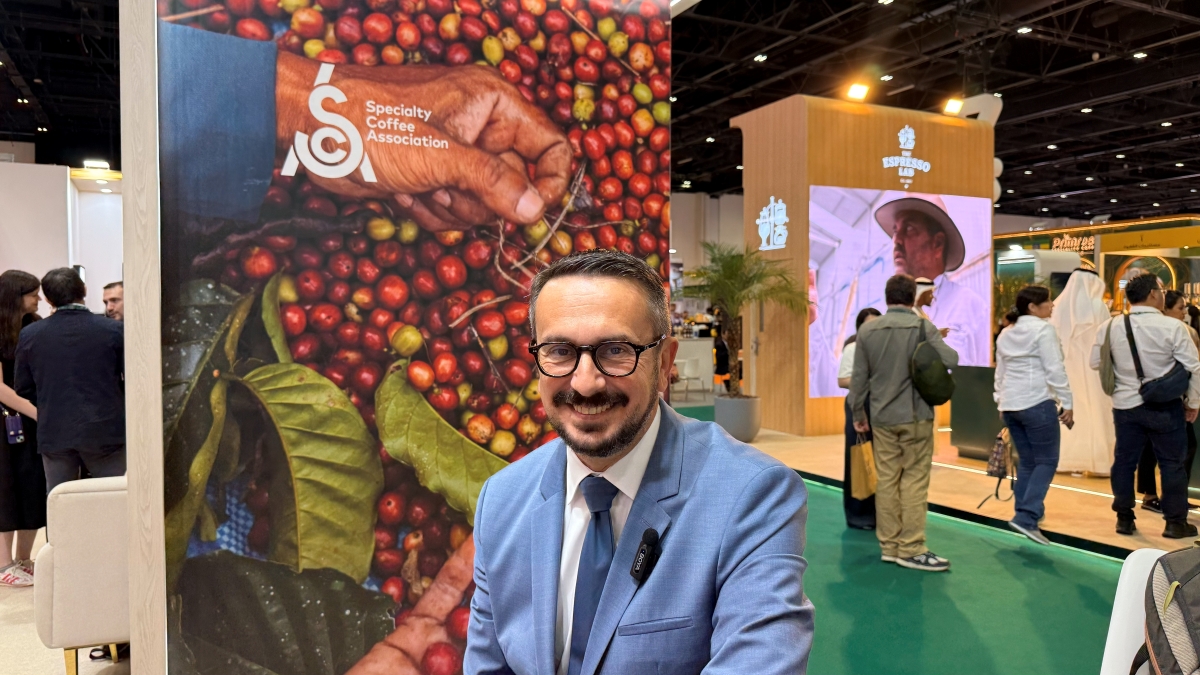
In an exclusive conversation with Qahwa World, Mr. Yannis Apostolopoulos, CEO of the Specialty Coffee Association, shared key insights on the growth and future of the “World of Coffee” exhibition, confirming that Dubai remains the sole destination for the show in the foreseeable future. He also spoke candidly about the transition following the end of the partnership with the Coffee Quality Institute (CQI) and the strong rollout of the Coffee Value Assessment (CVA) system.

Apostolopoulos highlighted that this year marks the fifth edition of the “World of Coffee,” which has grown tremendously. The number of exhibitors and attendees has surpassed any previous year, already 30% higher than before. He emphasized that the exhibition offers a unique opportunity for professionals to meet and conduct business. While it is fundamentally a trade show, it also fosters a sense of community and highlights the booming specialty coffee industry in the region.

“What we bring is a unique opportunity for people to come together and trade. At its core, this is a trade show, but it’s also about fostering a sense of community and showcasing how the specialty coffee industry is booming in the region. The Middle East has become one of the fastest-growing regions for specialty coffee in recent years, and you can feel that energy here at the show,” said Apostolopoulos.

Regarding the possibility of hosting editions in other Middle Eastern countries, Apostolopoulos confirmed that Dubai remains the ideal hub. He noted their ongoing partnership with DXB Live in Dubai, which will be renewed this year. Dubai provides excellent access from across the Middle East and the world, making it ideal for exhibitors and attendees. He added that while other countries may be considered in the future, this is not part of any immediate plans.

“At the moment, we have a partnership with DXB Live for Dubai, which we’re renewing this year. Dubai is a great hub with excellent access from across the Middle East and the world, making it ideal for exhibitors and attendees. Maybe in the future we’ll consider other countries, but not in the immediate plans,” said Apostolopoulos.

Apostolopoulos also discussed developments in the Coffee Value Assessment (CVA) system. He mentioned the transitional phase following the partnership with CQI and confirmed that many participants have already moved to the new program. There are now over 10,000 new Q graders and significantly more instructors, particularly in producing countries such as Colombia, Brazil, Indonesia, and Vietnam, which he recently visited. He stressed that the system allows producers to communicate clearly and objectively about the intrinsic and extrinsic attributes of coffee, while the trade sector explores how best to use the CVA framework to capture the quality of every coffee in everyday transactions.

“There has been some transition after our partnership with CQI, but many people have already moved to the new program. We now have over 10,000 new Q graders and significantly more instructors, especially in producing countries. We’re making targeted efforts to increase instructors in places like Colombia, Brazil, Indonesia, and Vietnam, where I was recently. Producers are seeing the value because you can communicate more clearly and objectively the attributes that are intrinsic and extrinsic to the coffee. The trade is figuring out the next steps of how to use the CVA paradigm and the new evaluation for quality and capturing the picture of every coffee in everyday trade,” said Apostolopoulos.

He affirmed that CVA benefits the industry as a whole, helping capture and share detailed data on coffee with producers and buyers, enabling clearer communication and maximizing coffee value.

“Absolutely. That’s the idea. CVA is part of the evolution of our understanding of coffee. We now care about more aspects of coffee than ever before, and CVA helps capture that information and share it with producers and buyers. This allows everyone to communicate more clearly and find ways to maximize the value of coffees,” said Apostolopoulos.
 

The SCA/Q Score Will Probably Disappear

Is This Good News or Bad News?

By Ennio Cantergiani
Owner and Managing Director, L’Académie du Café – Switzerland

For more than twenty years, we have treated a single number as the ultimate truth about coffee quality.

86.25 vs. 87.00 — as if the second coffee were objectively better.

But in sensory science, a score is not a truth. It is a measurement. And every measurement comes with uncertainty, which is almost never communicated.

In sensory science, we use statistics to validate hypotheses. Multiple measurements allow us to calculate an average, a median, and a standard deviation. A score without a standard deviation says nothing.

  • Why the “One-Score” Model Is Reaching Its Limits

1. Reliability Is Often Weaker Than We Admit

Different cuppers, different contexts, different expectations — different numbers.

This is not about “bad cuppers.” It is the nature of human perception:

Anchoring effects (the first sample sets the scale)

Contrast effects (coffee A changes how coffee B is perceived)

Semantic bias (words shape perception)

Fatigue and sensory adaptation

Calibration and alignment drift over time

When the measurement error is larger than the difference you are pricing, the number becomes fragile.

2. We Confuse Measurement with Value

A single score blends multiple dimensions:

Sensory performance (what is in the cup)

Preference (what I like)

Market narratives (what is trendy)

Rarity and social proof (what wins competitions)

Then we pretend this mixture represents one objective axis.

It does not.

  • 3. Scores Influence Money at Origin — Sometimes Unfairly

This is where it becomes uncomfortable.

When price is strongly tied to a number, producers are pushed to optimize for the scoring system, not necessarily for:

Long-term agronomy

Risk management

Climate resilience

Local sensory identity

Realistic processing constraints

  • What Comes Next (and Why It’s Better)

We will not stop evaluating coffee quality. But we should stop pretending that a single number is the best way to do it.

  • The future looks like:

Multi-dimensional assessment (descriptive, affective, and functional)

Confidence ranges, not fake precision (e.g., 86 ± 1)

Clear sensory evidence with traceable data (digital tools and better training loops)

Fit-for-purpose grading (espresso vs. filter vs. blends vs. cold brew)

Contracts combining specifications and sensory profiles, instead of worshipping one score

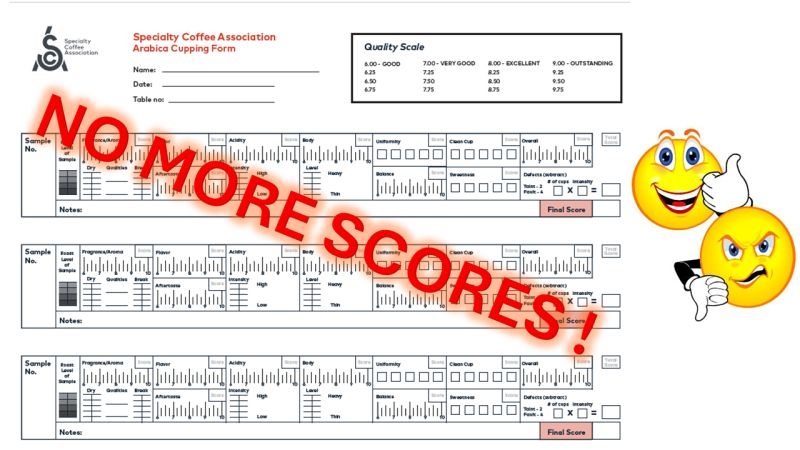
The score will not disappear overnight, but its monopoly will. No one will continue teaching the 2004 Q form indefinitely.

Will CVA replace the scoring system? Probably — but we need one to two years of feedback from major industry players. It will also need adaptation to better reflect the reality of coffee trading.

And honestly, that would be healthier — for producers, traders, roasters, and for sensory science.

  • A Question for the Industry

If tomorrow we removed the 100-point score, what would you use to trade coffee fairly and transparently?

Leon launches major restructuring plan with potential store closures

London – Qahwa World

Leon, the UK-based food-to-go and coffee chain, has initiated a company voluntary arrangement (CVA) as it works to shut down loss-making branches and reshape the business into a more efficient and sustainable operation.

This step follows the recent move by Co-founder John Vincent, who reacquired the brand from Asda just over a month ago.

Leon reported a pre-tax loss of £8.4 million ($11.3 million) for 2024, marking the company’s ninth consecutive year in deficit.

As part of the restructuring plan, the chain may close up to 20 underperforming outlets in an effort to reduce ongoing financial pressures. The CVA allows Leon to continue operating while arranging a structured repayment plan with creditors. Although the process is less costly than other insolvency options and keeps management in control, it is expected to lead to job cuts.

The initial phase will target branches that have been consistently unprofitable. Vincent said the process should help Leon emerge as a “leaner business” with a clearer path back to its original mission and values.

Vincent’s return to leadership has already brought significant changes. Shortly after retaking ownership of the 70-store chain, he discontinued Leon’s value-driven coffee subscription programme—ended only 18 months after its relaunch, which had aimed to attract budget-conscious customers.

Leon has not recorded a profit since 2015, and although losses were reduced by more than half in the previous year, the chain still ended 2024 with a substantial deficit.

Leon was founded in 2004 by Vincent, Henry Dimbleby, and chef Allegra McEvedy to introduce healthier fast-food options to the UK high street. However, after the brand’s sale to EG Group in 2021 and later to Asda in 2023, critics argue that its nutrition-focused identity has weakened.

In October 2025, shortly before Vincent took back control, Dimbleby—formerly a government advisor on food health—publicly criticised Asda, accusing it of undermining Leon’s concept by prioritising cheaper and saltier menu items.

During Asda’s tenure, Leon also expanded its presence in supermarkets. What began in 2019 with packaged coffee and sauces has since grown into a wide range of ready meals and frozen items such as waffle fries, burgers, and chicken nuggets—an area where some critics say the brand’s health-first approach has become less visible.

Financial advisory firm Quantuma has been appointed to manage the CVA process. Leon also announced a partnership with Pret A Manger to support employees who may face redundancy, offering opportunities for redeployment within Pret’s network.

Evolved Q Grader Program Adopts Coffee Value Assessment, Reshaping Global Coffee Standards

Dubai, 13 August 2025 (Qahwa World) — The global coffee industry is set for a historic transformation as the Q Grader Program, the benchmark certification for coffee quality evaluation, adopts the Coffee Value Assessment (CVA) framework under the leadership of the Specialty Coffee Association (SCA).

From October 1, 2025, the SCA will take over program operations from the Coffee Quality Institute (CQI), retiring the 2004 cupping protocol that has defined quality standards for over two decades. The move marks a significant shift toward a more holistic approach to coffee evaluation, placing equal emphasis on physical, sensory, cultural, and personal perception attributes.

Why the Change Matters

The 2004 protocol—built on objective scoring for aroma, flavor, body, and other measurable traits—has long been a trusted tool. However, industry leaders argue it underrepresents extrinsic factors such as origin, processing method, certifications, and producer stories, which increasingly influence market value.

Introduced in 2023, the CVA integrates four dimensions of assessment:

  • Physical Attributes — Objective evaluation of green coffee quality.

  • Extrinsic Attributes — Market-relevant factors such as terroir, certifications, and narratives.

  • Affective Attributes — The cupper’s personal impression on a 100-point scale.

  • Descriptive Attributes — Detailed sensory profiling of flavor and aroma.

By including these dimensions, the CVA reflects a coffee’s complete market value—not just its chemical or physical characteristics.

Impact on Q Graders

All current and former Arabica and Robusta Q Graders must complete the CVA for Cuppers conversion course by December 31, 2025 to maintain certification. The course, lasting two days, is designed to help graders transition smoothly to the new framework.

From 2026 onward, only the six-day Evolved Q Course will lead to certification. Missing the conversion deadline means starting the process from scratch.

Industry Reactions

“The CVA acknowledges that coffee quality is more than chemistry—it’s culture, craftsmanship, and context,” said Thomas Haigh, Specialty Coffee Merchant and Arabica Q Grader since 2015.

Producers, particularly in origin countries, see the shift as an opportunity to highlight unique practices and secure better recognition for their efforts. Roasters and green buyers anticipate richer, more nuanced data for sourcing decisions.

Key Transition Dates

  • October 1, 2025 — SCA takes over Q Grader Program; CVA becomes standard.

  • December 31, 2025 — Last day for Q Graders to complete CVA for Cuppers conversion course.

  • From 2026 — Six-day Evolved Q Course becomes the only certification route.

Looking Ahead

The adoption of the CVA is more than an administrative change—it represents an industry-wide realignment toward recognizing both intrinsic and extrinsic value in coffee. While some professionals may resist altering a long-trusted system, others view this as an essential evolution to meet the demands of a more globalized and story-driven specialty market.