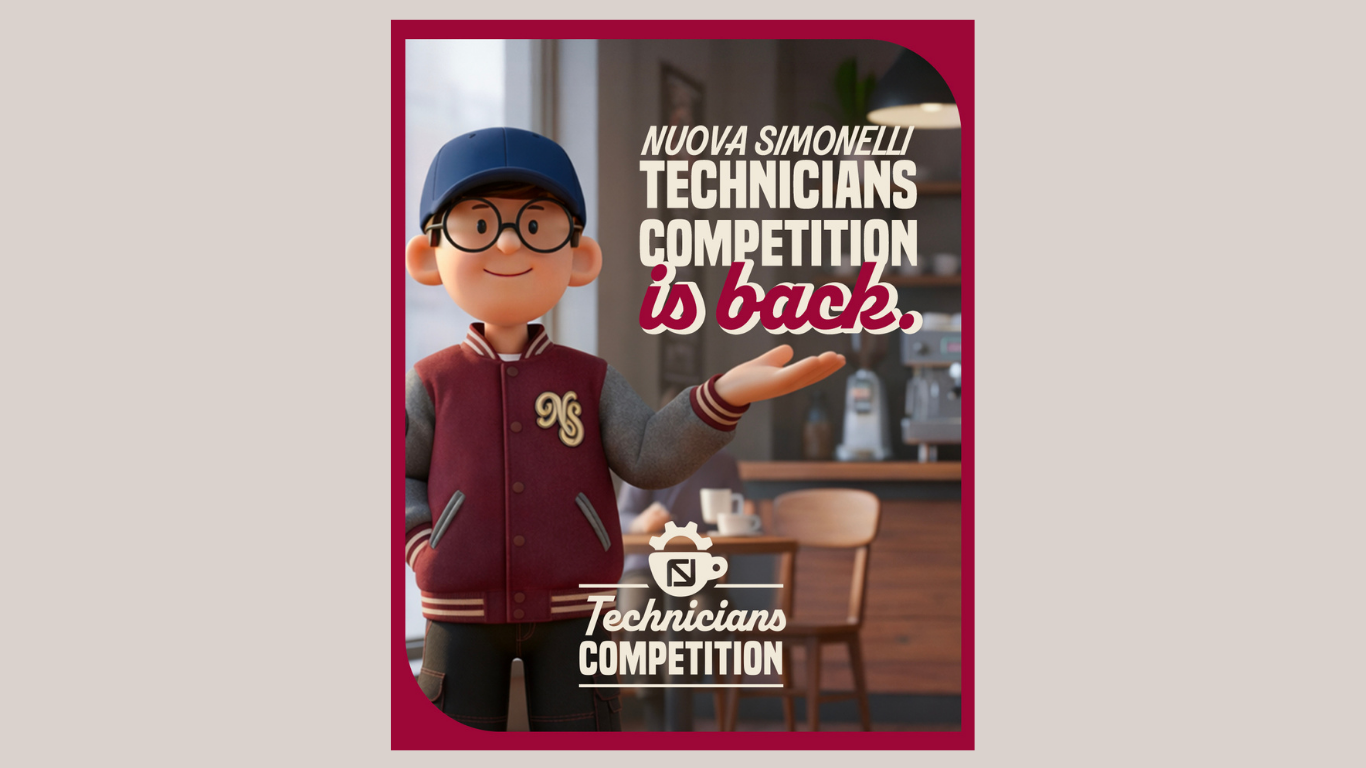
Nuova Simonelli Technicians Competition Returns for 2026  

Author: Qahwa World – Dubai
Source: Industry announcement
Date: May 14, 2026
Executive Summary

  • The Nuova Simonelli Technicians Competition is back after its first edition in France
  • The 2026 edition expands to new international stages in Paris, London, and the Middle East
  • The competition begins with an online technical quiz that selects 8 finalists
  • Finalists then face hands-on practical challenges on espresso machines
  • Judges evaluate speed, precision, machine knowledge, and safety practices
  • The event celebrates technicians who work behind the scenes in the coffee industry

The Nuova Simonelli Technicians Competition is returning in 2026. After its first edition in France, the event is now expanding to new international markets including Paris, London, and the Middle East.

The competition focuses on espresso machine technicians. These professionals typically work behind the scenes. Yet they play a vital role in coffee quality, equipment reliability, and cafe performance.

Origins of the competition

The competition first launched in France. Organizers created it to showcase the skills, experience, and professionalism of coffee machine technicians. These workers often remain unseen by customers. Nevertheless, they maintain the equipment that baristas rely on every day.

Nuova Simonelli, the Italian espresso machine manufacturer, organizes the event. The company aims to highlight the strategic importance of technicians in delivering quality service and reliable products.

What sets this competition apart

The Nuova Simonelli Technicians Competition stands out for its hands-on, practical approach. It tests real-world skills that technicians use daily.

The competition begins with an online technical quiz. From this stage, organizers select eight technicians who qualify for the final round.

In the final stage, participants face practical challenges on espresso machines. These include simulated malfunctions, adjustments, and real technical interventions. The tasks mirror everyday work scenarios in coffee shops and service centers.

Speed, precision, machine knowledge, and operational efficiency all go under evaluation. Technical judges assess performance based on workplace safety, organization, technical expertise, and the ability to maintain excellent coffee quality.

Expansion to new markets in 2026

In the coming weeks, the competition will launch new international stages. The confirmed locations include Paris, London, and the Middle East.

This expansion confirms the global nature of the initiative. Nuova Simonelli aims to create real opportunities for exchange, professional growth, and knowledge sharing across key international markets.

Industry context: Coffee machine technicians play a critical role across the entire supply chain. Their work ensures operational continuity, consistent quality, and customer satisfaction in cafes worldwide.

Celebrating the technicians

Through this initiative, Nuova Simonelli celebrates the crucial role technicians play. They provide baristas with reliable, high-performing, and long-lasting equipment. Their work supports operational continuity, consistent quality, and end-customer satisfaction.

The event is more than just a competition. Organizers describe it as a platform for training, networking, and showcasing technical expertise.

How to participate

Technicians ready to join the next editions of the competition can apply through dedicated registration pages. Separate application links are available for the Dubai and United Kingdom editions.

Frequently Asked Questions

What is the Nuova Simonelli Technicians Competition?
It is an international competition for espresso machine technicians. Participants demonstrate their skills in diagnosing and repairing coffee equipment under timed conditions.

Where will the competition take place in 2026?
The competition will take place in Paris, London, and the Middle East. Specific venues and dates are available through the official registration pages.

How does the competition work?
Participants first complete an online technical quiz. The top eight scorers advance to a final round of hands-on practical challenges on espresso machines.

What skills are tested?
Judges evaluate speed, precision, machine knowledge, operational efficiency, workplace safety, organization, and the ability to maintain coffee quality.

Who can participate?
The competition is open to espresso machine technicians. Interested candidates should apply through the official registration pages for their region.

Why is this competition important?
Technicians play a crucial but often invisible role in the coffee industry. They ensure equipment remains reliable and performs well, which directly affects coffee quality and customer satisfaction.


Author: Qahwa World – Dubai
Source: Industry announcement
Date: May 14, 2026

Sage Launches Oracle Dual Boiler Espresso Machine in UAE

Dubai, UAE — Qahwa World

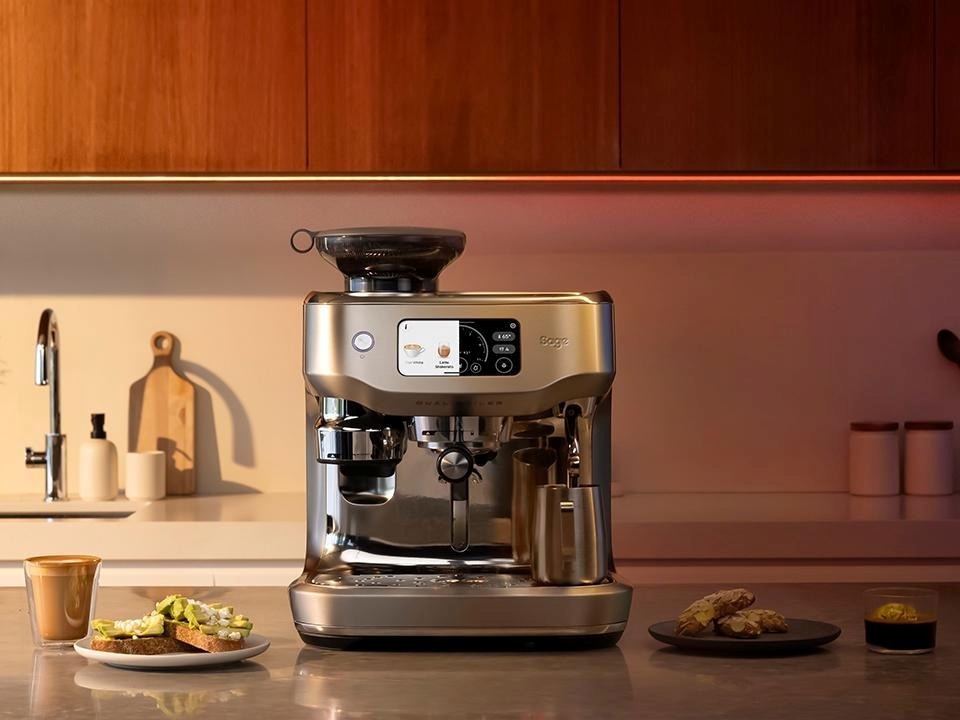
Sage Appliances®, the global manufacturer of premium kitchen appliances, has announced the launch of the Oracle Dual Boiler, the latest addition to its Oracle espresso machine range. The new model combines dual boiler technology with touchscreen automation, offering users the option to operate the machine in either automatic or manual mode.

The Oracle Dual Boiler is designed for home users seeking consistent espresso preparation with the flexibility to adjust brewing parameters manually. In automatic mode, the machine performs grinding, brewing and milk texturing in a simplified workflow. Manual mode allows users to adjust pre-infusion, blooming, extraction and milk texturing settings.

The machine features a 5.7-inch high-definition touchscreen, the largest display used in a Sage espresso machine to date. The interface provides step-by-step guidance and real-time feedback during coffee preparation. In the UAE, the Oracle Dual Boiler includes built-in Wi-Fi connectivity, enabling software updates and compatibility with the Sage Coffee App for remote machine control.

The Oracle Dual Boiler offers 15 preset beverage options, including espresso, flat white, latte, cappuccino, piccolo, mocha, iced latte and shakerato.

The machine is powered by a triple heating system, comprising a PID-controlled extraction boiler, a dedicated steam boiler and a heated group head. This configuration allows simultaneous espresso extraction and milk texturing while maintaining temperature stability.

The Oracle Dual Boiler also introduces Sage Appliances’ Auto Dial-In System, which automatically monitors espresso extraction and adjusts grind size to improve subsequent shots. The system operates in conjunction with Baratza European Precision burrs, offering 45 grind settings.

  • Key product specifications include:

Triple heating system

Quad-core processor

Auto puck system

Auto Dial-In system

Auto MilQ™ steam wand

Baratza European Precision burrs with 45 grind settings

5.7-inch HD touchscreen

Heated group head

Brew customisation

Stainless steel heated cup tray

Alternative milk settings (soy, almond and oat)

Wi-Fi connectivity

Electronic grind adjustment

Professional 58mm stainless steel portafilter

15 preset beverages

Dedicated hot water spout

Matching Knock Box™ 10

PID temperature control

2.3-litre water tank

The Sage Oracle Dual Boiler is available from 15 December through leading retailers across the UAE and GCC, priced at AED 9,999, and via www.sageappliances.com

About Sage Appliances®

Sage Appliances is a global kitchen appliance brand with over 90 years of history. The company operates under the Sage name in Europe and Breville in other markets. Sage products are sold in more than 70 countries worldwide, focusing on innovation, functional design and consumer-led engineering.

Coffee Gadgets: A Guide to Finding Your Perfect Brewing Method

Dubai – Qahwa World

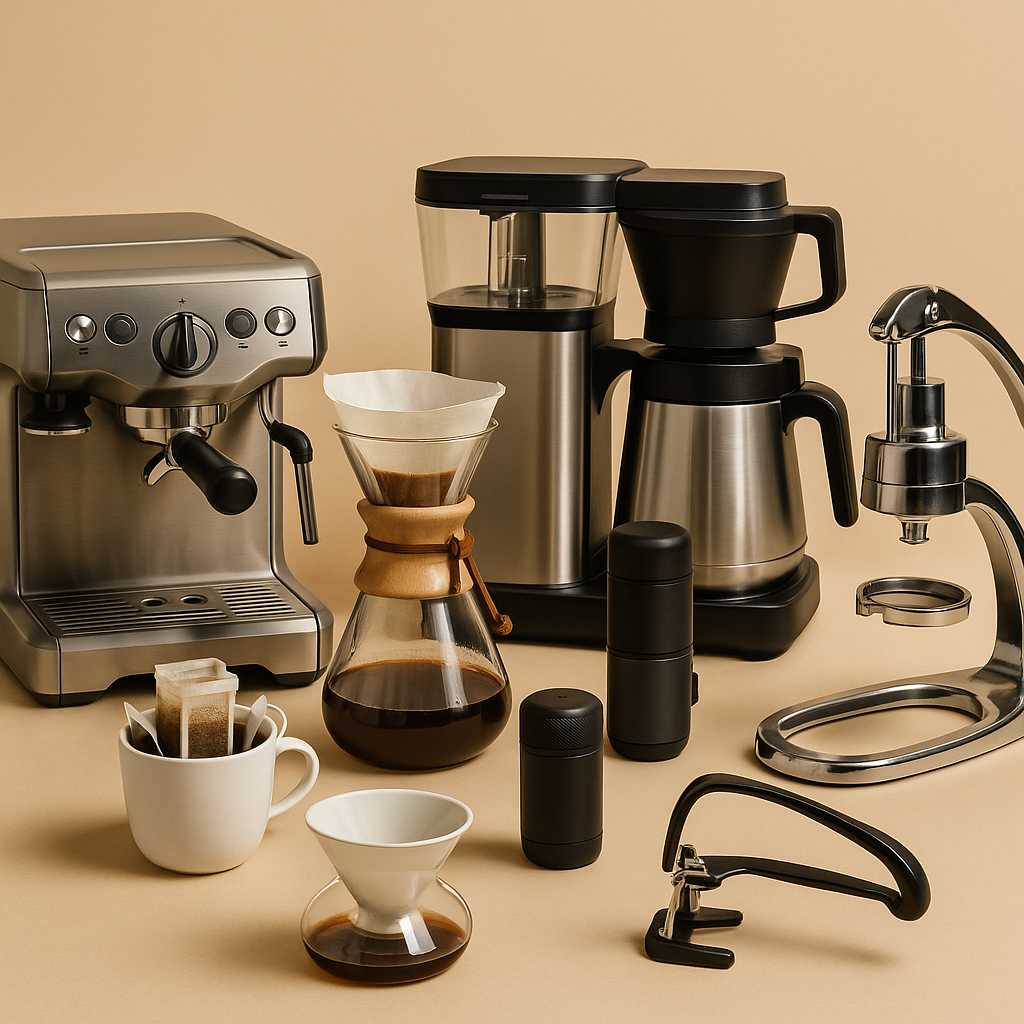
Coffee preparation has become more than just a morning ritual; it is a pursuit of precision, design, and personal preference. Across the world, enthusiasts choose from a wide variety of brewing devices, each catering to different needs — from quick convenience to meticulous craftsmanship. This guide offers a structured overview of the most notable coffee gadgets, their features, and how to identify which one might be best suited to your lifestyle.

Choosing the Right Gadget

A simple question often helps narrow the choices: Are you making coffee for lots of people?

Yes

If you prefer the ease of automation, an Espresso Machine or Sage Precision Brewer may be ideal.

If you value design and group brewing, the Chemex is a strong candidate.

For portable brewing with larger capacity, consider the Giant AeroPress.

No

If automation is important, a Bean-to-Cup machine offers a seamless experience.

For simplicity, the Coffee Bag provides a quick option.

For those who enjoy measuring and fine-tuning, the V60 Pourover is a classic.

If experimentation excites you, the Picopresso or Syphon provide unique experiences.

For mechanical elegance and complete control, the Lever Espresso stands out.

Coffee Bag

Single-use drip bags offer convenience and portability, functioning like a tea bag but designed for better water contact with coffee grounds. They are ideal for pre-portioned, ready-ground coffee when simplicity is the goal.
Example: Ueshima Pour Over Coffee Bag (~£5).

V60 Pourover

A cone-shaped brewer with a global following, the V60 is inexpensive but requires additional tools — grinder, gooseneck kettle, and scales — for precision. It is popular among those who enjoy the ritual of measured brewing.
Example: Hario V60 Coffee Dripper (~£6).

Chemex

Designed in the 1940s, the Chemex combines glass, wood, and leather in an iconic brewer. Its thicker paper filters produce a “cleaner” cup, though the slower percolation makes it less practical for quick brewing. Larger sizes make it well-suited for groups.
Example: 10-Cup Chemex (~£65).

Giant AeroPress

Known for portability and ease of cleaning, the AeroPress steeps coffee in a sealed chamber before plunging. The larger model caters to groups, while the standard version remains a gateway device for new enthusiasts.
Example: AeroPress XL (~£80).

Syphon

Also called a vacuum pot, the syphon is both functional and theatrical. Water is heated in a lower chamber, rises to mix with coffee in an upper chamber, then filters back down. While fragile and demanding to clean, it produces a distinct cup and serves as a centerpiece for coffee demonstrations.
Example: Hario Technica Coffee Syphon (~£125).

Picopresso

A compact, handheld espresso maker designed for experimentation. It appeals to those who want to test techniques outside of traditional machines while keeping portability in mind.

Sage Precision Brewer

A programmable filter brewer that delivers consistency for larger batches. Its thermal carafe preserves flavor better than hotplates, and the auto-brew function allows preparation in advance.
Example: Sage Precision Brewer Thermal (~£250).

Lever Espresso

A spring- or piston-driven machine that emphasizes manual control. Pulling the lever compresses water through the coffee puck, giving full oversight of extraction variables. Quiet and mechanical, it requires patience but rewards with mastery.
Example: Flair Pro 3 (~£325).

Espresso Machine

Countertop espresso machines allow variety, from straight espresso to milk-based drinks with latte art. They are essential for anyone who prioritizes serving café-style beverages at home, though they require significant space and investment.
Example: Sage Dual Boiler (~£1,250).

Bean-to-Cup

These machines automate the entire process, from grinding beans to extraction, often controlled through digital displays. They provide luxury and convenience, though at the cost of reduced manual experimentation.
Example: Jura Giga 10 (~£3,800).

Conclusion

The diversity of coffee gadgets reflects the diversity of coffee drinkers. Whether one values speed, design, experimentation, or tradition, there is a tool to match. For some, a simple coffee bag suffices. For others, the precision of a lever espresso machine or the indulgence of a bean-to-cup system becomes part of daily life. Understanding each device’s strengths helps not only in choosing the right gadget but also in appreciating the culture of coffee innovation.

Barista Terminology | Episode 13: Espresso Machine Components Explained

Understanding an espresso machine’s anatomy is essential for any barista. Whether you’re pulling shots, steaming milk, or troubleshooting a problem, knowing how each part functions ensures better coffee and safer operation.

  1. Group Head
  • The component where the portafilter locks in and water is dispersed over the coffee puck.
  • It includes a screen and gasket and is usually made of brass or stainless steel to retain heat.
  • Consistent temperature here ensures consistent extraction.
  1. Portafilter
  • A handle with a filter basket that holds ground coffee.
  • Comes in spouted, bottomless (naked), and pressurized variants.
  • Must be evenly filled and tamped for optimal extraction.
  1. Filter Basket
  • The metal insert inside the portafilter that holds the coffee grounds.
  • Sizes vary (single, double, triple), and hole precision affects flow rate.
  • Needs to be cleaned regularly to avoid flavor contamination.
  1. Boiler
  • The machine’s internal tank that heats and stores water for brewing or steaming.
  • Single boiler, dual boiler, and heat exchanger types exist.
  • Pressure and temperature stability here are key for quality shots and milk texturing.
  1. Pump
  • Responsible for delivering water to the group head at high pressure (~9 bars).
  • Most machines use rotary or vibratory pumps.
  • A stable pump ensures consistent flow and extraction.
  1. Steam Wand
  • The nozzle used to froth or steam milk.
  • Has one or multiple holes (tips) that control steam pressure and direction.
  • Must be cleaned immediately after each use to prevent milk buildup.
  1. Pressure Gauge
  • Displays boiler and/or pump pressure.
  • Useful for diagnosing performance issues.
  • Helps baristas track consistency during extraction.
  1. Drip Tray
  • Collects waste water and spilled coffee.
  • Should be emptied and rinsed regularly to maintain hygiene.
  • May include a drain pipe in plumbed-in machines.
  1. Hot Water Tap
  • Provides hot water for Americanos or tea.
  • Connected to the boiler system.
  • Useful but can introduce temperature instability if overused.
  1. Control Panel / Buttons
  • Manual machines use switches or levers.
  • Semi-automatics and automatics use programmable buttons for shot volume and other functions.
  • Some modern machines include touchscreens and PID temperature controls.

Related Stories:

Barista Terminology | Episode 12: Brewing Equipment Maintenance & Hygiene

Barista Terminology | Episode 11: Milk-Based Coffee Drinks

Barista Terminology | Episode 10: Advanced Concepts

Barista Terminology | Episode 9: Sensory Evaluation

Barista Terminology | Episode 8: Customer Service Language in the Café

Barista Terminology | Episode 7: Water & Temperature Control

Barista Terminology | Episode 6: Grind & Extraction Variables

Barista Terminology | Episode 5: Milk Texturing & Latte Art

Barista Terminology | Episode 4: Brew Methods Explained

Barista Terminology | Episode 1: The Coffee Bean – From Seed to Roast

Barista Terminology | Episode 2: Barista Tools & Equipment

Barista Terminology | Episode 3: Espresso Basics