World Coffee Championship Announces the Names of the Qualifiers for the Championship Final in Chicago

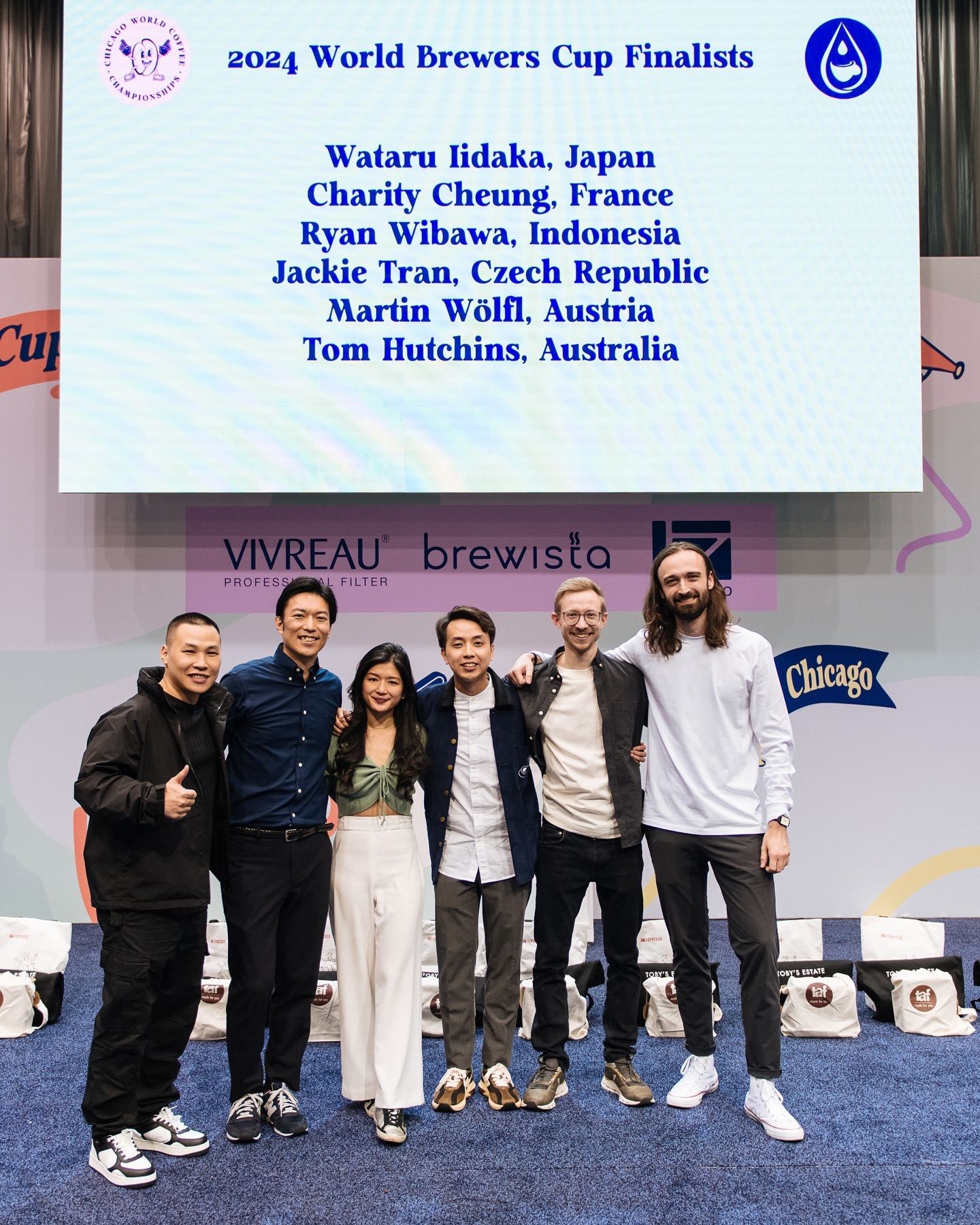
Chicago – QW : – Continuing the thrilling start to the ongoing World Coffee Championship held during the Specialty Coffee Expo Chicago 2024, the Specialty Coffee Association has announced the names of the qualifiers for the championship final, totaling 6 individuals representing Japan, France, Indonesia, Czech Republic, Austria, and Australia.

The Specialty Coffee Association stated in a press release that on Day 2 of the World Coffee Championship, following a fierce competition where 12 competitors took the stage in the semi-final this morning, we announce and congratulate the six qualifiers for the championship final, who will compete for the title today, Sunday, April 14, starting at 8:30 AM Central Time in the United States.

Without a specific order, the association announced the names of the six qualifiers and the countries they represent:

Wataru Iidaka, Japan

Charity Cheung, France

Ryan Wibawa, Indonesia

Jackie Tran, Czech Republic

Martin Wölfl, Austria

Tom Hutchins, Australia

The association invites the audience to join and follow the global event, saying: Join us to watch the final stage this evening. You can follow the action up close at the Specialty Coffee Expo in Chicago or watch the live stream on chicago.wcc.coffee to witness every exciting moment. Don’t miss out on the excitement and thrill amidst the competition of the outstanding players vying for the World Coffee Championship title!”


World Coffee Championship Announces Semi-Finalists in Chicago

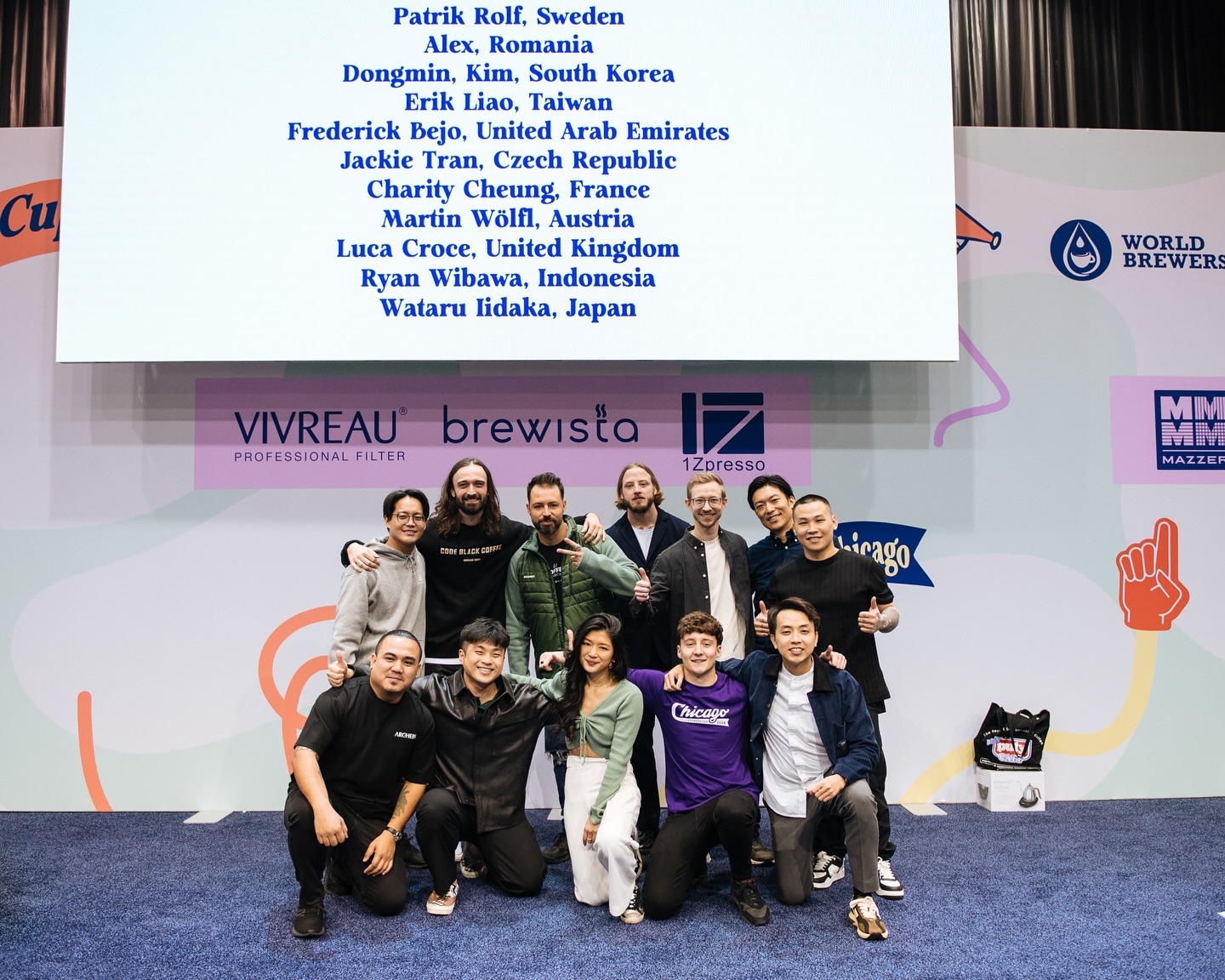
In an exciting start to the ongoing World Brewers Cup Championship at the Specialty Coffee Expo Chicago 2024, the Specialty Coffee Association has announced the names of the qualifiers for the semi-final, totaling 12 individuals representing the United Arab Emirates, Australia, Sweden, Romania, South Korea, Taiwan, the Czech Republic, France, Austria, the United Kingdom, Indonesia, and Japan.

The association stated, “The World Brewers Cup Championship kicked off with enthusiasm in Chicago, as 41 talented competitors from around the world showcased their coffee brewing skills on the global stage. Amidst the aroma of freshly ground beans and the hum of espresso machines, the competition was fierce, but the spirit of sportsmanship filled the air.”

The association added, “After an exhilarating first day of competition, the following skilled competitors emerged victorious and will advance to the semi-final round:

  • Tom Hutchins from Australia
  • Patrik Rolf proudly representing Sweden
  • Alex Niculae representing Romania
  • Dongmin Kim from South Korea
  • Erik Liao showcasing skills from Taiwan
  • Frederick Bejo representing the United Arab Emirates
  • Jackie Tran representing the Czech Republic
  • Charity Cheung bringing French elegance to the table
  • Martin Wölfl representing Austria
  • Luca Croce displaying expertise from the United Kingdom
  • Ryan Wibawa representing Indonesia
  • Wataru Iidaka from Japan.

They have captivated audiences with their unique brewing techniques and dedication to the craft.”

“The stage is set for an exciting Semi-Final round, where they will face new challenges and push the boundaries of excellence in the world of coffee even further,” the association stated.

The association invited the public to join and follow the global event, saying, “Join us to watch the Semi-Final round this evening starting at 1:38 PM Central Time. You can witness the action firsthand at the Specialty Coffee Expo in Chicago or tune in to the live stream at chicago.wcc.coffee to catch every thrilling moment. Don’t miss out on the excitement as the world’s finest brewers compete for the World Brewers Cup Championship title!”


Coffee V60: Its Story and How It’s Made

In the constantly evolving scene of coffee preparation, one name reigns supreme: V60 coffee. Its prominent brewing method, born from the fusion of innovation and tradition, has made V60 synonymous with the art of pour-over coffee. Join us as we explore the rich history, practical techniques, and sensory delight of the V60 experience.

Origins of V60

The story of V60 began with the pioneering spirit of its creator, Hario. Founded in Japan in the early 20th century, Hario quickly became a leader in glassware and coffee equipment. Drawing inspiration from traditional pour-over coffee methods and modern design principles, Hario set out to create a brewer that would redefine the coffee brewing experience.

After years of research and development, V60 was born. Its unique conical shape and spiral ribs were meticulously crafted to ensure optimal extraction and unparalleled clarity of flavor. From its elegant lines to its iron handle, every aspect of V60 was made with precision and purpose.

Rise of V60

V60 was introduced to the market in 2005 and quickly captured the hearts and minds of coffee enthusiasts worldwide. Its intuitive design and ability to consistently produce delicious coffee made it an essential part of both coffee shops and home kitchens alike, as well as competitions.

But the success of V60 was not only due to its innovative design – it was also a testament to the growing popularity of specialty coffee. As consumers began to prefer high-quality coffee, they started looking for brewing methods that would allow them to appreciate the diverse flavors of premium coffee. With its focus on precision and control, V60 became the perfect tool for this.

How to Make V60 Coffee: Step-by-Step Brewing Guide

  1. Gather Your Materials: You’ll need a V60, filters, freshly ground coffee, a kettle, and a scale.
  2. Prepare Your Equipment: Place the filter in the V60 and rinse it with hot water to remove any paper taste. Preheat the brewing vessel and the cup you’ll be using.
  3. Measure and Grind: Weigh out the desired amount of coffee according to your preferred coffee-to-water ratio (usually around 15-17 grams of coffee per 250 ml of water). Grind the coffee to a medium consistency, similar to sea salt.
  4. Bloom: Place the V60 on the brewing vessel and add the ground coffee. Start the timer and pour enough hot water (about twice the weight of the coffee) to evenly saturate it. Allow the coffee to bloom for 30-45 seconds.
  5. Pour: After blooming, slowly pour hot water in a circular motion, starting from the center and moving outward. Your goal is to maintain the water level slightly below the top edge of the filter to ensure even extraction.
  6. Enjoy: Once all the water has passed through the coffee grounds, lift the V60 and remove the filter. Stir the coffee briskly to ensure even extraction, then pour it into the preheated cup and savor every drop.

Beyond Brewing with V60

The journey with V60 extends beyond the brewing process itself – it’s a sensory experience that engages all the senses. From the rich aroma of freshly ground beans to the subtle flavors dancing on your palate, each cup of V60 coffee tells a story of craftsmanship, quality, and passion.

So whether you’re an experienced coffee lover or a newcomer to the world of specialty coffee, let V60 be your guide. With its elegant design, precise brewing technique, and unparalleled clarity of flavor, V60 is the perfect companion for anyone looking to explore the true potential of coffee.


View this post on Instagram


A post shared by عالم القهوة (@qahwaworld)

Specialty Coffee Association (SCA) Releases 2023 Annual Report

In a year marked by remarkable progress and innovation, the Specialty Coffee Association (SCA) unveils its highly anticipated 2023 Annual Report. Led by CEO Yannis Apostolopoulos, the SCA’s endeavors have propelled the global specialty coffee industry forward, cementing its commitment to enhancing sustainability, fostering community engagement, and delivering unparalleled service.

Global Impact through Sustainability

Central to the SCA’s mission is its Sustainable Coffee Agenda, a framework aimed at promoting equitable value distribution throughout the coffee supply chain. In 2023, the SCA reached two significant milestones in this regard. Firstly, it formally introduced the Sustainable Coffee Agenda and its theory of change, solidifying its dedication to sustainable practices. Secondly, the SCA launched the Coffee Value Assessment, a groundbreaking tool designed to facilitate transparent discussions about value distribution. With a focus on community integration, the SCA plans to embed these initiatives across all programs, fostering a culture of sustainability within the industry.

Expanding Horizons and Local Engagement

Expanding its global footprint, the SCA hosted events beyond traditional hubs, including Latin America and the Asia Pacific region. Through initiatives like the World of Coffee Panama 2026 and World of Coffee Busan 2024, the SCA forged connections within local communities, enriching experiences for coffee enthusiasts worldwide. Furthermore, the association revamped its membership model and enhanced support for chapters and guilds, ensuring greater accessibility and relevance within local coffee communities.

Empowering Growth and Education

With a focus on professional development, the SCA expanded its educational offerings, catering to diverse needs within the industry. Notably, efforts were made to address information gaps among coffee producers, supported by the Coffee Value Assessment’s insights. By investing in accessible education across multiple platforms and languages, the SCA continues to empower individuals and drive innovation within the specialty coffee sector.

Strengthening Infrastructure and Financial Resilience

Amidst challenges posed by the COVID-19 pandemic, the SCA navigated financial hurdles, achieving a remarkable turnaround in 2023. From a significant negative equity of -US$1.8M, the association successfully built an equity of US$12.5M, ensuring robust financial reserves for the future. This achievement underscores the SCA’s commitment to financial sustainability and resilience in the face of uncertainty.

Looking Ahead

As the SCA embarks on its journey into 2024, CEO Yannis Apostolopoulos expresses optimism for the future. With ongoing initiatives such as the rollout of the new membership model and continued research endeavors, the SCA remains steadfast in its mission to elevate the specialty coffee experience worldwide. As stakeholders anticipate upcoming events in Chicago, Busan, and Copenhagen, excitement brews for the innovative strides ahead in the world of specialty coffee.

The release of the 2023 Annual Report marks a pivotal moment in the SCA’s journey, reaffirming its dedication to excellence and progress within the global coffee community.

To read the report, click here


NCA: Daily Coffee Consumption in America Hits 20-Year High

A new study has revealed that daily coffee consumption in the United States has reached its highest level in 20 years, according to new research released by the National Coffee Association (NCA). According to the National Coffee Data Trends (NCDT) report for Spring 2024, 67% of American adults consumed coffee in the past day (more than any other beverage, including tap or bottled water), compared to 49% in 2004. The report also shows that 75% of American adults consumed coffee in the past week, with an increase of 4% since the Spring 2023 NCDT.

The increase in daily coffee consumption is attributed to consumers aged 25 and over. The largest increase is among consumers aged 60 and over, whose consumption increased by 9% (from 67% to 73%). Consumers aged 25-39 and 40-59 also saw an increase in consumption by 4.5% (from 67% to 70% and from 66% to 69%, respectively). Consumption among 18-24-year-olds remained steady at 47%.

Specialty coffee has also experienced significant growth, with 57% of American adults consuming specialty coffee in the past week, a 7.5% increase on a yearly basis. Among specialty coffees, consumption in the past week increased the most for espresso-based beverages, by 10%. Lattes are the most popular espresso-based beverage, enjoyed by 18% of American adults in the past week, followed by espresso (16%) and cappuccinos (14%).

Ready-to-drink coffee has become the third most popular preparation method among past-day coffee drinkers, almost doubling from 8% to 15%, pushing espresso machines to fourth place. Drip coffee makers (37%) and single-cup brewers (28%) continue to be the top two at-home preparation methods.

NCA President and CEO William “Bill” Murray commented: “NCA’s exclusive research has tracked coffee trends for over 70 years, and America’s favorite beverage has only continued to grow in terms of overall popularity and innovation to meet evolving consumer tastes. This year’s two-decade high is only the latest proof of America’s enduring love affair with coffee.”

About the National Coffee Association: The National Coffee Association (NCA) USA, Inc. is the leading trade association serving the U.S. coffee industry through education, advocacy, and connection. NCA members represent an estimated 90% of U.S. coffee commerce with small, medium, and large companies, including growers, importers, exporters, traders, brokers, freight forwarders, roasters, manufacturers, retailers, and allied companies.”


SCA: Specialty Coffee Expo Chicago 2024 Will Be the Largest Ever

The Specialty Coffee Association has announced that the Specialty Coffee Expo Chicago 2024, which will be held from April 12 to April 14, 2024, will be the largest ever in the history of the expo.

In a statement received by “Coffee World”, the association said that with the increasing anticipation for the Specialty Coffee Expo Chicago 2024, enthusiasts and professionals in the industry alike are preparing for what promises to be the biggest and most impactful event in the world of coffee.

The association expects the Specialty Coffee Expo Chicago 2024 to break all records and redefine the landscape of the specialty coffee industry, with over 590 exhibitors confirmed and an estimated 16,000 visitors expected to attend the event.

The association pointed out that the Specialty Coffee Expo Chicago 2024 is not just a gathering; it is a convergence of minds dedicated to shaping the future of the coffee sector.

The association emphasized that the global coffee market is experiencing unprecedented growth, with the market expected to exceed $182.63 billion by 2030, noting in this regard that the Specialty Coffee Expo Chicago 2024 is a crucial platform for industry players to explore expansion opportunities and foster innovation.

The association explained that one of the highlights of the Specialty Coffee Expo Chicago 2024 lies in the opportunity to network with a diverse community of professionals representing every aspect of the coffee value chain. With participants from over 75 countries, including key decision-makers and influencers, the expo provides an unparalleled environment for collaboration and knowledge exchange.

During the Specialty Coffee Expo Chicago 2024, a variety of events and activities will be offered, including the Specialty Coffee Association Lecture Series, SCA Workshop Series, Green Coffee Connect, Retail Buyers Lounge, Cupping Exchange, Scientific Poster Sessions, Roaster Village, World Coffee Championships, and other exciting events and activities.

The schedule of the Specialty Coffee Expo Chicago 2024 spans three days, providing participants with ample opportunities to immerse themselves in the world of specialty coffee and take full advantage of everything the expo has to offer. From the opening event on Friday morning to the closing activities on Sunday afternoon, the expo promises to be an unforgettable experience for all who attend.

International Coffee Organization to Attend Specialty Coffee Expo in Celebration of 25 Years of Coffee Excellence

The International Coffee Organization (ICO) has announced its participation in the upcoming Specialty Coffee Expo, marking a significant milestone in the world of coffee. The Expo, scheduled to take place from April 12th to 14th, will serve as a platform to celebrate the 25th anniversary of the Cup of Excellence, a renowned event that has redefined standards of coffee quality globally.


5 Trends Shaping the UK Branded Coffee Shop Market in 2024

In 2023, the UK branded coffee shop market soared to £5.3bn ($6.6bn), surpassing 10,000 outlets for the first time and experiencing remarkable sales growth. However, amidst ongoing economic challenges and shifting consumer behaviors, operators tread cautiously. Exclusive insights from the Project Café UK 2024 report unveil the pivotal dynamics shaping Europe’s largest branded coffee shop market.

  1. Navigating Economic Headwinds: Despite resilient growth, operators face constraints from a challenging economy. High inflation and decreased footfall at prime locations have compelled brands to reassess strategies, with notable shifts observed in consumer spending habits and outlet expansion plans.
  2. Franchising for Expansion: To mitigate risks amidst rising costs and stiff competition, UK operators increasingly turn to franchising for expansion. Notable brands like Costa Coffee and Greggs are leveraging this model to penetrate diverse markets and capitalize on local expertise.
  3. Rise of Boutique Operators: The specialty coffee segment witnesses unprecedented growth, with boutique operators like WatchHouse and Grind expanding their footprint and diversifying offerings. The market’s maturity is evident as specialty operators thrive beyond London.
  4. Oat’s Dominance in Non-Dairy Choices: Oat emerges as the preferred non-dairy option in UK coffee shops, gaining traction at the expense of other alternatives. Despite this, challenges persist, signaling that dairy still holds sway over consumer preferences.
  5. Diversification and Competition: Non-coffee-focused branded cafés are intensifying competition, offering handcrafted beverages and indulgent experiences. From bubble tea to premium drinking chocolate, these establishments seek to captivate younger consumers and tap into evolving tastes.

The UK branded coffee shop market of 2024 is characterized by resilience, innovation, and adaptation. As operators navigate economic uncertainties and changing consumer preferences, strategic maneuvers and diversification efforts emerge as key drivers of success in this dynamic landscape.

Specialty Coffee Expo 2024 Introduces Exciting New Features for April Show

Dubai, April 5, 2024 (qw) – This year’s Specialty Coffee Expo is geared up to showcase its commitment to sustainability amidst mounting pressure on companies to embrace eco-friendly practices. Collaborating with industry leaders like Caravela Coffee, Pacific Foods Barista Series, and Barista Attitude, the expo is unveiling innovative strategies to offset its environmental footprint.

Carrie Gibson, Events Director at Specialty Coffee Association (SCA), announces, “We’re launching the ‘Sustainable Expo’ initiative, channeling financial aid to Latin American coffee farmers for planting native trees. This green endeavor aims to improve soil health, mitigate erosion, and sequester carbon.”

Through agroforestry systems, the expo plans to offset 1600 to 2000 metric tons of CO2 emissions by planting 6000 native trees, benefitting over 150 coffee farms across several countries. In addition to its ‘Sustainable Expo,’ scheduled for April 12-14 in Chicago, the expo is designed to cater to the global coffee community’s diverse needs.

Gibson emphasizes, “Our expo offers not just a vibrant atmosphere but also a platform for business growth and professional development. With features like the Roaster Village and the Best New Product competition, attendees can expect a unique experience tailored to their preferences.”

Introducing two new features, Green Coffee Connect and Retail Buyers Lounge, the expo aims to foster inclusive business relationships and provide a space for retail professionals to network and engage in meaningful discussions.

Furthermore, the expo offers extensive educational opportunities, including lectures and workshops, addressing critical industry topics. Gibson adds, “Education is paramount for success in this industry, and our workshops provide in-depth insights into specific subjects.”

With substantial growth anticipated, the expo remains committed to upholding SCA’s values and mission, ensuring a rewarding experience for every participant.

Gibson, reflecting on her role, expresses pride in contributing to the expo’s success and sustainability initiatives. She concludes, “Each year, seeing the expo come together is incredibly fulfilling. It’s a testament to the collaborative efforts of our dedicated team and the vibrant coffee community we serve.”

How we inadvertently gatekeep specialty coffee from new consumers!

By: Estella Zuleta Carmona
Head of Coffee and Trainer

Ever wonder why regardless of how much we try to engange with consumers and share all things coffee with customers, friends and even our family somehow specialty coffee consumers doesnt seem to go in a raise? And big chains continue to expand and reach broaders audiences

Perhaps the reason lies in the way we are communicating specialty coffee, a field and expertise that want it or not has a complex nature and that many of us, coffee professionals, want it to be valued and appreciated for its value, worth, and all the deep and hard labour behind it, regardless, we forget that in the same way we appreciate some things and ignore others, we cannot force people to enjoy the same hobbies or pleasures that we do.

We need to make it approachable, simple and easy to enjoy, but how can we achieve this out of an expertise that implies so many variables and complexities?

Maybe, the reason why its so difficult for regular consumers to engage with high quality specialty coffee is the result of us, the professionals constantly giving a greater importance to techniques, brewing styles, equipments and all the buzzing and confusing terms that newcomers barely understand, and that, contrarily, might aswell make them feel not involved, interested or fall for the intimidation of the snobbism that this brings along. Perhaps we are oversharing, overcomplicating the simpleness of drinking and enjoying good quality coffee with unnecessary details and this way gatekeeping the joys of the world of coffee for the enthusiasts and the coffee lovers.

I still remember an anecdote from a post i read sometime ago in a forum: there was a person explaining his mother was visiting him for vacations and was staying at his place. As a coffee professional he had all sort of tools and at first encounter his mother was incredibly surprised with all the equipments and toys in his kitchen.

One morning his mother asked him if he wanted some coffee and as he sat on the living room he could hear his mother doing different tasks, one of them, grinding coffee in his automatic machine but to his realization he forgot he never taught her how to operate it.

His mother started talking from the distance and complimenting him about how amazing was the coffee he had in his shelves, explaining how she ground a full cup of coffee and then filled the basket and pressed the button up to 4 times till she filled the entirety of the cups she was preparing for the both of them.

It was the best coffee she ever had, regardless of preparation, fancy techniques, knowledge or recipes. Just water and coffee.

Sometimes we forget that in the end, coffee is just coffee, and everybody display a different set of preferences and inclination towards specific flavours or sensations aswell as not everyone is capable of sensing and perceiving as many complexities we do in coffee, not even us professionals can perceive the different qualities of coffee at the same level, some of us display greater skills while others have it more complicated.

But something is certain, we need to make it simple, and perhaps, the best way we can approach to simplify the complex is by actually trying to understand it deeply, moving away from the snobbism and trying to enjoy all the different qualities of specialty coffee that origin has to offer us.

The greater we understand about it, the better we will be able to simplify, share and make it approachableWe should probably start with the flavours we can find in coffee, where does flavour originate? What influences flavour?

Understand the different degrees of enjoyable and non-ejoyable flavours.

Last week i held a class consisting on the defects that we can find in green coffee, most of us in the industry know theoretically and in practice how most of these can impart sensations and affect the quality of the coffee we drink. More specifically we spoke about the primary and the secondary groups of defects. The practice consisted of tasting these defects, becoming familiar with them. What are the predominant notes on a coffee presenting partial blacks, sours, insect damage or quakers?

Does any of these defect truly make the cup undesirable? Do we think other consumers could find these cups enjoyable? As the kids of the washed arabica standards we were taught standards when it comes to green quality standards, we were taught about defects and how green coffee should look like in order to present pleasant sensations. But in my personal experience i have encounter coffees that physically look bad, rugged, and sometimes even showcase partial or “pseudo quakers” regardless, sometimes the most ugly coffee is the tastiest on the table.

Sometimes we as professionals are bias and forget most of what we like and think is “correct” in coffee comes from learning standards, training and calibrating our palate with other professionals that, redundantly, were also taught standards on what taste good and what tastes bad.

So, the question that arises is: Are defects truly unplesant or we find them unpleasant because we were taught that way? Chances are, consumers and ours friends will probably not notice or even more, enjoy them.

On another hand, then we also have roasting and how this changes and transform the flavours we can find in our coffee. Overdevelopment? Underdevelopment, Fast roasts? Slow roast? Light, Medium, Dark roast? Colour? Humidity? Weightloss? Caramelisation? Highly complex or chemically simple coffees?

Understanding this can help us comprehend the result in our cups instead of blaming it on the method, the equipment, the extraction or any other variables, we might be capable of assessing and even appreciating the actual potential and quality of what we have in our hands while ignoring all the other factors that could have gone wrong, Just like a non professional or a regular consumer could enjoy a coffee without comprehension of all these peculiarities, they can perceive that the coffee they are drinking simply its better than any others.

Once we hace analysed and understood everything that has happened from seed and all the processes that were applied to the beans until the moment we got them in our cup, once we understood the quality of our green, once we understood all the processes going on during the roasting and how the flavours were modulated. Once we have moved away from our snobbism, judgement and learned preferences, theres only one thing left to do:Sip, share and enjoy.

The value of the specialty coffee market is expected to reach $152.69 billion by 2030

A recent survey conducted by Brainy Insights indicates that the specialty coffee industry is poised for substantial growth, with its value anticipated to soar to US$152.69 billion by 2030. This projection signifies a robust growth rate of 12.32% throughout the forecast period.

Sandra Moraes, the Specialty Coffee Manager at the Cerrado Coffee Growers’ Cooperative (Expocacer), highlights the burgeoning demand for specialty coffee and the promising prospects it presents for producers. She elaborates on the Essências initiative, tailored to support small and medium-sized coffee growers transitioning into specialty coffee production. The program offers personalized guidance on post-harvest processes, ensuring adherence to quality standards while accommodating the unique characteristics of each crop.

The research further reveals a remarkable surge in the North American specialty coffee market, with an expected annual growth rate of 20% until 2030, positioning it as the world’s fastest-growing market segment.

Expocacer’s Executive President, Simão Pedro de Lima, underscores the significance of this trend by discussing the establishment of a logistics hub in the United States, the largest consumer of their coffee. The majority of the coffee beans shipped to the hub are of specialty grade, reflecting the company’s commitment to capitalizing on the burgeoning demand for high-quality coffee. Initial plans entail the delivery of one container per week, each containing approximately 320 bags of 60-kilograms of coffee. This endeavor aims to invigorate both the economy and the consumption of specialty coffees, which continues to experience upward momentum.

The inauguration of the hub is anticipated to yield substantial results, with an expected increase in North American market sales by 10 to 15% within the first year alone. Brazilian Agricultural Research Corporation data indicates a steady annual growth rate of 12% in global consumption of Brazilian specialty coffee in recent years.

Pedro de Lima emphasizes the evolving consumer preferences, emphasizing the importance of transparency and sustainability in coffee production. He underscores Expocacer’s commitment to meeting these demands, with the hub facilitating improved traceability and showcasing the stories behind each cup of coffee.

Erna Knutsen: The Unsung Heroine of Specialty Coffee

Atoni Lucien I name her the mother of specialty coffee.

Our lives, all of them, are lived in versions.

I have a version of my life, my parents have another, my siblings another, and for every person I count as a friend or acquaintance, there are yet more versions of my life.

This is not news to anyone.

Famous people famously have many biographies written about them, many different versions of who they were and what they did or didn’t do.

Erna Knutsen was not a famous person, generally. She was a famous person, specifically.

The regular world, the world that is not engrossed and consumed by, obsessed and beset by coffee, that world may not know who Erna Knutsen was.

The coffee world—and not just the specialty coffee world—knows who Erna Knutsen was, though we may not agree on any one version of her story. But I think we might all agree, or most of us, on a version of the person.

She was generous, if not to a fault, then beyond normal, with her time, knowledge, and understanding.

For years before the Specialty Coffee Association of America (now the SCA) hired its first professional staff person, Erna was the unofficial spokesperson for the industry, speaking to reporters about the new fad known as specialty coffee.

Perhaps because her story can be understood as something of an underdog story, she loved to see people succeed against the expectations if not the odds; and while she was not at all shy of the spotlight, she was likely to drag someone else into the spotlight with her to share it.

She had a guffaw that bordered on a cackle and yet was thoroughly charming because it was so genuine, and often surprising, because if anyone could find humor in unexpected places, it was Erna Knutsen.

“During the discussion after one cupping session, Erna had scored a particular sample much higher than the rest of the jury, so Paul asked her to explain what she liked so much about that coffee.

She put on her reading glasses, perused her cupping sheet for a few seconds, then looked up and replied, ‘Oh… I’m sleeping with the farmer!’” -career coffee professional Stephen Vick, talking about the Cup of Excellence jury in Nicaragua, 2006 .

Erna died in June 2018. At 96, she was well past the age when we ask what it was that caused her death. Enough was enough. She had already lived more than one life by any measure and for those of us who claim coffee as a living, it was her second life that meant the most, her coffee life.

Erna’s father, Edwin, died just three months before his 100th birthday.

Long life was in her blood, is one way to put it. Another way would be to say that long life was in her spirit, and her spirit was needed to launch an industry.

To give away the ending, that is what Erna Knutsen did.


By:Atoni Lucien (Lucio) Ngeh

International Specialty Coffee and Roastry Manager at SADDLE CAFE and Feels Juice Bar. Specialty Coffee Consultant