Lavazza Doubles UK Profits Despite Record Coffee Costs in 2025

London – Qahwa World

Italian coffee giant Lavazza has doubled its UK profits despite grappling with severe supply chain disruption and record-high green coffee costs. Strategic price increases and high-profile sponsorships have helped the brand maintain momentum in one of its key European markets.

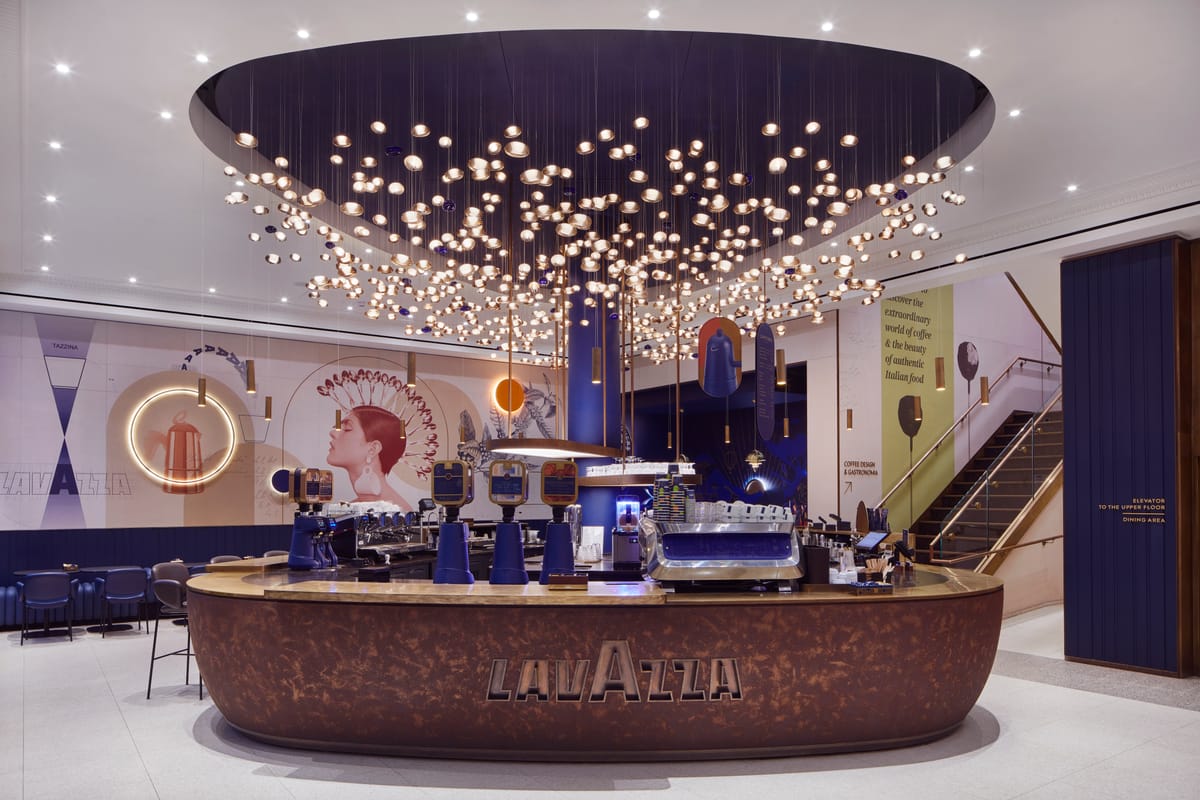
Lavazza UK reported a pre-tax profit of £3.2 million ($4.3m) in 2024, compared with £1.5 million ($2m) the previous year. Sales rose 8% year-on-year to £110.3 million ($149m), marking the second consecutive year revenues surpassed the £100m threshold. The Turin-based roaster strengthened its UK presence through partnerships with Wimbledon, Arsenal Football Club, and Ascot Racecourse, initiatives that it said significantly boosted brand visibility and consumer recognition. Lavazza has also operated a flagship store in London since 2021, reinforcing its retail footprint.

In its Companies House filing, the company acknowledged “unprecedented” cost pressures tied to climate change, geopolitical tensions, and volatile green coffee markets. Despite leveraging Lavazza Group’s global procurement strategies to hedge against volatility, it admitted that part of the inflationary burden had to be passed on to consumers. “The company benefits from the policies adopted by the Lavazza Group to limit the impact of volatility within the coffee market,” Lavazza UK stated. “However, despite these measures, the company has had to mitigate the increased risk by passing some inflation to its customers and consumers.”

According to company figures, UK households consume 13 million cups of Lavazza coffee every week and use 1.4 million capsules. Raising prices has been a key lever for sustaining modest revenue growth and absorbing cost pressures in an environment where inflation has pushed up the cost of everyday goods. Data from consumer watchdog Which? indicates that retail coffee prices in the UK climbed by up to 40% in the 12 months to March 2025.

Still, there are signs of relief. Speaking to UK press in July 2025, Lavazza Group Chairman Giuseppe Lavazza suggested that record coffee prices may have already peaked, potentially bringing stability to supermarket shelves. On a global scale, the group absorbed €600m ($658m) in additional costs since 2022 but nonetheless achieved record revenues of €3.35bn ($3.67bn) in 2024, underlining the strength of its brand across more than 140 markets.

Founded in 1895, Lavazza remains one of the world’s most prominent coffee roasters. Its performance in the UK highlights how strategic pricing and brand-building investments have enabled it to withstand inflationary shocks while continuing to expand its international footprint.

Bad News for Coffee Drinkers: U.S. Tariffs Push Prices to Record Highs

Dubai – Qahwa World

Times are getting tougher for coffee drinkers as tariffs push already record-high prices even higher.

When former U.S. President Donald Trump announced new tariffs on imports in April, many in the industry believed coffee would be spared since the U.S. barely produces it domestically. But by midyear, a 10% duty was imposed on most imported coffee, including shipments from Brazil—the world’s top supplier. In August, those tariffs on Brazil rose sharply to 50%.

For roasters like Chad Seegers of Low Country Coffee Roasters in Charleston, South Carolina, the impact has been immediate. “Raw-bean prices have doubled for us,” he said. Wholesale prices to his customers have risen by 30–40%, while retail prices climbed by about 25%. “Brazilian coffee, which made up 80% of our best-selling blend, is simply not feasible anymore.”

The industry was already struggling before tariffs. According to Fernando Maximiliano of StoneX, global coffee output has been hit repeatedly by droughts, frosts, and extreme weather since 2020, leaving global inventories at just 36–37 million bags in 2024, down from nearly 59 million in 2020. “Persistent supply shocks had already fueled inflation in coffee markets. Tariffs only intensified the strain,” Maximiliano explained.

The data shows the severity: U.S. city prices for 100% ground roast coffee hit $8.87 per pound in August 2025—the highest on record since tracking began in 1980. Futures markets reflect the pressure too. Arabica “C” contracts in New York have surged nearly 20% this year, peaking at $4.29 a pound in February.

Trade flows are already adjusting. ING’s food and agriculture economist Thijs Geijer noted that U.S. imports of Brazilian coffee plunged more than 75% in August compared with a year earlier, while exports from Colombia and Vietnam have remained stable. American buyers are now sourcing from alternative markets with lower tariffs.

Still, the adjustment is costly. Seegers said some family growers from Cameroon and Costa Rica refused to sell to the U.S. altogether rather than deal with tariff rules. Profit margins for his roastery have been cut in half, and he warned: “A $4.50 latte is now $7 in some cafés.”

According to Geijer, much of the tariff-driven cost increase has not yet reached store shelves. With the 50% tariff on Brazilian coffee only taking effect in August, existing inventories are still being used. “Expect the tariff impact to start hitting retailers in the fourth quarter,” he warned.

Starbucks, the world’s largest coffee chain, confirmed in its July earnings call that its hedging strategies delay cost spikes, but said year-over-year increases are expected to peak in the first half of fiscal 2026.

Despite the financial hit, Seegers said his company refuses to compromise on quality: “We chose to absorb most of the cost increases rather than cut corners.” But the stress is mounting. Higher prices are slowing demand, squeezing both roasters and cafés.

With U.S. coffee lovers already paying more than ever before, the worst may still be ahead. “High-tariff coffee hasn’t even fully hit the shelves yet,” Geijer warned. For millions of Americans, their daily cup may soon cost more than they ever imagined.

Yemeni Coffee Achieves Record Heights at the Best of Yemen 2025 Auction

Dubai – September 2025 (Qahwa World) – The Best of Yemen 2025 auction, organized by Qahwa Al Qimma (Qima Coffee), has come to a historic close after two days of global bidding that stretched across 12 intense hours. The event not only broke price records but also highlighted the resilience of Yemeni farmers and the global demand for their unique coffees.

The auction witnessed unprecedented participation, with servers overwhelmed after 11 hours of bidding and forced into a temporary pause. When resumed the following day, just one more hour of spirited competition was enough to crown this year’s winners.

The Top Lots

1st Place: Yahya Al Faqeeh, offering the rare Yemenia variety processed naturally, achieved the highest price of the auction at $851.50 per pound for 37 lbs. The winning buyer was Black Sip Coffee Roasters, securing one of the most expensive Yemeni coffees in history.

2nd Place: Maghrib Ans XV (Kent, Alchemy process), 110 lbs, sold for $320.50/lb to Sulalat.

3rd Place: Hejrat Al Ain Women Farmers XV (Yemenia, Alchemy process), 88 lbs, reached $327.50/lb, purchased by Albhaa Roastery and Out of Line.

4th Place: Bait Yaseen XI (Yemenia, Alchemy process), 110 lbs, sold for $196.50/lb to Entro Coffee Egypt and ESS’s Roasters Saudi Arabia.

Women Farmers in the Spotlight

Women-led lots stole the spotlight this year. Coffees from Hejrat Al Ain, Hayma Dakhiliya, Bait Al Yaziji, and Al Mezab all ranked among the top positions, underscoring the growing role of Yemeni women in shaping the country’s specialty coffee renaissance.

Global Buyers

Bidders came from across the Middle East, Asia, Europe, and North America. Notable names included George Howell Coffee Company (USA), Slope Roastery (Saudi Arabia), Andes Coffee Roaster (Latin America), and several specialty roasters from China and Europe. The diversity of buyers confirmed Yemen’s status as a global benchmark for rare and exclusive coffees.

Auction Figures

Total lots: 33

Total weight: 2,857 lbs

Total value: $391,632

Average price (weighted): $137.08/lb

Median price: $109/lb

Highest price: $851.50/lb

Lowest price: $50.50/lb

Lots over $100/lb: 21

In its closing statement, the organizer said: “This milestone is not only about record prices—it is about the resilience of Yemeni coffee and the farming communities behind it. The unwavering commitment of our buyers and partners makes these moments possible year after year.”

The Best of Yemen 2025 auction was more than a commercial success; it was a cultural milestone. It brought together farmers cultivating coffee in the mountains of Yemen with roasters across the globe, uniting two ends of a shared story: those who grow coffee at its birthplace and those who bring it to the world’s cups.

Coffee Prices Plunge on Rain Forecasts for Brazil

Dubai, September 18, 2025 – (Qahwa World) – Global coffee markets faced a sharp downturn on Wednesday as prices tumbled amid forecasts of long-awaited rainfall in Brazil, the world’s largest coffee producer. December arabica futures (KCZ25) closed down -33.70 cents, a steep -8.23%, marking a one-week low. November ICE robusta futures (RMX25) also plunged by -331 points, or -6.92%.

The sudden reversal came just a day after arabica reached a contract high and robusta hit a three-week peak, driven by drought conditions. Forecasts now indicate showers in Brazil’s key coffee-growing regions beginning next week, triggering heavy long liquidation in the market.

Brazil’s Cooxupe cooperative, the largest in the country, announced that the harvest among its members was 98.9% complete as of September 12, adding further bearish pressure. The completion of the harvest, coupled with improved weather outlooks, weighed heavily on investor sentiment.

Yet underlying fundamentals remain tense. Earlier this month, Brazil’s crop forecasting agency Conab revised its 2025 arabica production estimate down by -4.9% to 35.2 million bags, while total coffee output was trimmed to 55.2 million bags. Global supply challenges also persist: the International Coffee Organization (ICO) reported that July exports fell -1.6% year-on-year, while cumulative exports from October to July slipped -0.3%.

On the demand side, U.S. buyers continue to face supply strain due to 50% tariffs on Brazilian coffee, effectively tightening the American market, where one-third of unroasted coffee imports come from Brazil. Meanwhile, ICE-monitored inventories continue to dwindle, with arabica stocks dropping to a 16.5-month low of 659,949 bags and robusta inventories falling to a 1.5-month low of 6,551 lots.

Vietnam, the world’s second-largest coffee producer, is also under scrutiny. Severe drought reduced the 2023/24 crop by -20% year-on-year to 1.472 million metric tons, the smallest harvest in four years. Exports in 2024 declined -17.1%, though shipments from January to August 2025 were up +7.8% year-on-year, showing signs of recovery.

Looking ahead, the USDA’s Foreign Agriculture Service projects global coffee production in 2025/26 will reach a record 178.68 million bags, up +2.5% year-on-year, supported by strong robusta output. However, research firm Volcafe warns that arabica will face a deficit of -8.5 million bags in 2025/26, the fifth consecutive year of shortage.

For now, rain forecasts in Brazil have calmed fears of immediate supply disruption, but the broader picture of tightening inventories, tariffs, and shifting climate risks ensures that volatility will remain a defining feature of the global coffee market.

Brazil Coffee Harvest 2025/2026: A Decent Crop Amid Market Volatility

São Paulo – September 16, 2025 – Qahwa World (EFICO’s Coffee Bean Scene) – There is an old saying in the coffee world: “When Brazil sneezes, the rest of the coffee world catches a cold.” The phrase remains true today. With the upcoming Brazil Coffee Harvest 2025/2026, accounting for nearly 40% of global production, Brazil continues to dictate the rhythm of supply, prices, and the flavor profiles that reach consumers around the globe. At times, it offers stability; at others, it sparks volatility across the market. In fact, the Brazil Coffee Harvest 2025/2026 will likely dominate coffee sector discussions for the coming year.

The past has proven this influence repeatedly. The frost of 1975 sent international prices soaring, while the droughts of 2014 and 2021 created deep uncertainty for exporters. Currency swings have only added to the turbulence, reshaping contracts and global trade dynamics. Brazil remains, without doubt, the heartbeat of the coffee industry, especially as we anticipate the results of the Brazil Coffee Harvest 2025/2026.

Harvest Progress and Outlook

By the end of August, Brazil’s 2025 harvest was virtually complete, with 100% of robusta and 98% of arabica collected. Rainfall—up to 50mm in arabica areas and 30mm in robusta regions—did little to damage bean development. Average bean size is larger than last year, and mild winter conditions extended the processing season, allowing more washed and semi-washed coffees to enter the market. Light frosts in June caused only localized impact, with no major losses.

The 2025/26 crop is now projected at 62.3 million bags—down 3.4% from earlier estimates and 5.4% compared to last year. Arabica is expected at 36.5 million bags, a sharp decline of 18.4% year-on-year, while robusta will rise to 25.8 million bags, a gain of nearly 22%. Strong vegetation growth after harvest suggests excellent potential for the 2026/27 cycle, with nurseries already sold out and farmers reinvesting in renewal and expansion. Notably, Brazil Coffee Harvest 2025/2026 will be closely watched for its impact on these numbers and future cycles.

Regional Insights

South Minas Gerais, the world’s largest coffee region with 500,000 hectares under cultivation, continues to showcase both challenges and innovation. Cities like Varginha, Três Pontas, Poços de Caldas, and Guaxupé remain central hubs. While productivity averages 25 bags per hectare, EFICO’s field visits revealed stark differences between farms. Yet one constant was clear: investment in innovation, from modern warehouses to irrigation projects that allow precise fertilization and improved yields. As a result, Brazil Coffee Harvest 2025/2026 outcomes will be partially driven by the ongoing modernization in these regions.

The Cerrado, often referred to by EFICO Brazil director João Marcos Crespo as “The Factory,” demonstrates a more industrialized approach. With 250,000 hectares—more than half irrigated—its productivity averages 35 bags per hectare, producing nearly 6 million bags annually. Regenerative agriculture is widely adopted here, both for cost savings and soil health. Farmers are also installing new high-capacity mechanical dryers, doubling efficiency compared to traditional models.

Market Dynamics

Despite decent production levels, commercialization has slowed to its lowest point in five years. Producers are financially stable and releasing coffee in small volumes, waiting for favorable prices. The introduction of a 50% U.S. import duty on Brazilian coffee in August has added further uncertainty to the market. Exporters are now carefully balancing procurement and sales strategies while watching international flows closely.

Overall, Brazil’s 2025 harvest stands between 60 and 62 million bags. While arabica output has dropped, robusta is filling part of the gap, and investments in quality continue to push screen sizes above last year’s levels. Market volatility is expected to persist at least through October, as the flowering season and rainfall patterns will set the tone for the 2026 crop.

Final Note

From the innovation-driven Cerrado to the tradition-rich farms of South Minas, Brazil’s coffee sector remains both resilient and deeply influential. As the new harvest begins arriving in early October, one thing is certain: when Brazil sneezes, the entire coffee world feels it. Ultimately, only time will reveal the full implications of the Brazil Coffee Harvest 2025/2026 for the global industry.

Coffee Prices Surpass $4 per Pound Amid Global Supply Strains and Trade Tensions

Dubai, September 16, 2025 (Qahwa World) – The global coffee market has once again taken center stage as New York arabica futures surged above $4 per pound for the first time since April. This sharp rally reflects a confluence of factors—from severe drought in Brazil and dwindling inventories to U.S. import tariffs and weaker global exports—raising new concerns about supply stability.

A Sharp Rally in Prices

On Monday, arabica futures jumped 3.6%, bringing total gains since early August to nearly 47%. In New York, arabica rose 3.1% to $4.0905 per pound, while robusta in London climbed 3.6%. The steep rise has fueled market anxiety, with momentum indicators signaling overbought conditions: the 14-day relative strength index crossed above 70, pointing to unusually rapid gains.

Brazil at the Epicenter

Brazil, the world’s top coffee producer, remains at the heart of the current price surge. According to meteorological firm Somar Meteorologia, the key producing states of Minas Gerais and São Paulo face abnormal heat and drought, while Espírito Santo is also expected to receive below-average rainfall. Such conditions threaten the upcoming flowering stage—a critical period for setting the next harvest due in mid-2026.

Brazil’s crop forecasting agency Conab lowered its 2025 arabica output estimate by 4.9% on September 4, cutting projections to 35.2 million bags from 37 million in May. Overall coffee production was revised to 55.2 million bags from 55.7 million previously.

Currency movements are amplifying the pressure: the Brazilian real rallied to a 15-month high against the U.S. dollar, discouraging export sales and lending further bullish support to global coffee prices.

U.S. Tariffs Tighten Supply

Trade tensions are another driving force. The U.S. imposed a 50% tariff on Brazilian coffee imports, prompting American buyers to cancel new contracts. This shift is tightening domestic supplies, particularly significant given that nearly one-third of U.S. unroasted coffee imports come from Brazil. Analysts warn this could amplify short-term volatility.

Shrinking Inventories

The decline in exchange-monitored stockpiles underscores the strain on global supply. ICE-monitored arabica inventories fell Monday to a 16-month low of 666,337 bags. Robusta inventories also slipped to a two-week low of 6,556 lots, hovering just above the seven-week low reached in late August.

Reduced reserves highlight how vulnerable the market is to further disruptions, with less buffer available to absorb shocks.

Export Slowdowns Worldwide

Export data confirms these tightening conditions. The International Coffee Organization (ICO) reported on September 3 that global exports fell 1.6% year-on-year in July to 11.6 million bags. Cumulative shipments from October through July declined 0.3% to 115.6 million bags.

Brazilian exports have been particularly weak. The Trade Ministry reported a 20.4% year-on-year drop in July shipments of unroasted coffee to 161,000 metric tons. Exporter group Cecafe said July green coffee exports fell 28% to 2.4 million bags, with arabica shipments down 21% and robusta plunging 49%. Overall, Brazil’s exports in July totaled 2.7 million bags, while January–July shipments fell 21% to 22.2 million bags.

Vietnam Adds to the Strain

Vietnam, the world’s second-largest producer, is also struggling. Production in the 2023/24 crop year fell 20% to 1.47 million metric tons, the smallest crop in four years, while exports for 2024 dropped 17.1% to 1.35 million tons. The Vietnam Coffee and Cocoa Association in March lowered its 2024/25 production estimate to 26.5 million bags from 28 million.

Yet more recent figures show some rebound: Vietnam’s National Statistics Office reported January–August 2025 exports up 7.8% year-on-year to 1.14 million tons, highlighting mixed signals from the world’s robusta powerhouse.

Mixed Forecasts and Outlook

The outlook remains divided. The USDA’s Foreign Agriculture Service (FAS) projects global coffee production in 2025/26 will rise 2.5% year-on-year to a record 178.7 million bags. Arabica production is forecast to fall 1.7% to 97 million bags, while robusta is expected to jump nearly 8% to 81.7 million bags. Ending stocks are seen climbing 4.9% to 22.8 million bags.

By contrast, commodity trader Volcafe projects a global arabica deficit of 8.5 million bags in 2025/26, widening from a 5.5 million bag shortfall this season. This would mark the fifth consecutive year of supply deficits for arabica, underscoring persistent structural imbalances.

Harvest Progress in Brazil

One counterweight to bullish factors is Brazil’s rapid harvest progress, which typically exerts downward pressure on prices. On September 5, cooperative Cooxupé reported that its members had harvested 97% of their crops. Separately, Safras & Mercado said Brazil’s 2025/26 harvest was 99% complete as of August 20, compared with 98% at the same time last year. Robusta harvesting was complete, and arabica was 98% finished.

Still, despite the near-completion of the harvest, broader supply-side issues—including weather stress and declining exports—continue to outweigh the potential bearish impact of fresh beans entering the market.

The Bigger Picture

The coffee market now finds itself caught between conflicting forces. On one side are bullish drivers: drought in Brazil, U.S. tariffs, shrinking inventories, weaker exports, and long-term arabica deficits. On the other side are bearish signals, including harvest completion and USDA’s optimistic production outlook.

For now, the bullish momentum dominates. The symbolic $4-per-pound threshold has been breached, highlighting the fragility of coffee supply chains. With climate uncertainty, trade disputes, and tightening stockpiles all in play, volatility looks set to remain a defining feature of the global coffee market in the months ahead.

DMCC Coffee Centre: Supply Chain Pressures and Tariffs Threaten Global Coffee Trade

Dubai, 15 September 2025 ( Qahwa World) – Coffee, the world’s second most traded commodity after oil and a cultural staple for billions, is entering a critical stage in its global journey. The threats facing the industry are no longer confined to climate change alone. Increasingly, they include mounting supply chain disruptions and escalating tariffs that are reshaping the economics of one of the most vital agricultural products on earth. In its latest report, released as part of the Future of Trade Agri Series, the DMCC Coffee Centre warns that unless urgent measures are taken, the future of the global coffee trade may be defined by instability, rising costs, and deep uncertainty.

For decades, coffee has been regarded as a model commodity for international trade thanks to its durability and storability as green beans. But according to the report, this traditional advantage is no longer sufficient. Shipping costs have risen sharply amid ongoing global supply chain disruptions, compounded by geopolitical tensions across key trade corridors such as the Red Sea and the Panama Canal. Even a 1% increase in transport costs, the report notes, can result in months of accumulated price hikes for coffee worldwide. What was once a relatively resilient supply chain has become a fragile lifeline vulnerable to external shocks.

The situation has been further aggravated by protectionist trade policies. Most notably, the United States recently imposed tariffs of up to 50% on coffee imports from Brazil, the world’s largest exporter. While this may appear to offer short-term relief for American markets, it has shaken investor confidence and created uncertainty for Brazilian producers who rely heavily on exports. Many growers now face the prospect of cutting back production or seeking alternative markets, both of which come with risks of their own.

Mike Butler, Assistant Director for Coffee at DMCC, described the dilemma: “Large buyers often have the option of stockpiling coffee to protect themselves against price swings, but this strategy is not available to everyone. Smallholder farmers and specialty roasters remain the most exposed, as they lack the resources to hedge or hold inventories for long periods.”

The pricing system itself is also under strain. For decades, futures markets like the Intercontinental Exchange (ICE) provided reliable benchmarks for coffee. But the DMCC report highlights how these benchmarks are increasingly detached from reality. Futures contracts may show declines, while specialty coffee prices remain elevated, squeezing small and medium-sized roasters who cannot reconcile speculative market prices with real-world sourcing costs. Garfield Kerr, President of the Specialty Coffee Association and founder of Dubai’s “Mokha 1450,” summed it up: “The futures market has become more speculative and no longer reflects the actual value of high-quality coffee.”

Adding to this pressure is the rapid transformation of consumption patterns. Across Asia—in countries like China, Japan, and the Philippines—demand for coffee is accelerating, particularly among younger generations seeking premium quality and unique experiences. This growth, while promising, makes these markets especially vulnerable to global supply shocks. A shipping delay in Brazil or a tariff dispute in the U.S. can now ripple instantly into cafés and supermarkets in Beijing or Manila, underscoring the fragility of today’s interconnected coffee economy.

Amid these challenges, Dubai is positioning itself as a stabilizing hub. The DMCC Coffee Centre offers a pay-as-you-go model for storage, roasting, packaging, and logistics, lowering barriers for producers and small exporters to access global markets. Its geographic location at the crossroads of Africa, Asia, and Latin America allows Dubai to act as a natural bridge, absorbing shocks and keeping trade flows alive even in turbulent times. This strategic advantage, the report argues, could prove decisive as volatility becomes the new normal.

Still, the outlook remains precarious. Global production is expected to reach a record 178.7 million bags in the 2025/26 season. But without meaningful reforms, these volumes may not translate into market stability. Tariffs, freight costs, and speculative pricing continue to weigh heavily on the system, leaving more than 25 million smallholder farmers—who form the backbone of global coffee production—on the edge of economic survival.

The DMCC Coffee Centre’s report concludes with a stark choice. Either the industry embraces international cooperation, reforms outdated pricing mechanisms, and invests in supply chain infrastructure, or it risks plunging into prolonged volatility. Coffee, long celebrated as a symbol of connection and culture, could instead become a mirror of global trade’s fragility. But with decisive action, from fairer pricing models to transparent trade systems and collaborative investment, the industry has the tools to safeguard coffee’s future as a unifying global commodity.

Tariff-Fueled Price Hikes Hit U.S. Consumers

New York, September 13, 2025 – Qahwa World –U.S. consumers are beginning to feel the full impact of the Trump administration’s sweeping tariffs, as new data shows prices rising sharply across a range of imported goods.

The Consumer Price Index (CPI) climbed 2.9% in August compared to a year earlier, marking the fastest inflation rate since President Trump’s second inauguration in January. Analysts say the acceleration reflects tariffs filtering through the economy, with heavily imported goods seeing the steepest increases.

Although tariffs were first announced in April on what Mr. Trump dubbed “Liberation Day,” their implementation was delayed as trade negotiations continued. Many businesses initially stockpiled goods or absorbed costs to shield consumers. That strategy is now waning, according to the Federal Reserve’s latest Beige Book, which found widespread price hikes linked to tariffs in August.

Beth Hammack, president and CEO of the Federal Reserve Bank of Cleveland, told CBS News that companies are increasingly forced to pass along higher costs: “Some businesses have no choice but to start passing on tariff-related costs to consumers.”

Major retailers including Home Depot, Macy’s, and camera maker Nikon have already confirmed price increases. EY-Parthenon chief economist Gregory Daco noted that while many businesses initially shouldered the burden, “there is a limit to how long and how much of that they can do.”

The White House insists inflation remains contained. Spokeswoman Karoline Leavitt highlighted that overall CPI is tracking at a 2.3% annualized rate since Mr. Trump took office and pointed to easing wholesale inflation. She credited the administration’s policies, citing “historic tax cuts, massive deregulation, and energy dominance” as drivers of growth.

Goods Most Affected

August CPI data shows sharp increases in categories reliant on imports, including:

  • Coffee: +21% (Brazilian beans now face a 50% tariff; the U.S. imports 80% of its unroasted coffee from Latin America).

  • Audio equipment: +12%

  • Household furniture: +10%

  • Bananas: +6.6%

  • Women’s dresses: +6.2%

  • Watches: +5.6%

  • Motor vehicle parts: +3.4%

Pressure on Households

With wages rising more slowly, the tariff-driven costs are squeezing lower-income families. Heather Long, chief economist at Navy Federal Credit Union, warned, “Food, gas, clothing and shelter all had big cost jumps in August. And this is only the beginning of the price hikes.”

Consumers like Clara Moore, a researcher from Newark, New Jersey, are already feeling the strain. She said her grocery bills climbed from $175 to $250 in the past year, forcing her to cut back on streaming services and discretionary purchases.

Economists expect inflationary pressure to persist through year-end, with Oxford Economics’ Ryan Sweet predicting that consumers will absorb about two-thirds of the tariff costs: “You’ll see more of the tariffs passed on to consumers with each passing month.”

Brazil’s Dryness Continues to Fuel Global Coffee Price Surge

Dubai, September 12, 2025 – Qahwa World – Global coffee markets surged sharply on Friday, with December arabica futures climbing +10.75 cents (+2.78%) to a four-month high and November robusta futures rising +$80 (+1.77%) to a one-and-a-half-week peak.

The rally is being driven primarily by ongoing drought in Brazil, the world’s largest coffee producer. Weather agency Somar Meteorologia reported that Minas Gerais, Brazil’s largest arabica-producing state, received no rainfall during the week ending September 6 — a critical period just ahead of the flowering stage for coffee trees.

A stronger Brazilian real added further bullish momentum, rallying to a 15-month high against the US dollar on Friday. A stronger real typically discourages coffee exports, as producers are less incentivized to sell abroad.

In the United States, concerns over tighter supplies are mounting as buyers cancel new contracts for Brazilian beans following the imposition of 50% tariffs on imports. Roughly one-third of America’s green coffee supply comes from Brazil, making the tariffs a significant disruptor for the US market.

Tightness in ICE-monitored inventories has also supported prices. Arabica stocks fell to a 16-month low of 669,251 bags, while robusta inventories declined to a two-week low of 6,557 lots.

Adding to the bullish outlook, Brazil’s crop forecasting agency Conab cut its 2025 arabica production estimate by -4.9% to 35.2 million bags from its May forecast of 37 million. Total Brazilian coffee output for 2025 was also revised lower by -0.9% to 55.2 million bags.

On the trade side, the International Coffee Organization (ICO) reported that global exports in July fell -1.6% year-on-year to 11.6 million bags. Cumulative exports from October to July slipped -0.3% year-on-year to 115.6 million bags.

Brazil’s July shipments added more pressure to the supply side. The Trade Ministry reported that unroasted coffee exports dropped -20.4% year-on-year to 161,000 metric tons. Exporter group Cecafe confirmed a steeper fall, with green coffee exports plunging -28% to 2.4 million bags. Arabica exports dropped -21% while robusta exports plunged -49%. Cecafe added that total July shipments fell -28% to 2.7 million bags, while cumulative January–July exports fell -21% to 22.2 million bags.

Meanwhile, Brazil’s harvest is nearly complete. Cooxupé, the country’s largest coffee cooperative, reported that 97% of its members’ harvest was completed by September 5. Separately, consultancy Safras & Mercado noted that the national 2025/26 harvest reached 99% by August 20, including 100% completion of robusta and 98% of arabica.

In Vietnam, the world’s second-largest producer, 2023/24 coffee output fell -20% year-on-year to 1.47 million metric tons, the smallest crop in four years. Exports in 2024 fell -17.1% to 1.35 million metric tons. However, the General Statistics Office reported that January–August 2025 exports rose +7.8% to 1.14 million metric tons.

Looking ahead, the USDA’s Foreign Agricultural Service (FAS) projected on June 25 that global coffee production in 2025/26 will rise +2.5% year-on-year to a record 178.68 million bags. The forecast includes a -1.7% decline in arabica to 97.02 million bags and a +7.9% increase in robusta to 81.65 million bags. Brazil’s 2025/26 crop is expected to rise +0.5% to 65 million bags, while Vietnam’s production is forecast to grow +6.9% to 31 million bags, a four-year high. Global ending stocks are forecast to rise +4.9% to 22.8 million bags, up from 21.7 million in 2024/25.

However, trader Volcafe has issued a more cautious outlook, projecting a global arabica deficit of -8.5 million bags in 2025/26, compared with a -5.5 million bag deficit in 2024/25. This would mark the fifth consecutive year of deficits for arabica, underscoring structural supply concerns.

The combination of Brazil’s drought, lower exports, shrinking inventories, and global trade pressures highlights the fragility of the balance between supply and demand — setting the stage for further volatility in one of the world’s most important agricultural commodities.

Why Have Coffee Prices Surged Again Globally?

Dubai, September 9, 2025 (Qahwa World) – Coffee prices are once again on the rise, pushing global markets into a renewed bullish phase after months of volatility and decline. Analysts point to a mix of climate pressures, trade barriers, falling inventories, and speculative buying as the key forces driving the market upward.

Arabica coffee futures on the Intercontinental Exchange (ICE) climbed above $3.70 per pound in early September 2025, nearing record levels last seen at the beginning of the year. This rebound followed a sharp downturn during the first half of 2025, when prices fell by 19.22% in the second quarter and dropped 4.07% overall in the first six months, closing June at $3.0675 per pound.

On July 8, 2025, the December Arabica contract reached its lowest point of the year at $2.72 per pound. From there, the market staged a dramatic recovery, rallying nearly 43.9% to $3.9130 by August 28. The turnaround signaled a renewed long-term bullish momentum for coffee.

Climate Concerns Put Pressure on Supply

Brazil, the world’s largest coffee producer, is facing challenging weather conditions, including drought in some regions and unusually cold temperatures in others. These climate issues have heightened concerns about reduced crop yields in the upcoming harvest.

At the same time, ICE data shows that open interest in coffee futures rose 11.5% between August 12 and August 28, climbing from 146,352 to 163,170 contracts, highlighting increased speculative activity. Meanwhile, ICE coffee inventories fell to multi-year lows, further tightening global supply.

Tariffs Fuel the Rally

Adding to the pressure, the United States has imposed additional tariffs on coffee imports from Brazil and Vietnam, the two largest exporters. These trade barriers have raised costs for roasters, while well-capitalized Brazilian farmers have held back sales, using the tight market to strengthen their negotiating position. The result has been an acceleration of the rally in coffee prices.

Starbucks Feels the Impact

Rising green coffee costs are weighing directly on Starbucks, one of the world’s biggest buyers. While U.S. equity markets reached new highs in August, Starbucks shares underperformed. From March 3 to September 5, 2025, the stock fell 27.5% from $117.46 to $85.06, before closing at $85.32—6.4% below the year-end 2024 level. Analysts point to rising input costs, particularly coffee, as a major factor behind the decline.

Lack of Investment Vehicles

Since the iPath Coffee Subindex ETF ceased trading in June 2023, investors seeking direct exposure to coffee have had to rely exclusively on futures and options listed on ICE. Each futures contract represents 37,500 pounds of green coffee. At $3.7365 per pound on September 5, the December contract was valued at approximately $140,118.75. With an initial margin requirement of $10,659, traders can control the contract with just 7.6% upfront, though they must meet maintenance margin calls if equity falls below $9,690.

Outlook: Volatility Ahead

Looking forward, analysts expect heightened volatility in the coffee market over the coming weeks and months. Climate challenges in Brazil, tariff-driven trade distortions, and dwindling inventories will continue to keep upward pressure on prices. While the long-term trend remains bullish, sharp fluctuations are likely to remain a defining feature of the global coffee trade.

India Cuts GST on Coffee to 5% in Landmark Tax Overhaul

New Delhi, September 4, 2025 (Qahwa World) – The Indian government has announced a sweeping reform of its Goods and Services Tax (GST), slashing rates on coffee and other food products from 12%–18% down to just 5%. The decision, taken during the 56th GST Council meeting chaired by Finance Minister Nirmala Sitharaman, marks one of the most significant tax changes since the GST system was introduced in 2017.

The reform simplifies India’s indirect tax structure into two main slabs—5% for essential and merit goods, and 18% as the standard rate—alongside a new 40% rate for de-merit goods such as tobacco and luxury items. The reduced rates, including the cut on coffee, will take effect from September 22, 2025, coinciding with the Navratri festival.

Coffee Industry Among Key Beneficiaries

Coffee has been placed in the merit category, meaning products that previously attracted 12% or 18% GST—such as roasted beans, instant coffee, and other processed coffee items—will now be taxed at only 5%.

Industry experts expect this move to have a ripple effect across the entire coffee value chain:

  • Growers and processors are likely to benefit from stronger domestic demand, as lower retail prices could encourage greater consumption.

  • Retailers and cafés may see a boost in sales volumes, with increased affordability improving consumer access to both mainstream and specialty coffee.

  • Consumers will directly benefit from reduced prices, especially as food and beverage costs have risen sharply in recent years.

A Broader Economic Push

The decision is part of a wider strategy aimed at easing the cost of living, stimulating consumption, and simplifying India’s tax regime. Alongside coffee, the rate cut covers other everyday items including chocolates, butter, ghee, sauces, noodles, and packaged snacks.

“This rationalisation is designed to make GST simpler, more transparent, and more consumer-friendly,” Finance Minister Sitharaman said after the council meeting, stressing that the two-slab system will also reduce compliance burdens for businesses.

Looking Ahead

India—already one of the world’s largest producers of Arabica and Robusta—is expected to see a surge in domestic coffee consumption following the tax cut. Analysts suggest the move could help narrow the cultural gap between tea and coffee, while further boosting India’s vibrant café culture and specialty coffee sector.

The GST overhaul signals a structural shift in India’s economic policy, and for coffee, it may represent the beginning of a new chapter where affordability fuels greater appreciation of the drink across the country.

Coffee Prices Continue to Rise as Global Supplies Decline

Dubai, 4 September 2025 (Qahwa World) – Coffee prices closed higher on Wednesday amid tightening global supplies, with both arabica and robusta contracts gaining momentum. December arabica futures (KCZ25) rose by +3.30 cents (+0.89%), while November robusta (RMX25) advanced by +55 USD (+1.25%), bouncing back from a recent 1.5-week low.

The International Coffee Organization (ICO) reported that global coffee exports in July dropped -1.6% year-on-year to 11.6 million bags, while cumulative exports for October to July slipped -0.3% to 115.6 million bags. This contraction, combined with falling exchange-monitored inventories, supported the market. ICE-monitored robusta inventories fell to a 1-month low of 6,552 lots, while arabica stocks declined to a 1.25-year low of 686,863 bags.

Concerns about tighter U.S. coffee supplies also added support, as American buyers canceled contracts for Brazilian coffee following the 50% tariffs imposed on Brazilian exports to the U.S. Since Brazil supplies about a third of unroasted coffee to the American market, the move is further tightening availability.

In Brazil, above-average rainfall has eased crop concerns ahead of the crucial flowering period. Somar Meteorologia reported that Minas Gerais, the country’s largest arabica-growing area, received 163% of the historical average rainfall during the last week of August. Meanwhile, the harvest is nearly complete, with Cooxupé, Brazil’s largest cooperative, announcing that 94.9% of its members’ harvest was done by August 29, while Safras & Mercado estimated the national harvest at 99% complete as of August 20. Despite this, export data reflects a slowdown, with Brazil’s Ministry of Trade reporting that July unroasted coffee exports plunged -20.4% y/y to 161,000 MT, and exporter group Cecafé noting that green coffee shipments fell -28% y/y to 2.4 million bags, including a -49% drop in robusta exports.

Vietnam, the world’s leading robusta producer, continues to face drought-related challenges. Production for the 2023/24 crop fell -20% y/y to 1.47 MMT, the smallest in four years, while 2024 exports declined -17.1% y/y to 1.35 MMT. The Vietnam Coffee and Cocoa Association has revised its 2024/25 production outlook downward to 26.5 million bags, though the National Statistics Office reported a +6.9% y/y increase in January–July 2025 exports, reaching 1.05 MMT.

Looking ahead, the USDA’s Foreign Agriculture Service projects that world coffee production in 2025/26 will climb +2.5% y/y to a record 178.7 million bags. This includes a -1.7% decline in arabica output to 97 million bags and a +7.9% increase in robusta to 81.6 million bags, with ending stocks expected to rise +4.9% to 22.8 million bags. However, trader Volcafé forecasts a global arabica deficit of -8.5 million bags for 2025/26, deeper than the -5.5 million bag deficit recorded in 2024/25, marking the fifth consecutive year of arabica shortfalls despite stronger robusta production.