Coffee Slides on Supply Surge Signals

London – Qahwa World

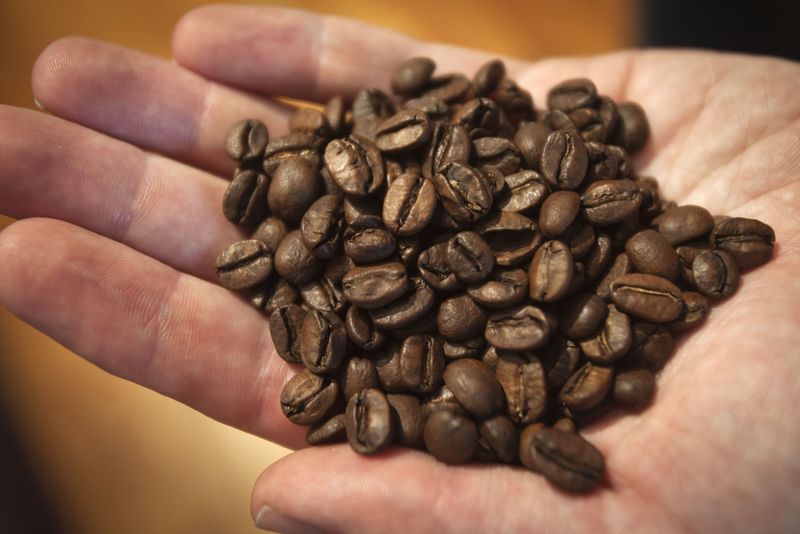
Coffee futures dropped notably, with arabica hitting its lowest level in about a week and robusta sinking to a multi-month low. The decline comes as expectations grow for a significantly larger global supply, led by Brazil.

Forecasts from multiple analysts point to a record-breaking Brazilian harvest in the 2026/27 season, with estimates clustering around the mid-70 million bag range—marking a strong year-over-year increase. This optimistic outlook has weighed heavily on prices in recent sessions.

The downturn intensified as the U.S. dollar strengthened to its highest level in over ten months, adding further pressure to commodity markets, including coffee.

You may like: CQI CEO Michael Sheridan Highlights Strong Q1 2026 Momentum

Despite the broader bearish tone, some factors are offering support—particularly for robusta. Exchange-monitored inventories have tightened recently, signaling short-term supply constraints.

Logistical challenges have also emerged as shipping disruptions in key global routes have pushed up freight, insurance, and fuel costs, indirectly impacting coffee trade flows and pricing dynamics.

Weather conditions in Brazil remain another point of concern. Key growing regions have received less rainfall than usual, which could affect crop development if dryness persists.

On the inventory front, Arabica stocks tracked by exchanges have been rising, contributing to downward pressure on prices.

Read also: Roseville’s Coffee Passport brews community and business growth

Export data adds a mixed picture. Brazil reported a sharp decline in green coffee shipments in February compared to last year, alongside a broader drop in total coffee exports.

Earlier in the year, prices had already come under pressure following projections of a bumper crop in Brazil. Government and private forecasts have consistently pointed to strong production growth, especially in arabica output.

Globally, coffee supply is expected to expand further. Estimates suggest total production could reach new highs in the upcoming season, supported by gains in both Brazil and Vietnam.

Vietnam, the leading robusta producer, continues to boost exports, with shipments rising in the early months of the year. Production is also expected to increase, adding to global availability.

Meanwhile, some international data indicates only a slight dip in global exports so far this season, while overall production forecasts remain strong. However, ending stock levels are expected to tighten modestly, reflecting steady demand.

China’s Oddities: Coffee Made from Urine and Eggs

Dubai – Qahwa World

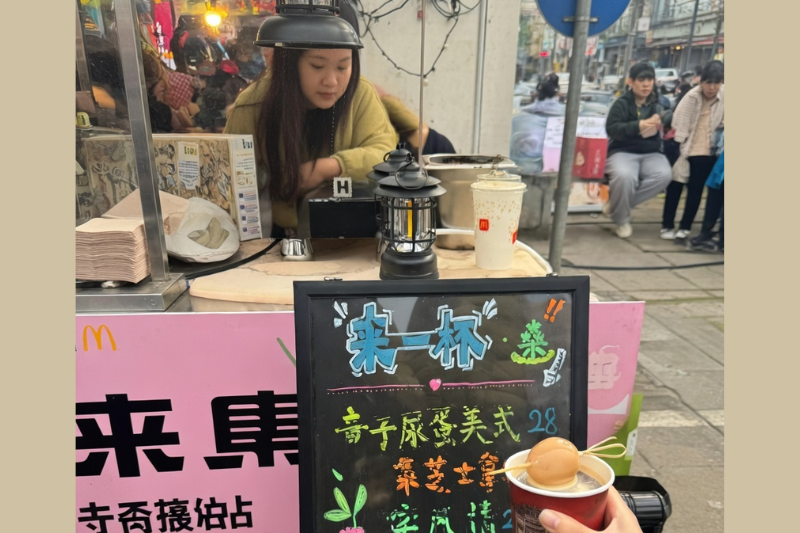
China’s reputation for unusual food and beverage creations has once again drawn attention, this time from a coffee shop in Dongyang, in Zhejiang Province.

According to Jiupai News, the café has introduced an unconventional drink that pairs Americano coffee with “virgin boy eggs,” a traditional local delicacy prepared using children’s urine.

Staff at the shop say the product sells around 100 cups a day, with some customers traveling from other cities specifically to try it. At the same time, many first-time visitors find the idea surprising or difficult to accept.

The eggs are prepared using a long-standing local method. They are first boiled, then roasted over charcoal, giving them a slightly charred surface and a salty, roasted flavor. They are typically served separately on a skewer placed on the rim of the coffee cup, although some customers request that they be crushed and mixed into the drink.

You may read: China’s wonders never end .. Mushroom coffee is the latest craze

The café presents the beverage as a fusion of traditional Dongyang food culture and modern coffee trends. It has also introduced other experimental drinks inspired by regional cuisine, including a latte made with preserved vegetables and cheese.

The eggs themselves are a seasonal specialty in Dongyang and are recognized locally as part of the city’s intangible cultural heritage. They are traditionally consumed during the spring and have long been associated with local customs.

Public reaction has been mixed. While some people express curiosity and a willingness to try the drink, others—particularly those unfamiliar with the tradition—have voiced criticism.

Medical opinions also differ. Some practitioners point to historical uses of such ingredients in traditional remedies, while others raise concerns about hygiene and question any potential health value.

Despite the controversy, the drink continues to attract attention, highlighting how local traditions and modern coffee culture can intersect in unexpected ways.

U.S. Coffee Prices Hit Record Levels Despite Stable Global Markets

DUBAI – QAHWA WORLD

By any measure, coffee should be getting cheaper.

International green coffee prices have eased in recent months as production rebounds in major origins. Yet in the United States, retail coffee prices continue to climb — reaching levels not seen in decades.

According to data from the U.S. Bureau of Labour Statistics, the average retail price of roasted coffee in the United States hit $9.37 per pound in January, up 33% year over year. That marks the highest level since federal record-keeping began in the 1980s.

At the same time, global benchmark prices for green coffee have fallen to roughly $3.64 per pound, reflecting improved crop expectations and stabilising supply chains.

So why is the world’s largest coffee-consuming economy moving in the opposite direction?

Tariffs and Trade Policy Still Ripple Through the Market

The answer begins with trade policy.

During the previous administration of Donald Trump, tariffs were imposed on key coffee-exporting countries. The United States introduced:

  • A 46% tariff on imports from Vietnam

  • A 10% tariff on imports from Brazil and Colombia

Vietnam, Brazil, and Colombia collectively supply more than 60% of U.S. coffee imports. Any disruption involving these origins has immediate consequences for American roasters.

In July, an additional 40% tariff on Brazilian food and beverage imports was proposed. Although that measure was later reversed, the market had already reacted. Coffee is traded months in advance, and importers typically lock in contracts well before shipments arrive. By the time policies shift, pricing structures are already embedded in the supply chain.

In coffee, timing is everything — and costs move slowly in one direction.

The Lag Between Global Prices and Retail Shelves

Green coffee prices are only one component of what consumers pay. Roasting, freight, warehousing, labor, packaging, and retail margins all compound the final number on a supermarket shelf or café menu.

Even when global commodity prices fall, retailers rarely adjust immediately. Contracts must roll over. Inventories must clear. New pricing agreements must be negotiated.

There is also a behavioural element at play. Coffee remains a daily ritual for millions of Americans. Demand has proven remarkably resilient, even in periods of inflation. When consumers continue buying at higher prices, businesses face little urgency to cut them.

Corporate Performance Signals Strong Demand

Publicly traded coffee giants reflect this resilience.

Shares of Starbucks are up roughly 14% year to date in 2026. Meanwhile, Keurig Dr Pepper has gained about 5% over the same period.

Strong performance suggests that consumers are still spending on coffee, whether in cafés or at home. For investors, it’s a sign of pricing power. For consumers, it means relief may not come quickly.

A Market Split: Global Relief, Domestic Pressure

Globally, supply conditions are improving. Brazil’s production outlook has strengthened, and earlier disruptions in key growing regions have begun to ease. That has kept international prices from climbing further.

But the United States operates within its own pricing ecosystem — shaped by trade policy, distribution costs, and consumer behaviour.

The result is a widening gap between falling global bean prices and rising American retail prices.

Will U.S. Coffee Prices Come Down?

They may — but not immediately.

As older contracts expire and lower global prices filter through the system, wholesale costs could soften. However, whether those savings reach consumers depends on competitive pressure, corporate strategy, and demand trends.

Coffee has evolved far beyond a commodity. It is a cultural staple, a daily necessity, and for many households, a non-negotiable expense.

For now, Americans are paying record prices for their morning cup — even as the rest of the world sees relief.

And until supply contracts reset and market forces realign, that disconnect is likely to persist.

EL&N London Opens Two New Branches in Abu Dhabi

Abu Dhabi – Qahwa World

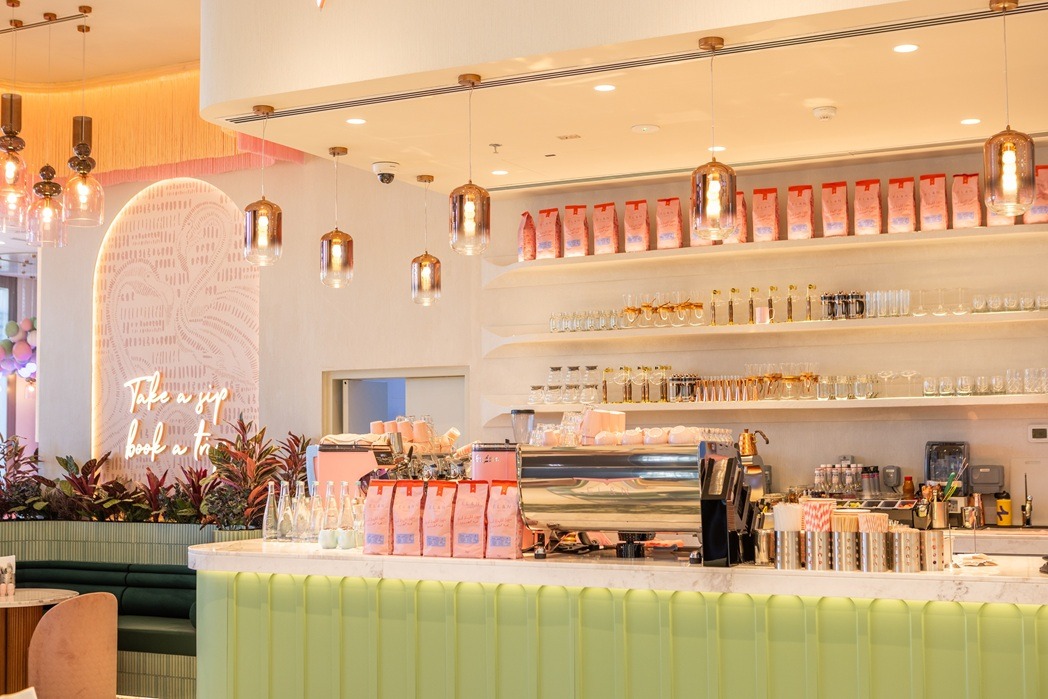
EL&N London, one of the world’s leading luxury café brands founded in London, has announced its continued expansion in the United Arab Emirates with the opening of two new branches in the capital, Abu Dhabi. The new locations at Reem Mall and Marina Mall mark a strategic step that reinforces the brand’s presence in high-growth key markets.

Having established itself as a favorite destination for coffee lovers and design enthusiasts alike, EL&N London is known for its vibrant interiors, contemporary aesthetics, and diverse menu featuring specialty coffee and premium desserts. The brand now brings its distinctive identity to two of Abu Dhabi’s most prominent retail and lifestyle destinations.

The new EL&N London Daily at Reem Mall introduces a refined yet simplified concept tailored for guests seeking a quick, high-quality experience. The offering includes freshly baked pastries, artisanal breads, specialty coffee, and practical grab-and-go selections. The space features a lighter, more contemporary design while maintaining the elegance that defines the brand’s core identity.

Meanwhile, the EL&N London branch at Marina Mall delivers the full brand experience for which it is globally recognized. Guests can enjoy the café’s signature vibrant décor, immersive atmosphere, and an all-day dining menu featuring specialty coffee, carefully crafted desserts, and distinctive dishes that combine refined flavors with artistic presentation.

Founded in London in 2017, EL&N London rapidly evolved into a globally recognized brand, expanding across Europe, Africa, and the Gulf region. Its growth has been driven by an innovative vision centered on creating modern café experiences that blend lifestyle, hospitality, and design.

With these new openings, EL&N London continues to strengthen its investment in the UAE market, positioning Abu Dhabi as a key hub within its regional expansion strategy while offering residents and visitors fresh experiences that reflect the brand’s playful yet luxurious approach to café culture.


Peru Hits Record Coffee Sales of Over $1.5 Billion in 2025

Dubai – Qahwa World

Peru’s coffee industry reached an unprecedented historical milestone in 2025, with the latest official data from the Ministry of Agrarian Development and Irrigation (MIDAGRI) reporting record-breaking sales of $1.57 billion between January and November. This figure represents a staggering 54.1% year-on-year growth compared to the same period in the previous year, firmly positioning the coffee sector as one of the most vital pillars of the Peruvian national economy over the last decade.

This exceptional success is the result of Peru’s long-term strategic commitment to solidifying its status as the world’s leading producer and exporter of organic coffee. This commitment has perfectly aligned with a major shift in global consumer behaviour, where buyers are increasingly prioritising sustainable, eco-certified, and ethically sourced crops. Furthermore, favourable international prices for high-value speciality coffee lots played a decisive role in maximising financial returns. Peruvian exporters have successfully navigated and met the rigorous quality standards and strict traceability requirements demanded by major strategic markets, most notably the United States and the European Union.

Field reports indicate that this growth was not accidental but the product of intensive investment in improving logistical supply chains and advancing post-harvest processing technologies within the rugged Andean highlands. This prosperity has had a direct and tangible impact on the national income, significantly enhancing the livelihoods of more than 223,000 farming families across the Andes and the Amazon rainforest. In these regions, coffee cultivation serves as the primary socioeconomic lifeline and a fundamental social pillar for rural communities. Building on these historic results, the Peruvian government now aims to leverage this momentum to further promote regional brands in international forums and ensure the long-term sustainability of these record-breaking figures in future seasons.

Nestlé Considers Selling Blue Bottle Coffee Stake

Dubai – Qahwa World

Sources indicate that the Swiss food and beverage conglomerate, Nestlé, is exploring the sale of its interest in Blue Bottle Coffee. The company is reportedly working with investment bank Morgan Stanley to manage the potential transaction.

Background on the Investment

2017 Acquisition: Nestlé secured a majority 68% share in Blue Bottle Coffee in 2017 for an estimated $425 million. At the time, this deal valued the specialized US coffee group at $700 million.

Initial Strategy: Announcing the acquisition, Nestlé positioned Blue Bottle as a gateway into the fast-growing, ‘super-premium’ US coffee shop segment, intended to complement their existing portfolio of brands like Nescafé and Nespresso.

Current Operations: California-based Blue Bottle, founded by James Freeman in 2002, currently runs over 100 high-end cafés in markets including the US, Japan, South Korea, China, Hong Kong, and Singapore. The company continued to operate as a stand-alone entity after the majority acquisition.

Rationale for Potential Divestment

The reported move to divest Blue Bottle comes amidst several strategic shifts at Nestlé:

Efficiency Drive: The potential divestiture aligns with a broader efficiency drive by new CEO Philipp Navratil to streamline the company’s portfolio and deliver $3.8 billion (CHF 3$ billion) in savings by 2028, amidst slowing sales and rising cost pressures. The focus is reportedly shifting toward more scalable, global brands rather than niche physical retail operations.

Potential Discount: Three sources cited by Reuters suggest that the boutique coffee operator might be sold at a lower valuation than its 2017 purchase price, indicating the investment has not generated sufficient gains.

Operational Challenges: While Blue Bottle has nearly doubled its store count since the acquisition, the move to sell highlights the complexities of operating a high-cost, high-service café business that prioritizes the specialized experience (like hand-drip extraction) over the high-volume efficiency that large corporations typically seek.

Strategic Options and Future Focus

Partial Sale: One source mentioned Nestlé might pursue a partial sale, specifically offloading the physical café business while retaining Blue Bottle’s intellectual property (IP).

Leveraging the Brand: This strategy would allow the company to continue selling packaged Blue Bottle-branded productssuch as wholebean coffee, ground coffee, and ready-to-drink (RTD) linesmirroring the model of its lucrative Global Coffee Alliance with Starbucks. The $$7.1$ billion Starbucks deal, finalized a year after the Blue Bottle acquisition, grants Nestlé exclusive rights to market and distribute Starbucks-branded retail packaged coffee products outside of Starbucks’ own stores.

The re-evaluation of its coffee investments by Nestlé is part of a wider industry trend. Other major conglomerates, such as Coca-Cola (which is also reportedly reviewing its Costa Coffee chain) and JAB Holding Company (reducing its stake in JDE Peet’s), have also been adjusting their large-scale coffee strategies to focus on packaged products and core businesses.

Luckin Coffee Eyes Fresh U.S. Listing Five Years After Accounting Scandal

The Chinese coffee giant moves to regain investor confidence and global credibility following a dramatic turnaround that made it China’s largest coffee chain.

Dubai – Qahwa World

China’s Luckin Coffee is reportedly preparing to return to Wall Street, five years after its dramatic delisting from the Nasdaq amid one of the country’s most notorious corporate accounting scandals.

Speaking at a government-hosted event in Xiamen on 2 November 2025, CEO Jinyi Guo said the company was “actively pushing the process of relisting on a U.S. main board,” though he declined to specify a timeline. Market observers believe the relisting could take place either on the New York Stock Exchange or Nasdaq, marking a significant milestone in the company’s comeback story.

Founded in Beijing in 2017, Luckin first listed in the United States in May 2019, raising $561 million to fund its breakneck expansion to 4,500 stores across China. But by April 2020, revelations emerged that the company had fabricated roughly $340 million in sales, triggering a collapse in its stock price, the dismissal of its senior management, bankruptcy filings in the U.S., and a $180 million fine by the U.S. Securities and Exchange Commission.

Under new ownership by Beijing-based private-equity firm Centurium Capital, Luckin launched a sweeping turnaround plan focused on profitable growth, tech-driven operations, and stricter financial oversight. The strategy began paying off in 2022, when the company reported its first quarterly net profit and emerged from bankruptcy shortly thereafter — a milestone that paved the way for its first annual operating profit later that year.

By 2023, Luckin Coffee had overtaken Starbucks in China’s fiercely competitive coffee market, fueled by rapid franchise expansion and affordable pricing. As of mid-2025, the brand operates over 26,000 stores across China and continues to extend its international presence with outlets in Singapore, Malaysia, and its first U.S. location.

A potential U.S. relisting, analysts say, could provide Luckin with fresh access to capital markets, boost brand visibility, and restore investor confidence still clouded by its past misconduct. Yet the move will not be simple: any overseas listing by a Chinese firm now requires filing with the China Securities Regulatory Commission (CSRC), part of Beijing’s tightened oversight of foreign capital operations.

As of March 2025, 286 Chinese companies were listed on U.S. exchanges with a combined market capitalization of around $1.1 trillion, according to the U.S.–China Economic and Security Review Commission. Luckin’s move, therefore, would mark one of the most high-profile returns of a Chinese consumer brand to U.S. markets since the scandal-scarred delistings of 2020.

Earlier this year, Chinese tea brand Chagee raised $411 million in its Nasdaq IPO — a sign that global appetite for Chinese beverage players may be returning. Whether Luckin Coffee can brew up a similar success story on Wall Street remains one of the most closely watched comebacks in the coffee industry.

Dubai Outdoes Dubai and Serves the World’s Most Expensive Cup of Coffee Once Again

Dubai – Qahwa World

Dubai has done it again—setting a new record for the world’s most expensive cup of coffee and, remarkably, outdoing its own achievement. During an exclusive Panama Night event hosted by Julith Café, the city witnessed the official launch of Nido 7 Geisha, a legendary brew now served to the public at an unprecedented price of AED 3,600 (around USD 1,000) per cup.

Just six weeks after Dubai entered the Guinness World Records in mid-September, when Roasters Café served a cup priced at AED 2,500, Julith has taken the crown with an even higher price tag — proving once more that in Dubai, even records don’t stand still for long.

The rare Nido 7 Geisha beans were acquired by Julith in August at the Best of Panama 2025 auction, following a tense bidding war that drew 549 bids from elite roasters and collectors worldwide. The Dubai café purchased just 20 kilograms of the beans for AED 2,218,785 (USD 604,080)—the highest price ever paid for coffee.

Grown near Panama’s Baru Volcano, Nido 7 Geisha is cultivated in unique microclimates that produce its distinctive floral and fruity profile. It earned an exceptional 98 points at the Best of Panama competition, with six of the 22 judges awarding a perfect 100 points, setting a new global benchmark for coffee excellence.

world’s most expensive coffee Dubai

Serkan Sagsoz, Julith’s Head Roaster and Turkey’s Barista Champion, commented: “We’re not chasing publicity; we’re crafting an experience. This coffee captures the essence of patience, artistry, and nature. Every cup is a story — not just a drink.”

Sagsoz added that a portion of the beans has been reserved for His Highness Sheikh Mohammed bin Rashid Al Maktoum, Vice President and Prime Minister of the UAE, and Ruler of Dubai, in appreciation of his vision and leadership, and in recognition of Dubai’s growing role as a capital of global coffee culture.

The Geisha Panama Experience now available at Julith offers an intimate sensory journey for up to four guests, guided by expert baristas who share the story of the beans from Panama’s misty highlands to Julith’s meticulous roasting in Dubai. Guests describe the brew as a harmony of jasmine, citrus, apricot, and peach, with a honey-like sweetness that lingers.

Founded in August 2025, Julith Café merges a roastery, café, boutique store, and social space under one roof. Its name derives from Just Like This, reflecting a philosophy of elegance in simplicity. The café sources its beans from Hacienda La Esmeralda, the renowned Peterson family estate that first introduced Geisha coffee to the world and continues to set the gold standard for specialty coffee cultivation.

With this new record, Dubai once again proves that it doesn’t just follow global trends — it creates them, cup after cup.

Anatoly Gorbunov Reveals to Qahwa World the Story Behind the World’s Most Expensive Cup of Coffee

Dubai – Ali Alzakary

In September, Dubai witnessed an event that captured the attention of the global coffee community. The café chain Roasters Specialty Coffee House entered the Guinness World Records for setting a new global milestone — the world’s most expensive cup of coffee, priced at USD 680.

Behind this achievement lies not just an expensive beverage but a story of passion, persistence, and a pursuit of perfection. In an exclusive interview with Qahwa World, Anatoly Gorbunov, the General Beverage Director of the group, shared how this record was born.

From an Idea to a Dream

“It all began with our dream to obtain Esmeralda coffee from Panama,” recalls Anatoly. “This variety is considered one of the rarest and most expensive in the world. For several years, we tried to win it at auction, but each time the beans went to other buyers.

In January, our founder and CEO, Konstantin Harbuz, told me, ‘I want us to get this coffee, no matter what it takes. Use all your contacts.’

Anatoly adds, “It took less than a week of calls and searching before I found someone who had a small amount of it. After long negotiations, we bought three kilograms of this rare coffee, despite its high price—we wanted it badly, and we got it.”

A Special Presentation for a Special Coffee

“We introduced this coffee to the menu at one of our central branches on the Boulevard and planned every detail: handcrafted double-glass cups, a special dessert designed to match the coffee’s flavor profile.

Guests cannot order Esmeralda immediately — it must be reserved at least a day in advance. We invite our head roaster, and the preparation takes place right in front of the guest, as an individual, personalized service. Everything is accompanied by a story about the coffee’s origin, its rarity, and what makes it exclusive. It’s a true coffee performance.”

The Road to the Guinness Record

“In April, we started selling Esmeralda. At the end of the month, during one of our meetings, the idea came up: why not make all of Dubai hear about it? That’s when we decided to aim for a Guinness record,” says Gorbunov.

The team contacted the Guinness World Records organization. After verification, it turned out that the existing world record belonged to a coffee priced at only USD 140.
“We realized we had a real chance,” he explains.

To register the record, it was necessary to prove the price and justify it. “You can’t just make a cup of coffee and say it costs a million. We provided all the required proof — purchase receipts, auction results, reports from the point-of-sale system confirming real sales, and statements from independent witnesses.”

A Coincidence That Became Destiny

The record attempt was scheduled for August. It coincided with an important event — the annual Panamanian auction.
“I suggested we wait for the results. And indeed, the Esmeralda farm won in three categories and set a new record — about USD 30,000 per pound. It was perfect confirmation of the coffee’s value. We set the date — September 13.

That day, an official inspector arrived at our café. Everything took place under the supervision of two independent witnesses. Each detail was checked, every receipt confirmed. After the process, the inspector handed us the world record certificate. It was a historic moment for the entire team.”

Dubai on the Coffee Map of the World

“Following the event, we were honored to receive congratulations from Mr. Khalid Al Mulla., Chairman of the Specialty Coffee Association of the UAE,” Anatoly recalls. “He congratulated us and said this achievement was not only for our brand but for all of Dubai. The city officially entered the history of the global coffee industry.”

After that, dozens of media outlets wrote about Roasters Specialty Coffee House, and interest in Esmeralda increased dramatically.
“We were officially allowed to use the Guinness logo for six months — a rare right, since it’s a registered trademark. We placed it on our packaging, displayed certificates in all our branches. The result was enormous: brand awareness grew, guest traffic increased, and Esmeralda sales rose. People came specifically to try ‘the coffee from the Guinness Book.’”

Impact on the Team and the Industry

“For us, it wasn’t just a marketing success,” notes Gorbunov. “It changed the atmosphere inside the company. People felt proud and motivated. We started receiving many applications from those who wanted to train with us. We have a strong training program and our own academy, where baristas receive professional education.

We also organize internal competitions to discover new talents. It motivates the team and strengthens our collective spirit.”

The Pursuit of Perfection Continues

“We are not stopping with Esmeralda. Our menu already includes exclusive varieties — Colombia Wush Wush and Tutti Frutti. We are negotiating with a Japanese company that owns farms in Costa Rica, one of which has received the Cup of Excellence title.

We regularly buy coffee from Yemen and keep track of Jamaica Blue Mountain, one of the rarest coffees in the world — about 95 percent of Jamaica’s harvest goes to Japan. Our goal is to always have this coffee available in our cafés.”

“We also plan to participate in future auctions in Panama and Yemen, as well as those to be held in January during the World of Coffee Dubai exhibition,” he adds.

From Dubai to the World

Today, the network has nine operating branches in Dubai, and the tenth will open at Dubai Hills next week. By the end of the year, Roasters plans to open twelve cafés in total.
“We are preparing to expand into Abu Dhabi, Hong Kong, and London, and we see Saudi Arabia as a promising franchise market. We want Roasters to become a symbol of quality, innovation, and passion for coffee at the international level,” concludes Anatoly Gorbunov.

Intense Competition at the 2025 UAE National Cup Tasters Championship

Abu Dhabi – Qahwa World

The 2025 UAE National Cup Tasters Championship continued for the second consecutive day as part of Global Food Week, held at the Abu Dhabi National Exhibition Centre (ADNEC). The event brought together 84 experts, including some of the country’s finest baristas, tasters, and coffee professionals representing leading cafés and roasteries across the UAE. The competition witnessed fierce rivalry and sharp fluctuations in contestant rankings based on performance.

Organized by the Specialty Coffee Association of the UAE (SCA UAE), the championship is one of the country’s most prominent coffee competitions, bringing together top professionals and coffee enthusiasts to test their ability to identify flavors and subtle distinctions among different coffee profiles, in line with international standards set by World Coffee Events.

Saeed Al Balushi, Board Member of the Specialty Coffee Association of the UAE, said that the competition is far from easy, noting that participants undergo rigorous sensory tests to evaluate coffee based on flavor, aroma, and consistency, with the goal of determining the most accurate and professional taster.

He added that winning the title is no simple task; even highly skilled participants must demonstrate exceptional professionalism and deep expertise in coffee tasting and sensory analysis. The challenge lies in identifying the best cup among 16 coffees sourced from different countries, with varying roast levels and processing methods — a task that demands extraordinary precision and focus.

Al Balushi emphasized that victory requires not only knowledge and experience but also strong emotional control, heightened sensory awareness, and total concentration, without distractions that could affect performance.

He concluded by confirming that the championship winner, to be announced tomorrow at the closing ceremony, will represent the UAE at the World Cup Tasters Championship, scheduled to take place in Thailand in May 2026.

Roast Magazine Reveals 2026 Roaster of the Year Winners

Dubai – Qahwa World

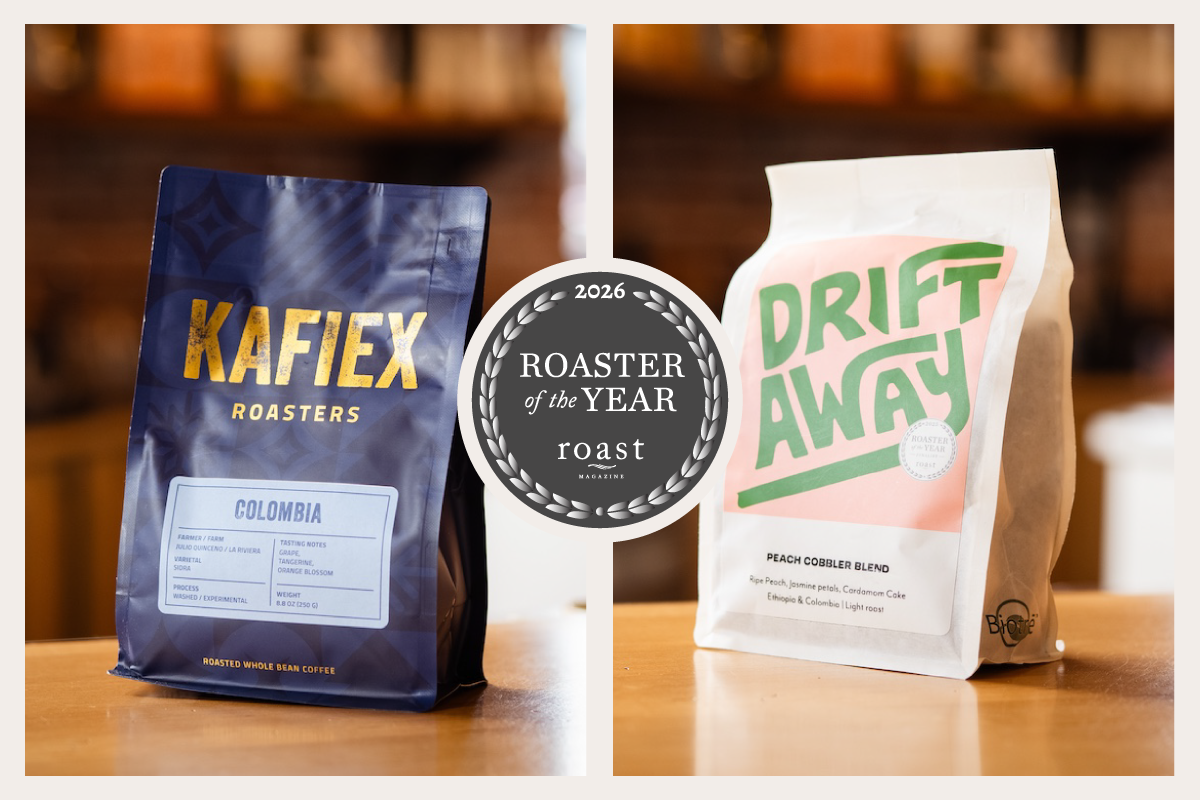
Two outstanding coffee companies have earned top recognition in the 22nd annual Roaster of the Year awards presented by Roast Magazine. Kafiex Roasters and Driftaway Coffee were named the 2026 winners in the Micro and Macro categories, respectively. Their achievements will be highlighted in the November–December 2025 issue of the magazine.

Each year, Roast Magazine selects two roasters that set benchmarks for excellence in coffee quality, environmental responsibility, education, and community engagement. The Micro Roaster of the Year category honors companies producing under 100,000 pounds annually, while the Macro category recognizes those exceeding that volume.

Kafiex Roasters: 2026 Micro Roaster of the Year

Hailing from Vancouver, Washington, Kafiex Roasters operates as both a roaster and café business. Established in 2018 by Matthew and Seidy Selivanow, the company is widely recognized for its focus on sustainability and education. Kafiex runs two coffee shops and has introduced a range of environmentally friendly initiatives, including a zero-waste specialty instant coffee line and a roasting system designed to minimize emissions.

Beyond roasting over 16,000 pounds of coffee in the past year, the team invests heavily in bilingual training programs, direct relationships with producers, and inclusive education efforts that reflect its commitment to accessibility and community empowerment.

Driftaway Coffee: 2026 Macro Roaster of the Year

Founded in Brooklyn, New York, in 2014 by Anu Menon and Suyog Mody, Driftaway Coffee has become known for its personalized approach to coffee education and sustainability. The immigrant- and woman-led business specializes in subscription-based coffee experiences that connect consumers directly with farmers through virtual tastings and transparent sourcing.

Driftaway’s sustainability efforts include compostable packaging, full pricing transparency, and consistent support for women- and minority-owned farms. The company also donates a portion of its proceeds to World Coffee Research. Over the past year, Driftaway roasted more than 125,000 pounds of coffee, continuing its mission to combine environmental responsibility with consumer education.

Honoring Innovation and Impact

The finalists in this year’s competition reflect the evolving spirit of specialty coffee. Alongside Kafiex in the Micro category were Three Keys Coffee and Dessert Oasis Coffee Roasters, while Corvus Coffee and Nossa Familia Coffee joined Driftaway as Macro finalists.

All of the contenders demonstrated exceptional leadership in sustainability, equity, and community building — values that continue to define the future of coffee roasting worldwide.

First Look at the Central America Coffee Harvest 2025 / 2026

Dubai – Qahwa World

Sucafina has published a new field report titled First Look at the 2025 / 2026 Central America Coffee Harvest, offering an early overview of the upcoming season across Central America and Mexico. The report describes a sense of cautious optimism among producers as they prepare for the harvest, buoyed by improved weather conditions during the first half of the year.

According to Sucafina, early indicators suggest a 3% increase in coffee production compared to the previous season, with the first volumes expected to appear in the second half of October and the peak harvest period projected between December and January — a timeline more in line with historical averages for the region.

Oscar Fernando Hurtado Ramirez, Global Head of Production Research at Sucafina, stated that overall crop expectations across the region are positive. “We are expecting more coffee production in each country due to better weather conditions during the first half of the year,” he explained. Total production across Central America and Mexico is forecast to reach around 18 million bags, representing an increase of approximately 570,000 bags compared to the previous cycle.

Improved Crop Quality and Fewer Pests

The report notes that crop quality and conversion rates are also looking favorable this year. Lower pest and disease pressure have created more stable conditions that support plant health and boost yield potential. However, the report warns that coffee leaf rust could rise later in the year, given the higher proportion of susceptible varieties planted across the region combined with wetter conditions expected in October and December.

EUDR Still a Major Concern

Despite the encouraging start to the season, concerns remain high regarding the European Union Deforestation Regulation (EUDR). Hurtado emphasized that “EUDR remains the biggest concern among farmers and the broader coffee sector.” While progress has been made in preparing for compliance, producers are still uncertain about how the regulation will be implemented in practice—particularly for smallholders who may struggle to meet traceability and verification requirements.

Investing in Education for Lasting Impact

The report also highlights Sucafina’s ongoing social initiatives in Central America, particularly its collaboration with the Seeds for Progress Foundation to strengthen rural education in coffee-growing communities. Active in Guatemala across regions such as Santa Rosa, Jalapa, and Chiquimula, the initiative supports school infrastructure, teacher training, and the creation of safe learning environments for children during the harvest season, when many parents are at work in the fields.

One current project, Opportunity Through Pre-School Education, focuses on improving preschool classrooms in Santa Rosa by providing child-friendly furniture and training for educators. This initiative forms part of Sucafina’s IMPACT program, which promotes responsible sourcing and human rights development at origin.

As the 2025 / 2026 harvest begins to take shape, Sucafina reaffirmed its commitment to supporting both farmers and communities in the region. The company plans to share more updates from the field in the coming weeks and encourages partners to coordinate with their trading teams to plan for the upcoming coffee volumes.