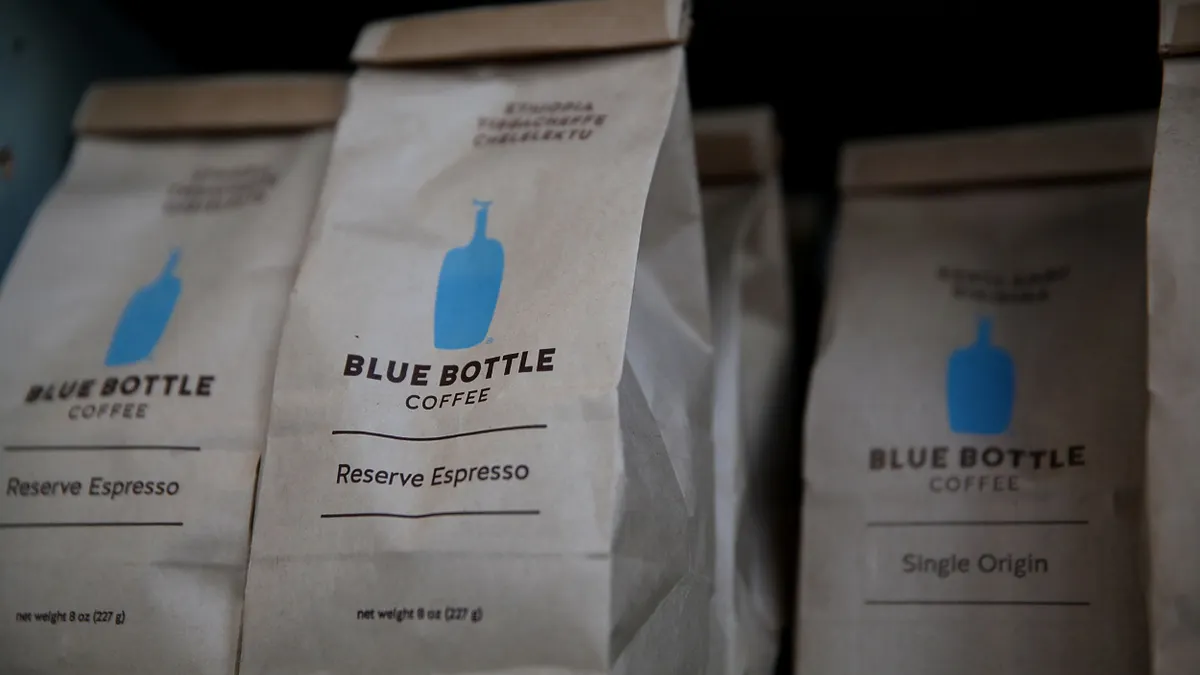
Nestlé Officially Confirms Sale of Blue Bottle Coffee to Owner of China’s Luckin Coffee

VEVEY, Switzerland – Qahwa World

In a decisive move reshaping the global coffee landscape, Nestlé has officially confirmed the sale of its majority stake in the renowned brand “Blue Bottle Coffee” to Centurium Capital, the private equity firm that is the largest shareholder in China’s Luckin Coffee.

This announcement, made in conjunction with the company’s first-quarter 2026 earnings report, marks the conclusion of the Swiss giant’s nearly decade-long venture into the high-end specialty coffee retail sector.

Centurium Capital is the primary investment power behind Luckin, which is currently the largest coffee chain in China.

Under this agreement, Centurium will acquire Blue Bottle’s entire global retail network of approximately 140 luxury locations, as well as the majority of the consumer packaged goods business associated with the brand.

While this sale signals Nestlé’s retreat from managing physical storefronts, the company has not entirely abandoned the brand’s marketing power. In a strategic move aimed at boosting profitability and focusing on high-growth segments, Nestlé will retain the exclusive rights to produce and market Blue Bottle-branded coffee capsules designed for the Nespresso system.

This strategic separation allows Nestlé to shed the high operational costs linked to property management and labor in physical cafes while retaining the most profitable and expandable segment: the at-home and packaged coffee sector.

Philipp Navratil, CEO of Nestlé, stated that this step is part of a comprehensive portfolio review to strengthen core brands and achieve sustainable growth.

Financial details of the deal were not officially disclosed by either party, but industry sources and reports circulating since March 2026 suggest the transaction value is approximately $400 million. If these figures are accurate, they represent a notable decline from the brand’s $700 million valuation in 2017, when Nestlé originally purchased its 68 percent stake for roughly $425 million.

According to experts, this valuation reflects the significant challenges large corporations face in scaling “artisanal” brands without losing their distinct identity. When Nestlé first acquired Blue Bottle, the bet was on the possibility of maintaining the brand’s soul while expanding globally. However, the operational complexities of maintaining high quality standards across 140 different locations proved to be a major challenge against Nestlé’s efficiency goals.

For Centurium Capital, adding Blue Bottle to its portfolio provides a luxury pillar to complement the massive dominance of Luckin Coffee in the general consumer market. Luckin Coffee currently operates more than 31,000 locations and is following an unprecedented global expansion path.

Through the acquisition of Blue Bottle, Centurium will gain immediate entry into the ultra-premium specialty coffee segment without compromising Luckin Coffee’s reputation based on speed and technology.

Sources indicate that Centurium intends to keep the two brands completely separate, with Blue Bottle serving as a “prestige” offering for the group, particularly in high-end Asian shopping malls where demand for luxury brands is steadily increasing.

From a specialized coffee journalism perspective, this deal represents a pivotal moment in the industry’s history.

It suggests that the era of large global companies buying artisanal roasters has begun to shift toward more specialized ownership models. It also highlights the ongoing migration of global coffee trade centers toward Asian markets.

The presence of a Chinese-backed private equity firm at the head of a leading American brand like Blue Bottle reflects the new geopolitical reality of the coffee industry.

With the deal expected to finalize in the first half of 2026, specialty coffee experts are waiting to see if Blue Bottle can maintain its artisanal identity, born in Oakland, under the management of one of the most aggressive growth machines in the world.
Luckin Coffee Explores Potential Acquisition of Blue Bottle Coffee

Dubai – Qahwa World

Chinese coffee chain Luckin Coffee is reportedly evaluating a potential acquisition of Blue Bottle Coffee, the specialty coffee brand majority-owned by Nestlé, as part of its strategy to strengthen its presence in the premium coffee segment.

Sources indicate that Luckin and its main investor, Centurium Capital, are pursuing moves to build a portfolio of premium coffee brands and expand their global footprint. This potential bid follows reports that Nestlé was considering selling its stake in the California-based Blue Bottle, which it acquired in 2017 for $425 million, valuing the company at roughly $700 million. Current estimates suggest the brand could now be sold at a lower price.

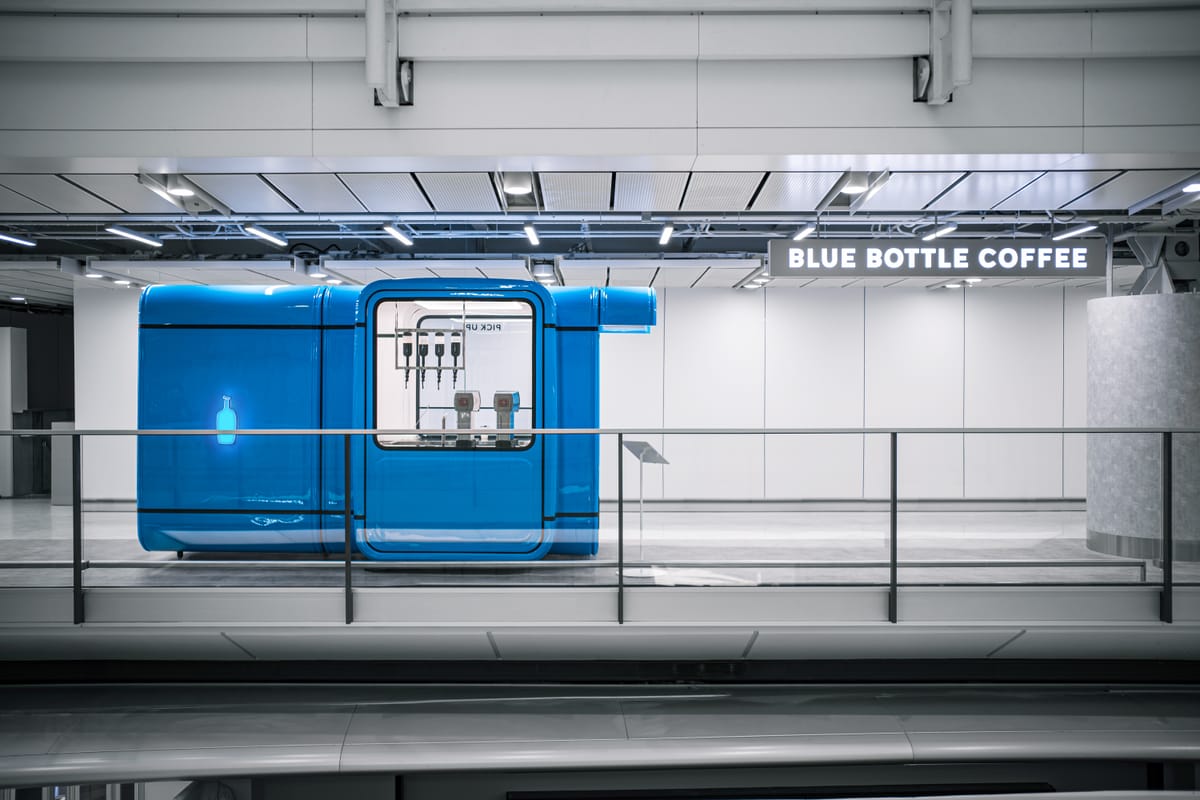
Blue Bottle Coffee operates over 100 boutique cafés in the United States and East Asia, including 12 locations in mainland China and four in Hong Kong.

In addition to Blue Bottle, Luckin and Centurium are said to be exploring a bid for Lucky Ace International Ltd., the holder of master franchise rights for Japanese specialty chain % Arabica in China and Hong Kong. % Arabica currently runs 84 outlets in mainland China and 15 in Hong Kong.

Centurium Capital, which had previously shown interest in Coca-Cola’s Costa Coffee, appears to have shifted focus toward the Luckin expansion strategy.

Luckin Coffee, China’s largest coffee chain with more than 29,000 stores nationwide, significantly outpaces its nearest competitor, Cotti Coffee. Centurium became Luckin’s controlling shareholder in January 2022, holding over 50% of voting rights, following previous investments that helped the company recover from accounting issues and restructure debt.

Beyond China, Luckin has expanded internationally with 68 stores in Singapore, 45 in Malaysia, and five in the United States. CEO Jinyi Guo announced in November 2025 that the company is preparing for a new public listing in the United States.

Nestlé Considers Selling Blue Bottle Coffee Stake

Dubai – Qahwa World

Sources indicate that the Swiss food and beverage conglomerate, Nestlé, is exploring the sale of its interest in Blue Bottle Coffee. The company is reportedly working with investment bank Morgan Stanley to manage the potential transaction.

Background on the Investment

2017 Acquisition: Nestlé secured a majority 68% share in Blue Bottle Coffee in 2017 for an estimated $425 million. At the time, this deal valued the specialized US coffee group at $700 million.

Initial Strategy: Announcing the acquisition, Nestlé positioned Blue Bottle as a gateway into the fast-growing, ‘super-premium’ US coffee shop segment, intended to complement their existing portfolio of brands like Nescafé and Nespresso.

Current Operations: California-based Blue Bottle, founded by James Freeman in 2002, currently runs over 100 high-end cafés in markets including the US, Japan, South Korea, China, Hong Kong, and Singapore. The company continued to operate as a stand-alone entity after the majority acquisition.

Rationale for Potential Divestment

The reported move to divest Blue Bottle comes amidst several strategic shifts at Nestlé:

Efficiency Drive: The potential divestiture aligns with a broader efficiency drive by new CEO Philipp Navratil to streamline the company’s portfolio and deliver $3.8 billion (CHF 3$ billion) in savings by 2028, amidst slowing sales and rising cost pressures. The focus is reportedly shifting toward more scalable, global brands rather than niche physical retail operations.

Potential Discount: Three sources cited by Reuters suggest that the boutique coffee operator might be sold at a lower valuation than its 2017 purchase price, indicating the investment has not generated sufficient gains.

Operational Challenges: While Blue Bottle has nearly doubled its store count since the acquisition, the move to sell highlights the complexities of operating a high-cost, high-service café business that prioritizes the specialized experience (like hand-drip extraction) over the high-volume efficiency that large corporations typically seek.

Strategic Options and Future Focus

Partial Sale: One source mentioned Nestlé might pursue a partial sale, specifically offloading the physical café business while retaining Blue Bottle’s intellectual property (IP).

Leveraging the Brand: This strategy would allow the company to continue selling packaged Blue Bottle-branded productssuch as wholebean coffee, ground coffee, and ready-to-drink (RTD) linesmirroring the model of its lucrative Global Coffee Alliance with Starbucks. The $$7.1$ billion Starbucks deal, finalized a year after the Blue Bottle acquisition, grants Nestlé exclusive rights to market and distribute Starbucks-branded retail packaged coffee products outside of Starbucks’ own stores.

The re-evaluation of its coffee investments by Nestlé is part of a wider industry trend. Other major conglomerates, such as Coca-Cola (which is also reportedly reviewing its Costa Coffee chain) and JAB Holding Company (reducing its stake in JDE Peet’s), have also been adjusting their large-scale coffee strategies to focus on packaged products and core businesses.